
Are Mechanical Float Switches Outdated? Why Intelligent Electronic Liquid Level Sensors Are More Durable
In the field of liquid level control, mechanical float switch was once the most common solution. However, with advancements in technology, more and more users have come to realize that while float switches are inexpensive, they are far from “durable.” Issues such as jamming, wear, and malfunction often cause significant headaches. Today, HojellyTek will take you deeper into the reasons why intelligent electronic liquid level sensors are gradually replacing mechanical float switches and becoming a more durable option.https://www.ceshhome.com/wp-admin/post.php?post=4924&action=edit
I. The “Innate Flaw” of Mechanical Float Switches
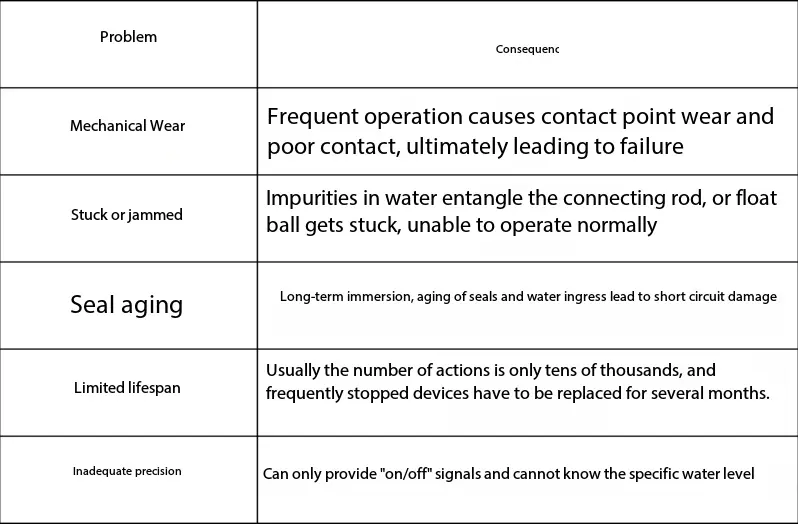
The mechanical float switch relies on the movement of the float with the liquid level, which is then used to actuate a micro-switch through a connecting rod or a rope. While this design appears simple, it harbors several fatal weaknesses:
II. Intelligent electronic liquid level sensors: A revolution without mechanical movement.
Electronic liquid level sensors (such as ultrasonic, immersion-type, capacitive, etc.) have completely eliminated mechanical moving parts. They measure liquid levels using electronic sensing principles, resulting in a revolutionary improvement in durability.
- No mechanical wear, resulting in a longer lifespan.
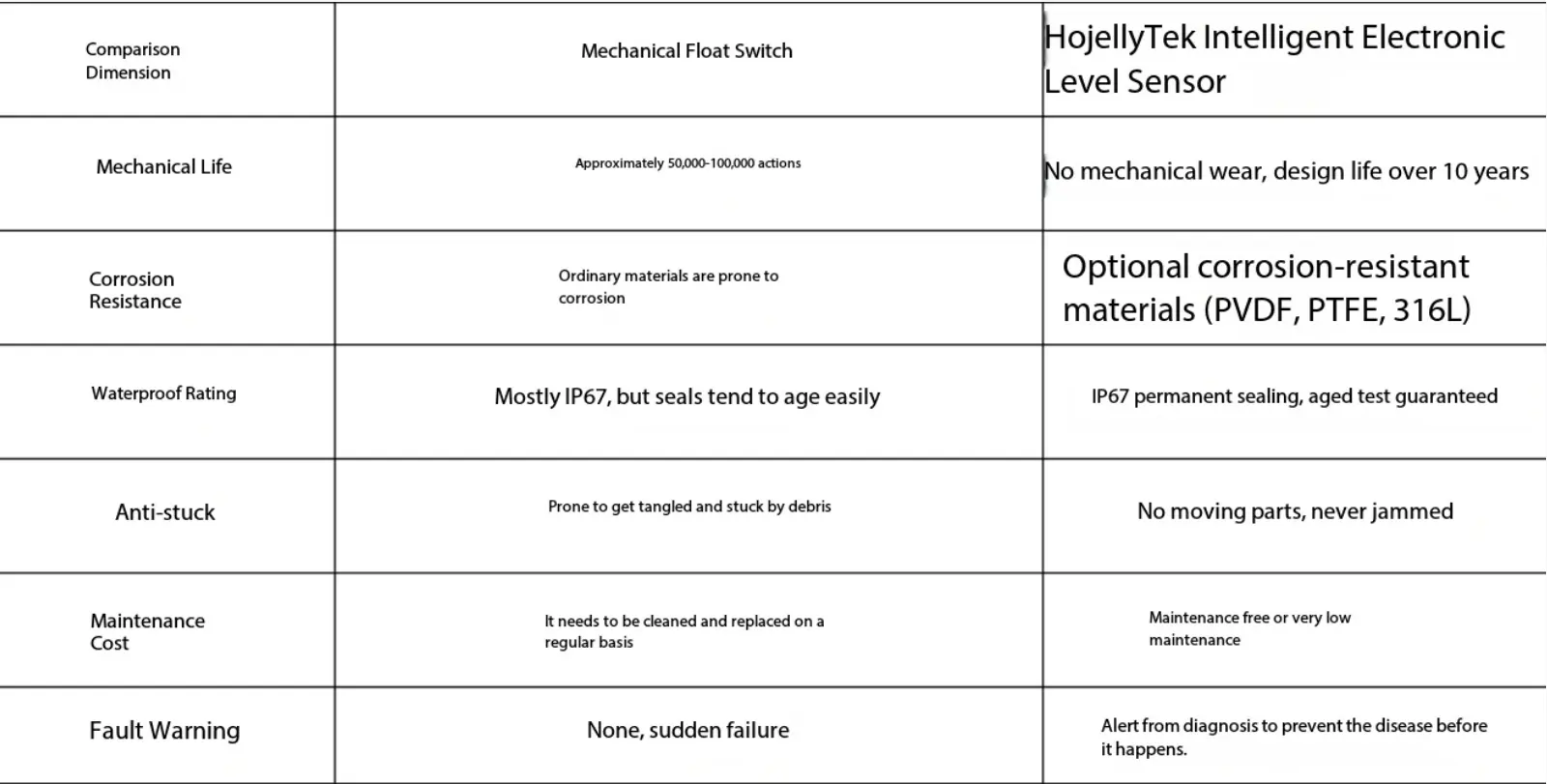
Electronic sensors do not contain any moving parts, and they do not wear out due to frequent operation. Take the Ceshhome ultrasonic liquid level meter as an example. Its core component is a piezoelectric ceramic plate, which has a theoretical lifespan of over 10 years, far exceeding the few months to one or two years of mechanical float balls. - Fully sealed design, waterproof and corrosion-resistant.
The HojellyTek smart liquid level sensor features an IP68 protection rating, with the probe fully sealed and impervious to immersion. The housing is made from corrosion-resistant engineering plastics or 316L stainless steel, ensuring stable operation even in wastewater, acidic, or basic liquids. - Self-diagnosis feature for early warning.
The intelligent sensor is equipped with a microprocessor that can monitor its own operating status in real time. When the probe becomes fouled or the signal is abnormal, it can proactively trigger an alarm to alert the user to perform maintenance, thereby preventing sudden failure – something that a mechanical float cannot do at all. - Precise, continuous measurements eliminate the need for “blindly touching an elephant.”
Electronic sensors output continuous data on liquid levels (such as 4-20mA, RS485, 0-10V, etc.). This allows you to know the exact water level at all times, enabling precise management. In contrast, float switch indicators can only indicate whether the level has “reached” or “not reached.”
III. Comparison Table of Durability
IV. In which scenarios is it strongly recommended to “discard the floating ball and switch to electronics”?
Scenarios with frequent start-stop operations: such as automatic water replenishment in wastewater treatment plants and livestock farms, where the float valve is activated dozens of times per day, leading to rapid wear and tear.
Scenarios with complex water quality: containing impurities, thick liquids, corrosive liquids, where the float ball is highly prone to getting stuck or corroded.
Protection of critical equipment: For example, protection against water pumps running dry, and monitoring of the water level in firefighting tanks. These systems require high reliability and must not fail.
Remote monitoring is required: electronic sensors can be connected to the internet to upload data, allowing users to view water levels on their phones.
V. HojellyTek: Making durability a standard
As a source factory, HojellyTek understands what “durability” means to users. Every smart level sensor that leaves our facility has undergone the following processes:
72-hour high-temperature aging test
IP67 waterproof pressure test.
High and low temperature cycling test.
Electromagnetic compatibility testing.
We firmly believe that one installation can provide peace of mind for ten years. If you’re still suffering from the hassle of frequent replacements for mechanical float balls, it’s time to upgrade HojellyTek to an intelligent electronic liquid level sensor.


