
Avoiding Costly Runouts: How IoT Tank Monitors Are Optimizing Commercial LPG Logistics
Transition from mechanical guessing to predictive analytics for warehouses, hotels, and manufacturing
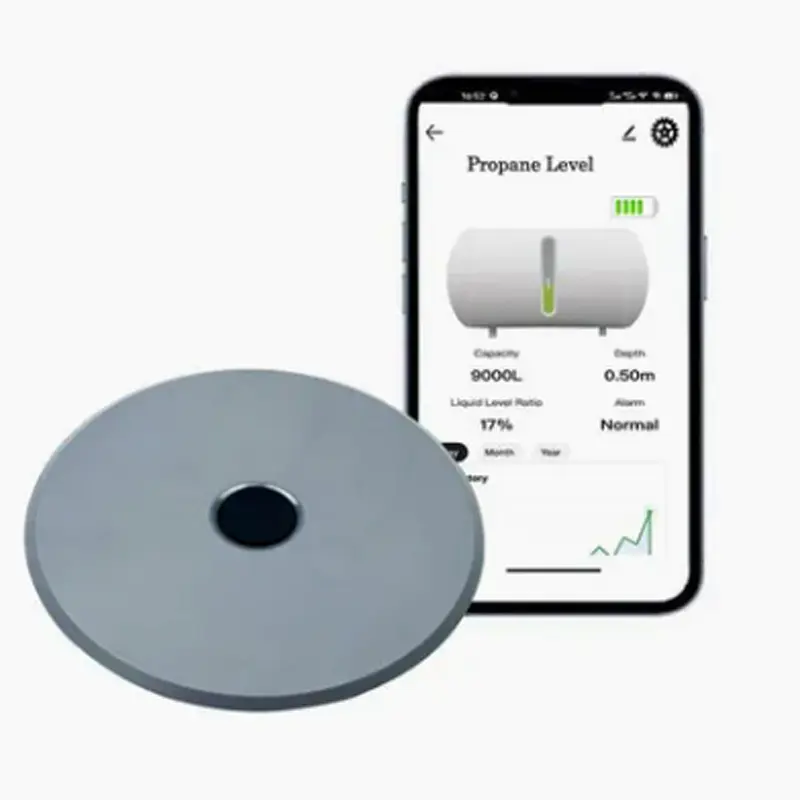
For commercial users such as hotels, greenhouses, and factories, an LPG runout means operational shutdown. The traditional method of manual gauging is not only inefficient but often leads to expensive emergency deliveries. The LPG Propane Tank Gas Cylinder Level Sensor with APP Monitoring is emerging as the critical tool for supply chain optimization.
The Problem with Mechanical Float Sensors
Industry analysis indicates that traditional float-type sensors are prone to mechanical sticking and corrosion, leading to false readings . Furthermore, ultrasonic sensors, while precise, require correct configuration (such as proper empty/full value settings) to avoid integration errors .
Operational Efficiency
By adopting digital monitoring, businesses eliminate "truck rolls"—the unnecessary dispatch of delivery vehicles to tanks that are still partially full. Solutions like ANOVA’s Universal Tank Monitor (UTM) provide a cloud-based dashboard (Unify) that forecasts demand, optimizes delivery routes, and sends low-level alerts automatically
Preventative Maintenance
Modern sensors provide data on pressure and temperature, offering a window into potential leaks or regulator failures before they cause downtime. The ability to remotely control tank valves (as seen in systems like DPS Telecom’s LPG Controller) further allows managers to switch between multiple tanks without a site visit .
Investing in smart level monitoring transforms LPG from a logistical headache into a measurable, manageable utility, ensuring that commercial operations never miss a beat.


