
Buyer Beware: The 6 Most Common Pain Points in the Wireless Level Monitor Market
Target Audience: End Users, Property Managers, Maintenance Personnel, Farmers
Introduction
With the rapid development of smart water management and IoT, market demand for wireless level monitors continues to grow. However, behind the market prosperity, product pain points revealed in user feedback cannot be ignored. Below are six major industry pain points compiled from market research and user feedback.
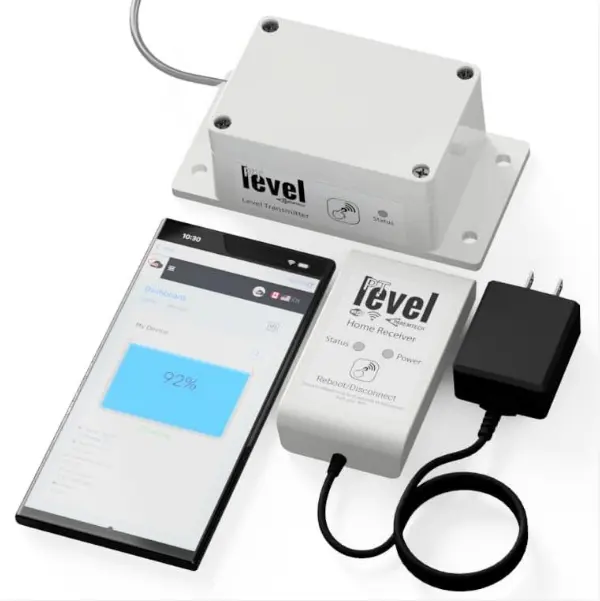
Pain Point #1: Severely Inflated Battery Life – "6 Months" Actually Means 1 Month
The Problem: Many wireless level meters boast "low power consumption" and "long battery life," but users find actual battery life far falls short. Industry research shows that WiFi level meters typically only last 1 months at normal reporting frequencies.
Real-World Impact: For equipment deployed in hard-to-reach locations like rooftop tanks and deep wells, frequent battery changes increase maintenance costs and create monitoring gaps. One user reported: "Claimed 6 months battery life, but it died in one month".
HojellyTek PTDevices Solution: LoRa ultra-low power technology + intelligent sleep mechanism – battery life lasts for years, no frequent changes needed.
Pain Point #2: Signal Coverage "Dead Zones" – WiFi Disappears Through Walls
The Problem: The core pain point of WiFi level meters is limited signal coverage. 2.4GHz WiFi signal attenuation through concrete floors can reach 15-20dB per layer. One user reported: "The water tank is in the basement, the router is on the first floor—the device couldn't connect at all".
Real-World Impact: Device offline means monitoring failure. For critical facilities like fire water tanks and underground tanks, signal dead zones can have serious consequences.
HojellyTek PTDevices Solution: LoRa technology offers 10x the penetration capability of WiFi, able to penetrate multiple concrete floors without relying on on-site WiFi coverage. LoRaWAN networks provide reliable coverage across remote, outdoor, and industrial environments.
Pain Point #3: Float Sensors Easily Jam – The Natural Defect of Mechanical Structures
The Problem: Traditional float-type level switches rely on mechanical movement. In hard water or debris-laden environments, floats easily jam or corrode. User feedback shows float switches often jam due to scale buildup in hard water
Real-World Impact: Float jamming causes false signals – tank overflows (not stopping) or pumps run dry (not starting). Statistics show float-type sensors have significantly higher failure rates in sewage environments compared to non-contact solutions.
HojellyTek PTDevices Solution: Ultrasonic non-contact measurement – no moving parts, never jams, maintenance-free.
Pain Point #4: Insufficient Protection – Outdoor Installation "Failure to Thrive"
The Problem: Level monitoring equipment is often installed outdoors in humid environments, but many products have insufficient protection ratings. Industry guidelines state: Outdoor installation requires ≥IP65, underwater requires ≥IP68. However, many products fail quickly in actual
outdoor environments.
Real-World Impact: One user reported: "After less than six months, the housing cracked and it was full of water". Water ingress, corrosion, and aging lead to premature equipment failure.
HojellyTek PTDevices Solution: IP67/IP68 high protection rating – completely dustproof, rain-resistant, and submersible, truly designed for long-term outdoor service.
Pain Point #5: Complex Installation – Difficult for Non-Professionals
The Problem: Some wireless level meters require complex network configuration, specific gateways, or professional tools for installation. Selection guides point out installation methods vary by scenario
Real-World Impact: Self-installation is nearly impossible for ordinary users. One user reported: "The manual was incomprehensible, customer service couldn't explain it – it took a week of struggling to barely get it working".
HojellyTek PTDevices Solution: Simplified installation process, detailed illustrated guidance, and professional technical support – most users can complete installation themselves.
Pain Point #6: Inaccurate Measurement and Data Drift – "Precision" in Name Only
The Problem: Industry testing shows that some low-cost level sensors suffer from severe measurement drift – "after 72 hours of continuous operation, reading deviation reached 1.2%". Temperature changes, false echo interference, and foam absorption can all cause reading errors.
Real-World Impact: Inaccurate measurement data causes users to lose trust. One user reported:
"The tank was almost empty, but the App showed 50%, so the pump ran dry and got damaged".
HojellyTek PTDevices Solution: High-precision ultrasonic probe + temperature compensation + intelligent echo processing algorithm – stable and reliable measurement.


