
A Complete Guide to City Garbage Pickup: Schedules, Rules, and the Future of Collection
City garbage pickup is one of the most essential services for modern urban living. This complex logistical operation is the foundation of public health and sanitation. Every week, residents rely on this service to remove waste from their homes cleanly and efficiently. While the specific schedules and rules are determined locally, the principles of how these services operate are universal.
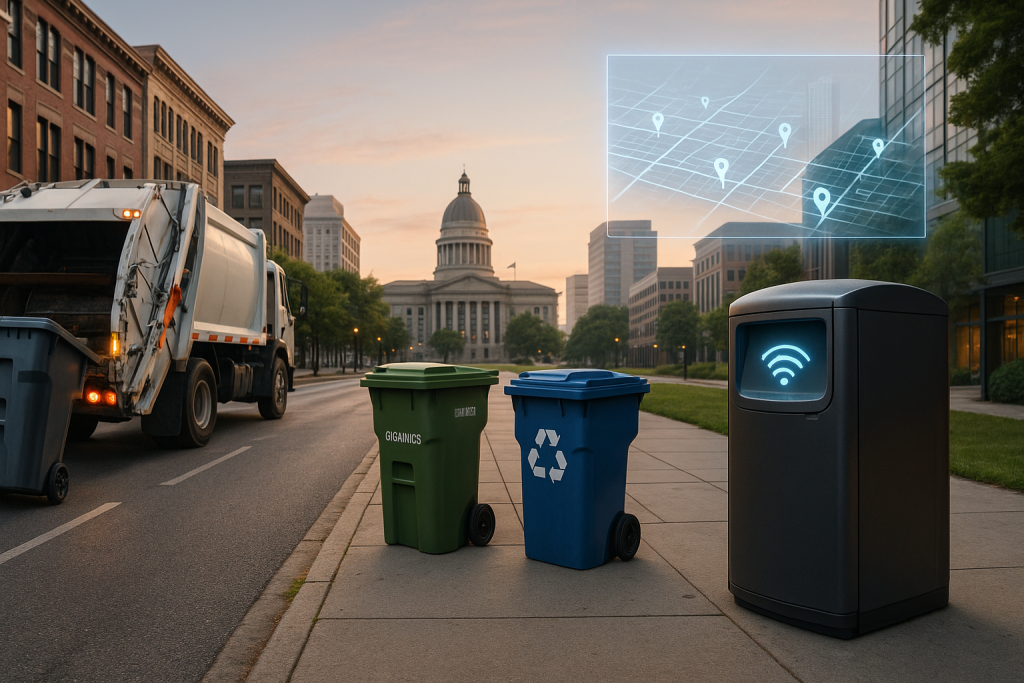
This guide provides a complete overview of how city garbage pickup systems work. We will cover how you can find your specific local schedule and understand the rules for collection. We will also explore the future of municipal collection and the technology that is making it smarter, more efficient, and more reliable for everyone.
Understanding Your Local Collection Service
The first step for any resident is to understand who provides their garbage pickup service and how to find information. There are generally two models for municipal collection.
In the first model, the service is run directly by a municipal department. This is often the city's Department of Public Works or Sanitation Department. These government employees operate a fleet of city-owned vehicles. They are responsible for everything from curbside collection to managing public litter bins. The most reliable source of information in this model is always the city's official government website.
In the second model, the city contracts the service out to a private waste hauling company. The city sets the standards and service levels, but a private company performs the physical collection. In this case, information might be found on both the city's website and the website of the private contractor.
To find your specific schedule and rules, the best place to start is the official website for your town or city. Look for a "Sanitation," "Public Works," or "Trash and Recycling" section. Many cities now offer digital tools, such as an address lookup to find your collection day. Some also provide a downloadable annual calendar or even a dedicated mobile app. Your utility bill may also list the service provider's name and contact information.
The Three Streams of Curbside Collection
Most modern city garbage pickup services are designed to handle three distinct streams of waste. Separating waste at the source is critical for achieving community recycling and sustainability goals.
1. General Waste (Trash)
This stream is for all non-recyclable and non-hazardous household waste. This includes items like plastic wrap, food packaging, and other materials destined for a landfill or waste-to-energy facility. Collection is typically once per week. Residents are usually provided with a standardized wheeled cart for this waste. There are important rules for placing this cart for collection. It must be placed at the curb with a safe distance from any obstacles, and the lid must be fully closed.
2. Recycling
Residential recycling programs are a key part of a city's sustainability efforts. The most common type is single-stream recycling. This allows residents to place all their accepted recyclables into a single cart without sorting them. These materials are then sorted later at a specialized facility called a Material Recovery Facility (MRF). It is vital to only place accepted materials in the recycling bin. Common contaminants like plastic bags, food waste, and electronics can ruin an entire batch of otherwise good recyclables. Always check your local guidelines for a list of what is and is not accepted.
3. Organic and Yard Waste
The third stream is for organic materials. This often includes food scraps, leaves, grass clippings, and small branches. These materials are collected separately and taken to a composting facility. They are then turned into a nutrient-rich soil amendment. This service may be year-round or seasonal, particularly in climates with cold winters. Organic waste is often collected in a separate, specially marked cart. Keeping non-organic materials like plastic or glass out of this stream is essential for creating high-quality compost.
A Resident's Checklist for a Successful Pickup Day
Following a few simple guidelines on your collection day helps the entire system run smoothly. It ensures the safety of collection crews and prevents your bins from being missed. This is the only section where we will use bullet points to create a clear checklist.
- Bin Placement: Place your bins at the curb by the designated time, which is often early in the morning (e.g., 7 AM). Do not leave them on the sidewalk itself, as this can impede pedestrians.
- Clearance: The automated arms on modern collection trucks need space to operate. Ensure there is at least three feet of clearance on all sides of each bin.
- Lid Closure: The lid of your bin must be completely closed. This prevents litter from blowing out and stops animals from getting into the waste. Crews may be instructed not to collect overfilled bins.
- Facing Forward: Position your bins correctly. The wheels and handle should be facing your house, away from the street. This allows the truck's lifting arm to grab the bin properly.
- Remove Obstacles: Do not place your bins behind a parked car. Also, keep them away from other obstacles like mailboxes, utility poles, or low-hanging tree branches.
- Retrieve Bins Promptly: After your bins have been emptied, bring them back to your property by the end of the day. This keeps sidewalks and streets clear and is often a local ordinance.
Handling Non-Standard Waste
City garbage pickup services also have procedures for items that cannot go into the regular weekly bins.
Bulk Waste
Large items like furniture, mattresses, and appliances are considered bulk waste. You cannot simply leave these items at the curb. They require a special collection, which almost always needs to be scheduled in advance. Most municipalities offer an online form or a dedicated phone number to request a bulk item pickup. There may be a limit on the number of items that can be collected at one time, and some items may have an associated fee.
Household Hazardous Waste (HHW)
Household hazardous waste includes any products that are corrosive, flammable, or toxic. Common examples are paint, cleaning chemicals, pesticides, motor oil, and batteries. These items must never be placed in your regular trash or recycling bins. They can harm collection workers and contaminate the environment. Cities typically manage HHW through two methods. They may host periodic drop-off events a few times a year. Some larger municipalities may operate a permanent HHW facility where residents can bring these materials. Always check your city's website for information on how to dispose of HHW safely.
The Hidden Logistics: How City Garbage Pickup Works
The weekly collection service that residents see is the final step in a highly complex logistical operation. Behind the scenes, a great deal of planning is required to make the system work.
The foundation of the service is route planning. In a traditional model, the city is divided into geographical zones. Each zone is assigned a specific collection day. Planners create static, fixed routes for each truck to follow to ensure that every street is serviced. While this model provides predictability, it is not very efficient.
The city also manages a large and expensive fleet of collection vehicles. The most common type for residential collection is the automated side-loader (ASL). This truck is operated by a single driver who uses a robotic arm to pick up and empty the carts. This improves safety and efficiency. For commercial routes or in dense urban areas, rear-loading trucks with a crew of several workers are also used.
After the waste is collected, it is not taken directly to a landfill. It is usually transported to a local transfer station first. At the transfer station, smaller collection trucks dump their loads. The waste is then compacted and loaded onto much larger tractor-trailers. These large trucks then make the long-haul trip to the regional landfill or recycling facility. This hub-and-spoke model is more efficient than having every small truck drive to the final disposal site.
The Future of City Garbage Pickup: A Shift to Smart Technology
The traditional model of city garbage pickup has served communities for decades. However, it has inherent inefficiencies. A significant portion of every route involves a truck stopping to lift a bin that is nearly empty. This wastes an enormous amount of time, fuel, and labor.
The future of municipal collection is a shift to a smarter, data-driven model. This transformation is powered by the Internet of Things (IoT). The key technology is the bin fill-level sensor. These small, rugged sensors are placed inside public litter bins and residential carts. They use technology like ultrasound to measure how full the container is in real-time.
This data is then sent to a central software platform. This platform gives city managers a complete, live view of their entire container network. The most powerful feature of this system is dynamic route optimization. Each day, the software's artificial intelligence uses the sensor data to create a 100% efficient route for each truck. The route includes only the bins that are actually full and need service.
This intelligent approach to waste pickup has a transformative impact. It can reduce the miles driven by collection fleets by more than 50%. This leads to massive cost savings for the city. It also significantly reduces the fleet's carbon footprint and noise pollution. For residents, it means a more reliable service with fewer missed collections and a guarantee that public bins will be emptied before they can overflow.
Conclusion: An Evolving and Essential Service
City garbage pickup is a complex and evolving service. For residents, understanding the local schedules and rules is key to ensuring a smooth and effective weekly collection. Following the guidelines for bin placement and waste sorting helps the entire system to function properly. It is a simple but important part of being a responsible member of the community.
From a city management perspective, the future is incredibly exciting. The shift away from rigid, inefficient routes toward dynamic, data-driven operations is already underway. This new model, powered by smart technology, promises to create a service that is not only more cost-effective but also more sustainable and responsive to the needs of the public. This evolution will ensure that this essential service continues to support the health and cleanliness of our communities for generations to come.


