Vorteile optischer Flüssigkeitspegelsensoren
Du verlässt dich wahrscheinlich auf ein Optischer Flüssigkeitsstandsensor bevor du deinen Morgenkaffee ausgetrunken hast, ohne ihn je wirken zu sehen.. Anstatt sich auf einen sperrigen mechanischen Schwimmer zu verlassen, der leicht klemmt, Moderne Haushaltsgeräte verwenden diese winzigen Geräte, Lichtbasierte Bauteile, um genau zu bestimmen, wo das Wasser stoppt. Wie jeder Installationsleitfaden für den Tankpegelpegel veranschaulicht, Der Austausch beweglicher Teile durch Licht macht diesen speziellen Flüssigkeitsstandsensor zum ultimativen stillen Schutz gegen unordentliche Küchenüberläufe.
Der Taschenlampen-und-Spiegel-Trick: Wie ein 'undichtes' Licht Wasser erkennt, ohne es zu berühren
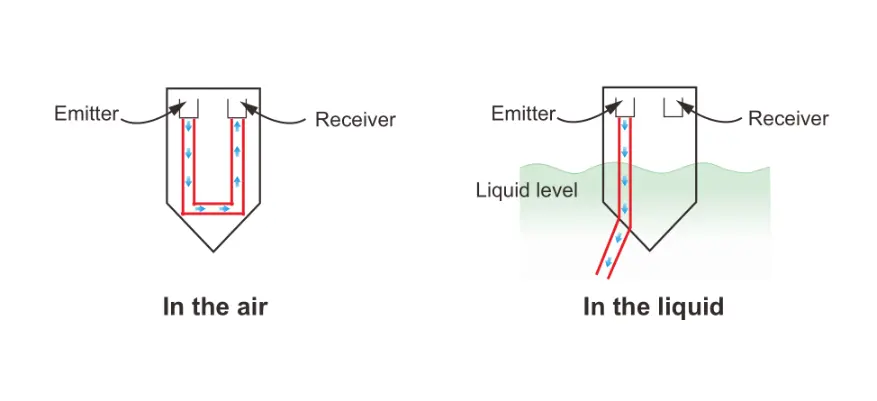
Innerhalb eines Optischer Pegelsensor ist ein unsichtbarer Lichtsender und -empfänger, Sie wirkt wie eine winzige Taschenlampe und ein Auge. In der Luft, Die Spitze des Sensors funktioniert wie ein perfekter Spiegel. Das Licht reflektiert einfach vom Inneren des Glases und kehrt direkt zum Empfänger zurück. Diese kontinuierliche Schleife von reflektierendem Licht erklärt, wie Infrarotpegel-Schalter ihre Umgebung erkennen, ohne komplexe Arbeiten zu benötigen, teure Kameras.
Wenn Flüssigkeit das Glas berührt, Die Magie geschieht. So wie ein Strohhalm in einem Becher Wasser verbogen aussieht, Flüssigkeiten verändern natürlich den Weg des Lichts. Durch das Brechungsindex-Sensorprinzip, Das umgebende Wasser erzeugt das Licht "Leck" Draußen in die Flüssigkeit, anstatt zurückzuprallen. Der Empfänger bemerkt dieses fehlende Licht und signalisiert sofort einen vollen Tank.
Warum 'keine beweglichen Teile' jahrzehntelange sorgenfreie Leistung bedeutet
Denken Sie an das Traditionelle "Ball auf einem Stock" Schwimmerschalter in einem Toilettentank. Es funktioniert einwandfrei, bis der Arm stecken bleibt oder sich verbiegt. Mechanische Reibung ist genau das, was der Vergleich zwischen Schwimmerschalter und photoelektrischem Sensor hervorhebt. Optische Sensoren basieren auf "Festkörper" Technologie – das heißt, sie haben absolut keine beweglichen Teile. Das macht sie perfekt für vibrationsintensive Umgebungen, Wie rumpelnde Motoren, wo zerbrechliche mechanische Arme leicht reißen.
Diese Sensoren bieten deutliche Vorteile für das Festkörper-Fluidniveau gegenüber älteren Designs:
- Wartung: Schwimmer können kleben oder rosten, während Festkörpersensoren vollständig versiegelt bleiben.
- Größe: Schwimmer sind sperrig, während optische Sensoren unglaublich winzig sind.
- Lebensdauer: Die Schwimmer verschleißen sich, aber optische Sensoren haben keine Reibung, die sich abbauen kann.
Zuverlässigkeit, wo es zählt: Von lebensrettender medizinischer Ausrüstung bis zur Laborautomatisierung
In Krankenhäusern, Absolute Präzision ist für die Punktmessung auf medizinischer Ausrüstung nicht verhandelbar. Im Gegensatz zu herkömmlichen mechanischen Sensoren, die durch dicke Blasen verwechselt werden, Optische Technologie ermöglicht eine perfekt schaumresistente Flüssigkeitspegelmessung. Der Sensor ignoriert einfach den luftigen Schaum, Stattdessen wartet er, bis die Flüssigkeit die glatte Glaskuppel berührt, um einen Alarm auszulösen.
Der Umgang mit gefährlichen Flüssigkeiten erfordert sorgfältige Aufmerksamkeit bei den physisch berührenden Teilen, Ein Sicherheitskonzept namens benetzte vs. nicht benetzte Materialien. Weil optische Sensoren Tough verwenden, Vollständig versiegelte Spitzen, Sie bieten hochhaltbare korrosive chemische Sensorlösungen.
Die Zukunft der Fluid Sensing: Die Wahl langfristiger Zuverlässigkeit gegenüber mechanischem Ausfall
Ersatz für sperrige mechanische Schwimmer mit Optische Flüssigkeitspegelsensoren Schafft intelligentere Geräte. Die wahren Vorteile der prismenbasierten Flüssigkeitssensorik sind einfach: winzige Größe, Keine Wartung, und absolute Präzision. Das nächste Mal, wenn du eine Kaffeemaschine kaufst, Schau in den Tank nach diesem kleinen, klaren Auge. Das Erkennen dieser berührungslosen Flüssigkeitserkennungstechnologie stellt sicher, dass Sie eine zuverlässige Maschine mit nach Hause bringen, die nie klemmt oder überläuft.