
Comprendre les capteurs ultrasoniques de niveau: Un guide
Vous êtes-vous déjà demandé à quel point les usines de fabrication sont massives, Installations municipales d’eau, et les opérations de transformation alimentaire suivent leur stockage de liquides sans envoyer constamment un technicien tremper une arène de mesure dans un réservoir? Le secret réside dans l’instrumentation industrielle avancée, plus précisément le capteur ultrasonore de niveau.
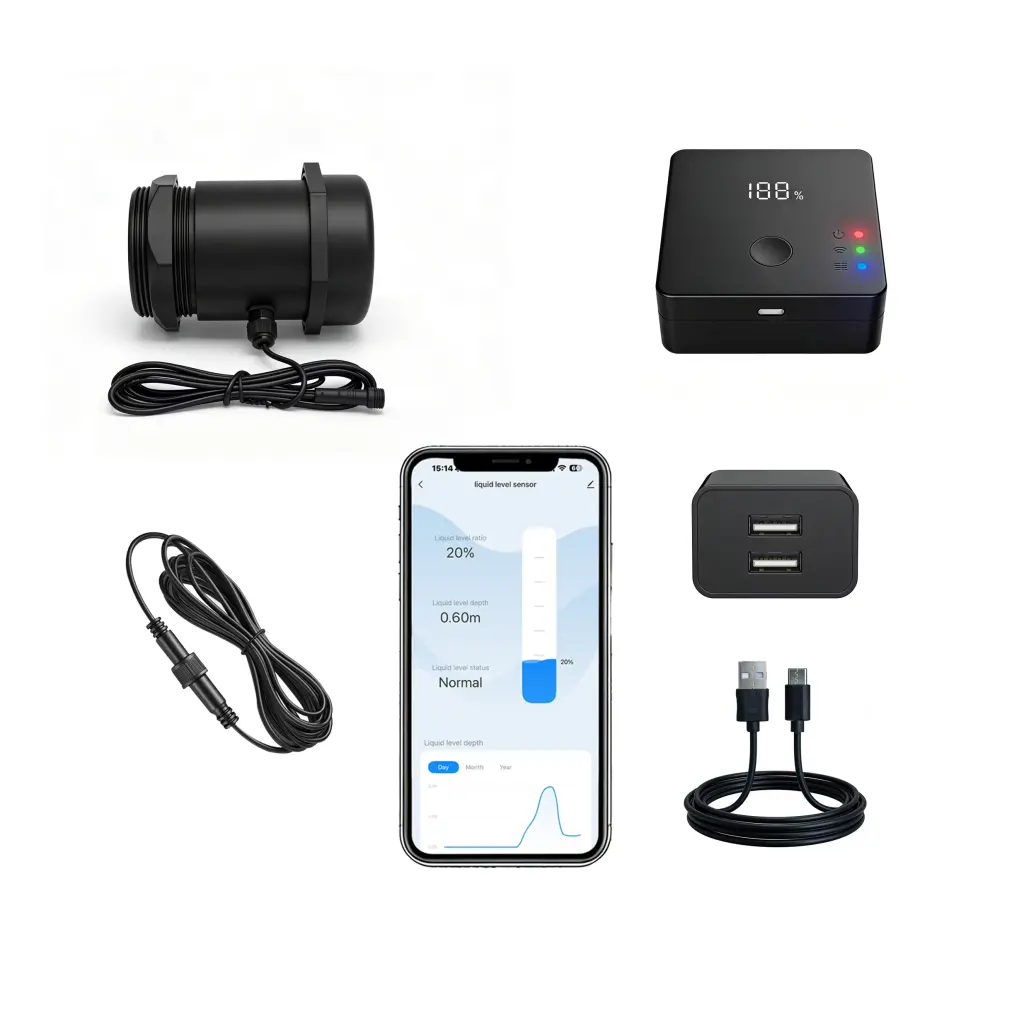
Que vous gériez des produits chimiques agressifs ou de simples eaux purifiées, Une mesure précise et continue est non négociable. Dans ce guide complet, Nous allons expliquer exactement ce que sont ces dispositifs, La science derrière leur fonctionnement, et comment les optimiser pour votre établissement.
Qu’est-ce qu’un capteur ultrasonore de niveau?
À la base, a Capteur de niveau de liquide est un instrument conçu pour surveiller et rapporter la quantité de liquide à l’intérieur d’un récipient ou d’un plan d’eau naturel. Historiquement, Les installations dépendaient de flotteurs mécaniques ou de transmetteurs de pression. Cependant, Lors de la comparaison entre capteurs sans contact et capteurs à contact, Les technologies sans contact émergent constamment comme le choix supérieur pour les applications modernes.
Parce qu’ils ne touchent jamais physiquement le liquide, Les instruments sans contact nécessitent moins d’entretien, Souffrir moins d’usure, et sont immunisés contre les propriétés corrosives des produits chimiques agressifs. A capteur ultrasonore de niveau est la norme industrielle pour la mesure des niveaux liquides sans contact. En flottant de manière sécurisée au-dessus du produit, Il permet aux opérateurs de surveiller l’inventaire en toute sécurité, Avec précision, et de manière fiable.
La Science: Comment fonctionnent les émetteurs ultrasoniques?
Si vous débutez dans le domaine de l’automatisation industrielle, Vous vous posez peut-être la question: Comment fonctionnent les émetteurs ultrasoniques? Le procédé est un mélange fascinant de physique acoustique et de synchronisation numérique précise, Principalement ancré dans le principe du temps du vol.
Voici une analyse étape par étape du processus:
Génération d’impulsions: À l’intérieur de l’appareil, La technologie avancée des transducteurs piézoélectriques convertit l’énergie électrique en ondes sonores à haute fréquence (Échographie), qui sont généralement inaudibles à l’oreille humaine.
Émission: Le capteur de niveau ultrasonique émet ces impulsions acoustiques vers le bas vers la surface du liquide.
Réflexion: Une fois que les ondes sonores atteignent la surface du liquide, ils rebondissent vers le capteur sous forme d’écho.
Calcul: Le microprocesseur intégré au capteur mesure le temps exact qu’il fallait à l’onde sonore pour descendre et revenir. Puisque la vitesse du son dans l’air est une constante connue, Le capteur calcule la distance entre le transducteur et la surface du liquide.
Cependant, Il y a un piège. La vitesse du son varie selon la température de l’air à l’intérieur du réservoir. Garantir une précision absolue, Les capteurs de haute qualité disposent d’une compensation automatique de la température. Une sonde de température intégrée ajuste constamment le calcul de la vitesse du son, S’assurer que les fluctuations environnementales ne faussent pas vos lectures de volume.
Surmonter les défis courants de mesure
Tandis que le capteur ultrasonore de niveau est très polyvalent, certaines conditions environnementales peuvent mettre en difficulté la technologie acoustique. Comprendre ces obstacles — et comment les surmonter — est essentiel pour maintenir des données précises.
Gestion des perturbations de surface
L’un des obstacles les plus courants est de mesurer des liquides avec de la mousse ou de la turbulence. Une agitation forte ou une mousse épaisse peuvent absorber ou diffuser les ondes sonores, menant à une faiblesse, perdu, ou échos erratiques. Pour atténuer cela, Les ingénieurs installent souvent un puits de refroidissement (un tuyau qui protège la surface du liquide contre la turbulence) ou utiliser un transducteur ultrasonore à basse fréquence, ce qui produit une onde acoustique plus forte capable de pénétrer la mousse légère.
Élimination des angles morts
Tout appareil ultrasonore possède un "Distance de blanking" ou bande morte — un petit espace directement sous la face du capteur où il ne peut pas recevoir un écho avec précision. Savoir comment réduire les zones mortes des capteurs est crucial pour maximiser la capacité des réservoirs. La meilleure pratique est de monter le capteur sur une colonne montante ou une buse surélevée. Cela garantit que même lorsque le réservoir est rempli à sa capacité maximale, Le liquide n’atteint jamais l’angle mort du capteur.
Éviter les faux échos
À l’intérieur d’un réservoir bondé, Les ondes sonores peuvent accidentellement rebondir sur des échelles internes, Lames agitatrices, ou les parois du réservoir. C’est là que l’optimisation de l’angle de faisceau entre en jeu. En sélectionnant un capteur avec un angle de faisceau étroit (typiquement entre 5 et 10 degrés) et en la visant avec soin, Vous vous assurez que l’impulsion sonore se propage dans un corps serré, Colonne ciblée, contourner les obstacles internes et renvoyer un signal propre.
Émetteurs ultrasoniques vs radar: Faire le bon choix
Lors de la conception ou de la modernisation des systèmes industriels de surveillance des réservoirs, Les responsables d’installation sont souvent confrontés à un choix: Émetteurs ultrasoniques vs niveau radar.
Capteurs à ultrasons: Comptez sur les ondes sonores. Ils sont très rentables, Facile à configurer, et parfait pour l’eau standard, eaux usées, et des applications chimiques douces. Cependant, ils luttent dans le vide (puisque le son ne peut pas voyager sans air) et environnements de vapeur extrêmes.
Capteurs radar: Utiliser des micro-ondes électromagnétiques. Ils ne sont pas affectés par les variations de température, Vapeurs lourdes, Vides, ou mousse épaisse. Bien qu’ils soient plus robustes dans des environnements extrêmes, Ils sont vendus à un prix plus élevé.
Pour la grande majorité des réservoirs atmosphériques standards, Un système ultrasonore offre le meilleur retour sur investissement.
Essentiel Capteur à ultrasons Guide d’installation
Une installation physique appropriée et une intégration électrique déterminent ou défait la précision de votre système. Suivez ce bref guide d’installation de capteurs ultrasonores pour des performances optimales:
Le positionnement est essentiel: Montez toujours le capteur parfaitement perpendiculaire à la surface du liquide. Évitez de la placer directement au centre d’un toit en dôme, car les formes en dôme peuvent agir comme un miroir parabolique, amplification du bruit acoustique indésirable.
Câblage: Lors du câblage de transducteurs ultrasoniques vers un API (Contrôleurs logiques programmables) Systèmes, Utilisez toujours des câbles à paires torsadées blindées. Cela évite les interférences électromagnétiques (EMI) à cause de machines lourdes qui perturbent le signal analogique de 4 à 20 mA. Assurez-vous que votre mise à la terre est solide selon le manuel du fabricant.
Configuration du système: Après que le matériel a été monté et câblé, Étalonner les appareils de niveau numériques est votre dernière étape. Vous devez saisir les dimensions du réservoir dans le logiciel du capteur, Définissant le "zéro" (vide) et "Portée" (complet) Points. Cette calibration permet à l’API de traduire la mesure brute de la distance en métriques significatives comme des gallons, Litres, ou pourcentage de capacité maximale.
L’avenir: Connectivité et automatisation
Les jours d’isolement, Le matériel peu communicatif est derrière nous. Aujourd’hui, L’intégration d’un capteur ultrasonore de niveau avec des solutions de surveillance à distance sans fil transforme le fonctionnement des industries.
Les capteurs intelligents modernes peuvent transmettre des données via le cellulaire, Wi-Fi, ou LoRaWAN en réseau direct vers des tableaux de bord cloud. Cela permet aux responsables d’installation de surveiller l’inventaire sur leur smartphone en temps réel, Recevez des alertes SMS instantanées si un réservoir risque de surcharger, et automatiser la réorganisation de la chaîne d’approvisionnement. Ces systèmes industriels de surveillance des réservoirs connectés réduisent les temps d’arrêt opérationnels, Améliorer la sécurité, et réduit drastiquement le travail manuel.
Dernières réflexions
Assurer une gestion d’inventaire fiable n’a pas besoin d’être complexe ou excessivement coûteux. En utilisant un capteur ultrasonore de niveau, Vous utilisez un Prouve, Une technologie hautement précise qui assure le bon fonctionnement de vos opérations. Que vous optimisiez vos angles de faisceau, Intégrant des réglages automatiques de température, ou câbler votre système sur un API moderne, Comprendre les bases de la mesure acoustique vous permet de construire un environnement plus sûr, Installation plus efficace.