
Braiteoir Leibhéal Leachtach Optúil Flange-Mount
Déanann HojellyTek braiteoirí leibhéil leachtach optúla suite ar flange-suite i Shenzhen do thionscadail OEM / ODM, Tógálaithe trealaimh, agus dáileoirí braiteoirí a dteastaíonn geoiméadracht gléasta saincheaptha uathu, Ábhair fhliucha, Roghanna Aschuir, agus tacaíocht réidh le honnmhairiú do na Stáit Aontaithe, TÁIMID, agus margaí na hIndia.
Cumas Braiteoir Flangge-Suite
De ghnáth roghnaítear lasc leibhéil optúil flange-suite nuair nach féidir leis an mballa umar braiteoir snáithithe a shealbhú go hiontaofa. In ionad calafort snáithithe a ghearradh, Úsáideann an umar poll imréitigh agus aghaidh flange. Coinníonn an flange an comhlacht braiteora i gcoinne an dromchla lasmuigh nó taobh istigh agus cruthaíonn gasket nó O-fáinne an séala.
Do cheannaitheoirí a dhéanann comparáid idir cineálacha gléasta, ár gcaighdeán Braiteoir Leibhéal Optúil Is féidir raon a chumrú timpeall ábhar umar, Airde a bhraitheann, Treo scoir cábla, agus aschur leictreach. Do thionscadail a bhfuil Boss miotail nó calafort tiubh snáithithe acu cheana féin, a 1/4 Rogha snáithithe NPT d'fhéadfadh sé a bheith níos oiriúnaí. Le haghaidh meáin chreimneach, trealamh bia, córais ola, nó umair dhosmálta, a 316 Comhlacht dhosmálta Is féidir athbhreithniú a dhéanamh le linn roghnú ábhair.
I measc na réimsí saincheaptha tipiciúla tá:
- Babhta, cearnach, nó cruthanna flange saincheaptha
- Dhá pholl, trí pholl, ceithre pholl, nó patrúin bolt atá sainithe ag an gcustaiméir
- Dearadh séalaithe gasket cothrom nó O-fáinne
- Plaisteacha, PTFE, 316 cruach dhosmálta, nó roghanna ábhair teagmhála gloine
- NPN, PNP, Ní hea, NC, nó cumraíocht aschuir analógach nuair is gá
- Cábla, cónascaire, fad na sreinge, agus treo scoir
- Taobhbhalla, bun, Ón mbarr anuas, nó gléasta painéal trealaimh
Fadhb gléasta a réitíonn an dearadh seo
Is é an chúis is mó le braiteoir leibhéal leachtach optúil atá suite ar flange-suite a roghnú ná teoiric a bhrath; Is iontaofacht suiteála é. Tá go leor umair déanta as plaisteach tanaí, bileog dhosmálta, aicrileach, alúmanam, nó cásálacha múnlaithe ina bhfuil snáitheanna inmheánacha lag, costasach, nó dodhéanta a mheaisíniú. Má chuirtear braiteoir snáithithe isteach i mballa tanaí, D'fhéadfadh droch-shéalaithe a bheith ag an suiteálaí, scoilteadh balla, Stripping snáithe, claonadh braiteora, nó airde braite neamh-chomhsheasmhach.
Scaipeann mount flange an t-ualach meicniúil ar fud dromchla níos leithne. Soláthraíonn an poll umar imréiteach don rinn braite, cé go rialaíonn an flange ailíniú agus comhbhrú. Fágann sé seo go bhfuil an dearadh úsáideach do thaiscumair balla tanaí, umair uisce, umair cuisnithe, coimeádáin ola, trealamh ceallraí, trealamh glantacháin, Fearais bheaga, agus modúil OEM nuair nach bhfuil cnagadh praiticiúil.
Tugann an flange smacht níos fearr don cheannaitheoir freisin ar thionól arís agus arís eile. I dtáirgeadh, Is féidir le hoibreoirí an patrún poll céanna a dhruileáil nó a mhúnlú, Cuir an gasket, Cuir isteach an braiteoir, Déan na scriúnna nó an cnó a dhéanamh níos doichte, agus airde an phointe braite a dhearbhú. Tá sé seo níos éasca a chaighdeánú ná balla umar tanaí a chnagadh de láimh.
Méid Flange agus Roghnú Patrún
Caithfidh an flange trí rud a mheaitseáil: an balla umar, an dromchla séalaithe, agus an suíomh braite. Sábhálann flange beag spás, ach soláthraíonn sé níos lú limistéar gasket. Tugann flange níos mó tacaíocht séalaithe níos fearr, ach teastaíonn níos mó spáis uaidh ar bhalla an umair. Braitheann an rogha ceart ar thiús umar, limistéar árasán atá ar fáil, tonnchrith, cineál leachtach, agus modh cóimeála.
Le haghaidh umair dhlúth, D'fhéadfadh flange babhta mion a bheith go leor má tá an balla cothrom agus má tá an brú leachtach íseal. Le haghaidh painéil trealaimh nó taiscumair mhúnlaithe, Is féidir le flange dhá pholl nó ceithre pholl cosc a chur ar rothlú le linn láimhseáil cábla. Le haghaidh tonnchrith níos airde nó umair níos mó, De ghnáth tugann aghaidh flange níos leithne agus patrún scriú níos láidre cobhsaíocht níos fearr.
Ba chóir go sainmhíneodh an líníocht flange an poll lárnach braiteora, Flange trastomhas taobh amuigh, Cainníocht poll bolt, ciorcal nó spásáil bolt, Méid an scriú, limistéar teagmhála gasket, agus imréiteach imeachta cábla. Má tá patrún poll ag an umar cheana féin, Is féidir lenár bhfoireann athbhreithniú a dhéanamh ar an líníocht agus an dearadh flange a oiriúnú in ionad iallach a chur ar an gceannaitheoir an umar a athdhearadh.
Tábla Toise Flange le haghaidh Athbhreithniú RFQ
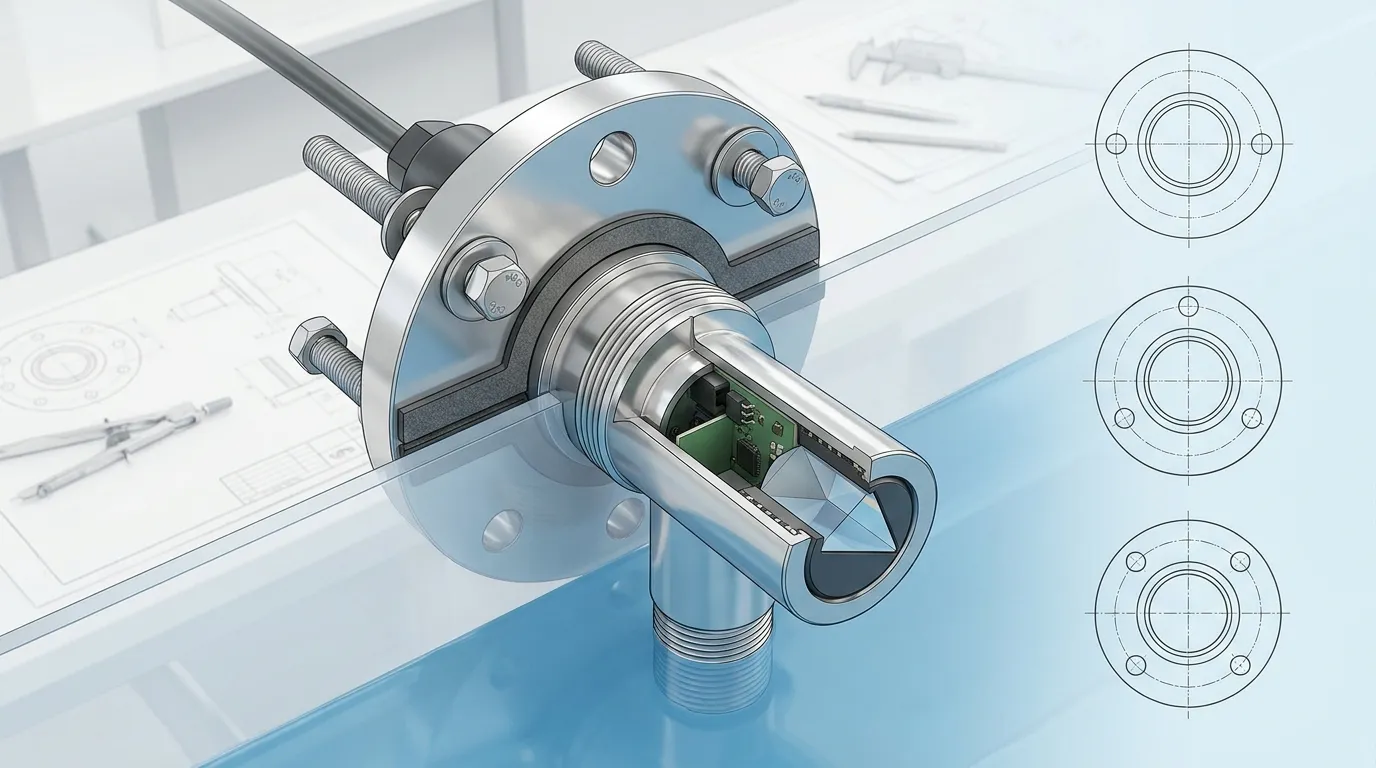
| Mír Flange | Cad atá le Dearbhú | Cén fáth a mbaineann sé le |
|---|---|---|
| Cruth flange | Babhta, cearnach, ubhchruthach, nó próifíl saincheaptha | Rialaíonn limistéar séalaithe atá ar fáil agus oiriúnach balla umar |
| Poll imréitigh lárnach | Poll don tip braite agus don chorp braiteora | Cuireann cosc ar chuimilt, claonadh, nó doimhneacht iontrála mícheart |
| Flange taobh amuigh de mhéid | An spás uasta a cheadaítear ar bhalla an umair | Cinntíonn nach mbuaileann an flange easnacha, coirnéil, Táthú, nó codanna in aice láimhe |
| Patrún bolt | Dhá pholl, trí pholl, ceithre pholl, nó spásáil saincheaptha | Cuireann sé cosc ar rothlú agus rialaíonn comhbhrú gasket |
| Méid poll bolt | Meaitseáil le rogha scriú nó ceanglóir | Seachnaíonn gléasadh scaoilte nó tionól éigeantach |
| Suíochán gasket | Aghaidh gasket cothrom nó groove O-fáinne | Cinneann sé modh séalaithe agus rialú comhbhrúite |
| Teilgean braiteora | Fad ó aghaidh flange go pointe braite | Socraigh an airde lasctha leibhéal leachtach |
| Treo scoir an chábla | Díreach, Scoir Taobh, nó sainmhínithe ag an gcustaiméir | Seachnaíonn lúbthacht cábla i gcoinne an umar nó an imfhálú |
| Raon tiús an bhalla | Dearbhaithe ó líníocht umar nó sampla | Cuireann cosc ar chlampáil bhocht, rannpháirtíocht neamhleor, nó mí-ailíniú braiteora |
| Treoshuíomh | Taobh, bun, Barr, nó sliabh uillinneach | Bíonn tionchar aige ar dhraenáil, tógáil iarmhar, agus rochtain ar sheirbhísí |
Roghanna Séalaithe Gasket agus O-Ring
Níl mount flange iontaofa ach amháin má tá an séala comhoiriúnaithe le dromchla an umair agus leacht. Tá gaiscéid árasán úsáideach nuair a bhíonn leathan ag an mballa umar, limistéar teagmhála réidh. Is minic a bhíonn O-fáinní is fearr nuair a bhíonn groove rialaithe ag an flange agus éilíonn an dearadh comhbhrú in-athdhéanta.
Ba chóir go roghnódh an leacht ábhar séala, Modh glantacháin, raon teochta, agus ábhar umar. Is minic a mheastar silicone le haghaidh séalaithe uisce agus trealaimh ghinearálta. Roghnaítear FKM go coitianta le haghaidh ola, breosla, agus ceanglais friotaíochta ceimiceacha níos airde. Féadfar athbhreithniú a dhéanamh ar EPDM do chórais uiscebhunaithe. Is féidir réitigh séalaithe a bhaineann le PTFE a mheas nuair a bhíonn comhoiriúnacht cheimiceach níos tábhachtaí ná comhbhrú leaisteacha.
Is gnách go mbíonn na modhanna teip fíor simplí: tá an gasket ró-chrua, níl an balla cothrom, tá na scriúnna níos doichte go míchothrom, ní rialaítear an groove O-fáinne, nó tá an braiteoir suite ar rannóg umar cuartha gan limistéar séalaithe leordhóthanach. Le haghaidh obair OEM, Is é an cur chuige is sábháilte ná athbhreithniú a dhéanamh ar an líníocht umar, dromchla séalaithe, leagan amach scriú, agus comhoiriúnacht leachtach roimh tháirgeadh samplach.
Treoirlínte maidir le Tiús agus Treoshuíomh Balla
Le haghaidh umair balla tanaí, Ba chóir an braiteoir a shuiteáil san áit a bhfuil an balla cothrom agus láidir go leor chun comhbhrú a shealbhú. Má lúbann an balla nuair a bhíonn na scriúnna níos doichte, D'fhéadfadh an séala scaoileadh le himeacht ama. Má tá an balla ró-tiubh don teilgean braiteora roghnaithe, B'fhéidir nach suífidh an pointe braite ag an leibhéal riachtanach taobh istigh den umar.
Tá gléasadh taobh-bhalla coitianta le haghaidh braite ardleibhéil / íseal toisc go leagann sé airde lasctha soiléir. Is féidir le gléasadh bun oibriú le haghaidh braite sceite nó monatóireacht ar leibhéal íosta, Ach éilíonn sé athbhreithniú séalaithe níos láidre toisc go bhféadfadh brú agus iarmhar leachtach tionchar a imirt ar an limistéar gléasta. Is féidir gléasadh ón mbarr anuas a úsáid nuair nach gceadaíonn an balla umar druileáil taobh, ach caithfear fad an teilgean agus an ródú cábla a sheiceáil go cúramach.
Seachain an flange a chur ar choirnéil cuartha, seams weld, plaisteach ribbed, dromchlaí múnlaithe míchothrom, nó réimsí nach féidir le huirlisí na ceanglóirí a dhéanamh níos doichte go cothrom. Is tionól meicniúil é braiteoir flange-suite ar dtús; Braitheann an fheidhmíocht braite go mór ar shuiteáil chobhsaí.
5-Próiseas OEM / ODM
- Fiosrúchán - Seol an líníocht umar, cineál leachtach, Treo gléasta, airde spriocleibhéal, agus an t-aschur riachtanach.
- Sonraíocht agus saincheaptha - Dearbhaímid cruth flange, patrún bolt, Dearadh gasket / O-fáinne, Ábhair fhliucha, cábla, agus aschur leictreach.
- Sampla — Is féidir sampla a ullmhú le haghaidh feistiú umar, Seiceáil Séalaithe, agus bailíochtú leictreach.
- Táirgeadh agus QC — Seiceálann an mhonarcha comhsheasmhacht an chóimeála, sreangú, Feidhm aschuir, agus cuma roimh loingsiú.
- Loingseoireacht — Déantar orduithe a phacáil lena n-onnmhairiú, le cumarsáid trí WhatsApp nó ríomhphost le haghaidh nuashonruithe tionscadail.
Ceanglais a dhearbhú sula n-ordaítear
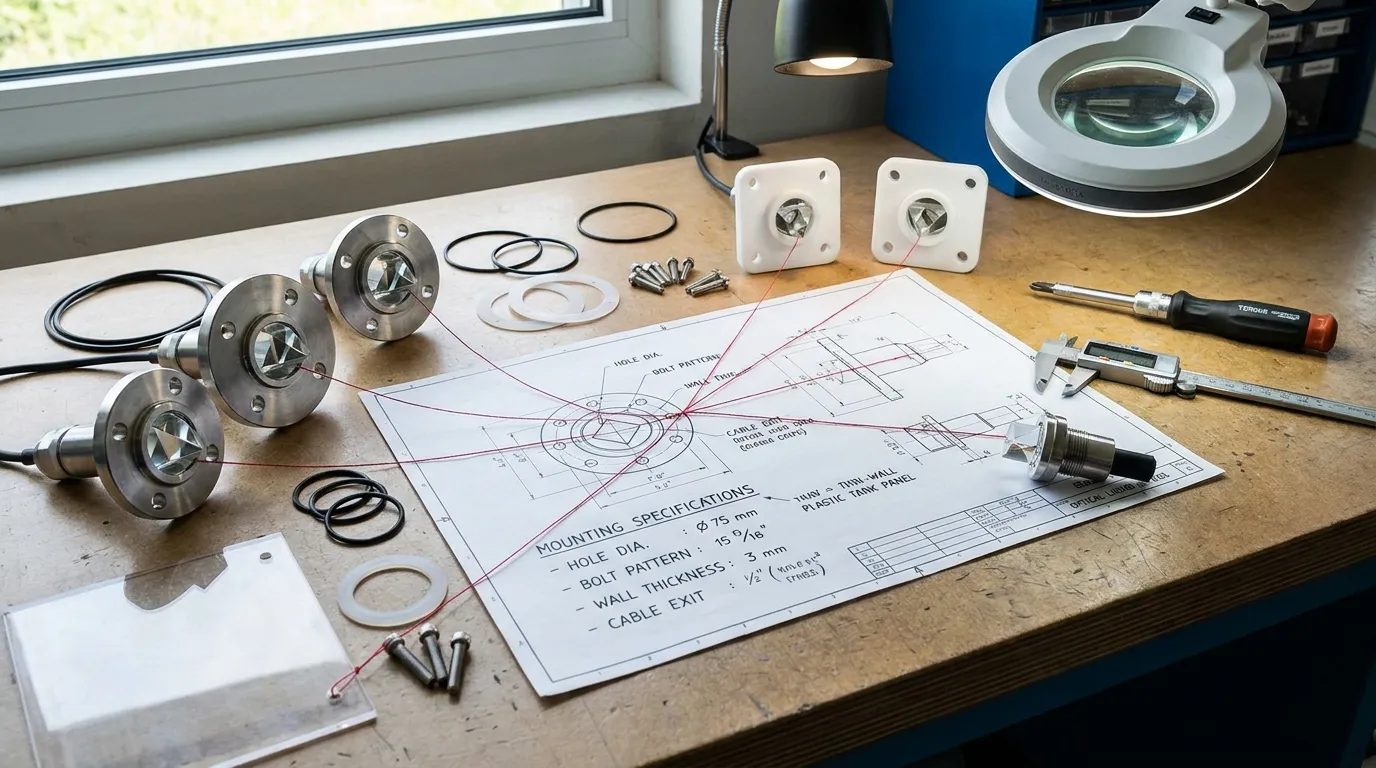
Sula n-ordaítear braiteoir leibhéal leachtach optúil flange-mount, na sonraí seo a dhearbhú:
- Ábhar umar agus tiús balla
- Méid dromchla gléasta cothrom
- Airde braite riachtanach ó bhun an umair
- Trastomhas poll nó gearradh umar atá ann cheana féin
- Patrún bolt nó suíomhanna scriú atá ar fáil
- Cineál leachtach: uisce, ola, cuisnithe, breosla, ceimiceach, nó sreabhán glantacháin
- Rogha séala: gasket comhréidh nó O-fáinne
- Ábhar comhlacht fliuch: PSU, PTFE, 316 cruach dhosmálta, nó dearadh teagmhála gloine
- Cineál aschuir: NPN, PNP, NÍL/NC, nó ceanglas analógach
- Voltas soláthair a theastaíonn ón mbord rialaithe
- Treo gléasta: taobhbhalla, bun, Ón mbarr anuas, nó uilleach
- Fad cábla, cónascaire, agus treo imeachta cábla
- Gá le brandáil OEM, Rialú líníochta, nó pacáistiú saincheaptha
Do cheannaitheoirí a dteastaíonn tagairt táirge roghnaithe iomlán uathu, an táirge braiteoir leibhéal optúil Is féidir leathanach a úsáid mar phointe tosaigh roimh shaincheapadh flange-shonrach.
Flange Mount vs Sliabh Snáithithe
| Pointe Roghnúcháin | Braiteoir Mount Flange | Braiteoir Snáithithe |
|---|---|---|
| An cineál umar is fearr | Umar balla tanaí nó neamh-snáithithe | Balla tiubh, Boss, nó calafort snáithithe |
| Modh suiteála | Poll imréitigh móide séala flange | Poll snáithithe nó feistiú snáithithe |
| Modh séalaithe | Gasket nó O-fáinne faoi flange | Séalaithe snáithe, O-fáinne, nó dearadh snáithe |
| Rialú rothlaithe | Is féidir le patrún bolt cosc a chur ar chasadh | Is féidir leis an braiteoir rothlú le linn géarú |
| In-atrialltacht OEM | Maith le haghaidh patrúin múnlaithe nó druileáilte | Maith nuair a rialaítear iontrálacha snáithithe |
| Modhnú ag teastáil | Patrún poll agus scriú | Calafort snáithithe nó próiseas tapála |
| An cás úsáide is fearr | Taiscumair phlaisteacha, painéil, umair miotail tanaí | Umair mhiotail meaisínithe nó feistis píopa |
Cén fáth a n-oibríonn sé le HojellyTek
Is monaróir braiteoir leibhéal optúil agus leachtach Shenzhen é HojellyTek le R intí&Tacaíocht D agus OEM / ODM. Díríonn ár bhfoireann ar tháirgí braite optúla fótaileictreach, Struchtúir gléasta saincheaptha, Roghnú Ábhar Fliuch, agus tionscadail onnmhairithe do mhonaróirí agus dáileoirí trealaimh.
Le haghaidh córais nasctha, Is féidir comhtháthú Tuya / Smart Life a phlé freisin nuair a éilíonn an tionscadal sonraí braiteora a bheith ag obair le crua-earraí monatóireachta cliste. Do cheannaitheoirí tionsclaíocha agus OEM, Tacaímid le hathbhreithniú líníochta, Bailíochtú samplach, agus plé cumraíochta roimh tháirgeadh.
Ceisteanna CCanna
An féidir braiteoir leibhéal leachtach optúil mount flange a shuiteáil gan snáitheanna inmheánacha a thapú?
Tá. Tá braiteoir leibhéal leachtach optúil mount flange deartha d'umair ina bhfuil sé deacair nó neamhiontaofa snáitheanna inmheánacha a thapú. De ghnáth úsáideann an umar poll imréitigh, aghaidh flange, agus gasket nó séala O-fáinne.
Cén patrún flange ba chóir dom a roghnú?
Roghnaigh bunaithe ar spás umar, limistéar séalaithe, agus riachtanais frith-uainíochta. Oireann patrúin dhá pholl do dhearaí dlúth, cé go dtugann patrúin trí pholl nó ceithre pholl ailíniú níos láidre agus comhbhrú gasket níos cothroime.
Ar chóir dom gasket nó O-ring a úsáid?
Bain úsáid as gasket cothrom le haghaidh dromchlaí cothroma leathana agus O-fáinne nuair is féidir leis an flange groove rialaithe a áireamh. Ba chóir go mbeadh an t-ábhar séala ag teacht leis an leacht, teocht, Modh glantacháin, agus ábhar umar.
An féidir an braiteoir a shuiteáil ar bhalla umar cuartha?
Ní mholtar é mura bhfuil an flange agus an gasket deartha don dromchla sin. Tugann limistéar gléasta cothrom comhbhrú níos fearr agus riosca sceitheadh níos ísle.
An féidir liom gléasta flange a úsáid le haghaidh umair ola nó cuisnithe?
Tá, ach caithfear na hábhair fhliucha agus an t-ábhar séala a sheiceáil. Le haghaidh ola, cuisnithe, breosla, nó ceimiceáin, Comhroinn na sonraí leachtacha ionas gur féidir leis an mhonarcha athbhreithniú a dhéanamh ar chomhoiriúnacht ábhar coirp agus gasket.
Cén t-eolas ba chóir dom a sheoladh le haghaidh luachan?
Seol an líníocht umar nó an grianghraf, Tiús Balla, méid an phoill, Treoshuíomh gléasta, Airde a bhraitheann, cineál leachtach, Riachtanas aschuir, fad cábla, agus úsáid ordaithe ionchasach. Is féidir lenár bhfoireann dearadh oiriúnach flangge-suite a mholadh ansin.
Iarratas ar luachan
Teastaíonn braiteoir leibhéal optúil atá suite ar flange-suite le haghaidh umar balla tanaí nó neamh-snáithithe? Déan teagmháil le HojellyTek trí WhatsApp nó ríomhphost le do líníocht umar, cineál leachtach, Treo gléasta, agus riachtanas aschuir. Déanfaidh ár bhfoireann athbhreithniú ar mhéid an flange, Modh séalaithe, Rogha ábhair, agus cumraíocht shamplach do do thionscadal.


