
Braiteoir Leibhéal Leachtach Optúil Gloine
Do cheannaitheoirí a dhéanann comparáid idir gloine, plaisteach, PTFE, agus dearaí braiteoir optúla dhosmálta, Míníonn an leathanach seo an rogha ábhair, Páirteanna fliucha, Séalaithe, Breithnithe Teochta, teorainneacha turraing theirmeach, glanadh, Roghanna Aschuir, agus sonraí RFQ ag teastáil sula n-ordaítear.
Cumas Braiteoir Optúil Gloine
Úsáideann ár braiteoirí leibhéal optúla gloine-priosma braiteoir fótaileictreach chun a bhrath an bhfuil an barr priosma san aer nó báite i leacht. Taobh istigh den braiteoir, seolann LED infridhearg solas isteach sa phriosma. I riocht tirim, Frithchaitear an solas go hinmheánach agus filleann sé ar an bhfóta-trasraitheoir. Nuair a chlúdaíonn leacht an priosma, Athraíonn an coinníoll athraonta, mar sin filleann níos lú solais ar an nglacadóir. Ansin athraíonn an ciorcad an t-aschur.
Ag brath ar an tionscadal, Is féidir an braiteoir a chumrú le haghaidh:
- Braite pointe-leibhéal le haghaidh leibhéal leachtach ard nó íseal
- Loighic lasctha tirim-go-fliuch nó fliuch-go-tirim
- Struchtúir braite gloine-tipped nó priosma gloine
- Cruach dhosmálta, PTFE, PSU, nó roghanna ábhair tithíochta eile
- NPN, PNP, Brazzers físeán catagóir Inexperienced, Déagóirí, Seapáinis, Aziatochki, Téalainnis, Físeán HD ar a dtugtar Téalainnis Cailín Kim watch gan chlárú sa HD
- Aschur lasc digiteach nó plé aschur analógach do thionscadail leibhéal leanúnach
- Snáithithe, suite ar umar, suite ar an taobh, nó suiteáil OEM saincheaptha
- Cábla, cónascaire, nó foirceannadh sreang luaidhe pota
- Saincheaptha OEM / ODM do mhonaróirí trealaimh
Má theastaíonn tagairt ghinearálta uait sula roghnaíonn tú an leagan gloine, féach ar ár Braiteoir Leibhéal Optúil Forbhreathnú.
Cén fáth a n-úsáidtear gloine le haghaidh meáin chrua agus ardteochta
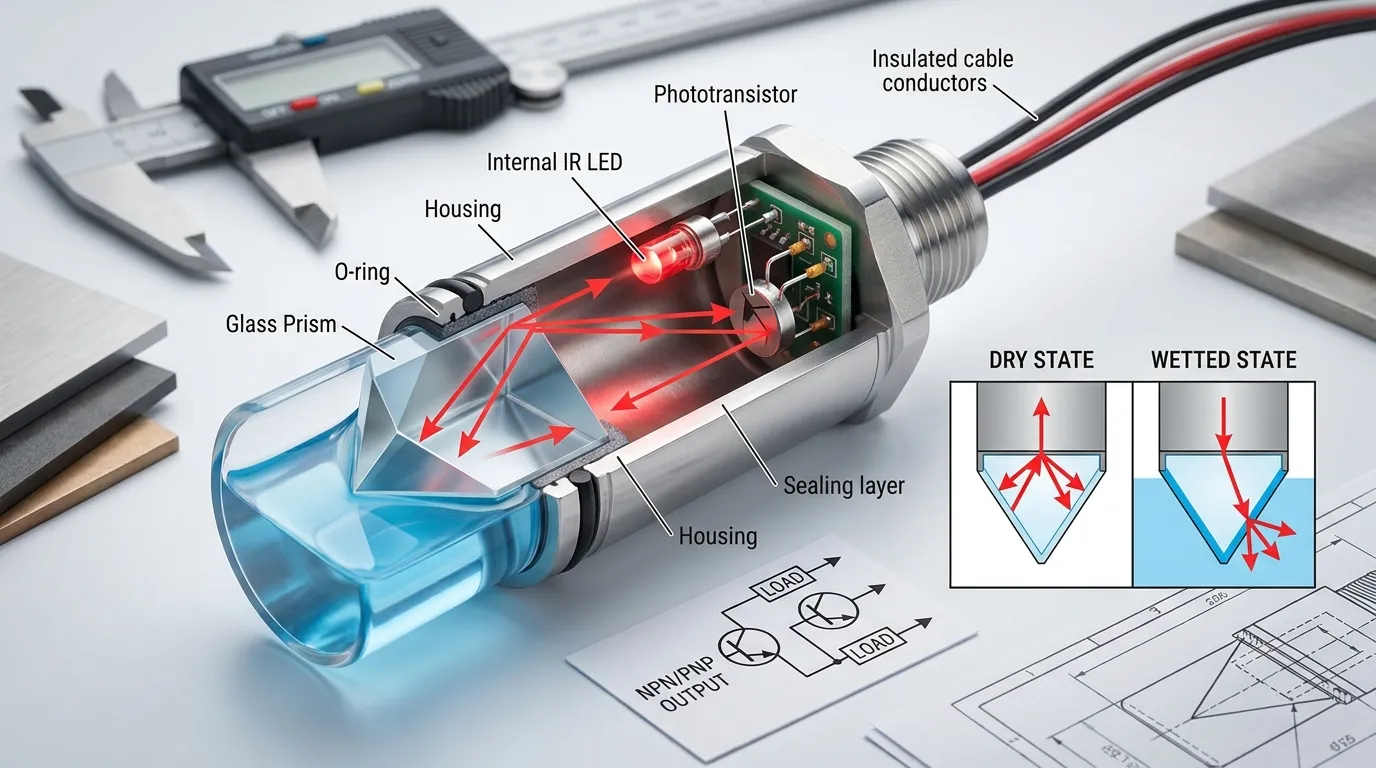
Roghnaítear gloine nuair a chaithfidh an barr braite fanacht cobhsaí go optúil i leacht a d'fhéadfadh a bheith ró-ionsaitheach, Ró-Te, nó ró-scríobach do phriosma plaisteach caighdeánach. Ní hamháin go bhfuil an luach friotaíocht ceimiceach. Is é an fíorbhuntáiste ná an meascán de shoiléireacht optúil, cruas dromchla, cobhsaíocht tríthoiseach, agus cleanability.
Friotaíocht Ceimiceach i Leachtanna Ionsaitheacha
In umair cheimiceacha, córais ghlantacháin, láimhseáil tuaslagóra, trealamh plating, agus coimeádáin phróisis thionsclaíocha, Tá an barr braiteora nochtaithe go díreach don sreabhán. Is féidir le priosmaí plaisteacha ionsú, swell, soften,, Mídhaite, nó craze nuair a bhíonn siad nochtaithe do thuaslagóirí áirithe nó do cheimiceáin ionsaitheacha áirithe. Soláthraíonn leid braite gloine dromchla optúil níos cobhsaí do go leor leachtanna crua.
Cén dóigh faoin spéir a ...?, Níl gloine uilíoch. Ní mór don cheannaitheoir an leacht cruinn a dhearbhú fós, tiúchan, teocht, gníomhaire glantacháin, agus am nochta. Is féidir le ceimiceáin áirithe ionsaí a dhéanamh ar ghloine, agus d'fhéadfadh an córas séalaithe timpeall an ghloine a bheith ina phointe lag fíor mura ndéantar é a mheaitseáil leis an leacht.
Friotaíocht abrasion agus cobhsaíocht dromchla
Tá braiteoir priosma gloine úsáideach nuair a bhíonn cáithníní sa leacht, Púdair, rianta sciodair, iarmhar glantacháin, nó sreabhán ag gluaiseacht a fhéadann plaistigh níos boige a scríobadh. Is féidir le priosma scríobtha solas a scaipeadh agus athrú éagobhsaí a chur faoi deara, go háirithe in umair bheaga ina dtrasnaíonn an leibhéal an pointe braite arís agus arís eile.
Tá cruas dromchla níos fearr ag gloine ná leideanna optúla plaisteacha coitianta, ionas gur féidir leis cosán optúil níos glaine a choinneáil níos faide i dtimpeallachtaí scríobach nó glanta go minic. Fós, Is féidir le gloine sliseanna nó scoilteadh má bhuaileann uirlisí crua é, páirteanna miotail, nó tionchar meicniúil láidir le linn suiteála.
Soiléireacht optúil a sheasann in aghaidh fadhbanna sciath
Braitheann braiteoirí leibhéil optúla ar dhromchla priosma soiléir. Olaí, Breiseáin Greamaitheacha, Ceimiceáin criostalaithe, scannán bitheolaíoch, scála, nó is féidir le hiarmhar triomaithe aon athrú braiteoir optúil a dhéanamh go mícheart. Cuidíonn gloine toisc go bhfuil sé réidh, Tá dromchla crua níos éasca a ghlanadh agus a iniúchadh ná go leor ábhar plaisteach.
Le haghaidh leachtanna a fhágann scannán trom, Ba chóir an braiteoir a shuiteáil áit ar féidir le sreabhadh an barr a ní go nádúrtha, ní i gcúinne marbh. Má tá sciath tiubh ag an umar, cúr, nó criostalú, Ba chóir go n-áireofaí minicíocht glantacháin agus iompar iarmhar sa RFQ ionas gur féidir leis an mhonarcha cruth barr oiriúnach agus suíomh gléasta a mholadh.
Caoinfhulaingt Ardteochta vs Priosmaí Plaisteacha
Is minic a roghnaítear gloine le haghaidh leachtanna teochta níos airde toisc go gcoinníonn sé a chruth agus a chobhsaíocht optúil níos fearr ná go leor plaistigh. I gcórais uisce téite, Trealamh ola te, umair phróisis, agus meaisíní glantacháin tionsclaíocha, Is féidir le priosmaí plaisteacha a mhaolú, dífhoirmiú, Mídhaite, nó sruth i bhfeidhmíocht.
Le haghaidh tionscadail teochta níos déine, Déan comparáid idir ár braiteoir optúil ardteochta Roghanna. Ba chóir go gcuirfeadh ceadú teochta san áireamh i gcónaí an braiteoir iomlán, ní hamháin an ghloine. An tithíocht, cábla, séala, potaí, cónascaire, agus caithfidh leictreonaic a mheaitseáil leis an bhfíor-thimpeallacht oibriúcháin freisin.
Ná déan neamhaird ar theorainneacha turraing theirmeach
Is féidir le gloine teas a láimhseáil níos fearr ná go leor priosmaí plaisteacha, Ach is féidir le hathrú teochta tobann damáiste a dhéanamh dó fós. D'fhéadfadh turraing theirmeach tarlú nuair a dhéantar barr braiteora te a shruthlú le huisce fuar, nuair a líontar braiteoir fuar go tobann le leacht te, nó nuair a bhíonn timthriallta glantacháin ag athrú teocht an leachtach go tapa.
Tá sé seo difriúil ó ghnáththeocht oibriúcháin. D'fhéadfadh braiteoir a bheith oiriúnach do leacht ardteochta seasmhach ach fós i mbaol má bhíonn turraing tobann te-go-fuar nó fuar-go-te ag an rinn. Le haghaidh braiteoirí leibhéal optúla gloine, Ba chóir do cheannaitheoirí cur síos a dhéanamh ar thimthriallta téimh, timthriallta glantacháin, teocht líonta umar, agus coinníollacha níocháin sula gceadaítear.
Cineál Gloine Fhliuchaithe, Séalaithe, agus Ábhar Coirp
Ní hamháin "gloine" é braiteoir optúil gloine iontaofa. Ní mór athbhreithniú a dhéanamh ar an struchtúr fliuch iomlán.
Leid Braite Gloine nó Priosma Gloine
D'fhéadfadh an chuid ghloine a bheith ina tip beag optúil, priosma múnlaithe nó meaisínithe, nó eilimint ghloine atá comhtháite i gcorp dhosmálta. Is é an príomhriachtanas ná go bhfanann an cosán optúil soiléir agus cobhsaí ag an bpointe braite. Ba chóir do cheannaitheoirí a dhearbhú an bhfuil an ghloine nochtaithe go díreach do leacht agus an dtéann an leacht i dteagmháil leis an rinn nó le codanna breise den tionól.
Roghanna Ábhair Tithíochta
I measc na roghanna tithíochta coitianta tá:
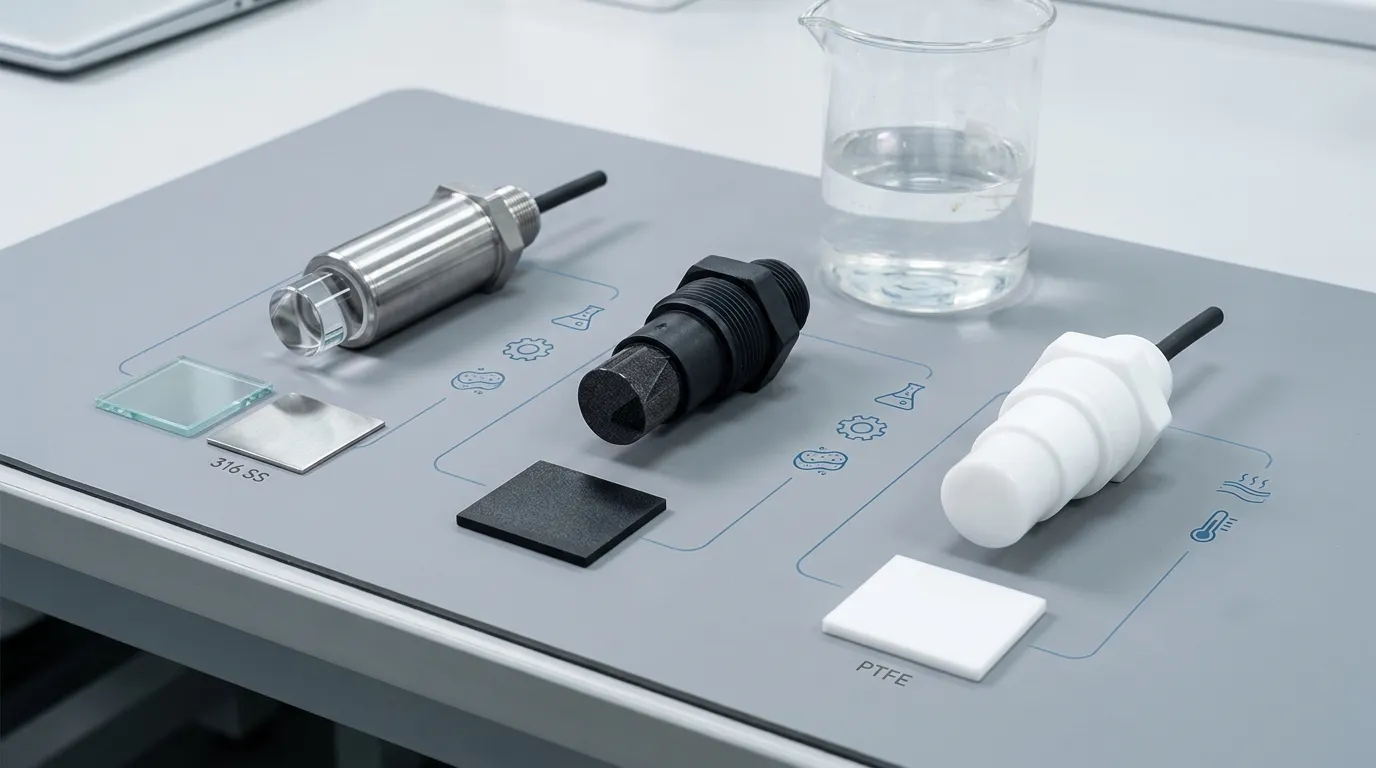
- 316 cruach dhosmálta le haghaidh neart, Gléasta snáithithe, olaí, breoslaí, Leachtanna tionsclaíocha, agus go leor timpeallachtaí ceimiceacha
- PTFE d'iarratais an-chreimneach nuair is fearr comhoiriúnacht fluoropolymer
- PSU nó plaisteach innealtóireachta d'iarratais thionsclaíocha agus fearais ar chostas níos ísle
- Tip gloine le comhlacht miotail áit a bhfuil soiléireacht optúil agus neart meicniúil ag teastáil
Do thionscadail chomhlacht miotail, Déan athbhreithniú ar ár 316 Braiteoir optúil dhosmálta Roghanna. Maidir le meáin chreimneach ina dteastaíonn cosaint fluoropolymer ón struchtúr fliuch ar fad, Déan comparáid idir ár Braiteoir optúil PTFE.
Séalaithe agus Potáil
Is minic gurb é an séala an pointe roghnúcháin is tábhachtaí. Fiú nuair a bhíonn an barr gloine comhoiriúnach, an O-fáinne, greamaitheach, cumaisc potála, seaicéad cábla, nó d'fhéadfadh go dteipfeadh ar chónascaire má tá sé nochtaithe don leacht nó don teocht mhícheart. Ba chóir RFQ maith a dhearbhú:
- Cibé an bhfuil an braiteoir suiteáilte ón taobh istigh nó ón taobh amuigh den umar
- Cibé an bhfuil an séala tumtha go leanúnach nó nach bhfuil ach splancscáileán nochta
- Cibé an bhfuil brú nó folús ann
- Cibé an dtéann ceimiceáin ghlanadh i dteagmháil leis an gcábla nó an barr amháin
- Cibé an leathnaíonn an t-ábhar umar le linn téimh
- Cibé an bhfuil tonnchrith nó strus meicniúil i láthair
Gléasta, Aschur, agus Roghanna Comhtháthaithe
Is gnách go n-úsáidtear braiteoirí leibhéal optúla gloine mar lasca dlúth pointe-leibhéal. Is féidir iad a shuiteáil trí bhalla umar, Port snáithithe, Flange, lúibín, nó gné umar múnlaithe OEM. Caithfidh an suíomh gléasta ligean don phriosma teagmháil a dhéanamh leis an leacht go glan gan boilgeoga aeir a ghabháil.
Le haghaidh aschur rialaithe, Is gnách go n-iarrann ceannaitheoirí athrú NPN nó PNP le haghaidh PLCanna, Boird rialaithe, caidéil, aláraim, agus córais líonta. Is féidir loighic aschuir a roghnú go minic de réir cibé an bhfuil comhartha ag teastáil ón gcóras nuair a bhíonn an barr fliuch nó tirim. Le haghaidh tionscadail ar leibhéal leanúnach, ba chóir aschur analógach ar nós 4-20 mA a phlé ar leithligh toisc go dteastaíonn struchtúr braite difriúil uaidh ná lasc optúil simplí pointe-leibhéal.
Sula n-ordaítear, Voltas soláthair a dhearbhú, Cineál Aschuir, fad cábla, cónascaire, snáthaid, Treo gléasta, Tiús Balla Umar, agus cibé an gcaithfidh an braiteoir teip a bheith sábháilte i ndálaí ardleibhéil nó ísealleibhéil.
Gloine vs Plaisteacha vs Braiteoirí Optúla PTFE
| Rogha ábhair | Is fearr a oireann | Láidreachtaí | Teorainneacha le seiceáil |
|---|---|---|---|
| Leid optúil gloine / Priosma | Crua, te, scríobach, nó leachtanna a ghlanadh go minic | Soiléireacht optúil mhaith, dromchla crua, glanadh níos éasca, cobhsaíocht ardteochta níos fearr ná go leor plaistigh | Turraing theirmeach, damáiste tionchair, Comhoiriúnacht cheimiceach gloine, Comhoiriúnacht Séala |
| Priosma optúil plaisteach | Uisce ginearálta, fearais, umair dhlúth, Dearaí OEM ar chostas níos ísle | Costas íseal, éadrom, Éasca le saincheapadh, Oiriúnach do go leor leachtanna caighdeánacha | Friotaíocht ceimiceach agus abrasion níos ísle, caoinfhulaingt teasa níos ísle, discoloration nó swelling féideartha |
| Braiteoir optúil PTFE | Ceimiceáin chreimneach láidir agus riachtanais éilitheacha ábhar fliuch | Friotaíocht ceimiceach den scoth do go leor meán ionsaitheach, fuinneamh dromchla íseal, Iompar maith frith-bata | Costas níos airde, teorainneacha dearaidh mheicniúla, Ní mór struchtúr optúil agus séalaithe a dhearbhú |
| Gléamar + 316 Comhlacht dhosmálta | Olaí, breoslaí, trealamh tionsclaíoch, suiteáil snáithithe ard-neart | Comhlacht láidir, Leid optúil glan, gléasadh tionsclaíoch láidir | Comhoiriúnacht miotail, Riosca galbhánach / creimeadh, Ábhar Séalaithe, Suiteáil chasmhóiminte |
Seicliosta a Oiriúnú Sula sonraíonn tú Gloine
Is iarrthóir láidir é braiteoir optúil priosma gloine má mheaitseálann an chuid is mó de na pointí seo le d'iarratas:
- Tá an leacht ionsaitheach go ceimiceach le leideanna plaisteacha coitianta
- Caithfidh an braiteoir oibriú i leacht téite nó in aice le próiseas ardteochta
- Tá cáithníní sa mheán, iarmhar, nó timthriallta glantacháin a d'fhéadfadh plaisteach a scríobadh
- Teastaíonn cuimilt rialta nó glanadh ceimiceach ón tip optúil
- Úsáideann an umar suiteáil thionsclaíoch snáithithe nó dhosmálta
- Tá an leacht soiléir, tréshoilseach, nó intuartha go leor le haghaidh lascadh optúil
- Cúr, boilgeoga, agus is féidir sciath greamaitheach a bhainistiú trí shuíomh gléasta
- Is féidir turraing theirmeach a rialú nó a dhearadh timpeall
- An séala, cábla, agus is féidir ábhar coirp a mheaitseáil leis an leacht
- Is féidir sampla a thástáil sa leacht fíor roimh olltáirgeadh
B'fhéidir nach é gloine an rogha is fearr má tá tionchar meicniúil láidir ag an iarratas, rothaíocht teochta foircneach tapa, criostalú trom, nó ceimiceán ar a dtugtar ionsaí gloine. Sna cásanna sin, PTFE, dhosmálta, ultrasonaic, snámhphointe, nó modh braite leibhéil eile a d'fhéadfadh a bheith níos sábháilte.
5-Próiseas Soláthair Céim
- Fiosrúchán: Seol an t-ainm leachtach, líníocht umar, Suíomh gléasta, coinníoll teochta, Riachtanas aschuir, agus plean cainníochta trí WhatsApp nó ríomhphost. Cuidíonn grianghraif nó líníochtaí lenár bhfoireann an fíor-shuiteáil a thuiscint.
- Spec agus Saincheaptha: Déanann ár n-innealtóirí athbhreithniú ar an ábhar fliuch, barr gloine, séala, tithíocht, snáthaid, loighic aschuir, cábla, agus cónascaire. Do thionscadail OEM / ODM, Is féidir linn méid a phlé, sreangú, riachtanais lipéad príobháideach, agus comhtháthú an bhoird rialaithe.
- Sampla: Moltar sampla le haghaidh leachtanna crua, Meáin ardteochta, leachtanna sciath, nó feidhmchláir timthriall glantacháin. Is é an tástáil is fearr i gcónaí sa leacht fíor faoi choinníollacha fíor-theochta agus glantacháin.
- Táirgeadh agus QC: Déantúsaíonn HojellyTek i Shenzhen le R intí&D agus taithí braite optúil fótaileictreach. Is féidir le táirgeadh seiceálacha feidhme a áireamh, Seiceálacha sreangaithe, Athbhreithniú Séalaithe, agus iniúchadh amhairc de réir na sonraíochta comhaontaithe.
- Loingseoireacht: Onnmhairímid braiteoirí leibhéal leachtach optúla chuig na Stáit Aontaithe, TÁIMID, An India, agus margaí eile. Deimhnítear modh loingseoireachta agus pacáil de réir cainníocht an ordaithe, Práinn Samplach, agus riachtanais an cheannaitheora.
Riachtanais le Dearbhú ag Céim RFQ
- Ainm leachtach, tiúchan, slaodacht, agus iompar iarmhar
- Gnáth agus uasteocht oibriúcháin
- Cé acu téamh tobann, fuarú, nó cruthaíonn washdown turraing theirmeach
- Ábhar umar, Tiús Balla, agus treo gléasta
- Snáithe, Flange, nó riachtanas gléasta saincheaptha
- Ábhair fhliucha: gloine, cruach dhosmálta, PTFE, PSU, séala, cábla
- Cineál aschuir: NPN, PNP, loighic fliuch/tirim, nó ceanglas analógach
- Voltas soláthair agus cineál rialaitheora
- Fad cábla, cónascaire, agus riachtanais IP / comhshaoil
- Modh glantacháin: wipe, Sruthlú, nigh ceimiceach, CIP, nó seirbhís láimhe
- Plean tástála samplach roimh ordú baisc
Cén fáth a n-oibríonn sé le HojellyTek
Is monaróir agus onnmhaireora Shenzhen é HojellyTek atá dírithe ar tháirgí braite ar leibhéal optúil agus leachtach. Tacaímid le roghnú braiteoir caighdeánach chomh maith le forbairt OEM / ODM do mhonaróirí umar, brandaí fearas, Tógálaithe Trealamh Tionsclaíoch, agus comhtháthóirí córais.
Is féidir lenár bhfoireann cabhrú le gloine a chur i gcomparáid, PTFE, cruach dhosmálta, agus struchtúir braiteoir optúla plaisteacha in ionad ábhar amháin a chur i bhfeidhm do gach cás. Do thionscadail monatóireachta umar ceangailte, Is féidir comhtháthú Tuya / Smart Life a phlé freisin nuair a oireann sé do dhearadh an chórais.
Ceisteanna CCanna
Cad é braiteoir leibhéal leachtach optúil gloine a úsáidtear le haghaidh?
Úsáidtear braiteoir leibhéal leachtach optúil gloine le haghaidh braite pointe-leibhéal i gcrua, te, scríobach, nó leachtanna a éilíonn go ceimiceach i gcás nach bhféadfadh priosma optúil plaisteach a sholáthar dóthain cobhsaíochta ábhartha.
Conas a bhrath braiteoir leibhéal optúil priosma gloine leacht?
Úsáideann sé stiúir infridhearg, Fóta-trasraitheoir, agus priosma optúil. San aer, Frithchaitear solas taobh istigh den phriosma. Nuair a chlúdaíonn leacht an barr gloine, Athraíonn an t-iompar athraonta, agus athraíonn an braiteoir a aschur.
An bhfuil gloine níos fearr ná plaisteach le haghaidh braite leibhéal leachtach optúil?
Is minic a bhíonn gloine níos fearr le haghaidh teocht ard, friotaíocht abrasion, soiléireacht optúil, agus glanadh. Tá plaisteach fós úsáideach le haghaidh costas níos ísle, braite leacht ginearálta nuair a bhíonn strus ceimiceach agus teochta níos ísle.
An féidir braiteoirí optúla gloine a úsáid le ceimiceáin?
Tá, Is féidir le gloine oibriú le go leor meán ceimiceach, ach caithfear comhoiriúnacht a dhearbhú. Ba chóir don cheannaitheoir an leacht a sheiceáil, tiúchan, teocht, gníomhaire glantacháin, agus am nochta, móide an séala agus an t-ábhar tithíochta.
An féidir le turraing theirmeach damáiste a dhéanamh do braiteoir optúil gloine?
Tá. Is féidir le gloine teocht ard seasmhach a fhulaingt ach is féidir é a scoilteadh faoi athrú teochta tobann. Sruthlú te-go-fuar, líonadh tapa, nó ba chóir timthriallta glantacháin chrua a athbhreithniú sula gceadaítear an braiteora.
Conas ba chóir an barr braite gloine a ghlanadh?
Bain úsáid as modh glantacháin atá comhoiriúnach leis an leacht, gloine, séala, agus tithíocht. Seachain uirlisí crua a d'fhéadfadh an barr a chip. Le haghaidh iarmhar greamaitheach, iniúchadh agus tástáil rialta a phleanáil cibé an ndéanann cuimilt nó sruthlú athrú cobhsaí a athbhunú.
Iarratas ar luachan
Braiteoir leibhéil optúla gloine-tipped nó priosma gloine a shonrú, Seol do chuid sonraí leachtacha, raon teochta, líníocht umar, Riachtanas gléasta, Cineál Aschuir, agus próiseas glantacháin. Déan teagmháil le HojellyTek trí WhatsApp nó ríomhphost chun luachan a iarraidh, sampla, nó moladh braiteoir OEM / ODM.


