
Praghas Braiteoir Leibhéal Optúil
Is HojellyTek monaróir Shenzhen agus onnmhaireoir braiteoirí leibhéal leachtach optúla fótaileictreach do thionscadail OEM / ODM, umair thionsclaíocha, Fearais bheaga, córais uisce, Brath ola, agus feidhmchláir monatóireachta cliste. Tacaímid le meastóireacht shamplach, Mórtháirgeadh, agus luachan díreach sa mhonarcha trí WhatsApp nó ríomhphost.
Praghsáil Braiteoir Leibhéal Optúil: Cad atá san áireamh i luachan?
Luachan ceart le haghaidh Braiteoir Leibhéal Optúil Brazzers físeán catagóir Inexperienced, Déagóirí, Seapáinis, Aziatochki, Téalainnis, Físeán HD ar a dtugtar Téalainnis Cailín Kim watch gan chlárú sa HD. Ba chóir go ndeimhneoidh sé an chumraíocht iomlán a théann i bhfeidhm ar fheidhmíocht, iontaofacht, agus ath-ordú.
De ghnáth cuimsíonn luachan réidh don cheannaitheoir:
- Cineál braiteora: lasc leibhéal pointe nó braiteadh leibhéal leanúnach
- Ábhar fliuch: PSU, PTFE, 316 cruach dhosmálta, gloine, nó tithíocht chomhoiriúnach eile
- Struchtúr optúil: IR faoi stiúir, Fóta-trasraitheoir, agus leid braite priosma
- Cineál aschuir: NPN, PNP, loighic lasc, nó comhartha analógach ar nós 4-20 mA nuair is gá
- Comhéadan leictreach: voltas, sreangú, fad cábla, cónascaire, agus sainmhíniú bioráin
- Modh gléasta: snáithithe, gléasta painéil, Mount Balla Umar, Flange, nó tithíocht OEM saincheaptha
- Comhoiriúnacht leachtach: uisce, ola, cuisnithe, leacht ceimiceach, Riosca cúr, nó riosca iarmhar
- Cainníocht: Ordú samplach, baisc phíolótach, nó mórtháirgeadh
- Ceanglais maidir le tástáil agus doiciméadú
- Pacáistiú, Lipéadú, agus ceanglais onnmhairithe
Sin é an fáth go bhféadfadh praghsanna an-difriúla a bheith ag dhá bhraiteoir a bhfuil cuma chosúil orthu i ngrianghraf táirge. Níl praghas mar an gcéanna ar lasc leibhéal uisce plaisteach dlúth d'fhearas beag le 316 Braiteoir optúil cruach dhosmálta le haghaidh ola, leacht ardteochta, nó comhtháthú umar tionsclaíoch.
Na príomhfhachtóirí a thiomáineann costas braiteoir leibhéal optúil
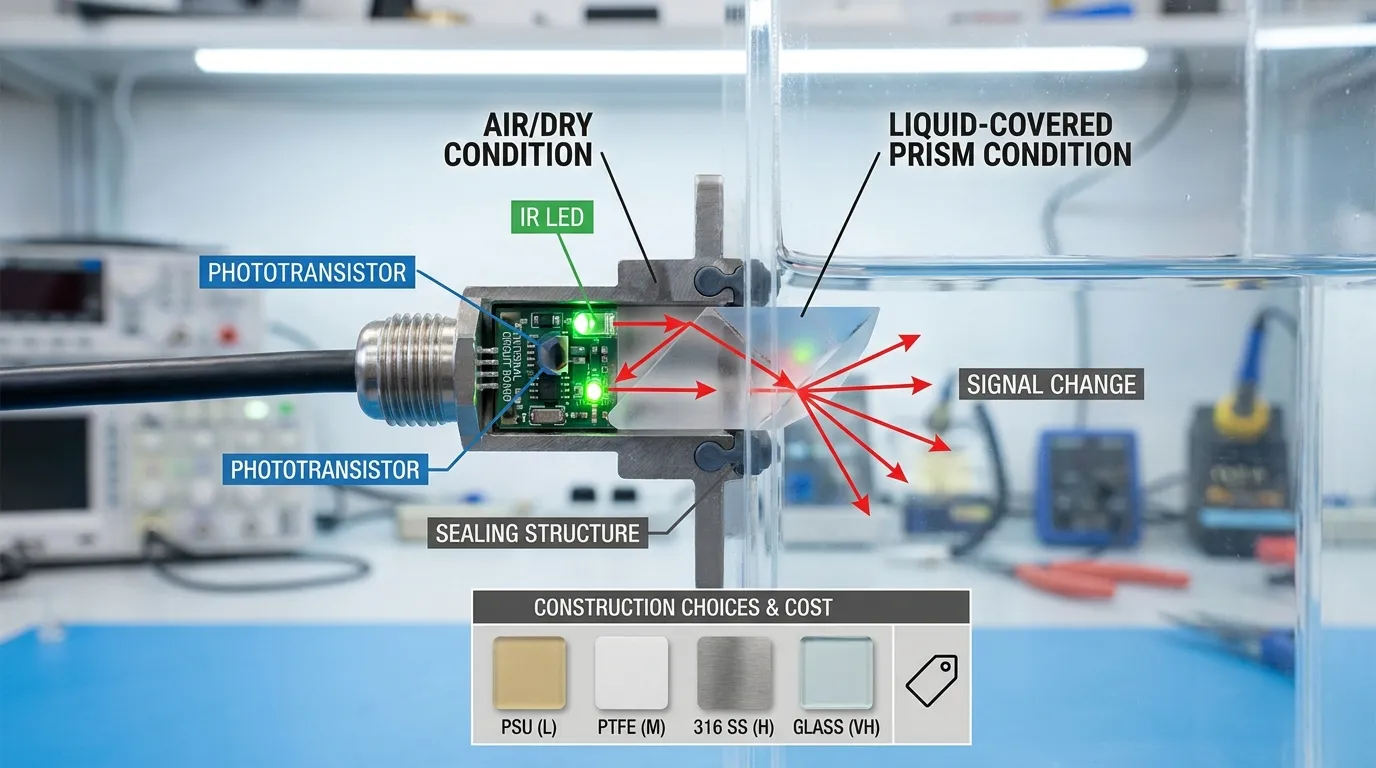
Is gnách go dtagann an difríocht praghais is mó ón teicneolaíocht agus ón rogha ábhair. Oibríonn braiteoirí optúla trí sholas infridhearg a sheoladh ó stiúir IR isteach i leid priosma. San aer, frithchaitear an solas go hinmheánach agus sroicheann sé an fóta-trasraitheoir. Nuair a chlúdaíonn leacht an priosma, Athraíonn an coinníoll athraonta, Tuairisceáin níos lú solais, agus stáit na lasca ciorcad. Tugann an dearadh solad-stáit seo freagairt thapa agus seachnaíonn sé snámhphointe ag gluaiseacht, ach braitheann an costas deiridh ar cé chomh láidir is a chaithfidh an pacáiste a bheith.
Athraigh Leibhéal Pointe vs Braiteoir Leibhéal Leanúnach
Braitheann lasc leibhéal optúil pointe seasamh leachtach amháin: folamh/lán, Ardleibhéal, leibhéal íseal, sceitheadh i láthair, nó gan aon leacht. Is gnách gurb é an rogha ar chostas níos ísle é toisc go bhfuil an dearadh níos simplí agus is minic gur comhartha lasc digiteach é an t-aschur.
Tomhaiseann braiteoir leibhéal leanúnach leibhéal thar raon. Éilíonn sé níos mó struchtúr braite, Próiseáil comhartha, calabrú, agus rialú aschuir. Mura dteastaíonn ó d'iarratas ach cosaint tirim-reáchtáil caidéil, Brath ró-shreabhadh, nó aláram ísealleibhéil, Is gnách gurb é lasc leibhéal optúil pointe an rogha is éifeachtaí ó thaobh costais de. Má theastaíonn céatadán leibhéal umar fíor-ama ó do chóras, monatóireacht cianda, nó sonraí treochta a phróiseáil, D'fhéadfadh braite leanúnach údar a thabhairt leis an gcostas níos airde.
Ábhar Fite: PSU, PTFE, 316SS, agus Gloine
Tá ábhar fliuch ar cheann de na tiománaithe praghsanna is soiléire toisc go rialaíonn sé friotaíocht ceimiceach, oiriúnacht teochta, neart meicniúil, agus castacht meaisínithe.
PSU nó plaisteach innealtóireachta is minic a úsáidtear le haghaidh uisce glan, umair fearais, humidifiers, dáileoirí, taiscumair bheaga, agus leachtanna ginearálta neamh-ionsaitheacha. De ghnáth bíonn sé níos eacnamaíche agus oibríonn sé go maith nuair a bhíonn an leacht comhoiriúnach.
PTFE roghnaítear nuair a bhíonn friotaíocht ceimiceach níos tábhachtaí. Meastar go coitianta go bhfuil sé le haghaidh leachtanna creimneach, sreabhán glantacháin speisialta, nó iarratais ina bhfuil swelling plaisteach, Staining, nó is ábhar imní é an t-ionsaí. Is féidir le PTFE costas a mhéadú mar gheall ar riachtanais ábhair agus déantúsaíochta.
316 cruach dhosmálta a úsáidtear nuair a bhíonn cosaint mheicniúil níos láidre ag teastáil ó cheannaitheoirí, marthanacht tionsclaíoch, Comhoiriúnacht ola / breosla, nó comhlacht miotail préimhe. De ghnáth cosnaíonn cásálacha dhosmálta níos mó ná leaganacha plaisteacha mar gheall ar mheaisíniú, Séalaithe, agus ceanglais cóimeála.
Leideanna braite gloine Is féidir iad a roghnú le haghaidh riachtanais speisialta comhoiriúnachta ceimiceacha nó optúla. Teastaíonn séalaithe agus láimhseáil chúramach uathu, mar sin caithfidh an luachan an leacht a dhearbhú, brú, Modh glantacháin, agus timpeallacht suiteála.
Cineál Aschuir agus Comhéadan Rialaithe
Tá aschuir lasc bunúsacha mar NPN nó PNP coitianta do thógálaithe trealaimh toisc go nascann siad go héasca le PLCanna, Boird rialaithe, aláraim, agus ciorcaid sealaíochta. Loighic aschuir, iompar oscailte de ghnáth/dúnta de ghnáth, agus ba chóir ceanglais tarraingthe suas a dhearbhú sula n-ordaítear.
Tá aschur 4-20 mA níos ábhartha nuair a theastaíonn sonraí leibhéal leanúnach ón gceannaitheoir, ritheann cábla níos faide, nó comhoiriúnacht comhartha tionsclaíoch. Féadann sé costas a mhéadú toisc go n-éilíonn sé dearadh leictreonach difriúil agus cur chuige calabrúcháin. Pinouts cónascaire saincheaptha, seaicéid cábla speisialta, nascóirí múnlaithe, nó is féidir le plocóidí uiscedhíonach tionchar a imirt ar an bpraghas deiridh freisin.
Deimhniú, Doiciméadú, agus Riachtanais Easpórtála
Is féidir le ceanglais deimhniúcháin an costas a athrú toisc go mbíonn tionchar acu ar ábhair, tástáil, Doiciméadú, agus rialú táirgeachta. Ná glac leis go dteastaíonn an pacáiste comhlíonta céanna ó gach braiteoir. Lasc leibhéal uisce fearas beag, Braiteoir tionsclaíoch ar leibhéal ola, agus d'fhéadfadh dearbhuithe ábhair nó doiciméid tástála éagsúla a bheith ag teastáil ó fheidhmchlár teagmhála uisce óil.
Onnmhairíonn HojellyTek braiteoirí chuig na Stáit Aontaithe, TÁIMID, An India, agus margaí eile, Mar sin, is féidir leis an gcéim luachana an doiciméadú do cheannaitheoir a áireamh, Iompórtálaí, nó ní mór don fhoireann innealtóireachta athbhreithniú a dhéanamh ar. Ba chóir riachtanais deimhniúcháin deiridh a dhearbhú i gcónaí roimh olltáirgeadh.
Imleabhar an Ordaithe: Sampla, Baisc Phíolótach, agus Praghsáil Bulc
Is gnách go mbíonn praghsáil samplach níos airde in aghaidh an aonaid toisc go n-áirítear láimhseáil bhaisc bheag, Dearbhú Innealtóireachta, socrú, Pacáil, agus ullmhúchán onnmhairithe. Éiríonn praghsáil mórchóir níos iomaíche nuair a shocraítear an dearadh, Deimhnítear na hábhair, agus is féidir táirgeadh a phleanáil go héifeachtach.
Do thionscadail OEM, Is é an cur chuige is fearr ná:
- Deimhnigh an tsonraíocht theicniúil.
- Samplaí tástála san umar fíor agus leacht.
- Faomhadh an gléasta, sreangú, agus loighic.
- Cuir an líníocht léiriúcháin faoi ghlas.
- Iarr mórphraghsáil bunaithe ar chainníocht réamhaisnéise.
Tábla Fachtóir Praghas Braiteoir Leibhéal Optúil
| Fachtóir Praghas | Treo ar Chostas Níos Ísle | Treo Costas Níos Airde | Nóta an Cheannaitheora |
|---|---|---|---|
| Teicneolaíocht braiteora | Athraigh leibhéal an phointe | Braiteoir leibhéal leanúnach | Ná íoc as tomhas leanúnach más leor aláram ard / íseal |
| Ábhar fliuch | PSU / plaisteach | PTFE, 316SS, gloine | Roghnaigh bunaithe ar chomhoiriúnacht leachtach, ní hamháin praghas |
| Cineál aschuir | NPN / Aschur lasc PNP | 4-20 mA nó comhartha saincheaptha | Meaitseáil an PLC nó an bord rialaithe sula n-ordaíonn tú |
| Gléasta | Snáithe caighdeánach nó mount umar simplí | Snáithe saincheaptha, Flange, Comhlacht OEM dlúth | Is féidir le dearadh meicniúil saincheaptha tionchar a imirt ar uirlisí agus ar chostas aonaid |
| Cábla / cónascaire | Cábla caighdeánach | Breiseán múnlaithe, seaicéad speisialta, cábla fada | Úsáideach le haghaidh uiscedhíonta agus suiteáil allamuigh |
| Deimhniú | Tástáil mhonarcha caighdeánach | Doiciméadú a bhaineann go sonrach le feidhmchlár | Riachtanais an mhargaidh agus an tionscail a dhearbhú go luath |
| Toirt an ordaithe | Mórtháirgeadh | Samplaí nó orduithe trialach beaga | Is gnách go bhfeabhsaíonn costas aonaid tar éis ceadú sonraíochta |
Ba chóir gach raon praghsanna a dhearbhú trí luachan. Athruithe ábhartha ar an margadh, Struchtúr saincheaptha, leibhéal tástála, agus is féidir leis an modh loingseoireachta an tairiscint tráchtála deiridh a athrú.
Praghas Monarcha-Díreach vs Marcáil Dáileoir
Is féidir le ceannach ó dháileoir a bheith áisiúil nuair a theastaíonn earra caighdeánach uait go tapa, ach d'fhéadfadh corrlach stocála a bheith san áireamh sa chostas aonaid, corrlach seirbhíse logánta, agus solúbthacht chumraíochta teoranta. Ag ceannach monarcha-díreach ó monaróir braiteoir optúil is gnách go bhfuil sé níos oiriúnaí nuair a theastaíonn fad sreinge saincheaptha uait, Pacáistiú lipéad príobháideach, loighic aschuir dhifriúil, snáithe speisialta, nó praghsáil chobhsaí le haghaidh táirgeadh arís agus arís eile.
Tá foinsiú monarchan-dhíreach úsáideach go háirithe do:
- Déantúsóirí fearas ag comhtháthú braiteoirí ina dtáirge féin
- Tógálaithe córais caidéil agus uisce a dteastaíonn sreangú agus gléasadh seasta uathu
- Soláthraithe trealaimh ola / breosla ag roghnú comhlachtaí cruach dhosmálta
- IoT monatóireacht a dhéanamh ar bhrandaí braiteoirí péireála le LoRa, Wifi, Mise, nó modúil Smart Life
- Dáileoirí a dteastaíonn sonraíochtaí in-athfhillteacha uathu faoina bpáirtuimhreacha féin
Is é an comhréiteach ná go dteastaíonn ionchur teicniúil níos soiléire ó orduithe monarchan-dhíreacha. An níos iomláine do shonraíocht, an níos tapúla is féidir leis an mhonarcha a lua go cruinn.
Costas Iomlán Úinéireachta vs Lasca Snámhphointe
D'fhéadfadh lasc snámhphointe breathnú níos saoire ar dtús, ach ní hé an praghas ceannaigh an costas iomlán. I go leor umair dhlúth, leachtanna salach, seomraí caol, nó feidhmchláir ardtimthrialla, Is féidir le lasca snámhphointe meicniúla teip ó ghreamú, éilliú, Caith snámhphointe, Fadhbanna uillinn gléasta, nó spás suiteála teoranta.
Úsáideann braiteoirí leibhéal optúla prionsabal optúil soladach-stáit gan aon snámhphointe ag gluaiseacht. Féadann sé seo cothabháil a laghdú in iarratais ina bhfuil gluaiseacht snámhphointe neamhiontaofa. Tá siad dlúth freisin, lascadh tapa, agus níos éasca a chomhtháthú i dtithálacha trealaimh bheaga.
Cén dóigh faoin spéir a ...?, Ní huathoibríoch iad braiteoirí optúla an rogha is fearr do gach leacht. Ba chóir do cheannaitheoirí sciath a sheiceáil, cúr, boilgeoga, comhdhlúthú, iarmhar láidir, agus coinníollacha glantacháin priosma. Má fhágann an leacht scannán ar an rinn braite, B'fhéidir go mbeadh ábhar difriúil ag teastáil ón braiteoir, Suiteáil uillinn, Plean glantacháin, nó modh braite malartach. Ní margadh maith é an praghas ceannaigh is ísle má tá an braiteoir mí-oiriúnach leis an leacht.
Maidir le comhthéacs an mhargaidh agus treochtaí foinsiú, féach an margadh braiteoir leibhéal optúil treoir.
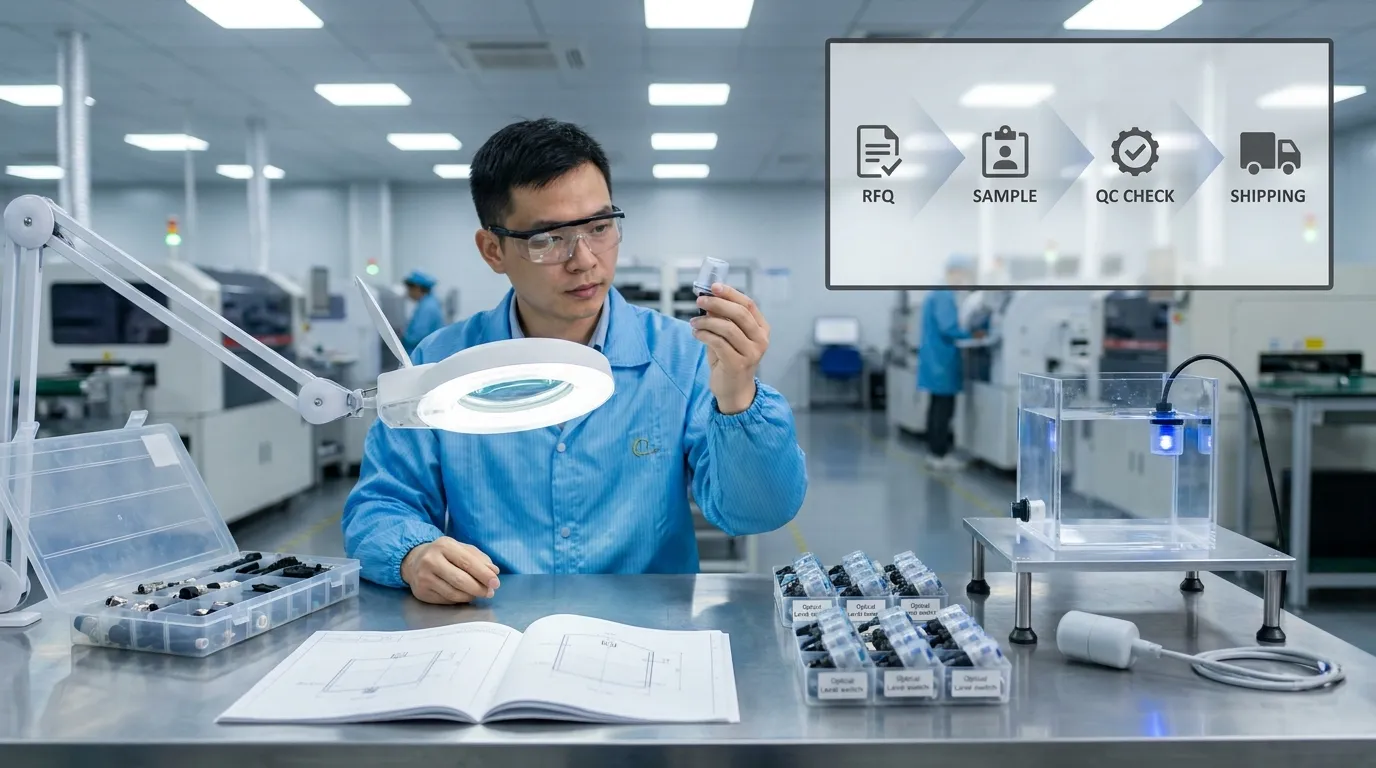
5-Próiseas Luachana agus Soláthair Céim
1. Fiosrúchán
Seol sonraí d'iarratais trí WhatsApp nó ríomhphost. Comhroinn an cineál leachtach, ábhar umar, Suíomh gléasta, voltas soláthair, comhartha aschuir, agus cainníocht ordaithe measta.
2. Sonraíocht agus Saincheaptha
Déanann ár bhfoireann innealtóireachta athbhreithniú ar an ábhar fliuch, Aschur ciorcad, cábla, cónascaire, snáthaid, Modh séalaithe, agus struchtúr suiteála. Is féidir saincheaptha OEM / ODM a phlé ag an gcéim seo.
3. Dearbhú Samplach
Úsáidtear samplaí chun fíor-iompar leachtach a thástáil, lascadh tirim / fliuch, loighic sreangaithe, Oiriúnach umar, agus comhoiriúnacht rialaitheora. Cuidíonn an chéim seo le hathruithe costasacha a chosc tar éis uirlisí nó mórtháirgeadh.
4. Táirgeadh agus QC
Tar éis ceadú samplach, Leanann an táirgeadh an chumraíocht dheimhnithe. Díríonn QC ar fhreagairt optúil, sreangú, Séalaithe, Cuma, agus iompar aschuir bunaithe ar an gceanglas ceadaithe.
5. Loingseoireacht agus Orduithe Athrá
Is féidir an t-ordú deiridh a phacáil le haghaidh loingsiú onnmhairithe. Le haghaidh ath-orduithe, an líníocht chéanna a choinneáil, cábla, cónascaire, agus cuidíonn riachtanas tástála le praghsáil sa todhchaí a chobhsú.
Riachtanais le hullmhú sula n-iarrtar praghas
Luachan praiticiúil a fháil le haghaidh táirge braiteoir leibhéal optúil, na sonraí seo a leanas a ullmhú:
- Ainm leachtach agus cibé an bhfuil sé uisce, ola, ceimiceach, cuisnithe, glantach, nó leacht measctha
- Feidhm riachtanach: Aláram ísealleibhéil, Aláram Ardleibhéil, Braite sceite, Cosaint caidéil, nó tomhas leanúnach
- Ábhar umar agus tiús balla
- Treo gléasta: taobh, bun, Barr, seomra inmheánach, nó feistiú seachtrach
- An t-ábhar fliuch is fearr leat: PSU, PTFE, 316SS, gloine, nó oscailte do mholadh
- Cineál aschuir: NPN, PNP, 4-20 mA, nó loighic saincheaptha
- Voltas soláthair agus cineál rialaitheora
- Fad cábla agus rogha cónascaire
- Cainníocht samplach ionchasach agus cainníocht bhliantúil nó bhaisc
- Margadh onnmhairithe agus riachtanais doiciméadúcháin
Comparáid Costais Braiteoir Optúil vs Athraigh Snámhphointe
| Mír | Braiteoir leibhéal optúil | Athraigh Snámhphointe |
|---|---|---|
| Costas ceannaigh tosaigh | Go minic níos airde ná lasc snámhphointe bunúsach | Go minic níos ísle do mhúnlaí simplí |
| Páirteanna ag gluaiseacht | Gan aon snámhphointe ag gluaiseacht | Gluaiseacht snámhphointe meicniúil |
| Riachtanas spáis | Barr priosma dlúth, maith d'umair bheaga | Teastaíonn seomra le haghaidh taistil snámhphointe |
| Freagra | Athrú optúil tirim / fliuch tapa | Braitheann sé ar ghluaiseacht snámhphointe |
| Riosca teipe | Iarmhar, sciath, cúr, nó is féidir le hábhar mícheart tionchar a imirt ar bhrath | Ag Greamú, Caith, éilliú, agus saincheisteanna uillinn gléasta |
| An úsáid is fearr | Trealamh OEM, umair dhlúth, Braite sceite, leibhéal pointe uisce/ola | Umair shimplí ina bhfuil gluaiseacht mheicniúil inghlactha |
| Cinneadh costais | Níos fearr nuair a bhíonn iontaofacht agus comhtháthú dlúth tábhachtach | Níos fearr nuair a bhíonn an t-iarratas simplí agus riosca íseal |
Cén fáth a roghnaíonn ceannaitheoirí HojellyTek
Is monaróir agus onnmhaireoir atá lonnaithe i Shenzhen é HojellyTek atá dírithe ar bhrath optúil fótaileictreach agus braite leibhéal leachtach. Tacaímid le R inmheánach&D, Forbairt OEM / ODM, Roghnú ábhair, Meaitseáil aschuir, agus soláthar samplach-go-mórchóir do cheannaitheoirí idirnáisiúnta.
Oibríonn ceannaitheoirí linn nuair is gá dóibh:
- Cumarsáid mhonarcha-dhíreach le tacaíocht innealtóireachta
- Saincheaptha braiteoir leibhéal leachtach optúil
- PSU, PTFE, 316 cruach dhosmálta, agus roghanna ábhair gloine
- NPN, PNP, agus plé aschuir a bhaineann go sonrach le feidhmchlár
- Tacaíocht d'uisce, ola, fearas, tionsclaíoch, agus tionscadail monatóireachta umar cliste
- Taithí easpórtála do na Stáit Aontaithe, TÁIMID, An India, agus margaí eile
Ceisteanna CCanna
Cad is mó a théann i bhfeidhm ar phraghas braiteoir leibhéal optúil?
Is iad na fachtóirí is mó ná cineál braiteora, Ábhar fliuch, comhartha aschuir, Dearadh gléasta, Ceanglais deimhniúcháin, agus toirt ordaithe. Is gnách go mbíonn praghsanna difriúla ag lasc leibhéal pointe plaisteach d'uisce ó chruach dhosmálta, PTFE, nó dearadh leibhéal leanúnach.
An féidir leat praghas braiteoir cruinn leibhéal optúil a thabhairt?
Ní fhoilsímid praghsanna cruinne cumtha toisc go mbraitheann an costas deiridh ar chumraíocht agus ar chainníocht. Seol do leacht, ábhar, Aschur, Gléasta, cábla, agus riachtanais toirte, agus deimhneoidh muid raon luachana reatha.
An bhfuil praghsáil samplach níos airde ná praghsáil mhórchóir?
Tá, Is gnách go mbíonn costas aonaid samplach níos airde toisc go n-áiríonn orduithe beaga socrú, láimhseáil, tástáil, agus ullmhúchán onnmhairithe. Is féidir le praghsáil mhórchóir feabhas a chur ar an tsonraíocht tar éis an tsonraíocht a cheadú agus cainníocht táirgeachta a dhearbhú.
An bhfuil PTFE nó 316 cruach dhosmálta níos costasaí ná PSU?
I bhformhór na dtionscadal, PTFE agus 316 Costas cruach dhosmálta a mhéadú i gcomparáid le hábhair phlaisteacha coitianta mar gheall ar chostas ábhair, próiseáil, Séalaithe, agus ceanglais iarratais. Braitheann an rogha ceart ar riachtanais chomhoiriúnachta agus marthanachta ceimiceacha.
An bhfuil braiteoir leibhéal optúil níos saoire ná lasc snámhphointe?
D'fhéadfadh an costas tosaigh a bheith níos airde ná lasc snámhphointe bunúsach, Ach is féidir leis an gcostas iomlán a bheith níos ísle má laghdaíonn an braiteoir optúil greamú, caitheamh meicniúil, Fadhbanna spáis, nó cothabháil i do threalamh.
Conas is féidir liom an luachan is cruinne a fháil?
Seol an cineál leachtach, Líníocht umar nó grianghraf, Modh gléasta, Riachtanas aschuir, voltas soláthair, Cábla nó cónascaire riachtanas, cainníocht samplach, agus spriocchainníocht mhórchóir. An níos iomláine an RFQ, an níos cruinne an luachan.
Iarr Luachan Braiteoir Leibhéal Optúil
Chun comparáid a dhéanamh idir fíorchostas do roghanna braiteora, seol do chuid sonraí iarratais chuig HojellyTek trí WhatsApp nó ríomhphost. Is féidir lenár bhfoireann cabhrú leis an struchtúr optúil ceart a dhearbhú, Ábhar fliuch, Cineál Aschuir, Dearadh gléasta, agus raon praghsála samplach-go-mórchóir sula gcuireann tú ordú.


