
ઓપ્ટિકલ કન્ટિન્યુઅસ લેવલ સેન્સર
હોજેલીટેક ખરીદદારો માટે ઓપ્ટિકલ લિક્વિડ લેવલ સેન્સિંગ પ્રોજેક્ટ્સને સપોર્ટ કરે છે જેમને સ્પષ્ટ સ્તરના પ્રતિસાદની જરૂર હોય છે, કોમ્પેક્ટ ઇન્સ્ટોલેશન, અને સ્ટાન્ડર્ડ ઓન / ઓફ ડિટેક્શનથી આગળ કસ્ટમાઇઝેશન.
સતત ઓપ્ટિકલ સ્તર સેન્સિંગ ક્ષમતાઓ
મોટાભાગના ઓપ્ટિકલ લિક્વિડ લેવલ સેન્સર ફોટોઇલેક્ટ્રિક સિદ્ધાંતનો ઉપયોગ કરે છે: ઇન્ફ્રારેડ એલઇડી પ્રિઝમ ટીપમાં પ્રકાશ મોકલે છે, અને ફોટોટ્રાન્ઝિસ્ટર અથવા રીસીવર પરાવર્તિત પ્રકાશને શોધી કાઢે છે. હવામાં, પ્રિઝમ પ્રવાહી દ્વારા ભીનું થાય છે તેના કરતાં પ્રકાશને અલગ રીતે પ્રતિબિંબિત કરે છે. ત્યારબાદ સેન્સર સર્કિટ આ શુષ્ક / ભીના ઓપ્ટિકલ ફેરફારને ઉપયોગી સિગ્નલમાં રૂપાંતરિત કરે છે.
એક સરળ ટાંકી એલાર્મ માટે, આ સિગ્નલ આઉટપુટ ચાલુ / બંધ હોઈ શકે છે. સતત અથવા નજીકના સતત સ્તરની દેખરેખ માટે, ડિઝાઇન લાંબા સેન્સિંગ સ્ટ્રક્ચરનો ઉપયોગ કરી શકે છે, બહુવિધ ઓપ્ટિકલ બિંદુઓ, અથવા સિગ્નલ-રૂપાંતરણ ડિઝાઇન જે નિયંત્રકને સ્તરના ફેરફારોની જાણ કરે છે.
અમારા ઓપ્ટિકલ લેવલ સેન્સિંગ સપોર્ટમાં શામેલ હોઈ શકે છે:
- ઉચ્ચ માટે વૈવિધ્યપૂર્ણ ઓપ્ટિકલ પોઇન્ટ સ્વીચો, નીચું, ખાલી, ઓવરફ્લો, અને લીક શોધ
- સ્ટેપ્ડ લેવલ ઇન્ડિકેશન માટે મલ્ટિ-પોઇન્ટ ઓપ્ટિકલ લેવલ એરે
- સતત સ્તરના પ્રોજેક્ટ્સ જ્યાં સિગ્નલ પ્રક્રિયા નિયંત્રણ અથવા ડોઝિંગ પ્રતિસાદને ટેકો આપવો આવશ્યક છે
- નિયંત્રણ બોર્ડ માટે આઉટપુટ રૂપરેખાંકન, પીએલસી, પંપો, એલાર્મો, અથવા IoT ઉપકરણો
- પાણી માટે સામગ્રીની પસંદગી, તેલ, બળતણ, રાસાયણિક, અને સફાઈ-પ્રવાહી એપ્લિકેશન્સ
- OEM/ODM સેન્સર બાડી, થ્રેડ, કેબલ, કનેક્ટર, અને હાઉસિંગ કસ્ટમાઇઝેશન
સામાન્ય ઉકેલોની તુલના કરતા ખરીદદારો માટે, જુઓ અમારું ઓપ્ટિકલ લેવલ સેન્સર માર્ગદર્શિકા.
પોઇન્ટ ઓપ્ટિકલ સ્વીચ વિ સતત ઓપ્ટિકલ સ્તરનું માપન
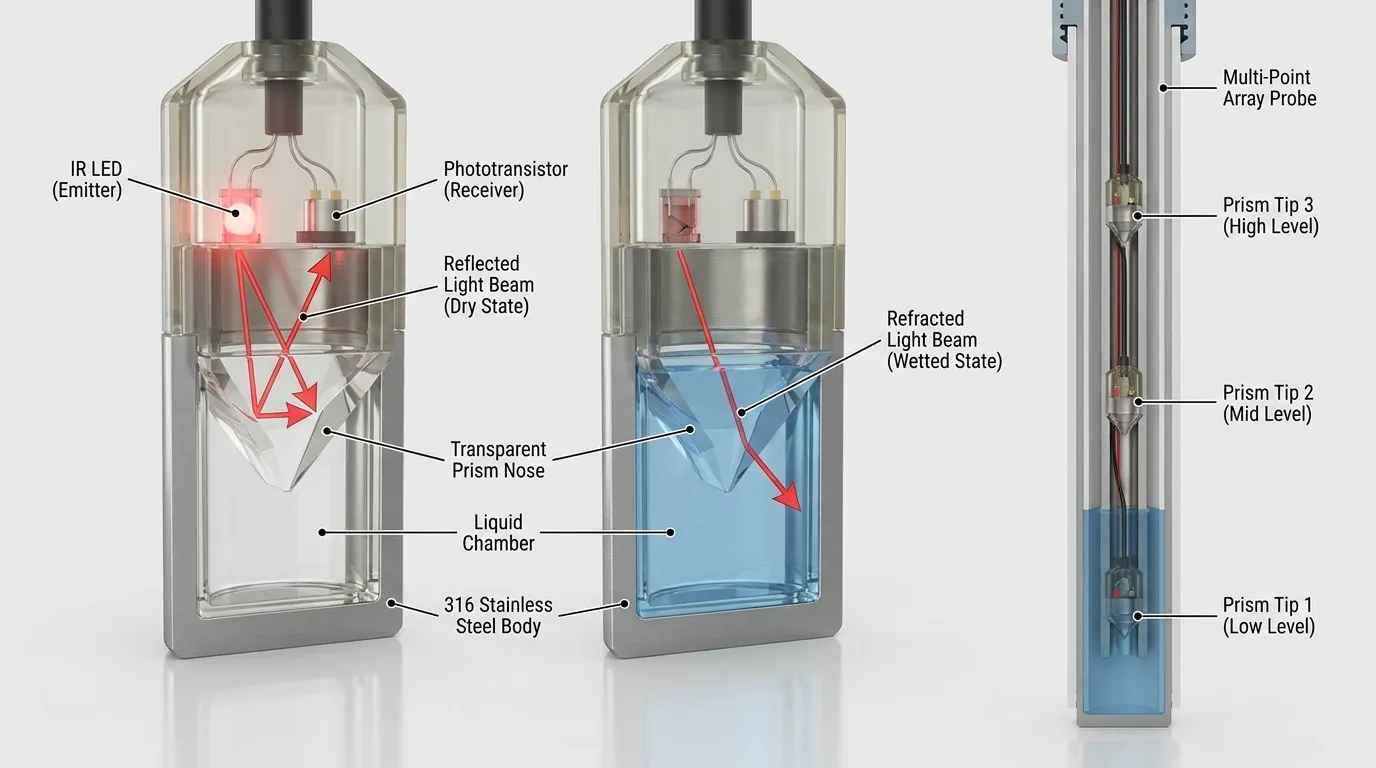
ફોટોઇલેક્ટ્રિક પોઇન્ટ લેવલ સ્વિચ એક પ્રશ્નનો જવાબ આપે છે: "શું આ સ્થિતિમાં પ્રવાહી હાજર છે?"જ્યારે સિસ્ટમને માત્ર સ્પષ્ટ શુષ્ક/ભીની સ્થિતિની જરૂર હોય ત્યારે તે આદર્શ છે.. ઉદાહરણ તરીકે, કોફી મશીનને નીચા પાણીની ચેતવણીની જરૂર પડી શકે છે, તબીબી ઉપકરણને રીએજન્ટ-પ્રેઝન્ટ સિગ્નલની જરૂર પડી શકે છે, અથવા નાની ટાંકીને ઓવરફ્લો પ્રોટેક્શનની જરૂર પડી શકે છે.
સતત માપન અલગ પ્રશ્નનો જવાબ આપે છે: "હવે ટાંકીમાં કેટલું પ્રવાહી છે?"આ બાબત મહત્ત્વની છે જ્યારે નિયંત્રકે ભરણ દરમિયાન સ્તરના ફેરફારને ટ્રેક કરવો જાઇએ, ડ્રેઇનિંગ, ડોઝિંગ, બેચીંગ, અથવા પ્રક્રિયા પ્રક્રિયા.
ઘણા પ્રોજેક્ટ્સમાં, ખરીદદારો પહેલા ઓપ્ટિકલ કન્ટિન્યુઅસ લેવલ સેન્સર માટે પૂછે છે, પરંતુ સમીક્ષા પછી, યોગ્ય ડિઝાઇન ત્રણ વિકલ્પોમાંથી એક હોઈ શકે છે:
- સિંગલ ઓપ્ટિકલ પોઈન્ટ સ્વીચ ઊંચા/નીચા એલાર્મ માટે
- મલ્ટિ-પોઇન્ટ ઓપ્ટિકલ એરે કેટલાક નિશ્ચિત સ્તરના પગલાઓ માટે
- સતત આઉટપુટ ડિઝાઇન જ્યાં નિયંત્રક વેરિયેબલ એનાલોગ અથવા ડિજિટલ સિગ્નલ પ્રાપ્ત કરે છે
જો તમારી જરૂરિયાત માત્ર "ટાંકી ભરેલી છે" અથવા "ટાંકી ખાલી છે",""બિંદુ ઉપકરણ સામાન્ય રીતે સરળ હોય છે. જો તમને લેવલ ટ્રેન્ડની જરૂર હોય તો, રીફિલ સમય, ડોઝીંગ જથ્થો, અથવા પ્રક્રિયા પ્રતિસાદ, સતત અથવા મલ્ટિ-પોઇન્ટ સેન્સિંગ વધુ યોગ્ય છે.
ફિક્સ્ડ-પોઇન્ટ ડિટેક્શન પ્રોજેક્ટ્સ માટે, અમારી સરખામણી કરો ઇલેક્ટ્રો-ઓપ્ટિક પોઈન્ટ લેવલ સેન્સર.
માપન વિસ્તાર, રીઝોલ્યુશન, અને સિગ્નલ ડિઝાઇન
સતત ઓપ્ટિકલ લેવલ પ્રોજેક્ટ્સ માટે, સામાન્ય કેટલોગ સ્વીચની જેમ માપન વિસ્તાર પસંદ થયેલ નથી. તે ટાંકીની ઊંડાઈ સાથે મેળ ખાતો હોવો જ જોઇએ, સેન્સિંગ ઝોન, સ્થાપન સ્થાન, પ્રવાહી વર્તણૂક, અને જરૂરી નિયંત્રણ ચોકસાઈ.
ટૂંકા જળાશયને ફક્ત ઘણા ઓપ્ટિકલ શોધ બિંદુઓની જરૂર પડી શકે છે. ઊંચી ટાંકીને લાંબી પ્રોબ અથવા કસ્ટમ સેન્સિંગ સ્ટ્રક્ચરની જરૂર પડી શકે છે. ડોઝિંગ ચેમ્બરને લાંબી ફુલ-ટેન્ક રેન્જને બદલે સાંકડા વિભાગમાં ઉચ્ચ રિઝોલ્યુશનની જરૂર પડી શકે છે..
રિઝોલ્યુશન સેન્સિંગ પદ્ધતિ પર આધાર રાખે છે. મલ્ટિ-પોઇન્ટ એરે સાથે, રિઝોલ્યુશન દરેક ઓપ્ટિકલ પોઇન્ટ વચ્ચેના અંતર પર આધારિત છે. નજીકનું અંતર વધુ સ્તરના પગલાં આપે છે, પરંતુ તે પ્રોબ ડિઝાઇનને પણ અસર કરે છે., વાયરીંગ, કિંમત, અને નિયંત્રક ઇનપુટ આવશ્યકતાઓ. એનાલોગ અથવા ડિજિટલ સતત આઉટપુટ સાથે, ઉપયોગી રીઝોલ્યુશન ઓપ્ટિકલ સેન્સિંગ ડિઝાઇન પર આધારિત છે, સિગ્નલ પ્રક્રિયા, પ્રવાહી સ્થિરતા, અને કેલિબ્રેશન પદ્ધતિ.
ખરીદદારોએ વ્યાખ્યાયિત કરવી જોઈએ:
- કુલ ટેન્કની ઊંડાઈ અથવા લક્ષ્ય સેન્સિંગ ઊંચાઈ
- મોનિટર કરવા માટે ન્યૂનતમ અને મહત્તમ પ્રવાહી સ્તરો
- જરૂરી સ્તર પગલું અથવા નિયંત્રણ ચોકસાઈ
- શું સિસ્ટમને સરળ આઉટપુટ અથવા ચોક્કસ સ્તર ઝોનની જરૂર છે
- પ્રવાહી પ્રકાર, સ્પષ્ટતા, ચીકાશ, ફીણ, પરપોટા, અને કોટિંગ જોખમ
- નિયંત્રક ઇનપુટ પ્રકાર: NPN, PNP, વોલ્ટેજ, 4-20 mA, ધબકારા, RS485, અથવા વૈવિધ્યપૂર્ણ ડિજિટલ સિગ્નલ
આઉટપુટ વિકલ્પો: NPN, PNP, 4-20 mA, અને ડિજિટલ સિગ્નલો
આઉટપુટ પસંદગી એ સૌથી મોટા ખરીદીના નિર્ણયોમાંનો એક છે. પોઇન્ટ સ્વીચ સામાન્ય રીતે એનપીએન જેવા અલગ આઉટપુટનો ઉપયોગ કરે છે, PNP, પુશ-પુલ, અથવા કંટ્રોલ સર્કિટના આધારે રિલે-સ્ટાઇલ લોજિક. આ એલાર્મો માટે યોગ્ય છે, પંપ શરુઆત/બંધ, રિફિલ ટ્રિગરો, અને ઇન્ટરલોક સિગ્નલો.
સતત અથવા પ્રક્રિયા-સ્તરના પ્રતિસાદ માટે, ખરીદદારો ઘણીવાર એનાલોગ આઉટપુટ માટે પૂછે છે. ઔદ્યોગિક નિયંત્રણમાં 4-20 એમએ સિગ્નલ સામાન્ય છે કારણ કે તે નિર્ધારિત રેન્જમાં બદલાતા સ્તરનું પ્રતિનિધિત્વ કરી શકે છે અને સરળ વોલ્ટેજ સિગ્નલો કરતાં લાંબા સમય સુધી કેબલ ચલાવવા માટે વધુ યોગ્ય છે. જ્યારે સેન્સરને માઇક્રોકંટ્રોલર સાથે વાતચીત કરવાની જરૂર હોય ત્યારે ડિજિટલ આઉટપુટનો ઉપયોગ થઈ શકે છે, સ્માર્ટ ઉપકરણ, અથવા ઔદ્યોગિક પ્રવેશદ્વાર.
હોજેલીટેક આરએફક્યુ દરમિયાન નિયંત્રક આવશ્યકતાની સમીક્ષા કરી શકે છે અને આઉટપુટ તર્કને તમારી સિસ્ટમ સાથે મેળ ખાવામાં મદદ કરી શકે છે. સપ્લાય વોલ્ટેજ, વાયરિંગ સ્થિતિ, કેબલ લંબાઈ, કનેક્ટર, અને નમૂનાના ઉત્પાદન પહેલાં સિગ્નલ વર્તણૂકની પુષ્ટિ કરવામાં આવે છે.
સતત વિકલ્પ તરીકે મલ્ટિ-પોઇન્ટ ઓપ્ટિકલ એરે
દરેક સતત દેખાતી એપ્લિકેશનને સાચા સતત ટ્રાન્સમીટરની જરૂર હોતી નથી. ઘણી કોમ્પેક્ટ OEM સિસ્ટમ્સમાં, મલ્ટિ-પોઇન્ટ ઓપ્ટિકલ એરે એ વ્યવહારુ વિકલ્પ છે.
મલ્ટિ-પોઇન્ટ ડિઝાઇન એક પ્રોબ અથવા એસેમ્બલી સાથે ઘણી ઓપ્ટિકલ સેન્સિંગ પોઝિશન મૂકે છે. દરેક બિંદુ શોધી કાઢે છે કે પ્રવાહી તે ઊંચાઈએ પહોંચ્યું છે કે નહીં. નિયંત્રક પછી પરિણામને ખાલી તરીકે અર્થઘટન કરે છે, નીચું, મધ્યમ, ઊંચું, અથવા પૂર્ણ. ઘણાબધા ઉપકરણો માટે, રિફિલને નિયંત્રિત કરવા માટે આ પૂરતું છે, સૂકા રનને અટકાવશો, ઓવરફ્લો બંધ કરો, અથવા બાકી રહેલ પ્રવાહીનો અંદાજ લગાવો.
આ અભિગમ ત્યારે ઉપયોગી થાય છે જ્યારે:
- ટાંકી નાની અથવા અનિયમિત હોય છે
- ચોક્કસ મિલિમીટર-સ્તર માપન જરૂરી નથી
- નિયંત્રક પાસે બહુવિધ ડિજિટલ ઇનપુટ્સ છે
- ખરીદનાર ફરતા ફ્લોટ વિના ઓપ્ટિકલ વિશ્વસનીયતા ઇચ્છે છે
- એપ્લિકેશનને ડોઝ અથવા પ્રક્રિયા નિયંત્રણ માટે સરળ સ્તર ઝોનની જરૂર છે
મલ્ટિ-પોઇન્ટ એરેનો ઉપયોગ ઘણીવાર રીએજન્ટ ટાંકીમાં થાય છે, જળ જળાશયો[ફેરફાર કરો], સફાઈ-પ્રવાહી કારતૂસ, તેલની ટાંકીઓ, ફ્યૂઅલ મોનિટરિંગ મોડ્યુલ્સ, સ્માર્ટ ઉપકરણો, લેબ સાધનો, અને કોમ્પેક્ટ ઔદ્યોગિક ઉપકરણો.
તેલ-પાણી અથવા પ્રવાહી-ઇન્ટરફેસ પ્રોજેક્ટ્સ માટે, જુઓ અમારું ઓપ્ટિકલ ઇન્ટરફેસ સ્તર સેન્સર.
પોઈન્ટ વિ કન્ટિન્યુઅસ ઓપ્ટિકલ લેવલ સેન્સર સરખામણી
| જરૂરિયાત | ફોટોઇલેક્ટ્રિક પોઇન્ટ સ્વીચ | મલ્ટિ-પોઇન્ટ ઓપ્ટિકલ એરે | સતત ઓપ્ટિકલ સેન્સિંગ |
|---|---|---|---|
| મુખ્ય હેતુ | એક નિશ્ચિત િસ્થતિ પર પ્રવાહી શોધો | ઘણાબધા ચોક્કસ સ્તર ઝોનને શોધો | વ્યાખ્યાયિત વિસ્તારમાં બદલવાનું સ્તર ટ્રેક કરો |
| લાક્ષણિક આઉટપુટ | NPN, PNP, ડિજીટલ ચાલુ/બંધ | બહુવિધ ડિજિટલ સિગ્નલો અથવા એન્કોડ થયેલ આઉટપુટ | 4-20 mA, વોલ્ટેજ, ડિજિટલ, અથવા વૈવિધ્યપૂર્ણ સંકેત |
| શ્રેષ્ઠ બંધબેસતો | પૂર્ણ, ખાલી, ઓવરફ્લો, લીક, ઊંચુ/નીચું એલાર્મ | નીચા/મધ્યમ/ઉચ્ચ સંકેત, સ્ટેપ થયેલ રીફિલ નિયંત્રણ | ડોઝીંગ, પ્રક્રિયા પ્રતિસાદ, ટાંકી વલણ મોનિટરિંગ |
| રીઝોલ્યુશન | એક શોધ બિંદુ | બિંદુ અંતર પર આધારિત | સેન્સિંગ ડિઝાઇન અને સિગ્નલ પ્રોસેસિંગ પર આધારિત |
| ડિઝાઇન જટિલતા | સૌથી નીચું | માધ્યમ | ઉચ્ચતમ |
| ખરીદનારે તેને ક્યારે પસંદ કરવું જોઈએ | માત્ર શુષ્ક/ભીની સ્થિતિની જરૂર છે | કેટલાક સ્તરના પગલાં પૂરતા છે | નિયંત્રકને ચલ સ્તર પ્રતિસાદની જરૂર છે |
સતત અથવા મલ્ટિ-પોઇન્ટ ઓપ્ટિકલ સ્તર શોધ માટે એપ્લિકેશન ઉપયોગો
જ્યારે યાંત્રિક ફ્લોટ્સ ખૂબ મોટા હોય ત્યારે સતત અને મલ્ટિ-પોઇન્ટ ઓપ્ટિકલ સેન્સિંગ ઉપયોગી છે, વળગી શકે છે, અથવા ઉત્પાદનની ડિઝાઇનને બંધબેસતા નથી. કારણ કે સેન્સિંગ ટીપમાં કોઈ મૂવિંગ ફ્લોટ આર્મ નથી, તે કોમ્પેક્ટ સાધનો માટે યોગ્ય છે જ્યાં જગ્યા મર્યાદિત છે.
સામાન્ય ઉપયોગોમાં નીચેનાનો સમાવેશ થાય છે:
- ડોઝિંગ ટેન્ક કે જેને રિફિલ ટાઇમિંગ અથવા વોલ્યુમ-સ્ટેજ ફીડબેકની જરૂર હોય છે
- પ્રક્રિયા સાધન કે જ્યાં પ્રવાહી સ્તર પમ્પ અથવા વાલ્વ નિયંત્રણને અસર કરે છે
- પાણીનું મોનિટરિંગ કરતા સ્માર્ટ ઉપકરણો, ડિટર્જન્ટ, અથવા સફાઈ પ્રવાહી
- રિએજન્ટ અથવા વેસ્ટ ટાંકી સાથે તબીબી અને પ્રયોગશાળાના સાધનો
- તેલ, કૂલન્ટ, અથવા લો-ટુ-હાઇ ઇન્ડિકેશનની જરૂર હોય તેવા ફ્યૂઅલ રિઝવોયર
- નિયંત્રણ બોર્ડ સાથે જોડાયેલ OEM સિસ્ટમો, ડિસ્પ્લે, અથવા IoT મોડ્યુલ
સ્માર્ટ પ્રોડક્ટ ડિઝાઇન માટે, તુયા / સ્માર્ટ લાઇફ એકીકરણની ચર્ચા કરી શકાય છે જ્યાં સેન્સર મોટી કનેક્ટેડ મોનિટરિંગ સિસ્ટમનો ભાગ છે.
ક્રમ આપતા પહેલા પસંદગી ચકાસણીયાદી
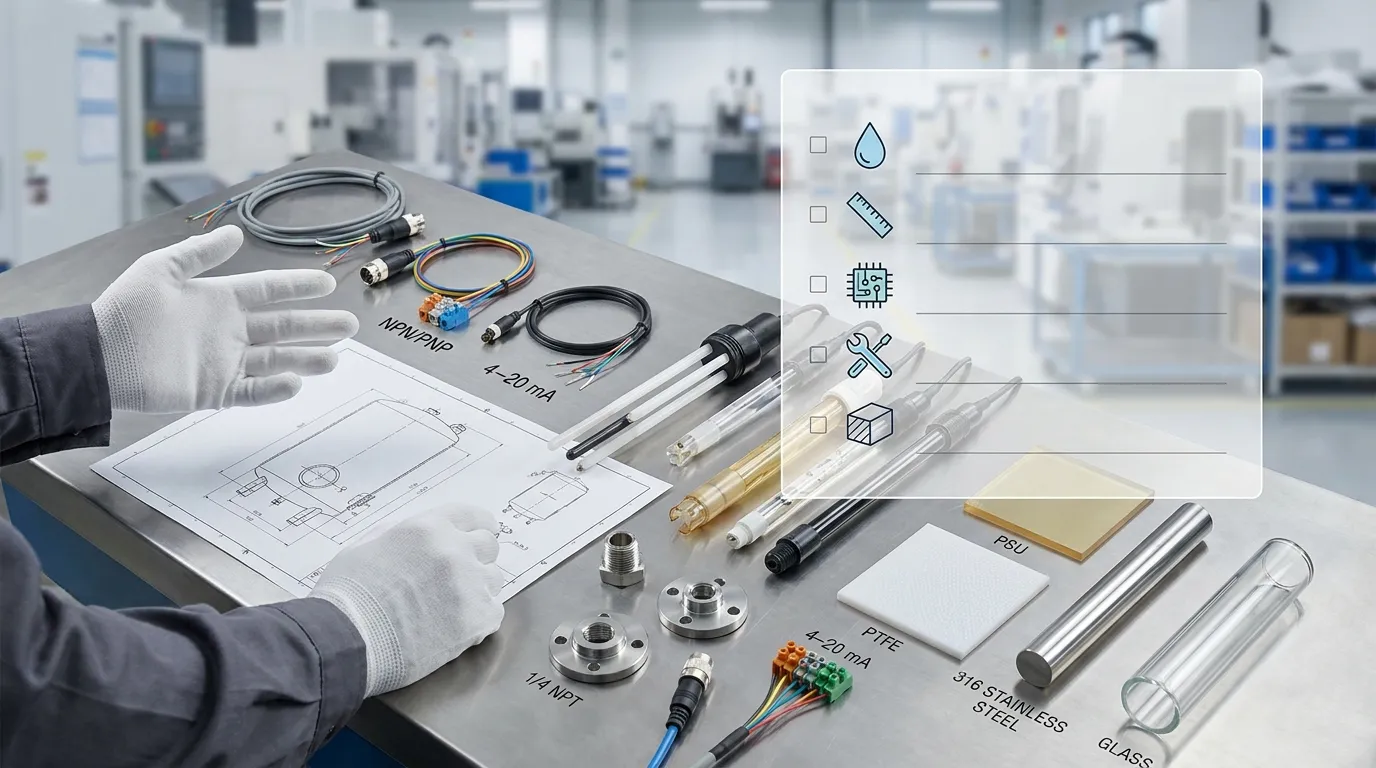
અવતરણની વિનંતી કરતા પહેલા, નીચેની વિગતો તૈયાર કરો:
- સ્તર વિધેય: પોઈન્ટ એલાર્મ, મલ્ટી-પોઇન્ટ ઇન્ડિકેટ, અથવા સતત આઉટપુટ
- ટાંકી ચિત્ર: ઊંચાઈ, દિવાલની જાડાઈ, કોણ સ્થાપન, અને ઉપલબ્ધ માઉન્ટિંગ જગ્યા
- માપન ઝોન: સંપૂર્ણ રેન્જ અથવા ફક્ત સક્રિય નિયંત્રણ વિભાગ
- પ્રવાહી વિગતો: પાણી, તેલ, બળતણ, રાસાયણિક, ફીણનું જોખમ, પરપોટા, ચીકાશ, આવરણ, અને પારદર્શિતા
- ભીની સામગ્રી: PSU, PTFE, 316 સ્ટેઈનલેસ સ્ટીલ, ગ્લાસ, અથવા રાસાયણિક સંપર્ક પર આધારિત અન્ય સામગ્રી
- માઉન્ટ કરવાની શૈલી: થ્રેડેડ બોડી, પેનલ માઉન્ટ, બાજુ માઉન્ટ, ટોચનો માઉન્ટ, 1/4 NPT, ફ્લેન્જ, અથવા કસ્ટમ હાઉસિંગ
- આઉટપુટ આવશ્યકતા: NPN, PNP, 4-20 mA, વોલ્ટેજ, ધબકારા, RS485, અથવા વૈવિધ્યપૂર્ણ ડિજિટલ આઉટપુટ
- વિદ્યુત વિગતો: સપ્લાય વોલ્ટેજ, કેબલ લંબાઈ, કનેક્ટર, વાયર રંગો, અને નિયંત્રક ઇનપુટ
- ઓપરેટિંગ વાતાવરણ: સફાઈ પદ્ધતિ, સ્પંદન, સંક્ષેપણ, છંટકાવ, અને તાપમાનની સ્થિતિ[ફેરફાર કરો]
- પ્રોજેક્ટ તબક્કો: પ્રોટોટાઇપ, બદલી, નવી OEM ડિઝાઇન, અથવા પ્રોડક્શન સોર્સિંગ
5-પગલું વૈવિધ્યપૂર્ણ સેવા પ્રક્રિયા
- પૂછપરછ સમીક્ષા
રેખાંકનોને વહેંચો, પ્રવાહી વિગતો, લક્ષ્ય સ્તર વિસ્તાર, આઉટપુટ જરૂરિયાતો, અને સ્થાપન પદ્ધતિ. - સ્પષ્ટીકરણ અને કસ્ટમાઇઝેશન
અમારી એન્જિનિયરિંગ ટીમ સેન્સિંગ સ્ટ્રક્ચરની પુષ્ટિ કરે છે, ભીની સામગ્રી, માઉન્ટ કરી રહ્યા છે, કેબલ, કનેક્ટર, અને સિગ્નલ પ્રકાર. - નમૂનાની તૈયારી
ફિટ માટે નમૂના તૈયાર કરી શકાય છે, વાયરીંગ, અને મોટા પાયે ઉત્પાદન પહેલાં પ્રવાહી પરીક્ષણ. - ઉત્પાદન અને ક્યુસી
ફેક્ટરી ઓપ્ટિકલ પ્રતિભાવ ચકાસે છે, વાયરીંગ, એસેમ્બલી ગુણવત્તા, અને મંજૂર નમૂનાના આધારે સુસંગતતા. - શિપિંગ આધાર
અમે યુ.એસ.માં નિકાસ ખરીદદારોને ટેકો આપીએ છીએ, અમે, ભારત, અને પેકિંગ અને શિપિંગ સંકલન સાથેના અન્ય બજારો.
હોજેલીટેક શા માટે પસંદ કરો
હોજેલીટેક એ ઇન-હાઉસ આર સાથે શેનઝેન ઓપ્ટિકલ અને લિક્વિડ લેવલ સેન્સર ઉત્પાદક છે&D, ફોટોઇલેક્ટ્રિક સેન્સિંગ અનુભવ, અને OEM / ODM કસ્ટમાઇઝેશન સપોર્ટ. દરેક ખરીદદારને પ્રમાણભૂત પોઇન્ટ સ્વીચમાં દબાણ કરવાને બદલે, અમે તમારા ઉત્પાદનને પોઇન્ટ સેન્સરની જરૂર છે કે કેમ તેની સમીક્ષા કરવામાં મદદ કરીએ છીએ, મલ્ટી-પોઇન્ટ એરે, અથવા સતત સ્તરની સિગ્નલ ડિઝાઇન.
ખરીદદારો અમારી સમીક્ષા પણ કરી શકે છે ઓપ્ટિકલ લેવલ સેન્સર પ્રોડક્ટ રેખાંકનો અથવા કાર્યક્રમ વિગતોને મોકલતા પહેલાં પાનું.
ચપળ
શું ઓપ્ટિકલ કન્ટિન્યુઅસ લેવલ સેન્સર ઓપ્ટિકલ પોઈન્ટ િસ્વચ જેવું જ છે?
ના. ઓપ્ટિકલ પોઇન્ટ સ્વીચ એક નિશ્ચિત સ્થિતિ પર પ્રવાહી શોધી કાઢે છે. ઓપ્ટિકલ કન્ટિન્યુઅસ લેવલ સેન્સર અથવા મલ્ટિ-પોઇન્ટ ડિઝાઇન રેન્જ અથવા ઘણા ઊંચાઈ ઝોનમાં સ્તર પ્રતિસાદ આપે છે.
શું ઓપ્ટિકલ લેવલ સેન્સિંગ 4-20 એમએ આઉટપુટ પ્રદાન કરી શકે છે?
હા, 4-20 એમએ એવા પ્રોજેક્ટ્સ માટે નિર્દિષ્ટ કરી શકાય છે કે જેને ચલ સ્તરના પ્રતિસાદની જરૂર હોય છે. સેન્સિંગ વિસ્તાર, સિગ્નલ માપણી, વાયરીંગ, અને આરએફક્યુ દરમિયાન નિયંત્રક ઇનપુટની પુષ્ટિ થવી જાઇએ.
મારે મલ્ટિ-પોઇન્ટ ઓપ્ટિકલ એરેનો ઉપયોગ ક્યારે કરવો જોઈએ?
જ્યારે તમને ઘણા ચોક્કસ સ્તરના તબક્કાઓની જરૂર હોય ત્યારે મલ્ટી-પોઇન્ટ એરે વાપરો, જેમ કે નીચું, મધ્યમ, અને ઊંચું, પરંતુ સંપૂર્ણ સરળ સતત ટ્રાન્સમીટર સિગ્નલની જરૂર નથી.
મારે કયું ભીનું મટિરિયલ પસંદ કરવું જોઈએ?
પીએસયુ ઘણા પાણી આધારિત ઉપયોગ માટે સામાન્ય છે. PTFE, 316 સ્ટેઈનલેસ સ્ટીલ, અથવા કાચને રસાયણો માટે ધ્યાનમાં લેવામાં આવી શકે છે, તેલ, બળતણ, ઉચ્ચ સ્વચ્છતા આવશ્યકતાઓ, અથવા વધુ માંગ પ્રવાહી સંપર્ક.
ઓપ્ટિકલ લેવલ સેન્સિંગની સમસ્યાઓનું કારણ શું હોઈ શકે છે?
સામાન્ય જોખમોમાં ગંદા પ્રિઝમ ટિપ્સનો સમાવેશ થાય છે, કોટિંગ પ્રવાહી, ફીણ, પરપોટા, સંક્ષેપણ, નબળી માઉન્ટિંગ સ્થિતિ, અસંગત સામગ્રી, અયોગ્ય વાયરિંગ, અથવા જ્યારે પ્રક્રિયાને સતત પ્રતિસાદની જરૂર હોય ત્યારે પોઇન્ટ સ્વિચ પસંદ કરવી.
હું કસ્ટમ ઓપ્ટિકલ લેવલ સેન્સર ક્વોટની વિનંતી કેવી રીતે કરી શકું?
તમારું ટાંકી ચિત્ર મોકલો, પ્રવાહી પ્રકાર, માપન વિસ્તાર, આઉટપુટ સિગ્નલ, માઉન્ટ કરવાની પદ્ધતિ, વોલ્ટેજ, કેબલ આવશ્યકતા, અને ઇચ્છિત કાર્યક્રમ. તમે વોટ્સએપ અથવા ઇમેઇલ દ્વારા ક્વોટની વિનંતી કરી શકો છો.
અવતરણની વિનંતી કરો
સરળ ચાલુ/બંધ સિગ્નલને બદલે સતત સ્તરના પ્રતિસાદની જરૂર છે? તમારું ચિત્ર મોકલો, પ્રવાહી વિગતો, જરૂરી આઉટપુટ, અને હોજેલીટેક માટે ઇન્સ્ટોલેશન પ્લાન. અમારી ટીમ તમને પોઇન્ટ ઓપ્ટિકલ સ્વીચ વચ્ચે પસંદ કરવામાં મદદ કરી શકે છે, મલ્ટિ-પોઇન્ટ ઓપ્ટિકલ એરે, અથવા તમારા OEM અથવા ઔદ્યોગિક પ્રોજેક્ટ માટે સતત ઓપ્ટિકલ લેવલ સેન્સિંગ સોલ્યુશન.
