
પમ્પ ડ્રાય રન પ્રોટેક્શન માટે ઓપ્ટિકલ લેવલ સેન્સર
ઓપ્ટિકલ લેવલ સેન્સર પમ્પ ડ્રાય રન પ્રોટેક્શન પ્રવાહી સલામત સક્શન પોઇન્ટથી નીચે પડે તે પહેલાં પમ્પને રોકવામાં મદદ કરે છે અને દાઝી ગયેલી સીલનું કારણ બને છે, ક્ષતિગ્રસ્ત ઇમ્પેલર્સ, વધુ ગરમ થઈ રહ્યું છે, અથવા એર ઇન્ટેક. હોજેલીટેક કોમ્પેક્ટ માટે ફોટોઇલેક્ટ્રિક ઓપ્ટિકલ લેવલ સેન્સર સપ્લાય કરે છે, ટેન્કમાં ફાસ્ટ-રિસ્પોન્સ લો-લેવલ કટ-ઓફ સર્કિટ્સ, જળાશયો, કૂલન્ટ સિસ્ટમ્સ, તેલના કન્ટેનર, અને ઓઇએમ પંપ એસેમ્બલી.
સેન્સર સ્પષ્ટ કરવા માટે આ પાનાંને વાપરો, વાયરિંગ તર્ક, માઉન્ટિંગ બિંદુ, અને વિશ્વસનીય ડ્રાય-રન પ્રિવેન્શન સર્કિટ માટે વર્તણૂકને ફરીથી સેટ કરો.
ઓપ્ટિકલ પંપ ડ્રાય રન પ્રોટેક્શન ક્ષમતાઓ
પમ્પ પ્રોટેક્શન માટે, સેન્સર માત્ર એક સ્તર સૂચક નથી. તે કંટ્રોલ સર્કિટમાં નીચલા સ્તરના નિર્ણય બિંદુ બની જાય છે: જ્યારે પ્રવાહી કટ-ઓફ ઊંચાઈથી નીચે આવે છે, આઉટપુટ સ્થિતિમાં ફેરફાર થાય છે અને નિયંત્રક પંપને અટકાવે છે.
હોજેલીટેક ડ્રાય-રન પ્રોટેક્શન પ્રોજેક્ટ્સને ટેકો આપે છે જેમાં શામેલ હોઈ શકે છે:
- ન્યૂનતમ સલામત પ્રવાહી સ્તર પર ઓપ્ટિકલ પોઇન્ટ-સ્તરની શોધ
- પીએલસી માટે લો-લેવલ કટ-ઓફ આઉટપુટ, રીલે બોર્ડ, પંપ નિયંત્રક, અથવા VFD ઇનપુટ
- NPN, PNP, અથવા કંટ્રોલ સિસ્ટમ પર આધાર રાખીને એનાલોગ સિગ્નલ વિકલ્પો
- નિષ્ફળતા-સલામત આવશ્યકતાઓ પર આધારિત NO/NC લોજિક પસંદગી
- નાની ટાંકીઓ અને ઓઇએમ પમ્પ મોડ્યુલ્સ માટે કોમ્પેક્ટ પ્રિઝમ-ટિપ સેન્સર
- ભીની સામગ્રીની પસંદગી જેમ કે પીએસયુ, PTFE, 316 સ્ટેઈનલેસ સ્ટીલ, અથવા ગ્લાસ
- ટાંકીની દિવાલ માટે થ્રેડેડ અથવા વૈવિધ્યપૂર્ણ માઉન્ટિંગ, જળાશય બાજુ, અથવા ચેમ્બર ઇન્સ્ટોલેશન
- હાઉસિંગ માટે OEM/ODM કસ્ટમાઇઝેશન, કેબલ, કનેક્ટર, થ્રેડ, અને આઉટપુટ તર્ક
સામાન્ય ઉત્પાદન ઝાંખી માટે, જુઓ અમારું ઓપ્ટિકલ લેવલ સેન્સર વિસ્તાર. તૈયાર ઉત્પાદન સંદર્ભ માટે, સમીક્ષા કરો ફોટોઇલેક્ટ્રિક લિક્વિડ લેવલ સ્વીચ.
પંપ ખાલી ચાલે તે પહેલાં ડ્રાય-રન કટ-ઓફ શા માટે થવું જોઈએ
નુકસાન શરૂ થાય તે પહેલાં પંપને લાંબા સમય સુધી સૂકવવાની જરૂર નથી. જ્યારે સક્શન બાજુ પર પ્રવાહી હાજર રહેતું નથી, પંપ ઠંડક ગુમાવી શકે છે, લ્યુબ્રિ્ાકેશન, અને હાઇડ્રોલિક લોડ. પરિણામ બળી શકાય છે યાંત્રિક સીલ, ક્ષતિગ્રસ્ત ઇમ્પેલર્સ, વધુ ગરમ ભીના ભાગો, પોલાણ, સ્પંદન, અથવા કુલ પંપ નિષ્ફળતા.
ડ્રાય રન પ્રોટેક્શન સર્કિટને તેથી એક વ્યવહારુ પ્રશ્નનો જવાબ આપવો આવશ્યક છે:
ચોક્કસ કયા પ્રવાહી સ્તર પર પમ્પને દબાણ કરીને બંધ કરવું જાઇએ?
તે કટ-ઓફ પોઇન્ટ પર ઓપ્ટિકલ લેવલ સેન્સર માઉન્ટ કરવામાં આવે છે. જ્યારે પ્રવાહી પ્રિઝમની ટોચને આવરી લે છે, સેન્સર "ભીના" સ્થિતિને જુએ છે. જ્યારે પ્રવાહી ટોચની નીચે પડે છે, ઓપ્ટિકલ પાથ બદલાય છે અને આઉટપુટ ઝડપથી બદલાય છે. ત્યારબાદ કંટ્રોલ સર્કિટ પમ્પ રન સિગ્નલને દૂર કરે છે, રિલે ખોલે છે, VFD ઇનપુટને નિષ્ક્રિય કરે છે, અથવા પમ્પ નિયંત્રકને સ્ટોપ કમાન્ડ મોકલે છે.
આ સામાન્ય ટાંકી મોનિટરિંગથી અલગ છે. ડ્રાય રન પ્રોટેક્શનમાં, સેન્સર સ્થિતિ[ફેરફાર કરો], આઉટપુટ તર્ક, અને રીસેટ વર્તણૂક પંપ સલામતીની આસપાસ ડિઝાઇન થવી જાઇએ..
ઓપ્ટિકલ સેન્સર ભીની અને શુષ્ક સ્થિતિને કેવી રીતે શોધી કાઢે છે
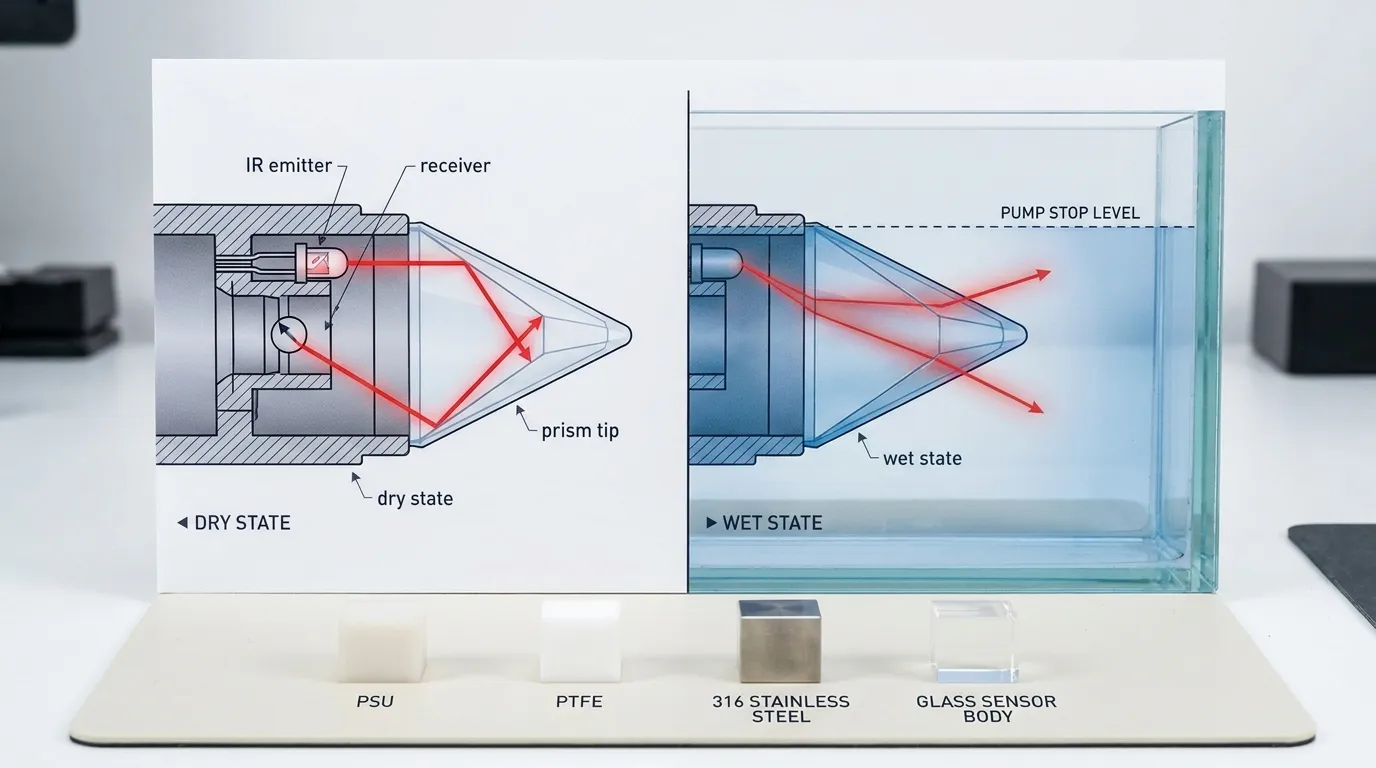
ફોટોઇલેક્ટ્રિક લેવલ સેન્સર ઇન્ફ્રારેડ એલઇડીનો ઉપયોગ કરે છે, ફોટોટ્રાન્ઝિસ્ટર, અને સેન્સિંગ ટીપ પર આકારના ઓપ્ટિકલ પ્રિઝમ. હવામાં, ઇન્ફ્રારેડ લાઇટ પ્રિઝમની અંદર આંતરિક રીતે પરાવર્તિત થાય છે અને રીસીવર સુધી પહોંચે છે. જ્યારે પ્રિઝમ પ્રવાહી દ્વારા આવરી લેવામાં આવે છે, વક્રીભવનની સ્થિતિ બદલાય છે અને ઓછો પ્રકાશ રીસીવર પર પાછો ફરે છે. ઇલેક્ટ્રોનિક્સ આ ઓપ્ટિકલ પરિવર્તનને ડિજિટલ આઉટપુટમાં રૂપાંતરિત કરે છે.
આ ડિઝાઇનમાં કોઈ ફ્લોટ આર્મ નથી, લોહચુંબક, હિંજ, અથવા પ્રવાહીની અંદર યાંત્રિક ભાગને ખસેડવો. તે પંપ કટ-ઓફ એપ્લિકેશન્સ માટે મહત્વપૂર્ણ છે જ્યાં ધીમું, અટવાઈ ગયું, અથવા નમેલા ફ્લોટ સ્ટોપ સિગ્નલમાં વિલોપ કરી શકે છે. ઓપ્ટિકલ સેન્સિંગ ખાસ કરીને કોમ્પેક્ટ જળાશયો માટે ઉપયોગી છે, સાંકડી ચેમ્બરો, OEM સાધનો, કૂલન્ટ ટાંકીઓ, ડોઝિંગ સિસ્ટમ્સ, પાણીના કન્ટેનર, અને સીલબંધ પમ્પ મોડ્યુલ્સ જ્યાં યાંત્રિક સ્વીચ ખૂબ મોટા હોઈ શકે છે.
ડ્રાય-રન સર્કિટ સામાન્ય રીતે પોઇન્ટ-લેવલ સ્વીચ તરીકે સેન્સરનો ઉપયોગ કરે છે. સંબંધિત બિંદુ શોધ કાર્યક્રમો માટે, જુઓ અમારું બિંદુ સ્તર બદલાવ પાનું.
પમ્પ કન્ટ્રોલ માટે લો-લેવલ કટ-ઓફ વાયરિંગ
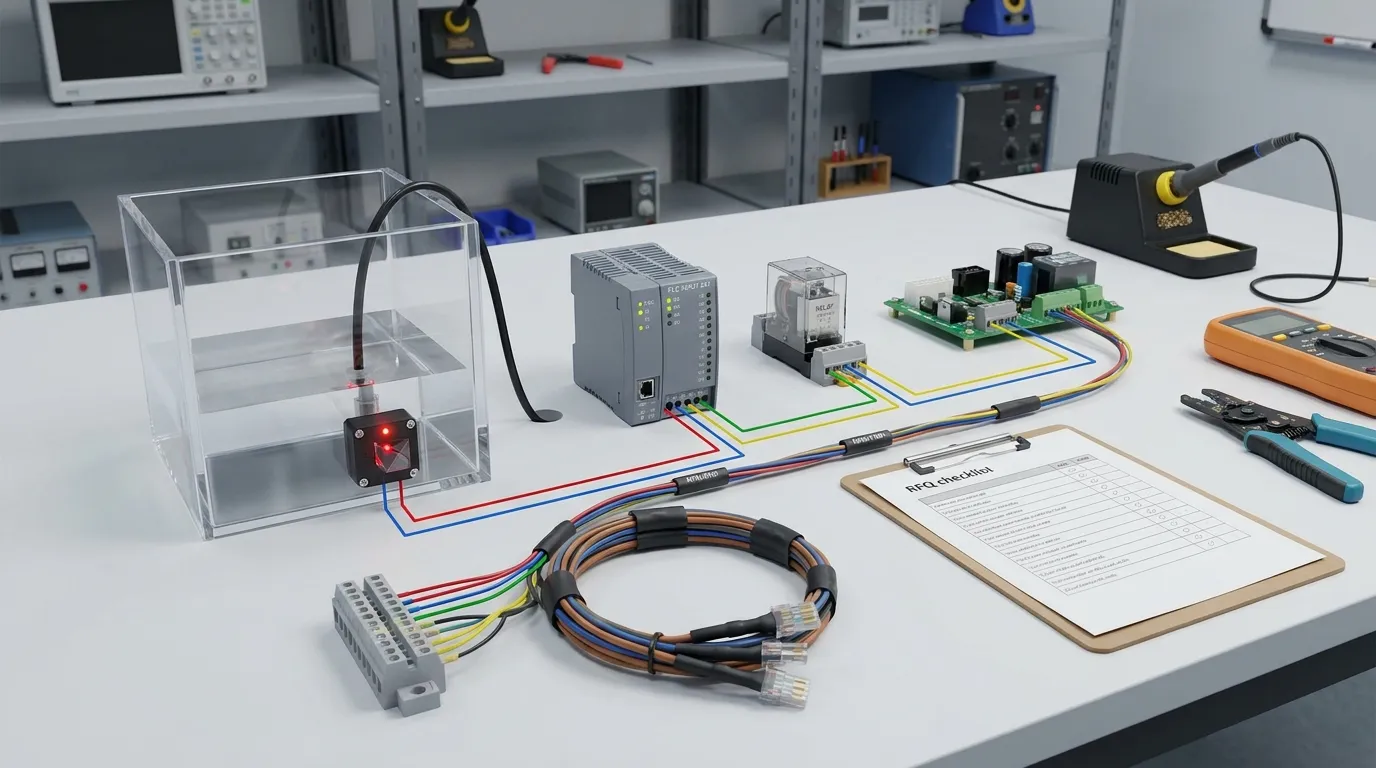
સેન્સર આઉટપુટ કંટ્રોલ ઇનપુટ સાથે મેળ ખાતું હોવું જાઇએ, માત્ર સેન્સર આકાર દ્વારા પસંદ કરવામાં આવતું નથી. ઓર્ડર આપતા પહેલા, ખાતરી કરો કે તમારી પમ્પ સિસ્ટમ રિલે કોઇલનો ઉપયોગ કરે છે કે નહીં, PLC ડિજીટલ ઇનપુટ, VFD શુષ્ક સંપર્ક ઇનપુટ, ટ્રાન્ઝિસ્ટર ઇનપુટ, અથવા વૈવિધ્યપૂર્ણ PCB.
સામાન્ય નિયંત્રણ વ્યવસ્થામાં શામેલ છે:
- સેન્સર ટુ પીએલસી ઇનપુટ: પીએલસી ભીના/શુષ્ક સ્થિતિને વાંચે છે અને પમ્પ કોન્ટેક્ટર અથવા વીએફડીને નિયંત્રિત કરે છે.
- મોડ્યુલને રિલે કરવા માટે સેન્સર: સેન્સર રિલે ચલાવે છે જે પમ્પ સક્ષમ સર્કિટને ખોલે છે.
- સેન્સર ટુ પમ્પ કંટ્રોલર: નિયંત્રક લો-લેવલ એલાર્મ અથવા રન-પરમિટ સિગ્નલ પ્રાપ્ત કરે છે.
- VFD ઇનપુટથી સેન્સર: ડ્રાય-રન સિગ્નલ ડ્રાઇવ ક્રિયાને નિષ્ક્રિય કરે છે અથવા ખામી ઇનપુટને ટ્રિગર કરે છે.
- સેન્સર થી ઓઇએમ પીસીબી: સિગ્નલ પ્રોડક્ટ કંટ્રોલ બોર્ડ દ્વારા સીધું જ વાંચવામાં આવે છે.
સૌથી સલામત ડિઝાઇન સામાન્ય રીતે "રન પરમિટ" તર્ક હોય છે. પમ્પને ત્યારે જ ચલાવવાની મંજૂરી આપવામાં આવે છે જ્યારે સેન્સર લિક્વિડ હાજર છે તેની પુષ્ટિ કરે છે. જ્યારે સેન્સર સુકાઈ જાય છે, રન પરમિટ દૂર કરવામાં આવી છે.
ડ્રાય-રન પ્રોટેક્શન માટે વાયરિંગ લોજિક કોષ્ટક
| સેન્સર ટીપ પર લિક્વિડ અવસ્થા | સેન્સર આઉટપુટ તર્ક | નિયંત્રક અર્થઘટન | પમ્પ ક્રિયા | શ્રેષ્ઠ ઉપયોગનો કેસ |
|---|---|---|---|---|
| ભીનું / પ્રવાહી હાજર છે | રન-પરમિટ સિગ્નલ સક્રિય છે | સલામત પ્રવાહી સ્તર ઉપલબ્ધ છે | પમ્પને ચલાવવા માટે પરવાનગી આપવામાં આવી છે | પ્રમાણભૂત નીચા સ્તરનું રક્ષણ |
| સૂકા / ટીપની નીચે પ્રવાહી | રન-પરમિટ સિગ્નલ દૂર થયેલ છે | ડ્રાય રન જોખમ શોધાયું | પમ્પ બંધ થાય છે અથવા ચાલુ કરી શકાતો નથી | નિષ્ફળતા-સલામત પંપ કટ-ઓફ |
| રિફિલ પછી ભીનું કરો | સિગ્નલ ફરીથી સક્રિય છે | પ્રવાહી પુન:સંગ્રહ થયેલ છે | તર્ક પર આધાર રાખીને આપોઆપ પુન:સુયોજિત અથવા મેન્યુઅલ રીસેટ કરો | સરળ જળાશયો અથવા નિયંત્રિત રિફિલ સિસ્ટમ્સ |
| સક્રિય થયેલ લેચ સાથે સૂકા કરો | સફર સક્રિય રહે છે | દોષ સ્વીકારવો જ જોઇએ | પમ્પ બંધ રહે છે | ઉચ્ચ મૂલ્યના પંપ, રાસાયણિક ડોઝ, બિનહાજર સિસ્ટમો |
| વેવ લાઇનની નજીક ભીના/સૂકા અસ્થિર | સિગ્નલ વારંવાર બદલાઈ શકે છે | ગપસપ કરવાનું જોખમ | વિલંબ વાપરો, હિસ્ટરેસિસ, અથવા સ્ટિલિંગ ટ્યુબ | ઉશ્કેરાયેલી ટાંકી અથવા નાના ચેમ્બર |
| સેન્સર/કેબલ ખામી | સિગ્નલ વાયરિંગ ડિઝાઇન પર આધાર રાખે છે | દોષ અથવા રન પરમિટ નથી | પમ્પ નિષ્ફળ-સલામત ડિઝાઇનમાં બંધ હોવો જાઇએ | ક્રિટિકલ પમ્પ પ્રોટેક્શન સર્કિટ્સ |
મોટા ભાગના ડ્રાય રન કાર્યક્રમો માટે, ઇચ્છિત ભીના/સૂકી આઉટપુટ સ્થિતિને સ્પષ્ટ રીતે સ્પષ્ટ કરો. ફેક્ટરી એનપીએન સાથે મેળ ખાવામાં મદદ કરી શકે છે, PNP, NO/NC, અથવા તમારી નિયંત્રક ડિઝાઇન માટે એનાલોગ આઉટપુટ.
ઝડપી ઓપ્ટિકલ પ્રતિસાદ વિ સુસ્ત ફ્લોટ સ્વીચો
ફ્લોટ સ્વીચો સામાન્ય છે, પરંતુ તેઓ હંમેશા પંપ ડ્રાય રન પ્રોટેક્શન માટે આદર્શ નથી. ફ્લોટને શારીરિક હિલચાલની જરૂર હોય છે, સ્વિંગ કરવા માટે જગ્યા, અને યોગ્ય દિશા. નાની ટાંકીઓમાં, તૈલી પ્રવાહી, સાંકડી પમ્પ ચેમ્બર, અથવા કંપન સાથેના સાધનો, ફ્લોટ ધીમે ધીમે પ્રતિસાદ આપી શકે છે અથવા વળગી શકે છે.
ઓપ્ટિકલ સેન્સર સેન્સિંગ ટીપ પર સીધો પ્રતિસાદ આપે છે. જ્યારે પ્રવાહી પ્રિઝમને ઉજાગર કરે છે, ઓપ્ટિકલ સ્થિતિ ફ્લોટ આર્મ ડ્રોપ કરવા માટે રાહ જોયા વગર બદલાય છે. આ કટ-ઓફ પોઇન્ટને વધુ પુનરાવર્તિત અને કોમ્પેક્ટ બનાવે છે.
જ્યારે ખરીદનારને જરૂર હોય ત્યારે ઓપ્ટિકલ ડ્રાય-રન સેન્સિંગ ઉપયોગી છે:
- ચોક્કસ નીચા-સ્તરની કટ-ઓફ ઊંચાઈ
- નાના જળાશયની અંદર કોમ્પેક્ટ માઉન્ટિંગ
- ન્યૂનતમ સલામત સ્તરે ઝડપી સ્વિચિંગ
- પ્રવાહીમાં કોઈ ફરતા ભાગો નથી
- OEM-મૈત્રીપૂર્ણ આવાસ અને કેબલ કસ્ટમાઇઝેશન
- પીસીબી સાથે ક્લીનર સિગ્નલ ઇન્ટિગ્રેશન, PLC, અથવા પમ્પ કંટ્રોલર
જો કે, સેન્સર હજુ પણ યોગ્ય રીતે પસંદ થયેલ હોવુ જ જોઇએ. ફીણ પ્રવાહી, ભારે આવરણ, સ્ફટિકીકરણ, અથવા જાડા અવશેષો માટે સામગ્રીની પસંદગીની જરૂર પડી શકે છે, ટીપ પ્લેસમેન્ટ, સફાઈ પ્રવેશ, અથવા વધારાની સુરક્ષા પદ્ધતિ.
લેચ, વિલંબ, અને ઓટો-રીસેટ લોજિક
સેન્સર આઉટપુટ એ પ્રોટેક્શન સિસ્ટમનો માત્ર એક ભાગ છે. નિયંત્રણ તર્ક નક્કી કરે છે કે શુષ્ક સ્થિતિ શોધી કાઢ્યા પછી શું થાય છે.
આપોઆપ પુન:સુયોજિત તર્ક સેન્સર ટીપની ઉપર લિક્વિડ પાછો ફર્યા બાદ પમ્પને ફરી શરૂ થવા દે છે. આ સરળ પાણીની ટાંકીઓ માટે કામ કરી શકે છે, રિફિલ જળાશયો, અથવા એવી સિસ્ટમો જ્યાં પુનઃપ્રારંભ સલામત અને અપેક્ષિત છે.
લેચ તર્ક જ્યાં સુધી ઓપરેટર અથવા કંટ્રોલર ફોલ્ટને રિસેટ ન કરે ત્યાં સુધી ડ્રાય રન ટ્રિપ બાદ પમ્પને બંધ રાખે છે. મોંઘા પંપ માટે આ વધુ સારું છે, રાસાયણિક પ્રણાલીઓ, ઔદ્યોગિક ડોઝિંગ, અજાણ્યા સાધનો, અથવા એવી સિસ્ટમો જ્યાં વારંવાર શુષ્ક શરૂ થાય છે તે નુકસાન પહોંચાડી શકે છે.
વિલંબ તર્ક તરંગોથી ઉપદ્રવ ટ્રિપ્સને અટકાવે છે, છંટકાવ, પરપોટા, અથવા સેન્સરની આસપાસ ક્ષણિક પ્રવાહી હિલચાલ. ટૂંકા કંટ્રોલર વિલંબથી પમ્પને બંધ કરતા પહેલા સેન્સર ખરેખર સૂકા છે તેની પુષ્ટિ કરી શકે છે. રિસ્ટાર્ટ વિલંબ રિફિલ પછી ટૂંકા સાયકલિંગને પણ અટકાવી શકે છે.
પાનાંનો વિષય પંપ જાળવણી નથી; મુખ્ય મુદ્દો નિયંત્રણ ડિઝાઇન છે: વ્યાખ્યાયિત કરો કે શું શુષ્ક આઉટપુટ પમ્પને તરત જ બંધ કરવું જોઈએ, ચકાસાયેલ વિલંબ પછી બંધ કરો, મેન્યુઅલ પુન:સુયોજિત થાય ત્યાં સુધી લેચ કરો, અથવા ભીના સિગ્નલ પાછા ફર્યા પછી આપોઆપ રીસેટ કરો.
કટ-ઓફ પોઈન્ટ પર સેન્સરને માઉન્ટ કરવું
સેન્સર લઘુત્તમ સલામત પ્રવાહી સ્તર પર ઇન્સ્ટોલ કરવું જાઇએ, ફક્ત ટાંકીના તળિયે જ નહીં. સાચી ઊંચાઈ સક્શન પોર્ટ પર આધાર રાખે છે, પંપ ઇન્ટેક ભૂમિતિ, વમળનું જોખમ, જરૂરી અનામત વોલ્યુમ, અને શું ટાંકીની સપાટી કામગીરી દરમિયાન ખસેડે છે.
માઉન્ટિંગ માર્ગદર્શન:
- પ્રિઝમની ટોચને પ્રવાહીની ઊંચાઈ પર મૂકો જ્યાં પમ્પ અટકવો જાઇએ..
- ટેન્કની દીવાલોથી ટીપને સાફ રાખો, ખૂણાઓ, કાંપ ઝોન, અને મૃત વિસ્તારો.
- પરપોટા અથવા છાંટા વારંવાર ખુલ્લા હોય તેવા સ્થળોને ટાળો અને ટોચને ઢાંકી દો.
- ઉશ્કેરાયેલી ટાંકીઓ માટે, સ્ટિલિંગ ટ્યુબ અથવા પ્રોટેક્ટેડ સેન્સિંગ ચેમ્બરને ધ્યાનમાં લો.
- સાઇડ-વોલ ઇન્સ્ટોલેશન માટે, થ્રેડ પ્રકારની ખાતરી કરો, સીલિંગ પદ્ધતિ, અને કેબલ દિશા.
- રાસાયણિક રીતે આક્રમક પ્રવાહી માટે, સુસંગત ભીની સામગ્રીને પસંદ કરો.
- ઓઇલ અથવા ફ્યૂઅલ એપ્લીકેશન માટે, મોટા પાયે ઉત્પાદન પહેલાં ઓપ્ટિકલ પ્રતિસાદ અને સામગ્રી સુસંગતતાની પુષ્ટિ કરો.
સમાન ઓપ્ટિકલ સેન્સિંગ સિદ્ધાંતોનો ઉપયોગ કરીને ઓવરફ્લો અને ઉચ્ચ-સ્તરીય સુરક્ષા માટે, જુઓ અમારું ઓવરફ્લો પ્રોટેક્શન સેન્સર પાનું.
RFQ પહેલાં ડ્રાય-રન પ્રોટેક્શન ચેકલિસ્ટ
| ખાતરી કરવા માટે વસ્તુ | કટ-ઓફ સર્કિટ માટે તે શા માટે મહત્વનું છે |
|---|---|
| પ્રવાહી પ્રકાર | પાણી, કૂલન્ટ, તેલ, બળતણ, રાસાયણિક, અથવા મિશ્રિત પ્રવાહી સામગ્રી અને પ્રકાશીય વર્તણૂકને અસર કરે છે |
| ન્યૂનતમ સલામત સ્તર | ચોક્કસ સેન્સર માઉન્ટિંગ ઊંચાઈ નક્કી કરે છે |
| ટાંકી અથવા ચેમ્બર સામગ્રી | થ્રેડને અસર કરે છે, સીલીંગ, અને માઉન્ટિંગ પદ્ધતિ |
| ઇનપુટ પ્રકારને નિયંત્રણ કરો | PLC, રીલે, VFD, પંપ નિયંત્રક, અથવા પીસીબીને વિવિધ આઉટપુટ મેચિંગની જરૂર હોય છે |
| આઉટપુટ પસંદગી | NPN, PNP, NO/NC, અથવા એનાલોગ આઉટપુટ પરિપથ સાથે બંધબેસતો હોવો જ જોઇએ |
| તર્કને પુન:સુયોજિત કરો | આપોઆપ પુન:સુયોજિત અથવા લેચ પુન:સુયોજન પંપ પુન:શરૂ વર્તણૂક બદલો |
| વિલંબ આવશ્યકતા | તરંગોથી ખોટી ટ્રિપ્સને અટકાવે છે, સ્પંદન, પરપોટા, અથવા છંટકાવ |
| ભીની સામગ્રી | PSU, PTFE, 316 સ્ટેઈનલેસ સ્ટીલ, અથવા કાચ પ્રવાહી અને પર્યાવરણ સાથે મેળ ખાય છે |
| કેબલ અને કનેક્ટર | ઓઇએમ એસેમ્બલી માટે મહત્વપૂર્ણ, સેવા પ્રવેશ, અને વોટરપ્રૂફ રૂટિંગ |
| સ્થાપન દિશા | બાજુ માઉન્ટ, ઊભું માઉન્ટ, ચેમ્બર માઉન્ટ, અથવા વૈવિધ્યપૂર્ણ ધારક વિશ્વસનીયતાને અસર કરે છે |
5-પગલું સેવા પ્રક્રિયા
1. પૂછપરછ
તમારો પંપ પ્રકાર મોકલો, ટાંકી ચિત્ર, પ્રવાહી પ્રકાર, ઇનપુટ નિયંત્રણ કરો, અને વોટ્સએપ અથવા ઇમેઇલ દ્વારા જરૂરી કટ-ઓફ લેવલ. ફોટા, વાયરિંગ આકૃતિઓ, અથવા પીસીબી ઇનપુટ વિગતો અમારા ઇજનેરોને ઝડપથી પ્રતિસાદ આપવામાં મદદ કરે છે.
2. સ્પષ્ટીકરણ અને કસ્ટમાઇઝેશન
અમારી ટીમ ઓપ્ટિકલ સેન્સર પ્રકારની પુષ્ટિ કરે છે, ભીની સામગ્રી, આઉટપુટ તર્ક, થ્રેડ, કેબલ, કનેક્ટર, અને માઉન્ટિંગ દિશા. OEM/ODM પ્રોજેક્ટ્સ માટે, સાધનોની ડિઝાઇનને ફિટ કરવા માટે હાઉસિંગ અને હાર્નેસની વિગતોને સમાયોજિત કરી શકાય છે.
3. નમૂનો
તમારા વાસ્તવિક પ્રવાહી અને નિયંત્રક સર્કિટમાં ભીના / શુષ્ક સિગ્નલ પરીક્ષણ માટે નમૂના તૈયાર કરી શકાય છે. રીસેટ વર્તણૂકને ચકાસવા માટે આ પગલું મહત્વપૂર્ણ છે, નીચા સ્તરના બંધ સમય, અને માઉન્ટિંગ સ્થિતિ.
4. ઉત્પાદન અને ક્યુસી
નમૂનાની મંજૂરી પછી, ઉત્પાદન પુષ્ટિ થયેલા સ્પષ્ટીકરણને અનુસરે છે. QC ઓપ્ટિકલ સ્વિચિંગ ફંક્શન પર ધ્યાન કેન્દ્રિત કરે છે, આઉટપુટ વર્તણૂક, વાયરીંગ, સીલીંગ, અને સંમત રૂપરેખાંકન પર આધારિત દેખાવ.
5. વહાણખોરી
હોજેલીટેક શેનઝેનથી યુ.એસ.ના ગ્રાહકોને ઓપ્ટિકલ લિક્વિડ લેવલ સેન્સર ઉત્પાદનોની નિકાસ કરે છે, અમે, ભારત, અને અન્ય બજારો. પેકેજિંગ અને દસ્તાવેજીકરણ પ્રોજેક્ટ આવશ્યકતાઓ અનુસાર ગોઠવવામાં આવે છે.
પુષ્ટિ કરવા માટેની આવશ્યકતાઓ અને સ્પેસિફિકેશન
પંપ ડ્રાય-રન પ્રોટેક્શન પ્રોજેક્ટ માટે, ઓર્ડર આપતા પહેલા આ વિગતોની પુષ્ટિ કરો:
- પ્રવાહી નામ અને સાંદ્રતા
- સામાન્ય અને ન્યૂનતમ પ્રવાહી સ્તર
- ટાંકીની દિવાલની જાડાઈ અને માઉન્ટિંગ જગ્યા
- જરૂરી થ્રેડ અથવા સ્થાપન માળખું
- સેન્સર બોડી મટિરિયલ અને પ્રિઝમ/ટિપ મટિરિયલ
- કંટ્રોલ બોર્ડ દ્વારા જરૂરી સપ્લાય વોલ્ટેજ
- આઉટપુટ પ્રકાર: NPN, PNP, 4-20 mA, અથવા બીજો ઇન્ટરફેસ
- વેટ-સ્ટેટ અને ડ્રાય-સ્ટેટ આઉટપુટ પસંદગી
- કેબલ લંબાઈ, કનેક્ટર, અને વાયર રંગ આવશ્યકતા
- શું પમ્પ આપોઆપ પુન:સુયોજિત થવું જોઇએ અથવા બંધ રહેવું જોઇએ
- શું કાર્યક્રમને દૂરસ્થ ટાંકી મોનિટરિંગ માટે Tuya/Smart Life એકીકરણની જરૂર છે
ઇન્સ્ટોલેશન સમયે વાયરિંગ લોજિકનો અંદાજ લગાવશો નહિં. ઉત્પાદન પહેલાં કટ-ઓફ સર્કિટનો ઉલ્લેખ કરવો જાઇએ જેથી સેન્સર આઉટપુટ અને કંટ્રોલર ઇનપુટ યોગ્ય રીતે મેળ ખાય.
ઓપ્ટિકલ સેન્સર વિ અન્ય ડ્રાય-રન પ્રોટેક્શન પદ્ધતિઓ
| પદ્ધતિ | તાકાત | મર્યાદા | શ્રેષ્ઠ બંધબેસતો |
|---|---|---|---|
| ઓપ્ટિકલ લેવલ સેન્સર | ઝડપી બિંદુ-સ્તરનો પ્રતિસાદ, સંકુચિત, ખસેડતા ફ્લોટ નથી | યોગ્ય સામગ્રી અને ક્લીન સેન્સિંગ ટીપની જરૂર છે | OEM ટાંકીઓ, જળાશયો, કોમ્પેક્ટ પમ્પ સિસ્ટમ્સ |
| ફ્લોટ સ્વીચ | સરળ અને પરિચિત | ધીમું હોઈ શકે છે, ભારે, નમેલ છે, અથવા અટવાઈ ગયા | પૂરતી ફ્લોટ હિલચાલ જગ્યા સાથે મોટી ટાંકીઓ |
| પ્રેશર સ્વીચ | નીચા સક્શન અથવા ડિસ્ચાર્જની સ્થિતિનું અનુમાન લગાવી શકે છે | વાસ્તવિક ટાંકી સ્તરને સીધું શોધી શકશે નહિં | દબાણ આધારિત બેકઅપની જરૂર હોય તેવા પમ્પ સિસ્ટમ્સ |
| ફ્લો સ્વીચ | વાસ્તવિક પ્રવાહ નુકશાનને શોધી કાઢે છે | પ્રવાહ પહેલાથી જ નિષ્ફળ થયા પછી પ્રતિક્રિયા આપી શકે છે | પાઇપલાઇન સુરક્ષા અને ગૌણ પુષ્ટિ |
| હાલનું સંવેદના | અસામાન્ય મોટર લોડને શોધી કાઢે છે | ટ્યુનિંગની જરૂર છે અને પંપ દ્વારા બદલાઈ શકે છે | મોટર પ્રોટેક્શન લેયર, ચોક્કસ સ્તર કટ-ઓફ નથી |
ઘણી કોમ્પેક્ટ સિસ્ટમ્સ માટે, ઓપ્ટિકલ સેન્સર એ સૌથી સીધું લો-લેવલ કટ-ઓફ ડિવાઇસ છે. જટિલ ઔદ્યોગિક પ્રણાલીઓ માટે, તેને દબાણ સાથે પણ જોડી શકાય છે, પ્રવાહ, અથવા સ્તરવાળા રક્ષણ માટે વર્તમાન દેખરેખ.
હોજેલીટેક સાથે શા માટે કામ કરવું
હોજેલીટેક એ શેનઝેન ઉત્પાદક અને નિકાસકાર છે જે ફોટોઇલેક્ટ્રિક ઓપ્ટિકલ સેન્સિંગ અને પ્રવાહી સ્તરના સેન્સર વિકાસ પર ધ્યાન કેન્દ્રિત કરે છે. ઇન-હાઉસ આર સાથે&D અને OEM/ODM ક્ષમતા, અમે ખરીદદારોને સેન્સર બોડી સાથે મેળ ખાવામાં મદદ કરીએ છીએ, આઉટપુટ પરિપથ, કેબલ, અને પંપ પ્રોટેક્શન એપ્લિકેશન માટે માઉન્ટિંગ ડિઝાઇન.
અમારી ટીમ વ્યવહારિક એન્જિનિયરિંગ પ્રશ્નોને ટેકો આપે છે: ભીના/સૂકા તર્ક, NPN/PNP પસંદગી, થ્રેડ વિકલ્પો, સામગ્રી સુસંગતતા, અને નમૂના પરીક્ષણ. દરેક પંપ માટે એક જેનરિક સ્વીચ ઓફર કરવાને બદલે, અમે ઉત્પાદન પહેલાં કટ-ઓફ પોઇન્ટ અને નિયંત્રણ વર્તણૂકને વ્યાખ્યાયિત કરવામાં મદદ કરીએ છીએ.
ચપળ
શું ઓપ્ટિકલ લેવલ સેન્સર પંપ ડ્રાય-રનિંગને અટકાવી શકે છે?
હા. જ્યારે ન્યૂનતમ સલામત પ્રવાહી સ્તર પર માઉન્ટ કરવામાં આવે છે, સેન્સર શોધી કાઢે છે કે જ્યારે પ્રવાહી પ્રિઝમની ટોચથી નીચે પડે છે અને પીએલસી દ્વારા પંપને રોકવા માટે શુષ્ક-અવસ્થા સિગ્નલ મોકલે છે, રીલે, VFD, અથવા પમ્પ કંટ્રોલર.
ઓપ્ટિકલ લેવલ સેન્સર પમ્પ ડ્રાય રન પ્રોટેક્શનનો શો અર્થ થાય છે?
તેનો અર્થ એ છે કે પંપ કંટ્રોલ સર્કિટમાં લો-લેવલ કટ-ઓફ ડિવાઇસ તરીકે ઓપ્ટિકલ પોઇન્ટ-લેવલ સેન્સરનો ઉપયોગ કરવો. પમ્પ ત્યારે જ ચાલે છે જ્યારે સેન્સર લિક્વિડ હાજર છે તેની પુષ્ટિ કરે છે અને જ્યારે સેન્સર શુષ્ક િસ્થતિ શોધી કાઢે છે ત્યારે અટકી જાય છે.
શું ટેન્ક રિફિલ થયા પછી પમ્પ આપમેળે ફરી શરૂ થવું જોઈએ?
તે જોખમ પર નિર્ભર કરે છે. સરળ રિફિલ ટાંકી માટે ઓટો-રીસેટ યોગ્ય છે. મોંઘા પમ્પ માટે લેચ/મેન્યુઅલ રીસેટ સલામત છે, રસાયણો, બિનહાજર સિસ્ટમો, અથવા એપ્લીકેશન્સ જ્યાં વારંવાર શુષ્ક શરૂ થાય છે તે સાધનોને નુકસાન પહોંચાડી શકે છે.
શું ઓપ્ટિકલ સેન્સર ફ્લોટ સ્વીચ કરતા વધુ ઝડપી છે?
ઘણી કોમ્પેક્ટ ટાંકીઓમાં, હા. ઓપ્ટિકલ સેન્સર ફ્લોટ આર્મને ખસેડવાની રાહ જોયા વિના પ્રિઝમ ટીપ પર સ્થિતિ બદલે છે. આ પસંદ કરેલા પ્રવાહી સ્તર પર વધુ સીધું કટ-ઓફ સિગ્નલ આપે છે.
ડ્રાય-રન પ્રોટેક્શન માટે સેન્સર ક્યાં ઇન્સ્ટોલ કરવું જાઇએ?
તેને પમ્પ સક્શન રિસ્ક પોઇન્ટથી ઉપર ન્યૂનતમ સલામત કટ-ઓફ ઊંચાઈ પર ઇન્સ્ટોલ કરો.. પરપોટા ટાળો, કાંપ, અશાંતિ, અને એવા સ્થળો કે જ્યાં સેન્સર ટીપ સતત ભીના થવાને બદલે વારંવાર છંટકાવ કરી શકાય છે..
પમ્પ નિયંત્રક માટે મારે કયું આઉટપુટ પસંદ કરવું જોઈએ?
નિયંત્રણ ઇનપુટ પર આધારિત આઉટપુટ પસંદ કરો. પીએલસી ઘણીવાર એનપીએન અથવા પીએનપી ડિજિટલ ઇનપુટ્સનો ઉપયોગ કરે છે, રિલે મોડ્યુલોને NO/NC લોજિકની જરૂર પડી શકે છે, અને કેટલીક સિસ્ટમોને એનાલોગ અથવા કસ્ટમ પીસીબી ઇનપુટની જરૂર હોય છે. RFQ દરમ્યાન આની પુષ્ટિ કરો.
પમ્પ ડ્રાય રન સેન્સર પ્રોટેક્શન માટે ક્વોટની વિનંતી કરો
તમારું ટાંકી ચિત્ર મોકલો, પ્રવાહી પ્રકાર, પંપ નિયંત્રણ પદ્ધતિ, વાયરિંગ ઇનપુટ, અને વોટ્સએપ અથવા ઇમેઇલ દ્વારા હોજેલીટેકને કટ-ઓફ લેવલની જરૂર છે. અમે તમારા ડ્રાય-રન પ્રોટેક્શન સર્કિટ માટે ઓપ્ટિકલ લેવલ સેન્સર રૂપરેખાંકનની ભલામણ કરીશું, આઉટપુટ તર્ક સહિત, પદાર્થ, થ્રેડ, કેબલ, અને નમૂના પરીક્ષણ વિકલ્પો.


