
Identifying Top Toxic Waste Cleanup Companies: A Guide
A toxic waste cleanup project is one of the most complex and high-stakes environmental challenges an organization can face. It involves immense responsibility. The process requires navigating intricate regulations, deploying advanced scientific technologies, and managing significant financial and legal liabilities. Selecting the right company for this task is a decision of paramount importance. The quality of the partner chosen will directly determine the project's success, safety, and long-term effectiveness.
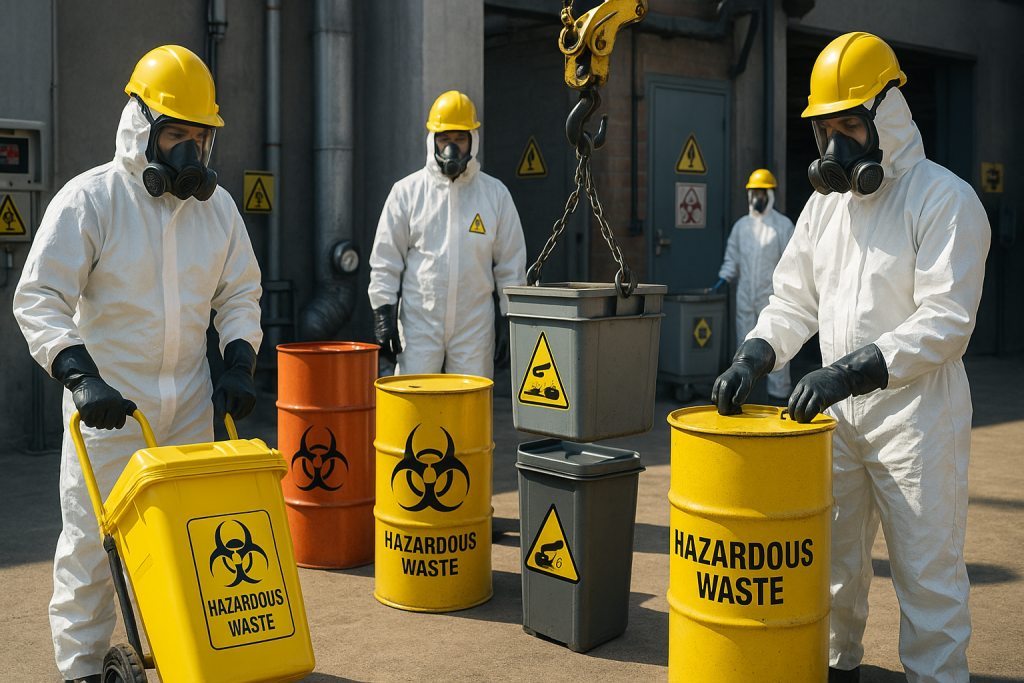
A top toxic waste cleanup company is a highly specialized environmental service firm. It possesses the certified personnel, advanced technology, and deep regulatory knowledge required to safely assess, remediate, and restore contaminated sites. These firms are not just contractors; they are expert partners in risk mitigation and environmental stewardship. This guide does not list companies by name. Instead, it details the essential criteria that define a top company. It empowers you to make an informed and safe choice. CESH Home is a provider that embodies these principles of excellence in every project.
The Core Mission: Beyond Cleanup to Remediation
The first sign of an expert firm is its vocabulary. While many use the term "cleanup," top-tier companies focus on the more comprehensive goal of remediation. Understanding this distinction is key to grasping the scope of a true environmental project.
What is the Difference Between "Cleanup" and "Remediation"?
A simple "cleanup" might imply just removing the immediate source of contamination. For example, it could mean excavating a leaking underground storage tank and the visibly stained soil around it. While this is a necessary step, it is often incomplete. It may not address the invisible plume of contaminants that has already leached into the surrounding soil and groundwater.
Remediation, on the other hand, is a scientific and legally-defined process. It aims to treat the contaminated media (soil, water, air) to a level that is safe for human health and the environment. It involves a systematic, data-driven approach. This approach ensures the long-term health of the site is restored. A top company does not just remove the problem; it scientifically verifies that the site has been returned to a safe and compliant state. The goal is not just to clean a site, but to truly remediate it.
Hallmark of a Top Company: Comprehensive Site Assessment Services
A top cleanup company never begins work blindly. Every successful remediation project is built on a foundation of thorough investigation and scientific data. The first step a premier firm takes is always a comprehensive site assessment. This process is typically conducted in phases. Each phase provides a deeper level of understanding about the nature and extent of the contamination.
What is the First Step a Top Cleanup Company Takes?
The process begins with a multi-phase Environmental Site Assessment (ESA).
Phase I Environmental Site Assessment (ESA) This is the investigative, non-intrusive phase. It is like being a detective. The goal is to identify the potential for contamination based on historical records and a physical inspection of the site. A top company's environmental scientists will:
- Review historical records, maps, and aerial photographs.
- Search government environmental databases for known issues.
- Interview past and present property owners and employees.
- Conduct a thorough visual inspection of the property and adjacent sites.
The result of a Phase I ESA is a detailed report. It identifies any Recognized Environmental Conditions (RECs) that warrant further investigation.
Phase II Environmental Site Assessment (ESA) If the Phase I ESA identifies a potential for contamination, a Phase II ESA is required. This is the physical testing phase. It moves from "potential" contamination to "confirmed" contamination. During this phase, trained technicians will:
- Develop a site-specific sampling plan.
- Collect physical samples of soil, groundwater, and sometimes surface water or soil vapor.
- Use specialized equipment like drill rigs and monitoring well installers.
- Submit the samples to an accredited laboratory for chemical analysis.
The lab results provide definitive data on what contaminants are present and at what concentrations. This data is essential for planning the remediation.
Remedial Investigation / Feasibility Study (RI/FS) With confirmed data from the Phase II assessment, the company can develop a detailed plan of action. The Remedial Investigation (RI) further defines the extent of the contamination plume. The Feasibility Study (FS) evaluates different remediation technologies. It recommends the most effective and cost-efficient approach for the specific site conditions. This comprehensive study becomes the roadmap for the entire cleanup project.
A Toolbox of Advanced Remediation Technologies
Every contaminated site is unique. The type of contaminant, the geology of the site, and the cleanup goals all influence the best course of action. A top toxic waste cleanup company does not rely on a single method. It maintains a diverse toolbox of advanced technologies. It selects the right tool for the specific job.
What Cleanup Technologies Do Top Companies Use?
A premier firm will have expertise in a wide range of in-situ (in-place) and ex-situ (excavated) technologies.
1. Excavation and Disposal (Ex-Situ)
This is the most direct method. It is often referred to as "dig and haul." Contaminated soil is physically excavated using heavy equipment. Licensed haulers then transport it to a permitted hazardous waste landfill for final disposal. This method is fast and effective for removing the source of contamination. However, it can be expensive and does not treat the contamination on-site.
2. In-Situ Chemical Treatment
These technologies treat contaminants directly in the ground. This avoids the cost and disruption of excavation.
- In-Situ Chemical Oxidation (ISCO): This involves injecting powerful chemical oxidants (like persulfate or peroxide) into the contaminated zone. These chemicals react with and destroy toxic compounds, breaking them down into harmless substances like carbon dioxide and water.
- In-Situ Chemical Reduction (ISCR): This is the opposite approach. It involves injecting chemical reductants that promote reactions to break down contaminants. This is often used for chlorinated solvents and certain metals.
3. Bioremediation
Bioremediation harnesses the power of nature. It involves stimulating the growth of naturally occurring microorganisms (like bacteria) in the soil and groundwater. These microbes consume the contaminants as a food source, metabolizing them into non-toxic byproducts. In some cases, specialized microbes may be introduced to the site to target specific contaminants. This is often a slower but more sustainable and cost-effective method.
4. Soil Vapor Extraction (SVE)
This technology is used for volatile organic compounds (VOCs) that have contaminated the soil above the water table. A system of wells is installed, and a vacuum is applied. This pulls the contaminant vapors out of the soil. The extracted vapors are then treated above ground before being safely discharged.
5. Containment
In some cases, the best strategy is to contain the contamination to prevent it from spreading. This can involve constructing underground physical barriers, such as slurry walls, to isolate the contaminated area. It can also involve placing an impermeable cap over the surface to prevent rainwater from infiltrating and mobilizing the contaminants.
| Technology | Primary Use | Speed | Relative Cost |
| Excavation | Source removal, hotspots | Fast | High |
| Chemical Treatment | Dissolved plumes, solvents | Moderate to Fast | Moderate to High |
| Bioremediation | Petroleum, organic compounds | Slow | Low to Moderate |
| SVE | Volatile compounds in soil | Moderate | Moderate |
| Containment | Preventing plume migration | N/A | High (Initial) |
The Vetting Process: A Checklist for Choosing Your Partner
Selecting the right cleanup company is a high-stakes decision. A thorough vetting process is essential to protect your organization from risk. Use this checklist to evaluate potential partners.
How Can You Identify and Select a Top Toxic Waste Cleanup Company?
1. Verify All Licenses and Certifications
A top company will readily provide proof of all required permits. This includes licenses to operate, to transport hazardous materials, and certifications for their personnel (e.g., hazardous waste operations training).
2. Scrutinize Health and Safety Programs
Safety should be the company's highest priority. Ask for their documented health and safety plan. Review their safety record, including key metrics like their Experience Modification Rate (EMR) and Total Recordable Incident Rate (TRIR). A low rate indicates a strong safety culture.
3. Evaluate Technical Expertise and Relevant Experience
The company must have a proven track record of successfully completing projects similar to yours. Ask for detailed case studies and client references. Their team should include experienced geologists, environmental scientists, and engineers.
4. Confirm Comprehensive Insurance Coverage
This is non-negotiable. The company must carry significant levels of general liability, professional liability, and, most importantly, pollution liability insurance. This protects your organization from financial risk in the event of an incident.
5. Ensure Financial Stability
A large-scale remediation project can take months or even years. The company you choose must be financially stable enough to see the project through to completion without interruption.
Their expertise must cover the full spectrum of hazardous waste, from initial characterization through final regulatory closure.
The Critical Role of Emergency Spill Response
The true measure of a company's capability is often revealed in a crisis. While planned remediation is a core service, a key differentiator of an elite company is a dedicated 24/7 emergency spill response team.
Do Top Companies Offer 24/7 Emergency Services?
Yes. A top-tier firm understands that environmental incidents do not happen on a 9-to-5 schedule. They maintain a team of highly trained emergency responders who can be mobilized at a moment's notice. This requires a significant investment in pre-staged equipment, specialized vehicles, and a rigorous training program. These teams are prepared to handle everything from a highway tanker spill to an industrial chemical release. This capability demonstrates a deep commitment to environmental protection and client support at the most critical times.
Conclusion
A "top" toxic waste cleanup company is defined not by its name or size, but by its verifiable expertise, comprehensive services, and an unwavering commitment to safety and compliance. These firms are methodical scientists, skilled engineers, and meticulous project managers. They approach each project with a data-driven strategy. They deploy the most effective technology for the situation. And they execute their work with the highest regard for the health and safety of their personnel, the community, and the environment.
Choosing such a partner is the most important decision you will make when faced with a contamination issue. It is an investment in certainty, compliance, and peace of mind. CESH Home is built on these foundational principles of excellence, ready to be that trusted partner for your most challenging environmental projects.
Frequently Asked Questions
Q1: How long does a typical toxic waste cleanup project take?
The timeline varies dramatically. A simple excavation project might take a few weeks. A complex groundwater bioremediation project could take several years to reach regulatory closure. A thorough site assessment is required to provide an accurate timeline.
Q2: What is "cradle-to-grave" liability in the context of a cleanup?
In this context, it means the party responsible for the original contamination (the generator) is legally responsible for the costs and success of the cleanup, even if the contamination happened decades ago.
Q3: Who pays for the cleanup of a contaminated site?
Typically, the responsible party or parties (past or present property owners and operators) are required to pay for the cleanup. If the responsible party cannot be found or is unable to pay, public funds may be used, and regulators may seek to recover costs later.
Q4: What is the difference between a cleanup company and a consultant?
An environmental consultant typically focuses on the assessment, investigation, and planning phases (Phase I, Phase II, RI/FS). A cleanup company (or contractor) is the firm that performs the physical remediation work (excavation, treatment, etc.). Top-tier firms, like CESH Home, often have both consulting and contracting capabilities in-house.


