
DIY光学液位センサー: 建設 & パーツガイド
A DIY光学液体レベルセンサー 実用的な方法は2通りで構築可能です: IR LEDから自分で光学ヘッドを組み立ててください, フォトトランジスタ, そしてプリズム先端, あるいは、準備済みの光学レベルモジュールから配線に集中するか, 取り付け, およびキャリブレーション. 最初の道では、光電液体検出の仕組みを教えてくれます. 2番目の道の方が速いです, クリーナー, そして通常、稼働中のタンクプロジェクトにより信頼性が高いです.
このガイドでは両方のルートを解説しています, 一部を含む, コスト要因, 取り付けの選択肢, キャリブレーションステップ, 一般的な故障モード, そして、DIYを続けるよりもHojellyTekの完成したセンサーを買う方が理にかなっている場合もあります.
光学液体レベルセンサーが湿潤状態と乾燥状態を検出する方法
光学レベルセンサーは光電検出を使用します. センサーヘッド内部, 赤外線LEDは透明なプリズムや光学チップに光を送ります. フォトトランジスタ, フォトダイオード, または受信機が返光を検出します.
プリズムの先端が空気中にあるとき, 赤外線は内部で反射し、強く受信機に戻ります. 液体がプリズムを覆うとき, 光の挙動は液体が空気と異なる屈折率を持つため変わります. 受信機は信号が低く、または異なるものを感知します, 回路はその変化をウェット/ドライ出力に変換します.
製品レベルの詳細な説明については, HojellyTekの項目を参照してください 光学レベルセンサー ガイド.
DIY用, つまり、タンク全体の高さを測っていないということです. あなたはポイントレベル検出器を作っています: この時点では空っぽだ, もう満杯です, 溢れ出した, ポンプ保護レベルに達しました, または貯水槽の補充が必要.
まずはDIYビルドの道を選びましょう
パスA: レディ光学センサーモジュールの使用
これはArduinoにとって最も簡単な選択肢です, ESP32, ラズベリーパイ・ピコ, ホビーオートメーション, 水族館, 水タンク, および小規模な貯水池. 光学ヘッド, エミッター, 受信機, 住宅, 基本的な回路はすでに構築されています. 低電圧電源だけを扱う, 信号読み取り, 取り付け, およびキャリブレーション.
準備済みモジュールは、迅速に動作する結果を得たい場合に最適で、光学ジオメトリを自分で設計する必要がない.
経路B: 部品から光学ヘッドを組み立てる
これが教育ルートです. 赤外線LEDを使っています, フォトトランジスタまたはフォトダイオード, 抵抗器, コンパレータまたはマイコン入力, そしてプリズムまたは透明の光学チップ. 学習に役立ちます, カスタム形状, または実験用プロトタイプ.
この方法は光学的なアライメントのため難しいです, 環境光遮蔽, 防水, プリズムの明瞭さ, そしてすべての物質を繰り返し校正できる. 角度や表面仕上げのわずかな変化でも読み取りが変わることがあります.
部品および原価計画表
正確な価格はサプライヤーによって異なります, 品質, ハウジング素材, および量, したがって、この表は価格見積もりではなく計画ガイドとして使ってください.
| 部品または材料 | ビルドの目的 | DIYコストの影響 | 購入前に確認すべきこと |
|---|---|---|---|
| 赤外線LEDです | 光学チップに赤外線を送ります | 低い | 波長, 視野角, パッケージサイズ, 安定出力 |
| フォトトランジスタまたはフォトダイオード | 反射した赤外線光を受信します | 低い | 感度, 応答速度, パッケージアライメント |
| プリズムまたはクリア光学チップ | 湿式・乾式の光学変化を生み出します | 中程度 | 光学的鮮明さ, 形, 液体適合性, ポーランド品質 |
| 抵抗器 | LED電流と受信機信号レベルを設定してください | 低い | 基板電圧の正しい値 |
| コンパレータまたはトランジスタ段 | アナログ信号を安定したデジタル出力に変換します | 低〜中 | しきい値調整, 防騒音性 |
| Arduino, ESP32, またはMCUボード | 信号を読み込み、ロジックを制御します | 中程度 | 入力電圧, ADC/デジタルピンの挙動 |
| レディ光学レベルモジュール | 別々のLEDを交換, 受信機, およびプリズム設計 | 中程度 | 供給電圧, 出力タイプ, ケーブルシーリング |
| 飼育または囲い | 電子機器を飛び散らせから守ります | 中程度 | 防水, ケーブル出口, 機械的強度 |
| ケーブルグランドまたは密閉ケーブル | 配線から湿気を防いでくれます | 中程度 | シール品質, ひずみ緩和, タンク環境 |
| 取り付けねじまたはブラケット | 先端を正しい高さに保つ | 中程度 | 糸のサイズ, 壁の厚さ, 向き |
| 完成した産業用センサー | 本番対応の代替案 | 前額が上がる, 再作業リスクの低減 | 出力, 材料, 取り付け, ケーブル, 純正フィット |
DIYの隠れたコストはLEDや受信機ではありません. 防水です, 再現可能な取り付け, 光学的アライメント, 誤った数値を修正するのに費やす時間.
集合ルート 1: レディ光学モジュールの使用
ほとんどのビルダーにとって, 準備済みモジュールが最良の出発点です.
- 低電圧ピンを特定する. ほとんどの単純なモジュールは電力を供給します, グラウンド, および信号. 一部のモジュールはデジタル出力を提供する場合があります, アナログ出力, あるいはその両方. ワイヤーの色を決めつけないでください; サプライヤー図を確認してください.
- 互換性のある低電圧制御基板にのみ接続してください. Arduinoの使用, ESP32, データロガー, または適切な場合は低電圧PLC入力. センサーを直接電源や交流ポンプの配線に接続しないでください.
- まず空中での試験. センサーを液体に入れる前にドライ状態の出力を読み取ります.
- 光学先端だけを浸してください. ウェットステート出力を記録する. 信号がアナログなら, 乾燥と湿潤の値の違いに注目してください.
- しきい値を設定してください. 乾燥と湿気の中間点を明確にしてください, そして、波やスプラッシュからの誤切りを防ぐためにコードに小さなタイムディレイを加えます.
低電圧マイクロコントローラの例として, 参照 Arduinoガイド. 一般的な信号接続の参考までに, use the 配線図.
集合ルート 2: IR LEDからの建築, フォトトランジスタ, そしてプリズム
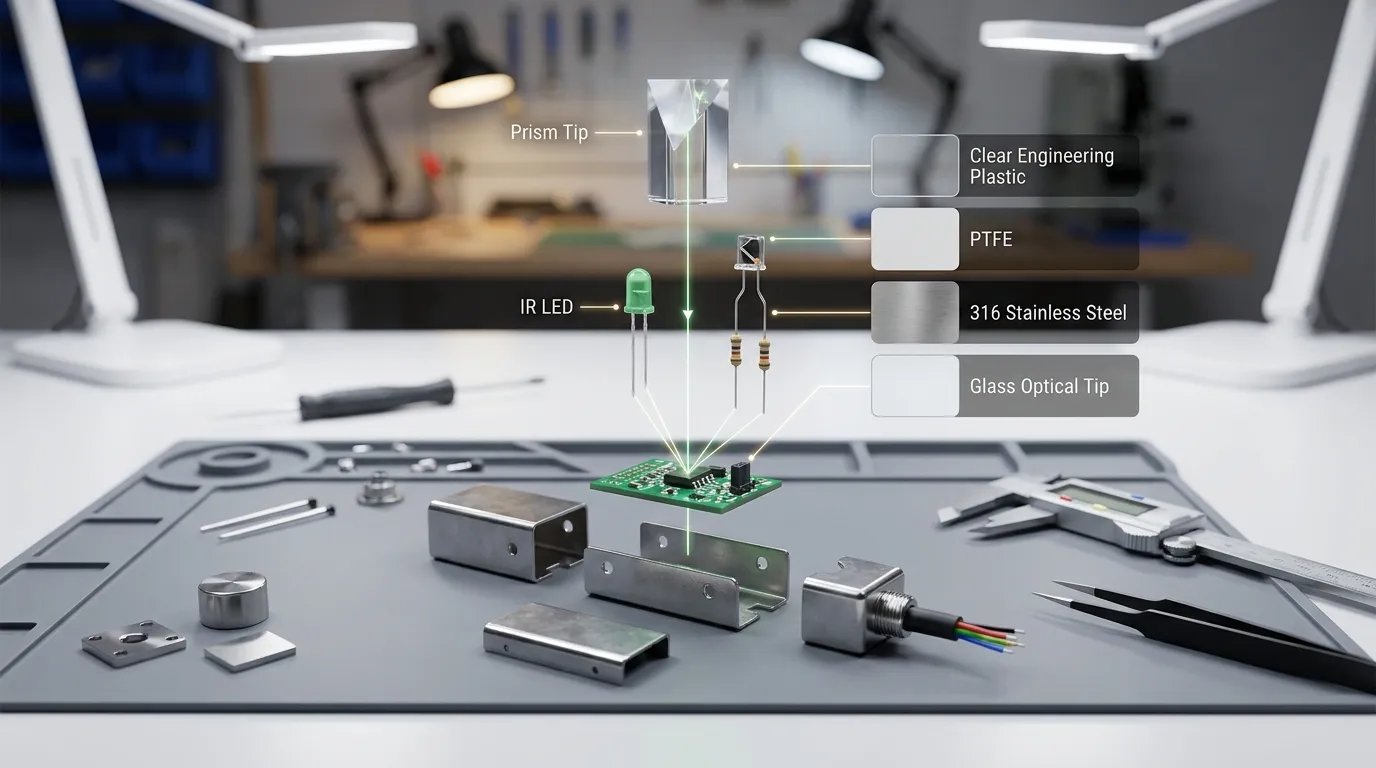
自分でセンシングヘッドを作りたいなら, 光学レイアウトが最も重要な部分です.
赤外線LEDはプリズムやクリア先端に繰り返し可能な角度で照射されるべきです. 受信機は、乾燥状態で反射光が強く戻る場所に設置すべきです. 液体がプリズムに触れるとき, 反射光は減少したりずれたりします. その変化を回路が検知します.
基本的なプロトタイプはこのように配置できます:
- IR LEDはクリアプリズム本体に向けられています
- 反射赤外線を受信するために設置されたフォトトランジスタ
- LED電流を制限するための抵抗
- 受信信号用のプルアップまたはプルダウン抵抗
- マイコンアナログ入力またはコンパレータ入力
- 光学ペアの周囲に遮蔽して部屋の光を遮る
- 液体がプリズム先端にしか届かないように密閉された機械式ヘッド
一番難しいのはプリズムを作ることです. 粗いプラスチックの先端, 表面を傷つけた, 濁ったエポキシ, またはLEDのずれがセンサーの不安定さを引き起こすことがあります. 水のために, 透明なプラスチック製の光学チップが学習に使えるかもしれません. 石油のために, 燃料, 化学薬品, 洗剤, または熱い液体, 物質的な選択ははるかに深刻になります.
濡潤材料: プラスチック製, PTFE製, ステンレススチール, そしてガラス
「濡れた物質」とは液体に触れる部分のことです. DIYプロジェクト用に, 人々はしばしば回路だけに注目します, しかし、液体に接触した物質がセンサーの生存を決定します.
電源ユニットかエンジニアリングプラスチック 化学物質への曝露が軽度なコンパクトな水位設計に有用です. 金属よりも加工や成形が簡単です.
PTFE製 より強い化学抵抗性や粘着防止性が必要な場合に選ばれます. 残留物や攻撃的な液体が問題な場合に役立ちます.
316 ステンレススチール これは機械的な強度を提供するため、産業用ハウジングで一般的です, 耐食性, そしてプロ仕様のねじ込みボディ.
ガラス光学チップ 光学的クリアさが, 耐温性, または化学的安定性が重要である. ガラスはプリズム表面での再現性検知にも役立ちます.
DIY学習のために, シンプルなプラスチックでも許容されるかもしれません. OEM機器用, 機器, 燃料・石油プロジェクト, または輸出製品, センサーを注文する前に素材の適合性を確認してください.
見かける出力タイプ: デジタル, NPN, PNP, および4〜20mAです
小型のホビーモジュールは通常、シンプルなデジタル信号またはアナログ電圧を提供します. 産業用センサーではNPNが使用されることがあります, PNP, リレースタイルインターフェース, または制御システムによっては4〜20 mAの出力もあります.
NPN出力 センサーが制御入力に電流を流す場合によく使われます.
PNP出力 センサーが制御入力に電流を供給する場合に一般的です.
4–20 mA 出力 通常は産業用アナログ伝送に使用されます, 特に長距離のケーブル配線や防音性が重要な場合. シンプルなポイントレベルのDIYセンサー, デジタル出力で通常は十分です.
注文前に, コントローラーの入力タイプを確認してください. 間違った出力のセンサーでも、良いセンサーである可能性はあります, しかし、インターフェース電子回路がなければボードにきれいに接続できません.
センサーの正しい取り付け方法
取り付け方によって、光学センサーがきれいな読み取り値を出すかどうかが決まります.
ポイントレベル検出には側面取り付けが一般的です. プリズムの先端はタンクの壁を通り抜け、検出したい高さにちょうど位置します. ねじ込み取り付けは接着剤やテープよりも強いです, 特にタンクが振動したりケーブルが引っ張られたりすると.
小さなDIY容器用, ブラケットでセンサーを上から固定できます, ただし、先端は選択した高さに固定されなければなりません. センサーが動いたら, トリガーレベルも変わります.
これらの取り付けポイントを確認してください:
- プリズムの先端は清潔に保ち、液体にさらしておきましょう.
- 反射する壁や光沢のある金属部品に先端を近づけすぎないようにしましょう.
- ケーブルをセンサーに引っ張るような垂れ下がらせないでください.
- タンクの開口部をしっかり密閉してください.
- 電子機器側は結露や水しぶきから遠ざけてください.
- 穴を開ける前にネジ山と取り付け方法を選んでください.
生産機器用, よくある決定には、直線体か直角体か, ねじ込み式とフランジ式取り付けの比較, プラスチックとステンレスのハウジング, およびケーブルの長さ.
キャリブレーション: 濡れた状態や乾いた状態の測定値を信頼できる信号に変えましょう
キャリブレーションは簡単ですが、省略すべきではありません.
まずは, センサーを空気中に通電させ、ドライの測定値を記録します. 次にプリズムを完全に湿らせて、濡れた読み取りを記録します. アナログ入力を使用する場合, これら2つの値の間で切り換えしきい値を選びます. デジタル出力を使用する場合, モジュールが濡れた時にHIGHと表示されるか、乾いた時にHIGHと表示されるかを確認してください.
次に実際の条件を検証します:
- ゆっくり詰め物
- 速い充填
- 水しぶきが響く
- バブル
- 泡
- 先端に滴りつく
- 汚れた水や残留物
- 環境光曝露
- タンク付近の振動
コードやロジックでデバウンスを加える. ウェットかドライか確認するまでの短い遅延があれば、液体がプリズムに一瞬触れた際に誤報が起きるのを防ぎます.
よくあるDIYミスとそれを避ける方法
環境光干渉: 赤外線受信機は日光の影響を受けることがあります, 強いランプ, または反射的な環境. LEDと受信機をシールドしてください, 最終設置環境付近での試験.
ダーティプリズム: 油絵フィルム, 鉱物スケール, 藻類, 塵, または粘着性のある液体が光経路を変えることもあります. 先端をきれいにして、液体に合った素材を選びましょう.
誤った出力仮定: 濡れたときに点灯するセンサーもあります; 乾くと点灯するものもあります. 制御ロジックを接続する前に、必ず両方の状態をテストしてください.
防水性の低さ: 作業中の作業台プロトタイプは、湿潤なタンク内で故障することがあります. シールケーブル出口, 回路基板を保護する, 液体の近くに露出したはんだ接合部を避けること.
悪いプリズム幾何学: DIYプリズムはきれいな表面と繰り返し可能な角度が必要です. 粗く切ったアクリルや曇った接着剤は反射を減らすことができます.
機械的なストレスリリーフはありません: ケーブルが動くとセンサーが緩んだり、シールが割れたりすることがあります.
デバウンスはありません: 波, 泡, また、液滴は短い偽遷移を生み出すことがあります. 行動を起こす前に、短期間その州を承認してください.
完成したセンサーを買う方が自分で買うより安い場合
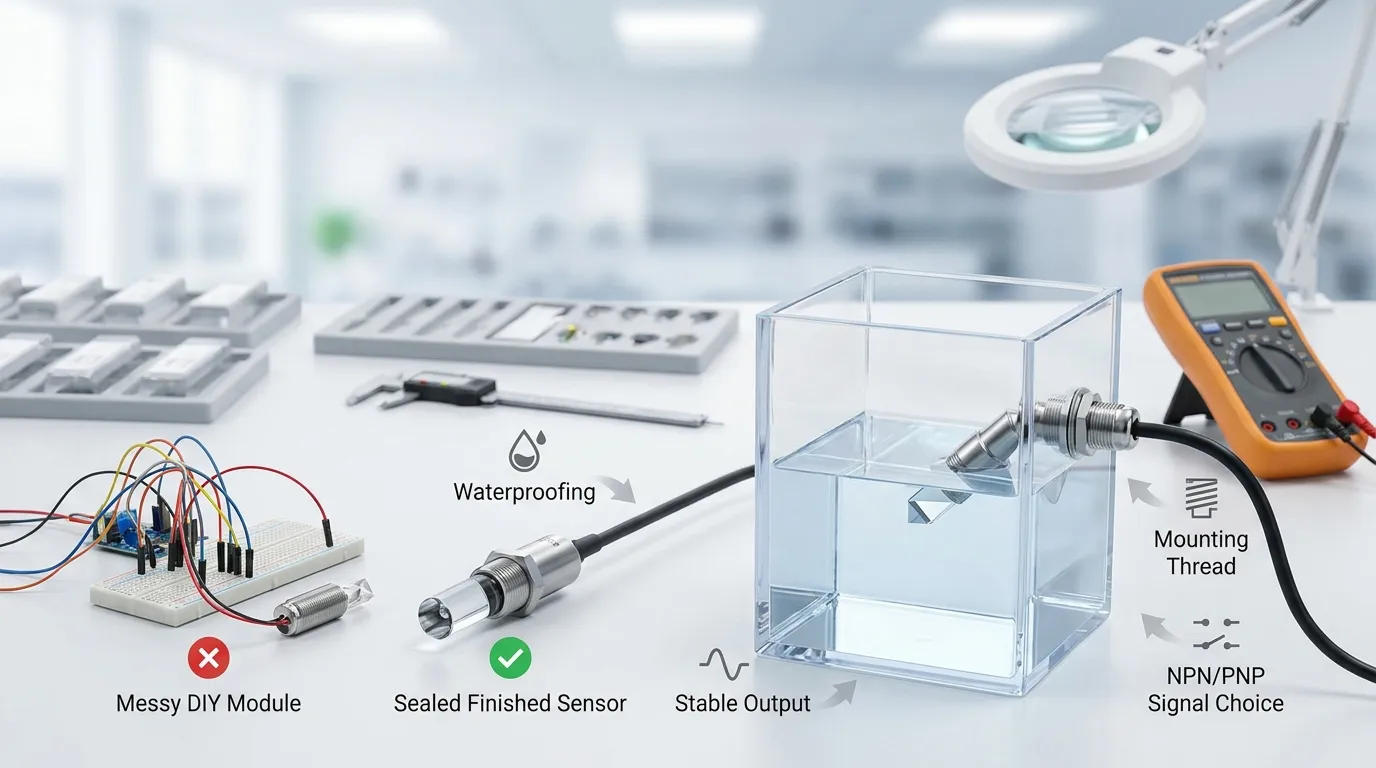
DIYは学ぶ方が安上がりです, あるアイデアを試す, あるいは、すでに持っているパーツから素早くプロトタイプを作るか. しかし、完成した光学レベルセンサーは、プロジェクト全体の費用を考慮すると安いことが多いです.
必要なときに完成したセンサーを購入しましょう:
- 繰り返し検出可能な湿式/乾式検知
- 密閉ケーブルとハウジング
- 安定NPN, PNP, または工業生産
- 限られた空間のためのコンパクトボディ
- PTFE製, 316 ステンレス, グラス, または他の湿潤材料の選択肢
- OEM/ODMのカスタマイズ
- 生産量の一貫性
- 輸出対応サプライヤーコミュニケーション
- フィールド故障の減少
HojellyTekは、深センの光電光学センシングに特化した製造・輸出業者です, 社内R&D, 米国の顧客向けのOEM/ODM液体レベルセンサープロジェクト, 私たちは, インド, その他の市場. もしあなたのDIYプロトタイプが本物に向かっているなら, 私たちの 完成したマイクロ光学センサー 再作業を減らすかもしれません, シールリスク, および集合時間.
完成した光学レベルセンサーを注文する前に確認すべきこと
RFQを送る前に, これらの詳細を準備してください:
- 液体タイプ: 水, 油, 燃料, 洗剤, 冷却液, 化学的
- タンクの材料と壁厚
- 取り付け位置と必要なねじ山スタイル
- ウェット/ドライ論理要件
- 出力タイプ: NPN, PNP, アナログ, またはその他のインターフェース
- 制御基板に必要な供給電圧
- ケーブルの長さとコネクタの好み
- 湿潤素材の好み: プラスチック, PTFE製, 316 ステンレス, グラス
- プロジェクトにOEMボディサイズが必要かどうか, プライベートラベル, またはカスタムケーブル
- センサーがプロトタイプ用かどうか, パイロットラン, 量産も含まれます
スマートタンク監視や接続型家電プロジェクト用, コントローラーボードなどの統合ニーズについても話し合うことができます, ワイヤレスモジュール, または該当する場合、Tuya/Smart Life関連のシステム設計.
FAQ
IR LEDとフォトトランジスタを組み合わせたDIYの光学液位センサーを作れますか??
はい. 赤外線LEDで基本的な光学ポイントレベル検出器を作ることができます, フォトトランジスタ, プリズムチップ, 抵抗器, および低電圧制御基板. 難しいのは光学アライメントです, 防水, 環境光遮蔽, および安定キャリブレーション.
レディの光学レベルモジュールは、別々のパーツから組み立てるよりも優れているのでしょうか??
ほとんどの実務プロジェクトでは, はい. レディモジュールは光ヘッドと基本回路がすでに組み立てられているため、時間を節約できます. 別々のパーツから組み立てる方が学習には良いです, カスタム実験, あるいは、センシング原理の仕組みを理解すること.
このセンサーはタンクの満杯を測定できますか?
基本的な光学レベルセンサーは、ある点で液体を検出します. プリズムの先端が濡れているか乾いているかを教えてくれます. 連続タンク水位測定用, 異なるセンシングアプローチや複数のセンシングポイントが必要です.
なぜ私の光学センサーは誤ってトリガーされるのでしょうか?
一般的な原因には日光が含まれます, ダーティプリズム表面, 先端に滴が付着している, 反射タンクの壁, 配線が緩い, 密閉不良, 制御ロジックのデバウンスもありません. 実際の取り付け条件下での乾燥・湿潤測定のテスト.
このセンサーを使ってポンプを制御できますか??
低電圧センサー信号を適切なコントローラーへの入力として使うことができます. センサーを直接電源や交流ポンプに配線しないでください. ポンプの電源回路は、資格のある人によって適切な絶縁と安全保護が施されているべきです.
DIYを続けるのではなく、いつHojellyTekに連絡すべきでしょうか?
試作機体の密封が必要な場合は、HojellyTekにご連絡ください, 安定出力, コンパクトサイズ, 特殊な濡れた材料, OEM/ODMのカスタマイズ, または生産準備済みの一貫性. 液体タイプを送ってください, 取り付け方法, 出力要件, また、見積もりを依頼するためにWhatsAppやメールで数量プランを申請できます.


