
플랜지 마운트 광학 액체 수위 센서
HojellyTek은 선전에서 OEM/ODM 프로젝트를 위해 플랜지 장착형 광학 액체 수평 센서를 제조합니다, 장비 제작자, 그리고 맞춤형 장착 형하학이 필요한 센서 배전기, 습윤 물질, 출력 옵션, 그리고 미국에 대한 수출 준비 지원, 우린, 그리고 인도 시장.
플랜지 장착 센서 기능
탱크 벽이 나사식 센서를 신뢰성 있게 고정할 수 없을 때 플랜지 장착 광학 레벨 스위치가 일반적으로 선택됩니다. 나사산 포트를 자르는 대신, 탱크는 클리어런스 홀과 플랜지 페이스를 사용합니다. 플랜지는 센서 본체를 외부 또는 내부 표면에 고정시키고, 가스켓이나 O-링이 밀봉을 만듭니다.
마운팅 종류를 비교하는 구매자들을 위해., 우리의 표준 광학 레벨 센서 사거리는 탱크 재료에 맞춰 구성할 수 있습니다, 감지 고도, 케이블 출구 방향, 그리고 전기 출력도. 이미 금속 보스나 두꺼운 나사산 포트가 있는 프로젝트에 적합합니다, a 1/4 NPT 스레드 옵션 더 적합할 수도 있습니다. 부식성 매체에 대해, 식량 장비, 석유 시스템, 또는 스테인리스 탱크, a 316 스테인리스 바디 재료 선택 시 검토할 수 있습니다.
일반적인 커스터마이징 영역은 다음과 같습니다:
- 라운드, 정사각형, 또는 맞춤형 플랜지 형태
- 투홀, 쓰리홀, 포홀, 또는 고객이 정의한 볼트 패턴
- 평평한 개스킷 또는 O-링 밀봉 설계
- 플라스틱, PTFE, 316 스테인리스 스틸, 또는 유리 접촉 재료 옵션
- NPN, PNP, 아니요, 노스캐롤라이나, 또는 필요에 따라 아날로그 출력 구성을 선택할 수 있습니다
- 케이블, 커넥터, 와이어 길이, 그리고 출구 방향
- 측벽, 바닥, 탑다운, 또는 장비 패널 장착
장착 문제 이 설계가 해결합니다
플랜지 장착 광학 액체 수준 센서를 선택하는 주된 이유는 감지 이론이 아닙니다; 설치 신뢰성입니다. 많은 탱크가 얇은 플라스틱으로 만들어집니다, 스테인리스 시트, 아크릴, 알루미늄, 또는 내부 나사산이 약한 성형 하우징, 비싼, 또는 가공이 불가능한 경우도 있습니다. 나사산 센서가 얇은 벽에 강제로 박힌다면, 설치자는 밀봉 부실에 직면할 수 있습니다, 벽 균열, 실 스트리핑, 센서 기울기, 또는 감지 높이가 일정하지 않거나.
플랜지 마운트는 기계적 하중을 더 넓은 표면에 분산시킵니다. 탱크 구멍은 감지 팁을 위한 공간 확보를 제공합니다, 플랜지는 정렬과 압축을 제어합니다. 이로 인해 얇은 벽 저수지에 적합한 설계가 됩니다, 물 탱크, 냉각수 탱크, 오일 용기, 배터리 장비, 청소 장비, 소형 가전제품, 그리고 탭이 실용적이지 않은 OEM 모듈.
플랜지는 구매자가 반복 조립을 더 잘 제어할 수 있게 해줍니다. 제작 중, 작업자는 동일한 구멍 패턴을 드릴링하거나 성형할 수 있습니다, 가스켓을 놓으세요, 센서 삽입, 나사나 너트를 조여 주세요, 그리고 감지점 높이를 확인한다. 이것은 얇은 탱크 벽을 손으로 두드리는 것보다 표준화하기가 더 쉽습니다.
플랜지 크기 및 패턴 선택
플랜지는 세 가지 조건을 충족해야 합니다: 탱크 벽, 밀봉 표면, 그리고 감지 위치. 작은 플랜지는 공간을 절약합니다, 하지만 개스킷 면적은 편입니다. 더 큰 플랜지는 더 나은 밀폐 지지를 제공합니다, 하지만 탱크 벽에 더 많은 공간이 필요합니다. 올바른 선택은 탱크 두께에 따라 다릅니다, 사용 가능한 평면 면적, 진동, 액체형, 조립 방법.
컴팩트 탱크 사용, 벽이 평평하고 액체 압력이 낮다면 미니 라운드 플랜지로도 충분할 수 있습니다. 장비 패널 또는 성형 저장소용, 2홀 또는 4홀 플랜지는 케이블 취급 중 회전을 방지할 수 있습니다. 더 높은 진동이나 더 큰 탱크를 위해, 더 넓은 플랜지 면과 강한 나사 패턴이 보통 더 나은 안정성을 제공합니다.
플랜지 도면에는 센서 중심 구멍이 정의되어야 합니다, 플랜지 외경, 볼트 홀 수량, 볼트 원형 또는 간격, 나사 크기, 가스켓 접촉 영역, 그리고 케이블 출구 간격. 탱크에 이미 구멍 패턴이 있다면, 저희 팀은 도면을 검토하고 플랜지 디자인을 조정하여 구매자에게 탱크를 재설계하도록 강요하지 않습니다.
RFQ 검토용 플랜지 치수 표
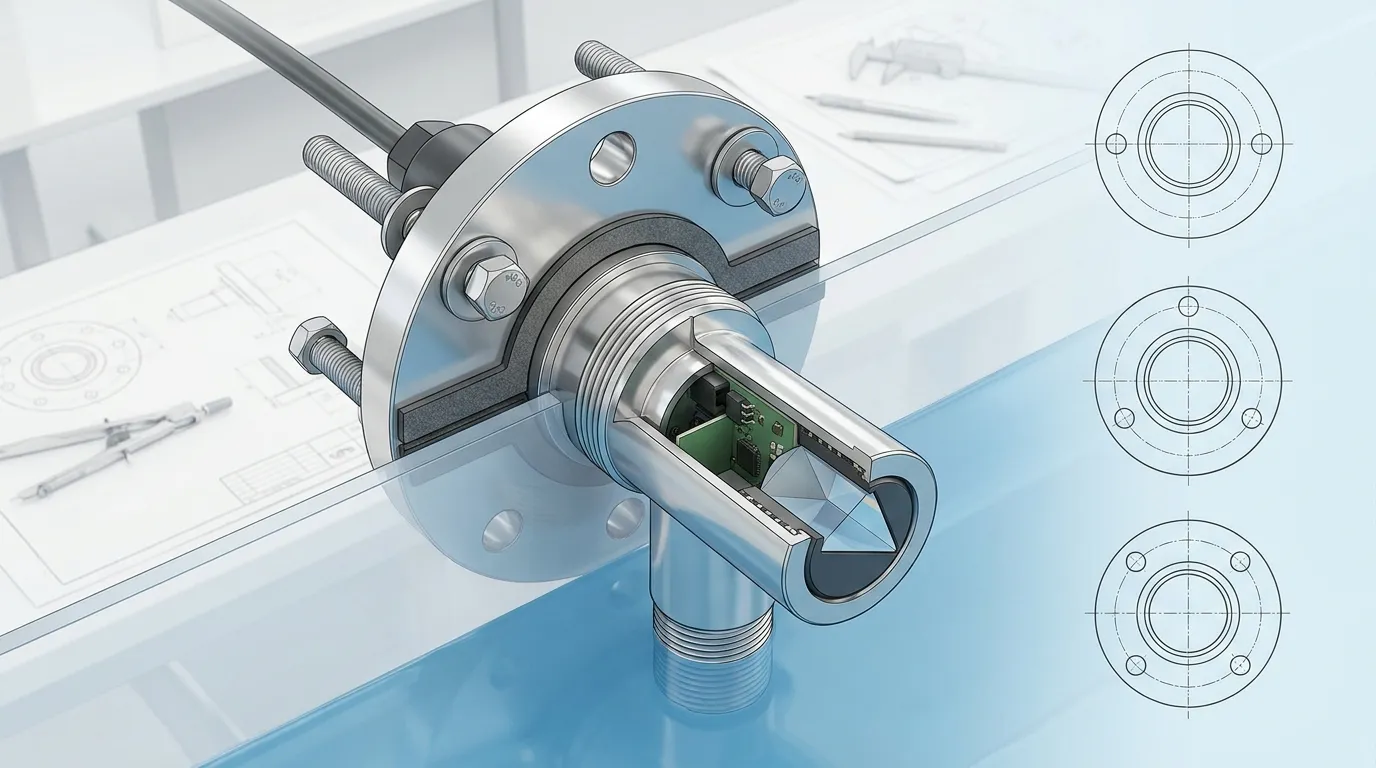
| 플랜지 항목 | 확인할 내용 | 왜 중요한가 |
|---|---|---|
| 플랜지 모양 | 라운드, 정사각형, 타원형, 또는 커스텀 프로필 | 사용 가능한 제어 밀폐 구역 및 탱크 벽 맞춤 |
| 중앙 클리어런스 구멍 | 감지 팁과 센서 본체를 위한 구멍 | 마찰을 방지해, 경사, 또는 삽입 깊이가 잘못되었거나 |
| 플랜지 외부 크기 | 탱크 벽에 허용되는 최대 공간 | 플랜지가 갈비뼈에 닿지 않도록 보장합니다, 코너, 용접, 또는 인근 지역 |
| 볼트 패턴 | 투홀, 쓰리홀, 포홀, 또는 맞춤 간격 | 회전을 방지하고 개스킷 압축을 제어합니다 |
| 볼트 홀 크기 | 나사 또는 고정 장치 선택에 맞춰 | 느슨한 장착이나 강제 조립을 방지합니다 |
| 개스킷 시트 | 평평한 개스킷 면 또는 O-링 홈 | 밀봉 방법 및 압축 제어 결정 |
| 센서 투영 | 플랜지 면에서 감지 지점까지의 거리 | 액체 레벨 전환 높이를 설정합니다 |
| 케이블 출구 방향 | 직선, 측면 출구, 또는 고객 정의 | 탱크나 인클로저에 케이블이 휘는 것을 방지합니다 |
| 벽 두께 범위 | 탱크 도면이나 샘플에서 확인됨 | 클램핑 불량을 방지합니다, 교전 부족, 또는 센서 정렬 불량 |
| 방향 | 사이드, 바닥, 맨 위로, 또는 각진 마운트 | 배수 영향, 잔류 축적, 서비스 접근 |
가스켓 및 O-링 밀봉 옵션
플랜지 마운트는 밀봉이 탱크 표면과 액체와 일치할 때만 신뢰할 수 있습니다. 탱크 벽이 넓을 때 평평한 가스켓이 유용합니다, 매끄러운 접촉 면적. 플랜지에 제어된 홈이 있고 반복 압축이 필요한 설계에서는 O-링이 종종 선호됩니다.
밀봉 재료는 액체 종류에 따라 선택되어야 합니다, 청소 방법, 온도 범위, 그리고 탱크 재료. 실리콘은 종종 물 및 일반 장비 밀봉에 사용됩니다. FKM은 일반적으로 석유용으로 선택됩니다, 연료, 그리고 더 높은 화학 저항성 요구사항. EPDM은 수력 시스템에 대해 검토될 수 있습니다. 탄성 압축보다 화학적 적합성이 더 중요한 경우 PTFE 관련 밀봉 솔루션이 고려될 수 있습니다.
실제 고장 모드는 보통 단순합니다: 가스켓이 너무 단단해요, 벽이 평평하지 않아, 나사가 고르지 않게 조여져 있습니다, O-링 홈은 제어되지 않습니다, 또는 센서가 충분한 밀봉 면적이 없는 곡선형 탱크 섹션에 장착되기도 합니다. OEM 작업을 위해, 가장 안전한 방법은 탱크 도면을 검토하는 것입니다, 밀봉 표면, 나사 배치, 그리고 샘플 생산 전 액체 적합성.
벽 두께 및 방향 지침
얇은 벽 탱크용, 센서는 벽이 평평하고 압축을 견딜 만큼 강한 곳에 설치해야 합니다. 나사를 조일 때 벽이 휘어지면, 밀봉이 시간이 지나면서 느슨해질 수 있습니다. 선택한 센서 투영에 벽이 너무 두꺼울 경우,, 감지 지점이 탱크 내부에서 요구되는 수준에 있지 않을 수 있습니다.
측면벽 장착은 명확한 스위칭 높이를 설정하기 때문에 고수위/저위 감지에 흔히 사용됩니다. 바닥 장착은 누수 탐지나 최소 수준 모니터링에 적합합니다, 하지만 액체 압력과 잔류물이 장착 부위에 영향을 줄 수 있으므로 더 강력한 밀봉 검토가 필요합니다. 탱크 벽이 측면 드릴링을 허용하지 않을 때 탑다운 장착을 사용할 수 있습니다, 하지만 투영 길이와 케이블 경로는 신중히 확인해야 합니다.
플랜지를 곡선 모서리에 두지 마세요, 용접 이음새, 골이 있는 플라스틱, 고르지 않은 몰딩 표면, 또는 도구가 고정 장치를 고르게 조이지 못하는 부분. 플랜지 장착 센서는 먼저 기계적 조립체입니다; 감지 성능은 안정적인 설치에 크게 의존합니다.
5-단계적인 OEM/ODM 프로세스
- 조사 — 전차 도면 보내, 액체형, 장착 방향, 목표 수준 높이, 그리고 요구되는 출력물.
- 사양과 커스터마이징 — 플랜지 모양을 확인했습니다, 볼트 패턴, 가스켓/O-링 설계, 습윤 물질, 케이블, 그리고 전기 출력도.
- 샘플 — 탱크 장착을 위해 샘플을 준비할 수 있습니다, 밀봉 체크, 및 전기적 검증.
- 생산 및 품질 관리 — 공장에서 조립 일관성을 점검합니다, 배선, 출력 함수, 그리고 선적 전 출하.
- 해운 — 주문은 수출을 위해 포장됩니다, 프로젝트 업데이트를 위해 WhatsApp이나 이메일로 소통할 수 있습니다.
주문 전에 확인해야 할 요건
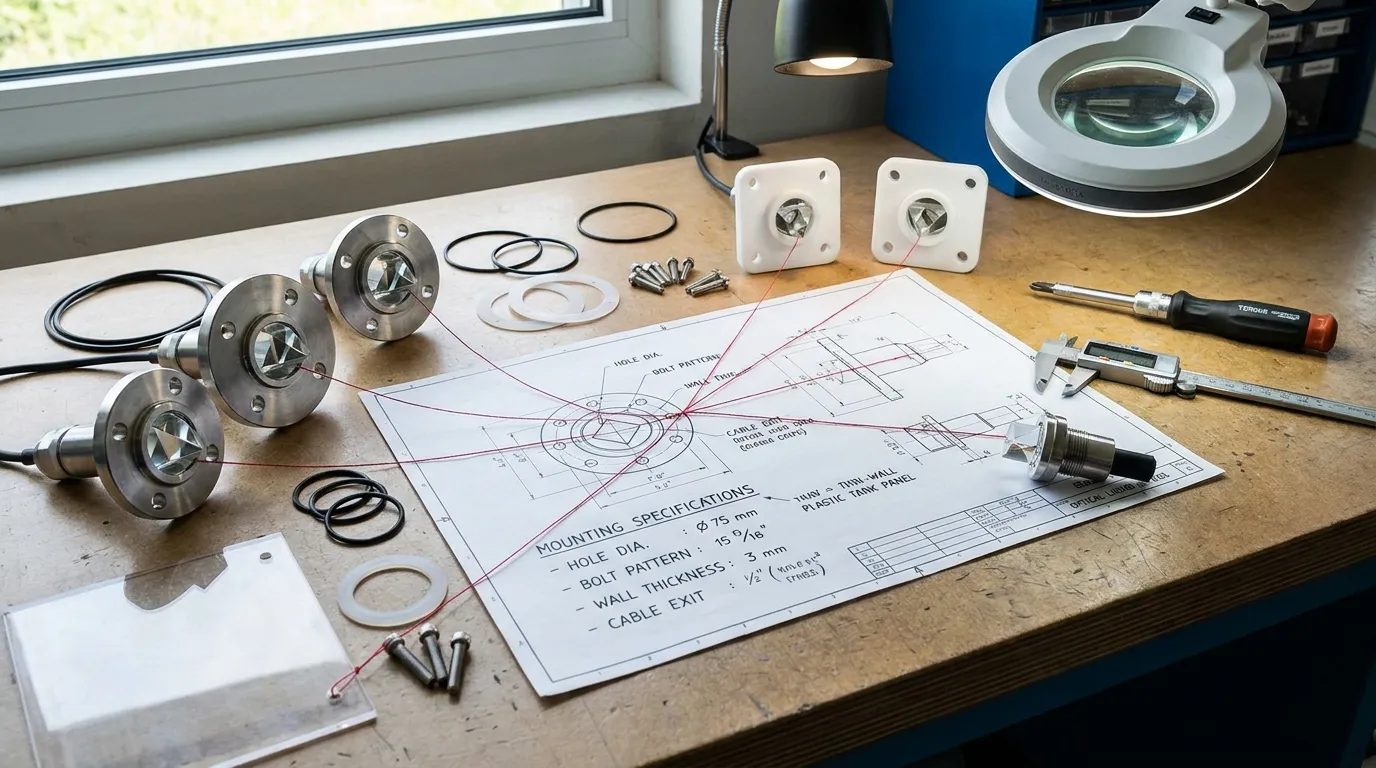
플랜지 마운트 광학 액체 수위 센서를 주문하기 전에, 이 세부 사항들을 확인해 주세요:
- 탱크 재질과 벽 두께
- 평면 장착면 크기
- 탱크 바닥에서 필요한 감지 높이
- 구멍 직경 또는 기존 탱크 컷아웃
- 볼트 패턴 또는 사용 가능한 나사 위치
- 액체형: 물, 기름, 냉각수, 연료, 화학적인, 또는 세척액
- 인장 선호: 플랫 개스킷 또는 O-링
- 젖은 몸체 재질: PSU, PTFE, 316 스테인리스 스틸, 또는 유리 접점 설계
- 출력 유형: NPN, PNP, 아니오/NC, 또는 아날로그 요구사항
- 제어 보드가 요구하는 공급 전압
- 장착 방향: 측벽, 바닥, 탑다운, 또는 각도 있는
- 케이블 길이, 커넥터, 그리고 케이블 출구 방향
- OEM 브랜드의 필요성, 드로잉 제어, 또는 맞춤형 포장
완전하고 선택 가능한 제품 참고가 필요한 구매자를 위한, 그 광학 레벨 센서 제품 페이지는 플랜지 전용 커스터마이징 전에 출발점으로 사용할 수 있습니다.
플랜지 마운트 vs 나사산 마운트
| 선택 지점 | 플랜지 마운트 센서 | 나사식 센서 |
|---|---|---|
| 최고의 수조 유형 | 얇은 벽 또는 비나사형 탱크 | 두꺼운 벽, 보스, 또는 나사식 포트 |
| 설치 방법 | 클리어런스 홀과 플랜지 씰 | 나사식 구멍 또는 나사식 피팅 |
| 밀봉 방법 | 플랜지 아래 개스킷 또는 O-링 | 나사산 실란트, O-링, 또는 나사 설계 |
| 회전 제어 | 볼트 패턴은 꼬임을 방지할 수 있습니다 | 센서가 조임 시 회전할 수 있습니다 |
| OEM 반복성 | 몰딩이나 드릴로 만든 패턴에 적합합니다 | 나사산 인서트를 제어할 때 좋습니다 |
| 개조 필요 | 홀 앤 스크류 패턴 | 스레드 포트 또는 탭핑 프로세스 |
| 최적의 사용 사례 | 플라스틱 저장소, 패널, 얇은 금속 탱크 | 가공된 금속 탱크 또는 파이프 피팅 |
왜 HojellyTek과 일해야 하는가
호젤리텍은 선전의 광학 및 액체 수위 센서 제조업체로, 자체 R을 보유하고 있습니다&D 및 OEM/ODM 지원. 우리 팀은 광전 광학 센서 제품에 집중하고 있습니다, 맞춤형 장착 구조, 습윤 물질 선택, 장비 제조업체 및 유통업체를 위한 수출 프로젝트.
연결된 시스템의 경우, Tuya/Smart Life 통합은 스마트 모니터링 하드웨어와 함께 작동하기 위해 센서 데이터가 필요한 프로젝트에서도 논의할 수 있습니다. 산업용 및 OEM 구매자를 위한, 우리는 드로잉 리뷰를 지원합니다, 샘플 검증, 그리고 생산 전 구성 논의.
자주 묻는 질문
플랜지 마운트 광학 액체 레벨 센서를 내부 나사산을 탭핑하지 않고 설치할 수 있나요??
네. 플랜지 마운트 광학 액체 레벨 센서는 내부 나사산을 탭핑하기 어렵거나 신뢰성이 떨어지는 탱크용으로 설계되었습니다. 탱크는 보통 클리어런스 홀을 사용합니다, 플랜지 면, 그리고 가스켓 또는 O-링 씰이 있습니다.
어떤 플랜지 패턴을 선택해야 할까요?
탱크 공간을 기준으로 선택하세요, 밀봉 구역, 그리고 회전 방지 필요. 2구멍 패턴은 컴팩트 디자인에 적합합니다, 반면 3홀 또는 4홀 패턴은 더 강한 정렬과 고르게 압축된 가스켓을 제공합니다.
가스켓을 써야 할까요, 아니면 O-링을 써야 할까요?
넓은 평평한 표면에는 평평한 가스켓을 사용하고, 플랜지에 조절된 홈이 있을 때는 O-링을 사용하세요. 밀봉 재료는 액체와 일치해야 합니다, 온도, 청소 방법, 그리고 탱크 재료.
센서를 곡선형 탱크 벽에 장착할 수 있나요??
플랜지와 가스켓이 해당 표면에 맞게 설계되어 있지 않은 경우에는 권장되지 않습니다. 평평한 장착 부위는 더 나은 압축과 누설 위험을 제공합니다.
오일이나 냉각수 탱크에 플랜지 장착을 사용할 수 있을까요??
네, 하지만 젖은 재료와 밀봉 재료는 반드시 확인해야 합니다. 석유, 냉각수, 연료, 또는 화학 물질, 액체 정보를 공유하여 공장에서 차체 재질과 가스켓 적합성을 검토할 수 있도록 하세요.
견적을 받으려면 어떤 정보를 보내야 할까요??
수조 도면이나 사진을 보내주세요, 벽 두께, 구멍 크기, 장착 방향, 감지 고도, 액체형, 출력 요구사항, 케이블 길이, 그리고 기대 순서 사용. 저희 팀은 적합한 플랜지 장착 설계를 추천해 드립니다.
견적 요청
얇은 벽이나 비나사산 탱크용 플랜지 장착 광학 레벨 센서가 필요합니다? 탱크 그림을 WhatsApp이나 이메일로 HojellyTek에 문의하세요, 액체형, 장착 방향, 그리고 출력 요구사항. 저희 팀이 플랜지 크기를 검토할 예정입니다, 밀봉 방법, 재료 선택, 그리고 프로젝트 샘플 구성.


