
Whirinoa Pūoko Taumata Ōmata Carlo Gavazzi
Ko te pūoko taumata ōmata o Carlo Gavazzi e whakaarohia ana e ngā kaihoko e whakamana ana i tētahi pūoko aunoatanga mahi tūturu, urunga kaihoko, me ngā wae paewhiri-mana tauhou. Mō ngā OEM, kaihanga mīhini, me ngā kaihoko rōrahi, Ka tukuna e HojellyTek tētahi whiringa pūoko taumata wai ōmata hāngai wheketere e arotahi ana ki te mana utu, tauritenga tauwhāiti, me te whakaritenga ake mō te kura, mapu, waiwhakao, hinu, wai, me ngā kaupapa haurapa taumata-taputapu.
Whiringa Wheketere-Hāngai mō ngā Kaupapa Taumata Ōmata
E mōhiotia ana a Carlo Gavazzi mō tōna whakapapa aunoatanga mahi whānui: pūoko, whakawhiti pūrere, tānga, aroturuki i ngā hua, me ngā wae whakahaere e whakamahia ana i roto i ngā taiao wheketere me te mīhini. He taonga taua tūnga parani ina hiahia tētahi tīma tiaki i tētahi wae mahi e mōhiotia ana mai i tētahi hongere kaiwhakanoa.
He rerekē te pātai hoko mō ngā OEM me ngā kaihoko rōrahi. Mēnā kei te hanga hua koe, te whakauru i te haurapa taumata ki roto i ngā taputapu, te tiki rānei i ngā rau, mano rānei o ngā pūoko mō te whakanao tukurua, Ehara te take matua i te āhukahuka parani anake. Me whai pūoko e ōrite ana ki te arorau mana, momo wai, mokowā whakamau, aratuka waea, me te utu ūnga.
Koinei te wāhi e taea ai e tētahi kaiwhakarato wheketere te āwhina. Ka hangaia e HojellyTek ngā pūoko taumata wai whakaahua i Shenzhen me te R i roto i te whare&D, Tautoko OEM/ODM, me te wheako kaweake mō US, MATOU, me ngā kaupapa Īnia. Kaua e hoko i tētahi wāhanga kaihoko anake, Ka taea e ngā kaihoko te tono huringa ki te miro, taura, whare nohoanga, huaputa, tūhono, me te hanganga pūoho i mua i te whakamātautau tauira.
Mō ngā kaihoko e whakataurite ana i tētahi tauira Carlo Gavazzi ki tētahi wheketere hāngai, tīmata ki tā mātou pūoko taumata ōmata awhe, kātahi ka whakaū i ngā taipitopito hiko, pūkaha hoki i mua i te tono tauira.
He aha kei roto i tētahi arotakenga whirinoa HojellyTek?
Ko te tikanga kia kaua te whakataurite tika e whakawhitiwhiti ana ia pūoko taumata ōmata. He kiato ngā pūoko taumata-ira ōmata, tata, me te pono ina tīpako tika, engari ko te kōwhiringa whakamutunga kei te āhua tonu o te wai, taiepa kura, turanga whakamau, arorau huaputa, me te tāurunga pūmana.
Ka taea e tā mātou tautoko whakataurite te whakauru:
- Arotakenga o tō tauira pūoko tīariari, tātuhi mīhini, hoahoa waea, whakaahua taupānga rānei
- Whakataurite ana i te arorau huaputa pēnei i te NPN, PNP, tuwhera noa, katia noatia rānei
- Matapakinga whare me ngā rauemi mākū mō te wai, hinu, waiwhakao, horoi horoi, matū, wai whāranu rānei
- Taki miro me te whakamau mō te pātū kura, whakamau-taha, poutū, tāutanga taputapu kiato rānei
- Roanga taura, tūhono, me te whakaritenga tae-waea mō te huihuinga OEM
- Tauira whakanao i mua i te hokonga rōpu
- Te arotake whakanao me te tautoko pōkai mō ngā tono kaweake
Ehara te whāinga i te tono i tētahi whakakapinga taka-mai whānui. Ko te whāinga ko te āwhina i ngā kaihoko ki te tāutu i tētahi whiringa hototahi ka taea te whakamana i roto i tō rātou kura tūturu, mīhini rānei.
He pēhea te mahi a ngā pūoko taumata ōmata i roto i ngā taputapu tūturu
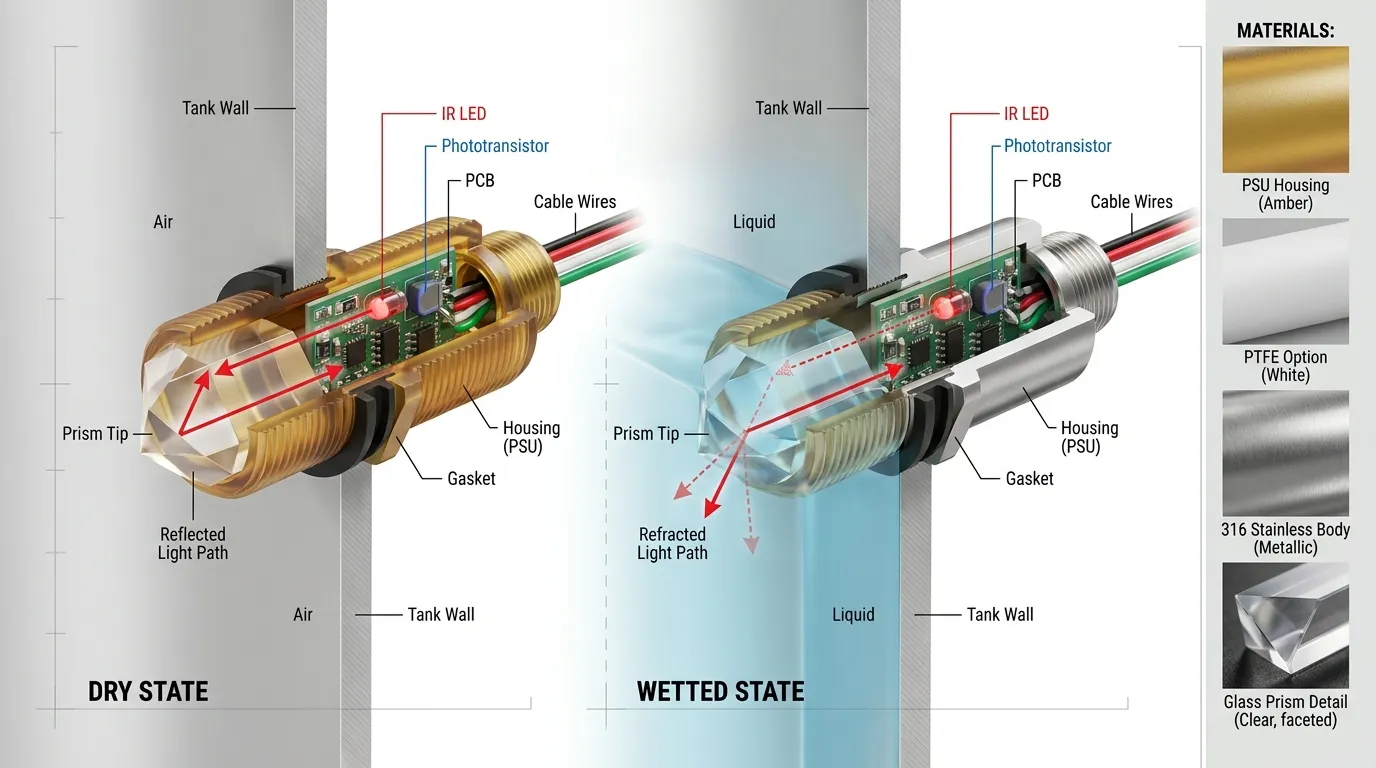
Ko te nuinga o ngā whakakā taumata wai ōmata e whakamahi ana i tētahi mātāpono whakaahua māmā. Kei roto i te tinana pūoko, ka tukuna e tētahi LED IR te mārama ki tētahi pito pororua iti. Ka aroturuki tētahi whakaahuatransistor, pūwhiwhi ōmata rānei i te hokinga mai o taua rama.
Ina maroke te pito pororua, E whakaata ana te mārama i roto i te prism, ā, ka hoki kaha ki te kaiwhiwhi. Kia taupokina te pito e te wai, Ka huri te ara ōmata nā te mea he rerekē te whanonga tāhapa o te wai i te hau. He iti iho te rama e hoki ana ki te pūwhiwhi, ā, ka huri te ara iahiko ā-roto i te āhua huaputa.
Ko tēnei tohu maroke-ki-mākū te take i whakamahia whānuitia ai ngā pūoko ōmata mō te haurapa taumata-ira. Ka taea e rātou te kite i te taumata tiketike, taumata hahaka, waipuke, kura putu, mōrea oma maroke mapu, Aroaro Whakamātao, aroaro o te wai, taumata hinu rānei i runga anō i te wāhi i tāutatia ai te pūoko.
Mō ngā kaihoko OEM, Ko ngā pātai tīpakonga ā-ringa ko:
- Me whai huaputa NPN, PNP rānei te pūmana?
- Me whakakā te pūoko ina mākū, ina maroke rānei?
- Kei te mārama te wai, huka, mārire, hinuhinu, whakatuki matū rānei?
- Ka hangaia te toenga ki runga i te pito pororua?
- Kua whakatūria te pūoko mai i te taha, raro, runga rānei?
- Ka whakaaetia e te pakitara kura tētahi pūoko miro, harakeke, rapa kiato, tinana ritenga ake rānei?
- Kei te tūpono te pūoko ki te wiriwiri, tārewa, wai horoi, haumākū rānei o waho?
He nui ake ēnei taipitopito i te ingoa parani anake. Mā tētahi whārangi whirinoa kaha e āwhina i te kaihoko ki te whakataurite i ngā here mahi tūturu, ehara i te taitara hua noa iho.
Te wāhi e tiakina ai e te ōrite wheketere-hāngai te utu i te rōrahi
I te nuinga o te wā ka hokona tētahi pūoko aunoatanga mahi parani mā tētahi whatunga kaiwhakanoa. He pai tēnā mō ngā tīma whakatikatika, whakahau ohorere iti, ngā kaihoko rānei e hiahia ana ki tētahi wāhanga kua whakaaetia. Hoianō, ka nui pea te utu o te hoko kaihoko ina auau te whakamahi i te pūoko ōrite i roto i te whakanao OEM.
Ka taea e te pūoko taumata ōmata wheketere te whakaiti i te utu i roto i ngā huarahi maha:
Tuatahi, Ka taea e te kaihoko te karo i te utu mō ngā āhuahira kāore i te hiahiatia. Hei tauira, he pūoko kura wai kiato, pūoko mīhini kawhe, whakakā puna whakamātao, kāore pea e hiahiatia e te pūoko taumata-pūrere te kāhua whare ōrite ki tētahi wāhanga aunoatanga ahuwhānui.
Hēkona, Ka taea e te wheketere te whakahāngai i te hoahoa ki ngā hiahia whakaminenga. He roanga taura tika, tūhono, aho, raupapa waea, ka taea rānei e te hanga whakatū te whakaiti i te wā tāuta i runga i te raina whakanao.
Tuatoru, Ka taea e te whakaritenga OEM te ārai i te whakarerekētanga tuarua. Kaua e hoko i tētahi pūoko paerewa me te huri i te taura, taiapa, hiri, whare rānei ā muri ake, Ka taea e ngā kaihoko te tono i te whirihoranga e hiahiatia ana i mua i te whakanaotanga.
tuawha, Ka taea te whakahua hāngai atu i ngā whakahau rōrahi ki te whakaritenga kaupapa. Me whakaū te utu e te RFQ nā te mea he rawa whare, roanga taura, tūhono, takai, me ngā whakaritenga whakamātautau e pā ana ki te utu.
Mō ngā kaihoko e hiahia ana ki tētahi mahere whakarato tukurua, He pai ake te mahi tahi me tētahi kaiwhakanao pūoko ōmata i te whakataurite i ngā utu putumōhio takitahi anake.
Me tirotiro e ngā kaihoko ngā whakaritenga ōrite
Ina whakataurite i tētahi pūoko taumata ōmata Carlo Gavazzi ki tētahi whiringa wheketere hāngai, Kaua e whakataurite i te ingoa hua anake. Whakatauritea takitahitia ngā here pūkaha.
Huaputa hiko: He maha ngā pūnaha whakahaere ahumahi e hiahia ana ki te huaputa NPN, PNP rānei. E hiahiatia ana hoki e ētahi kaihoko te 4–20 mA mō ngā kaupapa taumata-motukore, tairitenga rānei, ahakoa he maha ngā pūoko ōmata kiato he whakakā taumata-ira. Whakaūngia mēnā e tūmanako ana te pūmana kia totohu, pukenga, hohe-mākū, hohe maroke, tuwhera noa, whanonga kati noa rānei.
Ngaohiko tuku: Whakaūngia te ngaohiko pūoko ki te PLC, papa whakahaere, punaha pūhiko, puna hiko taputapu rānei. Kaua e whakaaro i te awhe ngaohiko ōrite ki te kore e manatokona te tauira kua tīpakohia.
Rauemi mākū: kirihou, PSU, PTFE, 316 tīra poapoa, me te karaehe e mahi ana i ngā taupānga rerekē. Ka taea e te PSU te hāngai ki ngā taupānga taputapu kiato maha. He whaitake te PTFE i te wāhi e hira ana te ātete matū. 316 E manakohia ana te tīra poapoa mō te hanganga pūkaha kaha ake, te whakapā wai mahi rānei. Ka taea e ngā aki karaehe te tautoko i te haurapa ōmata mā me te mahinga poroporo pūmau.
Te whakatūnga me te miro: Rahi miro, aratuka hiri, me te hōhonutanga kōkuhu ka pā mēnā ka taea e te pūoko te whakakapi ā-tinana i tētahi wae tīariari. He pūnoa ngā pūoko whakamau-taha mō te haurapa tiketike/iti o te kura. Ka taea te whakamahi i te whakatūnga o raro, poutū rānei i roto i ngā puna kiato, engari me whakaaro te toenga me te mirumiru.
Taura me te tūhono: I te nuinga o te wā e hiahiatia ana e ngā kaupapa OEM te roa waea kua tautuhia, pito tīhore, kāpeka, tūhono rererangi, tūhono waikore, ngā whitiki ritenga rānei. Koinei tētahi o ngā take tino kaha ki te kōwhiri i tētahi pūoko ōmata kua whakaritea kaua ko tētahi wāhanga putumōhio pūmau.
Whanonga wai: He ngāwari kē atu te wai mārama i te hinu piripiri, huka, waikawa miraka, whakamātao me ngā matūriki, he wai matū rānei e pani ana i te poroporo. Mēnā ka kapi te toenga i te pito ōmata, Ka pōturi pea te urupare a te pūoko, ka noho rānei ki te āhua hē. He mea nui te whakamātautau tauira.
Carlo Gavazzi vs HojellyTek: Tauritenga Taha-ki-te-Taha Ataahua
| Pūwāhi Whakataurite | Pūoko Taumata Ōmata Carlo Gavazzi | HojellyTek Factory-Direct Alternative |
|---|---|---|
| Tūnga parani | Kua whakatūria he tohu aunoatanga ahumahi me te kōpaki wae mana whānui | Ko te kaiwhakanao pūoko taumata ōmata me te wai o Shenzhen i arotahi ki ngā kaupapa pūoko OEM/ODM |
| Kaihoko tino pai | Whakatikatika, MRO, hoko kaihoko kua whakaaetia, whakakapinga kaitoha paerewa | Ngā OEM, kaihanga mīhini, kaiwhakanao taputapu, kaihoko rōrahi, Ngā Kaupapa Ritenga |
| Mātāpono mātāpono | Haurapa taumata-ira ōmata whakaahua i runga anō i te tauira kua tīpakohia | ARAHI IR, kaiwhiwhi, me te haurapa wai whakaahua ā-prism |
| Ngā kōwhiringa tāputa | Kua tīpakohia ā-tauira; Me ōrite te kaihoko ki te tāurunga pūmana | NPN, PNP, arorau whakawhiti, me te huaputa kaupapa-tauwhāiti i whakaūngia i te wā o te RFQ |
| Kōwhiringa tairitenga | Whakaūngia mā te whānau hua kua tīpakohia | 4–20 mA ka taea te kōrerorero mō ngā kaupapa taumata-taumata tika |
| Ngā rauemi mākū | Whakaū mai i te rauraraunga kua tīpakohia | PSU, PTFE, 316 tīra poapoa, Karaehe, me te arotakenga rauemi tauwhāiti kaupapa |
| Whakatū ana | Ngā whirihoranga putumōhio paerewa | Miro, taura, tūhono, tinana, me te kāhua tāuta ka taea te whakarite |
| Tauira utu | Utu kaiwhakanoa, hongere rānei, i te nuinga o te wā he pai mō ngā rahinga iti | Te whakahua wheketere ā-RFQ mō te tauira, ropu, me te hoko rōrahi OEM |
| Tauira wā-ārahi | Kei te āhua tonu o ngā rawa kaihoko me te wāteatanga hongere | Kua whakaūngia ā-rahinga kaupapa, ritenga ake, tauira whakaaetanga, me te hōtaka whakanao |
| Kaha tuhinga | Ngā tuhinga pūkenga pakari me ngā raraunga hua kaihoko | Arotakenga taupānga, Ngā Tātuhi/Whakaūnga Tohu, whakamanatanga tauira, me te whakawhitiwhitinga wheketere |
| Pātahitanga | Tauritenga takitahi anake; kāore i tautokona e Carlo Gavazzi | Whirinoa hototahi anake i muri i te whakaūnga pūkaha |
Te wāhi e toa tonu ai a Carlo Gavazzi
Ko te tikanga kia pono te whakataurite tika. Ka taea tonu e Carlo Gavazzi te kōwhiringa pai ake ina whakaaetia kētia e tō kamupene taua waitohu, ina tuhia te wāhanga ki tētahi ā-ringa mīhini, Ina hiahia tētahi tīma tiaki i tētahi hokonga kaitoha tere, ina pupuri rānei te kaihoko i te tohu ōrite mō te whakatikatika, pūtāhui, ngā take hoko ā-roto rānei.
Ka toa hoki rātou ina tuhinga, āhukahuka waitohu ahumahi ā-ao, ā, he hira ake te whakakapinga wawe mā tētahi kaihoko e mōhiotia ana i te whakaritenga, i te utu hāngai rānei o te wheketere.
Ko HojellyTek te kaha ake ina hiahiatia e te kaihoko tētahi taumahi pūoko ōmata ōrite i te rōrahi OEM, E hiahia ana ki te whakatika i te hoahoa, me whakawhitiwhiti kōrero hāngai rānei ki te tīma whakanao i mua i te whakamātautau tauira.
5-Tukanga Whakakapinga Hipanga me te Whakaritenga Ake
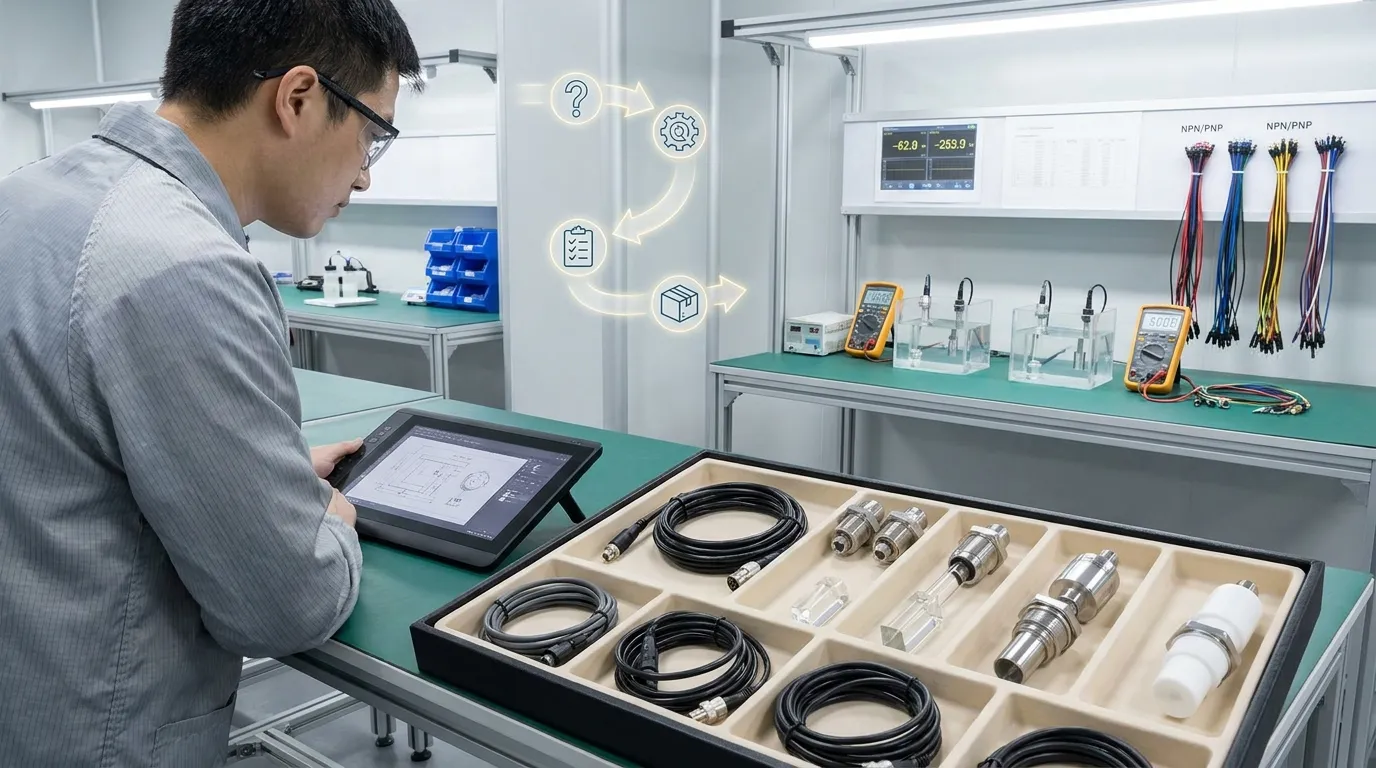
- Uiui: Tukua te tauira pūoko o nāianei, whakaahua hua, tātuhi kura, momo wai, hoahoa waea, me te whakatau tata o te rahinga ā-tau. Ki te kore koe e whakahōu i tētahi pūoko tīariari, whakaahuatia te kura, wai, tūnga tāuta, me te tāurunga pūmana.
- Arotakenga spec me te ritenga ake: Ka taki tō mātou tīma i te arorau huaputa, ngaohiko puto, papanga mākū, taura, aho, aratuka hiri, me te āhua whakawhiti e hiahiatia ana. Ki te kore e tika tētahi wāhanga paerewa, E tūtohu ana mātou i tētahi whirihoranga ritenga ake.
- Tauira whakaūnga: Kua whakaritea he tauira mō te whakamātautau hiko, wai hoki. Me whakamātau ngā kaihoko i te āhua maroke, āhua mākū, mirumiru, toenga, wiriwiri, huringa horoi, me te urupare pūmana.
- Production and QC: I muri i te whakaaetanga tauira, Ka whai te whakaputanga i te whakapūtātanga kua whakaūngia. Ka taea e te arotakenga te taupoki i te āhua, waea, panga whakawhiti, hiri, me ngā whakaritenga pōkai.
- Tukunga: Ka whakaritea te takai kaweake me te tukunga e ai ki te mahere tono a te kaihoko. Tonoa he whakahua mā WhatsApp, īmēra rānei me ō taipitopito whakaritenga e hiahiatia ana.
Ngā Whakaritenga RFQ i mua i te Tono
Hei tīpako tā mātou pūoko taumata ōmata hei whirinoa, whakaritea ngā mōhiohio e whai ake nei:
- Tauira Carlo Gavazzi tīariari, whakaahuatanga taupānga rānei
- Momo wai, ā, ka mahue i a ia te toenga
- Rauemi kura me te mātotoru o te pakitara
- Aronga whakatū me te whakaritenga miro
- Momo tāuru ngaohiko tuku me te pūmana
- NPN, PNP, KĀORE, NC, whakaritenga huaputa tairitenga rānei
- Roanga taura, tūhono, me te raupapa waea
- Taiao mahi, tikanga horoi, me te hiri i ngā tūmanako
- Rahinga tauira me te rōrahi whakanao whakaaro
He aha ngā kaihoko e mahi tahi ai me HojellyTek
Ko HojellyTek he kaiwhakanao Shenzhen me te kawekawe e arotahi ana ki te taumata wai whatu/whakaahua. Me te R ā-whare&Āheinga D me te OEM/ODM, E tautoko ana mātou i ngā kaihoko e hiahia ana kia nui ake i te pūoko putumōhio paerewa.
Ka taea e ngā kaupapa te whakauru i ngā puna wai kiato, parenga papu, kura whakamātao, haurapa hinu, taputapu ahumahi, taputapu, me ngā pūnaha aroturuki wai atamai. Ki te hāngai, ka taea hoki e te tīma te kōrerorero i te whakaurunga o Tuya me te Smart Life mō ngā kaupapa aroturuki kura tūhono.
Ko te hua tino pai e puta mai ana i tētahi matapakinga pūkaha ā-ringa: Whakataurite i te pūoko ki te wai, whakamau, ara iahiko, me te ūnga whakanao i mua i te whakatakoto tono rōrahi.
FQ
He whiringa pūoko taumata ōmata a Carlo Gavazzi i ngā wā katoa he whakakapinga taka-mai?
Kāore. He hototahi pea, engari ko te huaputa hiko, arorau whakawhiti, ngaohiko puto, aho, taura, hiri, ā, me taki ngā rauemi mākū i mua i te whakakapinga. E taunakitia ana te whakamātau tauira i mua i ngā raupapa rōpu.
Ka taea e HojellyTek te whakataurite i ngā whakaritenga huaputa NPN, PNP rānei?
Āe, Ka taea te arotake i ngā whakaritenga huaputa NPN me PNP i te wā o te RFQ. Me whakaū hoki ngā kaihoko mēnā me tuwhera noa iho te pūmana, katia noatia, hohe-mākū, whanonga whakawhiti hohe-maroke rānei.
Ka taea e au te tono PTFE, 316 tīra poapoa, PSU, ngā rauemi mākū karaehe rānei?
Āe. Kei te āhua o te wai te kōwhiringa rauemi, ahuatanga pāmahana, tikanga horoi, me te tāutanga pūkaha. PTFE, 316 tīra poapoa, PSU, ā, ka taea te whakaaro i te karaehe e ai ki te tono.
He iti iho te utu hāngai-wheketere i te hokonga kaihoko?
Mō ngā kaupapa rōrahi me ngā kaupapa OEM, Ka taea e te pūtake hāngai-wheketere te whakaiti i te utu katoa nā te mea ka taea te whirihora i te pūoko mō te kaupapa, kaua e hokona hei tūemi kaihoko pūmau. Me whakaū te utu whakamutunga e te RFQ.
He aha ngā aratau rahunga me whakamātau e au i mua i te whakakapinga i tētahi pūoko parani?
Whakamātauria te toenga i runga i te pororua, huka, mirumiru, wiriwiri, whakaoho teka, uaua taura, hiri, hototahitanga wai, me te urupare pūmana. He pono ngā pūoko ōmata ina tika ngā here wai me te whakatū.
Āhea tonu ahau kōwhiri ai i a Carlo Gavazzi?
Kōwhiria a Carlo Gavazzi ina hiahiatia e tō kaupapa taua tohu kua whakaaetia, whakakapinga kaihoko inamata, tuhinga tīariari, hononga hoko ā-roto rānei. Kōwhiria he whirinoa wheketere-hāngai ina whakaritea ake, Rōrahi OEM, ā, ko te mana utu te manakē.
Tonoa tētahi Kīanga Pūoko Taumata Ōmata Wheketere Hāngai
Tukua tō tauira pūoko onāianei, Taupānga Whakaahua, whakaritenga waea, momo wai, miro whakamau, roanga taura, me te rahinga whakatau tata. Ka taea e HojellyTek te arotake i te whakaritenga me te tūtohu i tētahi whiringa pūoko taumata wai ōmata hototahi mō te whakamātautau tauira me te whakaputa rōrahi. Whakapā mai mā WhatsApp, īmēra rānei ki te tono whakahua.


