
The 5 Best RV LPG Tank Monitors with Wi-Fi and App Control (2025 Edition)
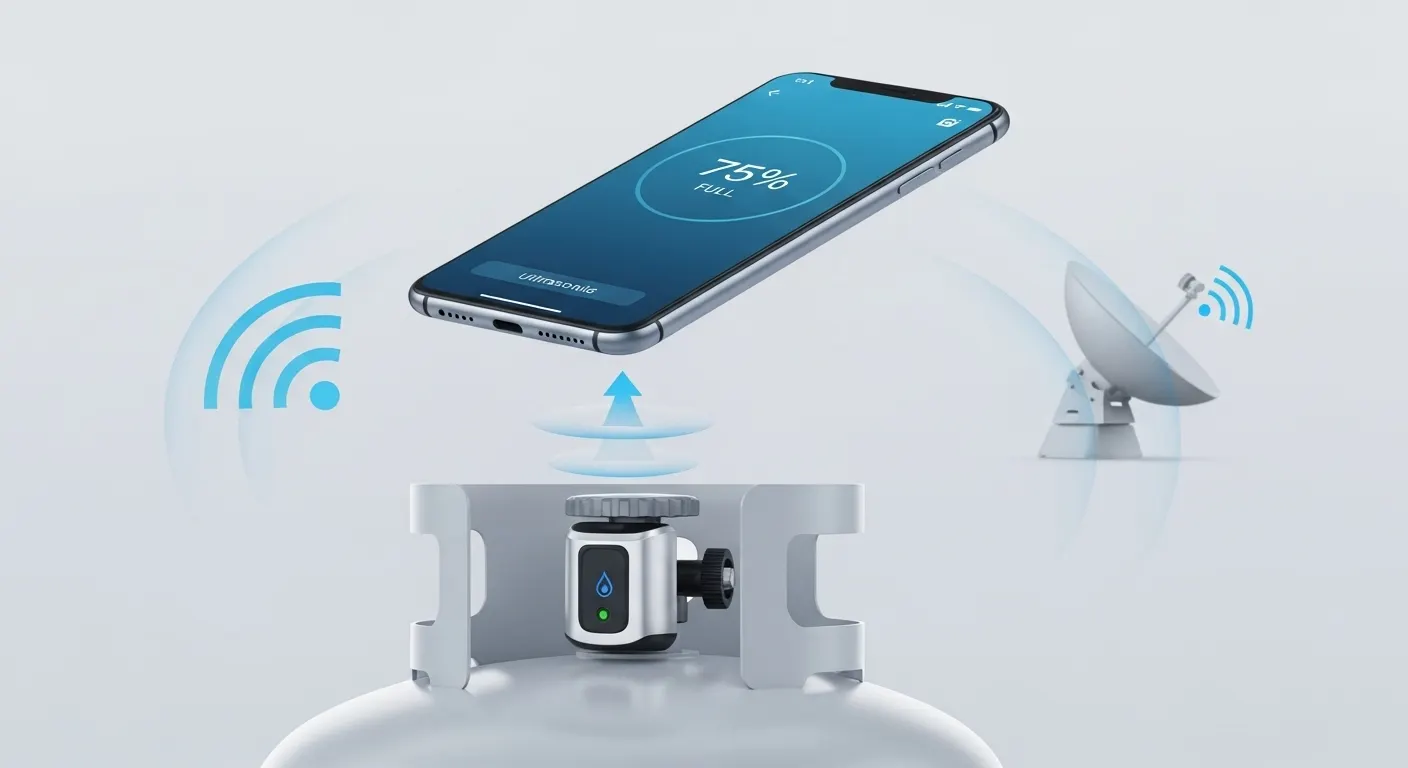
Let's talk about "propane anxiety."
It's that 2 AM feeling. The furnace cuts out, the rig goes silent, and you know it's the propane. You're in the middle of nowhere, it's freezing, and now you're fumbling with tanks in the dark. Or, just as bad, you drive 45 minutes to your storage lot just to check the tanks, only to find they were 80% full.
This guide isn't just another product list. We're going to break down the technology inside these RV LPG monitors, dig into their real-world accuracy, and expose the hidden costs—like subscriptions and required "bridges"—that competitors don't talk about. This is true smart propane monitoring for RVs.
In my 15+ years of working with industrial and RV systems, I've seen more install failures from simple mistakes than from bad products. The #1 mistake? Buying a monitor that doesn't even match your propane tank.
So, here's the quick answer: For most RVers in 2025, the best RV LPG monitor is the Mopeka PRO+ Sensor paired with the Mopeka Wi-Fi Bridge. It gives you the best balance of accuracy, app features, and compatibility, letting you check your tank levels from anywhere in the world.
But is it the right one for you? We'll cover how to choose, our top 5 picks, the real costs, and how to avoid the three biggest installation mistakes I see all the time.
Before You Buy: The 3 "Gotchas" of Smart Propane Monitors
Before you click "add to cart," let's save you a headache and a return shipment. In my experience, 90% of all problems happen right here. You need to know three things about your RV before you buy.
1. Tank Material: Steel vs. Aluminum (The #1 Mistake)
This one is critical. Most of the popular sensors on this list, especially Mopeka and its equivalents, use strong magnets to attach to the bottom of your propane tank.
Here's the problem: Magnets do not stick to aluminum.
This isn't a small issue; it's a deal-breaker. A lot of RVs, especially motorized ones or those with onboard tanks, use aluminum to save weight.
Here's the 2-second test: Go grab a simple fridge magnet.
- If it sticks firmly to the bottom of your tank, you have steel. You're good to go with any magnetic sensor.
- If it falls off, you have aluminum. You must buy a sensor that comes with a special "collar" or "halo" accessory (like the Mopeka Aluminum Tank Kit). It's a simple clamp that physically holds the sensor in place. It works great, but it's an extra part and an extra cost.
2. How They Work: Ultrasonic vs. Pressure vs. Scale
These gadgets aren't just guessing. They use a few different methods:
- Ultrasonic (Most Common): This is what Mopeka, BMPRO, and Lippert use. The sensor sticks to the exact bottom center of your tank. It sends a high-frequency sound wave (ultrasound) up. The sound bounces off the surface of the liquid propane and returns to the sensor. The app measures the time that echo took and calculates, "Okay, the liquid is at 4.5 inches," and translates that to a percentage.
- Pressure (Less Common): Some systems splice into the gas line after the regulator. These are less about measuring the level in the tank and more about measuring flow or predicting when the pressure will drop.
- Scale (Mostly for Grills): This is just a literal scale that the tank sits on. It measures the weight. This isn't practical for RVs, where our tanks are bolted down or held in a tight-fitting tray.
What suppliers won't tell you is that ultrasonic sensors have one weakness: they need a clear shot. If you have a very old tank with sludge, rust, or debris settled at the bottom, or if you're parked on a significant slope, the sensor can get a "dirty" reading.
3. Connectivity: Bluetooth vs. Wi-Fi vs. Cellular (What "App Control" Really Means)
This is the part everyone gets wrong. "App control" does not always mean "remote control."
- Bluetooth (Local): This is the baseline. The sensor on the tank has a Bluetooth radio with a 30-50 foot range. It lets you check your tanks while standing right next to your rig, sitting in your truck, or maybe from the driver's seat. This is NOT remote monitoring. You can't check it from home.
- Wi-Fi (Remote): This is what most of us actually want. But here's the "gotcha": the sensor itself doesn't have Wi-Fi. It's too power-hungry. Instead, you buy a small "Wi-Fi Bridge" (a separate $50-$60 device) that you plug into an outlet inside your RV.
- The sensor talks Bluetooth to the bridge.
- The bridge connects to your campground Wi-Fi or mobile hotspot.
- The bridge uploads the data to the cloud.Now, you can open the app from a beach 1,000 miles away and see your tank levels.
- Cellular (Premium Remote): This is the high-end option. The sensor itself has a cellular radio, just like your phone. It doesn't need your Wi-Fi at all. This is fantastic for rigs in storage lots with no Wi-Fi, but it always requires a monthly or annual subscription fee to pay for that cell service.
Comparison of the Top RV LPG Wi-Fi Monitors (2025)
Here's a quick-glance table of the contenders. Note the "Requires Bridge?" and "Subscription?" columns—that's where the real cost is.
| Model | Sensor Type | Connectivity | Requires Bridge? | Subscription? | Best For... |
| Mopeka PRO+ | Ultrasonic (Magnetic) | Bluetooth + Wi-Fi | Yes (Sold Separately) | No | Best All-Around |
| Generac 7009 LTE | Ultrasonic (Magnetic) | Built-in LTE | No | Yes (Required) | Remote Storage (No Wi-Fi) |
| BMPRO SmartSense | Ultrasonic (Magnetic) | Bluetooth | No (N/A) | No | BMPRO System Integration |
| Lippert Tank Sensor | Ultrasonic (Magnetic) | Bluetooth | No (N/A) | No | Lippert OneControl Users |
| AP Products (Mopeka) | Ultrasonic (Magnetic) | Bluetooth + Wi-Fi | Yes (Sold Separately) | No | (Rebranded Mopeka) |
2025 Deep Dive: The Best RV Smart Propane Monitors
Mopeka PRO+ Sensor with Wi-Fi Bridge
Best All-Around Monitor for Remote Viewing
This is the system I recommend to about 80% of RVers. It's the de-facto standard for a reason. The sensor itself is a robust, accurate Bluetooth device. But when you add the small, plug-in Wi-Fi bridge, it becomes a true remote monitoring system. I can check my rig's propane from my house, 100 miles away, and see if I need to swing by the storage lot on my way out of town.
- The Technology: The PRO+ sensor is ultrasonic and attaches magnetically. It runs on a single CR2032 battery that, in my experience, lasts a solid 1-2 years. The Mopeka "Tank Check" app is functional and straightforward. It lets you select your tank size (20, 30, 40lb, or horizontal) and gives you a clear percentage.
- The "Gotcha": You must buy the Mopeka Wi-Fi Bridge separately (it's usually about $50-$60). This is the piece that gets it on the internet. And, of course, that bridge needs a reliable Wi-Fi signal in your RV, either from a campground or your own mobile hotspot.
- Pros:
- Highly accurate when installed correctly.
- True remote monitoring (with the bridge).
- No subscription fees.
- The app can monitor multiple tanks (propane, water, etc.).
- Cons:
- The Wi-Fi Bridge is an extra, non-optional cost for remote viewing.
- If your tank has tall "feet" or a high collar, the sensor might touch the ground. You'll need to add the cheap rubber "Spacers" (sold separately) to the tank feet to lift it up.
- Needs the separate clamp kit for aluminum tanks.
Generac 7009 LTE Tank Monitor
Best for "Off-Grid" Rigs or Storage Lots (No Wi-Fi Needed)
This one is a different beast entirely. It's built for industrial use and adapted for RVs. It doesn't use your Wi-Fi. It has its own built-in LTE cellular radio. This is, without question, the most reliable remote solution. If your RV is in a storage lot with no Wi-Fi, or you boondock in areas with cell service but no Wi-Fi, this is your answer.
- The Technology: It's a heavy-duty, magnetic ultrasonic sensor. The "Mobile Link" app is polished and backed by a major company.
- The Cost (The Big "Gotcha"): This is the key. The unit itself is expensive (often over $150). And it requires an annual subscription fee of around $50/year to pay for that built-in cell connection. Competitors bury this, but for me, it's the main decision point.
- Pros:
- The most reliable remote monitoring on the market.
- Doesn't depend on spotty campground Wi-Fi.
- Excellent, professional-grade app.
- Cons:
- High upfront cost AND a recurring subscription fee.
- Only works on steel tanks (magnetic mount).
BMPRO SmartSense
Best for RVers with an Existing BMPRO System
Okay, now we're in the "ecosystem" products. If your RV is newer, it might have a JAYCOMMAND or RVMaster control panel on the wall. That's a BMPRO system. If you have that, this is the sensor to get.
- The Technology: This is a Bluetooth-only sensor. It's not a "Wi-Fi monitor" on its own. It's designed to talk directly to your rig's main control panel. You can then see your propane levels right on your RV's touchscreen.
- The "Wi-Fi" Part: If your BMPRO control panel is itself connected to Wi-Fi, then the BMPRO app on your phone can pull that data, and voilà, you have remote monitoring. It's an extra hop, but it's seamless if you're already in that ecosystem.
- Pros:
- Seamless integration with JAYCOMMAND/RVMaster.
- Good accuracy (it's based on Mopeka-style tech).
- Cons:
- Not a standalone Wi-Fi solution.
- Only makes sense if you already have a compatible BMPRO smart system.
Lippert OneControl Propane Tank Sensor
Best for Lippert OneControl System Integration
This is the exact same story as the BMPRO, but for the other major "smart RV" platform. If your rig runs on the Lippert OneControl (LCI) system—common in countless brands—this is your sensor.
- The Technology: It's a Bluetooth sensor that communicates directly with your OneControl hub. It's fantastic to see your propane level on the same app you use to extend your slide-outs, check your battery, and turn on your water heater.
- The "Wi-Fi" Part: Just like the BMPRO, this is not a standalone Wi-Fi product. It relies on your OneControl hub having its own Wi-Fi or internet connection to get the data to you remotely.
- Pros:
- Perfect, seamless integration for OneControl users.
- One app for your whole RV.
- Cons:
- Not a standalone Wi-Fi solution.
- Pointless unless you're a OneControl user.
How to Install & Calibrate Your RV Propane Monitor
You can buy the best sensor in the world, but it'll read 90% on an empty tank if you install it wrong.
How to Install an Ultrasonic Tank Monitor in 5 Steps
Warning: Before you start, turn off the propane valve at the tank. You're not opening any gas lines, but it's a critical safety step. Think like a pro.
- Clean the Tank Bottom.This is the #1 cause of bad readings, period. The sensor needs a perfectly clean surface. Use an alcohol wipe or glass cleaner to scrub the exact center of the tank's bottom. It must be free of all dirt, road grime, and old grease.
- Apply the Dielectric Grease.Your sensor will come with a small packet of clear grease. This is not optional. This is "ultrasonic couplant." It fills in microscopic air gaps between the sensor and the tank, ensuring a perfect signal. Apply a liberal dab to the sensor's rubber pad.
- Attach the Sensor.Press the sensor firmly onto the center spot you just cleaned. It should "squish" into the grease. If it's magnetic, it'll snap right on. If you're using an aluminum tank kit, this is when you'd attach the clamp.
- Add Spacers (If Needed).With the sensor attached, set the tank back in its tray. Now look underneath. Is the sensor itself touching the ground or the tray floor? If it is, it will fail. You must add the small rubber "spacers" (like the Mopeka Spacers) to the tank's metal "feet" or "collar" to raise the entire tank by about 1/4 inch.
- Pair with the App.Turn your tank's propane valve back on. Open the app on your phone and follow the pairing instructions. You'll usually have to press a small "sync" button on the sensor itself to make it discoverable.
Troubleshooting Inaccurate Readings
If your app says 90% but you know the tank is half-full, run this checklist:
- Are You Level? If your RV is parked on a slope, all the liquid propane sloshes to one side. The ultrasonic sensor will read the shallowest point, giving you a false "low" reading, or the deepest point, giving a false "high." Level your rig first, then check.
- Did You Clean It? Be honest. Did you really clean the bottom? Any bit of mud or grease will block the signal.
- Check Your App Settings. Did you tell the app you have a "20 lb vertical" tank? If the app thinks it's a 30 lb tank, its percentage calculation will be completely wrong.
The Verdict: My Expert Recommendation for 2025
So, what's the final word?
Don't just buy a sensor. Buy the right ecosystem for your needs. Running out of propane in the middle of the night is what we in the industry call "unplanned downtime"—and it's 100% preventable with the right monitoring.
Here are my final takeaways:
- For true remote monitoring from anywhere, you need a Wi-Fi or Cellular system.
- The Mopeka PRO+ with the Wi-Fi Bridge is the best value for most RVers. It's reliable, has no fees, and just works... if you have a Wi-Fi source in your rig.
- For 100% reliable remote monitoring with no Wi-Fi (like in a storage lot), the Generac LTE is the answer. But you must be willing to pay the annual subscription fee.
- For local (Bluetooth) monitoring that ties into your RV's built-in "smart" system, get the sensor that matches your hub: BMPRO or Lippert.
Frequently Asked Questions (FAQ)
How do Wi-Fi RV propane monitors work?
Most use a three-part system. First, an ultrasonic sensor on the tank sends a Bluetooth signal. Second, a "Wi-Fi Bridge" (a separate device) plugged into an outlet inside your RV picks up that Bluetooth signal. Third, the bridge connects to your RV's Wi-Fi hotspot to send the data to an app on your phone, letting you check it from anywhere.
Are RV propane tank monitors accurate?
Yes, they are very accurate (typically +/- 1% to 3%) if they are installed correctly. The biggest errors come from an unleveled RV, a dirty tank bottom, not using the included dielectric grease, or setting the wrong tank size in the app.
Do smart propane monitors require a subscription?
Most do not. Mopeka, BMPRO, and Lippert have no subscription fees. The main exception is cellular monitors, like the Generac 7009 LTE. Those require an annual service fee to pay for the built-in 4G/LTE cellular connection.
Will a Mopeka sensor work on an aluminum propane tank?
Not by default. The standard Mopeka sensor is magnetic and will not stick to an aluminum tank. You must buy the "Mopeka Aluminum Tank Kit," which is a special metal collar that clamps the sensor to the bottom of the tank.
What's the difference between the Mopeka and AP Products sensors?
In my experience, they are often the exact same product. AP Products is a major RV parts distributor that re-brands the Mopeka sensor. The core technology, the app (Mopeka Tank Check), and the Wi-Fi bridge are all identical.
How long do the batteries last in an RV tank sensor?
This varies, but most modern sensors like the Mopeka PRO+ use a single, common CR2032 coin battery. You can expect it to last between 1 and 3 years, depending on how often the sensor is set to "ping" for a new reading. They are easily replaceable.


