
How Sensor Smart Bins Work: A Deep Dive into the Core Technology
A sensor smart bin is a waste container equipped with advanced electronic sensors. These sophisticated devices are designed to detect and report real-time data about the bin's status. The most common function is to measure the container's fill level. However, they can also monitor other critical factors like temperature and physical orientation.
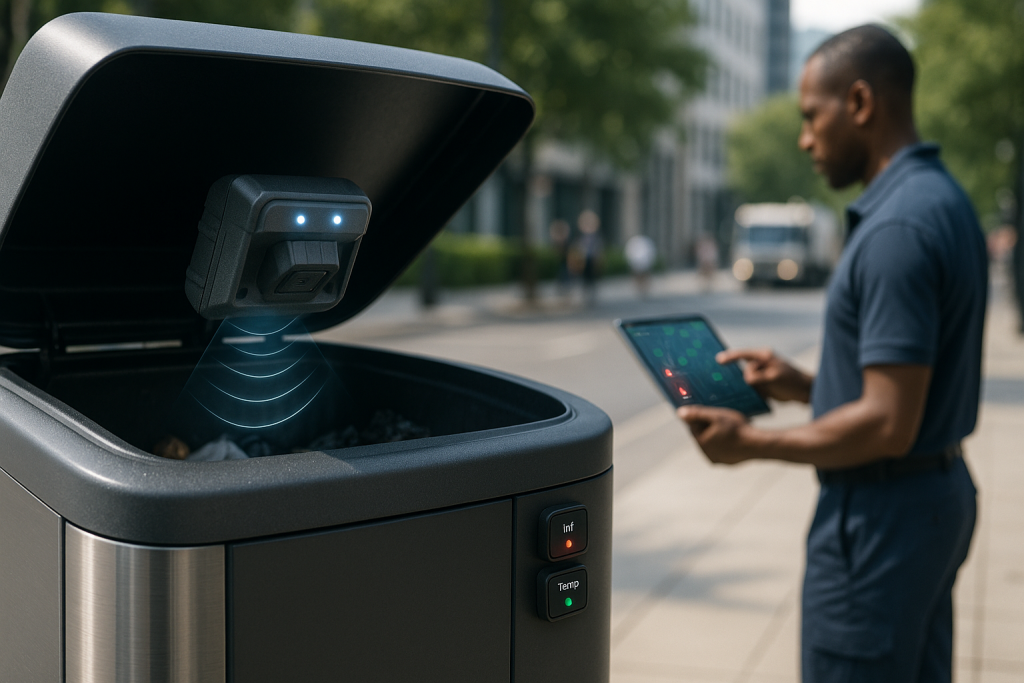
The core purpose of this technology is to provide the actionable data needed to automate and optimize waste collection services. The sensor is the single most important component. It is what transforms a passive container into an active, intelligent data-gathering asset for modern infrastructure. This guide provides a detailed exploration of the sensor technology that powers these innovative devices.
From Simple Container to Intelligent Asset
The evolution of the waste bin has been a slow but steady journey. For centuries, a bin was just an open-top container. The first major innovation was the lid, followed by the foot pedal for hands-free operation. These changes focused on basic hygiene and convenience. The integration of electronic sensors, however, marked a revolutionary leap forward. It shifted the paradigm entirely. The focus moved beyond simple convenience and into the realm of intelligence and data.
This leap transformed the bin from a mere receptacle into a valuable asset. It became a node in a network, capable of communicating its status to a central system. This ability to gather and transmit data from the field is the foundation of all modern waste management strategies. The sensor is the heart of this transformation. It provides the voice that allows the bin to report its needs, enabling a smarter, more responsive approach to sanitation services.
A Deep Dive into Sensor Technology
The term "sensor" covers a range of technologies. Each type has unique principles of operation, advantages, and limitations. Understanding these differences is key to appreciating the capabilities of a sensor smart bin. This is the only section where we will use bullet points to clearly differentiate these technologies.
Ultrasonic Sensors: The Gold Standard for Fill-Level Measurement
This is the most widely used technology for accurately measuring fill levels in waste containers. It operates on the principle of echolocation, similar to the sonar used by bats or submarines. The sensor, mounted at the top of the bin, emits a short, high-frequency sound pulse. This pulse travels downward until it hits the surface of the waste. It then reflects off the surface and travels back up to the sensor. The device's internal processor measures the precise time this round trip took. This is known as the "time-of-flight." Because the speed of sound in the air is a known constant, the sensor can use this time measurement to calculate the exact distance to the waste. By subtracting this distance from the known total height of the container, it can report a highly accurate fill-level percentage. Ultrasonic sensors are prized for their reliability and versatility. They work well with most types of solid waste and many liquids.
Infrared (IR) Sensors: For Proximity and Threshold Detection
Infrared sensors work with light instead of sound. They emit a beam of infrared light, which is invisible to the human eye, and then detect its reflection. In smart bins, IR technology is used in two primary ways. The first is for hands-free lid operation. A proximity sensor on the outside of the bin detects when a hand or object is near. This triggers the lid to open automatically. The second use is for fill-level threshold detection. An IR sensor can be placed at a specific height inside the bin. When the waste level rises and blocks the light beam, the sensor sends a simple "full" signal. While less precise than ultrasonic sensors for continuous measurement, IR sensors are a cost-effective and highly reliable solution for proximity sensing and simple threshold alerts.
Radar Sensors: For the Toughest Environments
Radar sensors operate on a similar principle to ultrasonic sensors but use radio waves instead of sound waves. This key difference makes them exceptionally robust and suitable for the most challenging industrial and environmental conditions. Radio waves are largely unaffected by factors that can interfere with sound waves or light beams. This includes heavy dust, moisture, extreme temperature fluctuations, or corrosive fumes. This resilience makes radar the preferred sensor technology for monitoring industrial containers holding liquids, powders, chemicals, or other difficult materials. While typically more expensive, their performance and reliability in harsh settings are unparalleled.
Other Critical Onboard Sensors
A truly smart bin often includes additional sensors that monitor more than just the fill level. An accelerometer, or tilt sensor, can detect if a bin has been knocked over or is tilted at an unsafe angle. It immediately sends an alert so that crews can be dispatched to correct the issue. A temperature sensor is another vital component. It continuously monitors the internal temperature of the bin. If it detects a sudden and sharp rise in temperature, it can trigger a fire alert. This safety feature is critical for preventing fires in public spaces or waste facilities.
Beyond Fill Levels: What Else Do Sensors Measure?
While fill-level measurement is the primary function, the data from other onboard sensors provides crucial layers of operational and safety intelligence. These additional data points enable a more holistic and proactive management approach.
The fire detection capability offered by temperature sensors is arguably the most critical safety feature. Waste containers, especially in public areas, can be vulnerable to accidental fires or arson. A traditional bin provides no warning. A fire can smolder and grow, potentially spreading to nearby property. A sensor smart bin, however, acts as a 24/7 fire watch. The moment the internal temperature exceeds a safe threshold, an instant alert is sent to the management platform and to designated personnel. This allows for an immediate response from emergency services, containing the threat before it escalates.
The data from tilt and shock sensors, powered by accelerometers, is essential for maintenance and asset management. These sensors can report if a bin has been impacted by a vehicle or knocked over by vandals. This allows managers to dispatch a crew to inspect for damage and reset the bin. It also helps to identify locations where bins are frequently disturbed, which can inform better placement strategies. This proactive approach to maintenance ensures the container fleet remains in good working order and public spaces stay safe and tidy.
The Data Journey: From Sensor to Software
The journey of a single data point from a sensor to an actionable insight is a marvel of modern connectivity. It begins the moment the sensor takes a reading. This could be a fill-level percentage, a temperature, or a tilt angle.
This small packet of information is then transmitted wirelessly. The sensor uses an integrated IoT communication module. This module connects to a Low-Power Wide-Area Network (LPWAN). These networks are specifically designed for IoT devices. They allow data to travel over very long distances while consuming an extremely small amount of battery power.
The data travels from the bin to a network gateway, and then securely over the internet to a central, cloud-based software platform. This platform is the system's brain. It receives, stores, and processes the incoming data from thousands of bins. It then visualizes this information on an intuitive dashboard. A manager can see a map with the real-time status of every bin in their network. The software's analytics engine then generates the actionable insights. It flags bins that are full, sends fire or tilt alerts, and, most importantly, feeds the data into a route optimization algorithm. This entire journey, from sensor reading to a new route on a driver's tablet, can happen in a matter of seconds.
How Sensor Data Revolutionizes Waste Collection
The data provided by these advanced sensors is the catalyst for a complete revolution in waste collection logistics. It allows organizations to move away from inefficient, static systems and embrace a highly efficient, dynamic model.
The most profound impact is the shift to data-driven collections. Fill-level data makes it possible to service only the bins that need it. This on-demand model eliminates wasted trips, which can account for more than half of all collections in a traditional system. The result is a massive reduction in miles driven, which in turn cuts costs for fuel, vehicle maintenance, and labor.
The data also enables proactive maintenance. Alerts from tilt and status sensors allow maintenance crews to respond to issues like a damaged or overturned bin immediately. This prevents minor problems from becoming major liabilities and keeps the service area safe and clean. This proactive approach extends the life of the assets and improves the overall quality of service.
The safety benefits are also significant. The ability of temperature sensors to prevent fires cannot be overstated. This feature protects public property and, more importantly, public safety.
Finally, the long-term data gathered from a fleet of smart bins is invaluable for strategic planning. By analyzing historical fill-rate data, city planners can make evidence-based decisions. They can determine the optimal placement for new bins. They can identify areas with high waste generation that may need more frequent service or larger containers. This strategic insight helps to design a more efficient and user-friendly waste management system for the entire community.
Conclusion: The Unseen Heart of the Smart Bin
The sensor is the true heart of the smart bin. It is the component that provides the intelligence, the voice, and the value. While features like self-compaction or hands-free lids are beneficial, it is the sensor's ability to generate data that delivers the transformative return on investment. This technology is the engine of efficiency, the guardian of safety, and the source of strategic insight.
Understanding the different types of sensor technology and the data they provide is crucial for any organization looking to modernize its waste management operations. As this technology continues to evolve, it will play an even greater role in the creation of smarter, safer, and more sustainable cities. The journey to a truly intelligent waste infrastructure begins with this small, unseen, yet incredibly powerful component.
Frequently Asked Questions (FAQ)
1. How accurate are the fill-level sensors in smart bins?
High-quality ultrasonic sensors are extremely accurate. They can typically measure fill levels with a precision of within one or two centimeters. This level of accuracy is more than sufficient for effective route optimization and overflow prevention.
2. What is the battery life of a typical bin sensor?
Bin sensors are designed for extreme power efficiency. By using low-power communication networks and smart "sleep" modes, the battery in a typical sensor unit can last for five to ten years before needing a replacement.
3. Can a sensor be damaged by the waste inside the bin?
The sensors are housed in very durable, rugged casings to protect them from the contents of the bin. They are mounted at the very top of the container, away from the bulk of the waste. They are designed to be resistant to moisture, dust, and impacts from falling trash.
4. How do sensors differentiate between a full bin and a temporary blockage?
Advanced sensors and software platforms have algorithms to handle this. For example, if a single piece of cardboard temporarily blocks the sensor, the system may register a 100% reading. However, the software can be configured to only trigger a collection alert after the bin has reported being full for a certain period, such as an hour. This prevents false alarms from temporary blockages.


