
The Complete Guide to Smart Waste Management with IoT & AI
Smart Waste management is a major issue. Cities grow, and the amount of waste grows too. In 2020, the world produced over 2 billion tonnes of solid waste. By 2050, it could rise to 3.4 billion tonnes, according to the World Bank. Traditional systems struggle to keep up. Overflowing bins, irregular pickups, and growing landfills are common. These problems affect not just cleanliness but also public health and environmental safety.
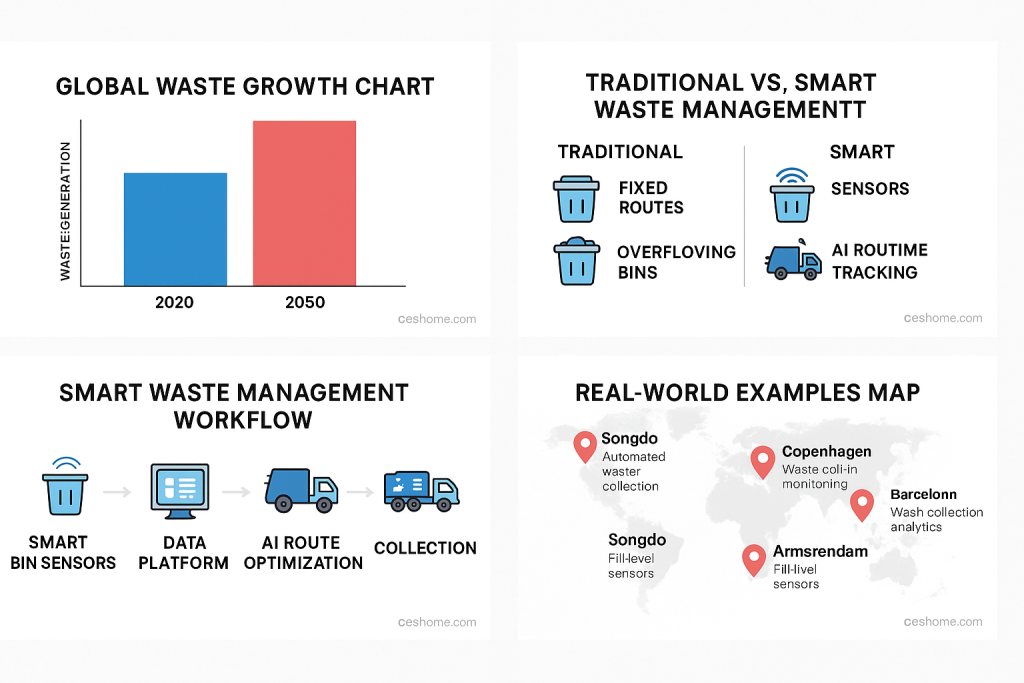
With more people living in cities, the pressure on waste systems keeps increasing. Urban areas must handle waste better. But doing this the old way doesn’t work. Manual systems are slow, costly, and hard to scale. They often miss data that could help improve services.
Technology changes that. Smart waste management uses Internet of Things (IoT) and Artificial Intelligence (AI) to create cleaner, more efficient systems. Sensors tell when a bin is full. AI helps plan collection routes. Dashboards give insights in real time. Together, these tools help reduce costs, cut emissions, and improve recycling.
Smart waste management is not just a tech trend. It’s a shift in how cities manage one of their biggest problems. Done right, it supports cleaner cities, better services, and a healthier planet.
What Is Smart Waste Management?
Smart waste management is a system that uses connected devices and smart algorithms to handle waste collection, tracking, and disposal more efficiently. The core idea is to collect waste when and where it’s needed, not just based on a fixed schedule.
This approach is different from traditional systems. In the past, garbage trucks followed routes without knowing if bins were full or empty. Workers often collected waste that didn’t need pickup or missed bins that were already overflowing. There was no way to know in real time what was happening.
Smart systems solve that. A sensor in a bin tells you when it’s 80% full. A dashboard shows which bins need urgent attention. A route optimization tool helps drivers pick the fastest, most efficient path. These small changes lead to big gains in time, money, and environmental impact.
Unlike traditional systems, smart waste management is adaptable. It becomes more efficient the more you use it. This makes it an essential component of modern infrastructure, particularly in rapidly growing cities.
How Smart Tech Is Changing the Future of Waste Management
Technology has changed how we deal with waste. It started with sensors. Now, it's much more. Waste systems today can detect, respond, and improve themselves using real-time data. This changes everything.
For example, instead of checking every bin on a route, a waste collector can focus only on bins that need emptying. This saves fuel, time, and labor. It also cuts carbon emissions. AI helps by analyzing patterns. If one neighborhood fills bins faster, the system adjusts. Routes change based on demand, not guesses.
These systems also support sustainable city planning. Data collected from bins and routes helps cities understand waste trends. Planners can see which materials are overused or under-recycled. They can create better rules, improve recycling centers, or change public bins’ placements.
The Old Way of Doing Waste Management
Old waste management systems had a basic approach. Garbage trucks followed fixed routes on fixed days. This didn’t always work well. Sometimes the bins were empty. Sometimes they were overflowing. It caused frustration and waste.
Manual schedules didn’t use data. Cities guessed how often bins filled. Some areas were over-serviced, and others were ignored. Workers collected trash that didn’t need picking. This wasted fuel, time, and money.
Routing was also inefficient. Without traffic data or bin status updates, trucks spent more time on the road. This led to delays, missed pickups, and higher emissions. It also increased maintenance costs and reduced worker efficiency.
Most important, there was no feedback loop. No one knew how much waste was collected from each area. No reports showed if recycling improved. This made planning difficult.
Overflowing bins caused public health issues. They attracted pests. They smelled. In some cases, they blocked walkways. All of this happened because systems didn’t respond in real time.
That’s the gap smart waste management fills. It adds data, automation, and flexibility to a broken model.
The Future of Waste Management
Smart Waste Management and Smart Cities
Cities today aim to be smart. That means using data to run better. Waste is a big part of that. Smart waste management is a key part of making cities sustainable and efficient.
Smart cities aim to reduce pollution, save resources, and make life better for people. Waste systems that use sensors, AI, and real-time tracking help achieve these goals. They reduce garbage truck emissions, save water, and boost recycling.
Many cities already lead in this. Barcelona uses smart bins and analytics. Seoul has a waste collection that uses weight-based fees. Amsterdam integrates waste data into its smart city dashboard. These aren’t experiments. They are working systems that show the future is now.
Smart waste management links with other city systems too. It works with transport, energy, and housing data. This lets cities plan better. If a new housing area is built, the system knows how much waste to expect and adjusts collection routes automatically.
How Does Smart Waste Management Work?
Smart waste management uses connected devices and software to monitor and optimize every step of the waste process. It starts with sensors and ends with better outcomes for cities and the environment.
Smart Bin Sensors
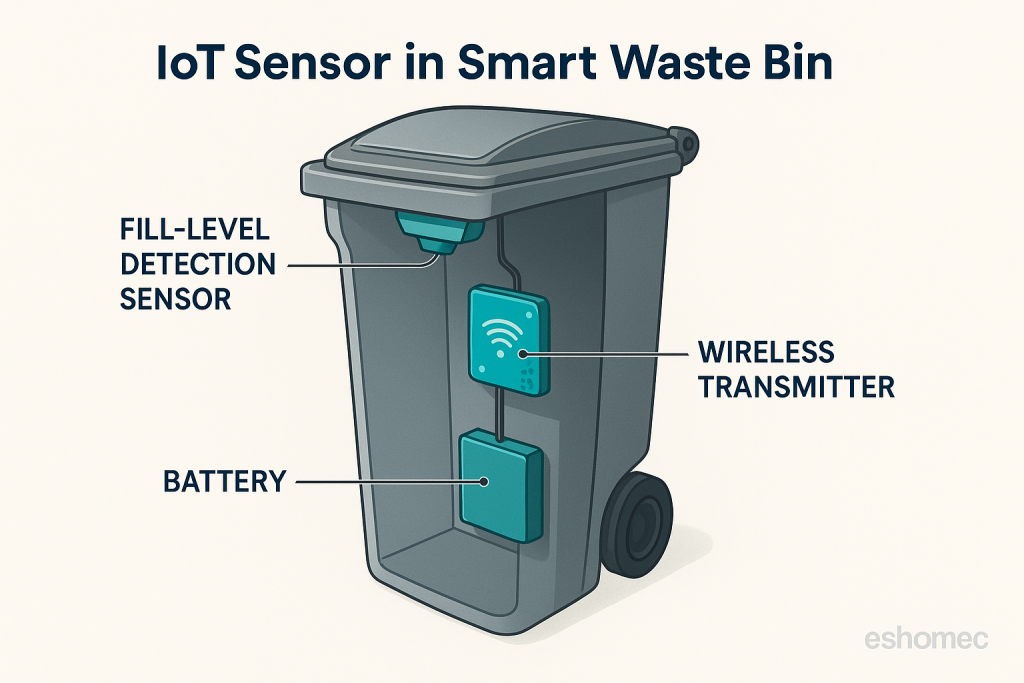
Sensors are the eyes of the system. They sit inside waste containers and measure how full a bin is. Some sensors also check temperature, which helps detect fires or other hazards. These devices send data to a central platform.
When a bin reaches a certain level, say 85% full, it sends an alert. This helps avoid overflowing bins and reduces unnecessary trips. Cities no longer guess when bins need emptying. They know exactly when and where to go.
Sensors are small, battery-powered, and connect via wireless networks. They’re easy to install and work in many environments, public streets, offices, and industrial zones.
Smart Waste Management Platform
This is the control center. All data from sensors flows into a single platform. Here, operators view maps, track bin levels, and get real-time alerts. The platform also analyzes historical data. This helps plan better routes and schedules.
Managers can see which areas produce the most waste, what kind of waste it is, and how often bins fill. They can adjust waste pickup times, send alerts to cleaning teams, and even spot illegal dumping.
Intelligent Routing
Routing software uses data from sensors and traffic systems to find the best paths for waste collection trucks. Instead of following a fixed route, drivers follow the most efficient one.
This reduces travel time, saves fuel, and cuts emissions. It also helps manage labor better. One truck can do the work of two if the route is optimized.
Some systems also adjust routes in real time. If traffic builds up or a bin fills faster than expected, the software updates the route instantly.
Container Tracking
Smart containers have GPS trackers. This helps locate bins, especially in large areas like campuses, parks, or cities. If a bin goes missing or gets moved, operators can find it fast.
Container tracking is also useful for recycling or special waste types. You can track how much e-waste or plastic is collected in a zone. This supports better recycling and reporting.
Enabling Technologies in Smart Waste Management
Several technologies work together to make smart waste management possible. Each has a role in making the system faster, smarter, and more accurate.
Internet of Things (IoT)
IoT connects physical objects, like bins and trucks, to the internet. It’s the base layer of the system. IoT allows sensors to talk to platforms, platforms to talk to drivers, and everything to update in real time.
IoT turns a static object like a bin into a source of data. This data drives all the decisions in smart waste management.
Artificial Intelligence (AI)
AI takes the data from IoT and makes it useful. It spots patterns, predicts future behavior, and helps make decisions.
For example, if a neighborhood always fills bins faster on weekends, AI can suggest adding extra pickups. If a certain route causes delays, AI finds a better one.
Some advanced systems also use computer vision to identify types of waste. This helps improve recycling and reduce sorting costs.
Data Analytics
Analytics turns raw data into insights. It shows what’s working and what’s not. With dashboards and reports, managers can track performance, spot trends, and make changes.
Data also helps justify budgets. If a smart system reduces costs by 20%, that can support further investment. Cities want proof, and analytics gives it.
The Benefits of Smart Waste Management
Smart systems deliver many benefits. They save money, improve services, and support long-term goals.
Optimized Resources
Resources like fuel, trucks, and labor are used better. You only collect bins that need it. This reduces wear and tear and increases productivity.
Reduced Costs
Less fuel, fewer overtime hours, and better planning mean lower costs. Even though smart systems require investment, they pay back fast through savings.
Cleaner Streets
When bins don’t overflow, streets stay clean. There’s less litter, fewer pests, and better public perception. Clean streets also attract tourists and support local business.
Better Working Environments
Workers follow better routes, lift fewer overfull bins, and face fewer health hazards. They spend less time stuck in traffic and more time doing useful work.
Lower Carbon Emissions
Efficient routing means fewer trips and less fuel burned. Some cities report up to 40% reduction in emissions after adopting smart systems. That supports climate goals.
Increased Recycling Rates
Smart systems can separate waste types or identify high-recycling areas. This helps direct education efforts and improves sorting. More recycling means less landfill.
Contribution to SDGs
Smart waste management supports multiple UN Sustainable Development Goals (SDGs)—clean water, sustainable cities, climate action, and responsible consumption.
Challenges in Implementing Smart Waste Management
While smart waste management offers clear benefits, adopting it isn’t always easy. Cities and companies face several real challenges when moving from traditional to smart systems.
High Initial Costs
Smart systems need investment. Sensors, software, dashboards, and training all cost money. Smaller towns or budget-strapped municipalities may hesitate to spend on upgrades. There’s also the cost of maintenance. Devices can break or need updates, which adds to long-term costs.
Even with long-term savings, the upfront cost can slow adoption. Decision-makers need to see a clear return on investment. That’s why strong pilot programs and case studies are important, they prove the system works.
Technology Integration Issues
Not all cities have the tech infrastructure in place. Smart waste systems need reliable internet, cloud storage, and sometimes GPS or traffic data. Integrating this with older systems—like legacy routing software or manual record-keeping—can be complex.
Some platforms don’t talk well with others. If one system uses one data format and another uses something else, syncing becomes difficult. This slows down performance and may lead to data gaps.
Training and Skills Gap
Technology is only as good as the people who use it. City workers, drivers, and managers need to learn how to use dashboards, interpret data, and follow optimized routes. Without training, even the best systems can fail.
Many workers are used to traditional systems. Moving to digital tools may require a shift in mindset. There’s also a need for ongoing support. When new features roll out, teams need updates and help.
Data Privacy Concerns
Smart bins and tracking systems collect a lot of data. Some of it may involve private areas or commercial zones. Cities must protect this information and use it responsibly.
If systems track locations, times, and volumes, they could reveal patterns about behavior. This raises questions about surveillance and data ethics. Regulations may require anonymization, secure storage, or user consent.
To earn trust, organizations must be transparent. They need clear policies on what data is collected, how it’s used, and who can access it.
Real-World Applications and Case Studies
Smart waste management isn’t just theory. Cities and companies around the world have already adopted it. Their experiences show what works, and what doesn’t.
City-Level Implementations
Barcelona, Spain is a leader in smart waste. The city uses underground smart bins connected to a central system. Sensors detect when bins are full, and trucks get real-time updates. This reduced overflow issues and improved recycling rates.
Copenhagen, Denmark integrated its waste system with its smart city network. The city can monitor waste across different zones, and route trucks using traffic data. This reduced vehicle usage and improved service times.
Songdo, South Korea, one of the world’s first “smart cities,” has a vacuum-powered waste collection system. There are no garbage trucks. Waste travels underground via tubes to processing centers. It’s clean, efficient, and highly automated.
Corporate and Industrial Use Cases
Many companies, especially in manufacturing and retail, now use smart bins inside facilities. These bins detect fill levels and sort waste into categories, plastic, metal, and general waste.
In warehouses, smart systems help track packaging waste. Data helps optimize packaging design to reduce waste. It also assists with compliance reporting.
Large offices use smart systems to improve employee awareness. They send alerts when recycling stations are full and encourage correct waste sorting through real-time screens.
Pilot Programs and Lessons Learned
Some cities started small. A town in Sweden ran a 6-month pilot using 100 smart bins. After measuring cost savings and reduced complaints, they expanded citywide.
A district in London tested smart waste for festivals and events. Temporary bins with sensors helped manage sudden waste spikes. It worked well and reduced cleanup time.
These pilots teach important lessons. Start small. Measure everything. Adjust based on feedback. Then scale. Smart systems are flexible, but they need real-world testing to succeed.
The Future of Smart Waste Management Technologies
Technology continues to grow. New ideas are entering the waste industry. They make systems even smarter and more powerful.
AI-Powered Waste Sorting Robots
AI robots now sort trash at recycling centers. Cameras and sensors identify items—plastic bottles, metal cans, paper. Then robotic arms sort them fast.
This reduces human error and increases speed. It also improves the quality of recycled materials. AI sorting is already in use in some US and EU facilities.
Blockchain for Waste Tracking
Blockchain adds security and transparency. Every step of the waste journey, from collection to disposal, gets recorded in a secure ledger.
This helps prevent illegal dumping. It also supports audits, improves traceability, and helps companies meet environmental compliance standards.
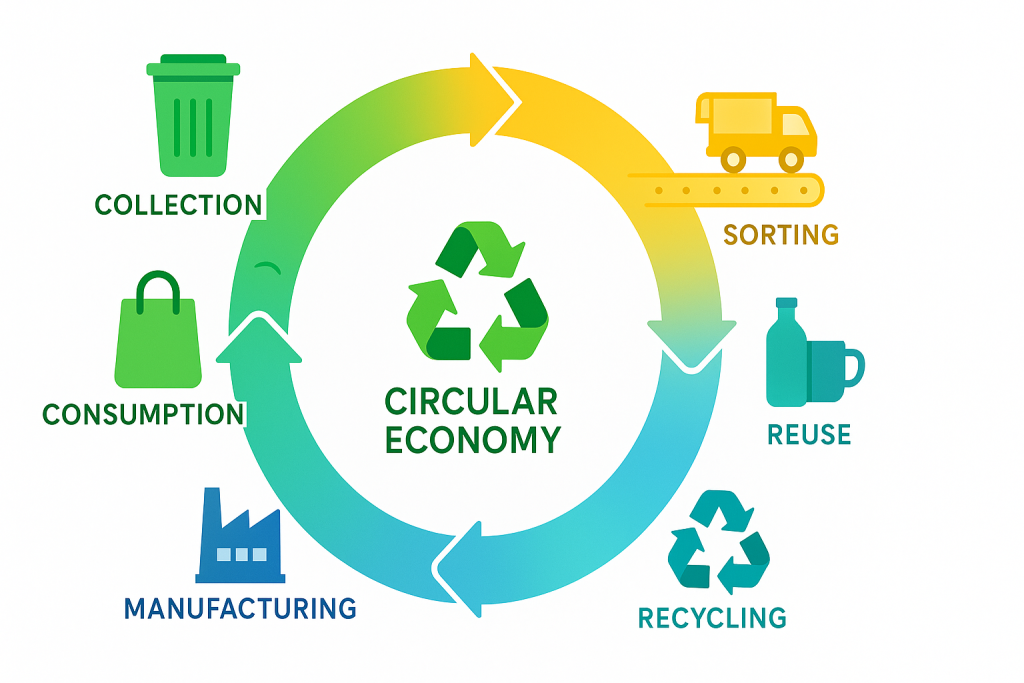
Circular Economy Integration
Smart systems can support reuse, not just disposal. Apps can alert people when reusable materials are available. Businesses can share waste, like leftover fabric or packaging, with others who need it.
This turns waste into a resource. It supports a circular economy where nothing is thrown away without a second look.
Waste-to-Energy Innovations
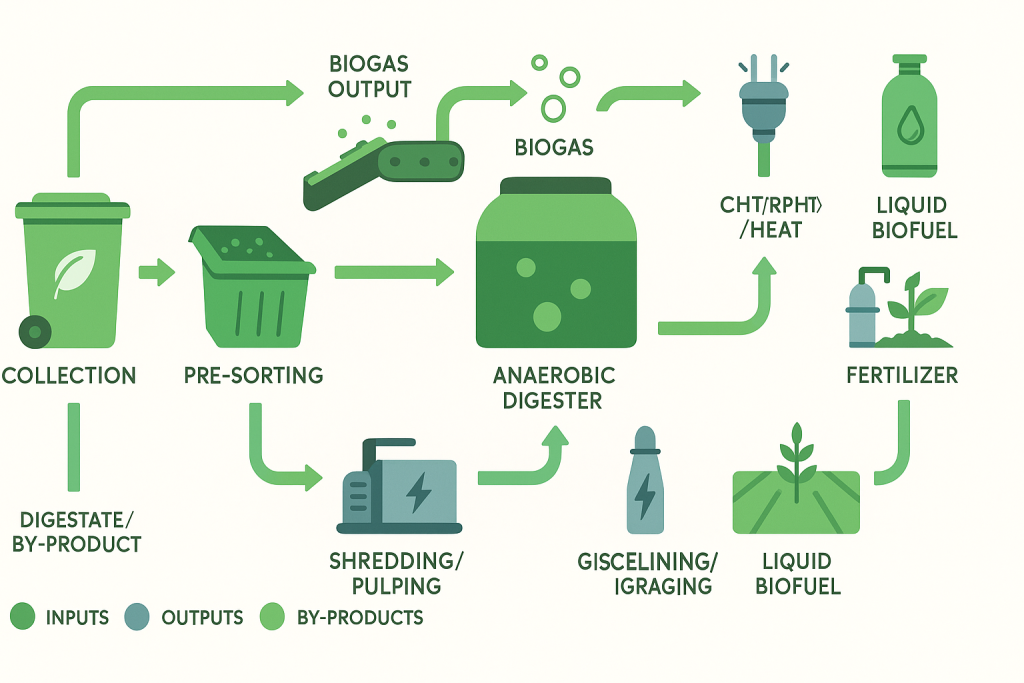
Some systems now track how waste can be turned into energy. Organic waste becomes biogas. Plastics become fuel. Smart sensors sort this waste and send it to the right processing center.
These solutions reduce landfill pressure and help produce clean energy. Countries like Sweden already turn over 50% of waste into energy.
Conclusion
Smart waste management combines technology, data, and common sense. It replaces guesswork with facts, fixed routes with smart routing, and manual work with automation. Cities get cleaner. Workers stay safer. Budgets stretch further.
The tools exist now. Sensors, AI, and platforms are proven. Many cities already use them. The next step is scaling—bringing these tools to more places, more people, and more systems.
Every city, business, or organization that deals with waste can benefit. All it takes is commitment, planning, and a willingness to work smarter.
Frequently Asked Questions (FAQs) About Smart Waste Management
1. Is smart waste management expensive to set up?
While the initial setup cost of smart waste management systems can seem high, it’s important to look at it as a long-term investment rather than a short-term expense. These costs may include:
- Smart bins with sensors
- Network infrastructure (LoRaWAN, cellular, etc.)
- Software platforms and data analytics tools
- Staff training and system integration
However, the return on investment (ROI) often becomes evident within the first few years. Cities and private operators usually save significantly on fuel costs (by reducing unnecessary trips), labor hours, and vehicle wear and tear. Additionally, smart systems lead to cleaner public spaces, fewer overflowing bins, and improved recycling rates, all of which contribute to lower operational costs and a more sustainable urban environment.
2. Can small towns or rural areas use smart waste systems?
Absolutely. Modern smart waste systems are highly scalable and adaptable. Small towns or municipalities don’t need to implement a full-scale smart system from the start. Many begin with:
- Pilot programs in specific neighborhoods or public areas
- Selective bin deployments (e.g., only for recyclables or in busy tourist spots)
- Low-cost sensor options
As local governments or waste service providers see tangible benefits—like reduced complaints, lower collection frequency, and better resource allocation—they often expand the systems in stages. Government grants and green technology funding may also help ease the financial burden for smaller communities.
3. What types of waste can smart systems manage?
Smart waste management platforms are versatile and can handle a broad range of waste types, including:
- General/municipal solid waste
- Recyclables (paper, plastic, glass, metals)
- Organic waste (food scraps, garden clippings)
- Hazardous waste (batteries, chemicals – with strict safety protocols)
- E-waste (electronic devices, computers, cables)
Some systems are designed with specialized features to handle specific types of waste, such as temperature tracking for hazardous bins or fill-level tracking for organic bins that degrade quickly. Additionally, smart labels or QR-code tracking can be used for e-waste logistics and compliance monitoring.
4. Do smart bins need internet or Wi-Fi to function?
Not necessarily. Most modern smart bins are equipped with low-power wide-area network (LPWAN) connectivity technologies such as:
- LoRaWAN (Long Range Wide Area Network)
- NB-IoT (Narrowband Internet of Things)
- Standard 3G/4G cellular signals
These technologies are chosen because they offer reliable, long-range, and energy-efficient communication, even in remote or crowded environments. Smart bins do not require continuous high-bandwidth internet like Wi-Fi; they only need to transmit small data packets (such as fill level, location, or status updates) intermittently. This design ensures longer battery life and lower operating costs.
5. How often should data from smart waste systems be reviewed?
The frequency of data review depends on the purpose:
- Daily monitoring: Ideal for real-time alerts and operational oversight. This includes checking for full bins, missed pickups, or irregular usage patterns.
- Weekly analysis: Helps in evaluating collection routes, staff productivity, and short-term waste trends.
- Monthly or quarterly reviews: Essential for long-term strategy, including forecasting, budgeting, and performance metrics (like waste diversion rates or public satisfaction).
Smart platforms often come with customizable dashboards and automated reports so operators don’t have to manually sift through data. With proper setup, stakeholders can receive automated alerts and performance summaries, which streamline decision-making and enhance responsiveness.


