
316 Te matini hi'opo'a auri
No te feia hoo e faaau ra i te PSU, PTFE, 316/316L stainless steel, e te mau tino hi'o, te faatumu nei teie api i ni'a i te mau vahi e faufaa ai te 316SS, Te mea e ti'a ia hi'opo'ahia, e mai te mea e, e mea maitai a'e te tahi atu tao'a rari.
316/316L Te mau rave'a no te hi'opo'a i te faito o te auri
Ua hamanihia ta matou mau matini hi'opo'a auri no te ite i te faito o te vahi i roto i te mau farii, Te mau nota, Te mau farii no te faaineineraa, te mau piha na'ina'i, e te mau tauihaa OEM i reira te pape e tuati ai, Te mau tereraa o te tamâraa, e aore râ, te puai o te matini. E faaohipa te matini i te hi'opo'araa i te hi'opo'araa uira: te vai ra te hoê LED infrarouge e te phototransistor i muri mai i te hoê prisma optic. I roto i te mata'i, E anaana te maramarama i roto i te prisma. Ia tapo'i ana'e te pape i te prisma, E taui te tapa'o e itehia ra, e e taui te mau matini roro uira i taua tauiraa ra ei tauiraa.
Teie te tahi mau rave'a no te opuaraa:
- 316 e aore râ, 316L stainless steel rarized body construction
- Te tapa'o o te prisma optic e tano i te faito e te anuvera e titauhia
- Te mau tao'a tapiri e ma'itihia ia au i te pape, anuvera, e te tamâraa i te mau hoho'a
- NPN, PNP, e aore râ, te tahi atu faanahoraa no te hi'opo'araa
- Te mana'o matara e aore râ tapirihia
- Hoho'a taviri e aore râ taa-ê-hia
- Te niuniu, tu'atiraa, e aore râ, te mau rave'a no te hamaniraa OEM
- Te hi'opo'araa i te faito teitei, Te mau mana'o tauturu no te, Te mau mana'o tauturu no te, Te hororaa mărû, e aore râ, te hi'opo'araa i te mau taheraa
No te mau ma'itiraa rahi a'e i te tino o te matini, A hi'o i ta matou matini hi'opo'a Te mau vahi faaearaa.
No te aha te feia hoo e ma'iti ai i te 316SS i te plastique no te hi'opo'araa i te faito hi'o
E mea mâmâ roa te mau matini hi'opo'a uraina no te mau pape e rave rahi, te anuvera ha'iha'i, e te mau faaohiparaa mâmâ. Tera râ,, E mea pinepine te feia hoo i te haere i te 316 te auri auri mai te peu e te vai ra te hoê aore ra hau atu o teie mau fifi: te anuvera teitei a'e, Te teimaha o te matini, Te rohirohi o te taura, Te faaheporaa, Te tape'araa i te mori, Te mau mana'o tauturu no te haapiiraa, e aore râ, te horoiraa.
316/316E mea puai a'e te auri L i te mau afata uraina matauhia i roto i te mau pape hamaniraa tauihaa. E mea pinepine te reira i te hi'opo'ahia no te diesel, mori mori, hinu hinu hinu, te hinu hydraulique, Te mau pape no te faaineineraa i te pape, Te mau mana'o tauturu no te haapiiraa, e te mau tauihaa e titauhia ia tamâ-pinepine-hia. E horo'a atoa te reira i te matini i te hoê tino puai a'e no te mau farii auri, te mau matini, e te mau fare hamaniraa tauihaa na'ina'i.
Te mana'o faufaa roa, oia ho'i, eita te auri stainless e faariro i te taatoaraa o te matini ei mea paruru i te mau tao'a chimique. I roto i te faanahoraa faarari mau, te vai ra te tino stainless, prisma optique, Te mau tapao, e te mau vahi taamuraa e aore râ, te tuatiraa. E mea ti'a i te taata hoo ia hi'opo'a i te taatoaraa o te haaputuraa materia rari hou a faati'ahia ai.
Te hamaniraa i te mau tuhaa rari: Tino, Prisma, Seal, e Cable Exit
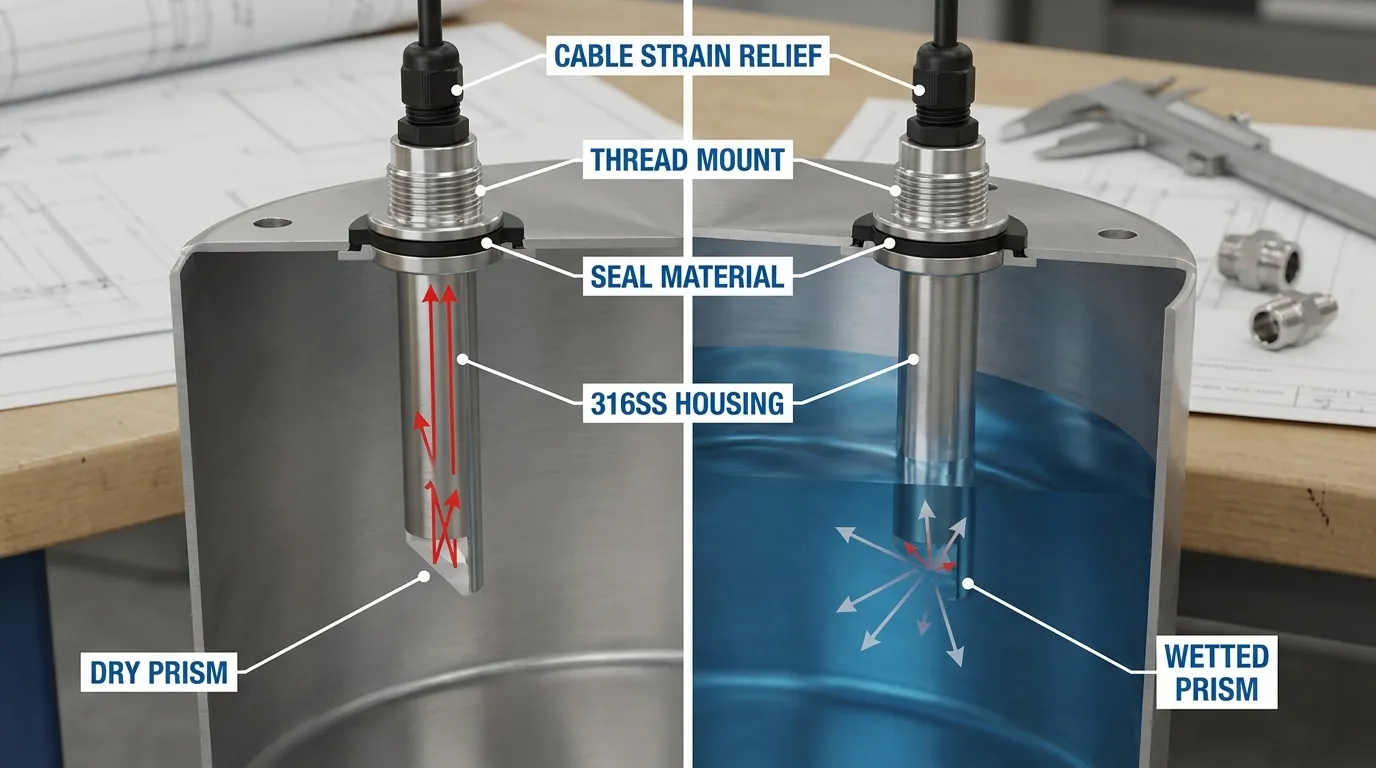
No te hoê matini hi'opo'a i te faito pape, Te parau ra « 316SS » o te tino auri ïa e aore râ, te afata o te tu'ati i ni'a i te pape e o te horo'a i te taura no te haamauraa. I roto i te tahi mau opuaraa, 316E nehenehe e anihia te L no te haamaitai i te tutae auri i roto i te mau vahi tapirihia e aore râ, i roto i te mau vahi mâ. E mea ti'a ia haapapûhia te faito hopea i roto i te RFQ ia au i te hoho'a o te pereoo auri, rave'a tamâraa, e te pape.
Te prisma optique o te vahi ite ïa. E mea ti'a i to'na materia ia tu'ati i te pape, anuvera, e te tereraa o te tamâraa. I roto i te mau matini hi'opo'a e rave rahi, E faaohipahia te hoê hi'o e aore râ, te hoê prisma hi'o ia nehenehe i te tapa'o infrarouge ia anaana maitai i rotopu i te mărô e te rari. E tia i te prisma ia vai mâ noa no te haapurororaa i te maramarama; tapo'i teiaha, te crystallisation, Te mau mana'o tauturu no te, e aore râ, e nehenehe te pape piripiri e faaiti i te papûraa o te pahonoraa.
E mea faufaa atoa te mau taatiraa. Noa'tu e mea tano te tino stainless, e nehenehe te tape'a O hape e oru, afafa, Etaeta, e aore râ, e tahe. Te mori, tao'a faatahe, pape ve'ave'a, pu'a pu'a, e e titau paha te pape tamâ alkaline i te mau maitiraa tapiri taa ê. E haapapû te HojellyTek i te mau ma'itiraa no te tapiri i te taahiraa RFQ eiaha râ e mana'o e, hoê taatiraa e tano i te pape atoa.
E ti'a atoa ia hi'opo'a i te vahi i rapae i te niuniu e aore râ, i te vahi tu'atiraa. No te mau tauihaa horoi, E mea ti'a i te taata hoo ia tauaparau no niuniu, tamărûraa i te teimaha, Paruru i te aua, e mai te mea e, e pîpîhia anei te matini, i raro i te pape, i raro a'e i te au auahi, e aore râ, tamâhia e te pîpî faaheporaa.
Te arata'iraa no te tu'atiraa i te mau materia no te 316SS Optical Level Sensors
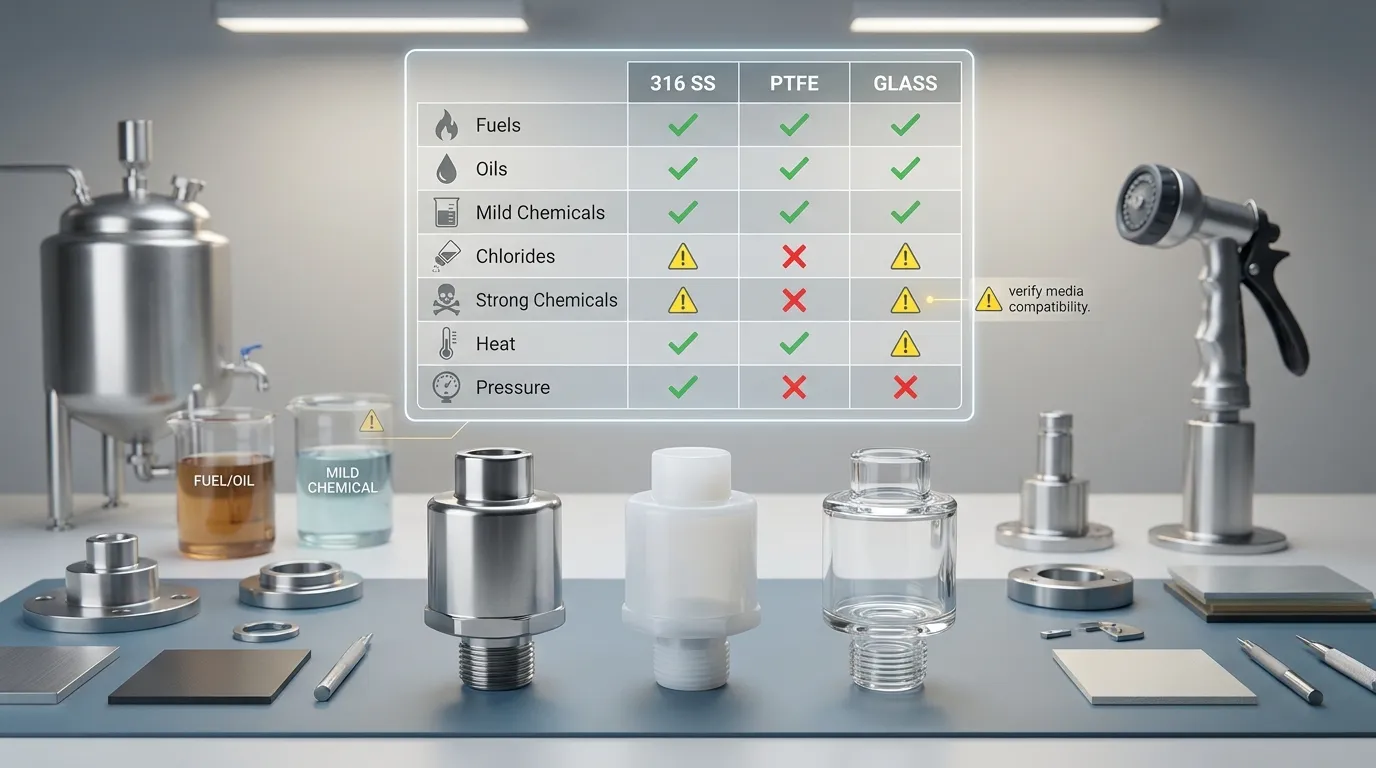
Teie te tabula i raro nei i te hoê buka arata'i no te ma'itiraa, e ere i te hoê haapapûraa hopea no te tu'atiraa. A hi'opo'a noa i te i'oa o te ve, Te mana'o, anuvera, Te mau mana'o tauturu no te, e te tamâraa hou a poro'i ai.
| Te mau ve'a e aore râ te huru | 316/316L tano maitai i te auri | Eaha te hi'opo'a hou a poro'i ai | Te tahi atu rave'a no te hi'opo'a |
|---|---|---|---|
| Diesel, mori mori, hinu hinu hinu | E mea pinepine te reira ei tumu puai no te ma'iti i te stainless i te uraina | Materia no te taati, Te faainoraa i te prisma, anuvera, Te aueueraa o te pereoo | Stainless e te tapa'o haapapûhia |
| Hinu hydraulique e te hinu matini | E tano no te mau opuaraa hi'opo'araa e rave rahi | Te mau tao'a hinu, Puai o te neheneheraa, Huru taura, Parururaa niuniu | Te hi'o e aore râ te hi'o tei te huru o te veavea |
| Te pape e te pape mărû | E mea tano, i te mau vahi ihoa râ e mea faufaa te puai e aore râ, te horoiraa | Faito chlorure, Te mau mana'o tauturu no te haapiiraa, anuvera | Plastique no te faaohipa i te pape mâmâ |
| Te mau tao'a mărû | E nehenehe e rave, tera râ, e mea ti'a ia hi'opo'ahia | I'oa chimique, Te mana'o, Taime no te faaiteiteraa, Te oru o te mau tapiri | PTFE aore ra hi'o mai te peu e e mea ino |
| Te horoiraa e aore râ te tamâraa CIP | E mea faufaa no te hamaniraa i te tino e te taura puai a'e | Tao'a tamâ, anuvera, pîpî faaheporaa, materia no te tapiri | PTFE/hi'o no te mau pape tamâraa paari a'e |
| Te mau ve'a ve'ave'a e aore râ, te faaheporaa | Mea pinepine e mea maitai a'e i te mau afata uraina | Te mau oti'a o te anuvera e te neheneheraa e titauhia, Te pereoo taataahi veavea | Hoho'a ve'ave'a teitei |
| Te pape chlorure e aore râ, te miti | E titau i te haapa'oraa maitai | Te mau apoo e te tutae auri, Te mana'o, anuvera | PTFE aore ra hi'o |
| Te mau acide puai, alkali puai, te mau tao'a faatahe puai | Eiaha e mana'o e e tu'ati te reira | Hi'opo'araa taatoa no te tu'atiraa i te mau tao | PTFE optical sensor |
| Te viivii ore, anuvera teitei, e aore râ, te hoê pû taa ê no te mau tao' | E ere paha te stainless i te vahi rari maitai roa a'e | Te viivii ore, Te aueueraa veavea, aroraa chimique, rave'a tamâraa | hi'o hi'o hi'o |
Te anuvera e te neheneheraa: Eaha te haapapû
316 E nehenehe te auri stainless e paturu i te mau huru matini e te veavea rahi a'e i te mau matini uraina e rave rahi, Tera râ, ua hau atu i te faito o te matini i te auri. Na te prisma e taui i te anuvera e te neheneheraa, Te mau matini roro uira i roto, Faanahoraa no te tapiri, niuniu niuniu, Te mau tauihaa no te farii, e te hoho'a no te tamauraa.
No te pape veavea, E mea ti'a i te feia hoo ia haapapû i te anu, Te anuvera o te tamâraa poto, i te au auahi e aore râ i te pape veavea, Te pereoo taataahi veavea, e mai te mea e, tei piha'i iho anei te mau matini uira i te ve'ave'a o te tereraa. No te faaheporaa, haapapû i te neheneheraa ohipa maitai, Te mau faito puai, Te mau huru o te vacuum, rave'a no te tapiri i te taura, e te puai o te haamauraa.
Mai te mea e, no ni'a i te faito teitei o te anuvera, te hoê pûpûraa matini hi'opo'a ve'ave'a teitei e mea tano a'e paha i te hoê hoho'a stainless.
I hea 316 Aita te auri auri e ere i te mea maitai
316E tauihaa hamaniraa tauihaa puai te SS, E ere râ te reira i te pahonoraa papû roa a'e no te mau pape atoa. E nehenehe â oia e faaruru i te tutae auri i roto i te mau tao'a tei î i te chlorure, te tahi mau acide, te tahi mau alkali, Te mau tao'a taero, e te mau raau taero veavea. I roto i te tahi mau faaohiparaa, E ora mai paha te tino ino, tera râ, e nehenehe te tapao aore ra te prisma e topa na mua.
Teie te mau rave'a manuïa ore:
- Te apoo aore ra te tutae i nia i te tino rari
- Te oru o te mau tapiri, te afafa, e aore râ, te mo'eraa o te compression
- Tapo'i prisma no roto mai i te vari hinu, Te mau mana'o tauturu no te, faito, e aore râ, te mau ve'a piripiri
- Te tauiraa hape mai roto mai i te mau hu'ahu'a, Te mau haaputuraa, e aore râ, ua hape te vahi tamauraa
- Te mau taheraa no te tapiriraa o te taura e aore râ te mau tao'a tu'ati ore
- Te ino o te niuniu i roto i te horoiraa e aore râ, i te aueueraa
- Te tu'atiraa ore o te output e te PLC, relay, e aore râ, te tomite hi'opo'araa
No te mau raau taero, E mea pinepine te PTFE i te riro ei ma'itiraa maitai a'e no te tino rari. No te anuvera teitei, te viivii ore, e aore râ, te mau titauraa taa ê no te hi'o, E mea maitai a'e paha te hi'o. Te rave'a papû roa a'e, o te haponoraa ïa i te mau haamaramaramaraa no ni'a i te pape hou a ma'iti ai i te tino o te matini.
5-Te faanahoraa o te opuaraa taahiraa
- Uiuiraa
A faaite i te pape, hoho'a o te pereoo auri, Te vahi tamauraa, Te hotu tia'ihia, Te mau mana'o tauturu no te, e te matete. - Hi'opo'araa i te mau hoho'a e te faatanoraa
E hi'opo'a ta matou pŭpŭ aravihi i te mau materia rari, hoho'a prisma, ma'itiraa i te mau tapao, Te mau mana'o tauturu no te, Te mau mana'o tauturu no te, niuniu niuniu, tu'atiraa, e te mana'o no te hi'opo'araa. - Hi'oraa haapapûraa
E nehenehe te mau hi'oraa e faaineinehia no te tano, Tauiraa i te mana'o, Te mau mana'o tauturu no te, e te mau rave'a haaparareraa na mua a'e i te hamaniraa. - Te hamaniraa e te QC
E hi'opo'a te fare hamaniraa, uira uira, Hoho'a, e te pahonoraa ohipa ia au i te faataaraa o te poro'i haapapûhia. - Tauturu no te haponoraa
HojellyTek e hapono nei i te mau matini apî na te mau hoani i te mau Hau Amui no Marite, MATOU, Inidia, e te tahi atu mau matete, na roto i te tauturu na roto i te WhatsApp e aore râ te rata uira no te faaauraa i te mau poro'i.
Te mau titauraa e te mau faataaraa no te faaineineraa
Hou a ani ai i te hoê faahitiraa parau, A faaineine i te mau haamaramaramaraa i muri nei:
- I'oa pape, Te mana'o, te mau tao'a amui, e te mau raau tamâraa
- Anuvera faito e te faito teitei roa a'e o te pape
- Te faito o te neheneheraa matauhia e te faito teitei roa a'e
- Te mau tauihaa o te vairaa e te meumeu o te papa'i
- Vahi tamauraa: Te mau mana'o tauturu no te, i ni'a, Raro, Te mau mana'o tauturu no te, e aore râ, i ni'a
- Te rahi o te taura e aore râ te hoho'a no te haamauraa
- Te mau ohipa e titauhia: NPN, PNP, relay interface, tapa'o analogue, e aore râ, te tapa'o o te iri hi'opo'araa
- Titauraa no te uira
- Te mana'o matara e aore râ tapirihia
- Te roa o te niuniu, tu'atiraa, e aore râ, te aniraa no te taamu
- Te hoho'a o te prisma: pape mâ, Te mau mana'o tauturu no te, tapo'i, Te mau hu'ahu'a, Te mau mana'o tauturu no te, e aore râ, te mau ve'a piripiri
- Rahiraa hi'oraa e te rahiraa hamaniraa i mana'ohia
- Te mau titauraa atoa no te tu'atiraa i te Tuya/Smart Life e aore râ te hi'opo'araa maramarama, mai te mea e faaohipahia i roto i te hoê matini tu'atihia
Faaauraa no te ma'itiraa materia
| Materia o te tino o te matini | Te mau faaohiparaa tano roa a'e | Te mau puai | Te mau taotiaraa |
|---|---|---|---|
| PSU / Te mau mana'o tauturu no te | Te mau vairaa pape, Te mau matini mâmâ, te mau tauihaa OEM mâmâ | Te faanavairaa faufaa, Te mau mana'o tauturu no te, E mea ohie ia faaô | Taoti'ahia no te ve'ave'a, Te mau mana'o tauturu no te, Te mau mana'o tauturu no te, e te tahi mau tao'a |
| 316/316L stainless steel | Te mau mori, Te mau nota, Te mau mana'o tauturu no te haapiiraa, te mau ve'a ve'ave'a e aore râ, te faaheporaa, te mau tauihaa horoi | Tino puai, taura paari, Te puai maitai a'e i te plastique | E ere i te pato'iraa i te mau tao'a chimiques; E tia ia hi'opoahia te mau tapao taati e te prisma |
| PTFE | Te mau pape taero e te mau vahi ino | E mea maitai roa te parururaa i te mau tao'a chimiques i roto i te mau pape etaeta e rave rahi | E ti'a ia hi'opo'a faahou i te hamaniraa matini e te mau oti'a anuvera |
| Glass | Te anuvera teitei, te viivii ore, e aore râ, te mau faaohiparaa taa ê i te mau tao'a | Te puai o te hi'oraa e te mau tao'a i roto i te mau huru tupuraa i ma'itihia | Mea paruparu a'e i te auri; E mea faufaa te parururaa |
No te aha e rave ai i te ohipa e HojellyTek
HojellyTek o te hoê ïa taiete hamani e te hoê taata hoo i Shenzhen tei faatumuhia i ni'a i te hi'opo'araa i te hi'opo'araa i te faito o te pape. Te paturu nei matou i te mau opuaraa OEM/ODM i reira te feia hoo e hinaaro ai hau atu i te hoê noa tuhaa no te tapura: Hi'opo'araa i te mau materia, faatanoraa i te haamauraa, faanahoraa no te niuniu, e te tauturu no te hi'opo'araa i te mau hi'opo'.
Ta matou R i roto i te fare&E nehenehe ta te pŭpŭ D e tauturu ia faaau i te auri, PTFE, Te mau mana'o tauturu no te, e te mau ma'itiraa hi'o tei niuhia i ni'a i te pape e te haamauraa. Eiaha e hoo rahi roa i te 316SS ei rave'a no te ao atoa nei, Te tauturu nei matou i te feia hoo ia hi'opo'a i te mau materia rari hou a hamanihia ai.
FAQ
Eaha te hoê 316 Te matini hi'opo'a i te faito o te auri e faaohipahia no te?
A 316 E faaohipahia te matini hi'opo'a auri no te hi'opo'araa i te faito o te faito i roto i te mau farii e aore râ, i te mau tauihaa e ere i te mea tano, mai te mau farii mori, Te mau vairaa mori arahu, te mau farii raau mărû, te mau faanahoraa pape veavea, te mau farii faahepohia, e aore râ, te mau tauihaa no te horoi i te pape.
E mea maitai a'e anei te 316L i te 316 no te mau matini hi'opo'a i te faito pape?
316E mea iti a'e te carbone o te L e mea au a'e no te tahi mau mea tapirihia, vai mâ, e aore râ, te mau hamaniraa fifi i te tutae auri. Te ma'itiraa maitai roa a'e, tei te huru ïa o te pape, rave'a tamâraa, anuvera, e te hoho'a o te pereoo auri. A haapapû i te faito materia i roto i te RFQ.
E nehenehe anei e faaohipa i te mau matini hi'opo'a 316SS i te mori e aore râ, i te hinu?
E, E ma'itihia te mau matini hi'opo'a stainless no te mori e te hinu, tera râ, te tapao, prisma, Te uputa niuniu, anuvera, e te vai noa ra te mau tao'a tapiri e ti'a ia hi'opo'ahia. E nehenehe atoa te vari hinu e faaino i te prisma mai te peu e e vaiiho te pape i te mau haapueraa.
E 316 Te auri e tano no te mau tao'a puai?
Eiaha i te mau taime atoa. 316E mea maitai te puai o te SS i roto i te mau vahi mǎrû e rave rahi, tera râ, te mau acide puai, te mau alkali, te mau chlorure, e e titau paha te mau tao'a faataheraa puai i te PTFE aore ra te hi'o. A horo'a noa i te i'oa ti'a e te faito o te tao'a hou a poro'i ai.
Eaha te mau huru ohipa e vai ra?
Tei te huru o te opuaraa, e nehenehe te matini e faanahonahohia no te mau faanahoraa hi'opo'araa i te mau fare hamaniraa tauihaa e aore râ, no te mau faanahoraa OEM mai te NPN, PNP, Tauiraa i te mana'o, e aore râ, te tahi atu mau titauraa no te faanahoraa. E mea ti'a ia tu'ati te output i ta outou PLC, relay, PCB, e aore râ, te taata hi'opo'a.
Nahea vau ia ani i te matini hi'opo'a tano??
A hapono i ta outou mau haamaramaramaraa no ni'a i te pape, anuvera, Te mau mana'o tauturu no te, Taura no te haamauraa, hoho'a o te pereoo auri, Te huru o te ohipa, uira uira, aniraa niuniu e aore râ tu'atiraa, e te rahiraa hi'oraa. E hi'opo'a to matou pŭpŭ i te hamaniraa rari e e horo'a mai i te hoê faanahoraa tano.
A ani i te hoê faahitiraa parau
Hinaaro i te hoê matini hi'opo'a 316/316L stainless optical level sensor no te mori, hinu, tao'a mǎrû, pape veavea, e aore râ, te mau tauihaa no te horoi i te pape? A hapono i te mau haamaramaramaraa no ta outou aniraa na roto i te WhatsApp e aore râ te rata uira no te ani i te hoê faahitiraa parau, Aparauraa no ni'a i te api parau, e aore râ, hi'opo'araa hi'opo'araa.


