
E‑Waste Recycling Services for Business: A Complete Guide
The rapid pace of technological innovation drives modern business. Every year, companies upgrade servers, laptops, and mobile devices to stay competitive. This progress creates a significant challenge: a growing mountain of obsolete electronics. This electronic waste, or e-waste, cannot be thrown in the trash. It is a complex waste stream, containing both valuable materials and hazardous substances. More importantly, it often holds a company's most sensitive data.
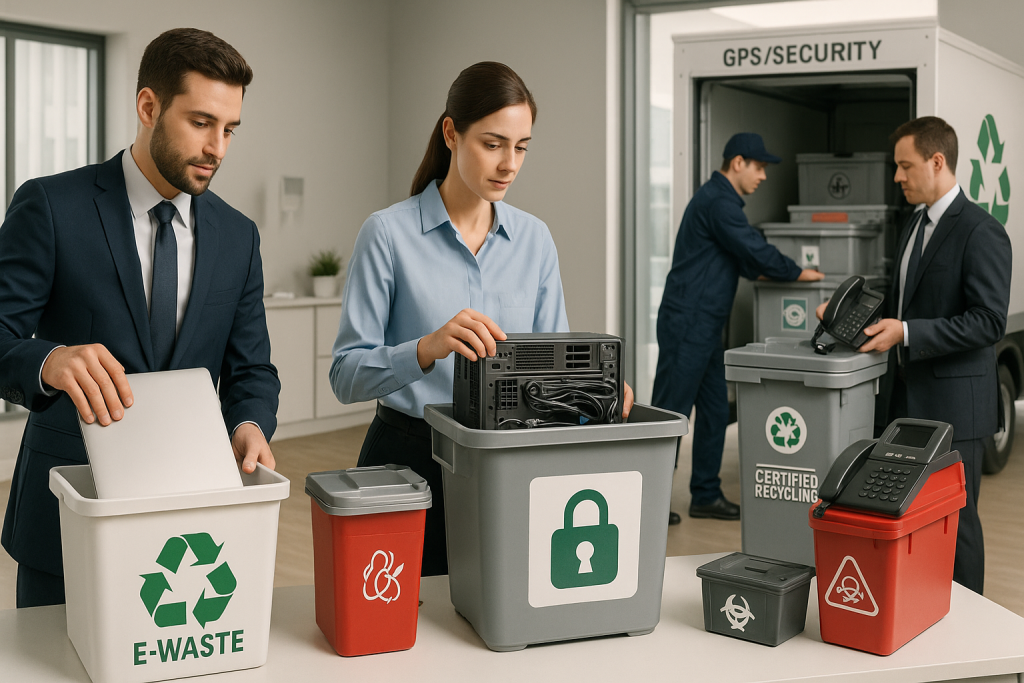
E-waste recycling services for business are professional, secure solutions for the collection, data destruction, and environmentally compliant recycling of obsolete electronic equipment. Choosing a certified partner for this process is one of the most critical risk management decisions a company can make. As an expert provider of comprehensive IT Asset Disposition (ITAD) and recycling services, CESH Home offers this guide. We aim to help businesses understand the risks, processes, and best practices for creating a secure and responsible e-waste program.
The Hidden Risks in Your Storage Closet: Why E-Waste Matters
That closet full of old computers and servers is not just a storage issue; it is a significant liability. Ignoring e-waste exposes a business to severe risks from multiple fronts. A professional e-waste service is essential for mitigating these threats.
1. The Data Security Risk
This is the number one concern for any business. Every discarded hard drive, company phone, and server contains a history of data. This can include customer information, financial records, employee data, and trade secrets. Simply deleting files does not remove the data. A determined thief can easily recover information from a hard drive thrown in a dumpster. A single data breach can lead to catastrophic financial loss, legal penalties, and irreparable damage to a company's reputation. Professional e-waste services guarantee the complete and permanent destruction of all data.
2. The Regulatory Compliance Risk
Numerous regulations govern the disposal of electronic waste. These rules prohibit the landfilling of e-waste due to its hazardous components. They also establish a "chain of custody" or "duty of care" principle. This means the business that created the waste is legally responsible for its proper disposal, even after it leaves the facility. Partnering with an uncertified recycler who illegally exports or dumps the waste does not transfer liability. The original business can still face heavy fines and legal action.
3. The Environmental Risk
Electronic devices contain a cocktail of toxic materials. These include heavy metals like lead, mercury, cadmium, and beryllium. They also contain flame retardants and other hazardous chemicals. When e-waste is dumped in a landfill, these toxins can leach into the soil and groundwater. This causes long-term environmental contamination. A responsible recycling process ensures these materials are safely extracted and managed. This prevents them from ever harming the ecosystem.
4. The Brand Reputation Risk
Modern consumers and business partners value corporate social responsibility (CSR). A news story about a company's data being found in a landfill, or about its e-waste being illegally dumped, can cause immediate and lasting harm to its brand. A certified, transparent e-waste recycling program is a positive and demonstrable part of a company's commitment to sustainability and data security.
What is Business E-Waste? Identifying Your Assets
Before a business can create a disposal plan, it must first identify what constitutes e-waste. The category is broad and covers nearly every device with a plug or a battery. A thorough inventory is the first step toward a compliant program.
What Types of Equipment Are Considered E-Waste?
It is helpful to group these assets into categories.
- IT Assets (The Highest Risk): This category contains the most sensitive data and is the highest priority for secure disposal.
- Servers and server racks
- Desktop computers (CPUs) and laptops
- Hard disk drives (HDDs) and solid-state drives (SSDs)
- Networking equipment (routers, switches, firewalls)
- Office Equipment: These items often contain hard drives or memory that store copies of documents.
- Printers, copiers, and multifunction devices
- Fax machines and scanners
- Projectors and audiovisual equipment
- Communication Devices: Mobile devices contain a wealth of company data, including emails, contacts, and access credentials.
- Business cell phones and smartphones
- Tablets
- VoIP phones and desk phone systems
- Data Center Equipment: The supporting infrastructure of an IT department also requires proper disposal.
- Uninterruptible Power Supply (UPS) systems and batteries
- Cables, wires, and power cords
- Keyboards, mice, and other peripherals
- Miscellaneous Electronics: This can include a wide range of other items.
- Lab and testing equipment
- Point-of-sale (POS) systems
- Security cameras and systems
The Secure Recycling Process: From Your Door to Final Recovery
What happens to your old electronics after they leave your office? A certified, professional e-waste recycler follows a highly controlled and documented process. This ensures security and environmental compliance at every stage.
Step 1: Secure Collection and Logistics
The process begins at your facility. The service provider dispatches trained, background-checked technicians to your location. They pack the assets into locked, sealed containers or bins. These containers are then loaded onto a secure, GPS-tracked truck. A formal chain-of-custody document is signed, creating a legal record of the transfer.
Step 2: Receiving and Asset Tracking
Upon arrival at the secure recycling facility, the sealed containers are opened. Every single asset is inventoried. Technicians scan serial numbers to create a detailed report. This report tracks each device through the entire process and provides a final accounting for your records.
Step 3: The Data Destruction Phase (The Most Critical Step)
Before any other processing occurs, all data-bearing devices are segregated. They are then sent to a secure, access-controlled area for data destruction. This is the highest-priority step in the entire process. The specific method used (shredding, wiping, or degaussing) is chosen based on the client's security requirements.
Step 4: Manual Dismantling and Sorting
After data is verifiably destroyed, the devices are moved to a processing line. Technicians manually dismantle the equipment into its core components. They separate circuit boards, plastics, metals (steel, aluminum), wires, and other materials. This careful sorting is essential for maximizing the recovery of valuable resources and properly managing hazardous components.
Step 5: Mechanical Shredding and Separation
The sorted components are then fed into large, powerful shredders. These machines shred the materials into small, uniform fragments. The shredded material then moves through a series of advanced separation technologies. Powerful magnets pull out steel, while eddy currents repel aluminum and other non-ferrous metals. Infrared systems can even separate different types of plastic.
Step 6: Smelting and Recovery (The Final Stage)
The separated, clean streams of commodities (aluminum, steel, copper, plastic) are packaged and sent to certified downstream partners, such as smelters and refineries. At these facilities, the materials are melted down and reformed into raw commodities. These raw materials are then sold back into the manufacturing supply chain to be used in new products. This completes the "closed-loop" recycling process.
A Deep Dive into Data Destruction Methods
For any business, the absolute guarantee of data destruction is the most important feature of an e-waste service. A certified recycler will offer several methods and provide a legal certificate to prove the job was done correctly.
How Can a Business Guarantee Data is Destroyed?
There are three primary, industry-standard methods for data destruction.
1. Physical Destruction: Shredding
This is the most secure and foolproof method of data destruction. Hard drives, cell phones, and other data-bearing devices are fed into an industrial shredder. This machine uses powerful cutting blades to grind the devices into tiny, confetti-like pieces. This process physically destroys the data platters and memory chips, making data recovery absolutely impossible. Many services offer on-site shredding, where a mobile shredding truck comes to your location. This allows you to witness the destruction of your assets.
2. Data Wiping (Sanitization)
Data wiping uses specialized software to overwrite all the data on a hard drive with random ones and zeros. The process is repeated multiple times according to internationally recognized standards (such as DoD 5220.22-M). A successful data wipe completely sanitizes the drive, removing all information. The key advantage of this method is that the hard drive remains physically intact. This allows the drive or the entire computer to be refurbished and resold, which can generate a financial return.
3. Degaussing
Degaussing is a method used for magnetic storage media like hard disk drives (HDDs) and backup tapes. The device is exposed to a very powerful magnetic field. This field completely neutralizes the magnetic charge on the drive's platters, instantly and permanently erasing all the data. The drive is rendered completely inoperable after degaussing.
The Certificate of Destruction
Regardless of the method used, a reputable recycler will issue a formal Certificate of Destruction upon completion of the process. This document is your legal proof that your data has been destroyed in a compliant manner. It should list the serial numbers of the destroyed assets and be kept in your compliance records.
| Method | Security Level | Allows for Reuse? | Best For |
| Shredding | Highest (Irreversible) | No | Highest-security data; obsolete or damaged hardware. |
| Wiping | Very High (Compliant) | Yes | Newer, valuable hardware that can be resold (asset recovery). |
| Degaussing | Highest (Irreversible) | No | Magnetic media like HDDs and backup tapes. |
How to Choose a Certified E-Waste Recycling Partner
Choosing the right partner is a matter of due diligence. Your company's data and reputation are on the line.
What Should You Look for in an E-Waste Service Provider?
- Look for Leading Certifications: Do not partner with an uncertified recycler. Look for providers who are certified to the highest international standards for responsible recycling (such as R2 or e-Stewards). These certifications are a third-party guarantee that the recycler follows strict protocols for environmental safety, data security, and worker health.
- Verify a Secure Chain of Custody: Ask about their security procedures. Do they use locked trucks and containers? Are their facilities secure and monitored? Do they provide a complete, unbroken chain-of-custody document for every pickup?
- Insist on a Certificate of Destruction: This is non-negotiable. If a provider cannot issue a serialized Certificate of Destruction, do not use them. This document is your only legal proof of compliance.
- Inquire About Asset Value Recovery: If you have newer, valuable equipment, ask if they offer refurbishment and resale services. A good partner will have a transparent process for testing and reselling viable assets and sharing the revenue with your business.
- Confirm Adequate Insurance: The provider must carry comprehensive liability insurance, including policies that specifically cover data breaches and environmental pollution.
- The toxic components in e-waste, like lead and mercury, mean it must be managed with the same care as other forms of hazardous waste. Your chosen partner must demonstrate expertise in handling these materials safely.
Conclusion
A professional e-waste recycling service is a critical partner for modern business. It is not a simple trash pickup; it is a comprehensive solution for data security, regulatory compliance, and corporate social responsibility. By managing the significant risks associated with obsolete electronics, a certified service protects your business from data breaches, legal fines, and reputational harm.
Choosing a partner with the highest certifications and a transparent, secure process is essential. This partnership ensures that your old technology is handled responsibly. It guarantees your sensitive data is completely destroyed, and it allows valuable materials to be recovered and reused, contributing to a circular economy.
Frequently Asked Questions
Q1: Can my business be fined for throwing computers in the trash?
Yes. In most regulated areas, it is illegal to dispose of e-waste in a municipal landfill. Businesses can face significant fines for improper disposal, especially if the devices contain sensitive data that is later exposed.
Q2: Is data wiping as secure as physical shredding?
When performed correctly to recognized standards, data wiping is considered a secure method of data sanitization by most regulatory bodies. However, physical shredding is the only method that is 100% foolproof and provides visual proof of destruction. For the absolute highest level of security, shredding is the preferred method.
Q3: What is "asset value recovery"?
Asset value recovery (AVR) is the process of generating a financial return from your old IT equipment. A service provider will test your obsolete assets. If a laptop, server, or component is still functional and has market value, they will refurbish it and sell it through secondary markets. They then share a portion of the revenue with your business.
Q4: Do you provide on-site hard drive shredding?
Yes, premier e-waste service providers offer mobile, on-site shredding services. A specialized shredding truck comes directly to your facility. Your staff can then witness the physical destruction of your hard drives and other media before they leave your premises, providing the ultimate level of security and peace of mind.


