
The Ultimate Guide to Waste Management Bin Cleaning
Waste management bin cleaning is an essential service for maintaining public health and hygiene. This process involves the professional cleaning, sanitizing, and deodorizing of residential and commercial waste containers. While often overlooked, the cleanliness of a waste bin has a significant impact on the immediate environment. Dirty bins can become breeding grounds for harmful bacteria and attract unwanted pests.
This guide provides a complete overview of the bin cleaning process. It will cover its numerous benefits, the differences between professional and DIY methods, and what to look for in a quality service provider. It is a critical component of a truly comprehensive approach to waste management.
Why Regular Bin Cleaning is Crucial
A waste bin, by its very nature, is exposed to a wide range of refuse. Over time, residue from food scraps, leaking liquids, and other organic matter builds up on the interior surfaces. This creates an environment where a host of problems can develop. Understanding these risks highlights the importance of regular, professional cleaning.
The most serious concern is public health. The residue in a dirty bin is an ideal breeding ground for harmful bacteria. This can include dangerous pathogens like E. coli, Salmonella, and Listeria. These bacteria can be transferred to anyone who touches the bin. Fungi and mold can also thrive in this damp, dark environment, releasing spores that can cause respiratory issues.
Dirty bins are also a powerful attractant for pests. The smell of decomposing organic matter attracts rodents like rats and mice. It is also a magnet for insects, particularly flies, which lay their eggs in the residue. This can lead to maggot infestations. These pests can then carry diseases from the bin to surrounding homes and businesses.
Beyond the health risks, there are the unpleasant odors. As organic waste breaks down, it releases foul-smelling gases. These odors can permeate a garage, a backyard, or the area around a commercial property. This can negatively impact a home's curb appeal or a business's reputation.
Finally, regular cleaning contributes to container longevity. Some types of waste can be corrosive. Over time, acidic or chemical residues can begin to degrade the plastic or metal of the bin itself. Regular cleaning removes these harmful substances. This helps to extend the life of these valuable assets, protecting the investment made in waste management infrastructure.
The Professional Bin Cleaning Process
Professional bin cleaning is a sophisticated, self-contained process. It is performed using specialized vehicles and equipment to ensure a thorough and environmentally responsible cleaning. The process follows a series of precise steps. This is the only section where we will use bullet points to clearly outline this process.
- Scheduling and Coordination: The cleaning service is almost always scheduled to take place on the same day as your regular waste collection. The cleaning truck arrives after the collection truck has emptied the bin. This ensures the container is empty and ready for cleaning.
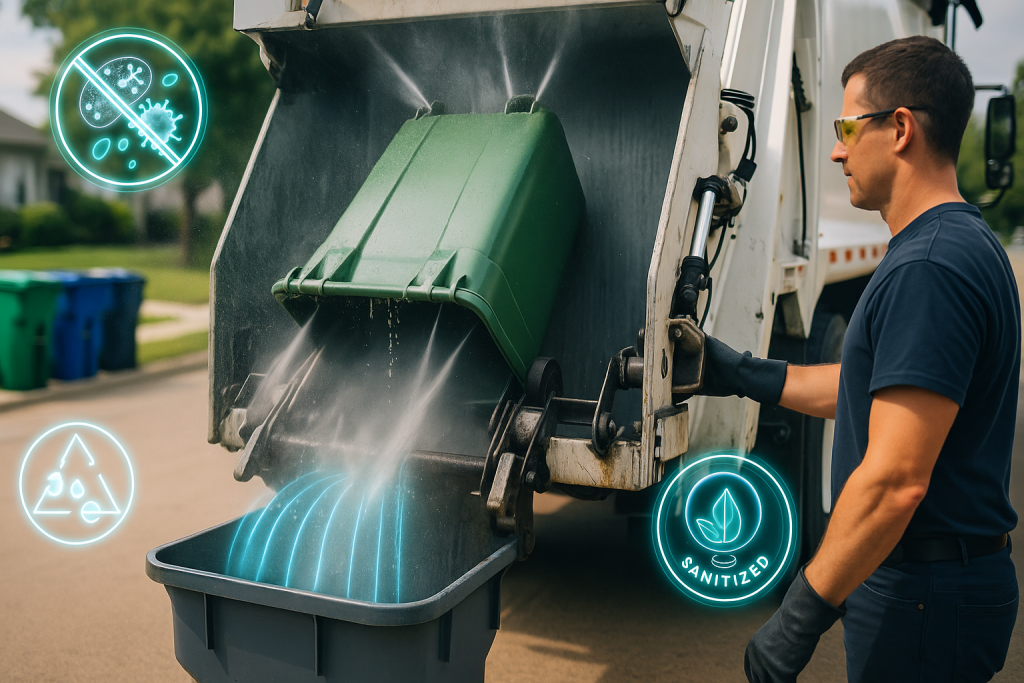
- Specialized Cleaning Vehicles: Professional companies use custom-built trucks. These vehicles are equipped with a high-pressure washing system, a hot water heater, and, most importantly, a wastewater containment tank. They are designed to be a fully self-contained cleaning plant on wheels.
- Lifting and Washing: The empty bin is brought to the back of the truck. A hydraulic lifting mechanism securely grabs the bin and lifts it into a sealed washing bay on the truck. It is positioned upside down over a high-pressure spinning wash head.
- High-Pressure, Hot Water Blasting: The wash head blasts the interior of the bin with extremely hot water, often over 190°F (90°C). This high pressure dislodges all the caked-on grime and residue. The high temperature of the water is critical for killing the vast majority of bacteria, viruses, and mold spores.
- Eco-Friendly Sanitization: During the washing cycle, a biodegradable and eco-friendly cleaning and sanitizing agent is injected into the water stream. This ensures that the bin is not just clean, but also hygienically sanitized.
- Wastewater Recovery: This is a crucial step. All the contaminated wash water is collected within the sealed washing bay. It is then filtered and stored in the wastewater containment tank on the truck. This prevents any harmful bacteria, chemicals, or dirty water from being discharged into the street or the storm drain system.
- Hand Detailing and Deodorizing: After the interior is cleaned, the bin is lowered. The technician will then often hand-wipe the exterior surfaces and the lid. To complete the service, a special deodorizing agent is sprayed on the interior. This leaves the bin smelling fresh and clean.
- Return to Curb: The clean, dry, and sanitized bin is then carefully placed back at the curb, ready for the resident or business to bring back to their property.
Professional Service vs. DIY Cleaning
Some people may consider cleaning their own waste bins. However, there are significant differences between a DIY attempt and a professional service.
The most important difference is effectiveness. The high-pressure, high-temperature water used by professionals is far more effective at removing grime and killing germs than the cold water from a typical garden hose. The professional-grade sanitizers are also more powerful than household soaps.
The environmental impact is another major consideration. When a person cleans their own bin in their driveway, all the contaminated water runs directly into the storm drain. This water is filled with harmful bacteria and chemicals. It flows untreated into local streams, rivers, and lakes, causing significant water pollution. Professional services are legally required to capture and properly dispose of all their wastewater, making them the far more environmentally responsible choice.
Professional services also conserve water. Their high-pressure, low-flow systems are designed to use a minimal amount of water to achieve a thorough cleaning. A DIY cleaning with a garden hose often uses much more water.
Finally, there is the matter of convenience and safety. Cleaning a waste bin is an unpleasant and physically demanding chore. A professional service handles this task quickly, efficiently, and safely, saving the property owner from a dirty job.
How Bin Cleaning Integrates with Modern Waste Management
Professional bin cleaning is more than just a convenience service. It is an integral part of a modern, holistic approach to waste management. It supports the core goals of efficiency, asset management, and public satisfaction.
Proper asset management is a key priority for any waste service provider. Bins are valuable assets that need to be maintained. Regular cleaning makes it much easier to inspect a container for damage like cracks or broken wheels. A clean bin is a well-maintained bin.
The service is also a key enabler for modern technology. An increasing number of waste containers are now smart bins equipped with fill-level sensors. For these sensors to provide accurate readings, their view must be unobstructed. A buildup of grime or stuck debris can interfere with the sensor's operation. Regular cleaning ensures that this advanced technology can function as intended. The cleaning visit also provides a perfect opportunity to visually inspect a sensor or an RFID tag to ensure it is in good working order.
The logistics of the service are also a perfect example of modern efficiency. By coordinating the cleaning schedule with the regular waste pickup schedule, the entire process is streamlined. This synergy between the collection service and the cleaning service is a model for integrated waste logistics.
Finally, a clean bin has a major impact on public perception. A sparkling clean container is a visible symbol of a high-quality, well-run sanitation service. This improves public trust and satisfaction with their waste management provider.
Conclusion: A Smart Investment in Cleanliness and Health
Waste management bin cleaning is a vital service that should be considered an essential part of any comprehensive waste program. Its benefits extend far beyond simply improving the appearance of a container. It is a critical practice for protecting public health. It prevents the spread of dangerous bacteria and deters disease-carrying pests.
The professional process is also designed to protect the environment by capturing all contaminated wastewater. It helps to maintain and extend the life of valuable waste management assets. For homes, businesses, and entire communities, a regular, professional bin cleaning service is a smart and responsible investment. It is a commitment to a higher standard of hygiene, health, and overall quality of life.


