
How WiFi Water Sensors Transform Tank Monitoring
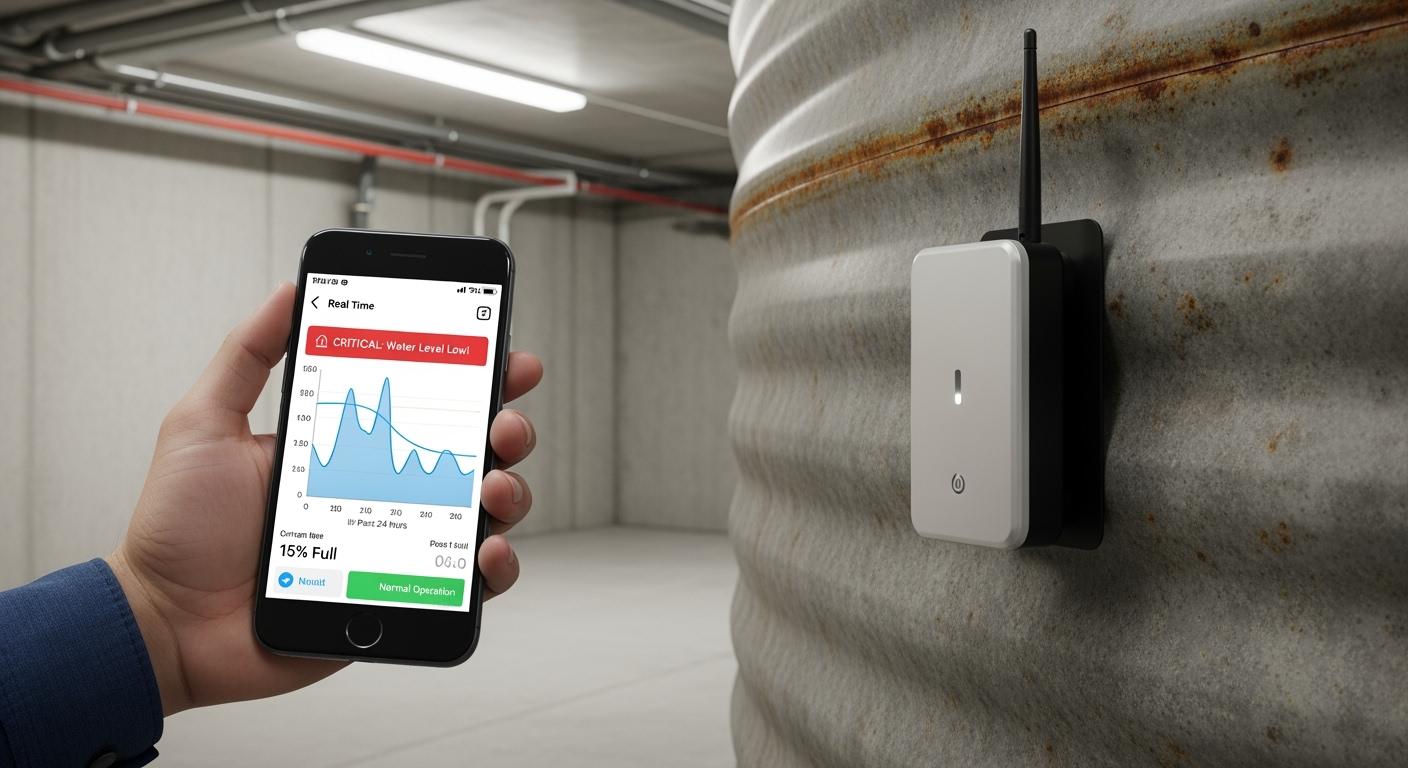
You can stop guessing your water levels. A wifi water level sensor ends the hassle of manual tank checks. This smart sensor sends real-time data directly to your phone. It helps you prevent unexpected water shortages and overflows. You gain complete control over your water supply for your home, farm, or business.
The Southwest US recently experienced its driest 22-year period in at least 1,200 years. This makes smart water management more important than ever.
A wi-fi water tank level sensor is a key tool for this new era of management. IoT water level sensors use Wi-Fi to monitor your tank and send alerts. These IoT sensors are the future of water monitoring. This smart IoT technology helps you save water.
How a WiFi Water Level Sensor Works
A wifi water level sensor is a smart IoT device. It measures the water in your tank and sends that data over your home Wi-Fi. This information goes directly to an app on your phone. The wi-fi water tank level sensor combines a physical sensor with a Wi-Fi module. This pairing turns a simple measurement into powerful, accessible data. This water sensor iot technology is the core of modern water management.
From Manual Checks to Automated Alerts
You can forget about climbing ladders for manual tank checks. A wireless water monitoring system automates the entire process. These IoT water level sensors connect to your Wi-Fi network. They allow you to monitor your water usage from any location. The system tracks your water levels minute-by-minute. It sends you real-time alerts through a mobile app if the water is too high or too low. This constant monitoring gives you the power to act before a small issue becomes a big problem. This IoT technology provides peace of mind.
Core Technology: Ultrasonic vs. Pressure Sensors
Most IoT water level sensors use one of two main technologies to measure your water. Understanding them helps you choose the right sensor for your tank.
- Ultrasonic sensors work from the top of the tank. They send a sound wave down to the water's surface and measure the echo time. This is a non-contact method.
- Pressure sensors sit at the bottom of the tank. They measure the pressure from the weight of the water above them to calculate the level.
Quick Tip: Ultrasonic sensors are great for avoiding contact with the liquid, but pressure sensors often perform better in tanks where condensation or frost might occur.
| Sensor Type | Measurement Style | Best For |
|---|---|---|
| Ultrasonic | Non-contact (measures air gap) | Tanks where you want to avoid liquid contact. |
| Pressure | Contact (measures water weight) | Reliability in tough temperature conditions. |
Connecting the Sensor to Your Wi-Fi and App
Setting up your wifi water level sensor is a straightforward IoT process. You can connect your new sensor to your Wi-Fi in just a few steps.
- Download the App: First, you find and download the manufacturer's app on your smartphone.
- Create an Account: You will sign up with your basic information inside the app.
- Connect to Wi-Fi: The app guides you to connect the device's bridge or hub to your home Wi-Fi network. You will select your network and enter the password.
- Pair the Sensor: Finally, you place the sensor on your tank. The app will then find and pair with the sensor, and you can start getting water level data.
The Key Benefits of Real-Time Monitoring
Adopting a Wi-Fi water sensor provides more than just data. It delivers powerful benefits that change how you manage your water supply. This smart IoT technology offers security, efficiency, and significant cost savings. These are the key benefits of wi-fi water tank monitoring.
Gain Peace of Mind with 24/7 Data
You can stop worrying about your water levels. A Wi-Fi sensor gives you 24/7 access to your tank's status directly on your phone. This constant monitoring provides complete peace of mind. You no longer need to guess or perform inconvenient manual checks. You can check your water supply from anywhere, whether you are at home, at work, or on vacation. This real-time information empowers you with the confidence that your water supply is secure. This level of management was impossible with old methods.
Prevent Costly Overflows and Shortages
Unexpected water events create expensive problems. A shortage can halt farm operations or leave your home without water. An overflow can cause property damage and waste a valuable resource. IoT water level sensors prevent these issues.
You receive instant low-level alerts on your phone when your tank is running low. This gives you plenty of time to act before you run out.
Water shortages have a massive financial impact, especially in agriculture and industry. For example, a lack of irrigation water in Texas's Lower Rio Grande Valley is expected to cause over $993 million in economic losses in a single year. This affects thousands of jobs and the availability of crops. Major companies also suffer from unpredictable water levels.
| Company | Cause of Loss | Financial Loss |
|---|---|---|
| Anheuser Busch InBev | Drought in South Africa (barley production) | $3.5 million |
| Anheuser Busch InBev | Excessive rainfall in Mexico (barley) | $3 million |
| Olam | Drought in Zambia (coffee supply) | Over $10 million |
These examples show that both too little and too much water can be disastrous. An IoT sensor acts as your first line of defense against these costly events.
Optimize Water Use and Plan Deliveries
Real-time monitoring helps you become much more efficient. You can actively improve your water management practices by understanding exactly how much water you use and when. This smart IoT approach leads to smarter decisions.
First, you can optimize your water consumption. IoT water level sensors let you see your daily, weekly, and monthly usage patterns. This data helps you spot waste and find opportunities to conserve. Studies show that access to this information changes behavior.
- A smartphone app connected to smart water meters helped households reduce water use by an average of 6%.
- High-volume users saw even bigger savings, cutting consumption by up to 12%.
- Leak alerts proved highly effective, with water use dropping significantly after a notification.
This smart water management tool helps you monitor your own habits and find leaks you never knew you had. The IoT sensor gives you the data you need to make a real difference.
Second, you can perfect your delivery schedule. With accurate tank data, you know precisely when to order more water. This eliminates guesswork and last-minute emergency calls. For businesses and farms, the efficiency gains are huge. Automated monitoring can save managers an entire workday each week. You can use remote control features to adjust schedules or automate deliveries, streamlining the entire process. This level of management ensures you have the water you need without wasting time or resources.
Save Time on Remote or Multiple Tanks
You can stop wasting time driving to distant locations just to check a water tank. Managing a single remote tank or several tanks across a property is a huge time commitment. This constant travel adds up to hours of lost productivity each week. An IoT water sensor system eliminates this burden entirely. It offers powerful remote management capabilities.
This technology brings all your water data into one simple app. You can monitor every tank from your phone or computer. This centralized monitoring provides a complete overview of your entire water supply. You get real-time information without leaving your office or home. This is one of the biggest benefits of modern water management.
Imagine what you could do with the extra hours you save each week. Instead of driving to check a tank, you can focus on more important tasks for your farm or business.
This smart IoT system is especially useful for large properties. Farmers can check irrigation tanks across hundreds of acres instantly. Business owners can oversee water levels at multiple sites from one dashboard. The IoT device on each tank does the work for you. This efficient management approach transforms your daily operations. You gain control over your water without the physical effort.
How to Set Up Your Wi-Fi Water Tank Level Sensor

Getting your new wifi water level sensor running is a simple process. You can complete the entire setup in just a few minutes. This guide walks you through the essential steps to connect your device and start monitoring your water.
Step 1: Choose the Right Sensor
You first need to pick the right sensor for your needs. Think about your specific tank. Consider the type of liquid you are monitoring and the tank's environment. As we discussed earlier, ultrasonic and pressure sensors work differently. Your choice depends on your tank's material and whether you want the device to touch the water. You should also check the Wi-Fi signal strength at your tank's location before you buy a wi-fi water tank level sensor. A strong signal is key for reliable data.
Step 2: Install the Sensor on Your Tank
Physical installation is usually quick and easy. Most sensors do not require any special tools or technical skills.
Pro Tip: Before you attach the sensor, make sure the surface of the tank is clean and dry. This helps ensure a secure fit and accurate readings, especially for adhesive-mounted sensors.
You will place an ultrasonic sensor on the top of the tank, where it has a clear line of sight to the water surface. A pressure sensor goes at the bottom of the tank, often through an existing outlet. Always follow the specific instructions that come with your model.
Step 3: Connect to Your Wi-Fi Network
This final step brings your sensor online. The digital setup connects your device to the internet, allowing it to send you real-time data. This IoT process turns your standard tank into a smart one. If you run into trouble connecting your wi-fi water tank level sensor, here are some common fixes:
- Check Wi-Fi Signal: Your sensor may be too far from your router. Try moving it closer to the Wi-Fi source or use a range extender.
- Restart Your Phone: Sometimes the issue is your phone. "Forget" the Wi-Fi network in your settings, restart your phone, and reconnect.
- Reset the Sensor: Most IoT water level sensors have a reset button. Press and hold it until the light flashes to start the setup again.
- Force Close the App: A glitch in the app can stop the connection. Force close the app on your phone and reopen it.
These simple IoT water level sensors give you powerful control over your water supply.
Step 4: Configure Alerts in the App
This final step unlocks the true power of your wi-fi water tank level sensor. You can now tell the app exactly what to monitor and when to notify you. This customization turns your sensor into a personal guard for your water supply. You get real-time information sent directly to your phone over your Wi-Fi network. This lets you act before a small issue becomes a major problem.
You can set specific thresholds for your tank. For example, you can create low-level alerts to trigger when your tank drops to 25% full. This gives you plenty of time to schedule a delivery. The app is your command center for all notifications.
Your new sensor is always watching your tank. Custom alerts ensure you only get the information that matters most to you, right when you need it.
Most apps allow you to configure a variety of useful alerts. You can choose the ones that fit your specific needs. Common options include:
- 💧 Water Level Alerts: You receive a notification when the water in your tank reaches a high or low point that you define. This is perfect for managing supply and preventing overflows.
- 🚨 Leak Detection: The app can send an immediate message if the sensor detects an unexpected drop in water, signaling a potential leak.
- 🥶 Freeze Alerts: You can set a temperature threshold to get a warning before freezing conditions can damage your tank or pipes.
- 💨 Humidity Alerts: This feature helps you protect sensitive areas by notifying you if humidity levels go above or below your desired range.
Setting up these alerts gives you complete control and peace of mind. You no longer have to guess or worry about your water.
Top WiFi Water Sensors for 2025
Choosing the right device is the most important step in upgrading your water management. The market offers many options, each with unique strengths. Your ideal sensor depends on your tank's location, your technical comfort, and your specific monitoring goals. We have reviewed the best wi-fi water tank sensors to help you find the perfect fit for your home, farm, or business. This guide explores the top choices for 2025.
Proteus Aquo: Best for Simple Wi-Fi Setup
You will love the Proteus Aquo if you want a sensor that is easy to install and connect. This device is famous for its simple Wi-Fi setup process. You can get it running in minutes without needing advanced technical skills. It connects directly to your home or office Wi-Fi network. This makes it a top choice for homeowners who want a reliable water monitoring solution without the hassle.
The Proteus Aquo offers powerful features in a user-friendly package. It sends alerts directly to your phone and email, so you are always informed.
- Connectivity: It uses your standard 802.11b/g Wi-Fi for a seamless connection.
- Alerts: You get free text and email notifications. It also has a loud buzzer to alert you locally.
- Detection: The sensor can detect water as shallow as 1/16 inch.
- No Fees: You do not have to pay any monthly subscription fees for its services.
Users consistently praise the Proteus Aquo for its reliability and ease of use, giving it a 4.8/5 star rating. One user noted it was "perfect for tight places," while another highlighted its valuable notifications when power is lost, which prevents you from missing an alert.
This smart sensor gives you peace of mind. Its straightforward setup and dependable performance make it an excellent starting point for smarter water management.
YoLink LoRa Sensor: Best for Long-Range & Off-Grid
You may have a water tank far from your house or in a barn with no Wi-Fi. The YoLink LoRa Sensor is the perfect solution for these situations. It does not use Wi-Fi. Instead, it uses LoRa, a long-range communication technology. This allows the sensor to send data up to a quarter-mile away in open air. It is the best choice for large properties, farms, and off-grid locations.
This system requires a YoLink Hub, but its performance is unmatched for remote monitoring. The battery life is over five years, so you can set it up and forget about it. Customers love the YoLink sensor for its reliability. It has helped many users detect leaks before they became expensive problems. The LoRa technology also avoids interference from your other smart home devices.
| Specification | Details |
|---|---|
| Communication | LoRa (Long Range) |
| Range | Up to 1/4 Mile |
| Power | Replaceable AAA Batteries |
| Battery Life | Over 5 Years |
| Hub Required | Yes, requires YoLink Hub |
The key benefits of this sensor are its incredible range and reliability.
- The range of the hub is phenomenal.
- Notifications arrive on your phone almost immediately.
- The long battery life means very low maintenance.
- The hub can connect via Wi-Fi or an Ethernet cable for flexibility.
If you need to monitor a distant tank, the YoLink system offers the best performance and peace of mind. This is one of the most robust iot water level sensors available.
SENSiT: Best for Integrated Business Systems
You might be a business owner or a DIY enthusiast who needs a more custom solution. The SENSiT water sensor is not a simple plug-and-play device. It is a high-sensitivity component designed for integration into larger systems. This water sensor iot component is perfect for creating your own monitoring setup with platforms like Arduino. It gives you complete control over how your water detection system works.
The SENSiT sensor works by detecting when water creates a short between its exposed electrical traces. It then converts this detection into an analog signal. Your custom system can use this signal to trigger alarms, shut off valves, or log data. This makes it ideal for specialized industrial applications or advanced smart home projects. This type of iot device offers maximum flexibility for your water management.
| Feature | Specification |
|---|---|
| Interface | Analog |
| Working Voltage | 5V/3.3V |
| Power Use | Low Power Consumption |
| Compatibility | Arduino UNO, mega2560, ADK |
| Output Signal | 0~4.2V |
Because it is a component, you build the alert system around it. This allows for endless customization. You can integrate it into a larger iot network to monitor multiple points across a facility. For businesses needing a tailored solution, these types of iot water level sensors provide the building blocks for a powerful and precise system.
Comparison: Price, Range, and Key Features
You need to decide what matters most for your water tank. Is it a simple setup, long-distance coverage, or custom control? This comparison breaks down the key differences between the top smart sensors. You can use this guide to find the perfect device for your water management needs. These iot sensors offer unique benefits for different situations.
This table helps you compare the sensors side-by-side. You can quickly see which one fits your budget and technical needs.
| Feature | Proteus Aquo | YoLink LoRa Sensor | SENSiT Component |
|---|---|---|---|
| Price | $$ (Moderate) | $$ (Moderate, plus Hub) | $ (Very Low) |
| Connectivity | Direct Wi-Fi | LoRa (Long Range) | Analog (Wired) |
| Range | Standard Wi-Fi range | Up to 1/4 mile | Very short (wired) |
| Setup | 🟢 Easy | 🟡 Moderate | 🔴 Advanced (DIY) |
| Best For | Homeowners wanting simple wi-fi monitoring. | Farms, large properties, off-grid tank locations. | DIY projects, custom business iot systems. |
| Power | Wall Outlet | AAA Batteries (5+ years) | 5V/3.3V from a controller |
| Hub Needed? | No | Yes | No (needs a controller) |
Choosing the right sensor is the first step toward better water management. The Proteus Aquo is a great choice if your tank is within your home's wi-fi signal. It offers a simple, direct way to monitor your water.
For remote locations, the YoLink LoRa sensor is the clear winner. Its long-range technology and incredible battery life make it one of the most reliable iot sensors available. It provides a powerful solution for complex properties.
Finally, the SENSiT component is for the builders. If you want to create a custom smart system, this sensor gives you the flexibility you need. It is one of the most adaptable sensors for specialized projects.
A wifi water level sensor is a simple, powerful upgrade for your water supply. These smart iot sensors deliver real-time data and automated alerts, ending guesswork. The market for smart water management is growing fast, with an expected 12.29% annual growth. These iot water level sensors improve your water management practices by preventing costly water damage. You can choose the right device for your needs. Take the first step toward smarter water management and reliable monitoring over your wi-fi network today. This iot technology gives you complete control through your wi-fi connection.
FAQ
Do these sensors work without Wi-Fi?
Some sensors use LoRa technology instead of direct wi-fi. These are great for remote areas without a signal. You need a hub, but they offer long-range monitoring. This smart management approach works well off-grid.
How long do the batteries last in these sensors?
Battery life varies by model. Some smart sensors plug into a wall outlet for continuous power. Battery-powered units can last over five years. Your choice affects your long-term management plan for the device.
Can I monitor multiple water tanks at once?
Yes, you can. Most apps let you add multiple devices to a single account. This allows for centralized water management. You can view all your water levels in one place for easy tracking.
Are smart water sensors difficult to install?
No, installation is usually simple. Most sensors attach to your tank without any special tools. You then connect the device to your home wi-fi network using a straightforward mobile app on your phone.


