
1/4" NPT Optical Level Sensor
This page focuses on the fit details buyers must confirm before ordering: thread type, seal method, body length, prism tip protrusion, torque control, pressure rating, and wetted material selection. For the sensing principle, see our optical level sensor explainer.
1/4 NPT Sensor Capabilities
HojellyTek manufactures optical / photoelectric point level sensors with custom thread, body, output, cable, and material options. For a 1/4 NPT version, the goal is not only “does the thread screw in?” but also “does the installed sensor seal, align, survive pressure, and place the prism tip at the correct detection point?”
Typical configuration support includes:
- 1/4-inch NPT threaded body for tapped tank ports
- Alternative thread options such as G/BSP or metric threads when NPT is not suitable
- Prism tip designs for side-mounted or bottom-mounted liquid detection
- Plastic, PTFE, stainless steel, or glass wetted material choices
- NPN, PNP, transistor, digital switch, and other output configurations
- Cable length, connector, wire color, and harness customization
- OEM/ODM housing, branding, packaging, and drawing support
- Export supply for buyers in the US, EU, India, and other markets
For standard model selection, you can also review our optical level sensor product page.
Fit First: Thread, Seal, Body Length, and Prism Protrusion
The most common problem with a 1/4 NPT optical sensor is not the sensing circuit. It is mechanical fit. A small error in thread standard, insertion depth, or seal method can cause leaks, false detection level, cracked housings, or prism contact with an internal wall.
Confirm the Port Is Actually 1/4 NPT
NPT is a tapered pipe thread. It seals by thread engagement plus sealant, commonly PTFE tape or compatible thread sealant. A G1/4 or BSP port may look similar at first glance, but it is a parallel thread and normally uses a gasket, O-ring, or flat sealing surface. These are not interchangeable without adapter design.
If your drawing only says “1/4 thread,” confirm whether it means:
- 1/4 NPT tapered thread
- G1/4 / BSP parallel thread
- 1/4 BSPT tapered thread
- Metric thread such as M10, M12, or M14
- Custom plastic molded thread
For OEM projects, send the port drawing, tank wall thickness, and expected sealing method before sampling.
Check Body Length and Hex Access
A 1/4 NPT optical level sensor usually needs enough body length outside the tank for wiring and tool access, but not so much that it interferes with surrounding parts. The hex section must be reachable by a wrench, and the cable exit must not be pressed against a wall, bracket, pump, or enclosure.
Inside the tank, the prism tip must protrude far enough into the liquid space to avoid being hidden inside the threaded boss. If the tank wall is thick or the tapped boss is deep, the optical tip may sit too far inside the port and detect trapped liquid, bubbles, or residue instead of the real tank level.
Control Prism Tip Position
The prism tip is the actual sensing end. It should face the liquid area clearly, with enough clearance from:
- Internal tank wall
- Weld bead or molded boss
- Foam layer or splash zone
- Moving float, filter, or baffle
- Thick oil residue or sediment area
For side-wall installation, the tip location sets the alarm level. For bottom installation, confirm whether the sensor is for presence detection, low-level alarm, dry-run protection, or drain confirmation. Each use case needs a different insertion depth and mounting angle.
Thread and Dimension Planning Table
| Item to Confirm | 1/4 NPT Version | Why It Matters |
|---|---|---|
| Thread standard | 1/4-inch NPT tapered thread | Must match the tapped port; not the same as G1/4/BSP parallel thread |
| Seal method | PTFE tape or compatible thread sealant, confirmed by application | Prevents leakage through tapered thread engagement |
| Tank port type | Direct tapped port, welded boss, molded plastic boss, or adapter | Changes insertion depth and sealing surface |
| Body length | Confirmed by drawing before sampling | Ensures enough external clearance and correct internal reach |
| Prism protrusion | Confirmed against wall thickness and boss depth | Prevents the tip from sitting too deep inside the port |
| Hex / wrench area | Confirmed from mechanical drawing | Allows installation without damaging cable or housing |
| Cable exit | Straight, side, connector, or custom harness | Avoids bending stress after installation |
| Pressure rating | Confirmed according to housing, seal, thread, and material | The complete assembly rating matters, not only the sensor body |
| Wetted material | PSU, PTFE, 316 stainless steel, glass, or custom | Must match liquid, temperature, cleaning agent, and pressure |
| Output configuration | NPN, PNP, digital switch, or custom signal | Must match PLC, controller, relay board, or OEM PCB |
1/4 NPT vs G/BSP: Which Thread Should You Order?
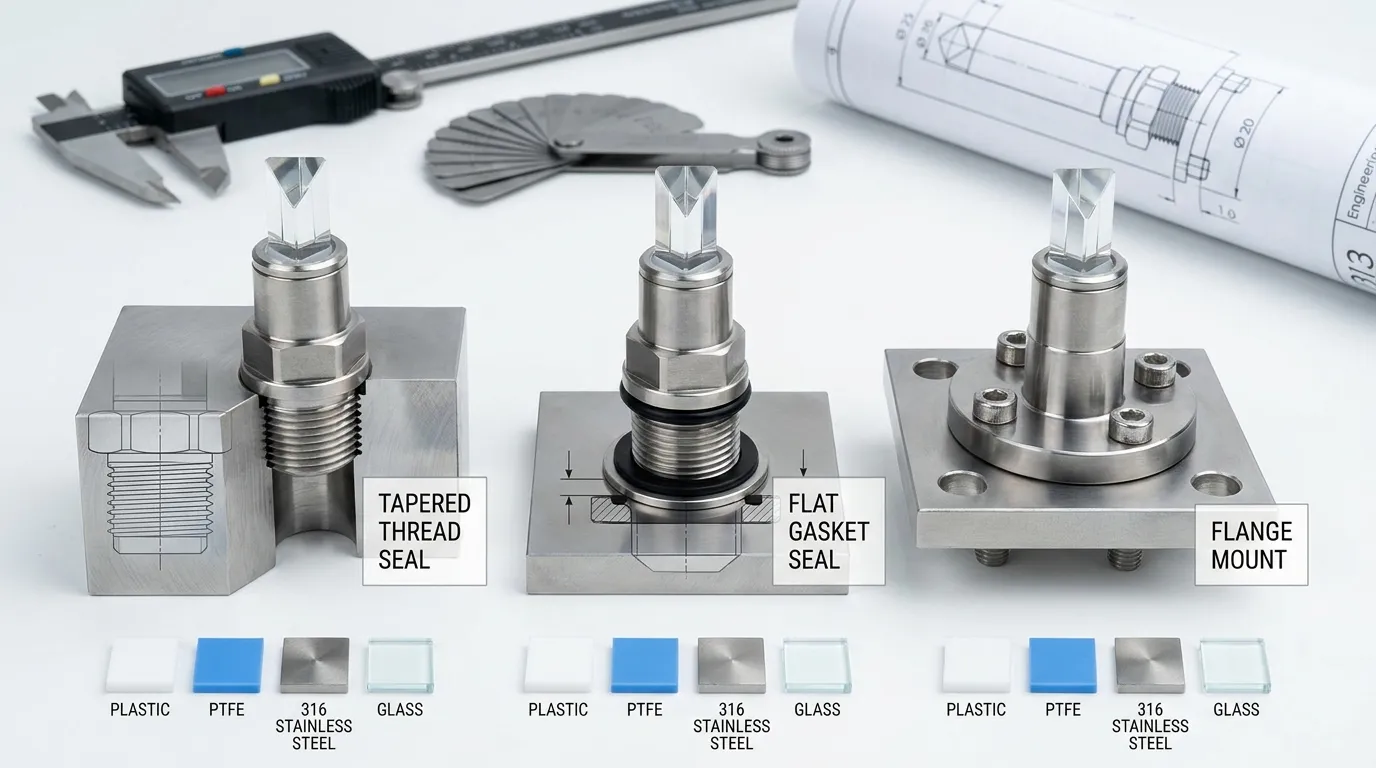
Choose 1/4 NPT when the tank port is already tapered NPT and the design expects thread sealing. This is common in North American equipment, some industrial systems, and many imported tanks or manifolds.
Choose G1/4 / BSP parallel thread when the tank uses a flat sealing face, gasket, or O-ring. This is common in many European and Asian equipment designs. If the sensor must be removed frequently for cleaning, a parallel thread with a defined gasket design may be easier to control than a taped tapered thread.
Choose a flange-mount option when the tank wall is thin, the mounting area is not suitable for tapping, or the sensor needs a larger sealing surface. For these cases, see our flange-mount option instead of forcing an NPT design into a weak port.
Torque, Sealing, and Installation Risk
A 1/4 NPT sensor should be tightened carefully. More torque does not always mean a better seal. Over-tightening can crack a plastic body, deform the thread, shift the detection level, or damage the tapped port.
For plastic bodies, the installation method is especially important. PTFE tape should be applied neatly and kept away from the prism tip. Loose tape fragments, excess sealant, or contamination on the optical tip can cause unstable detection.
Before production, confirm:
- Whether the assembly team will use PTFE tape or liquid thread sealant
- Whether the sensor body is plastic, stainless steel, PTFE, or glass
- Whether the port is metal, plastic, or molded composite
- Whether the sensor will be installed once or removed repeatedly
- Whether the tank is pressurized, vacuumed, washed, or exposed to vibration
Torque guidance should be confirmed at the RFQ stage based on the selected body material, thread engagement, and port material. For OEM programs, our team can review your installation drawing before sample production.
Pressure Rating and Wetted Material Choices
Pressure performance depends on the full design: sensor body, thread, sealant, port quality, wall thickness, cable exit, and material strength. A 1/4 NPT sensor used on a vented water tank has different requirements from one used on a pressurized oil reservoir or chemical dosing system.
Common Wetted Material Options
| Wetted Material | Best-Fit Applications | Buyer Notes |
|---|---|---|
| PSU / engineering plastic | Water tanks, appliances, compact OEM equipment | Cost-effective and compact; chemical compatibility should be checked |
| PTFE | Chemical liquid, aggressive media, high-cleanliness systems | Strong chemical resistance; mechanical design and sealing method must be reviewed |
| 316 stainless steel | Oil, fuel, coolant, industrial equipment, rugged tanks | Good strength for harsh installations; confirm liquid compatibility |
| Glass prism / glass body design | Clean liquid, lab equipment, special optical or chemical needs | Useful where plastic is unsuitable; mounting protection is important |
For AC-powered equipment, review our AC voltage optical sensor page to decide whether a low-voltage DC sensor or AC voltage configuration better matches your control system.
Output and Electrical Configuration
Mechanical fit solves only half of the specification. The output must also match the control board, PLC, alarm module, or pump protection circuit.
Common options include:
- NPN output for controllers expecting sinking output
- PNP output for controllers expecting sourcing output
- Digital switch output for simple wet/dry level signal
- 4–20 mA or analog-style integration when the system needs a configured signal interface
- Custom cable and connector for OEM assembly
- Normally wet / normally dry logic depending on alarm strategy
For smart tank monitoring packages, Tuya / Smart Life integration may be relevant when the optical point sensor is part of a larger monitor, controller, or wireless liquid level system. For a simple threaded point switch, the priority remains thread fit, material, output, and seal reliability.
Installation Checklist for a 1/4 NPT Optical Sensor
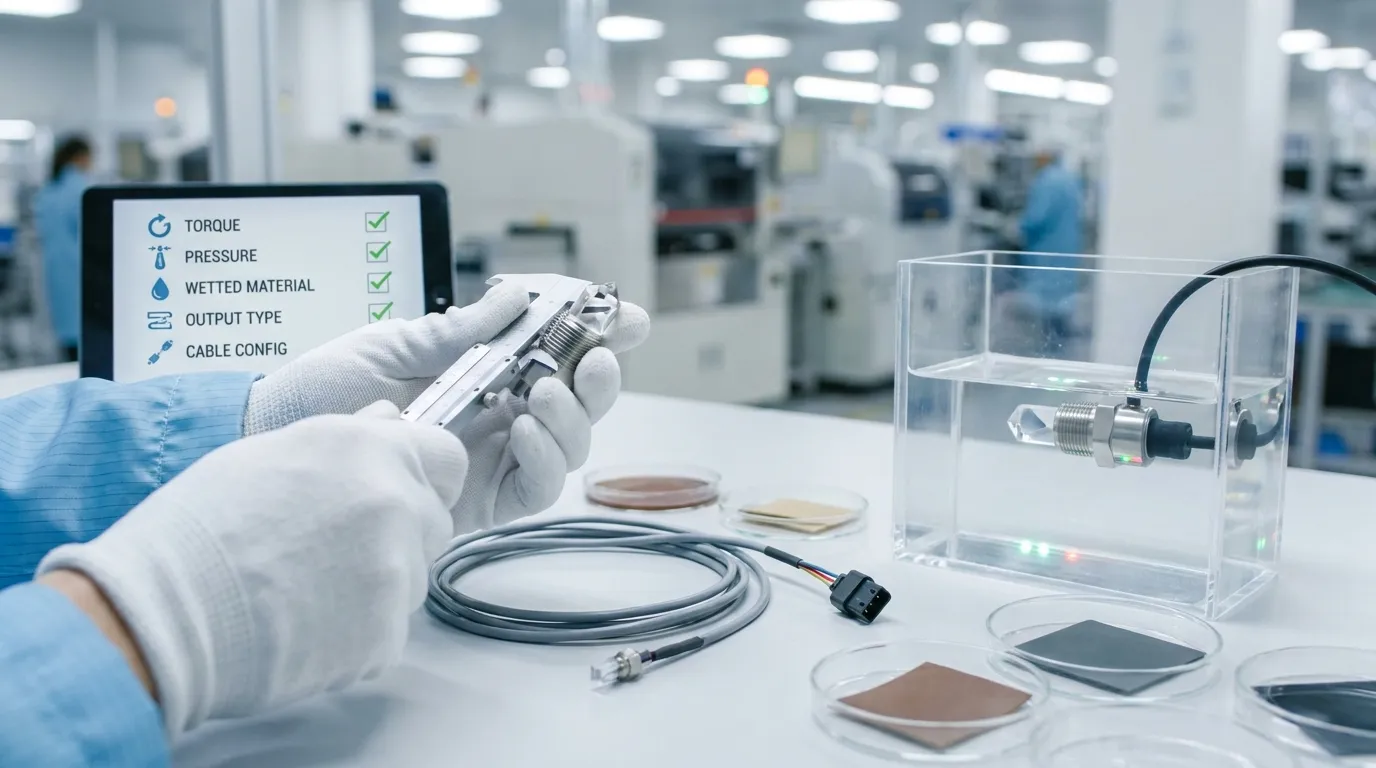
- Confirm the tank port is truly 1/4 NPT, not G1/4, BSP, or metric.
- Measure tank wall thickness and tapped boss depth.
- Confirm the required detection height from the tank bottom or reference line.
- Check whether the prism tip will protrude clearly into the liquid area.
- Select wetted material based on liquid type, temperature, cleaning agent, and pressure.
- Confirm whether PTFE tape or thread sealant is approved for your process.
- Define installation direction: side, bottom, or angled mounting.
- Confirm cable exit space and wrench access around the hex body.
- Choose NPN, PNP, digital, AC, or custom output according to the controller.
- Test the sample in the real liquid before approving mass production.
5-Step HojellyTek Supply Process
- Enquiry — Send your tank drawing, thread requirement, liquid type, voltage, output, and annual demand by WhatsApp or email.
- Spec and customization — Our in-house R&D team checks thread, body, prism protrusion, wetted material, cable, and output options.
- Sample — We prepare a sample or recommended configuration for fit testing in your tapped port.
- Production and QC — The factory confirms assembly, wiring, appearance, and functional checks according to the approved sample.
- Shipping — HojellyTek supports export orders for OEMs, equipment builders, and distributors in the US, EU, India, and other regions.
Requirements to Send for RFQ
| RFQ Item | What to Provide |
|---|---|
| Thread | 1/4 NPT, G1/4, BSP, metric, or custom drawing |
| Liquid | Water, oil, coolant, fuel, chemical, foam-prone liquid, or mixed media |
| Tank material | Plastic, stainless steel, aluminum, glass, or other |
| Mounting position | Side, bottom, top, or angled |
| Wall thickness | Tank wall and boss depth if available |
| Output | NPN, PNP, digital switch, AC, or custom interface |
| Wiring | Cable length, connector, wire colors, and protection needs |
| Quantity plan | Sample quantity and expected production volume |
Why Buyers Choose HojellyTek
HojellyTek is a Shenzhen optical and liquid level sensor manufacturer with in-house R&D, OEM/ODM customization, and export experience for industrial and equipment buyers. We help buyers match the sensor to the port, liquid, wiring, and production assembly—not just select a catalog part.
You can request drawing review, material suggestions, sample configuration, and quote support through WhatsApp or email.
FAQ
Is a 1/4" NPT optical level sensor the same as a G1/4 sensor?
No. 1/4 NPT is a tapered pipe thread, while G1/4 / BSP is normally a parallel thread. They require different sealing methods and should not be treated as interchangeable without an adapter or redesign.
Can I use PTFE tape on the NPT thread?
Yes, PTFE tape is commonly used for tapered thread sealing, but it must be applied carefully and kept away from the prism tip. The final sealing method should match your liquid, pressure, and assembly process.
How far should the prism tip protrude into the tank?
It should protrude far enough to detect the actual liquid level, not trapped liquid inside the threaded boss. Send the wall thickness and port drawing so the body length and insertion depth can be checked.
What torque should be used during installation?
Torque depends on body material, thread engagement, port material, and seal method. Avoid over-tightening, especially with plastic bodies. The recommended installation method should be confirmed during sample approval.
Which material should I choose for oil, fuel, coolant, or chemical liquid?
316 stainless steel is often preferred for rugged oil or fuel applications, while PTFE may be better for aggressive chemical media. PSU plastic can suit many water and equipment applications, but compatibility should be checked before ordering.
Can HojellyTek customize a 1/4 NPT optical sensor for my OEM tank?
Yes. HojellyTek can customize thread, body length, prism position, wetted material, cable, connector, and output configuration for OEM/ODM projects. Send your drawing and control requirements to request a quote by WhatsApp or email.


