Handhawing van optimale watervlakke in visbakke
Wanneer jy 'n nuwe akwarium opstel, Aquarisiste wy ure daaraan om die perfekte substraat te kies, Die water siklus, Reël van akwaskaping, en om hul visse aan te pas. Nietemin, Te midde van al die opwinding om 'n nuwe water-ekosisteem op te stel, 'n Skynbaar eenvoudige vraag ontstaan dikwels: Wat is die korrekte watervlak in visbak Opstellings?
Al mag dit lyk asof dit bloot 'n estetiese keuse is, Die watervlak in jou akwarium speel 'n kritieke rol in die algehele gesondheid van jou wateromgewing. Dit beïnvloed die funksionaliteit van toerusting direk, Suurstofvlakke, Waterchemie, en selfs die fisiese veiligheid van jou watertroeteldiere. Of jy nou 'n beginner is wat die basiese beginsels leer Visbak Care of 'n ervare stokperdjie-enthouer wat jou visbakonderhoudsroetine wil verfyn, Om die meganika agter behoorlike waterdiepte te verstaan, is noodsaaklik.
Hier is 'n omvattende gids om jou akwariums te bemeester Watervlak, Beskerm jou toerusting, en om 'n florerende omgewing vir jou visse te skep.
Hoe hoog moet ek my akwarium vul?
Een van die mees algemene vrae wat beginners vra, is, "Presies hoe hoog moet ek my akwarium vul?" Die antwoord hang grootliks af van die styl van die tenk wat jy besit, Die tipe deksel wat jy gebruik, en die spesifieke waterspesies wat jy aanhou.
Rimmed vs. Randlose tenks
- Die ideale waterhoogte vir omrande tenks: Standaard glasakwariums het 'n swart of houtnerf plastiekraam rondom die boonste en onderste kante. Vir hierdie tenks, Die Optimum Watervlak is tipies net verby die onderste rand van die boonste plastiekafwerking. Deur die tenk tot hierdie spesifieke punt vol te maak, Jy verberg effektief die oppervlakwaterlyn uit die oog, skep 'n naatlose, Aantreklike venster na jou onderwaterwêreld.
- Die randlose akwarium-vulhoogte: Randlose tenks maak staat op dik tenks, Hoë-helder glas en presiese silikoonnate om water vas te hou sonder die behoefte aan 'n plastiekraam. Omdat daar geen afwerking is om die waterlyn weg te steek nie, Estetika bepaal dat die tenk redelik hoog gevul word. Nietemin, Vir veiligheidsredes, Dit is die beste om 'n gaping van ongeveer 'n halwe tot 'n volle duim vanaf die boonste rand te handhaaf. Dit voorkom per ongeluk mors wanneer jy die glas skoonmaak, Doen onderhoud, Of plaas eenvoudig jou hande in die water, wat volume verplaas.
Rekening hou van visgedrag
Nog 'n belangrike faktor in die bepaling van jou Watervlak is die vee binne die tenk. Sommige spesies—soos Bettas, Bylvis, Killifish, en selfs sekere ongewerveldes soos Amano-garnale of Neriet-slakke—is berugte ontsnappingskunstenaars. Goeie voorkoming van visse wat uit die tenk spring, vereis óf 'n styfpassende deksel óf, As jy 'n oop-dak estetika verkies, 'n aansienlik laer waterpeil. As die waterlyn met twee tot drie duim verlaag word, skep dit 'n natuurlike versperring wat dit baie moeiliker maak vir springende visse om die boonste rand van die glas te oorkom.
Toerustingveiligheid en funksionaliteit
Jou akwarium is afhanklik van meganiese toerusting om lewe te onderhou, en byna al hierdie toestelle is ontwerp om op spesifieke waterdieptes te werk. Ignoreer die watervlak in visbak opstellings kan lei tot katastrofiese toerustingfoute.
Beskerming van jou verhitters
Akwariumverhitters is waarskynlik die sensitiefste toerusting as dit by waterdiepte kom. Elke dompelverwarmer het 'n minimum waterlyn-aanwyser wat op die glas- of titaniumomhulsel gemerk is. Om 'n veilige verwarmer-diepte te handhaaf is noodsaaklik. As die Watervlak val as gevolg van verdamping en stel die boonste gedeelte van 'n glasverwarmer bloot aan die lug, Die interne termostaat kan oorverhit. Wanneer koeler akwariumwater onvermydelik teen die oorverhitte glas spat, Die termiese skok sal veroorsaak dat die verwarmer breek, wat moontlik die tenkinwoners kan elektrokuteer en 'n ernstige brandgevaar inhou.
Om filters glad te laat loop
Filters dien as die lewensondersteuningsisteem van jou akwarium, en hul prestasie hang sterk af van die omliggende watervlak.
- Interne Filters: Die optimale vlak vir interne filters vereis gewoonlik dat hulle heeltemal ondergedompel moet word. As die water onder die inlaatventilasies of die waaierbehuising val, Die filter sal lug intrek in plaas van water.
- Pompmeganika: Die impak van lae water op pompmotors is ernstig. Akwariumpompe gebruik die vloei van water om hul interne magnetiese waaiers te smeer en af te koel. Wanneer 'n pomp opdroog as gevolg van lae waterpeile., Dit ervaar kavitasie. Die motor gaan oorverhit, Die waaieras kan kromtrek of breek, en die pomp gaan permanent uitbrand.
- Hang-aan-Rug (HOB) Filters: As jy 'n HOB-filter gebruik, Jy het dalk opgemerk dat soos die watervlak daal, Die geluid van water wat terugkom na die tenk word al hoe harder. 'n Vinnige, Effektiewe harde filterspatting is eenvoudig om die watervlak te verhoog. Deur die tenk te vul sodat die water die filter se uitsetlip ontmoet, kan die water glad en stil in die tenk vloei, om die ontwrigtende watervalgeraas uit te skakel.
Die Wetenskap van Oksigenasie en Oppervlakte
Visse asem nie water in nie; Hulle asem die opgeloste suurstof in die water in. Die primêre manier waarop suurstof jou akwarium binnekom, en koolstofdioksieduitgange, is deur die wateroppervlak.
Om gasuitruiling en oppervlakarea te verstaan, is fundamenteel vir vishou. Hoe groter die oppervlak van jou water, Hoe meer doeltreffend jou tenk kan asemhaal. As jy 'n tenk oorvol maak wat 'n dig verseëlde glaskap het, Jy verwyder die lugsak tussen die water en die deksel, die beskikbare suurstof drasties verminder.
Verder, Stilstaande water ruil nie gasse effektief uit nie. Jy het oppervlakbeweging nodig vir suurstoftoediening. Die sagte rimpeling wat deur 'n filteruitset geskep word, 'n Spuitstaaf, of 'n lugsteen breek die oppervlakspanning van die water. Hierdie voortdurende breek van die oppervlak laat giftige koolstofdioksied ontsnap en vars suurstof in die waterkolom oplos. Om 'n watervlak te handhaaf wat jou filter toelaat om 'n sagte oppervlakrimpeling te skep—sonder om chaoties te veroorsaak, Spatstroming—is die soetplek vir 'n gesonde, Suurstofryke omgewing.
Bestuur van Verdamping en Waterlyne
Maak nie saak wat jy doen nie, Water sal natuurlik oor tyd uit jou akwarium verdamp. Verdamping lei tot verskeie estetiese en chemiese uitdagings wat konsekwente bestuur vereis.
Die Misterie van die Wit Kors
Wanneer akwariumwater verdamp, slegs suiwer H2O verander in damp. Alles anders—insluitend minerale, soute, en opgeloste vaste stowwe—word in die tenk agtergelaat. Soos die watervlak daal, Hierdie oorblywende elemente bak op die droë glas, wat onooglike akwariumwaterlyn-mineraalafsettings skep. Hierdie harde watervlekke kan ongelooflik hardnekkig wees om te verwyder, Dit vereis dikwels 'n skeermeslem of wit asyn om op te los. Die beste manier om hierdie witkors te bestuur, is om te voorkom dat die waterlyn van die begin af wild wissel.
Deksels en Kondensasie
Een van die doeltreffendste metodes om verdamping van akwariumwater te voorkom, is die gebruik van 'n behoorlik aangepaste deksel of afdak. 'n Deksel dien as 'n versperring, vang ontsnappende vog vas. Jy sal gereeld kondensasie onder akwariumkapoppervlaktes sien; Hierdie druppels versamel uiteindelik en val reg terug in die tenk, Die water herwin effektief en verminder jou aanvul-frekwensie aansienlik. Deksels hou ook stof en huishoudelike besoedeling uit die water terwyl dit terselfdertyd as 'n waterdigte versperring teen springende visse dien.
Begrip van die Chemie: Top-Offs vs. Waterverversings
Dit is uiters belangrik vir akwariumiste om die duidelike verskil tussen aanvul- en gedeeltelike waterverversingsroetines te verstaan.
- Aanvulling: Dit behels die byvoeging van suiwer water (ideaal gesproke omgekeerde osmose/gedeïoniseerde of gedistilleerde water) om die water wat deur verdamping verlore gegaan het, te vervang. Omdat verdamping minerale agterlaat, Om gewone kraanwater by te voeg om 'n tenk aan te vul, sal aanhoudend byvoeg Nuwe minerale aan die oues, Maak geleidelik jou water harder en meer gekonsentreerd. Om aan te vul verwyder nie visafval of nitrate nie.
- Gedeeltelike Waterverandering: Dit behels die fisiese verwydering van 'n persentasie van die vuil water uit die tenk—saam met sy opgeloste minerale en nitrate—en vervanging met vars water, Gedechloreerde kraanwater.
Jy behoort jou tenk deur die week soos nodig vol te maak om die watervlak te handhaaf, terwyl jy gedeeltelike waterverversings vir jou weeklikse of tweeweeklikse skoonmaakskedule bespreek.
Outomatisering van die Proses
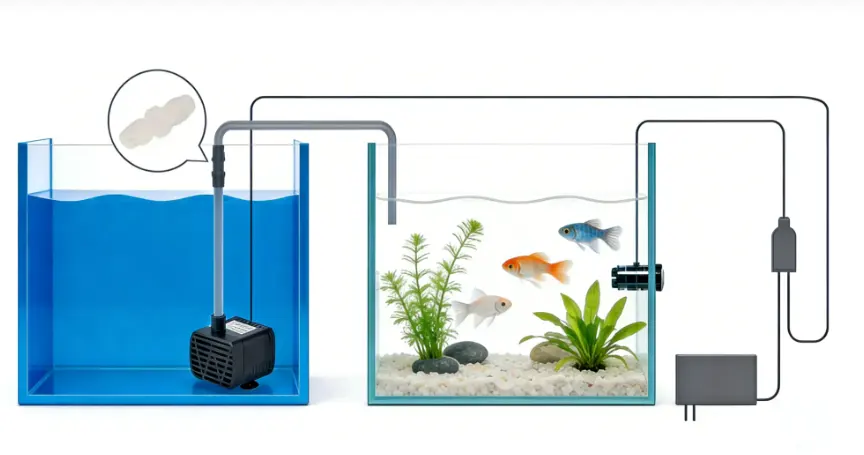
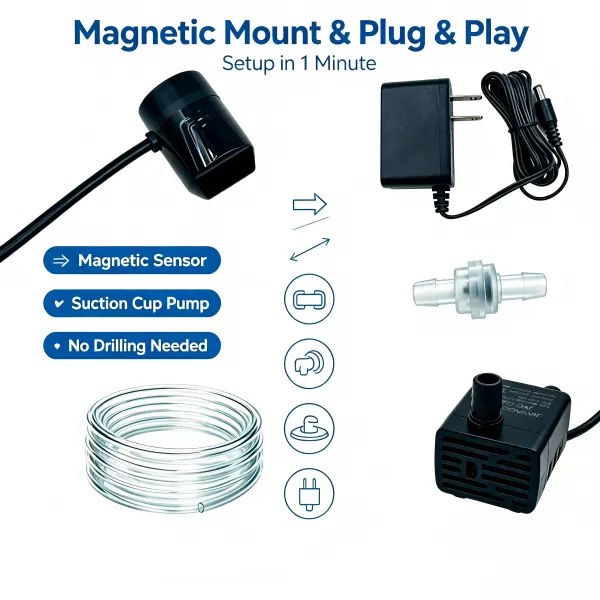
As jy jouself konstant bevind dat jy teen verdamping sukkel, veral in droë klimate of hoë-temperatuur opstellings soos riftenks, Oorweeg dit om in 'n Auto Top-Off te belê (BEDRYF) Stelsel. Die voordele van die outomatiese aanvulstelsel is enorm. 'n ATO gebruik 'n vlotklep of 'n optiese sensor wat by jou verlangde waterlyn geplaas word. Die oomblik wat die watervlak selfs net 'n fraksie van 'n duim daal, Die sensor aktiveer 'n klein pomp om vars water uit 'n reservoir in die tenk te druk totdat die perfekte vlak herstel is. Dit bied ongeëwenaarde stabiliteit in waterchemie, Spaar jou tyd, en beskerm jou verhitters en pompe heeltemal teen droogloop.
Vestiging van 'n Onderhoudsroetine
Om die korrekte watervolume te handhaaf, behoort nie 'n raaispel te wees nie; Dit behoort 'n naatlose deel van jou gereelde visbakonderhoud te wees. Raak gewoond daaraan om elke keer na jou tenk se waterlyn te kyk wanneer jy jou visse voer. As jy die water sien wat onder die rand val, Of jou filter harder as gewoonlik hoor spat, Neem 'n paar minute om dit aan te vul met gekondisioneerde of gesuiwerde water.
Uitstekende vistenkversorging gaan grootliks oor konsekwentheid. Drastiese temperatuurskommelinge, Waterchemie, of suurstofbeskikbaarheid is baie stresvol vir waterlewe. Deur streng te monitor en te bestuur die watervlak in visbak Omgewings, Jy voorsien 'n stal, Veilige, en pragtige habitat. Jy beskerm jou duur toerusting teen uitbranding, Hou jou mure vry van mineraalafskaling, En die belangrikste, Maak seker jou visse het die skoon, Suurstofryke water wat hulle nodig het om lank te leef, Gesonde lewens.