
Optiese sensors vir grondwatervlakmonitering
Hierdie artikel verduidelik waar optiese vlaksensors help, waar hulle nie doen nie, en hoe om die regte tegnologie vir grondwater te kies, Goed, Tenk, en afstandsmoniteringsprojekte.
Die Eerlike Pas: Optiese puntsensors is nie diepputvlak-loggers nie
'n Optiese vloeistofvlaksensor is 'n puntvlaktoestel. Dit detecteer of vloeistof op een vaste posisie teenwoordig is. Dit meet nie die volle waterkolom in 'n boorgat nie, En dit wys jou nie outomaties die veranderende waterdiepte nie, tensy jy verskeie punte installeer of dit met ander stelsels kombineer nie..
'n Tipiese foto-elektriese optiese sensor gebruik 'n infrarooi LED, 'n fototransistor, en 'n prisma-sensorpunt. In die lug, Infrarooi lig weerkaats intern binne die prisma en keer terug na die ontvanger. Wanneer die prisma deur vloeistof bevochtig word, Die brekingstoestand verander, minder ligterugvoer, en die sensor skakel die uitsettoestand oor. Hierdie droë/nat opsporing is vinnig, Kompakte, en het geen bewegende vlottermeganisme nie.
Daardie werkbeginsel is baie effektief in skoonwatertenks, Doseringsreservoirs, Kondensaatbakke, Koelmiddeltenks, Klein pompkamers, en oorloopalarmposisies. Dit is minder geskik vir 'n diep grondwaterput waar die sensor modder kan wees, Biofilm, Ysterafsettings, Sediment, Kabelspanning, Moeilike instandhouding, en 'n lang ondergedompelde installasie.
So die eerlike antwoord is eenvoudig: Gebruik optiese sensors vir grondwaterstelselalarms rondom die tenk, Sump, of pompskid; Gebruik druk- of loginstrumente vir deurlopende boorgatvlakdata.
Waar optiese sensors help in 'n grondwaterstelsel
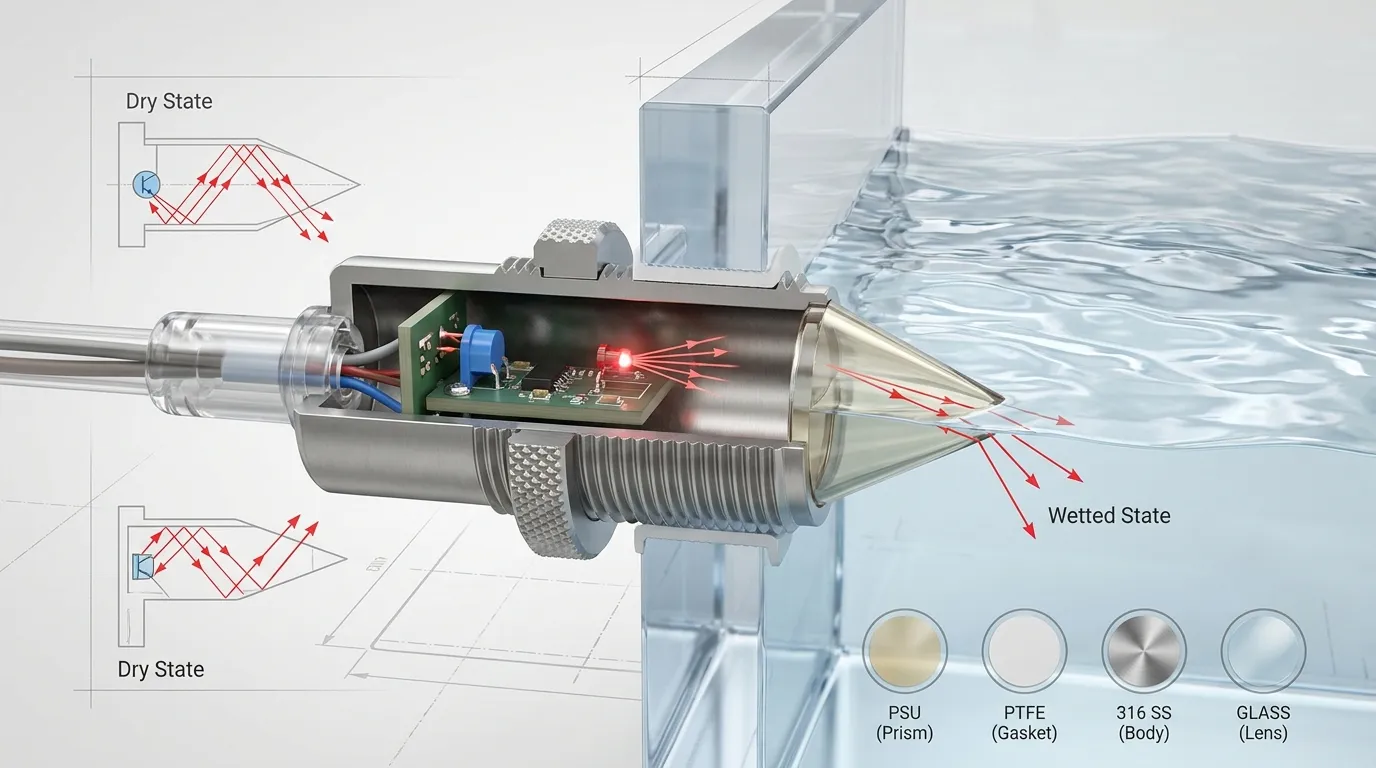
Grondwatermonitering is nie net die boorgat nie. 'n Volledige stelsel kan 'n put insluit, Dompelpomp, pyplyn, Stoortenk, Behandelingstenk, Sump, Beheerpaneel, en telemetriepoort. Optiese vlaksensors kan waarde toevoeg in verskeie van hierdie ondersteunende punte.
Skoon Stoortenk Hoëvlak of Laevlak Alarm
Nadat grondwater uit 'n put in 'n skoon bergingstenk gepomp is, 'n Optiese puntsensor kan 'n hoëvlaklimiet opspoor, Oorlooprisiko, of laevlaktoestand. Dit pas baie beter as om dieselfde sensor diep in 'n vuil boorgat te plaas.
Byvoorbeeld, 'n Prisma-punt optiese skakelaar wat deur 'n tenkmuur gemonteer is, kan 'n eenvoudige "tenk vol" sein aan 'n beheerder verskaf. 'n Tweede sensor naby die bodem kan 'n "laagwater"-sein gee om 'n oordragpomp te beskerm.
Vir hierdie soort skoon tenktoepassing, 'n Kompak optiese vlaksensor is dikwels prakties omdat dit geen dryfarm het nie, reageer vinnig, en kan in klein tenkontwerpe pas.
Pomp-droogloopbeskerming in 'n kamer of klein reservoir
As 'n grondwaterstelsel 'n klein bufferkamer vul voordat dit na 'n ander proses pomp, 'n Optiese puntsensor kan bevestig of vloeistof by die pomp se inlaatvlak teenwoordig is. As die kamer droog raak, Die beheerder kan die pomp stop voordat skade plaasvind.
Dit verskil van die meting van die volle putdiepte. Die optiese sensor probeer nie die grondwatertafel karteer nie. Dit is bloot om nat of droog te wees op een veiligheidspunt.
Sump Hoëvlak-alarm
Grondwaterpompkamers en ondergrondse nutsareas sluit soms sumps in. In 'n relatief skoon sump, 'n optiese puntskakelaar kan as 'n kompakte hoëvlak-alarm optree. Nietemin, as die sump modder bevat, Olie, modder, Alge, of swaar skaal, 'n Vlotskakelaar, Druksensor, of 'n ander robuuste toestel mag meer geskik wees.
Deur-muur opsporing vir nie-kontak alarmpunte
Sommige toepassings benodig vloeistofdeteksie sonder 'n nat sonde binne die houer. In geselekteerde deursigtige of deurskynende tenkmateriale, Nie-kontak sensing kan vloeistof deur die muur opspoor. Dit kan kontaminasierisiko verminder en skoonmaak vereenvoudig.
Hierdie benadering is nuttig vir skoonwaterreservoirs, Klein toerustingtenks, en beheerde binnenshuise stelsels. Dit is nie 'n oplossing vir ondeursigtige staalboorgatomhuling of diepputmeting nie.
Waar Druk, Ultrasoniese, en Radar Sensors Win
Vir grondwatervlakmeting binne putte en boorgate, Die mees algemene vereiste is deurlopende dieptedata. Operateurs wil weet of die grondwatervlak styg, val, herstel na pomp, of seisoenaal verander. 'n Enkele optiese puntskakelaar kan nie daardie tendens lewer nie.
Druktransduseerders vir boorgate
'n Onderwaterdruktransduseerder meet waterdruk bo die sensor. Omdat druk toeneem met die hoogte van die waterkolom, Die stelsel kan vlak bereken. Dit maak drukwaarneming 'n sterk keuse vir boorgate, Nou putte, en langtermyn grondwatermonitering.
Druksensors vereis steeds korrekte afstandskeuse, Kabelbeplanning, Barometriese kompensasie waar nodig, en periodieke verifikasie. Maar vir onderwater deurlopende putmeting, Hulle is normaalweg meer geskik as optiese puntskakelaars.
Watervlak-loggers vir langtermyndata
'n Watervlaklogger kombineer 'n sensor, Geheue, en kragbron om lesings oor tyd op te neem. Dit is nuttig vir grondwaterstudies, Pomptoetse, Seisoenale monitering, Aquifer-waarneming, en afgeleë plekke waar handmatige lesings duur is.
As die projek tendensgrafieke benodig, Historiese data, of nakomingsstyl rekords, 'n Logger of drukgebaseerde telemetriestelsel is gewoonlik die regte rigting.
Ultrasoniese sensors vir oop tenks en kanale
Ultrasoniese sensors meet afstand deur klankgolwe te stuur en die eggo vanaf die wateroppervlak te lees. Hulle is nie-kontak, Hulle kan dus nuttig wees bo oop tenks, Reservoirs, en kanale.
Nietemin, 'n Nou boorgat kan swak eggo's veroorsaak, Refleksies van die omhulsel, Kondensasieprobleme, en installasie-uitdagings. Ultrasoniese sensing kan goed werk in die regte geometrie, maar dit is nie outomaties geskik vir elke put nie.
Radarsensors vir Strawwe Nie-Kontak Meting
Radarvlaksensors meet ook van bo die oppervlak, maar hulle is oor die algemeen meer robuust as ultrasoniese sensors in sommige moeilike toestande soos damp, Temperatuurvariasie, of buitelugblootstelling. Hulle kan vir tenks gekies word, Reservoirs, en sekere oppervlakwater- of industriële moniteringspunte.
Vir diep boorgate, dieselfde vraag bly: Is daar 'n skoon pad na die wateroppervlak, en ondersteun die omhulselgeometrie stabiele meting? Indien nie, Drukmeting mag steeds die beter keuse wees.
Grondwatervlakmoniteringsmetode Vergelyking
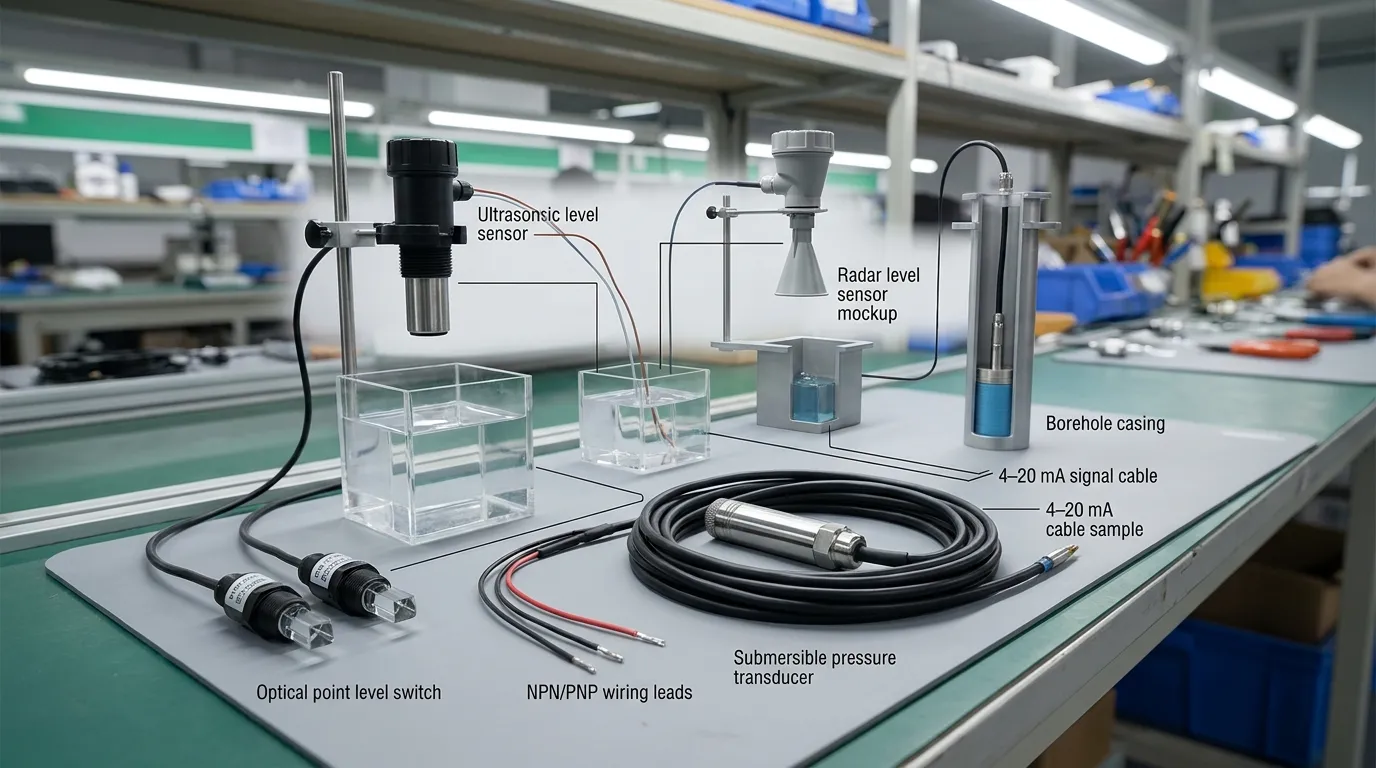
| Metode | Beste gebruik in grondwaterstelsels | Sterkpunte | Beperkings | Eerlike aanbeveling |
|---|---|---|---|---|
| Optiese puntvlakskakelaar | Skoon stoortenk, Sump-alarm, pomp-drooglooppunt, Oorloopdeteksie | Kompakte, vinnige reaksie, Geen bewegende dele nie, Eenvoudige nat/droë uitset | Slegs puntopsporing, Prisma kan fout maak, Nie ontwerp vir diep, vuil boorgate nie | Gebruik as alarm- en beskermingspunte rondom die grondwaterstelsel, nie as die hoofboorgatvlakinstrument nie |
| Optiese deurlopende vlaksensor | Skoon of beheerde tenks wat meer as een puntlesing vereis | Kan deurlopende vlakaanwysing in geskikte tenks ondersteun | Toepassingsafhanklik; steeds sensitief vir installasie en vloeibare toestand | Oorweeg skoon tenkvlakbeheer, nie modderput-ontplooiing nie |
| Onderwaterdruktransduseerder | Boorgate, putte, grondwaterdieptemeting | Deurlopende meting, werke onder die wateroppervlak, Goed vir nou putte | Benodig korrekte drukreeks, Installasiediepte, Kabelbeskerming, Vergoeding, Verifikasie | Beste standaardkeuse vir baie boorgatmoniteringsprojekte |
| Watervlak-logger | Langtermyn grondwaterwaarneming en tendensopname | Stoor data oor tyd, Nuttig vir afstandsmonitering en studies | Vereis herwinning of telemetrieplan, Battery-/databestuur | Die beste wanneer historiese data saak maak |
| Ultrasoniese vlaksensor | Oop tenks, Reservoirs, Kanale, Sommige toeganklike putte | Nie-kontak, Maklike montering van bokant in geskikte ruimtes | Echo-probleme in nou omhulsels, Skuim, kondensasie, Obstruksies | Goed vir oopoppervlakmeting, minder betroubaar in baie boorgate |
| Radarvlaksensor | Buitetenks, Reservoirs, Streng nie-kontak meting | Nie-kontak, sterker prestasie as ultrasonies in sommige omgewings | Hoër koste en opstellingskompleksiteit; Meetkunde maak steeds saak | Goed vir harde nie-kontak toepassings wanneer die begroting dit toelaat |
| Handmatige watervlakmeter | Veldkontroles en kalibrasieverwysing | Eenvoudige, Direk, Betroubare kolmeting | Nie deurlopend nie, Arbeid benodig | Gebruik vir verifikasie selfs wanneer outomatiese sensors geïnstalleer is |
Fouling: Die Hoofrisiko vir optiese sensors in boorgatwater
Optiese sensors is afhanklik van 'n skoon optiese pad by die prismapunt. As modder, Biofilm, Alge, Ysterafsettings, Skaal, Oliefilm, of gesuspendeerde vaste stowwe bedek die prisma, Die sensor kan die nat of droë toestand verkeerd lees.
Dit is hoekom die vloeibare toestand belangriker is as die woord "water." Skoon proseswater en vuil grondwater gedra hulle baie verskillend vir optiese sensing. 'n Deursigtige tenk kan uitstekend wees. 'n Boorgat met sediment- en mineraalopbou kan onderhoudsprobleme veroorsaak.
Algemene optiese faalmodusse sluit in:
- Prisma-laag wat die sensor laat dink dit is altyd nat
- Lugborrels wat om die sensorpunt vasgevang is
- Kondensasie of druppels wat vals natdeteksie veroorsaak
- Sedimentopbou rondom die monteerpunt
- Verkeerde oriëntasie wat puin vasvang
- Chemiese onverenigbaarheid met die sensorliggaam
- Kabelseëlprobleme in nat omgewings
- Verkeerde uitsettipe vir die beheerderinset
Vir kopers, die sleutelvraag is nie "Kan dit water opspoor nie?"Die beter vraag is: "Sal die sensorpunt skoon genoeg bly in my installasie om betroubaar te kan opspoor vir die vereiste onderhoudsinterval?'
Diepte en Installasie: Hoekom boorgate anders is
'n Boorgat is nie net 'n hoë tenk nie. Dit kan 'n nou omhulsel hê, Lang kabelbane, 'n Dompelpomp, Veranderende watervlakke, Turbulensie tydens pomp, Sediment aan die onderkant, en beperkte toegang vir skoonmaak.
'n Optiese puntsensor wat diep in 'n put geïnstalleer is, veroorsaak praktiese probleme. Hoe gaan die kabel ondersteun word?? Hoe gaan die sensor verwyder word vir skoonmaak?? Sal die prisma aan sediment blootgestel wees? Is die teiken net een alarmpunt, of is kontinue vlak nodig? Kan die beheerder 'n enkele nat/droë sein op 'n nuttige wyse interpreteer?
As die doel is "waarsku my wanneer die water onder 'n kritieke pompbeskermingspunt daal," 'n optiese puntskakelaar kan oorweeg word in 'n skoon, Toeganklike kamer. As die doel is "monitor grondwatervlak oor tyd," kies 'n deurlopende metode.
Vir beheerde tenks waar deurlopende optiese styl opsporing benodig word, HojellyTek kan bespreek Deurlopende vlakwaarneming Opsies, Maar die aansoek moet sorgvuldig hersien word voordat dit op enige grondwaterverwante stelsel toegepas word.
Akkuraatheid: Puntdeteksie is nie dieselfde as vlakmeting nie
Akkuraatheid hang af van die meetdoel.
'n Optiese puntskakelaar gee 'n herhaalbare skakelposisie wanneer die vloeistof die prisma bereik. In 'n skoon tenk, Dit kan akkuraat genoeg wees vir 'n hoëvlak-alarm of pompstopsein. Maar dit meet nie die afstand van die grondoppervlak tot die watertafel nie. Dit wys ook nie 'n geleidelike afname of herstel nie.
Druktransduseerders en loggers is beter vir deurlopende vlakakkuraatheid, Maar hulle benodig ook korrekte installasie. Kopers moet die drukreeks oorweeg, sensor plasing, Waterdigtheidsaannames, Temperatuur-effekte, Barometriese kompensasie, Kabelbeweging, Drift, en handmatige verwysingskontroles.
In praktiese terme:
- Gebruik opties wanneer jy 'n betroubare ja/nee vloeistofteenwoordigheidssein op een posisie benodig.
- Gebruik druk/logging wanneer jy deurlopende grondwatervlakdata nodig het.
- Gebruik ultrasoniese of radar wanneer nie-kontak oppervlakmeting moontlik is en die geometrie stabiele lesings ondersteun.
- Gebruik handmatige meting om outomatiese stelsels te verifieer, veral in belangrike moniteringsprojekte.
Telemetrie en Afstandmonitering Oorwegings
Baie grondwaterprojekte is afgeleë. Die sensor is net een deel van die stelsel. Jy mag dalk ook 'n kontroleerder nodig hê, Datalogger, kragtoevoer, Battery, Soninset, Omheining, Seinkabel, en kommunikasietoestel.
Optiese puntskakelaars koppel tipies aan beheerstelsels deur diskrete uitsette soos NPN of PNP te gebruik. Sommige vlakstelsels mag analooguitsette soos 4–20 mA gebruik wanneer deurlopende meting benodig word. Die regte keuse hang af van of die beheerder 'n eenvoudige alarm of 'n lewendige vlakwaarde benodig.
Vir afstandmonitering, Algemene opsies sluit in plaaslike datalogboek, RS485-verbinding, 4–20 mA inset na 'n PLC, LoRa-gebaseerde telemetrie, Sellulêre poort, of wolkplatform. Tuya of Smart Life-styl konnektiwiteit kan relevant wees vir klein slim moniteringsprojekte, Maar industriële grondwaterstelsels benodig gewoonlik sterker aandag aan omhulselbeskerming, Kragstabiliteit, Databetroubaarheid, en dienstoegang.
Voordat enige sensor bestel word, Definieer die seinpad van waarnemingspunt tot besluitpunt: Sensoruitset, Kabellengte, Beheerderinvoer, Alarmlogika, kragbron, Omheining, en afstandskennisgewingmetode.
Materiaal- en Monteringskeuses vir optiese sensors
In skoon tenk- of sump-toepassings, Die sensorliggaam en prismamateriaal moet ooreenstem met die vloeistof, Temperatuur, Skoonmaakmetode, en monteerstruktuur.
Algemene materiaalopsies sluit PSU-plastiek in vir algemene skoonwatertoepassings, PTFE vir sterker chemiese weerstand, 316 Vlekvrye staal vir robuuste industriële montering, en glas vir gekose optiese of hoë-verenigbaarheidsvereistes. Die beste keuse hang af van die werklike waterkwaliteit, Bymiddels, ontsmettingsmiddels, skoonmaak chemikalieë, en meganiese las.
Montering maak ook saak. Optiese vlakskakelaars kan draadinstallasie gebruik, Kompakte paneelmontering, of pasgemaakte huise. Draadgrootte, Seëlmetode, Kabelrigting, Sensororiëntasie, Wanddikte, en toegang vir skoonmaak moet voor produksie bevestig word. Vir tenktoepassings, Die koper moet ook besluit of die sensor hoë vlakke opspoor, Lae vlak, Oorloop, of droogloopbeskerming.
HojellyTek is 'n vervaardiger en uitvoerder in Shenzhen wat fokus op foto-elektriese optiese sensing, met in-huis R&D en OEM/ODM-ondersteuning vir sensorliggaam, Uitsetlogika, Bedrading, Materiaal, en montering van montering.
Wat kopers moet bevestig voordat hulle 'n sensor kies
Vir grondwater- en putverwante projekte, Moet nie met die sensortipe begin nie. Begin met die meettaak.
Bevestig hierdie punte voordat jy optiese kies, Druk, ultrasonies, of radar:
- Is die meetpunt binne 'n diep boorgat, Oop tenk, Geslote tenk, Sump, of pompkamer?
- Het jy puntdeteksie of deurlopende vlak data nodig??
- Is die water skoon, Troebel, Modderig, mineraalryk, olieagtig, of biologies aktief?
- Wat is die maksimum diepte of vlakreeks??
- Is die sensor maklik om te verwyder en skoon te maak?
- Watter uitset aanvaar die beheerstelsel: NPN, PNP, Aflos, RS485, of 4–20 mA?
- Is die installasie binnenshuis, Buite, Ondergedompel, of aan oorstromings blootgestel is?
- Is afstandstelemetrie nodig?
- Hoe gereeld kan die stelsel geïnspekteer of onderhou word?
- Is dit vir alarm?, Beheer, Navorsingsdata, Nakoming, of pompbeskerming?
As die antwoord na 'n diep put met veranderende watervlakke wys, Kies 'n druktransduseerder of logger. As die antwoord wys op 'n skoon tenk-alarm in die grondwaterstelsel, 'n Optiese puntskakelaar mag die eenvoudiger en meer kompakte keuse wees.
Waar HojellyTek Pas
HojellyTek moet nie as 'n verskaffer van diepboorgat-loggers geposisioneer word as die toepassing regtig drukgebaseerde grondwaterinstrumentasie benodig nie. Die beter pas is optiese sensering rondom grondwaterhanteringsisteme: Skoon stoortenks, Klein reservoirs, Pompbeskermingspunte, Oorloopalarms, Sump-waarskuwings, en OEM-toerusting wat kompakte nat/droë opsporing benodig.
As 'n vervaardiger van optiese vloeistofvlaksensors in Shenzhen, Ons ondersteun foto-elektriese puntvlakdeteksie, Materiaalkeuse, NPN/PNP-uitsetkonfigurasie, Pasgemaakte bedrading, en OEM/ODM-ontwerp vir uitvoerprojekte in die VSA, ONS, Indië, en ander markte.
Vir boorgatmonitering, Ons span kan ook kopers help om te verduidelik of optiese sensing enigsins in die stelsel hoort—of of die hoofvlak-toestel druk moet wees, ultrasonies, Radar, of 'n houtkapper.
Vrae
Is optiese sensors vir grondwatervlakmonitering geskik vir diep putte?
Gewoonlik nie as die primêre meettoestel nie. Optiese puntskakelaars detecteer nat of droog op een vaste plek, terwyl diep putte gewoonlik deurlopende vlakdata benodig. Vir boorgate, Druktransduseerders of watervlakloggers is gewoonlik beter keuses.
Kan 'n optiese vlaksensor in 'n grondwatertenk gebruik word??
Ja. As grondwater in 'n skoon stoortenk gepomp word, 'n Optiese vlaksensor kan gebruik word vir hoëvlak-alarm, Laevlak-alarm, Voorkoming van oorloop, of pomp-droogloopbeskerming.
Hoekom faal optiese sensors in vuil grondwater?
Die prisma-sensorpunt moet opties vry bly. Modder, Ysterafsettings, Biofilm, Alge, Skaal, of oliefilm kan die prisma bedek en vals skakeling veroorsaak. Vuil of moeilik-te-skoonmaak putte verhoog hierdie risiko.
Wat is die beste sensor vir deurlopende boorgatwatervlakmonitering??
'n Onderwaterdruktransduseerder of watervlaklogger is gewoonlik die beste beginpunt vir deurlopende boorgatmonitering. Hierdie toestelle is ontwerp om waterkolomverandering oor tyd te meet.
Is ultrasoniese sensing beter as optiese sensing vir putte?
Dit hang af van die installasie. Ultrasoniese sensors kan werk vir oop tenks en sommige toeganklike wateroppervlakke, Maar nou boorgate kan eggo-probleme veroorsaak. Optiese sensors is beter vir puntopsporing in skoon tenks, nie afstandmeting in diep boorgate nie.
Watter inligting moet ek stuur vir 'n sensoraanbeveling?
Stuur die installasietipe, Watertoestand, Diepte of tenkgrootte, Vereiste uitset, kragtoevoer, Monteringsmetode, Kabellengte, beheer stelsel, en of jy puntalarm of deurlopende data nodig het. Vir optiese tenk- of sumptoepassings, versoek 'n kwotasie via WhatsApp of e-pos met tekeninge of foto's indien beskikbaar.


