
Buyer Beware: The Hidden Headaches of Current Smart Water Valves
Smart Home Shoppers, Product Evaluators, Installers
The Reality Check
While the smart water valve market is growing rapidly, many existing products come with significant frustrations. Understanding these pain points clarifies why a well-designed Tuya-based valve represents a superior choice.
Pain Point #1: The Gateway Tax
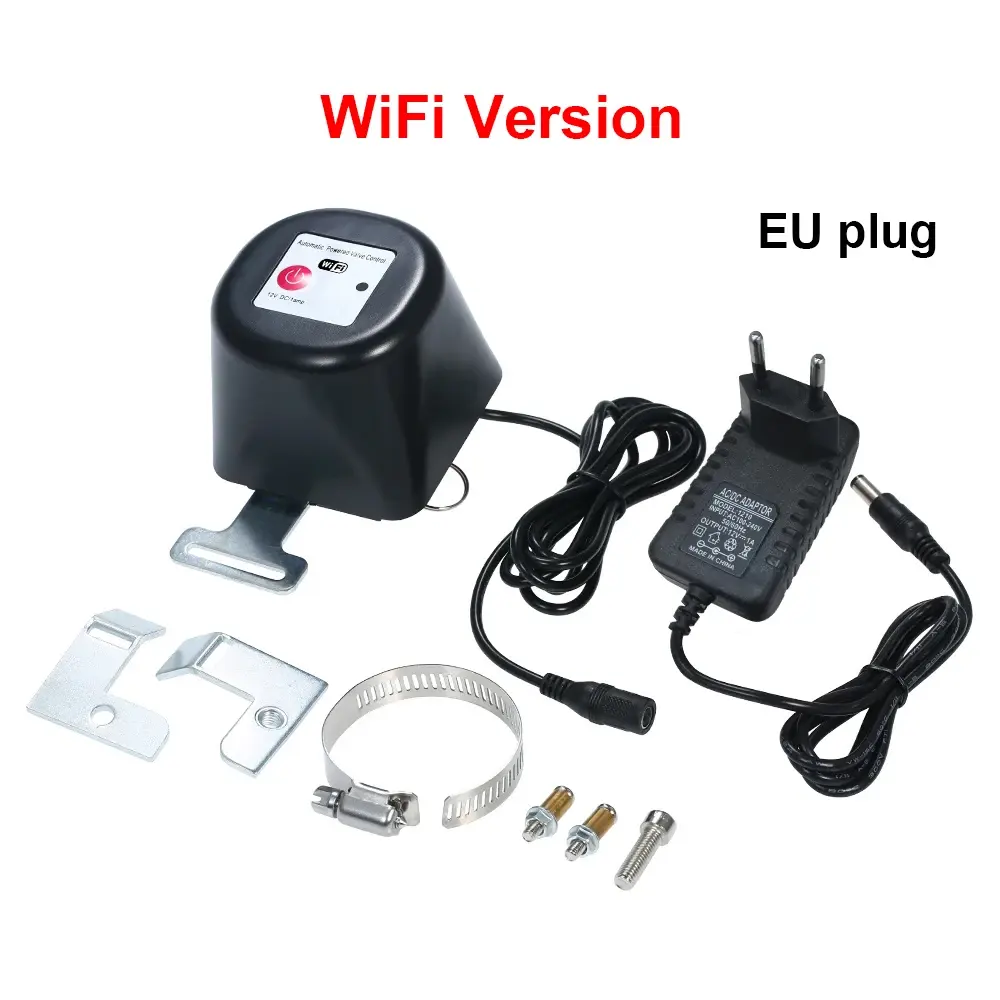
Many competing smart valves—particularly Zigbee,require proprietary hubs or specific bridges to function. User reviews reveal considerable frustration: one customer reported that the device "cannot be connected to classic Smart Life or Tuya" and requires a custom app "which is hell just to register with". Additionally, some Zigbee valves only work with specific brand hubs, not generic Zigbee coordinators, forcing users to invest in yet another piece of hardware. The Tuya WiFi valve eliminates this entirely—no hub required, connecting directly to your existing 2.4GHz router.
Pain Point #2: Installation Nightmares and Compatibility Issues
Users consistently report that installation is far from straightforward. One review of the ADC-SWM150 noted that "additional fittings are required, depending on the pipe size and threading type," with particular concern about compatibility with older plumbing systems. The SONOFF valve received criticism for requiring a "2.4 GHz sit to pair" while users were already running on 5GHz networks, creating a frustrating catch-22. Some users even reported that the device "does not behave like a classic ZigBee device," defying standard pairing expectations.
Pain Point #3: Mechanical Failure Under Pressure
Perhaps the most alarming pain point comes from performance issues. A verified review of the valve revealed that "at a pressure of around 2.5ATM it is quite common that the valve cannot be closed by the application—it does not overcome the water pressure". This is a critical safety failure: a valve that cannot close when commanded defeats its entire purpose. Furthermore, the same user noted significant flow restriction, achieving "only around 30 liters/minute," making it unsuitable for larger garden irrigation.
Pain Point #4: Voice Assistant Disintegration
Some valves that initially work with voice assistants lose functionality after firmware updates. A Dome Water Valve user reported that after a firmware update to version 047.00010, the device "no longer works with Google, Alexa, or Home Assistant" because it now "exposes itself as a binary sensor rather than a switch"—and voice assistants cannot control sensors. This required creating complex virtual switch workarounds with four separate routines to restore basic functionality.
Pain Point #5: Physical Leakage and Build Quality
Quality control issues plague some competitors. A verified purchaser reported simply: "water leaks, it's leaking. Returned". A water valve that leaks is not just a product failure—it is a hazard. This underscores the importance of robust construction and reliable sealing.
Conclusion: These pain points—gateway dependency, difficult installation, pressure failures, voice assistant disintegration, and physical leakage—represent significant obstacles. A well-engineered Tuya WiFi valve addresses each of these directly.


