
Why Tuya WiFi Smart Valve Stands Out: A Feature-by-Feature Competitive Analysis
Technical Buyers, System Integrators, Professional Installers
The Competitive Edge
When evaluating smart water and gas valves against alternatives, the Tuya WiFi model offers distinct advantages across multiple dimensions.
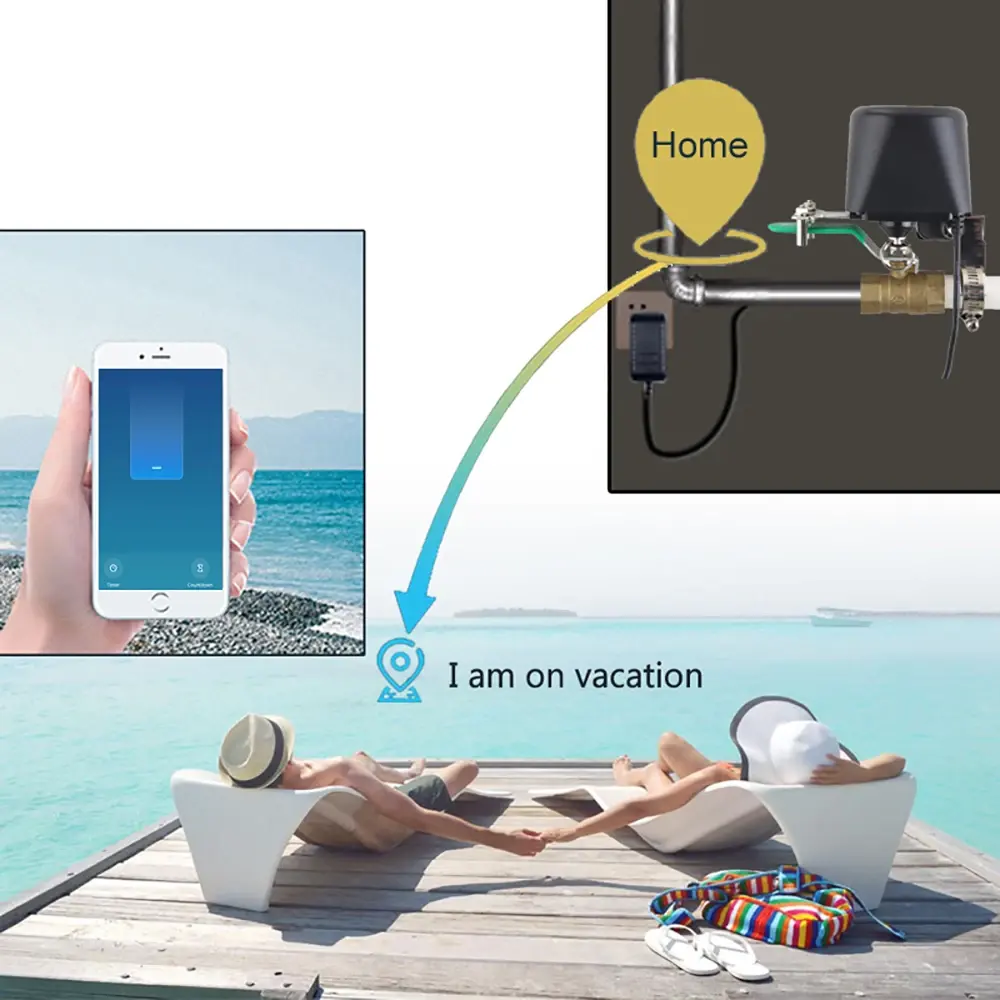
Dimension 1: Connectivity Architecture
Competitors: Many alternatives (Zigbee, Z-Wave, LoRa) require proprietary hubs or specific bridges. The Dome valve, for instance, lost voice assistant functionality after a firmware update because its device profile changed. Some Zigbee valves only pair with specific brand hubs, not open ecosystems.
Tuya Advantage: Direct 2.4GHz WiFi connectivity eliminates the need for any hub. The device connects directly to your existing router, reducing cost, complexity, and potential failure points. This "no hub required" architecture also ensures compatibility with the massive Tuya/Smart Life ecosystem of over 10,000 devices.
Dimension 2: Automation Intelligence
Competitors: Many smart valves stop at basic on/off and scheduling. The SONOFF Zigbee valve, while functional for basic operations, lacks seamless integration with broader automation scenes without additional configuration.
Tuya Advantage: The Tuya platform enables sophisticated scene linkages. When paired with a Tuya water leak sensor, the valve can automatically shut off upon detection. When integrated with a gas sensor, it can close the gas supply instantly. This transforms the valve from a simple remote switch into an intelligent safety system that responds to environmental conditions without human intervention.
Dimension 3: Installation Simplicity
Competitors: Users report compatibility issues with older plumbing, requiring additional fittings and measurements. Some valves demand specific network conditions (2.4GHz-only during setup) that conflict with modern dual-band routers.
Tuya Advantage: The valve is designed for existing lever ball valves with included mounting brackets and straightforward installation. The WiFi setup process is standard and well-documented within the Smart Life app, minimizing installation headaches.
Dimension 4: Voice Assistant Integration Reliability
Competitors: The Dome valve debacle demonstrates how firmware updates can break voice control functionality, requiring complex workarounds with virtual switches and multiple routines.
Tuya Advantage: Native integration with Alexa and Google Assistant through the Smart Life skill ensures consistent command recognition. The device exposes itself as a controllable switch—not a sensor—ensuring voice commands like "turn off the water valve" work reliably and continue working after updates.
Dimension 5: Mechanical Robustness
Competitors: User reviews document valves failing to close under pressure (2.5ATM), significant flow restriction (30L/min), and physical water leakage.
Tuya Advantage:* Specifications indicate torque of 30-60 kg.cm capable of handling pressures up to 1.6 MPa. Closing time of 5-10 seconds with robust ABS construction and stainless steel/brass components for durability.
Specification Comparison Table
| Feature | Tuya WiFi Valve | SONOFF Zigbee | Dome Z-Wave |
|---|---|---|---|
| Hub Required | No | Yes (Zigbee) | Yes (Z-Wave) |
| Voice Control | Native | Limited | Unstable after updates |
| Max Pressure | 1.6 MPa | ~0.25 MPa failure | Varies |
| Torque | 30-60 kg.cm | Not specified | Not specified |
| Ecosystem | Tuya/Smart Life | Proprietary | SmartThings |
| Installation | Direct mount | Complex | Complex |


