
Commercial & Industrial Waste Services: A Complete Guide
Every business produces waste. Whether it’s a retail shop, restaurant, hospital, or factory, waste is a part of operations. But commercial and industrial waste isn't just about what goes in the trash. It involves complex systems, strict rules, and important decisions.
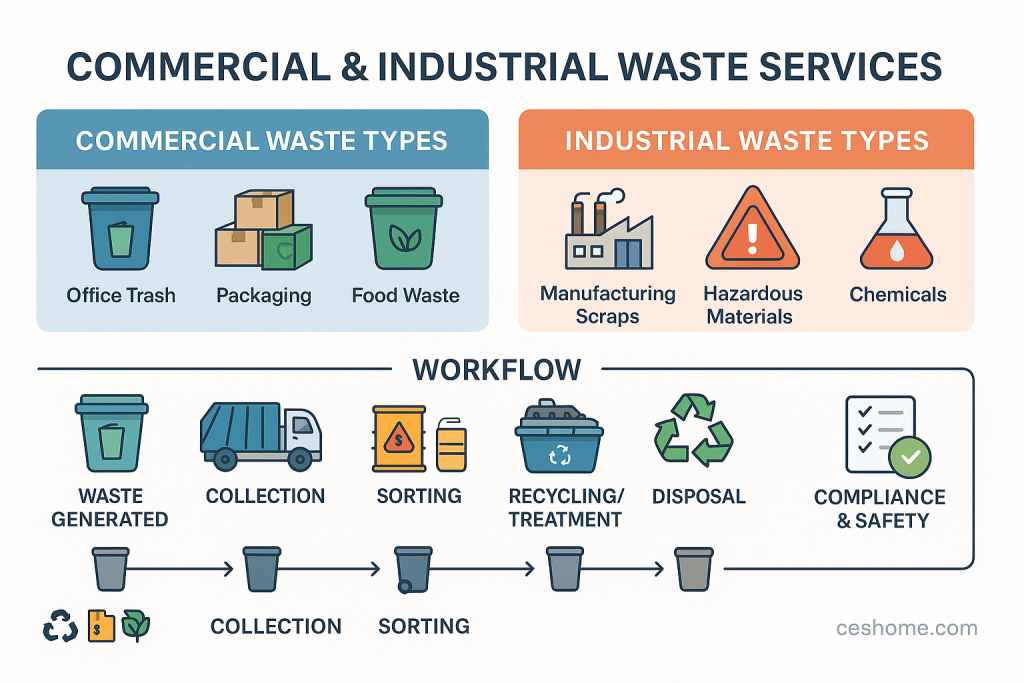
Commercial and industrial waste includes everything from packaging and paper to hazardous chemicals and leftover construction materials. It comes in high volumes, and often needs special handling. Managing this waste is about more than keeping spaces clean, it's about meeting environmental laws, reducing costs, protecting workers, and supporting sustainability.
The scale of this challenge is huge. A single commercial office can generate tons of paper and plastic each year. Industrial facilities may produce chemical by-products, scrap metal, or concrete debris in massive amounts. Without a proper waste plan, this material can pollute land, water, or air, and create big legal risks for the company.
But with the right services in place, waste becomes manageable. With expert providers and smart planning, businesses can streamline collection, improve recycling, and meet compliance rules without disrupting operations.
This guide breaks down everything you need to know about commercial and industrial waste services, from types and regulations to technologies and trends. It’s not just about taking out the trash, it’s about building a cleaner, more efficient business
What Are Commercial & Industrial Waste Services?
Commercial waste services refer to the collection, transportation, recycling, and disposal of waste generated by businesses such as offices, retail stores, restaurants, and schools. This waste typically includes paper, packaging, food scraps, and general non-hazardous materials.
Industrial waste services involve managing waste produced by industrial activities such as manufacturing, construction, mining, or chemical processing. This type of waste can include heavy metals, chemicals, scrap materials, and hazardous substances, and often requires specialized handling and disposal methods.
Both services are designed to help organizations comply with environmental regulations, manage waste efficiently, and reduce their environmental impact.
Key Differences Between Commercial and Industrial Waste
At first glance, commercial and industrial waste may seem similar. Both involve disposing of non-household materials. But in practice, the two are quite different in terms of volume, content, and how they’re handled.
Commercial waste comes from places like shops, offices, hotels, restaurants, and schools. It typically includes:
- Paper, cardboard, and packaging
- Food scraps and kitchen waste
- Cleaning supplies and containers
- Office electronics
The volume is steady but varies depending on business type and size. For example, a hotel produces more food waste, while a tech firm creates more e-waste.
Industrial waste, on the other hand, comes from factories, construction sites, mines, or power plants. It can include:
- Heavy scrap materials (wood, metal, concrete)
- Manufacturing by-products
- Chemicals and solvents
- Ash, slag, or sludge
This type of waste is usually larger in scale, more hazardous, and more regulated. It often needs special equipment, transportation, or permits.
From a legal standpoint, industrial waste is under tighter scrutiny. Businesses may need to track, label, and report how this waste is handled, from origin to final disposal. Regulatory bodies inspect these processes, and non-compliance can lead to fines or shutdowns.
Common Types of Waste in Commercial and Industrial Sectors
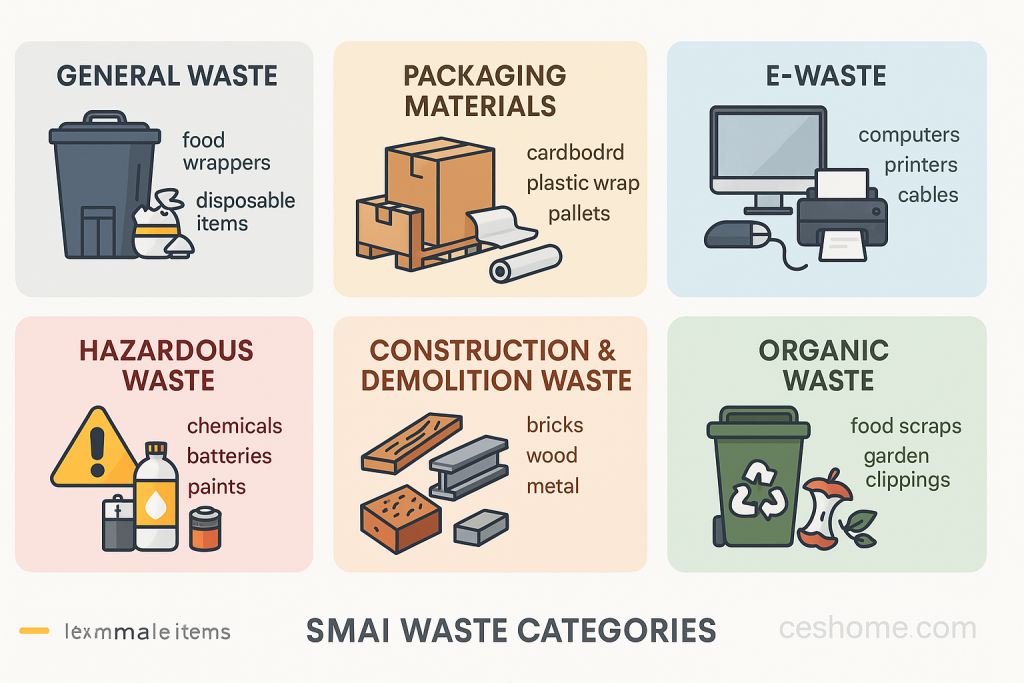
Not all waste is the same. Different industries produce different kinds, and each type needs its own handling method. Here are the most common waste categories found in commercial and industrial settings:
1. General Waste
This includes everyday trash like food wrappers, disposable items, and mixed non-recyclables. It’s common in offices, retail, and hospitality.
2. Packaging Materials
Cardboard, plastic wrap, wooden pallets, foam, and shipping materials often make up a large part of commercial waste, especially in retail and logistics.
3. E-Waste (Electronic Waste)
Broken computers, printers, cables, and mobile devices. Businesses are upgrading tech regularly, which leads to growing e-waste. These items need to be recycled at certified centers due to their components and environmental risk.
4. Hazardous Waste
Chemicals, paints, oils, batteries, fluorescent bulbs, or medical waste fall into this category. This is more common in industrial plants, labs, or healthcare centers. Disposal is strictly regulated.
5. Construction and Demolition Waste
Concrete, bricks, glass, wood, and metal are typical at building sites. These materials can often be recycled or reused but require heavy equipment and proper sorting.
6. Organic Waste
Food scraps, garden clippings, and biodegradable items often come from hotels, restaurants, and cafeterias. This waste is a good candidate for composting or bio-digestion.
Each type of waste requires its own approach. Some can be compacted. Others need specialized bins or temperature-controlled transport. Understanding the types of waste a business produces is the first step in setting up an efficient waste management system.
Core Services Offered in Commercial & Industrial Waste Management
Commercial and industrial waste services go far beyond trash pickup. They’re designed to handle every stage of the waste lifecycle—from collection to recycling to final disposal. Here are the main services available:
Scheduled Waste Collection
Regular pickups help businesses avoid pile-ups, pest problems, and non-compliance issues. Depending on the waste type, pickups can be daily, weekly, or monthly. Providers offer flexibility to match business needs.
Some offer early-morning or after-hours collection to avoid interrupting operations. The waste is sorted, loaded, and taken to treatment or recycling facilities.
Roll-Off Containers and Dumpsters
These large containers are perfect for businesses that produce a lot of waste or for temporary projects like renovations. Roll-off dumpsters come in various sizes, from 10 to 40 yards, and are used for construction debris, bulky items, or heavy loads.
Providers deliver the containers, schedule pickups, and handle final disposal. This service is ideal for factories, warehouses, and commercial renovations.
Recycling and Waste Diversion Programs
Recycling services separate paper, plastics, metals, glass, and electronics. Some providers offer bins for each material, while others sort materials after collection. Businesses that recycle often lower disposal costs and improve sustainability.
Waste diversion goes a step further. It helps businesses avoid sending materials to landfills. For example, food waste may be sent to composting facilities, or old furniture donated to charities.
Hazardous Waste Handling
This is one of the most sensitive services. It involves labeling, storing, transporting, and disposing of harmful materials safely. Providers follow strict legal protocols and use certified treatment facilities.
Businesses must often track every stage of the disposal process and keep records for inspections.
On-Site Waste Compaction
For companies that generate large volumes of waste, compactors reduce the amount of space needed for storage. They also lower pickup frequency, saving money. Compactors come in different forms—portable, stationary, or self-contained.
On-site waste compaction is common in malls, airports, hotels, and distribution centers.
Industry-Specific Waste Solutions
Every industry generates waste differently. A one-size-fits-all approach doesn’t work. Waste service providers understand this and offer customized plans to suit the specific needs of each sector.
Retail and Shopping Centers
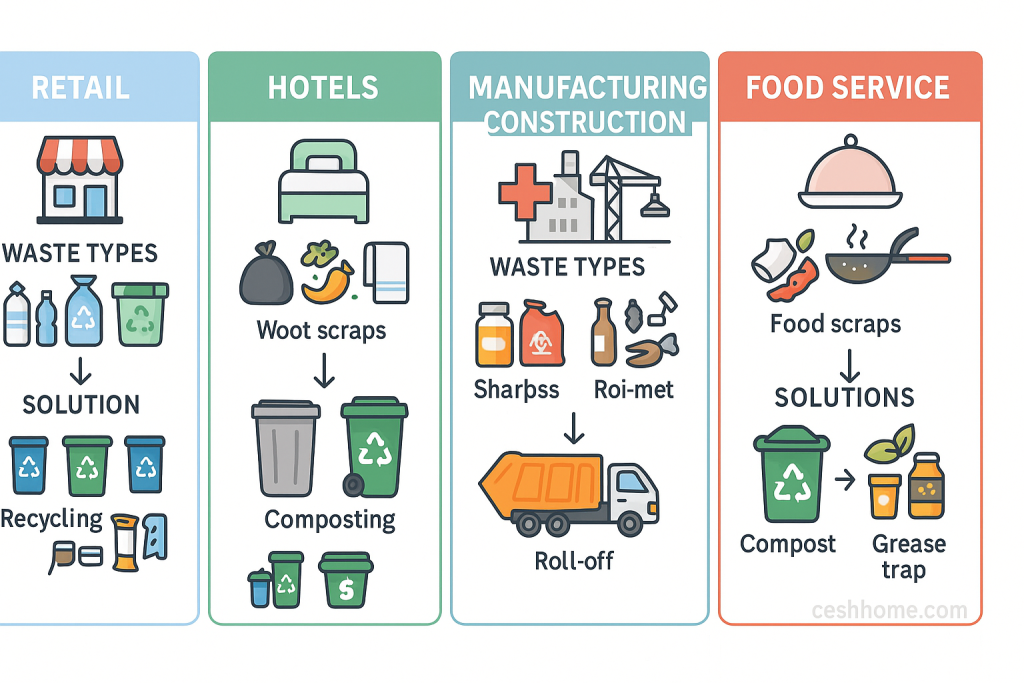
Retail stores deal with high volumes of packaging materials, outdated inventory, receipts, hangers, and general trash from foot traffic. Shopping centers also generate food waste from food courts and e-waste from electronics departments. Effective waste solutions for retail spaces must include frequent pickups, space-efficient bins, and strong recycling programs. Security is also a concern for handling branded or sensitive discarded items. Retailers benefit from regular training for staff and signage that helps customers dispose of items correctly.
Hotels and Hospitality
Hotels generate a wide range of waste types across guest rooms, kitchens, lobbies, and event spaces. The volume of food waste is high in this industry, along with laundry chemicals, miniature toiletry bottles, and packaging. Room service, housekeeping, and banquets all contribute to the waste stream. Effective waste management in hotels includes daily pickups, back-of-house recycling systems, grease trap cleaning, and composting for food waste. Many hotels aim to align their operations with sustainability standards, especially those certified under green hospitality programs.
Healthcare and Medical Facilities
Hospitals and clinics face strict regulations. Waste includes biohazardous materials, expired drugs, used syringes, patient records, and general office trash. Safety and compliance are critical. Medical waste must be separated, labeled, and stored according to legal guidelines. Specialized providers handle sharps disposal, controlled substance destruction, and infectious waste treatment. In addition, e-waste from diagnostic equipment and IT systems is managed under separate protocols.
Manufacturing and Construction
These sectors deal with heavy, often hazardous materials. Scrap metals, chemical waste, sawdust, plastics, and packaging materials are all common. For construction, debris like drywall, concrete, wood, and tiles must be collected and often recycled. Manufacturing facilities require tailored solutions that include large-capacity containers, scheduled roll-offs, and real-time waste tracking. Certain industries, like electronics or automotive, also produce niche waste that requires industry-specific knowledge to handle safely and cost-effectively.
Food Service and Restaurants
Restaurants create high amounts of food scraps, packaging, grease, and single-use containers. The fast-paced environment leaves little time for staff to sort materials during peak hours. Grease traps require regular cleaning to avoid backups and environmental issues. Food waste can be diverted to composting or animal feed, and cooking oil can be repurposed into biofuel. Efficient systems also need to handle glass bottles, cardboard boxes, and plastic containers from beverage and food shipments.
Compliance and Legal Requirements
Businesses that fail to manage waste correctly can face serious legal consequences. Waste handling is not just about logistics—it’s also about compliance with environmental laws at local, state, and national levels.
Companies must obtain the correct permits to store, transport, or treat certain types of waste. For example, any business that handles hazardous materials must follow detailed documentation and storage protocols. This includes using approved containers, maintaining separation between waste types, and labeling everything according to regulations.
Legal requirements often include keeping records of how waste is generated, stored, and disposed of. Some businesses are required to submit reports on the volume and type of waste produced. Failure to report or improper disposal can lead to inspections, penalties, and reputational damage.
Many areas now enforce strict landfill diversion rules. Businesses must show that they’re reducing the amount of waste sent to landfills by recycling or reusing materials. Others require companies to separate organics, recyclables, and trash before pickup.
To stay compliant, companies often work with licensed providers who understand the local regulations and provide documentation, audit trails, and expert advice. Investing in a compliant waste system helps businesses avoid legal risks while protecting the environment.
Technology in Commercial Waste Management
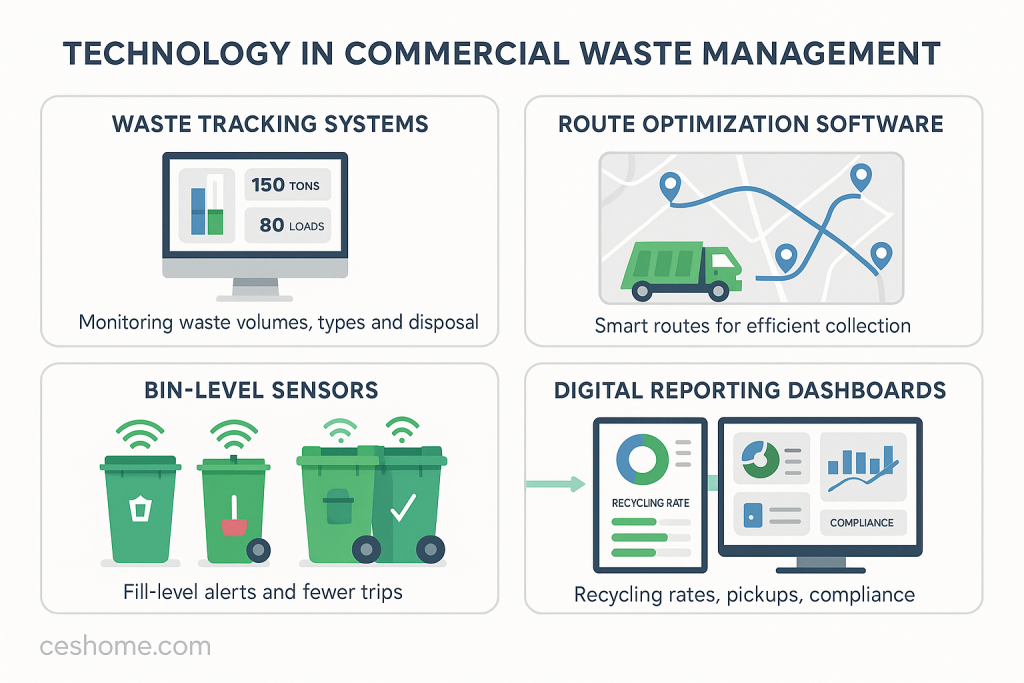
Modern waste management uses more than trucks and dumpsters. Today, technology plays a key role in making services smarter, more efficient, and easier to manage. Businesses benefit from tools that provide data, automate tasks, and optimize routes and operations.
Waste Tracking Systems
Tracking tools monitor how much waste a business generates, what type it is, and how it’s disposed of. This gives managers a full view of their waste footprint. Reports can be generated monthly or quarterly to meet regulatory requirements or internal sustainability goals. Tracking systems also help identify areas where waste can be reduced, leading to cost savings.
Route Optimization Software
Software for waste collection planning ensures that vehicles take the fastest, most efficient path. It factors in traffic, pickup schedules, waste volume, and vehicle size. This reduces fuel use, cuts emissions, and increases service reliability. Drivers receive updated routes in real time, minimizing delays and missed stops.
Bin-Level Sensors
Smart sensors inside bins detect when they’re full. They send alerts to collection teams so pickups can be scheduled only when needed. This reduces unnecessary trips and lowers costs. For high-traffic areas or sites with variable waste production, this system prevents overflow and improves cleanliness.
Digital Reporting Dashboards
Business owners and facility managers can log into platforms that show all waste activity in one place. These dashboards display pickup times, waste volumes, recycling rates, and compliance status. They offer detailed insights that help in planning, budgeting, and reporting to stakeholders. Some dashboards also include alerts, performance comparisons, and environmental impact data.
Benefits of Outsourcing Waste Services
Managing commercial or industrial waste in-house can be costly and time-consuming. Most businesses outsource this responsibility to specialized waste service providers—and for good reason. Outsourcing comes with several clear advantages that help improve operations, compliance, and the bottom line.
The most obvious benefit is expertise. Professional waste service providers understand local laws, industry standards, and best practices. They handle everything from pickup to disposal, including the proper handling of hazardous materials. This means fewer risks for your business and a higher chance of meeting regulatory requirements without mistakes.
Outsourcing also improves efficiency. Internal teams may lack the time or training to manage waste effectively. By using external experts, businesses can focus on core operations while still ensuring proper waste handling. Service providers schedule pickups based on waste volume, reducing overflow issues and missed collections.
Financial savings are another major benefit. A good provider helps reduce the number of pickups through better scheduling and compaction solutions. They can also identify opportunities to recycle or divert waste, lowering landfill costs and avoiding fines for improper disposal.
Most providers offer scalable plans. Whether your business grows or downsizes, your waste service can adjust accordingly. This flexibility allows companies to respond to seasonal changes or unexpected growth without disruptions.
Another overlooked advantage is reporting and data. Providers offer digital dashboards, compliance reports, and environmental impact tracking. These tools make it easier to monitor performance, set goals, and prove progress to customers, auditors, or corporate stakeholders.
Choosing a Commercial Waste Management Provider
The right waste provider makes all the difference in how your business handles its waste. But choosing one isn't always straightforward. You need a partner who offers reliable service, understands your industry, and can grow with your needs.
Start by reviewing their experience. A provider that has worked with similar businesses will already understand your specific waste challenges. If you're in healthcare, look for someone with medical waste expertise. If you're in construction, you need a team that knows how to handle heavy, bulky materials and schedule roll-off containers efficiently.
Next, evaluate the range of services. A good provider doesn’t just offer pickup—they provide recycling options, hazardous waste handling, digital tracking, and emergency response services. Make sure they offer everything you need now, plus options for future expansion.
Customer support matters too. Look for a company that offers 24/7 service access, fast response to missed pickups, and account managers who communicate clearly. Poor communication can delay service, create compliance problems, and hurt your reputation.
Scalability is key. If your waste volumes change with the seasons or your company expands, your provider must adjust accordingly. Ask about their capacity, equipment fleet, and ability to scale up on short notice.
Also, consider pricing transparency. Some providers charge flat rates, others bill per pickup or per container size. Ask for a clear quote that includes all fees, fuel charges, disposal costs, bin maintenance, and make sure there are no hidden extras.
Sustainability and Green Initiatives
More businesses now aim to reduce their environmental impact. Waste management is a key area where companies can show real progress toward sustainability. A good waste plan not only reduces landfill use but also supports broader corporate social responsibility (CSR) goals.
One way businesses achieve this is by increasing recycling rates. Providers help by offering dedicated bins, employee education, and monitoring systems that track sorting accuracy. Over time, recycling improves, waste to landfill decreases, and your environmental footprint shrinks.
Some businesses go even further, aiming for zero-waste operations. This means every item is either reused, recycled, or composted. It’s ambitious, but not impossible, especially in manufacturing, hospitality, or events. Providers support this goal by helping identify which materials can be diverted and by offering advanced sorting or repurposing solutions.
Green certifications are another motivator. Programs like LEED or ISO 14001 recognize companies that meet strict sustainability criteria. Waste reduction and proper disposal are major parts of these certifications. Partnering with the right waste service makes these goals easier to achieve.
Many providers now offer carbon impact tracking. You can see how much CO₂ your business saved by avoiding landfill, using fewer pickups, or recycling certain materials. These metrics are valuable not only for internal goals but also for reporting to clients, investors, and regulators.
Waste Reduction Strategies for Businesses
Reducing waste doesn’t just help the environment, it saves money, space, and time. Businesses that prioritize waste reduction see fewer pickups, lower disposal costs, and improved efficiency.
Start with staff awareness. Train your team on how to separate recyclables, reduce single-use items, and handle materials correctly. Place signs near bins, send monthly reminders, and provide feedback through reporting dashboards.
Examine your supply chain. Excess packaging, non-recyclable materials, or inefficient products create unnecessary waste. Work with suppliers who offer bulk delivery, returnable containers, or eco-friendly packaging.
Reuse materials where possible. Cardboard boxes can be reused for shipping. Leftover food from restaurants can be composted or donated. Unused office supplies can be redistributed before being discarded.
Optimize operations. Track where waste comes from—whether it’s overproduction, incorrect inventory, or customer returns. Use this data to change processes or adjust purchase quantities.
Invest in better containers. Compacting bins reduce pickup frequency. Clear bin labeling improves sorting. Smart bins prevent overflows. These small changes can lead to significant savings.
Cost Considerations and ROI of Proper Waste Management
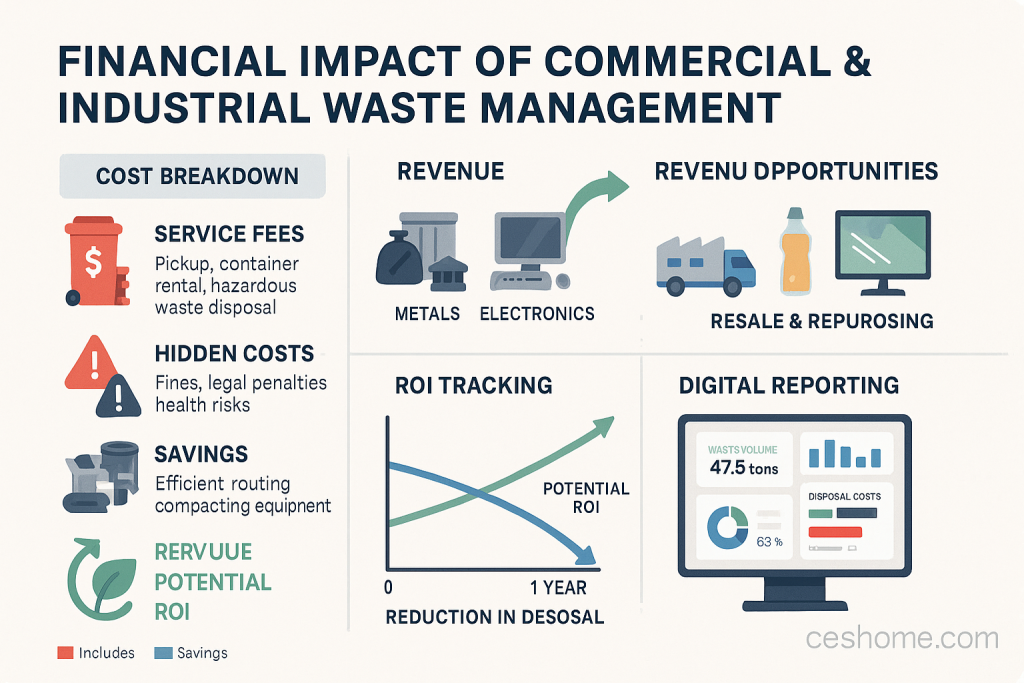
Managing commercial and industrial waste is not just an operational necessity, it’s a strategic business decision that affects your bottom line. When done correctly, it reduces costs, avoids fines, and adds long-term value.
The most immediate cost factor is service fees. These include regular pickup charges, container rentals, and any fees for disposing of hazardous or bulky waste. Businesses in high-waste industries, such as hospitality or manufacturing, typically pay more due to volume and frequency.
However, those upfront costs can be reduced over time. Efficient waste management leads to fewer pickups. Smart routing, compacting equipment, and improved sorting all contribute to cost savings. Businesses that recycle more often pay less for landfill services, as tipping fees for non-recyclable waste are usually higher.
Hidden costs are just as important. Poor waste handling can lead to health risks, legal penalties, and brand damage. Non-compliance with local or national laws can result in inspections, citations, or even business closures. These risks are especially high for companies handling hazardous materials.
Recycling and diversion programs also bring financial benefits. Some materials, like metals, electronics, or cooking oil, can be sold or repurposed. Companies working with certified waste vendors may also be eligible for tax breaks or sustainability incentives, especially if they report waste metrics in ESG disclosures.
The return on investment (ROI) becomes clearer when you track waste volumes, disposal costs, and recycling rates over time. Digital reporting tools help businesses identify areas of waste, monitor progress, and adjust plans. Many companies see their ROI within the first year of implementing a comprehensive waste strategy.
Challenges in Commercial Waste Handling
Despite the benefits, managing waste in a business setting isn’t always easy. Many organizations face common roadblocks that slow down progress or increase costs.
One of the biggest issues is waste contamination. When recyclables get mixed with food waste or other non-recyclables, the entire load can be rejected. This not only wastes effort but increases disposal costs. Training staff on proper sorting and placing clear labels on bins can reduce this issue, but it requires consistent follow-through.
Seasonal waste spikes present another challenge. Retailers see waste increase during holidays. Construction sites face higher debris during active phases. If businesses aren’t prepared for these fluctuations, they may experience overflow issues, missed pickups, or increased service fees.
Space limitations can also affect waste handling. Not all businesses have room for multiple dumpsters, recycling bins, or compaction equipment. This is especially true in urban settings where real estate is limited. Companies must then work with providers to find creative solutions, such as shared dumpsters, off-site sorting, or higher-frequency pickups with smaller bins.
Lack of data is a quiet but serious problem. Without knowing how much waste is produced, what types are most common, or where inefficiencies lie, businesses can’t improve. That’s why tracking systems and waste audits are becoming essential for modern waste strategies.
Another concern is vendor reliability. Late pickups, poor communication, or missed services can disrupt operations and reflect poorly on the business. That’s why choosing the right provider, as discussed earlier, is so critical.
Case Studies and Success Stories
Many companies have turned waste management into a competitive advantage by adopting efficient, sustainable strategies. Their stories offer practical lessons and proof that smart waste handling delivers real results.
A major hotel chain reduced waste by 35% over 12 months by introducing back-of-house recycling stations and composting organic waste from its kitchens. It also partnered with local food banks to donate surplus edible items. These changes cut costs, earned green certifications, and improved its brand reputation with eco-conscious travelers.
A regional grocery store chain launched a zero-waste initiative that diverted 80% of its waste from landfills within 18 months. This was achieved by switching to reusable shipping crates, offering digital receipts to reduce paper, and training staff on sorting protocols. The store also tracked savings from reduced waste pickups, which amounted to thousands of dollars annually.
A manufacturing company in the Midwest faced high disposal fees due to large volumes of metal scrap. By partnering with a specialized waste vendor, they started collecting, separating, and selling the scrap instead of dumping it. This not only cut disposal costs by half but also created a new revenue stream that supported equipment upgrades.
An urban office complex implemented smart bins with fill-level sensors and waste tracking dashboards. In the first six months, they reduced unnecessary pickups by 40% and improved recycling rates through regular staff reminders and digital signage. Employees responded positively, and the facility used its data to earn sustainability credits.
Future Trends in Commercial & Industrial Waste Services
As waste handling becomes more data-driven and environmentally focused, the future holds exciting developments that will reshape how businesses manage their waste.
One major trend is automation. AI-powered waste sorting machines are becoming more accessible. These systems can detect and separate different materials faster and more accurately than manual sorting, especially in large-scale facilities. This speeds up recycling and reduces contamination rates.
Blockchain technology is being explored for waste tracking. Each piece of waste can be logged from the moment it's created to its final disposal. This provides full transparency and ensures accountability—especially important for industries handling hazardous or regulated materials.
Circular economy models are also gaining ground. Instead of the traditional “take-make-dispose” model, businesses are shifting toward reuse and remanufacturing. For example, companies are finding ways to reuse packaging, refurbish electronics, and reprocess industrial by-products into new raw materials.
Another emerging area is waste-to-energy. Technologies that convert organic or non-recyclable waste into electricity, biofuel, or heat are being adopted in more cities. These systems reduce landfill dependence and generate usable energy, making waste a resource instead of a burden.
Smart city integration is expected to play a bigger role. Waste data will connect with other urban infrastructure systems, from traffic to energy to water management. This allows cities to plan waste logistics in real time, reducing congestion and improving service reliability.
Conclusion
Commercial and industrial waste services are more than just pickups and bins—they’re a critical part of modern business operations. When managed properly, waste becomes an opportunity for savings, compliance, and sustainability.
From understanding waste types to selecting the right provider, every business has the chance to build a smarter, cleaner, and more efficient waste system. Whether you're running a small shop or managing a large manufacturing plant, investing in expert waste services pays off in cost savings, legal protection, and environmental impact.
Now is the time to review your current setup, explore better options, and take control of your waste.
Business Waste FAQs
1. What is the difference between commercial and industrial waste?
Great question! Commercial waste comes from everyday businesses like offices, stores, hotels, and restaurants. It usually includes things like paper, cardboard, food waste, and packaging. On the other hand, industrial waste is produced by larger operations such as factories, manufacturing plants, and construction sites. This type of waste can include hazardous materials, chemicals, scrap metals, and large volumes of debris. Because industrial waste can pose more environmental and health risks, it often requires special handling and disposal procedures.
2. Can recyclables be mixed with regular waste?
No, it’s really important to keep recyclables separate from regular trash. When items like paper, plastic, and cans are mixed with food waste or dirty materials, the entire batch can become contaminated and may have to go to a landfill instead of being recycled. That’s a big waste, literally! For recycling to work properly, make sure your business has clearly labeled bins and trains staff to use them correctly.
3. How do I make sure my business complies with waste laws?
To stay on the safe side, always work with a licensed waste management provider. They know the local rules and will help make sure your waste is being handled responsibly. Keep good documentation, like service receipts and disposal records, in case you ever need to show compliance. Also, label your bins properly, especially for hazardous waste, and store materials safely. Regulations may vary by region, so it’s smart to check both local and national guidelines or consult an expert.
4. What are some simple ways to reduce business waste?
There are lots of small steps that can make a big difference! Start by training your staff on waste reduction practices. Try to reuse packaging materials when you can, and avoid ordering more supplies than you really need. Keep an eye on what you throw away,tracking waste helps you find areas to improve. Whenever possible, choose products made from recyclable or compostable materials. Even switching to digital receipts or reusable containers can cut down on daily waste.
5. How often should businesses audit their waste systems?
It’s a good idea to do a full waste audit at least once a year. This helps you understand where your waste is coming from, how much you're producing, and where it’s going. But if your business is focused on sustainability or trying to cut costs, more frequent check-ins—like every quarter, can be really useful. Regular audits can help you catch new trends, reduce waste-related expenses, and measure progress toward your environmental goals.


