
Braiteoir Leibhéal Leanúnach Optúil
Tacaíonn HojellyTek le tionscadail braite leibhéal leachtach optúil do cheannaitheoirí a dteastaíonn aiseolas leibhéal níos soiléire uathu, suiteáil dhlúth, agus saincheaptha níos faide ná braite caighdeánach ar / as.
Cumas Braite Leibhéal Optúil Leanúnach
Úsáideann an chuid is mó de na braiteoirí leibhéal leachtach optúla prionsabal fótaileictreach: seolann LED infridhearg solas isteach i leid priosma, agus braitheann fóta-trasraitheoir nó glacadóir an solas frithchaite. San aer, Léiríonn an priosma solas ar bhealach difriúil ná nuair a bhíonn sé fliuch le leacht. Ansin athraíonn an ciorcad braiteora an t-athrú optúil tirim / fliuch seo ina chomhartha inúsáidte.
Le haghaidh aláram umar simplí, Is féidir leis an gcomhartha seo a bheith ina aschur ar / as. Le haghaidh monatóireachta leanúnach nó beagnach leanúnach ar leibhéal, d'fhéadfadh struchtúr braite níos faide a úsáid sa dearadh, Pointí optúla iolracha, nó dearadh comhartha a thuairiscíonn athruithe leibhéil do rialaitheoir.
Is féidir lenár dtacaíocht braite leibhéal optúil a áireamh:
- Lasca pointe optúla saincheaptha le haghaidh ard, íseal, folamh, ró-shreabhadh, agus braite sceitheadh
- Eagair leibhéil optúla ilphointe le haghaidh tásc leibhéal céimnithe
- Tionscadail leanúnacha ina gcaithfidh an comhartha tacú le rialú próisis nó aiseolas dosing
- Cumraíocht aschuir do bhoird rialaithe, PLCanna, caidéil, aláraim, nó feistí IoT
- Roghnú ábhair le haghaidh uisce, ola, breosla, ceimiceach, agus feidhmchláir sreabhach glantacháin
- Comhlacht braiteoir OEM / ODM, snáthaid, cábla, cónascaire, agus saincheaptha tithíochta
Do cheannaitheoirí a dhéanann comparáid idir réitigh ghinearálta, féach ar ár Braiteoir Leibhéal Optúil treoir.
Athraigh Optúil Pointe vs Tomhas Leibhéal Optúil Leanúnach
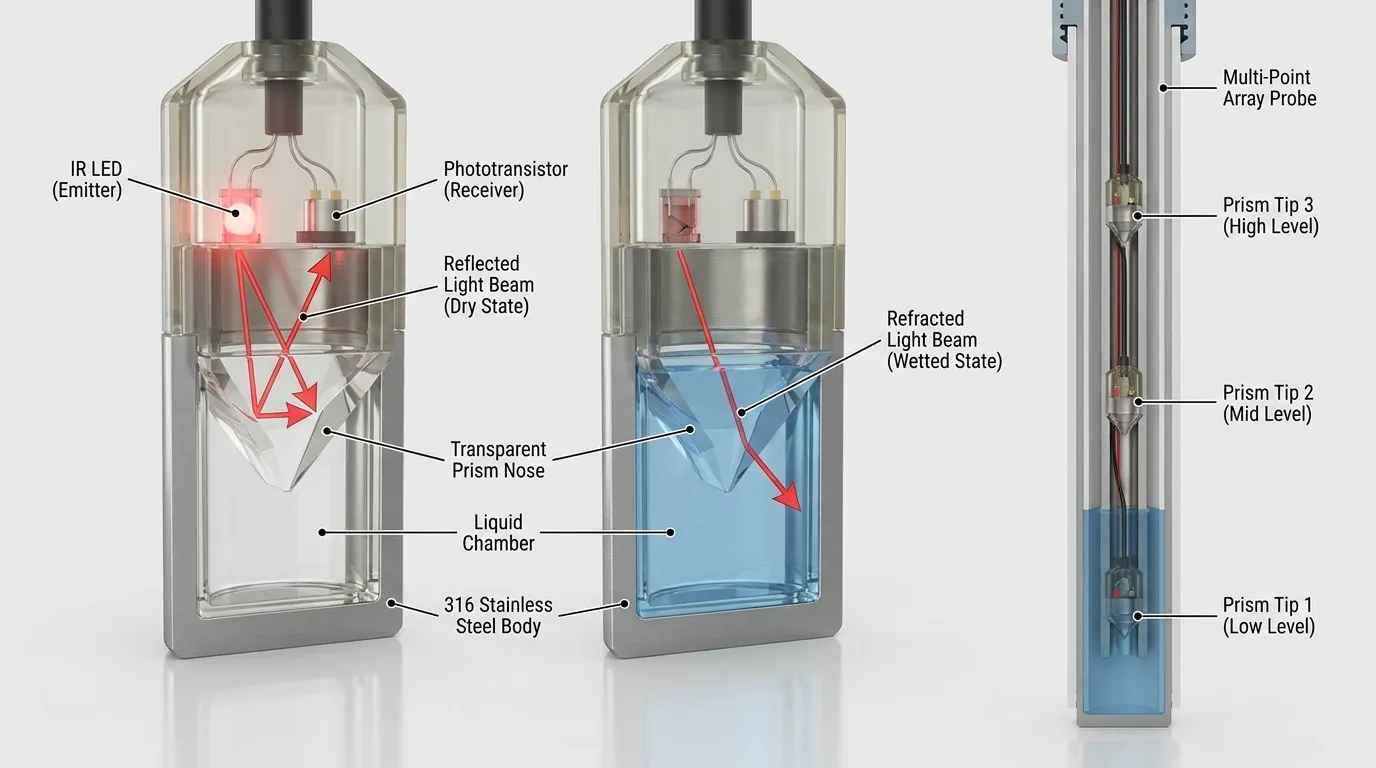
Freagraíonn lasc leibhéal pointe fótaileictreach ceist amháin: "An bhfuil leacht i láthair ag an suíomh seo?" Tá sé oiriúnach nuair nach dteastaíonn ach stádas soiléir tirim / fliuch ón gcóras. Mar shampla, D'fhéadfadh go mbeadh foláireamh uisce íseal ag teastáil ó mheaisín caife, D'fhéadfadh comhartha imoibrí a bheith ag teastáil ó fheiste leighis, nó d'fhéadfadh go mbeadh cosaint ró-shreabhadh ag teastáil ó umar beag.
Freagraíonn tomhas leanúnach ceist dhifriúil: "Cé mhéad leacht atá san umar anois?"Tá sé seo tábhachtach nuair a chaithfidh rialaitheoir athrú leibhéal a rianú le linn líonadh, draenáil, Dáileog, Baisc, nó oibriú an phróisis.
I go leor tionscadal, Iarrann ceannaitheoirí braiteoir leibhéal leanúnach optúil ar dtús, ach tar éis athbhreithnithe, D'fhéadfadh an dearadh ceart a bheith ar cheann de thrí rogha:
- Lasc pointe optúil aonair le haghaidh aláraim ard / íseal
- Eagar optúil ilphointe le haghaidh roinnt céimeanna leibhéal seasta
- Dearadh aschuir leanúnach sa chás go bhfaigheann an rialaitheoir comhartha analógach nó digiteach athraitheach
Mura bhfuil do riachtanas ach "umar lán" nó "umar folamh"," Is gnách go mbíonn gléas pointe níos simplí. Má theastaíonn treocht leibhéal uait, uainiú athlíonta, méid dosing, nó aiseolas a phróiseáil, Tá braiteadh leanúnach nó ilphointe níos oiriúnaí.
Le haghaidh tionscadail braite pointe seasta, déan comparáid idir ár Braiteoir leibhéal pointe leictrea-optaice.
Raon Tomhais, Rún, agus Dearadh Comhartha
Do thionscadail leanúnacha leibhéal optúil, Ní roghnaítear an raon tomhais cosúil le lasc catalóige cineálach. Caithfidh sé doimhneacht an umair a mheaitseáil, crios braite, Suíomh suiteála, iompar leachtach, agus cruinneas rialaithe riachtanach.
B'fhéidir nach mbeidh ach roinnt pointí braite optúla ag teastáil ó thaiscumar gearr. D'fhéadfadh tóireadóir níos faide nó struchtúr braite saincheaptha a bheith ag teastáil ó umar níos airde. D'fhéadfadh go mbeadh réiteach níos airde ag teastáil ó sheomra dosing ar fud rannóg chúng seachas raon fada lán-umar.
Braitheann an réiteach ar an modh braite. Le eagar ilphointe, Tá an réiteach bunaithe ar an spásáil idir gach pointe optúil. Tugann spásáil níos dlúithe céimeanna leibhéil níos mó, ach bíonn tionchar aige freisin ar dhearadh probe, sreangú, costas, agus ceanglais ionchuir rialaitheora. Le aschur leanúnach analógach nó digiteach, braitheann an taifeach inúsáidte ar an dearadh braite optúil, Próiseáil comhartha, cobhsaíocht leachtach, agus modh calabrúcháin.
Ba chóir do cheannaitheoirí a shainiú:
- Doimhneacht iomlán umar nó airde braite sprioc
- Leibhéil íosta agus uasleibhéil leachtacha chun faireachán a dhéanamh orthu
- Céim leibhéil riachtanach nó cruinneas rialaithe
- Cibé an bhfuil aschur réidh nó criosanna leibhéal seasta ag teastáil ón gcóras
- Cineál leachtach, soiléireacht, slaodacht, cúr, boilgeoga, agus riosca sciath
- Cineál ionchuir an rialaitheora: NPN, PNP, voltas, 4-20 mA, cuisle, RS485, nó comhartha digiteach saincheaptha
Roghanna Aschuir: NPN, PNP, 4-20 mA, agus Comharthaí Digiteacha
Tá roghnú aschuir ar cheann de na cinntí ceannaigh is mó. De ghnáth úsáideann lasc pointe aschur scoite ar nós NPN, PNP, brú-tarraingt, nó loighic stíl sealaíochta ag brath ar an gciorcad rialaithe. Tá sé seo oiriúnach le haghaidh aláraim, Tús / Stad Caidéil, Truicear athlíonta, agus comharthaí idirghlasála.
Le haghaidh aiseolas leanúnach nó ar leibhéal an phróisis, Is minic a iarrann ceannaitheoirí aschur analógach. Tá comhartha 4-20 mA coitianta i rialú tionsclaíoch toisc go bhféadfadh sé leibhéal athraitheach thar raon sainithe a léiriú agus tá sé níos oiriúnaí do ritheann cábla níos faide ná comharthaí voltais simplí. Is féidir aschur digiteach a úsáid nuair is gá don braiteoir cumarsáid a dhéanamh le micrea-rialaitheoir, Gléas Cliste, nó geata tionsclaíoch.
Is féidir le HojellyTek athbhreithniú a dhéanamh ar an riachtanas rialaitheora le linn RFQ agus cabhrú leis an loighic aschuir a mheaitseáil le do chóras. Voltas soláthair, Mód sreangaithe, fad cábla, cónascaire, agus deimhnítear iompar comhartha roimh tháirgeadh samplach.
Eagair Optúla Ilphointe mar Mhalairt Leanúnach
Ní theastaíonn tarchuradóir leanúnach fíor ó gach feidhmchlár leanúnach. I go leor córais OEM dlúth, Is rogha praiticiúil é eagar optúil ilphointe.
Cuireann dearadh ilphointe roinnt suíomhanna braite optúla feadh tóireadóir nó tionól amháin. Braitheann gach pointe an bhfuil an airde sin bainte amach ag leacht. Ansin léirmhíníonn an rialtóir an toradh mar fholamh, íseal, Meánach, ard, nó iomlán. Le haghaidh go leor feistí, is leor é seo chun athlíonadh a rialú, cosc a chur ar rith tirim, stop ró-shreabhadh, nó meastachán a dhéanamh ar an leacht atá fágtha.
Tá an cur chuige seo úsáideach nuair a bhíonn:
- Tá an umar beag nó neamhrialta
- Ní theastaíonn tomhas cruinn milliméadair
- Tá ionchuir dhigiteacha iolracha ag an rialtóir
- Ba mhaith leis an gceannaitheoir iontaofacht optúil gan snámhphointe ag gluaiseacht
- Teastaíonn criosanna leibhéal simplí ón bhfeidhmchlár le haghaidh dosing nó rialú próisis
Is minic a úsáidtear eagair ilphointe in umair imoibrí, taiscumair uisce, Cartúis sreabhach glantacháin, umair ola, Modúil monatóireachta breosla, fearais chliste, trealamh saotharlainne, agus feistí tionsclaíocha dlúth.
Le haghaidh tionscadail ola-uisce nó comhéadain leachtach, féach ar ár Braiteoir Leibhéal Comhéadan Optúil.
Comparáid Braiteoir Leibhéal Optúil Pointe vs Leanúnach
| Ceanglas | Athraigh Pointe Fótaileictreach | Eagar Optúil Ilphointe | Braiteadh Optúil Leanúnach |
|---|---|---|---|
| Príomhchuspóir | Braith leacht ag suíomh seasta amháin | Brath ar roinnt criosanna leibhéal seasta | Rianaigh leibhéal athraitheach thar raon sainithe |
| Aschur tipiciúil | NPN, PNP, digiteach ar / as | Comharthaí digiteacha iolracha nó aschur ionchódaithe | 4-20 mA, voltas, Digiteach, nó comhartha saincheaptha |
| Is fearr a oireann | Lán, folamh, ró-shreabhadh, sceitheadh, Aláram ard / íseal | Tásc íseal / meánach / ard, Rialú athlíonta céimnithe | Dáileog, aiseolas próisis, monatóireacht ar threocht umar |
| Rún | Pointe braite amháin | Bunaithe ar spásáil pointí | Bunaithe ar dhearadh braite agus próiseáil comhartha |
| Castacht an dearaidh | Is ísle | Meánach | An ceann is airde |
| Ba chóir don cheannaitheoir é a roghnú nuair a | Níl ach stádas tirim / fliuch ag teastáil | Is leor roinnt céimeanna leibhéil | Teastaíonn aiseolas ar leibhéal athraitheach ón rialaitheoir |
Úsáidí Iarratais le haghaidh Brath Leibhéal Optúil Leanúnach nó Ilphointe
Tá braiteadh optúil leanúnach agus ilphointe úsáideach nuair a bhíonn snámhphointí meicniúla ró-mhór, Is féidir le bata, nó nach n-oireann siad do dhearadh an táirge. Toisc nach bhfuil aon lámh snámhphointe ag an rinn braite, Tá sé oiriúnach do threalamh dlúth nuair a bhíonn spás teoranta.
I measc na n-úsáidí coitianta tá:
- Umair dosing a dteastaíonn uainiú athlíonta nó aiseolas céim toirte uathu
- Trealamh próisis ina mbíonn tionchar ag leibhéal leachtach ar rialú caidéil nó comhla
- Fearais chliste a dhéanann monatóireacht ar uisce, glantach, nó sreabhán glantacháin
- Trealamh leighis agus saotharlainne le imoibrí nó umair dramhaíola
- Ola, cuisnithe, nó taiscumair bhreosla a dteastaíonn tásc íseal go ard uathu
- Córais OEM atá ceangailte le bord rialaithe, taispeáint, nó modúl IoT
Le haghaidh dearaí táirgí cliste, D'fhéadfaí comhtháthú Tuya / Smart Life a phlé nuair a bhíonn an braiteoir mar chuid de chóras monatóireachta ceangailte níos mó.
Seicliosta roghnúcháin sula n-ordaítear
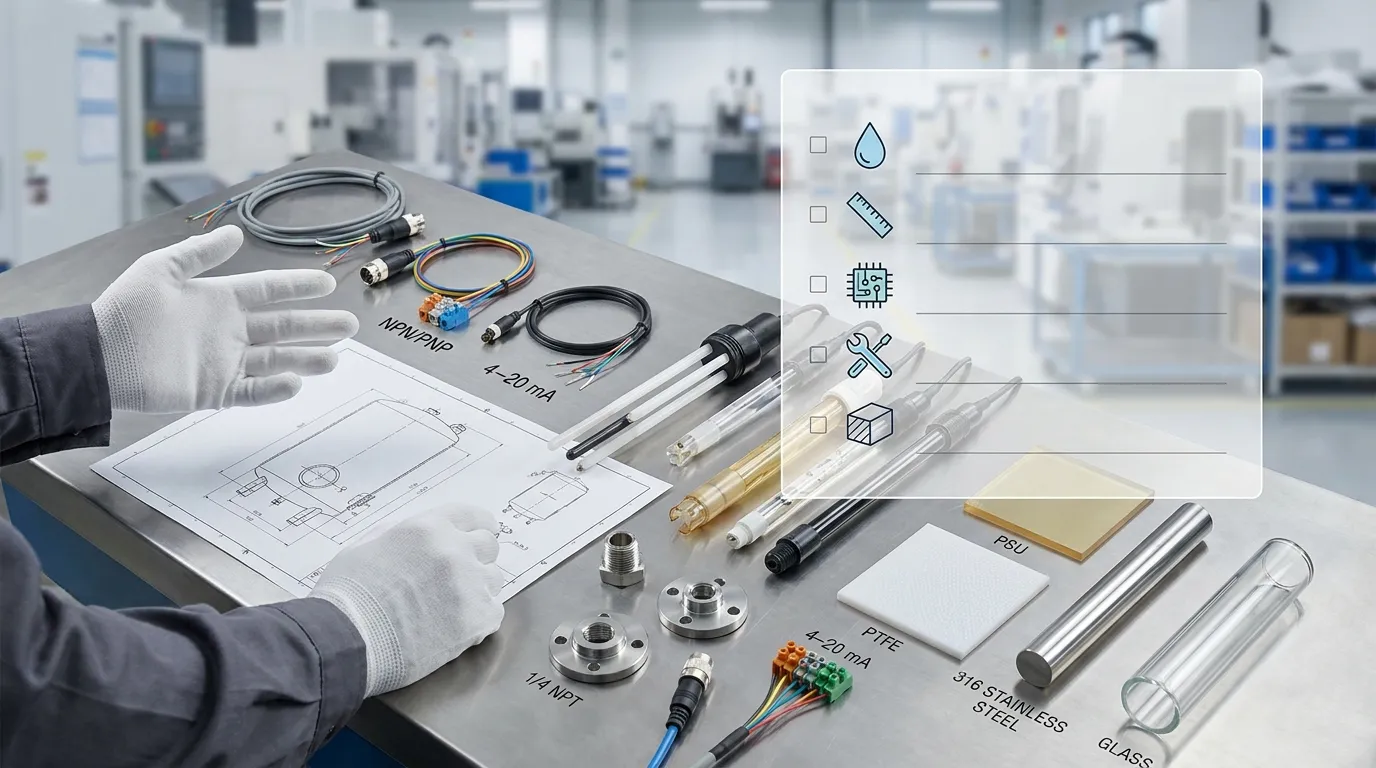
Sula n-iarrann tú luachan, na sonraí seo a leanas a ullmhú:
- Feidhm leibhéil: Aláram Pointe, Tásc ilphointe, nó aschur leanúnach
- Líníocht umar: airde, Tiús Balla, Suiteáil uillinn, agus spás gléasta atá ar fáil
- Crios tomhais: raon iomlán nó an rannóg rialaithe gníomhach amháin
- Sonraí leachtacha: uisce, ola, breosla, ceimiceach, Riosca cúr, boilgeoga, slaodacht, sciath, agus trédhearcacht
- Ábhar fliuch: PSU, PTFE, 316 cruach dhosmálta, gloine, nó ábhar eile atá bunaithe ar theagmháil cheimiceach
- Stíl gléasta: Comhlacht snáithithe, gléasta painéil, gléas taobh, An Sliabh Barr, 1/4 NPT, Flange, nó tithíocht saincheaptha
- Riachtanas aschuir: NPN, PNP, 4-20 mA, voltas, cuisle, RS485, nó aschur digiteach saincheaptha
- Sonraí leictreacha: voltas soláthair, fad cábla, cónascaire, dathanna sreinge, agus ionchur an rialaitheora
- Timpeallacht oibriúcháin: Modh glantacháin, tonnchrith, comhdhlúthú, splancscáileán, agus coinníollacha teochta
- Céim an tionscadail: Fréamhshamhail, athsholáthar, dearadh OEM nua, nó foinsiú táirgeachta
5-Próiseas Seirbhíse Saincheaptha Céim
- Athbhreithniú fiosrúcháin
Comhroinn líníochtaí, Sonraí leachtacha, raon spriocleibhéil, Riachtanais aschuir, agus modh suiteála. - Sonraíocht agus saincheaptha
Deimhníonn ár bhfoireann innealtóireachta struchtúr braite, Ábhar fliuch, Gléasta, cábla, cónascaire, agus cineál comhartha. - Ullmhúchán samplach
Is féidir sampla a ullmhú le haghaidh oiriúnach, sreangú, agus tástáil leachtach roimh olltáirgeadh. - Táirgeadh agus QC
Seiceálann an mhonarcha freagra optúil, sreangú, Cáilíocht Tionóil, agus comhsheasmhacht bunaithe ar an sampla formheasta. - Tacaíocht loingseoireachta
Tacaímid le ceannaitheoirí onnmhairithe sna Stáit Aontaithe, TÁIMID, An India, agus margaí eile a bhfuil comhordú pacála agus loingseoireachta acu.
Cén fáth a roghnaigh HojellyTek
Is monaróir braiteoir leibhéal optúil agus leachtach Shenzhen é HojellyTek le R intí&D, Taithí braite fótaileictreach, agus tacaíocht saincheaptha OEM / ODM. In ionad iallach a chur ar gach ceannaitheoir isteach i lasc pointe caighdeánach, Cabhraímid le hathbhreithniú a dhéanamh ar cibé an bhfuil braiteoir pointe ag teastáil ó do tháirge, eagar ilphointe, nó dearadh comhartha leanúnach.
Is féidir le ceannaitheoirí athbhreithniú a dhéanamh freisin ar ár táirge braiteoir leibhéal optúil Leathanach sula seoltar líníochtaí nó sonraí iarratais.
Ceisteanna CCanna
An bhfuil braiteoir leibhéal leanúnach optúil mar an gcéanna le lasc pointe optúil?
Ní hea. Braitheann lasc pointe optúil leacht ag suíomh seasta amháin. Tugann braiteoir leibhéil leanúnach optúil nó dearadh ilphointe aiseolas leibhéal thar raon nó roinnt criosanna airde.
An féidir le braiteadh leibhéal optúil aschur 4-20 mA a sholáthar?
Tá, 4-Is féidir 20 mA a shonrú do thionscadail a dteastaíonn aiseolas ar leibhéal athraitheach uathu. An raon braite, Scálú comhartha, sreangú, agus ba chóir ionchur an rialaitheora a dhearbhú le linn RFQ.
Cathain ba chóir dom eagar optúil ilphointe a úsáid?
Bain úsáid as eagar ilphointe nuair a theastaíonn roinnt céimeanna leibhéal seasta uait, mar shampla íseal, Meánach, agus ard, ach ní theastaíonn comhartha tarchuradóra leanúnach go hiomlán réidh uathu.
Cén t-ábhar fliuch ba chóir dom a roghnú?
Tá PSU coitianta do go leor úsáidí uiscebhunaithe. PTFE, 316 cruach dhosmálta, nó d'fhéadfaí gloine a mheas le haghaidh ceimiceán, olaí, breoslaí, ceanglais arda glaineachta, nó teagmháil leachtach níos déine.
Cad is féidir a bheith ina chúis le fadhbanna braite leibhéal optúil?
I measc na rioscaí coitianta tá leideanna prism salach, leacht sciath, cúr, boilgeoga, comhdhlúthú, drochshuíomh gléasta, ábhar neamh-chomhoiriúnach, Sreangú mícheart, nó lasc pointe a roghnú nuair a bhíonn aiseolas leanúnach ag teastáil ón bpróiseas.
Conas is féidir liom luachan braiteoir leibhéal optúil saincheaptha a iarraidh?
Seol do líníocht umar, cineál leachtach, Raon tomhais, comhartha aschuir, Modh gléasta, voltas, Riachtanas cábla, agus an cur i bhfeidhm a bhfuiltear ag súil leis. Is féidir leat luachan a iarraidh trí WhatsApp nó ríomhphost.
Iarratas ar luachan
Teastaíonn aiseolas leibhéal leanúnach uathu seachas comhartha simplí ar / as? Seol do líníocht, Sonraí leachtacha, Aschur riachtanach, agus plean suiteála chuig HojellyTek. Is féidir lenár bhfoireann cabhrú leat roghnú idir lasc optúil pointe, eagar optúil ilphointe, nó réiteach braite leibhéal optúil leanúnach do do thionscadal OEM nó tionsclaíoch.
