
Braiteoir Leibhéal Comhéadan Optúil (Ola-Uisce)
Cuidíonn braiteoir leibhéal comhéadain optúil leis an teorainn idir ola agus uisce a bhrath nuair a scarann dhá leacht do-mheasctha taobh istigh d'umar, deighilteoir, sump, nó soitheach próisis. Do cheannaitheoirí, Is é an dúshlán ná "leacht láithreach" nó "leacht as láthair" a bhrath; tá sé ag aimsiú an phointe comhéadain ina n-athraíonn an coinníoll innéacs athraonta timpeall an phriosma optúil ó chéim leachtach amháin go céim eile.
Déanann HojellyTek réitigh braite optúla fótaileictreach i Shenzhen do thionscadail OEM / ODM, Tógálaithe Trealamh Tionsclaíoch, soláthraithe monatóireachta umar, agus comhtháthóirí córais. Cabhraímid le ceannaitheoirí braiteoirí comhéadan ola-uisce a chumrú le dearadh priosma oiriúnach, Ábhair fhliucha, Gléasta, comhartha aschuir, agus roghanna cábla / cónascaire.
Cumas Braite Comhéadan Optúil
Le haghaidh feidhmchlár ola-uisce, Ní mór an braiteoir a roghnú timpeall ar riocht na meán fíor, ní hamháin méid an umar. Tá sé níos éasca teorainn shoiléir ola-uisce a bhrath ná sump salach le sloda, cúr, Solaid ar fionraí, nó ciseal eibleachta. Úsáidtear an braiteoir leibhéal comhéadain optúil de ghnáth nuair a theastaíonn pointe lasctha nó athrú comhartha ón gcóras nuair a bhíonn an priosma nochtaithe do chéim leachtach dhifriúil.
I measc na gcumas tionscadail tipiciúla tá:
- Brath teorainneacha ola-uisce i deighilteoirí, umair bhailithe, sumpaí, agus trealamh próisis dlúth
- Braiteadh priosma fótaileictreach ag baint úsáide as IR LED, Fóta-trasraitheoir, agus freagairt athraonadh optúil
- Dearadh lasc comhéadan pointe-leibhéal saincheaptha do threalamh OEM
- Athbhreithniú cumraíochta leanúnach nó ilphointe roghnach nuair a ghluaiseann suíomh an chomhéadain trasna raon níos leithne
- Roghanna aschuir ar nós NPN, PNP, comhartha atá comhoiriúnach le sealaíocht, Aschur digiteach saincheaptha, nó 4–20 mA nuair a éilíonn dearadh an chórais é
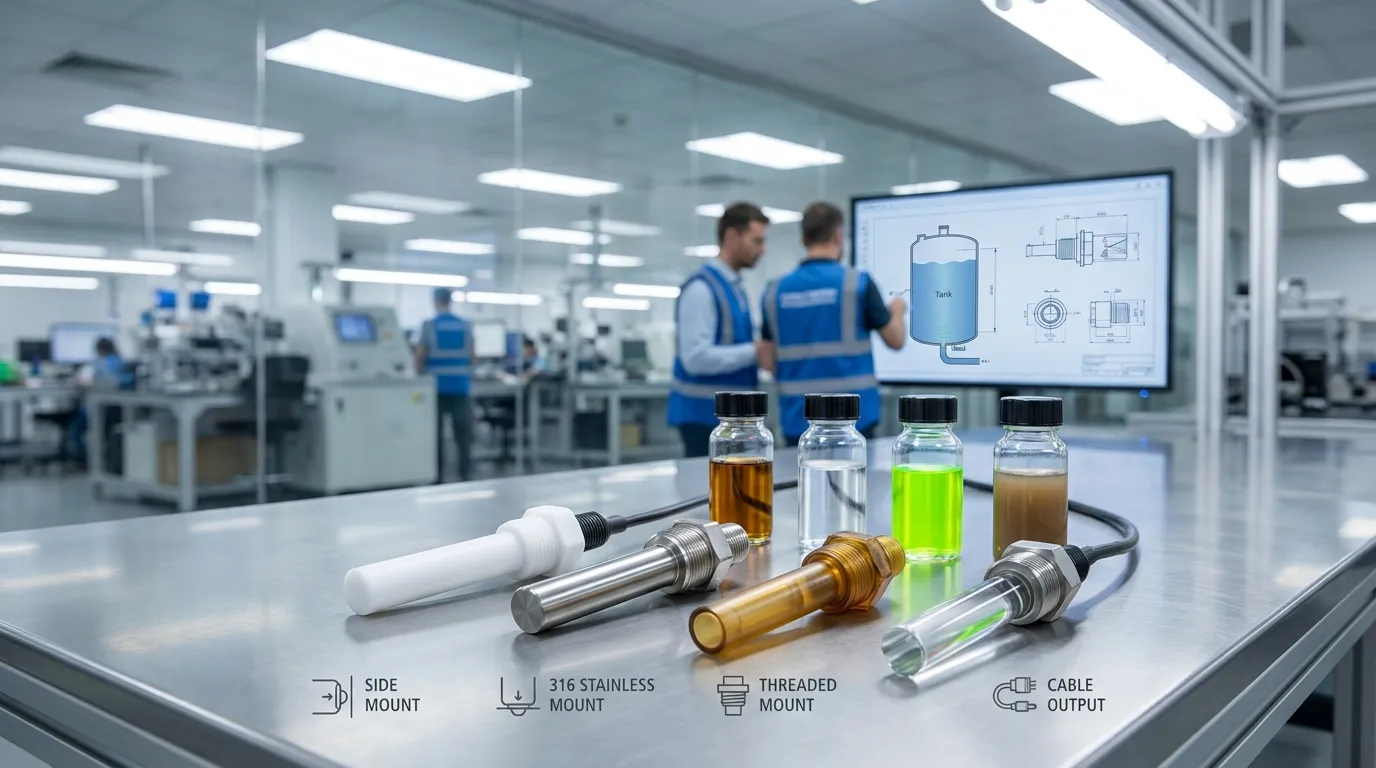
- Roghnú ábhar fliuch lena n-áirítear PSU, PTFE, 316 cruach dhosmálta, priosma gloine, agus roghanna séala / cábla a bhaineann go sonrach le feidhmchlár
- Snáithithe, painéal, taobhbhalla, bun, nó formáidí saincheaptha atá suite ar umar ag brath ar an suiteáil
Le haghaidh míniú níos leithne ar phrionsabail chaighdeánacha braite optúla, féach ar ár Braiteoir Leibhéal Optúil treoir. Díríonn an leathanach seo go sonrach ar roghnú seirbhíse comhéadan ola-uisce dhá leacht.
Teorainn Ola-Uisce a bhrath trí athrú innéacs athraonta
I go leor deighilteoirí agus sumps, Cruthaíonn ola agus uisce dhá shraith toisc nach meascann siad go cothrom. Is í fadhb an cheannaitheora ná an teorainn idir na sraitheanna sin a aimsiú ionas gur féidir leis an gcóras uisce a dhraenáil, Trigger Aláram, stop caidéal, trealamh iartheachtach a chosaint, nó feidhmíocht scaradh a dhearbhú.
Úsáideann braiteoir comhéadan optúil fótaileictreach foinse solais agus glacadóir taobh istigh den chorp braiteora. Is gnách go mbíonn priosma sa leid braite. Nuair a bhíonn an priosma nochtaithe don aer, ola, uisce, nó leacht eile, Athraíonn an cosán solais toisc go bhfuil riocht optúil difriúil ag gach meán máguaird. Taobh istigh den braiteoir, astaíonn stiúir IR solas i dtreo an phriosma, agus faigheann fóta-trasraitheoir an solas ar ais nó athraonadh. Déanann an leictreonaic an freagra optúil sin a thiontú ina chomhartha aschuir.
Le haghaidh seirbhíse ola-uisce, Is é an pointe tábhachtach ná nach dtáirgeann ola agus uisce an freagra priosma céanna i gcónaí. Is féidir an braiteoir a chumrú ionas go n-athraíonn an t-aschur nuair a ghluaiseann an priosma ó chéim amháin go dtí an ceann eile. Sin é an fáth go moltar go láidir tástáil a dhéanamh leis an bhfíor-ola agus fíor-uisce. Díosail, bealaidh, ola hiodrálach, dramhuisce, cuisnithe, uisce eiblithe, agus is féidir le ceimiceáin phróisis iompar go difriúil.
Conas a Freagraíonn an Priosma d'Ola, Uisce, agus Aeir
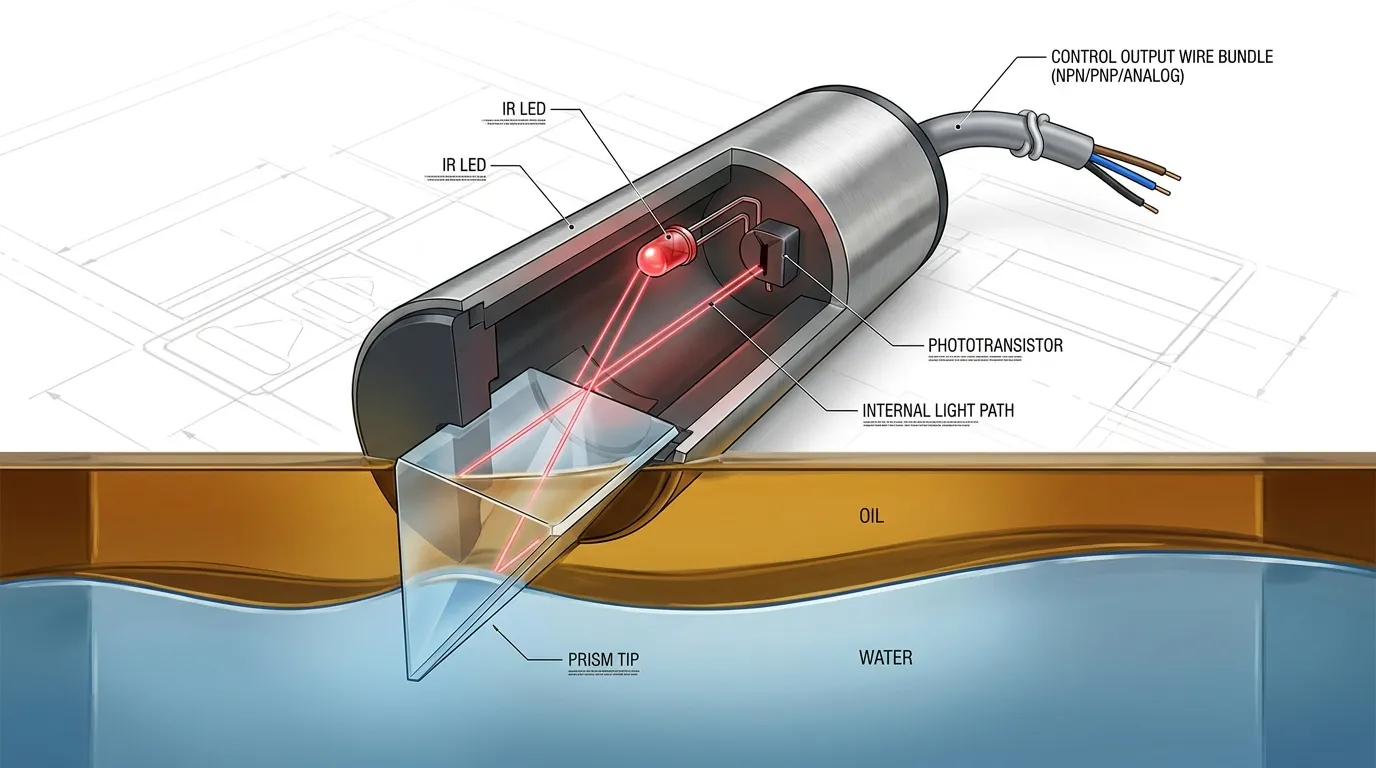
I lasc optúil caighdeánach tirim / fliuch, Athraíonn an freagra priosma nuair a chlúdaíonn leacht an barr braite. I mbrath comhéadan ola-uisce, tá an ceanglas níos sainiúla: B'fhéidir go mbeidh ar an braiteoir a aithint an bhfuil an priosma sa chiseal ola, ciseal uisce, nó uaireanta san aer os cionn an leachta.
Braitheann an t-iompar praiticiúil ar:
- An difríocht innéacs athraonta idir an dá leacht
- Soiléireacht an leachta timpeall an phriosma
- Cibé an gcótaíonn ola an priosma tar éis nochta
- Cé acu an bhfuil solaid ar fionraí in uisce, glantach, cuisnithe, nó breiseáin cheimiceacha
- Cibé an bhfuil an ciseal comhéadain géar nó eiblithe
- Treoshuíomh braiteora agus doimhneacht suiteála
Le haghaidh deighilteoir glan, Is féidir braiteoir taobh-suite a shuíomh ag airde an sprioc-chomhéadan. Nuair a ardaíonn uisce nó nuair a thiteann ola go dtí an leibhéal sin, Athraíonn an freagra optúil agus faigheann an rialtóir comhartha lasctha. Le haghaidh sump, Féadfar an braiteoir a úsáid chun láithreacht hidreacarbóin a bhrath, carnadh uisce, nó ciseal ar leith ag brath ar dhearadh an umair agus ar an sprioc calabrúcháin.
Má éilíonn an tionscadal rianú leibhéil thar raon seachas pointe lasctha amháin, Déan athbhreithniú ar ár Braiteoir leibhéal leanúnach optúil Roghanna.
Comhoiriúnacht Feidhmchlár agus Meáin
| Feidhmchlár | Péire Meán | Coinníoll Comhéadain | Cur Chuige Braiteoir Molta | Nótaí Ábhartha |
|---|---|---|---|---|
| Deighilteoir ola-uisce | Ciseal ola / ciseal uisce | De ghnáth teorainn níos soiléire, D'fhéadfadh eibleacht éadrom a bheith san áireamh | Braiteoir comhéadan pointe taobh-suite ag airde teorann sprioc | 316 cruach dhosmálta nó comhlacht PTFE ag brath ar nochtadh ceimiceach |
| Suimín tionsclaíoch | Hidreacarbóin / uisce / aer | Leacht salach, sloda, riosca sciath | Lasc optúil dlúth le suíomh glantacháin inrochtana | Deimhnigh seaicéad cábla, séala, agus friotaíocht priosma in aghaidh breosla nó fuíolluisce |
| Umar ola dramhaíola | Ola dramhaíola / ciseal bun uisce | Ola dhorcha, dríodar, slaodacht athraitheach | Suíomh priosma saincheaptha nó dearadh barr cosanta | D'fhéadfadh PTFE nó comhlacht dhosmálta a bheith níos fearr le haghaidh meáin chrua |
| Umar aisghabhála cuisnithe | Scannán ola / Cuisnithe uisce-bhunaithe | Ciseal ola tanaí, Breiseáin, Dromchlaghníomhaithe | Tástáil iarratais molta roimh tháirgeadh | Comhoiriúnacht a dhearbhú le ceimic cuisnithe agus sreabhán glantacháin |
| Córas tacaíochta stórála breosla | Breosla / carnadh uisce | Ciseal uisce faoi bhun breosla | Braite comhéadan bun nó taobh íseal | Ní mór séala agus ábhar cábla atá comhoiriúnach le breosla a roghnú |
| Skid próiseas OEM | Ola phróisis / uisce a shruthlú | Deighilt rialaithe, próiseas in-athdhéanta | Braiteoir comhéadan optúil saincheaptha snáithithe nó painéal-suite | Ba chóir go mbeadh aschur agus cónascaire ag teacht le dearadh PLC nó bord rialaithe |
Deighilteoir, Sump, agus Úsáidí Comhtháthaithe Trealaimh
Is minic a bhíonn comhartha iontaofa ag teastáil ó dheighilteoirí ola-uisce nuair a shroicheann an teorainn pointe draein, leibhéal tosaigh caidéil, nó leibhéal aláraim. Is féidir le braiteoir comhéadan optúil cabhrú le caidéalú an chéim mhícheart a sheachaint, Seiceáil láimhe a laghdú, agus tacú le rialú urscaoilte uathoibrithe.
I sumps coimeádta, Is féidir an braiteoir a úsáid le haghaidh idirdhealú hidreacarbóin/uisce nó le haghaidh braite leacht neamhghnácha. Ba chóir go gceadódh an tsuiteáil glanadh toisc go mbíonn salachar i leachtanna sump go minic, Bithscannán, Iarmhar ola, nó dríodar. Má chótaíonn ola an priosma, Féadfaidh an braiteoir leanúint ar aghaidh ag féachaint ar an riocht brataithe tar éis don chomhéadan iarbhír bogadh, mar sin tá rochtain glantacháin agus bailíochtú tástála tábhachtach.
Le haghaidh trealamh OEM, Ní braiteoir catalóige amháin é an riachtanas is coitianta. De ghnáth teastaíonn fad an choirp braiteora ó cheannaitheoirí, snáthaid, Scoir cábla, loighic aschuir, cónascaire, agus tacar ábhar atá curtha in oiriúint do dhearadh an trealaimh. Tacaíonn HojellyTek le tionscadail braite optúla OEM / ODM do chustaiméirí onnmhairithe sna Stáit Aontaithe, TÁIMID, An India, agus margaí eile.
Roghanna Aschuir agus Comhoiriúnacht Rialaithe
Ba chóir go mbeadh an t-aschur ag teacht le córas rialaithe an cheannaitheora ón tús. Le haghaidh rialú simplí aláraim nó caidéil, Is minic a iarrtar aschuir lasctha NPN nó PNP. Le haghaidh córais PLC, Ba chóir don cheannaitheoir cineál ionchuir a dhearbhú, voltas soláthair, loighic foinsiú / tóin poill, fad cábla, agus cibé an bhfuil gá le loighic oscailte de ghnáth nó loighic dúnta de ghnáth.
Maidir le córais faireacháin a dteastaíonn aiseolas comhréireach nó comhtháthú le hionchur analógach uathu, 4-Is féidir athbhreithniú a dhéanamh ar -20 mA nuair a thacaíonn an chumraíocht braiteora leis an gcás úsáide sin. Do thionscadail monatóireachta umar IoT, Is féidir geata gan sreang nó comhtháthú córais a bhaineann le Tuya / Smart Life a phlé nuair a bhaineann sé le dearadh iomlán an táirge, Ach braitheann an braite comhéadain lárnach fós ar an riocht braite optúil ag an bpriosma.
Le haghaidh feidhmchlár lasctha pointe, an Braiteoir leibhéal pointe leictrea-optaice Tá leathanach úsáideach nuair a dhéantar comparáid idir formáidí caighdeánacha leibhéal pointe.
Seicliosta Roghnúcháin do Thionscadail Comhéadain Ola-Uisce
Sula n-ordaítear, na sonraí seo a dhearbhú:
- Sainaithin an dá leacht: cineál ola, Cineál Uisce, Breiseáin, Dromchlaghníomhaithe, breosla, cuisnithe, dramhuisce, nó ábhar ceimiceach.
- Deimhnigh an bhfuil an teorainn glan, scamallach, cúr, salach, nó eiblithe.
- Sainmhínigh an fheidhm riachtanach: Braitheadh ola, braitheadh uisce, comhéadan bainte amach, Aláram ard / íseal, rialú caidéil, nó rialú draein deighilteora.
- Roghnaigh braite pointe nó rianú leanúnach ag brath ar cibé an gcaithfear monatóireacht a dhéanamh ar leibhéal amháin nó ar raon comhéadain ag gluaiseacht.
- Deimhnigh ábhair fhliucha: PSU, PTFE, 316 cruach dhosmálta, priosma gloine, rónta, seaicéad cábla, agus cónascaire.
- Sonraigh gléasadh: balla taobh, bun, probe ingearach, gléas snáithithe, Mount flange, gléasta painéil, nó tithíocht saincheaptha OEM.
- Deimhnigh aschur: NPN, PNP, comhartha atá comhoiriúnach le sealaíocht, Aschur digiteach saincheaptha, nó 4-20 mA.
- Comhroinn líníocht umar, Doimhneacht suiteála, teocht leachtach, coinníoll brú, fad cábla, agus cineál ionchuir an rialaitheora.
- Plean le haghaidh glanadh priosma má tá iarmhar ola, sloda, scála, nó d'fhéadfadh solaid a bhailiú timpeall an rinn braite.
- Iarr tástáil shamplach nuair a bhíonn an chodarsnacht innéacs athraonta nó iompar sciath éiginnte.
Athbhreithniú ar Riachtanais agus ar Shonraíochtaí
Chun comhéadan a bhrath, Ní uimhir chatalóige amháin é an "spec" is tábhachtaí. Is é an meaitseáil idir freagra optúil, Iompar na Meán, agus suíomh suiteála. Le linn RFQ, Déanann ár bhfoireann athbhreithniú ar an sprioc braite, péire leachtach, Modh gléasta, Ábhar fliuch, loighic aschuir, agus ceanglais an chórais rialaithe.
Is féidir leis an mhonarcha athbhreithniú a dhéanamh ar chruth coirp saincheaptha, Nochtadh priosma, cineál snáithe, cábla / cónascaire, agus cumraíocht comhartha do threalamh OEM. Rátálacha leictreacha sonracha, raon teochta, coinníoll brú, agus ba cheart comhoiriúnacht ábhair a dhearbhú i gcoinne an iariarratais fhíor sula gceadaítear samplach.
Braiteoir Comhéadan Optúil vs Roghanna Leibhéal Eile
| Rogha | Is fearr le haghaidh | Teorainn | Cathain a roghnú |
|---|---|---|---|
| Braiteoir pointe comhéadan optúil | Spriocleibhéal teorann ola-uisce a bhrath | Teastaíonn bailíochtú meán uaidh má tá eibleacht nó sciath ann | Aláraim deighilteora, Brath Sump, Rialú pointe OEM |
| Lasc leachtach optúil caighdeánach | Brath leachtach i láthair/as láthair | Ní cumraithe i gcónaí le haghaidh idirdhealú dhá leacht | Braite umar simplí ardleibhéil / íseal |
| Braiteoir leibhéal optúil leanúnach | Leibhéal rianaithe thar raon | Níos mó oibre cumraíochta ná lasc pointe amháin | Comhéadan gluaiseachta nó monatóireacht ilphointe |
| Lasc snámhphointe | Rialú bunúsach leibhéal leachtach | Páirteanna ag gluaiseacht, spleáchas dlúis, riosca greamaithe meicniúil | Iarratais ar chostas íseal le leachtanna glana |
| Braiteoir seoltachta | Brath uisce | Is gnách go mbíonn ola neamhsheoltaí, Is féidir le truailliú tionchar a imirt ar fhreagairt | Braite láithreacht uisce nuair a bhíonn seoltacht iontaofa |
Brazzers físeán catagóir Inexperienced, Déagóirí, Seapáinis, Aziatochki, Téalainnis, Físeán HD ar a dtugtar Téalainnis Cailín Kim watch gan chlárú sa HD, féach ar ár Athraigh leibhéal leachtach fótaileictreach.
5-Próiseas Tionscadail Céim
- Fiosrúchán
Seol an péire leachtach, Grianghraf an iarratais, líníocht umar, Suíomh gléasta, agus riachtanas ionchuir an chórais rialaithe trí WhatsApp nó ríomhphost. - Athbhreithniú sonraíochta agus saincheaptha
Seiceálann muid sprioc freagartha priosma, Roghnú ábhair, Dearadh snáithe nó tithíochta, Cineál Aschuir, cábla, cónascaire, agus srianta suiteála. - Dearbhú samplach
Is féidir sampla a ullmhú le haghaidh tástála fíor-mheán, go háirithe nuair a bhíonn cineál ola, Ceimic Uisce, nó iompar eibleachta éiginnte. - Táirgeadh agus QC
Tar éis ceadú samplach, leanann an táirgeadh an tsonraíocht dheimhnithe. Freagra optúil, sreangú, tithíocht, agus déantar iompar aschuir a sheiceáil de réir an dearaidh chomhaontaithe. - Loingseoireacht agus tacaíocht
Tá braiteoirí pacáilte le haghaidh onnmhairithe, agus tacaíonn ár bhfoireann le ceisteanna suiteála, dearbhú sreangaithe, agus coigeartuithe OEM sa todhchaí.
Cén fáth a roghnaigh HojellyTek
Is monaróir agus onnmhaireoir Shenzhen é HojellyTek atá dírithe ar bhrath optúil fótaileictreach d'iarratais ar leibhéal leachtach. Le R inmheánach&Tacaíocht D agus OEM / ODM, Cabhraímid le déantúsóirí trealaimh braiteoirí a chumrú timpeall ar riachtanais suiteála fíor seachas cuid chatalóige aon-mhéid a oireann do chách a chur i bhfeidhm.
Oibríonn ceannaitheoirí linn le haghaidh dearaí priosma optúla saincheaptha, Roghnú ábhair, Meaitseáil comhartha, struchtúir braiteoir dlúth, agus tacaíocht réidh le honnmhairiú do mhargaí tionsclaíocha agus OEM.
Ceisteanna CCanna
An féidir le braiteoir leibhéal comhéadain optúil idirdhealú a dhéanamh idir ola agus uisce?
Tá, nuair a chruthaíonn an ola agus an t-uisce difríocht inúsáidte i bhfreagairt optúil ag an bpriosma. Ba chóir an dearadh deiridh a thástáil leis na fíor-leachtanna mar gheall ar bhreiseáin, éilliú, eibleacht, agus is féidir le sciath tionchar a imirt ar bhrath.
An bhfuil an braiteoir seo oiriúnach do dheighilteoirí ola-uisce?
Tá. Is féidir braiteoir comhéadan optúil taobh-suite nó saincheaptha a úsáid chun a bhrath nuair a shroicheann an teorainn ola-uisce spriocleibhéal i deighilteoir, córas draein, nó umar próisis.
Cad a tharlaíonn má tá cúr ann, sloda, nó ciseal eibleachta?
Cúr, sloda, agus is féidir le eibleacht iontaofacht braite a laghdú toisc go mb'fhéidir nach bhfeicfidh an priosma athrú céim ghlan. An pointe suiteála, Rochtain a ghlanadh, agus ba chóir tástáil samplach a athbhreithniú roimh an táirgeadh.
Cé na hábhair atá ar fáil do na codanna fliucha?
I measc na roghanna coitianta tá PSU, PTFE, 316 cruach dhosmálta, agus dearaí priosma gloine. Braitheann an rogha ceart ar an gcineál ola, Ceimic Uisce, teocht, Modh glantacháin, agus nochtadh fadtéarmach.
An féidir liom NPN a fháil, PNP, nó aschur 4-20 mA?
Tá, Is féidir cumraíocht aschuir a athbhreithniú le linn RFQ. Tá NPN agus PNP coitianta chun feidhmchláir a athrú, cé go bhféadfaí 4-20 mA a mheas nuair a éilíonn an córas comhtháthú stíl analógach.
An dteastaíonn braiteoir pointe nó braiteoir leanúnach uaim chun comhéadan ola-uisce a bhrath?
Bain úsáid as braiteoir pointe nuair nach gá duit ach spriocleibhéal teorann amháin a bhrath. Bain úsáid as réiteach leanúnach nó ilphointe nuair a ghluaiseann an comhéadan thar raon níos leithne agus go dteastaíonn monatóireacht leanúnach ar shuíomh.
Iarratas ar luachan
Seol do shonraí meán ola-uisce, líníocht umar, Suíomh gléasta, Aschur Roghnaithe, agus riachtanais ábhartha chuig HojellyTek trí WhatsApp nó ríomhphost. Déanfaidh ár bhfoireann athbhreithniú ar an iarratas agus molfaidh siad cumraíocht braiteoir leibhéal comhéadan optúil oiriúnach le haghaidh samplála, Comhtháthú OEM, nó soláthar táirgeachta.
