
Doiciméadú Braiteoir Leibhéal Uisce Infridhearg Optúil
Cuireann an doiciméadú seo do mhodúil braiteoir leibhéal leachtach uisce infridhearg optúla an pinout, Teorainneacha leictreacha, loighic aschuir, Toisí, nótaí sreangaithe, agus pointí fabhtcheartaithe in aon áit amháin d'úsáideoirí céaduaire. In ionad an braiteoir a chóireáil cosúil le comhpháirt scaoilte páirteanna-bhosca bruscair, míníonn an treoir seo conas a oibríonn an leid braite optúil IR, conas VCC / GND / OUT a nascadh go sábháilte, agus cad atá le seiceáil sula n-úsáidtear an modúl in umar, Gléas, nó fréamhshamhail.
Déanann HojellyTek braiteoirí leibhéal leachtach optúla fótaileictreach i Shenzhen do thionscadail OEM / ODM, trealamh tionsclaíoch, fearais chliste, córais uisce, agus dearaí monatóireachta umar saincheaptha. Bain úsáid as an leathanach seo mar phointe tosaigh praiticiúil, ansin deimhnigh an líníocht chruinn, Cineál Aschuir, agus ábhar sula n-ordaítear é.
Pinout Tapa agus Tábla Spec
Úsáideann na modúil braiteoir uisce / leibhéal leachtach optúla IR is coitianta trí nasc bunúsacha: cumhacht, talamh, agus aschur digiteach. D'fhéadfadh roinnt leaganacha tionsclaíocha NPN a úsáid, PNP, analógach, nó aschuir lúb reatha, Mar sin, an leagan braiteoir a mheaitseáil i gcónaí le d'ionchur rialaitheora.
| Mír | Lipéad Coiteann | Cad a chiallaíonn sé | Nóta Úsáideora |
|---|---|---|---|
| Cumhacht dhearfach | VCC | Ionchur soláthair braiteora | Deimhnigh an voltas soláthair rátáilte sula nascann tú cumhacht. Tá go leor modúil bheaga deartha le haghaidh boird rialaithe ísealvoltais. |
| Talamh | GND | 0Tagairt V | Ní mór talamh a roinnt leis an micrea-rialaitheoir nó leis an gciorcad rialaithe. |
| Aschur comhartha | AMACH / DE | Aschur digiteach fliuch / tirim | Ceangail le hionchur rialaitheora, Bioráin dhigiteach Arduino, Ionchur PLC, nó ciorcad comhéadain de réir an chineáil aschuir. |
| Loighic aschuir | ARD / ÍSEAL | Athruithe nuair a bhíonn barr priosma tirim nó fliuch | Is féidir le loighic a bheith éagsúil de réir dearadh an mhodúil, Mar sin, tástáil stáit tirim agus fliuch roimh shuiteáil. |
| Modh braite | Priosma optúil IR | Faoi stiúir Infridhearg + Braitheann glacadóir athrú machnaimh | Níl aon snámhphointe ag teastáil. |
| Calabrú | De ghnáth níl aon cheann acu le haghaidh úsáide digiteach ar leibhéal pointe | Tá athrú fliuch / tirim bunaithe ar athraonadh optúil | Déan tástáil bhinse; ná glac leis go n-iompraíonn gach leacht mar an gcéanna. |
| Gléasta | Snáithe, cnó, gasket, Flange, nó comhlacht saincheaptha | Seasann an braiteoir ag leibhéal pointe amháin | Deimhnigh tiús balla umar, snáthaid, Modh séalaithe, agus treoshuíomh probe. |
| Toisí | Fad an choirp, Méid na Snáithe, Fad leid braite, fad cábla / sreang | Cinneann sé an n-oireann sé don umar nó don phainéal | Bain úsáid as an líníocht mhúnla roimh dhruileáil, múnlú, nó meaisínithe. |
| Ábhar fliuch | PSU, PTFE, 316 cruach dhosmálta, gloine, nó comhlacht saincheaptha | Ábhar a théann i dteagmháil leis an leacht | Roghnaigh bunaithe ar uisce, ola, ceimiceáin, teocht, brú, agus próiseas glantacháin. |
Le haghaidh forbhreathnú níos leithne ar an táirge, féach HojellyTek's Braiteoir Leibhéal Optúil Leathanach.
Conas a Oibríonn an Braiteoir Leibhéal Optúil IR
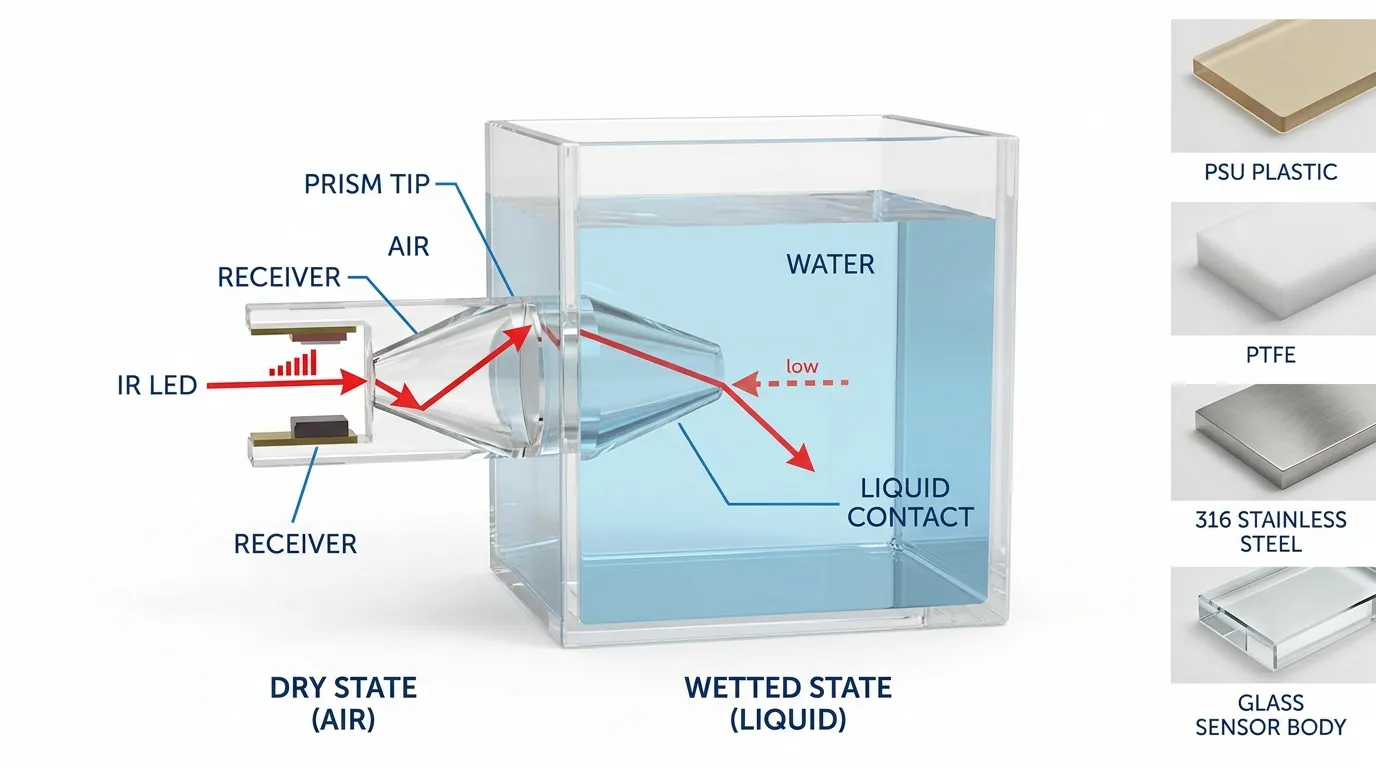
Úsáideann braiteoir leibhéal leachtach infridhearg optúil IR LED, glacadóir fóta-dé-óid nó fóta-dé-óid, agus barr priosma trédhearcach. Nuair a bhíonn an priosma san aer, Frithchaitear solas infridhearg go hinmheánach taobh istigh den rinn agus filleann sé go láidir ar an nglacadóir. Nuair a chlúdaíonn leacht an priosma, Athraíonn an coinníoll athraonta, mar sin filleann níos lú solais ar an nglacadóir. Athraíonn an ciorcad an t-athrú sin ina aschur leictreach.
Sin é an fáth go bhfuil braiteoirí leibhéil optúla coitianta le haghaidh umair uisce dlúth, taiscumair cuisnithe, Brath comhdhlúthaithe, córais urghnaimh, meaisíní caife, humidifiers, trealamh leighis, agus feistí uathoibrithe beaga. Níl aon lámh snámhphointe ann, Lasc giolcach, maighnéad, nó hinge meicniúil le subh. Braitheann an braiteoir leibhéal pointe seasta ina bhfuil an barr priosma suiteáilte.
Cén dóigh faoin spéir a ...?, Ní "brathadóir uisce draíochta" é an braiteoir. Caithfear é a mheaitseáil leis an leacht, umar, sreangú, Suíomh gléasta, agus ionchur an rialaitheora. Dromchlaí an-fhrithchaiteacha, cúr, boilgeoga, sciath ar an bpriosma, éilliú trom, agus is féidir le sreangú mícheart iompar mearbhall a chur faoi deara.
Pinout: VCC, GND agus AMACH
D'úsáideoirí céaduaire, Tá an mionsonra is tábhachtaí simplí: ná ceangail an braiteoir go dtí go bhfuil a fhios agat cén seoltóir VCC é, atá GND, agus atá AMACH.
VCC cumhachtaíonn an t-astaitheoir IR inmheánach agus an ciorcad comhartha. Caithfidh an voltas soláthair a mheaitseáil leis an leagan braiteora. Má tá an modúl deartha le haghaidh bord micrea-rialaitheora ísealvoltais, Ná ceangail go díreach é le hionchur voltais tionsclaíoch níos airde mura ndeimhníonn an bhileog sonraí an raon sin.
GND Is é an pointe tagartha don chiorcad. Nuair a úsáidtear é le Arduino, ESP32, STM32, nó bord rialaitheora eile, De ghnáth ní mór go mbeadh an talamh braiteoir agus an talamh rialaitheora coitianta.
AMACH Is é an comhartha. Ar mhodúl simplí, d'fhéadfadh sé iompar cosúil le aschur digiteach ARD / ÍSEAL. Ar leaganacha tionsclaíocha, d'fhéadfadh sé a bheith NPN, PNP, Bailitheoir Oscailte, brú-tarraingt, sealaíocht, nó analógach ag brath ar an dearadh. Ní bhíonn ionchur PLC agus ionchur Arduino sreangaithe i gcónaí ar an mbealach céanna.
Le haghaidh samplaí ceangail céim ar chéim, bain úsáid as an tiomnaithe léaráid sreangaithe treoir.
Loighic Aschuir: Tirim vs Stát Fliuch
Athraíonn an t-aschur nuair a bhíonn an priosma braite tirim nó clúdaithe le leacht. Roinnt modúil aschur ARD nuair a bhraitear leacht agus ÍSEAL nuair a bhíonn tirim. D'fhéadfadh boird comhéadain eile an loighic a inbhéartú. Sin é an fáth gurb é an chéad chéim is sábháilte ná tástáil bhinse shimplí:
- Cumhacht an braiteoir leis an soláthar ceart.
- Léigh an comhartha OUT san aer.
- Ná snámh ach an barr priosma in uisce.
- Taifead cibé an n-athraíonn OUT HIGH go LOW nó LOW go HIGH.
- Bain úsáid as an loighic sin i do chód rialaitheora nó clár dréimire PLC.
Ná dearadh do loighic aláraim deiridh sula ndeimhníonn tú an t-iompar seo. Mar shampla, Is féidir le umar uisce "aláram ísealleibhéil" agus "aláram ró-shreabhadh" na crua-earraí braiteora céanna a úsáid ach loighic os coinne sa chlár rialaithe.
Comhoiriúnacht Teorainneacha Leictreacha agus Rialaitheora
Is iad na príomhsheiceálacha leictreacha voltas soláthair, Cineál Aschuir, Luchtaigh reatha, riachtanas tarraingthe suas nó tarraingthe anuas, Comhoiriúnacht voltais ionchuir, agus cosaint i gcoinne polaraíocht droim ar ais nó botúin sreangaithe. Mura bhfuil aon cheann díobh seo soiléir, ná buille faoi thuairim.
Do thionscadail i stíl Arduino, is minic gur féidir modúl 5V a nascadh le hionchur digiteach tar éis an leibhéal comhartha agus an sreangú a dhearbhú. Le haghaidh PLC nó painéil rialaithe tionsclaíocha, Caithfidh an t-aschur braiteora an cineál ionchuir a mheaitseáil. Is gnách go bhfoinsíonn braiteoir PNP sruth chuig an ionchur, cé go mbíonn braiteoir NPN de ghnáth ag dul go tóin poill reatha. Má tá an rialtóir ag súil le cineál amháin agus soláthraíonn an braiteoir an ceann eile, B'fhéidir nach n-athróidh an t-ionchur i gceart riamh.
Do thionscadail bheaga, féach an 5Braiteoir uisce V IR acmhainn. Le haghaidh samplaí micrea-rialaitheora, déan tagairt don Treoir Arduino.
Toisí, Suíomh Gléasta agus Suiteála
Tá tábhacht le toisí toisc gur braiteoir pointe-leibhéal é seo. Ní thomhaiseann an braiteoir airde iomlán an umair. Braitheann sé an bhfuil leacht tar éis an barr priosma a bhaint amach.
Sula ndéantar an umar a ordú nó a dhruileáil, Deimhnigh:
- Trastomhas an choirp agus fad an choirp
- Cineál snáithe nó stíl gléasta
- Cnó, gasket, nó struchtúr séalaithe
- Suíomh tip probe tar éis a shuiteáil
- Tiús balla umar
- Treo cábla agus spás lúb
- Cibé an bhfuil an braiteoir suiteáilte ón taobh, Barr, nó bun
- Cibé an ailíníonn an pointe braite leis an bhfíor-aláram nó leis an leibhéal rialaithe
Botún coitianta do thosaitheoirí is ea an braiteoir a shuiteáil nuair a bhíonn splancscáileán, tonnta, nó déanann boilgeoga teagmháil leis an bpriosma sula sroicheann an leibhéal leachtach iarbhír an pointe rialaithe. Sa chás sin, Is féidir le scagadh bogearraí cabhrú, ach is gnách go mbíonn socrúchán meicniúil níos fearr níos iontaofa.
Le haghaidh trealamh saincheaptha, Is féidir le HojellyTek tacú le snáithithe, suite ar flange-suite, dlúth, agus struchtúir braiteora a bhaineann go sonrach le hábhar-shonrach bunaithe ar dhearadh an umair.
Roghanna Ábhar Fliuch
Ní rogha cosmaideach amháin é an t-ábhar a théann i dteagmháil leis an leacht. Bíonn tionchar aige ar chomhoiriúnacht cheimiceach, friotaíocht teochta, sláinteachas, oiriúnacht brú, agus iontaofacht fhadtéarmach.
PSU nó plaisteach innealtóireachta Is gnách le haghaidh braite dlúth uisce agus fearas i gcás ina bhfuil costas, méid, agus ábhar múnlaithe éasca.
PTFE is fearr le haghaidh go leor leachtanna ceimiceacha mar gheall ar a fhriotaíocht láidir creimeadh agus greamaitheacht dromchla íseal.
316 cruach dhosmálta Úsáidtear é i gcás tógála garbh, neart meicniúil, agus tá cuma thionsclaíoch tábhachtach.
Leideanna optúla gloine Is féidir a bheith úsáideach do shaotharlann áirithe, ardteocht, nó iarratais éilitheacha go ceimiceach, ag brath ar an struchtúr iomlán agus ar an modh séalaithe.
Braitheann an t-ábhar is fearr ar an leacht, Próiseas glantacháin, teocht oibre, brú, Suiteáil uillinn, agus cibé an gcaithfidh an braiteoir riachtanas tithíochta OEM a chomhlíonadh.
An bhfuil calabrú de dhíth ar an braiteoir?
Brazzers físeán catagóir Inexperienced, Déagóirí, Seapáinis, Aziatochki, Téalainnis, Físeán HD ar a dtugtar Téalainnis Cailín Kim watch gan chlárú sa HD, De ghnáth ní theastaíonn calabrú ar an mbealach a theastaíonn calabrú ó tharchuradóir leibhéal analógach. Braitheann an braiteoir staid fliuch / tirim ag barr an phriosma.
Ach ní chiallaíonn "gan calabrú" "gan tástáil." Déan tástáil ar an braiteoir i gcónaí leis an bhfíor-leacht nuair is féidir. Uisce, ola, cuisnithe, cúr, glantach, agus is féidir le leachtanna ceimiceacha iompar difriúil timpeall an phriosma. Má fhágann an leacht iarmhar ar an rinn optúil, D'fhéadfadh eatraimh ghlanacháin nó ábhar difriúil a bheith ag teastáil ón braiteoir.
Le haghaidh trealamh táirgeachta, an coinníoll tástála a shainmhíniú go soiléir: staid thirim, staid fhliuchaithe, Ionchas am freagartha, Treoshuíomh suiteála, agus loighic rialaitheora inghlactha.
Fabhtcheartú Fadhbanna Coitianta
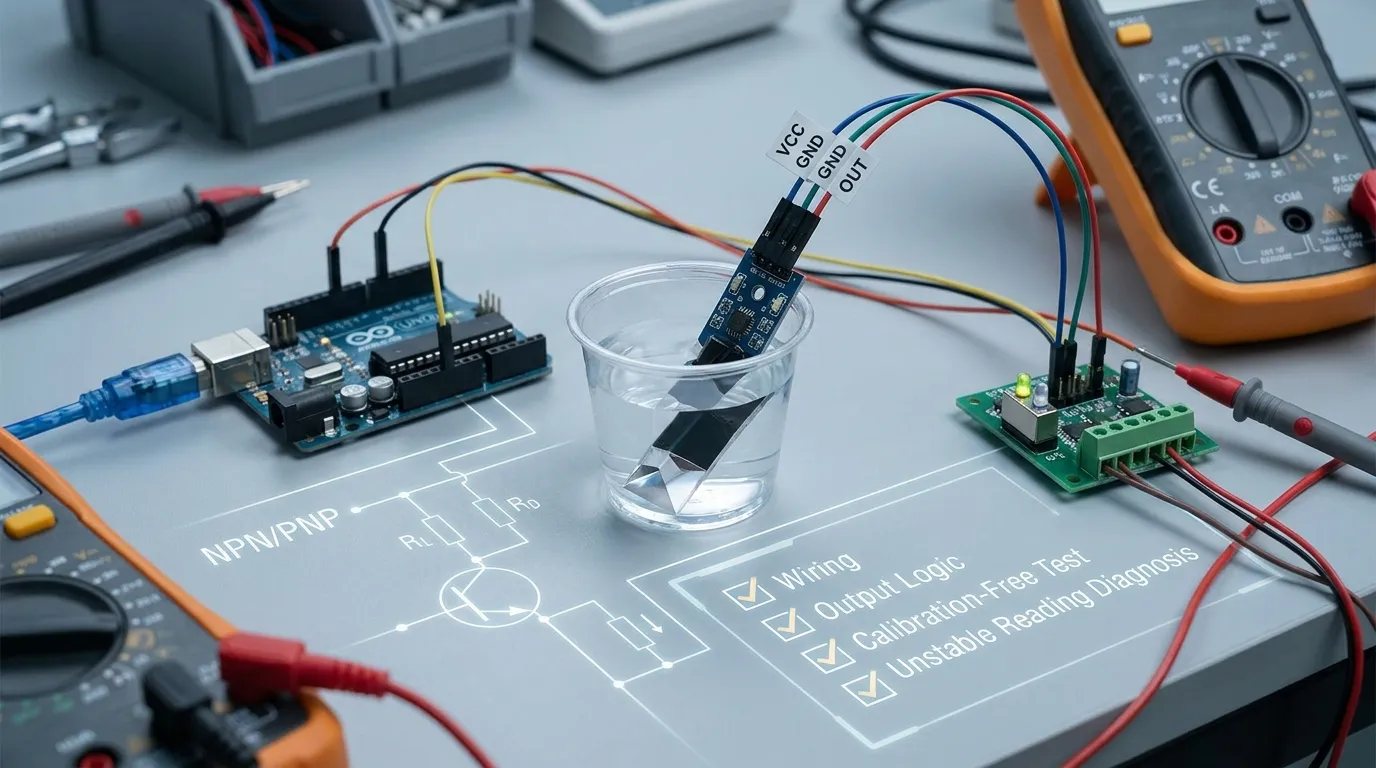
Ní athraíonn an t-aschur riamh
Seiceáil VCC agus GND ar dtús. Ansin deimhnigh an voltas soláthair, ordú sreinge, agus cibé an bhfuil OUT ceangailte leis an gcineál ionchuir ceart. Má tá aschur bailitheoir oscailte ag an braiteoir, B'fhéidir go mbeidh cosán tarraingthe suas nó tarraingthe anuas ag teastáil ón gciorcad.
Tá an braiteoir i gcónaí ARD nó i gcónaí ÍSEAL
Déan tástáil binse tirim / fliuch taobh amuigh den umar. Má athraíonn an loighic le linn na tástála binse ach ní san umar, is dócha gurb í an fhadhb ná suíomh suiteála, cúr, boilgeoga, sciath, nó iompar leachtach. Mura n-athraíonn sé riamh le linn na tástála binse, Is dóichí go bhfuil comhoiriúnacht sreangaithe nó aschuir.
Tá léamha éagobhsaí
Cuardaigh suaitheadh, splancscáileán, tonnchrith, soláthar cumhachta lag, Ritheann cábla fada gan sciath, nó droch-thalamh. I mbogearraí, cuir moill ghearr leis nó a cheangal ar an gcomhartha fanacht seasmhach sula n-athraíonn tú caidéal nó aláram.
Oibríonn an braiteoir in uisce ach ní i leacht eile
Braitheann braiteoirí optúla ar iompar solais ag an bpriosma. Leachtanna le hairíonna athraonta éagsúla, dath, boilgeoga, éilliú, nó is féidir le hiarmhar tionchar a imirt ar bhrath. Tástáil leis an leacht iarbhír roimh olltáirgeadh.
Theip ar an braiteoir tar éis a shuiteála
Seiceáil ró-voltas, polaraíocht droim ar ais, sceitheadh leachtach tríd an séala gléasta, ionsaí ceimiceach, brú cábla, agus ceimiceáin glantacháin. Níl go leor teipeanna allamuigh ag brath teipeanna; tá siad ag sreangú, Séalaithe, nó fadhbanna roghnúcháin ábhair.
Sula n-ordaíonn tú nó sula dtógann tú timpeall an braiteora
Ullmhaigh na sonraí seo sula seolann tú RFQ nó sula roghnaíonn tú modúl:
- Cineál leachtach: uisce, ola, cuisnithe, ceimiceach, dramhuisce, nó leacht measctha
- Aschur riachtanach: Digiteach, NPN, PNP, analógach, 4-20 mA, nó comhéadan saincheaptha
- Bord rialaithe: ArduinoCity name (optional, probably does not need a translation, PLC, PCB fearas, Modúl IoT, nó geata tionsclaíoch
- Teorainneacha voltais soláthair agus voltais ionchuir
- Loighic aschuir fliuch / tirim a theastaíonn ón gcóras
- Snáithe gléasta, Flange, cnó, gasket, nó comhlacht saincheaptha
- Riachtanas ábhar fliuch
- Tiús balla umar agus seasamh pointe braite
- Fad cábla, cónascaire, agus rogha dath sreinge
- Timpeallacht oibriúcháin: faoi dhíon, amuigh faoin aer, tonnchrith, teas, comhdhlúthú, nó nochtadh glantacháin
Le haghaidh fearas cliste nó tionscadail IoT, Is féidir lenár bhfoireann comhtháthú le boird rialaithe a phlé freisin, Tionóil cábla OEM, agus ceanglais maidir le táirgí a bhaineann le Tuya/Smart Life i gcás inarb ábhartha.
Cathain a úsáidfear modúl vs braiteoir optúil tionsclaíoch
Tá modúl beag leibhéal uisce optúil IR úsáideach don fhoghlaim, Fréamhshamhlú, Tástáil Arduino, agus trealamh ísealvoltais dlúth. Tá sé simplí, tapa le tástáil, agus éasca le tuiscint.
Tá braiteoir leibhéal leachtach optúil tionsclaíoch nó OEM níos fearr nuair a bhíonn ábhar sainithe ag teastáil ón tionscadal, tithíocht séalaithe, cábla cobhsaí, loighic aschuir shonrach, tástáil táirgeachta in-athdhéanta, Toisí saincheaptha, nó soláthar réidh le honnmhairiú. Tacaíonn HojellyTek le R intí&D, Dearadh braite optúil fótaileictreach, Saincheaptha OEM / ODM, agus tionscadail onnmhairithe do chustaiméirí sna Stáit Aontaithe, TÁIMID, An India, agus margaí eile.
Ceisteanna CCanna
Cad atá san áireamh sa cháipéisíocht seo d'úsáideoirí braiteoir leibhéal leachtach uisce infridhearg optúla?
Clúdaíonn sé na sonraí praiticiúla a theastaíonn ó úsáideoirí de ghnáth ar dtús: VCC / GND / OUT pinout, teorainneacha leictreacha a dhearbhú, Loighic aschuir fliuch / tirim, Toisí, Nótaí gléasta, ionchais calabrúcháin, Rabhaidh sreangaithe, agus fabhtcheartú.
An bhfuil an t-aschur ARD nó ÍSEAL nuair a théann an braiteoir i dteagmháil le huisce?
Braitheann sé ar an gciorcad modúl. Roinnt braiteoirí aschur ARD nuair a bhíonn siad fliuch; d'fhéadfadh daoine eile aschur LOW nó loighic inbhéartaithe a úsáid. Déan an braiteoir a thástáil i gcónaí i stáit thirim agus fliuch sula scríobhann tú loighic rialaithe deiridh.
An féidir liom braiteoir leibhéal uisce optúil a nascadh go díreach le Arduino?
Is féidir go leor modúil ísealvoltais a úsáid le Arduino tar éis an voltas soláthair a dhearbhú, voltas comhartha, agus cineál aschuir. Más é NPN an t-aschur, PNP, Bailitheoir Oscailte, nó voltas tionsclaíoch, Bain úsáid as an gciorcad comhéadain ceart.
An bhfuil braiteoir leibhéal uisce infridhearg optúil ag teastáil chun calabrú a dhéanamh?
De ghnáth ní gá calabrú a dhéanamh ar braiteoir optúil digiteach pointe-leibhéal. Ba chóir é a thástáil fós leis an bhfíor-leacht, Suíomh umar, agus ionchur an rialaitheora roimh an suiteáil deiridh.
Cén fáth go bhfanann mo braiteoir optúil spreagtha tar éis an leacht a bhaint?
Iarmhar, braoiníní, cúr, scannán ola, nó is féidir le truailliú ar an bpriosma an cosán optúil a choinneáil athraithe. Glan an barr, Tástáil leis an bhfíor-leacht, agus smaoinigh ar ábhar fliuch difriúil má bhíonn iarmhar go minic.
Cad ba chóir dom a sheoladh HojellyTek le haghaidh luachan braiteoir saincheaptha?
Seol an cineál leachtach, voltas soláthair, Cineál Aschuir, loighic fliuch/tirim, Modh gléasta, riachtanas ábhartha, Toisí, fad cábla, cónascaire, sprioc cainníochta, agus grianghraif nó líníochtaí iarratais. Is féidir leat luachan a iarraidh trí WhatsApp nó ríomhphost.


