
Braiteoir Leibhéal Uisce Optúil d'Uisceadáin (AN tACHT)
Tugann córas uisceadán ATO braiteoir leibhéal uisce optúil coimeádaithe sceireacha, Suiteálaithe, agus brandaí trealaimh uisceadán bealach gan snámhphointe chun uisce athlíonta a rialú gan a bheith ag brath ar snámhphointe meicniúil a d'fhéadfadh cloí, subh, nó teip i gcreep salainn. Soláthraíonn HojellyTek braiteoirí leibhéal leachtach optúla fótaileictreach do thionscadail uathoibríoch-barr uisceadán, Táirgí athlíonta cliste, agus uathoibriú sump atá comhoiriúnach le rialaitheoir.
Le haghaidh iarratais uisceadán ATO, Tá an sprioc simplí: an líne uisce sump a bhrath go cruinn, athlíonadh ach amháin nuair is gá, Stop roimh ró-shreabhadh, agus an caidéal a chosaint ó rith tirim.
Cumas Braiteoir ATO Optúil do Chórais Uisceadán
Tacaíonn HojellyTek le réitigh braiteoir optúla do tháirgí uisceadán ATO, Córais athlíonta sump sceire, Modúil athlíonta umar éisc cliste, agus tionscadail rialaitheora OEM / ODM. In ionad lámh snámhphointe ag gluaiseacht, Úsáideann an braiteoir braite optúil infridhearg ag an rinn, mar sin níl aon hinge ann, snámhphointe maighnéad, nó cuid sleamhnáin le subh.
Áirítear le tacaíocht tionscadail tipiciúil:
- Braite leibhéal fliuch / tirim optúil le haghaidh rialú sump ATO
- Braiteoir aonair, dé-braiteoir, nó leagan amach ATO il-braiteoir
- Roghanna braiteora le haghaidh sump sceire, seomra cúil, agus braite taiscumar
- Pleanáil comhoiriúnachta do bhoird rialaitheora, Calafoirt i stíl Apex, Boscaí rialaithe Tuya / Smart Life, agus PCBanna saincheaptha
- Roghnú ábhair do limistéir teagmhála uisce uisceadán
- Cábla, cónascaire, Gléasta, agus saincheaptha aschuir do cheannaitheoirí OEM / ODM
Le haghaidh tagairtí caighdeánacha braite optúla, féach ar ár Braiteoir Leibhéal Optúil Leathanach. Brazzers físeán catagóir Inexperienced, Déagóirí, Seapáinis, Aziatochki, Téalainnis, Físeán HD ar a dtugtar Téalainnis Cailín Kim watch gan chlárú sa HD, féach an Córas barr uathoibríoch uisceadán is Umar éisc athlíonadh cliste réitigh.
Rialú ATO Gan Snámhphointe le haghaidh Cosaint Ró-Shreabhadh agus Caidéil Rith-Tirim
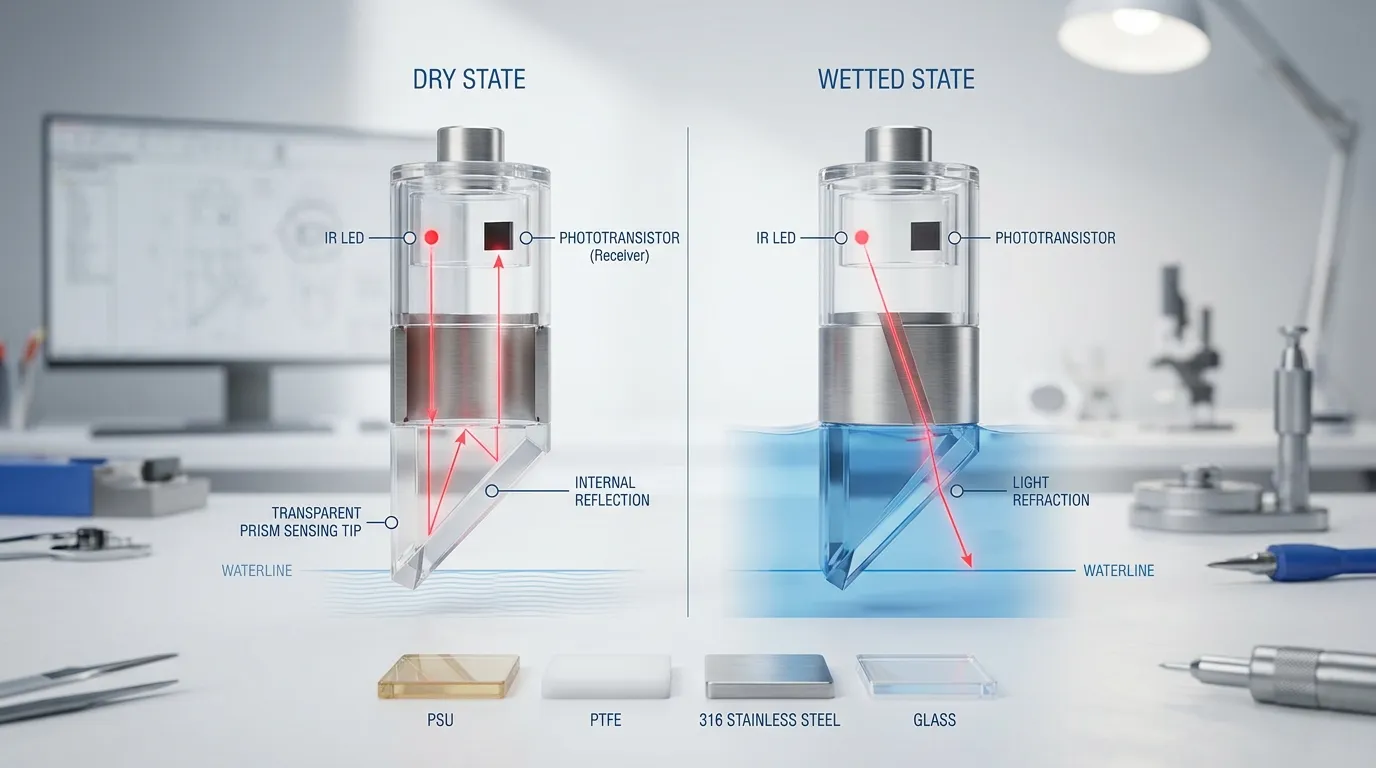
Is féidir le lasc snámhphointe meicniúil oibriú go maith i ndálaí glana, ach ní bhíonn suiteálacha uisceadán ATO glan i gcónaí. Creep salann, Bithscannán, Seilidí, teannas cábla, suaitheadh, agus is féidir le spás daingean sump tionchar a imirt ar chodanna ag gluaiseacht. In uathoibriú sump sceire, D'fhéadfadh comhartha "uisce íseal" greamaithe an caidéal athlíonta a choinneáil ag rith agus ró-shreabhadh a chur faoi deara. D'fhéadfadh comhartha "iomlán" greamaithe stop a chur le hathlíonadh agus ligean don seomra caidéil fillte titim ró-íseal.
Laghdaíonn braiteoir leibhéal uisce optúil an riosca seo toisc nach bhfuil aon taisteal meicniúil ag an rinn braite. Úsáideann an struchtúr coiteann LED infridhearg, fóta-trasraitheoir nó glacadóir, agus barr braite priosma-chruthach. Nuair a bhíonn an priosma tirim, Léiríonn solas infridhearg go hinmheánach taobh istigh den rinn agus sroicheann sé an glacadóir. Nuair a chlúdaíonn uisce an priosma, Athraíonn an coinníoll athraonta, mar sin filleann níos lú solais ar an nglacadóir. Déanann an leictreonaic braiteora an t-athrú optúil tirim / fliuch sin a thiontú ina aschur leictreach don rialtóir.
Le haghaidh córais ATO, Is féidir an comhartha fliuch / tirim seo a úsáid ar thrí phríomhbhealach:
- Rialú athlíonta bunscoile: Tosaíonn an stát tirim an caidéal athlíonta; Stopann staid fhliuch an caidéal.
- Gearradh sábháilteachta ardleibhéil: braitheann braiteoir uachtarach ardú neamhghnácha agus stopann sé an caidéal nó spreagann sé aláram.
- Cosaint taiscumar-íseal: Cuidíonn braiteoir sa taiscumar fionnuisce le cosc a chur ar rith tirim caidéil.
Ní bhraitheann an dearadh ATO is fearr ar chomhartha amháin amháin. Comhcheanglaíonn sé socrúchán braiteoir ceart, Loighic teorainn ama rialaitheora, Ródú feadán frith-siphon, agus iomarcaíocht dé-braiteora.
Gléasadh Sump do Reef agus Aquarium ATO
Ba chóir an braiteoir a shuiteáil sa seomra sump áit a n-athraíonn leibhéal an uisce ó ghalú, de ghnáth an seomra caidéil ar ais nó seomra cúil cobhsaí in uisceadán AIO. Níor chóir é a chur san áit a bhfuil tonnta, boilgeoga, splancscáileán draein, nó sreabhadh athlíonta díreach buaileann an barr i gcónaí.
Le haghaidh ATO suite ar sump, Ba chóir do cheannaitheoirí a shainiú:
- Gnáthlíne uisce oibriúcháin: Ba chóir go mbeadh airde an phríomhbhraiteoir ag teacht leis an spriocleibhéal stad athlíonta.
- Líne uisce sábháilteachta: Ba chóir go suífeadh an braiteoir ardleibhéil cúltaca os cionn an ghnáthleibhéil ach faoi bhun an phointe riosca ró-shreabhadh.
- Dromchla gléasta: gloine, aicrileach, lúibín, Port snáithithe, gléas maighnéad, nó sealbhóir saincheaptha.
- Tiús balla agus spás seomra: Tábhachtach do sheomraí cúil dlúth agus umair nana.
- Bealach cábla: seachain brú cábla a d'fhéadfadh an braiteoir a tharraingt amach as seasamh.
- Suíomh an fheadáin a athlíonadh: Ba chóir an t-asraon feadán a shocrú chun cosc a chur ar siphoning agus níor chóir é a urscaoileadh go díreach ar aghaidh an braiteora.
Is féidir le HojellyTek tacú le formáidí meicniúla éagsúla ag brath ar an tionscadal: tóireadóirí optúla dlúth, Comhlachtaí snáithithe, Stíleanna Feistithe Painéil, Dearaí suite ar lúibíní, agus tionóil cábla saincheaptha. Deimhnítear stíl snáithe agus gléasta le linn chéim RFQ toisc go n-úsáideann brandaí uisceadán agus déantóirí rialaitheora leagan amach imfhálaithe éagsúla go minic.
Comhoiriúnacht Sreangú agus Rialaitheora
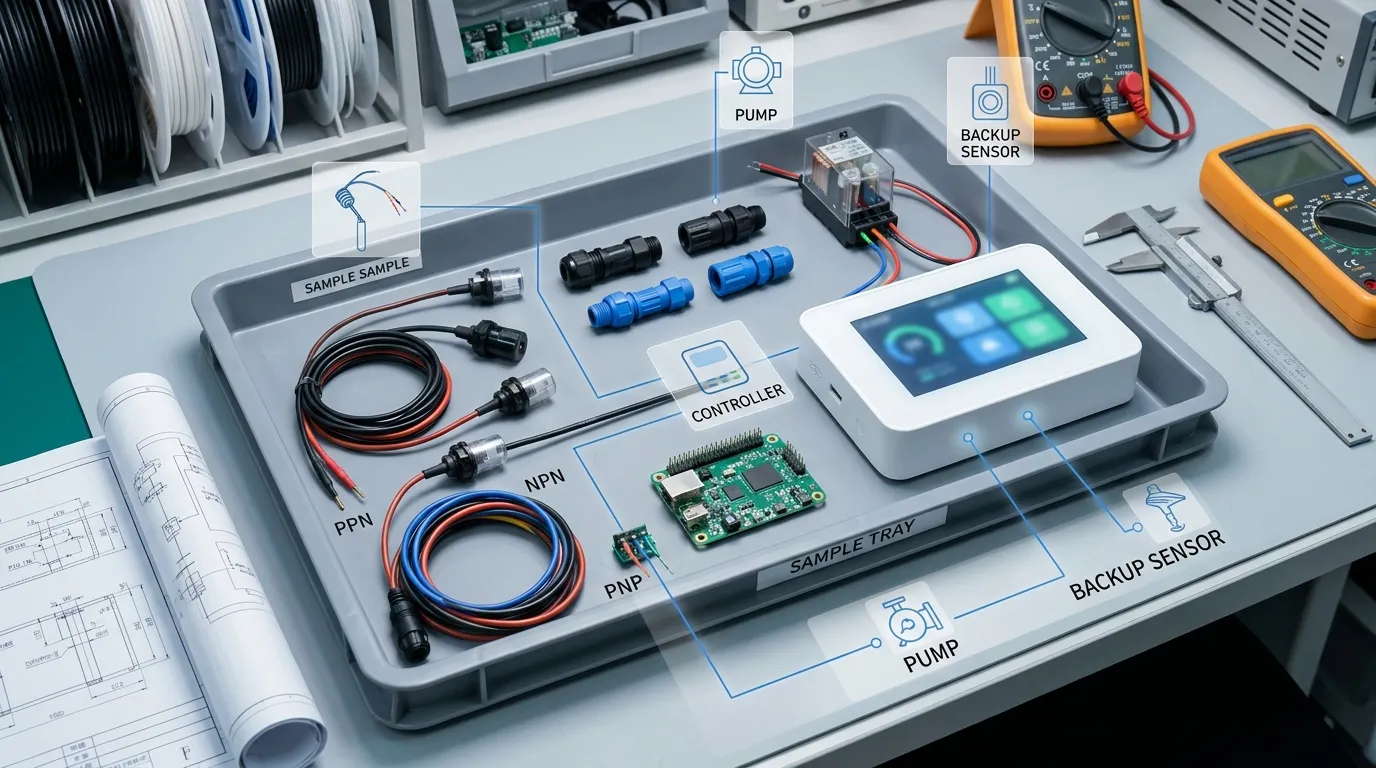
Braitheann comhoiriúnacht rialaitheoir ATO ar an aschur braiteora, voltas, loighic sreangaithe, agus stíl cónascaire. Teastaíonn comhartha lasc digiteach simplí fliuch / tirim ó roinnt ceannaitheoirí. Teastaíonn aschur NPN nó PNP ó dhaoine eile le haghaidh bord rialaitheora. Is féidir le ceannaitheoirí OEM úim saincheaptha a iarraidh le haghaidh rialtóir athlíonta Tuya / Smart Life nó modúl rialaithe uisceadán.
| Feidhmchlár ATO | Riachtanas comhartha coiteann | Cineál rialaitheora tipiciúil | Ní mór don cheannaitheoir a dhearbhú |
|---|---|---|---|
| Rialú bunúsach DIY ATO | Aschur digiteach fliuch / tirim | Bord sealaíochta, PCB ATO beag, micrea-rialaitheoir | Voltas soláthair, loighic comhartha, ionchur sealaíochta caidéil |
| Ionchur rialaitheoir uisceadán | Comhartha stáit fliuch / tirim | Calafoirt i stíl Apex nó Cerebra-stíl | Cineál calafoirt, cónascaire, loighic bhrath, riachtanais aonrúcháin |
| Táirge athlíonta cliste | Comhartha braiteoir chun bord rialaithe | Mise / Rialaitheoir athlíonta Smart Life | Voltas rialaitheoir app, Ionchur an Bhoird, cónascaire cábla |
| Córas OEM ATO | NPN Saincheaptha / PNP / aschur digiteach | Bosca rialaithe ATO brandáilte | Dath na sreinge, cónascaire uiscedhíonach, fad cábla |
| Monatóireacht ar stíl thionsclaíoch | 4–20 mA nó aschur leanúnach nuair is gá | Rialtóir monatóireachta nó leictreonaic saincheaptha | Cibé an bhfuil gá le brath pointe nó tomhas leanúnach |
| Sábháilteacht dé-braiteoir ATO | Bunscoile + Gearradh Ardleibhéil | Rialtóir PCB nó uisceadán tiomnaithe ATO | Cén braiteoir a bhfuil tosaíocht aige agus conas a láimhseáiltear aláraim |
Do thionscadail uisceadán atá dírithe ar rialaitheoir, féach ar ár Braiteoir uisceadán Apex / Cerebra Leathanach feidhmchláir.
Iomarcaíocht Dé-Braiteoir le haghaidh Dearadh ATO níos Sábháilte
Is féidir le braiteoir optúil amháin athlíonadh a rialú, ach is é ATO dé-braiteoir an leagan amach níos sábháilte do chórais sceireacha préimhe agus táirgí OEM. Rialaíonn an chéad braiteoir an gnáthlíne uisce. Tá an dara braiteoir suite beagán níos airde mar ghearradh sábháilteachta. Má chuirtear bac ar an bpríomhbhraiteoir, salach, Díphlugáilte, nó míléamh ag an rialaitheoir, Tugann an braiteoir ardleibhéil coinníoll eile don rialtóir chun an caidéal a stopadh.
Le haghaidh cosaint níos fearr, cuireann go leor dearaí ATO teorainn ama leis freisin. Má ritheann an caidéal níos faide ná mar a bhíothas ag súil leis, stopann an rialtóir é agus spreagann sé aláram. Cosnaíonn sé seo i gcoinne feadán dícheangailte, taiscumar folamh, Suíomh braiteora mícheart, nó riocht sump neamhghnácha.
I measc na modhanna teip fíor le pleanáil dóibh tá:
- Creep salainn nó algaí a chlúdaíonn an barr priosma
- Micrea-boilgeoga is cúis le braite éagobhsaí
- Cur isteach solais dhíreach i seomraí nochta
- Splancscáileán uisce a athlíonadh go díreach ar an braiteoir
- Loighic fliuch / tirim mícheart sa rialtóir
- Siphon ón taiscumar athlíonta isteach sa sump
- Caidéal ag rith le taiscumar folamh
- Gluaiseacht cábla nó lúibín tar éis cothabhála
Dearadh táirge iontaofa ATO timpeall na gcásanna seo sula dtáirgetar é, ní tar éis gearáin ó chustaiméirí.
Ábhair Uisceadán-Shábháilte agus Roghanna Comhlacht Braiteoir
Ábhair fhliucha i gcórais uisce sáile agus sceireacha. Ba chóir go mbeadh an barr braiteora agus an corp comhoiriúnach le fionnuisce, Uisce sáile, agus gnáth-bhreiseáin uisceadán. Ag brath ar an dearadh, Is féidir le HojellyTek PSU a phlé, PTFE, 316 cruach dhosmálta, agus roghanna tip braite gloine do limistéir teagmhála leachtach.
Ba chóir go mbeadh roghnú ábhair ag teacht leis an tionscadal:
- Comhlacht PSU: Úsáideach do struchtúir braiteoir plaisteacha dlúth ina bhfuil friotaíocht cheimiceach agus múnlú tábhachtach.
- Comhlacht PTFE: roghnaithe le haghaidh friotaíocht ceimiceach níos láidre agus ceanglais adhesion dromchla íseal.
- 316 comhlacht cruach dhosmálta: a úsáidtear i gcás ina bhfuil tithíocht miotail, Suiteáil snáithithe, nó struchtúr meicniúil garbh ag teastáil.
- Barr priosma gloine: úsáideach i gcás ina bhfuil soiléireacht optúil agus feidhmíocht braite glan mar thosaíochtaí.
Braitheann an rogha ábhair deiridh ar cheimic uisce an chustaiméara, dearadh imfhálú, sprioc costais, agus modh gléasta. Ní mholfaimid braiteoir a roghnú ach de réir cuma; Ba chóir don cheannaitheoir an t-ábhar fliuch a dhearbhú, Modh séalaithe, seaicéad cábla, cónascaire, agus coinníollacha glantacháin sula n-ordaítear.
5-Próiseas Tionscadail Céim
Fiosrúchán agus athbhreithniú ar chás úsáide: Seol do leagan amach ATO, Cineál an rialaitheora, Dearadh Seomra Sump, Líon Braiteoir atá ag teastáil, agus spriocmhargadh. Seiceálann ár bhfoireann an bhfuil braiteoir optúil amháin ag teastáil ón tionscadal, iomarcaíocht dé-braiteora, Brath taiscumar íseal, nó modúl athlíonta cliste.
Sonraíocht agus saincheaptha: Dearbhaímid voltas soláthair, Cineál Aschuir, loighic fliuch/tirim, dathanna sreinge, fad cábla, cónascaire, Stíl Mount, ábhar coirp, agus comhéadan rialaitheora. Do thionscadail OEM / ODM, Is féidir riachtanais tithíochta agus lúibíní a athbhreithniú freisin.
Tástáil shamplach: Is féidir samplaí a ullmhú le haghaidh tástála binse agus insamhalta sump. Ba chóir do cheannaitheoirí freagra tirim / fliuch a thástáil, loighic stad caidéil, Gearradh Ardleibhéil, Brath taiscumar íseal, agus iompar glantacháin.
Táirgeadh agus QC: Mar mhonaróir Shenzhen agus onnmhaireoir le R intí&D, Tacaíonn HojellyTek le saincheaptha braite optúla fótaileictreach, Seiceálacha Tionóil, agus rialú cáilíochta táirgeachta do thionscadail onnmhairithe.
Loingseoireacht agus tacaíocht: Tacaímid le ceannaitheoirí a onnmhairíonn go dtí na Stáit Aontaithe, TÁIMID, An India, agus margaí eile. Tar éis tástála, is féidir leat sonraí luachana a iarraidh trí WhatsApp nó ríomhphost le haghaidh orduithe baisc, Tionóil OEM, nó modúil braiteoir ATO comhlánaithe.
Ceanglais a dhearbhú sula n-ordaítear
Le haghaidh roghnú cruinn, an t-eolas seo a leanas a ullmhú:
| Ceanglas | Cén fáth a bhfuil sé tábhachtach |
|---|---|
| Cineál umar nó sump | Sainmhíníonn spás an tseomra, gluaiseacht uisce, agus stíl lúibín |
| Múnla rialaitheora | Cinneann sé sreangú, cónascaire, agus comhoiriúnacht comhartha |
| Voltas soláthair | Ní mór ionchur an bhoird rialaithe nó an rialaitheora uisceadán a mheaitseáil |
| Cineál aschuir | NPN, PNP, lasc digiteach, nó ní mór formáid comhartha eile a roghnú i gceart |
| Loighic fliuch/tirim | Ní mór don rialaitheoir fios a bheith agat an gciallaíonn fliuch AR, MÚCHTA, ard, nó íseal |
| Cainníocht braiteora | Singil, dé, nó athruithe leagan amach taiscumar íseal sreangú agus loighic firmware |
| Modh gléasta | Snáithe, lúibín, painéal, nó tionchar a bhíonn ag sealbhóir saincheaptha ar rogha an chomhlachta braiteora |
| Ábhar fliuch | Caithfidh sé a bheith oiriúnach d'uisce sáile, Fionnuisce, agus coinníollacha glantacháin |
| Cábla agus cónascaire | Tábhachtach le haghaidh uiscedhíonta, inseirbhíse, agus cóimeáil OEM |
| Modh rialaithe caidéil | Sealaíocht, MOSFET, Calafort an rialaitheora, nó ní mór modúl cliste a mheaitseáil go sábháilte |
Braiteoir Optúil vs Athraigh Snámhphointe Meicniúil le haghaidh Uisceadán ATO
| Gné | Braiteoir leibhéal uisce optúil | Lasc snámhphointe meicniúil |
|---|---|---|
| Páirteanna ag gluaiseacht | Gan aon snámhphointe nó hinge ag gluaiseacht | Úsáideann gluaiseacht snámhphointe |
| Príomhbhuntáiste ATO | Dlúth, Braite fliuch / tirim tapa, níos lú riosca greamaithe | Simplí agus ar chostas íseal |
| Príomhriosca | Priosma salach, boilgeoga, solas, socrúchán mícheart | Ag Greamú, Jamming, creep salainn, caitheamh meicniúil |
| An úsáid is fearr | Sump sceire ATO, Athlíonadh Cliste, Córais dhlúth OEM | Athrú simplí leibhéal uisce ar chostas íseal |
| Rogha iomarcaíochta | Éasca le comhcheangal bunscoile + Braiteoirí ardleibhéil | Féideartha, ach teastaíonn imréiteach snámhphointe fisiciúil uaidh |
| Comhtháthú rialaitheora | Maith don dhigiteach, NPN/PNP, agus dearaí rialaitheora cliste | Braitheann sé ar rátáil lasc agus sreangú |
Cén fáth HojellyTek a roghnú le haghaidh Tionscadail Braiteoir Aquarium ATO
Díríonn HojellyTek ar mhonarú braiteoir leibhéal leachtach optúil agus fótaileictreach, ní gabhálais uisceadán cineálach. Tá sé sin tábhachtach nuair a theastaíonn saincheaptha aschuir ón gceannaitheoir, Rogha ábhair, comhlachtaí braiteoirí beaga, Meaitseáil an Rialaitheora, agus soláthar OEM cobhsaí.
I measc na mbuntáistí atá againn tá:
- Tacaíocht déantúsaíochta agus onnmhairithe braiteoir bunaithe ar Shenzhen
- Intí R&D le haghaidh braite leibhéal leachtach optúil
- Tacaíocht OEM / ODM do bhrandaí uisceadán ATO agus do tháirgí athlíonta cliste
- Plé comhoiriúnachta Tuya / Smart Life do thionscadail rialaitheora cliste
- Saincheaptha braiteoir le haghaidh cábla, cónascaire, Aschur, comhlacht, agus gléasta
- Taithí easpórtála do cheannaitheoirí sna Stáit Aontaithe, TÁIMID, An India, agus réigiúin eile
Ceisteanna CCanna
An bhfuil uisceadán braiteoir leibhéal uisce optúil ATO níos sábháilte ná lasc snámhphointe?
Féadann sé an baol a bhaineann le greamú meicniúil a laghdú toisc nach bhfuil aon snámhphointe ag gluaiseacht. Cén dóigh faoin spéir a ...?, Braitheann sábháilteacht fós ar ghléasadh ceart, Loighic an Rialaitheora, iomarcaíocht dé-braiteora, Cosaint teorainn ama, agus glanadh rialta an barr optúil.
An féidir liom braiteoir optúil amháin a úsáid le haghaidh barr uathoibríoch uisceadán?
Tá, Is féidir le braiteoir amháin an gnáthphointe athlíonta a rialú. Le haghaidh córais sceireacha, táirgí ATO préimhe, nó trealamh atá dírithe ar chustaiméirí, moltar go láidir an dara braiteoir ardleibhéil le haghaidh cosaint ró-shreabhadh.
An n-oibreoidh an braiteoir le calafoirt rialaitheora uisceadán i stíl Apex?
Is féidir é a dhearadh le haghaidh riachtanais ionchuir rialaitheora Apex-stíl nó den chineál céanna, ach ní mór comhoiriúnacht a sheiceáil de réir cineál calafoirt, voltas, cónascaire, agus loighic comhartha fliuch / tirim sula n-ordaítear.
An féidir le braiteoirí optúla ATO oibriú le rialaitheoirí Tuya nó Smart Life?
Tá, is féidir braiteoirí optúla a chomhtháthú i rialaitheoirí athlíonta Tuya nó Smart Life nuair a ionchur an bord rialaithe, voltas, cónascaire, agus loighic a mheaitseáil i gceart le linn dearadh táirge.
Cad iad na hábhair atá oiriúnach do bhraiteoirí ATO uisceadán sáile?
I measc na roghanna coitianta tá PSU, PTFE, 316 cruach dhosmálta, agus struchtúir tip braite gloine. Braitheann an rogha is fearr ar dhearadh an chomhlachta braiteora, Ceimic Uisce, Modh glantacháin, agus timpeallacht gléasta.
Cad is cúis le triggering ATO bréagach le braiteoir optúil?
I measc na gcúiseanna coitianta tá boilgeoga, creep salainn, algaí, solas díreach, splancscáileán, airde gléasta mícheart, Loighic rialaitheora mícheart, nó uisce a athlíonadh ag sileadh go díreach ar an rinn braite.
Iarratas ar luachan le haghaidh Braiteoirí Optúla Aquarium ATO
Seol do mhúnla rialaitheora, voltas soláthair, Cineál Aschuir, cainníocht braiteora, Modh gléasta sump, fad cábla, Riachtanas cónascaire, agus plean ordaithe sprioc. Is féidir le HojellyTek cabhrú leat réiteach braiteoir optúil ATO a roghnú nó a shaincheapadh le haghaidh sumps sceireacha, Rialaitheoirí athlíonta cliste, agus córais uathoibríoch-barr uisceadán OEM. Déan teagmháil linn trí WhatsApp nó ríomhphost chun luachan a iarraidh, sampla, nó athbhreithniú comhoiriúnachta.


