
SST POS / Malartach Braiteoir Leibhéal Ola Optúil
An sst pos 187 413 Braiteoir Leibhéal Ola Optúil is gnách go ndéanann ceannaitheoirí cuardach orthu braiteoir pointe-leibhéal optúil dlúth optúil a theastaíonn uathu le haghaidh braite leibhéal ola, Aláraim ísealleibhéil, Rialú ró-shreabhadh, nó comhtháthú trealaimh OEM. Cuireann HojellyTek rogha eile braiteoir ola / leibhéal breosla optúla díreach monarcha ar fáil do cheannaitheoirí ar mian leo feidhmíocht braite comhoiriúnach, Roghanna aschuir solúbtha, Gléasta saincheaptha, agus rialú costais níos fearr gan sonraí páirteanna SST a chóipeáil.
Ní dáileoir SST muid agus ní éilíonn an leathanach seo athsholáthar buail isteach formhuinithe. Is leathanach malartach cothrom é d'innealtóirí, Foirne ceannaigh, agus ceannaitheoirí OEM a dteastaíonn braiteoir optúil ola-chomhoiriúnach uathu tógtha timpeall a leacht iarbhír, sreangú, voltas, Spás suiteála, agus riachtanais táirgthe.
Cumas Malartach Braiteoir Leibhéal Ola Optúil
Déanann HojellyTek braiteoirí leibhéal leachtach fótaileictreach a dhearadh agus a mhonarú i Shenzhen do thionscadail OEM / ODM, trealamh tionsclaíoch, Córais bhreosla/ola, umair chliste, agus tionóil braiteoirí onnmhairithe do na Stáit Aontaithe, TÁIMID, agus margaí na hIndia. Do cheannaitheoirí a dhéanann comparáid idir braiteoir sraith SST POS, Is féidir lenár bhfoireann cabhrú le réiteach coibhéiseach optúil pointe-leibhéal a mheas bunaithe ar:
- Braite leacht optúil dlúth le haghaidh ola, breosla, cuisnithe, ola hiodrálach, agus leachtanna comhoiriúnacha
- IR faoi stiúir, Fóta-trasraitheoir, agus struchtúr braite priosma-tip
- Athrú comhartha tirim / fliuch le haghaidh braite ísealleibhéil nó ardleibhéil
- NPN, PNP, Oscailte de ghnáth, dúnta de ghnáth, agus loighic aschuir saincheaptha
- Voltas soláthair a mheaitseáil le bord rialaithe an chustaiméara nó le hionchur PLC
- Snáithithe, painéal, umar - balla, agus dearaí gléasta saincheaptha
- Fad cábla, cónascaire, dath sreinge, agus saincheaptha tithíochta
- Ábhair fhliucha mar PSU, PTFE, 316 cruach dhosmálta, nó gloine ag brath ar riachtanais leachtacha agus teochta
Le haghaidh dearaí braite leacht optúla ginearálta, féach ar ár Braiteoir Leibhéal Optúil Leathanach. Do cheannaitheoirí a dteastaíonn monaróir díreach uathu seachas soláthróir trádála, ár monaróir braiteoir optúil Míníonn leathanach níos mó faoi thacaíocht OEM agus cumas táirgeachta.
Conas a Oibríonn an Brath Leibhéal Ola Optúil
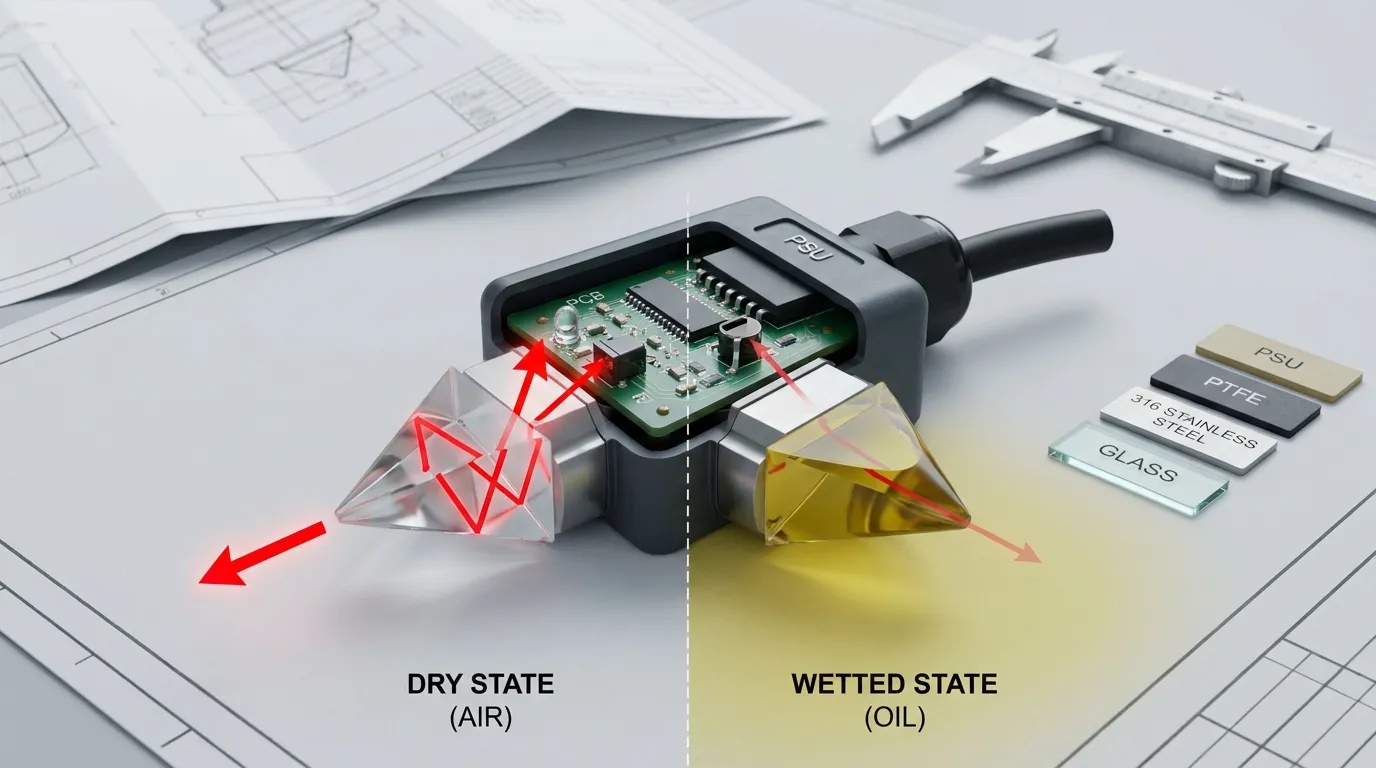
Úsáideann braiteoir leibhéal ola optúil prionsabal braite solas-bhunaithe seachas snámhphointe, Lasc giolcach, nó cuid mheicniúil ag gluaiseacht. Taobh istigh den chorp braiteora, seolann LED infridhearg solas i dtreo leid braite priosma. Faigheann fóta-trasraitheoir an solas frithchaite.
Nuair a bhíonn an barr priosma san aer, Léiríonn an solas infridhearg go hinmheánach agus filleann sé go láidir ar an nglacadóir. Nuair a chlúdaíonn ola nó leacht eile an priosma, Athraíonn an t-innéacs athraonta. Filleann níos lú solais ar an nglacadóir, agus athraíonn an leictreonaic an stát aschuir. Ligeann an t-aistriú tirim-go-fliuch seo don braiteoir pointe leibhéal leachtach seasta a bhrath.
Le haghaidh feidhmchlár ola agus breosla, Tá an dearadh seo úsáideach toisc go bhfuil sé dlúth, beagnach, agus gan tionchar ag snámhphointe a ghreamú i spásanna cúnga. Is féidir é a úsáid le haghaidh aláraim íseal-ola, monatóireacht a dhéanamh ar thaiscumar beag, córais lubrication, umair gineadóra, Brath leibhéal cuisnithe, agus trealamh dlúth nuair a bhíonn lasc snámhphointe ró-mhór.
Cén dóigh faoin spéir a ...?, Teastaíonn ábhar cúramach agus athbhreithniú optúil ón tseirbhís ola. Breosla éadrom, díosail, ola bhealaithe, ola hiodrálach, agus ní iompraíonn ola úsáidte dorcha ar an mbealach céanna. Slaodacht, scannán ola, cúr, boilgeoga aeir, cáithníní miotail, agus is féidir le sloda tionchar a imirt ar an bhfreagairt optúil. Sin é an fáth nár cheart braiteoir malartach tromchúiseach a roghnú ach trí ainm grianghraf nó páirt a mheaitseáil. An sampla leachtach, Suíomh umar, sreangú, agus ba chóir loighic rialaithe a sheiceáil sula ndéantar táirgeadh a dhearbhú.
HojellyTek Malartach do Cheannaitheoirí Sraith SST POS
Tá an tsraith SST POS ar eolas le haghaidh braite dlúth optúil pointe-leibhéal, agus cuardaíonn go leor ceannaitheoirí é toisc go bhfuil dearadh meaisín acu cheana féin, riachtanas cothabhála, nó tagairt BOM. Tá ár gcur chuige difriúil ó "an chuid chéanna" a rá go simplí. Cabhraímid le ceannaitheoirí rogha eile comhoiriúnach a thógáil timpeall an iarratais iarbhír.
I gcás tionscadail a bhaineann le hola agus le breosla, Is féidir le HojellyTek a sholáthar Braiteoir leibhéal breosla / ola cumraíocht leis an tithíocht cheart, cábla, Aschur, agus socrú gléasta. Má tá an leacht ionsaitheach go ceimiceach, Tá ceimiceáin glantacháin aige, nó teastaíonn cosaint níos láidre ó ábhar fliuch, a Braiteoir optúil atá frithsheasmhach in aghaidh ceimiceacha d'fhéadfadh sé a bheith níos oiriúnaí.
Is é an buntáiste is mó ná saincheaptha. Má tá do braiteoir reatha daor, deacair foinse a fháil, nó nach bhfuil solúbtha go leor do do thionscadal OEM, Is féidir lenár bhfoireann an comhlacht braiteora a choigeartú, Scoir cábla, snáthaid, cónascaire, loighic aschuir, agus roghnú ábhair. Tá sé seo úsáideach go háirithe do mhonaróirí trealaimh a dteastaíonn soláthar cobhsaí uathu, Dearadh lipéad príobháideach, nó braiteoir atá deartha i dtáirge nua seachas athsholáthar caighdeánach a cheannach.
Seiceálacha Eochair Sula ndéantar Braiteoir Sraith POS SST a Athsholáthar
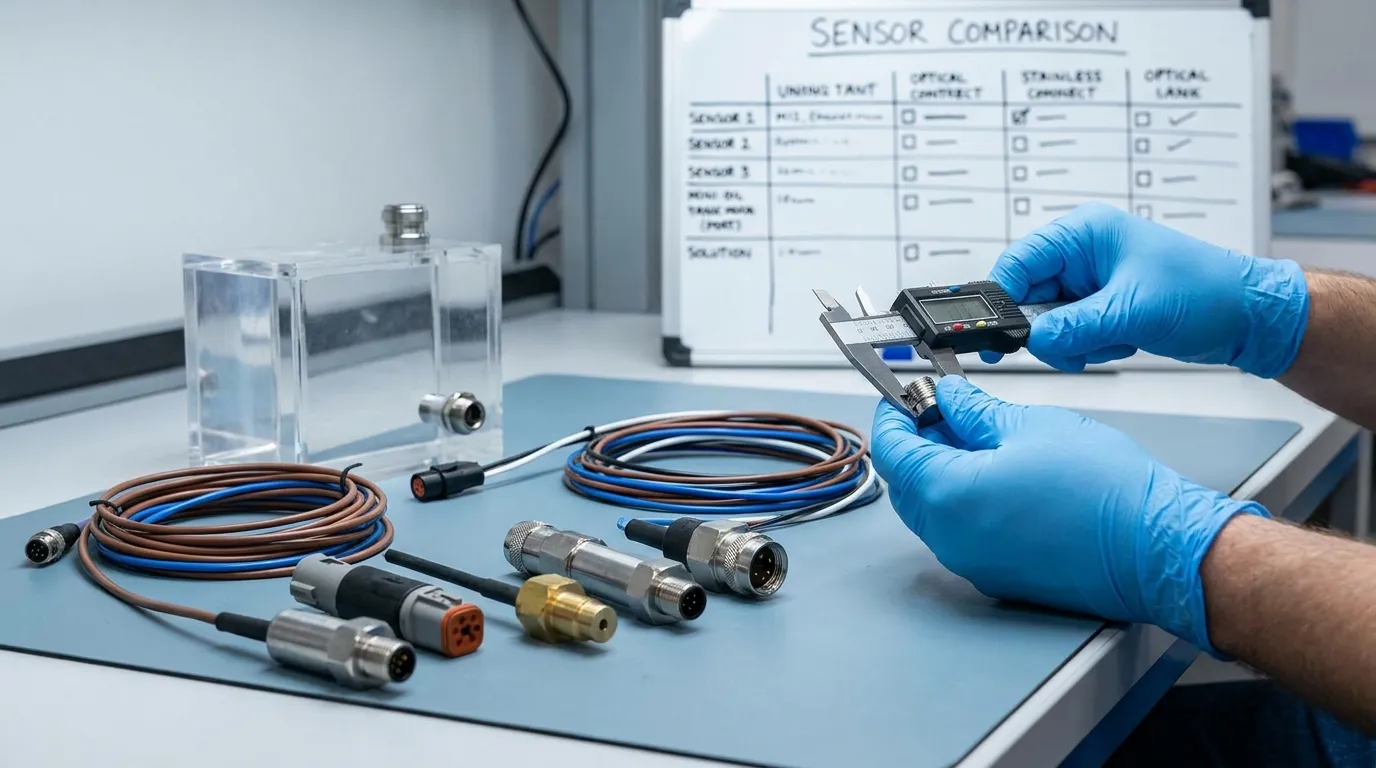
Sula roghnaíonn tú rogha eile, Ba chóir do cheannaitheoirí na riachtanais innealtóireachta iarbhír a dhearbhú seachas a bheith ag brath ar an abairt "SST POS 187 413 braiteoir leibhéal ola optúil."
Comhoiriúnacht ola agus breosla
Deimhnigh an leacht cruinn: ola innill, ola bhealaithe, díosail, meascán breosla, ola hiodrálach, cuisnithe, nó sreabhán measctha. Tá ola éadrom glan níos éasca a bhrath ná ola dorcha a úsáidtear le cáithníní. Má fhágann an ola scannán trom ar an bpriosma, D'fhéadfadh an braiteoir fanacht i riocht fliuch bréagach tar éis don leibhéal titim. Ar an gcúis seo, an cruth leid braite, Suiteáil uillinn, agus ba chóir athbhreithniú a dhéanamh ar ionchas glantacháin.
Aschur agus voltas
Roghnaítear an chuid is mó de na braiteoirí optúla pointe-leibhéal de réir an chineáil aschuir. Ní mór don cheannaitheoir a dhearbhú an bhfuil NPN nó PNP ag teastáil ón rialaitheoir, iompar oscailte de ghnáth nó dúnta de ghnáth, loighic tóin poill nó foinsiú, agus treo comhartha fliuch-stáit. Ba chóir voltas soláthair a mheaitseáil leis an mbord trealaimh, PLC, Modúl sealaíochta, nó ciorcad aláraim ag an gcéim RFQ. Maidir le tionscadail a dteastaíonn leibhéal umar comhréireach uathu seachas comhartha aonphointe, is féidir tuaslagán leibhéal 4-20 mA a phlé ar leithligh.
Gléasta agus séalaithe
Caithfidh an braiteoir malartach an umar nó an meaisín a fheistiú go fisiciúil. Ba chóir do cheannaitheoirí cineál snáithe a sheiceáil, Doimhneacht Iontrála, Tiús Balla, Treo cábla, imréiteach wrench, Ábhar O-fáinne nó gasket, agus cibé an bhfuil an braiteoir suiteáilte ón taobh istigh nó ón taobh amuigh den umar. Is féidir le braiteoir a oibríonn go leictreach teip fós mar athsholáthar má tá an snáithe, séala, nó tá seasamh priosma mícheart.
Roghnú ábhar fliuch
Meastar go coitianta go bhfuil PSU le haghaidh comhlachtaí braiteoirí optúla dlúth ina bhfuil nochtadh ceimiceach measartha. Is fearr PTFE nuair a bhíonn gá le friotaíocht cheimiceach níos láidre nó scaoileadh níos glaine ó leachtanna greamaitheacha. 316 Tá cruach dhosmálta úsáideach le haghaidh neart meicniúil garbh agus umair thionsclaíocha. Is féidir gloine a roghnú le haghaidh coinníollacha optúla agus ceimiceacha sonracha. Ba chóir go mbeadh rogha ábhair bunaithe ar an leacht iarbhír, Próiseas glantacháin, agus timpeallacht oibriúcháin.
Modhanna teip fíor chun cosc a chur orthu
I measc na bhfadhbanna coitianta tá triggering bréagach ó iarmhar ola, Loighic fhliuch/tirim mícheart, aschur éagobhsaí ó thorann leictreach, plaisteach scáinte ó leacht neamh-chomhoiriúnach, sceitheadh ó rogha séala mícheart, faoiseamh brú cábla bocht, agus comhartha neamh-inléite mar gheall ar sreabhán dorcha nó éillithe. Ba cheart go réiteodh roghnú malartach cuí na rioscaí seo sula gceadaítear samplach.
5-Próiseas Braiteoir Saincheaptha Céim
- Fiosrúchán
Seol do thagairt braiteora reatha, Aip Grianghraif, cineál leachtach, ábhar umar, Riachtanas sreangaithe, agus meastachán éilimh bhliantúil. - Athbhreithniú ar shonraíocht agus saincheaptha
Déanann ár n-innealtóirí athbhreithniú ar an gcineál aschuir, voltas, Gléasta, Ábhar fliuch, cábla, cónascaire, agus cibé an n-úsáidtear an braiteoir le haghaidh braite ardleibhéil nó ísealleibhéil. - Dearbhú samplach
Is féidir cumraíocht shamplach a ullmhú le haghaidh oiriúnach, sreangú, agus tástáil leachtach roimh olltáirgeadh. - Táirgeadh agus QC
Seiceálann an mhonarcha freagra optúil, sreangú, Séalaithe, tithíocht, agus cuma de réir riachtanais an tionscadail dheimhnithe. - Loingseoireacht agus tacaíocht
Is féidir braiteoirí críochnaithe a onnmhairiú le haghaidh táirgeadh OEM, stoc cothabhála, nó soláthar dáileora, le tacaíocht ó WhatsApp nó ríomhphost.
Riachtanais le Seol le haghaidh RFQ
Chun a lua go cruinn, Ullmhaigh le do thoil:
- Ainm leachtach agus cibé an bhfuil sé glan, dorcha, cúr, slaodach, nó éillithe
- Feidhm braiteora: Aláram ísealleibhéil, Aláram Ardleibhéil, ró-shreabhadh, cosaint tirim-rith, nó láithreacht umar a bhrath
- Aschur riachtanach: NPN, PNP, Ní hea, NC, comhoiriúnach sealaíochta, nó ceanglas analógach
- Voltas soláthair a úsáideann do rialtóir
- Méid snáithe gléasta nó poll umar
- Rogha ábhair tithíochta: PSU, PTFE, 316 cruach dhosmálta, gloine, nó saincheaptha
- Fad cábla, cineál cónascaire, agus sainmhíniú sreinge
- Grianghraif nó líníochtaí den tsuiteáil reatha
- Cainníocht samplach agus úsáid táirgeachta ionchasach
SST POS-Sraith vs HojellyTek Malartach
| Pointe Comparáide | Braiteoir Optúil SST POS-Sraith | HojellyTek Braiteoir Leibhéal Ola Optúil Malartach |
|---|---|---|
| Príomhról | Braite pointe-leibhéal optúil dlúth le haghaidh láithreacht leachtach | Braite optúil ola / breosla comhoiriúnach atá saincheaptha don tionscadal |
| Seasamh an bhranda | Rogha braiteoir brandáilte bunaithe | Malartach monarcha-dhíreach do cheannaitheoirí OEM agus d'fhoirne foinsiú |
| Úsáid ola | Ba chóir don cheannaitheoir oiriúnacht mhúnla cruinn a fhíorú ón mbileog eolais bhunaidh | Ola, breosla, cuisnithe, agus comhoiriúnacht ola hiodrálach athbhreithnithe roimh luachan |
| Aschur agus voltas | Ní mór an chuid bhunaidh agus ionchur an chórais a mheaitseáil | NPN, PNP, NÍL/NC, voltas, agus is féidir loighic sreangaithe a shaincheapadh |
| Gléasta | Caithfidh an tsuiteáil atá ann cheana an dearadh meicniúil bunaidh a leanúint | Snáithe, Scoir cábla, ábhar coirp, agus is féidir cónascaire a choigeartú |
| Suíomh costais | Láidir nuair a theastaíonn an branda bunaidh cruinn ón gceannaitheoir | Láidir nuair is mian le ceannaitheoir rialú praghsanna, Saincheaptha, agus tacaíocht mhonarcha |
| Oiriúnach ceannaitheora is fearr | Foirne cothabhála a dteastaíonn leanúnachas BOM bunaidh uathu | OEManna, Dáileoirí, agus tógálaithe trealaimh a dteastaíonn rogha eile solúbtha uathu |
| Riosca le seiceáil | Infhaighteacht, Praghas, agus spleáchas cuid cruinn | Éilíonn sé tástáil shamplach sula n-éilítear oiriúnacht athsholáthair |
Áit a bhféadfadh SST a bheith fós an rogha is fearr
B'fhéidir gurb é SST an rogha is fearr fós nuair a éilíonn do thionscadal an branda bunaidh cruinn, líníocht a ceadaíodh roimhe seo, Taifid dheimhniúcháin atá ann cheana, leanúnachas BOM oidhreachta, nó braiteoir athsholáthair atá bailíochtaithe cheana féin ag do chustaiméir. Má shonraíonn do lámhleabhar meaisín ach an chuid bunaidh SST agus nach féidir le d'fhoireann ceannaigh roghanna eile a cheadú, D'fhéadfadh fanacht leis an braiteoir bunaidh obair dhoiciméadúcháin a laghdú.
Tá ár rogha eile níos oiriúnaí nuair is féidir leat braiteoir comhoiriúnach a cheadú trí athbhreithniú innealtóireachta, tástáil samplach, agus cáilíocht soláthróra. Is rogha phraiticiúil é freisin nuair a bhíonn praghas, Solúbthacht MOQ, saincheaptha cábla, Roghnú ábhair, nó tá tábhacht níos mó le soláthar OEM fadtéarmach ná an chuid bhéacht bheachtas brandáilte a cheannach.
Cén fáth a n-oibríonn sé le HojellyTek
Is monaróir braiteoir leibhéal optúil agus leachtach Shenzhen é HojellyTek le R intí&Tacaíocht táirgeachta D agus OEM / ODM. Táimid ag díriú ar bhrath optúil fótaileictreach, Dearaí Tip Priosma Dlúth, Sreangú saincheaptha, agus comhoiriúnacht leachtach a bhaineann go sonrach le feidhmchlár. Do thionscadail ar leibhéal umar IoT, Is féidir comhtháthú Tuya agus Smart Life a phlé freisin nuair a oireann sé d'ailtireacht an táirge.
Oibríonn ceannaitheoirí linn nuair a theastaíonn níos mó ná cuid chatalóige uathu: teastaíonn braiteoir uathu a oireann don umar, Meaitseálann an Rialaitheoir, Maireann an leacht, agus is féidir iad a sholáthar go comhsheasmhach le haghaidh táirgeachta.
Ceisteanna CCanna
An féidir le HojellyTek POS SST a athsholáthar 187 413 Braiteoir Leibhéal Ola Optúil?
Tá, Is féidir linn rogha eile comhoiriúnach a mheas don sst pos 187 413 Braiteoir Leibhéal Ola Optúil, ach ní mhaímid gur cuid SST formhuinithe é. Braitheann an t-athsholáthar ceart ar an gcineál leachtach, Aschur, voltas, Gléasta, cábla, agus tástáil samplach.
An bhfuil an braiteoir malartach oiriúnach d'ola agus breosla?
Is féidir é a chumrú le haghaidh ola, breosla, ola hiodrálach, cuisnithe, agus leachtanna gaolmhara, ach caithfear comhoiriúnacht a sheiceáil i gcoinne an leacht iarbhír. Ola dhorcha, scannán ola greamaitheach, sloda, agus d'fhéadfadh go mbeadh roghanna éagsúla ábhair nó suiteála ag teastáil ó boilgeoga.
An féidir liom aschur NPN nó PNP a roghnú?
Tá. NPN, PNP, Oscailte de ghnáth, dúnta de ghnáth, agus is féidir loighic aschuir fliuch / tirim saincheaptha a athbhreithniú le linn na céime RFQ. Is é an sprioc ná do PLC a mheaitseáil, Bord Rialaitheora, ionchur sealaíochta, nó ciorcad aláraim.
An féidir an gléasadh a shaincheapadh?
Tá. Stíl snáithe, Fad an choirp, Treo cábla, cónascaire, ábhar tithíochta, agus is féidir struchtúr séalaithe a shaincheapadh ag brath ar an umar agus an t-iarratas. Cuidíonn grianghraif nó líníochtaí den tsuiteáil atá ann cheana le dlús a chur leis an athbhreithniú.
An athsholáthar buail isteach ráthaithe é seo?
Ní hea. Ba chóir caitheamh leis mar mhalairt chomhoiriúnach, Ní athsholáthar buail isteach ráthaithe é. Ní mór an braiteoir a sheiceáil le haghaidh loighic leictreach, voltas, snáthaid, séala, Doimhneacht Iontrála, agus freagairt leachtach sula gceadaítear táirgeadh.
Cén t-eolas atá ag teastáil le haghaidh luachan?
Seol an cineál leachtach, Tagairt braiteora reatha, Grianghraif suiteála, voltas, Cineál Aschuir, Sonraí gléasta, iarratas ar chábla nó cónascaire, agus cainníocht ionchais. Is féidir lenár bhfoireann cumraíocht braiteoir leibhéal ola optúil oiriúnach a mholadh ansin.
Iarratas ar luachan
Brazzers físeán catagóir Inexperienced, Déagóirí, Seapáinis, Aziatochki, Téalainnis, Físeán HD ar a dtugtar Téalainnis Cailín Kim watch gan chlárú sa HD, breosla, cuisnithe, nó tionscadal taiscumar hiodrálach? Seol do ghrianghraif iarratais, Riachtanas sreangaithe, Sonraí gléasta, agus faisnéis leachtach chuig HojellyTek trí WhatsApp nó ríomhphost. Cabhróidh ár bhfoireann leat an fheidhm riachtanach a chur i gcomparáid, Deimhnigh an cosán saincheaptha, agus malartach praiticiúil monarchan-dhíreach a lua.


