
હાઇ-ટેમ્પરેચર ઓપ્ટિકલ લિક્વિડ લેવલ સેન્સર
હોજેલીટેક ઓઇએમ / ઓડીએમ અને ઔદ્યોગિક ખરીદદારો માટે શેનઝેનમાં ફોટોઇલેક્ટ્રિક લિક્વિડ લેવલ સેન્સિંગ સોલ્યુશન્સનું ઉત્પાદન કરે છે, જેમને નમૂનાઓ અથવા ઉત્પાદન બેચનો ઓર્ડર આપતા પહેલા સામગ્રી માર્ગદર્શનની જરૂર હોય છે.
ઉચ્ચ-તાપમાન ઓપ્ટિકલ સ્તર સેન્સિંગ ક્ષમતાઓ
અમારી ઉચ્ચ-તાપમાન ઓપ્ટિકલ સ્તર સેન્સર સેવા હોટ-મીડિયા એપ્લિકેશન્સ માટે પોઇન્ટ લેવલ શોધને આવરી લે છે જ્યાં ફ્લોટ સ્વીચ જામ થઈ શકે છે, અવશેષો શોષી લે છે, અથવા યાંત્રિક રીતે પહેરો. સેન્સર ઇન્ફ્રારેડ એલઇડીનો ઉપયોગ કરે છે, ફોટોટ્રાન્ઝિસ્ટર, અને ઓપ્ટિકલ પ્રિઝમ ટીપ તે શોધવા માટે કે પ્રિઝમ શુષ્ક છે અથવા પ્રવાહી દ્વારા coveredંકાયેલ છે.
શુષ્ક અવસ્થામાં, ઇન્ફ્રારેડ પ્રકાશ પ્રિઝમની અંદર આંતરિક રીતે પરાવર્તિત થાય છે અને રીસીવર પર પાછો ફરે છે. જ્યારે પ્રવાહી પ્રિઝમને આવરી લે છે, વક્રીભવનની સ્થિતિ બદલાય છે, પ્રકાશ પ્રવાહીમાં રીડાયરેક્ટ થાય છે, અને આઉટપુટ સ્થિતિમાં ફેરફાર થાય છે. આ ઓપ્ટિકલ સેન્સિંગને ઉચ્ચ-સ્તરના એલાર્મ માટે ઉપયોગી બનાવે છે, નીચા સ્તરનું એલાર્મ, ડ્રાય રન પ્રોટેક્શન, કૂલન્ટ ટેન્ક લેવલ ડિટેક્શન, તેલ જળાશય પર દેખરેખ રાખવી, અને કોમ્પેક્ટ OEM ટેન્ક એકીકરણ.
પ્રોજેક્ટ પર આધાર રાખીને, અમે સપોર્ટ કરીએ છીએ:
- ગરમ પ્રવાહી શોધ માટે ફોટોઇલેક્ટ્રિક પોઇન્ટ લેવલ સેન્સિંગ
- PSU, 316 સ્ટેઈનલેસ સ્ટીલ, ગ્લાસ, PTFE, અને મિશ્ર-સામગ્રી રચનાઓ
- NPN, PNP, અને ડિજિટલ સ્વિચ આઉટપુટ વિકલ્પો
- 4-સતત સ્તર અથવા ટ્રાન્સમીટર-આધારિત પ્રોજેક્ટ્સ માટે 20 એમએ ચર્ચા
- થ્રેડેડ થ્રેડેડ, સંકુચિત, બાજુ-માઉન્ટ, તળિયે-માઉન્ટ, અને કસ્ટમાઇઝ્ડ માઉન્ટિંગ સ્ટ્રક્ચર્સ
- OEM કેબલ લંબાઈ, કનેક્ટર, આઉટપુટ તર્ક, અને હાઉસિંગ ડિઝાઇન
- હોટ-મીડિયા એપ્લિકેશન્સ માટે મોટા પાયે ઉત્પાદન પહેલાં નમૂનાનું પરીક્ષણ
સામાન્ય ઓપ્ટિકલ પોઇન્ટ સ્તરની પસંદગી માટે, જુઓ અમારું ઓપ્ટિકલ લેવલ સેન્સર વિસ્તાર.
વાસ્તવિક નિષ્ફળતાનું જોખમ: પ્લાસ્ટિક પ્રિઝમ અને સીલ રેટિંગથી ઉપર
ઉચ્ચ તાપમાનના ખરીદદારો સામાન્ય રીતે પહેલા મહત્તમ તાપમાન માટે પૂછે છે. તે સમજી શકાય તેવું છે, પરંતુ એક જ "મહત્તમ તાપમાન" નંબર ભ્રામક હોઈ શકે છે જો તે સેન્સરના ફક્ત એક ભાગનું વર્ણન કરે છે.
પ્લાસ્ટિક પ્રિઝમ ટૂંકા ગરમ સ્પ્લેશથી બચી શકે છે પરંતુ સતત નિમજ્જન દરમિયાન વિકૃત થઈ શકે છે. એક સીલ સખત થઈ શકે છે, ફૂલો, અથવા મેટલ હાઉસિંગ નિષ્ફળ જાય તે પહેલાં કમ્પ્રેશન ગુમાવે છે. સેન્સર ટીપ હજુ પણ કાર્યરત હોય તો પણ કેબલ જેકેટ હોટ ટેન્કની દિવાલ પાસે તિરાડ પડી શકે છે. પોટિંગ કમ્પાઉન્ડ, એડહેસિવ, કનેક્ટર પ્લાસ્ટિક, અને આંતરિક ઇલેક્ટ્રોનિક્સ પણ વાસ્તવિક મર્યાદા બની શકે છે.
આ કારણથી, હોજેલીટેક એકલા શરીરની સામગ્રી દ્વારા ગરમ-પ્રવાહી સેન્સર પસંદ કરવાની ભલામણ કરતું નથી. સ્ટેનલેસ સ્ટીલ બોડીનો અર્થ આપમેળે કેબલ નથી, છાપ, ઓપ્ટિકલ વિન્ડો, અને ઇલેક્ટ્રોનિક્સ સમાન છત શેર કરે છે. કાચની ટીપ ઘણા પ્લાસ્ટિક કરતા કઠોર મીડિયાને હેન્ડલ કરી શકે છે, પરંતુ એસેમ્બલીને હજી પણ પુષ્ટિ થયેલ સીલ અને કેબલ ડિઝાઇનની જરૂર છે.
હોટ-મીડિયા ઓપ્ટિકલ સેન્સરને સ્પષ્ટ કરવાની સલામત રીત એ છે કે પુષ્ટિ કરવી:
- સામાન્ય સતત પ્રવાહી તાપમાન
- મહત્તમ ટોચનું તાપમાન
- પીક તાપમાન કેટલો સમય ચાલે છે
- શું સેન્સર ટીપ, થ્રેડ, કેબલ, અથવા કનેક્ટર ગરમીના સંપર્કમાં આવે છે
- શું પ્રવાહી પાણી છે, કૂલન્ટ, તેલ, રાસાયણિક ઉકેલ, અથવા મિશ્રિત માધ્યમો
- શું દબાણ, સ્પંદન, ફીણ, પરપોટા, અથવા સફાઈ ચક્ર હાજર છે
સામગ્રી દ્વારા તાપમાનની ટોચમર્યાદા: પીએસયુ વિ 316 એસએસ વિ ગ્લાસ / પીટીએફઇ
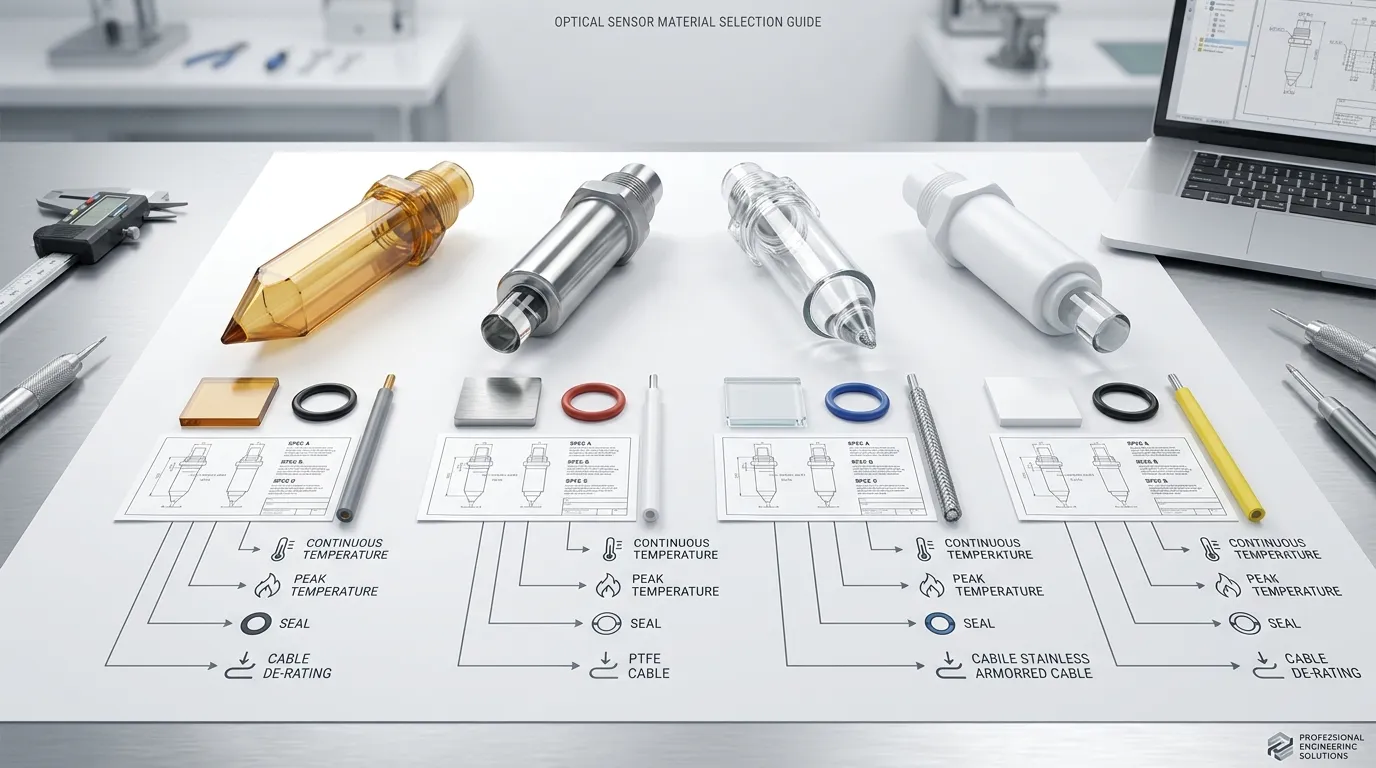
ઉચ્ચ-તાપમાન ઓપ્ટિકલ લિક્વિડ લેવલ સેન્સર પ્રોજેક્ટ્સ માટે, સંપૂર્ણ સેન્સર બિલ્ડથી "વાસ્તવિક છત" ની પુષ્ટિ થવી આવશ્યક છે, એક કાચા માલમાંથી ધારવામાં આવતું નથી. નીચેનું કોષ્ટક ખરીદનારની પસંદગી માટે રચાયેલ છે, પ્રકાશિત તાપમાનના દાવા તરીકે નહીં.
| સેન્સર મટિરિયલ / બાંધકામ | બેસ્ટ ફિટ | તાપમાન-રેટિંગ માર્ગદર્શિકા | ચકાસવા માટેનું મુખ્ય જોખમ |
|---|---|---|---|
| પીએસયુ પ્લાસ્ટિક ઓપ્ટિકલ પ્રિઝમ અથવા બોડી | કોમ્પેક્ટ OEM ટાંકીઓ, પાણી આધારિત પ્રવાહી, ઓછા ખર્ચના પ્રોજેક્ટ્સ | જ્યારે ચોક્કસ ભાગની પુષ્ટિ થયેલ સતત અને ટોચનું રેટિંગ એપ્લિકેશન સાથે મેળ ખાય ત્યારે જ યોગ્ય છે. એવું ન માની લો કે "એન્જિનિયરિંગ પ્લાસ્ટિક" એટલે બધી ગરમ ટાંકી માટે સલામત. | પ્રિઝમ નરમ થવું, ક્રેકિંગ, સોજો, તાણ સીલ કરો, લાંબા ગાળાની વિકૃતિ[ફેરફાર કરો] |
| 316 ઓપ્ટિકલ ટીપ સાથે સ્ટેનલેસ સ્ટીલ હાઉસિંગ | ગરમ કૂલન્ટ, તેલ, ઔદ્યોગિક ટાંકીઓ, મજબૂત યાંત્રિક સુરક્ષા | શરીરની ટકાઉપણું પ્લાસ્ટિક કરતાં વધુ મજબૂત હોય છે, પરંતુ વાસ્તવિક છત ઓપ્ટિકલ ટીપ પર આધારિત છે, છાપ, કેબલ, અને આંતરિક એસેમ્બલી. | વૃદ્ધત્વ સીલ કરો, કેબલ ડિ-રેટિંગ, ઇલેક્ટ્રોનિક્સમાં ગરમી સ્થાનાંતરણ |
| ગ્લાસ ઓપ્ટિકલ સેન્સિંગ ટીપ | ગરમ પાણી, તેલ, રસાયણો, અને એપ્લિકેશન્સ જ્યાં પ્લાસ્ટિક પ્રિઝમ સુસંગતતા ચિંતાજનક છે | જ્યારે ખરીદદારોને પ્લાસ્ટિક કરતાં વધુ સ્થિર ઓપ્ટિકલ ઇન્ટરફેસની જરૂર હોય ત્યારે ઘણીવાર પસંદ કરવામાં આવે છે. વાસ્તવિક છત હજી પણ સંપૂર્ણ એસેમ્બલી ડિઝાઇન દ્વારા પુષ્ટિ કરવી આવશ્યક છે. | ગ્લાસ-ટુ-મેટલ સીલિંગ, આઘાત, સ્થાપન તણાવ, કેબલ એક્સપોઝર |
| ગ્લાસ સેન્સિંગ એરિયા સાથે પીટીએફઇ ભીના ભાગો | રાસાયણિક મીડિયા, કાટવાળા પ્રવાહી, ઓછી સપાટી સંલગ્નતાની જરૂર હોય તેવા કાર્યક્રમો | પીટીએફઇ રાસાયણિક સુસંગતતામાં સુધારો કરી શકે છે, પરંતુ રાસાયણિક પ્રતિકાર અને તાપમાન રેટિંગને અલગથી ચકાસવું આવશ્યક છે. | સીલ સુસંગતતા, યાંત્રિક કઠોરતા, મીડિયા પર્મિએશન, કેબલ મર્યાદા |
| મિશ્રિત વૈવિધ્યપૂર્ણ એસેમ્બલી | ચુસ્ત જગ્યા સાથે OEM ટાંકીઓ, વાયરીંગ, અને મીડિયા આવશ્યકતાઓ | આરએફક્યુ-આધારિત ડિઝાઇન તરીકે શ્રેષ્ઠ રીતે સંચાલિત છે જ્યાં સામગ્રી, છાપ, કેબલ, આઉટપુટ, અને માઉન્ટિંગ એકસાથે સ્પષ્ટ થયેલ છે. | એસેમ્બલીમાં એક ઘટક મર્યાદિત બિંદુ બની રહ્યું છે |
બિન-પ્લાસ્ટિક સેન્સિંગ ચહેરાની જરૂર હોય તેવા ખરીદદારો માટે, અમારું ગ્લાસ ઓપ્ટિકલ સેન્સર પૃષ્ઠ એક ઉપયોગી સંદર્ભ છે. કઠોર ઔદ્યોગિક આવાસો માટે, સમીક્ષા કરો 316 સ્ટેનલેસ ઓપ્ટિકલ સેન્સર વિકલ્પ.
સતત તાપમાન વિ ટોચનું તાપમાન
સતત તાપમાન એ તાપમાન છે જે લાંબા સમય સુધી સામાન્ય કામગીરી દરમિયાન સેન્સર ટકી રહેવું જોઈએ. પીક તાપમાન એ એક ટૂંકી ઘટના છે, જેમ કે શરૂઆતની ગરમી, સફાઈ, ફ્લશિંગ, અથવા કામચલાઉ ઓવરહીટિંગ.
આ તફાવત મહત્વનું છે કારણ કે ઘણી નિષ્ફળતાઓ તરત જ થતી નથી. પ્લાસ્ટિક પ્રિઝમ ટૂંકી બેંચ પરીક્ષણ પસાર કરી શકે છે પરંતુ ગરમ ઠંડકમાં અઠવાડિયા પછી ધીમે ધીમે ક્રેઝ થઈ શકે છે. સીલ ઓરડાના તાપમાનના લીક પરીક્ષણમાંથી પસાર થઈ શકે છે પરંતુ વારંવાર ગરમી અને ઠંડક પછી સ્થિતિસ્થાપકતા ગુમાવે છે. કેબલ ઇન્સ્યુલેશન શરૂઆતમાં લવચીક રહી શકે છે, પછી ટાંકીની દિવાલ નજીક લાંબા સમય સુધી સંપર્કમાં આવ્યા પછી સખત અને તિરાડ પડે છે.
જ્યારે RFQ મોકલી રહ્યા હોય, ફક્ત "ઉચ્ચ તાપમાન" ન લખો. સતત ઓપરેટિંગ તાપમાન મોકલો, મહત્તમ ટોચનું તાપમાન, ટોચનો સમયગાળો, અને શું સેન્સર સતત નિમજ્જન હોય છે અથવા ફક્ત ફિલિંગ દરમિયાન ખુલ્લું હોય છે. જો કાર્યક્રમમાં CIP સફાઈનો સમાવેશ થાય છે, વરાળ, ગરમ ડિટર્જન્ટ, તેલના ઉમેરણો[ફેરફાર કરો], અથવા ગ્લાયકોલ કૂલન્ટ, નમૂના પસંદગી પહેલાં તે જાણકારીને શામેલ કરો.
કેબલ રેટીંગ, કનેક્ટર ડિ-રેટિંગ, અને ઇન્સ્ટોલેશન હીટ
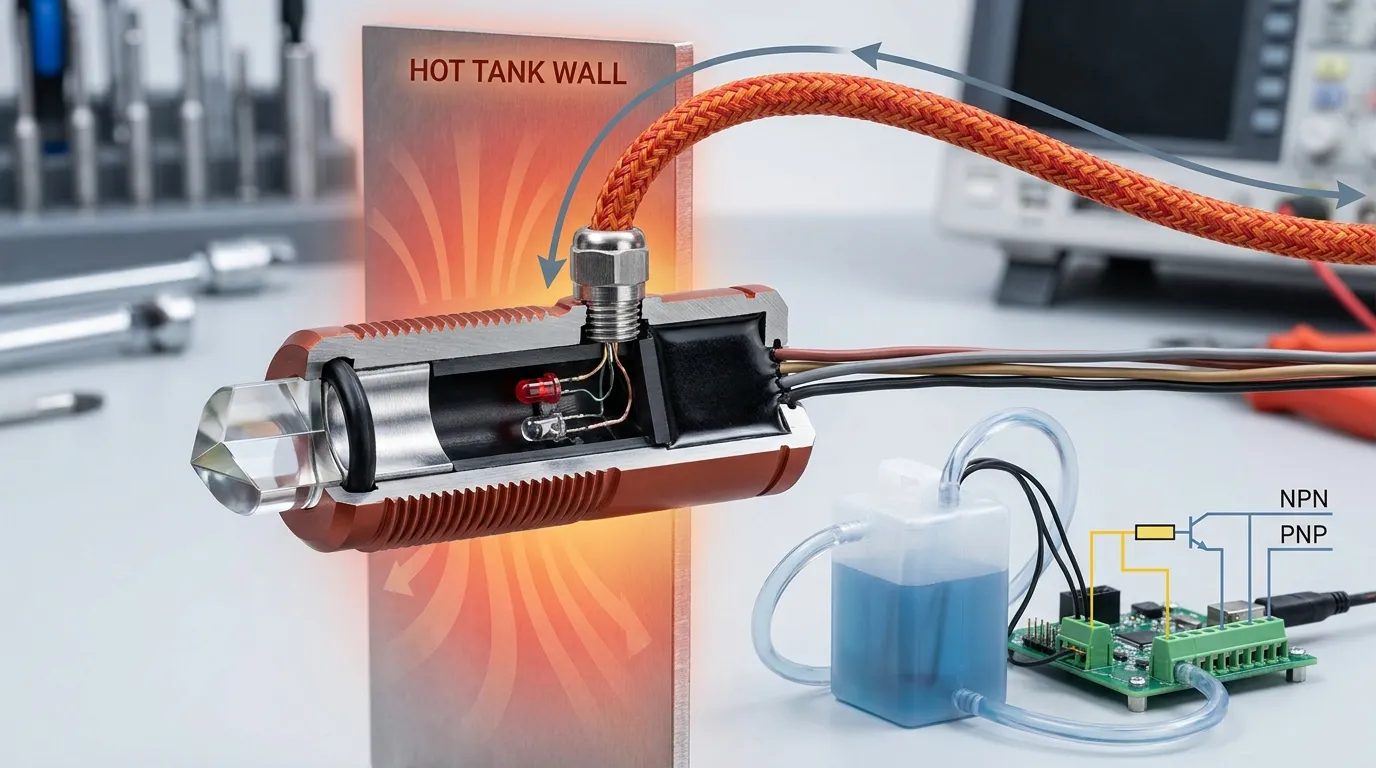
ગરમ ટાંકીઓમાં, સેન્સર ટીપ એકમાત્ર ખુલ્લો ભાગ નથી. કેબલ રાઉટિંગ નક્કી કરી શકે છે કે પ્રોજેક્ટ સફળ થાય છે કે નહીં.
સામાન્ય આસપાસની પરિસ્થિતિઓ માટે રેટેડ કેબલ નિષ્ફળ થઈ શકે છે જો તે ગરમ ધાતુની ટાંકીને સ્પર્શે છે, હીટરની બાજુમાં ચાલે છે, અથવા ગરમ એન્ક્લોઝરમાંથી બહાર નીકળે છે. કેબલને ઉચ્ચ-તાપમાનના ઇન્સ્યુલેશનની જરૂર પડી શકે છે, વધારાના તાણ રાહત, કૂલર રાઉટીંગ પાથ, અથવા મેટલ બોડી ડિઝાઇન જે કેબલ એન્ટ્રીમાં સીધી ગરમીના સ્થાનાંતરણને ઘટાડે છે.
કનેક્ટર પસંદગી પણ મહત્વની છે. M8, M12, પ્લગ-ઇન કનેક્ટરો, ફ્લાઇંગ લીડ્સ, અને કસ્ટમ હાર્નેસની ગરમીની વિવિધ મર્યાદા હોય છે. જો કનેક્ટર હોટ ઝોનની બહાર બેસે છે, ડિઝાઇન સરળ હોઈ શકે છે. જા કનેક્ટર ટાંકીની દિવાલની નજીક હોય તો, કનેક્ટર મટિરિયલ અને સીલિંગને એકસાથે ચકાસવું જાઇએ..
ઉચ્ચ-તાપમાન કાર્યક્રમો માટે, ખરીદદારોએ પુષ્ટિ કરવી જોઈએ:
- કેબલ જેકેટ મટિરિયલ અને હીટ એક્સપોઝર એરિયા
- હોટ ટેન્કની દિવાલથી કનેક્ટરનું અંતર
- શું કેબલ ચોક્કસ છે, ફ્લેક્સીંગ, અથવા વાઇબ્રેશનના સંપર્કમાં આવે છે
- શું તેલ, કૂલન્ટ, અથવા સફાઈ રાસાયણિક સંપર્ક કેબલ
- શું આઉટપુટ વાયરિંગ NPN વાપરે છે, PNP, અથવા અન્ય નિયંત્રણ ઇન્ટરફેસ
- શું નિયંત્રણ બોર્ડને સામાન્ય રીતે ખોલવાની જરૂર છે, સામાન્ય રીતે બંધ છે, ઉચ્ચ-ઇન-પ્રવાહી, અથવા લો-ઇન-લિક્વિડ લોજિક
હોટ-મીડિયા કાર્યક્રમ ચકાસણીની યાદી
અવતરણ અથવા નમૂનાની વિનંતી કરતા પહેલા આ ચેકલિસ્ટને વાપરો:
| RFQ વસ્તુ | શું પ્રદાન કરવું |
|---|---|
| પ્રવાહી પ્રકાર | પાણી, કૂલન્ટ, તેલ, ડિટર્જન્ટ, રાસાયણિક ઉકેલ, અથવા મિશ્રિત માધ્યમો |
| સતત તાપમાન | પ્રવાહીનું સામાન્ય લાંબા ગાળાનું ઓપરેટિંગ તાપમાન |
| ટોચનું તાપમાન | સૌથી વધુ અપેક્ષિત તાપમાન અને એક્સપોઝર સમયગાળો |
| માઉન્ટ સ્થાન | બાજુ માઉન્ટ, તળિયે માઉન્ટ, ટોચની નોંધણી, અથવા કસ્ટમ ટાંકી દિવાલ ડિઝાઇન |
| ભીની સામગ્રી પસંદગી | PSU, 316 સ્ટેઈનલેસ સ્ટીલ, ગ્લાસ, PTFE, અથવા ફેક્ટરી ભલામણ |
| સીલ આવશ્યકતા | મીડિયા સુસંગતતા, દબાણની સ્થિતિ, અને સફાઈ ચક્ર |
| કેબલ એક્સપોઝર | હોટ-ઝોન લંબાઈ, કનેક્ટર અંતર, અને રાઉટીંગ વાતાવરણ |
| આઉટપુટ પ્રકાર | NPN, PNP, આઉટપુટ બદલો, અથવા ટ્રાન્સમીટર ચર્ચા |
| વીજ પુરવઠો | કન્ટ્રોલ બોર્ડ વોલ્ટેજની પુષ્ટિ RFQ તબક્કે |
| કાર્યક્રમ ધ્યેય | ઉચ્ચ-સ્તરનું એલાર્મ, નીચા સ્તરનું એલાર્મ, ડ્રાય રન પ્રોટેક્શન, લીક શોધ, અથવા OEM ટાંકી નિયંત્રણ |
| નમૂના ચકાસણી | બેન્ચ ચકાસણી, ગરમ-પ્રવાહી પલાળવાની કસોટી, અને ઉત્પાદન પહેલાં ઇન્સ્ટોલેશન પરીક્ષણ |
હોટ કૂલન્ટ અને રિઝવોયર પ્રોજેક્ટ્સ માટે, ધ કૂલન્ટ ટેન્ક સેન્સર પેજ કોમ્પેક્ટ ટેન્ક મોનિટરિંગ માટે એપ્લિકેશન સંદર્ભ આપે છે.
5-સ્ટેપ ઓઇએમ/ઓડીએમ સપ્લાય પ્રોસેસ
1. પૂછપરછ
પ્રવાહી મોકલો, તાપમાન રૂપરેખા, માઉન્ટ સ્થાન, આઉટપુટ આવશ્યકતા, ચિત્ર દોરવું, ફોટો, અથવા હાલનો ભાગ નમૂનો. અમારી ટીમ પ્રમાણભૂત ઓપ્ટિકલ સ્વીચ છે કે કેમ તેની સમીક્ષા કરે છે કે નહીં, સ્ટેઈનલેસ આવૃત્તિ, ગ્લાસ આવૃત્તિ, અથવા કસ્ટમાઇઝ્ડ સ્ટ્રક્ચર વધુ યોગ્ય છે.
2. વિશિષ્ટતા અને વૈવિધ્યીકરણ
અમે વ્યવહારુ સેન્સર રૂપરેખાંકનની પુષ્ટિ કરીએ છીએ: ભીની સામગ્રી, થ્રેડ, કેબલ, આઉટપુટ તર્ક, કનેક્ટર, છાપ, અને શું તાપમાનની ટોચમર્યાદા નમૂના પરીક્ષણ દ્વારા માન્ય હોવી જોઈએ.
3. નમૂનો
ઇલેક્ટ્રિકલ પરીક્ષણ માટે નમૂના તૈયાર કરવામાં આવે છે, નિમજ્જન પરીક્ષણ, અને ઇન્સ્ટોલેશન ચકાસણી. હોટ-મીડિયા પ્રોજેક્ટ્સ માટે, અમે વાસ્તવિક પ્રવાહી તાપમાન અને ફરજ-ચક્ર શરતો હેઠળ પરીક્ષણની ભલામણ કરીએ છીએ.
4. ઉત્પાદન અને ક્યુસી
નમૂનાની મંજૂરી પછી, ઉત્પાદન પુષ્ટિ થયેલ ડ્રોઇંગ અને સ્પષ્ટીકરણને અનુસરે છે. ક્યુસીમાં દેખાવનું નિરીક્ષણ શામેલ હોઈ શકે છે, વાયરિંગ ચકાસણી, આઉટપુટ વિધેય ચકાસણી, સીલિંગ ચકાસણી, અને ઉત્પાદન પહેલાં એપ્લિકેશન-વિશિષ્ટ પરીક્ષણ સંમત થયા.
5. વહાણખોરી
હોજેલીટેક યુ.એસ.માં સેન્સર ઉત્પાદનોની નિકાસ કરે છે, અમે, ભારત, અને અન્ય બજારો. વહાણખોરી, પેકેજીંગ, લેબલીંગ, અને ખરીદનારના ઓર્ડર અને ગંતવ્યના આધારે દસ્તાવેજીકરણની ચર્ચા કરી શકાય છે.
ઑર્ડર આપતા પહેલા પુષ્ટિ કરવાની આવશ્યકતાઓ અને સ્પેસિફિકેશન
વિશ્વસનીય ઉચ્ચ-તાપમાન ઓપ્ટિકલ સેન્સર ઓર્ડર સેન્સર બોડી કરતાં વધુ પુષ્ટિ કરે છે. ઓછામાં ઓછું, વ્યાખ્યાયિત કરો:
- સેન્સર પ્રકાર: પોઇન્ટ લેવલ ઓપ્ટિકલ સ્વીચ અથવા સતત સ્તર પ્રોજેક્ટ
- ભીની સામગ્રી: PSU, 316 સ્ટેઈનલેસ સ્ટીલ, ગ્લાસ, PTFE, અથવા વૈવિધ્યપૂર્ણ
- આઉટપુટ: NPN, PNP, ડિજીટલ સ્વીચ આઉટપુટ, અથવા 4-20 એમએ ચર્ચા
- આઉટપુટ તર્ક: પ્રવાહીમાં સક્રિય અથવા હવામાં સક્રિય
- માઉન્ટ કરી રહ્યા છીએ: થ્રેડ, ફ્લેન્જ, બાજુની દિવાલ, તળિયે માઉન્ટ, અથવા કોમ્પેક્ટ OEM માળખું
- કેબલ: લંબાઈ, જેકેટ સામગ્રી, કનેક્ટર, અને ગરમીના સંપર્કમાં
- સીલ: પ્રવાહી અને તાપમાન ચક્ર સાથે સુસંગતતા
- વિદ્યુત એકીકરણ: સપ્લાય વોલ્ટેજ, લોડ, નિયંત્રક, PLC, અથવા PCB ઇનપુટ
- મીડિયા વર્તણૂક: ફીણ, પરપોટા, આવરણ, તેલ ફિલ્મ, અવશેષો, રંગ, અથવા સ્નિગ્ધતા
- માન્યતા પ્લાન: બેચના ઉત્પાદન પહેલાં નમૂના પરીક્ષણની સ્થિતિ
સામગ્રી અને એપ્લિકેશન સરખામણી
| કાર્યક્રમની પરિસ્થિતિ | વધુ સારો પ્રારંભ વિકલ્પ | શા માટે |
|---|---|---|
| ગરમ પ્રવાહી સાથે કોમ્પેક્ટ પ્લાસ્ટિક ટાંકી | જો યોગ્ય હોવાની પુષ્ટિ થાય તો પીએસયુ ઓપ્ટિકલ સેન્સર | ખર્ચ-અસરકારક અને કોમ્પેક્ટ, પરંતુ વાસ્તવિક સામગ્રી અને સીલ રેટિંગની અંદર રહેવું આવશ્યક છે |
| હોટ કૂલન્ટ રિઝવોયર | 316 સ્ટેનલેસ અથવા ગ્લાસ-ટીપ ડિઝાઇન | ગરમી ક્યાં હોય તે વધુ સારી પસંદગી, એડિટિવ્સ, અને કંપન ચિંતાઓ છે |
| ગરમ તેલ ટાંકી | યોગ્ય ઓપ્ટિકલ ટીપ અને કેબલ સાથે સ્ટેનલેસ હાઉસિંગ | તેલ સુસંગતતા, કેબલ જેકેટ, અને સીલ સામગ્રીની કાળજીપૂર્વક ચકાસણી કરવી જાઇએ |
| કાટવાળું ગરમ રસાયણ | ગ્લાસ/પીટીએફઇ ચર્ચા | રાસાયણિક પ્રતિરોધ અને તાપમાન બંનેને માન્ય કરવું આવશ્યક છે |
| ખરીદનાર ફક્ત "ગરમ પ્રવાહી" જાણે છે | RFQ-આધારિત સામગ્રી પસંદગી | ફેક્ટરીને મીડિયાની જરૂર છે, સતત તાપમાન, ટોચનું તાપમાન, અને સલામત રીતે અવતરણ કરતા પહેલા વિગતો માઉન્ટ કરી રહ્યા છે |
હોજેલીટેક શા માટે પસંદ કરો
હોજેલીટેક એ શેનઝેન ઉત્પાદક અને નિકાસકાર છે જે ફોટોઇલેક્ટ્રિક ઓપ્ટિકલ લિક્વિડ લેવલ સેન્સિંગ પર ધ્યાન કેન્દ્રિત કરે છે. અમે ઇન-હાઉસ આરને ટેકો આપીએ છીએ&D, OEM/ODM વૈવિધ્યીકરણ, કોમ્પેક્ટ સેન્સર સ્ટ્રક્ચર્સ, ઔદ્યોગિક સામગ્રી પસંદગી, અને એપ્લિકેશન-આધારિત નમૂના માન્યતા.
ખરીદદારો અમારી સાથે કામ કરે છે જ્યારે તેમને કેટલોગ-ફક્ત સપ્લાયરને બદલે વ્યવહારિક ફેક્ટરી-ડાયરેક્ટ સેન્સર ભાગીદારની જરૂર હોય છે. અમે પીએસયુની તુલના કરવામાં મદદ કરી શકીએ છીએ, 316 સ્ટેઈનલેસ સ્ટીલ, ગ્લાસ, અને પીટીએફઇ વિકલ્પો, કેબલ અને આઉટપુટ વિગતોને સંતુલિત કરો, અને ટેન્ક માટે OEM એકીકરણને સપોર્ટ કરે છે, ઉપકરણો, ઔદ્યોગિક સાધનો, કૂલન્ટ સિસ્ટમ્સ, અને સ્માર્ટ લિક્વિડ મોનિટરિંગ પ્રોડક્ટ્સ. તુયા અને સ્માર્ટ લાઇફ ઇન્ટિગ્રેશનની પણ ચર્ચા કરી શકાય છે જ્યાં પ્રોજેક્ટને સરળ વાયર્ડ સ્વિચને બદલે કનેક્ટેડ લિક્વિડ મોનિટરિંગની જરૂર છે.
ચપળ
હાઈ ટેમ્પરેચર ઓપ્ટિકલ લિક્વિડ લેવલ સેન્સરનું વાસ્તવિક મહત્તમ તાપમાન કેટલું છે?
વાસ્તવિક મહત્તમ તાપમાન સંપૂર્ણ એસેમ્બલી પર આધાર રાખે છે: પ્રિઝમ, આવાસ, છાપ, કેબલ, કનેક્ટર, પોટિંગ, અને પ્રવાહી સુસંગતતા. અમે એક હેડલાઇન નંબર દ્વારા પસંદ કરવાની ભલામણ કરતા નથી. તમારી સતત અને ટોચના તાપમાનની આવશ્યકતાઓ મોકલો જેથી સાચી છતની પુષ્ટિ થઈ શકે.
શું સતત તાપમાન ટોચના તાપમાનથી અલગ છે?
હા. સતત તાપમાન એ લાંબા ગાળાના સામાન્ય સંપર્ક છે. પીક તાપમાન એ એક ટૂંકી ઘટના છે. સેન્સર ટૂંકા શિખરમાં ટકી શકે છે, પરંતુ જો પ્રિઝમ હોય તો સતત નિમજ્જનમાં નિષ્ફળ જાય છે., છાપ, અથવા તે ફરજ ચક્ર માટે કેબલ રેટ કરવામાં આવતું નથી.
ગરમ પ્રવાહી માટે કયું મટિરિયલ શ્રેષ્ઠ છે: PSU, 316 સ્ટેઈનલેસ સ્ટીલ, ગ્લાસ, અથવા PTFE?
જ્યારે રેટિંગની અંદર પુષ્ટિ થાય ત્યારે પીએસયુ કોમ્પેક્ટ ઓઇએમ એપ્લિકેશન્સને અનુકૂળ કરી શકે છે. 316 સ્ટેનલેસ સ્ટીલ યાંત્રિક ટકાઉપણું સુધારે છે. જ્યારે પ્લાસ્ટિક સુસંગતતા ચિંતા હોય ત્યારે ઘણીવાર ગ્લાસને પસંદ કરવામાં આવે છે. રાસાયણિક સુસંગતતા માટે પીટીએફઇ ઉપયોગી છે, પરંતુ તાપમાન અને સીલિંગને હજી પણ પુષ્ટિ કરવાની જરૂર છે.
શું ઓપ્ટિકલ લેવલ સેન્સર હોટ કૂલન્ટ ટેન્કમાં કામ કરી શકે છે?
હા, જ્યારે સામગ્રી કૂલન્ટ સ્તરની શોધ માટે ઓપ્ટિકલ સેન્સરનો ઉપયોગ કરી શકાય છે, છાપ, કેબલ, અને આઉટપુટ યોગ્ય રીતે પસંદ થયેલ છે. કૂલન્ટ એડિટિવ્સ, તાપમાન ચક્ર, સ્પંદન, અને નમૂના પસંદગી પહેલાં માઉન્ટિંગ સ્થિતિ શેર કરવી જોઈએ.
શું ઓપ્ટિકલ સેન્સર સતત સ્તરના સેન્સર છે?
મોટા ભાગના ઓપ્ટિકલ પ્રિઝમ સેન્સર પોઇન્ટ લેવલ સ્વીચ હોય છે. તેઓ શોધી કાઢે છે કે ટીપ સૂકી છે કે ભીની છે. જો તમારા પ્રોજેક્ટને સતત માપન અથવા 4-20 એમએ આઉટપુટની જરૂર હોય તો, અલગ સતત સ્તર અથવા ટ્રાન્સમીટર આધારિત સોલ્યુશનની ચર્ચા કરો.
અવતરણની વિનંતી કરતા પહેલા મારે શું મોકલવું જોઈએ?
પ્રવાહી પ્રકારને મોકલો, સતત તાપમાન, ટોચનું તાપમાન, માઉન્ટ કરવાની પદ્ધતિ, ટાંકી સામગ્રી, થ્રેડની આવશ્યકતા, કેબલ લંબાઈ, જોડનાર પ્રકાર, આઉટપુટ પ્રકાર, અને લક્ષ્ય ઓર્ડર જથ્થો. ફોટા, રેખાંકનો, અથવા હાલના સેન્સર નમૂના પણ મદદરૂપ થાય છે.
અવતરણની વિનંતી કરો
ઉચ્ચ-તાપમાન ઓપ્ટિકલ લિક્વિડ લેવલ સેન્સર માટે, ઓર્ડર આપતા પહેલા સંપૂર્ણ સેન્સર એસેમ્બલીની વાસ્તવિક છતની પુષ્ટિ કરવી એ સૌથી સલામત પ્રથમ પગલું છે. તમારી હોટ-મીડિયા ચેકલિસ્ટ મોકલો, ટાંકી ચિત્ર, અને વોટ્સએપ અથવા ઇમેઇલ દ્વારા હોજેલીટેકને વાયરિંગની આવશ્યકતા, અને અમારી ટીમ યોગ્ય સામગ્રીની ભલામણ કરશે, આઉટપુટ, કેબલ, અને નમૂના યોજના.


