
કૂલન્ટ ટેન્ક માટે ઓપ્ટિકલ લેવલ સેન્સર
ઓપ્ટિકલ લેવલ સેન્સર કૂલન્ટ ટેન્ક સોલ્યુશન લો-કૂલન્ટ ઓવરહીટિંગને અટકાવવામાં મદદ કરે છે, પમ્પ ડ્રાય રનિંગ, પોલાણ, અને જળાશય ખતરનાક સ્તરે પહોંચે તે પહેલાં અણધારી મશીન શટડાઉન. મશીન ટૂલ્સ માટે, એન્જિનો, ચિલર્સ, કૂલિંગ સ્કિડ્સ, અને ઔદ્યોગિક જળાશયો[ફેરફાર કરો], હોજેલીટેક નીચા સ્તરના એલાર્મ શોધ માટે કોમ્પેક્ટ ફોટોઇલેક્ટ્રિક લેવલ સેન્સર સપ્લાય કરે છે, કૂલન્ટની હાજરીની પુષ્ટિ, અને OEM કૂલન્ટ ટેન્ક એકીકરણ.
ધ્યેય સરળ છે: સલામત ન્યૂનતમ સ્તર પર કૂલન્ટ હાજર છે કે કેમ તે શોધો, પછી પીએલસીને વિશ્વસનીય સિગ્નલ મોકલો, નિયંત્રણ બોર્ડ, રીલે, બઝર, ચેતવણી લેમ્પ, અથવા શટડાઉન સર્કિટ.
કૂલન્ટ ટેન્ક લેવલ ડિટેક્શન ક્ષમતાઓ
હોજેલીટેક ઓપ્ટિકલ સેન્સર્સ કોમ્પેક્ટ ટાંકી અને ઔદ્યોગિક જળાશયોમાં પોઇન્ટ-લેવલ શોધ માટે રચાયેલ છે જ્યાં ફ્લોટ સ્વિચ ખૂબ ભારે હોઈ શકે છે, યાંત્રિક રીતે અવિશ્વસનીય, અથવા કંપન પ્રત્યે સંવેદનશીલ.
કૂલન્ટ ટેન્કના એપ્લીકેશન માટે, અમે ટેકો આપી શકીએ છીએ:
- સીએનસી મશીન ટૂલ કૂલન્ટ રિઝવોયરમાં લો-કૂલન્ટ એલાર્મ ડિટેક્શન
- કૂલન્ટ પરિભ્રમણ પમ્પ માટે પમ્પ ઇનલેટ પ્રોટેક્શન
- ઔદ્યોગિક ઉપકરણો માટે એિન્જન કૂલન્ટ રિઝવોયર લેવલ મોનિટરિંગ
- ચિલર ટેન્ક લો-લેવલ એલાર્મ ડિટેક્શન
- મેટલવર્કિંગ સિસ્ટમ્સમાં કૂલિંગ લ્યુબ્રિ્ાકન્ટ લેવલ મોનિટરિંગ
- ટાંકી બિલ્ડરો અને સાધનો ઉત્પાદકો માટે OEM / ODM સેન્સર કસ્ટમાઇઝેશન
- વૈવિધ્યપૂર્ણ કેબલ સાથે ફોટોઇલેક્ટ્રિક સેન્સિંગ મોડ્યુલો, કનેક્ટર, આઉટપુટ, અને આવાસ વિકલ્પો
- કૂલન્ટના પ્રકાર પર આધારિત સેન્સર પસંદગી, ટાંકી સામગ્રી, માઉન્ટ સ્થાન, અને નિયંત્રણ તર્ક
જો તમારી એપ્લિકેશનને સામાન્ય પોઇન્ટ-લેવલ સેન્સર પ્લેટફોર્મની જરૂર હોય તો, જુઓ અમારું ઓપ્ટિકલ લેવલ સેન્સર પ્રમાણભૂત પ્રવાહી શોધ પ્રોજેક્ટ્સ માટેના વિકલ્પો.
લો-કૂલન્ટ ઓવરહીટિંગ અને પમ્પને નુકસાન અટકાવે છે
કૂલન્ટ સિસ્ટમમાં, લેવલ સેન્સર માત્ર મોનિટરિંગ એક્સેસરી નથી. તે એક સુરક્ષા ઉપકરણ છે. જ્યારે કૂલન્ટ સલામત સ્તરથી નીચે પડે છે, સિસ્ટમ ઠંડક ક્ષમતા ગુમાવી શકે છે, પંપ હવા ખેંચી શકે છે, અને ગરમીને દૂર કરવા માટે પૂરતા પ્રવાહી વિના મશીન ચાલુ રાખી શકે છે.
સામાન્ય નિષ્ફળતાઓ નિમ્ન-સ્તરના ઓપ્ટિકલ સેન્સર અટકાવવામાં મદદ કરે છે જેમાં નીચેનાનો સમાવેશ થાય છે:
- જ્યારે કૂલન્ટ ટેન્કનું સ્તર સક્શન પોઇન્ટથી નીચે આવે ત્યારે પમ્પ ડ્રાય રનિંગ
- મશીન ટૂલ્સમાં વધુ પડતું ગરમ થવું, એન્જિનો, અથવા ચિલર
- એર ઇન્ટેક અથવા પોલાણને કારણે નબળું કૂલન્ટ પરિભ્રમણ
- અપૂરતા કૂલિંગ ફ્લોને કારણે ટૂલના ઘસારા અથવા પ્રોસેસની અસ્થિરતા
- ચિલર લો-લેવલ ફોલ્ટ અને ઇમરજન્સી શટડાઉન
- વિલંબિત મેન્યુઅલ નિરીક્ષણને કારણે બિનઆયોજિત ડાઉનટાઇમ
- પર્યાપ્ત પ્રવાહી વિના વારંવાર કામગીરીને કારણે પમ્પ સીલને નુકસાન થાય છે.
પમ્પ-કેન્દ્રિત કાર્યક્રમો માટે, અમારા સંબંધિત પમ્પ ડ્રાય રન પ્રોટેક્શન પેજ સમજાવે છે કે પંપ અસુરક્ષિત પરિસ્થિતિઓમાં ચાલે તે પહેલાં પોઇન્ટ-લેવલ સેન્સિંગનો ઉપયોગ ઇન્ટરલોક તરીકે કેવી રીતે કરી શકાય છે.
ઓપ્ટિકલ સેન્સર કૂલન્ટનું સ્તર કેવી રીતે શોધે છે
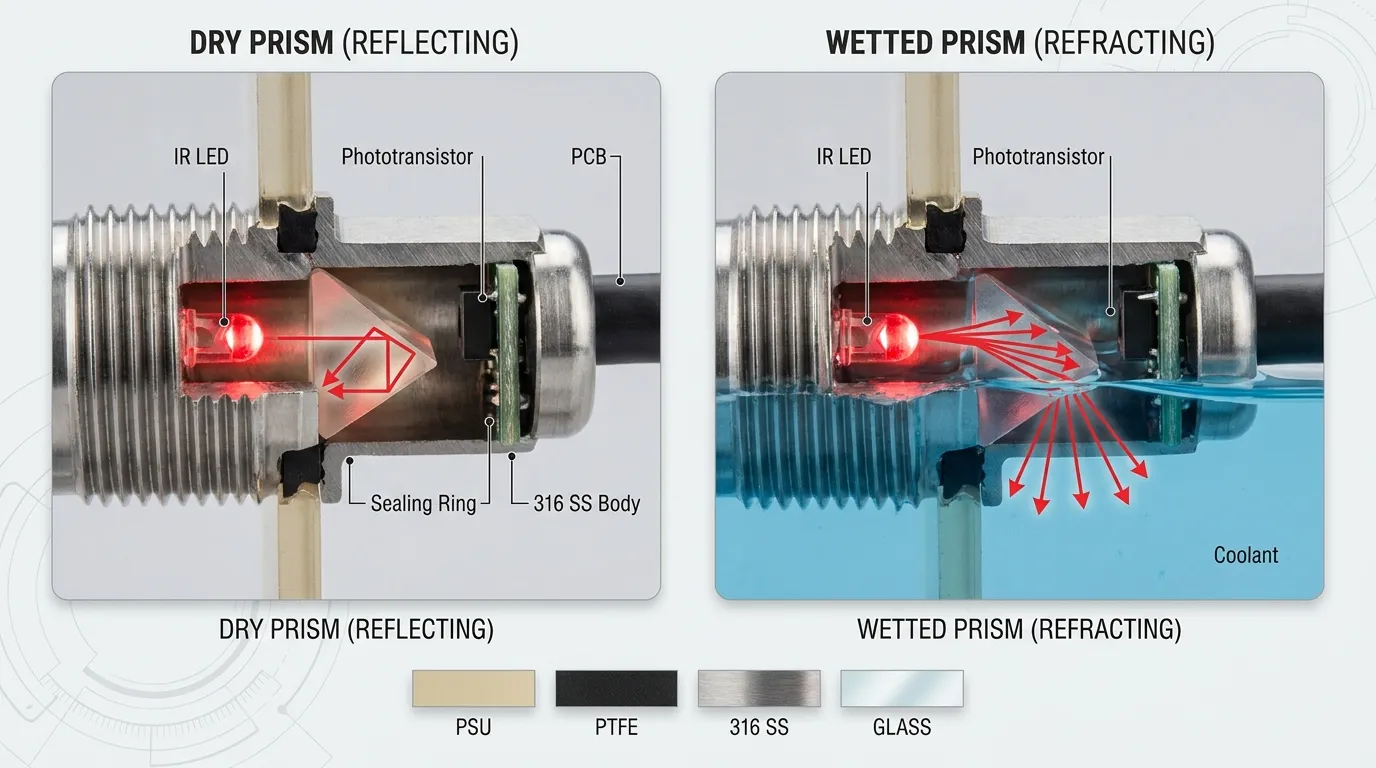
ફોટોઇલેક્ટ્રિક કૂલન્ટ લેવલ સેન્સર સામાન્ય રીતે ઇન્ફ્રારેડ એલઇડીનો ઉપયોગ કરે છે, ફોટોટ્રાન્ઝિસ્ટર, અને પ્રિઝમ આકારની સેન્સિંગ ટીપ. સેન્સિંગ ટીપ કૂલન્ટ જળાશયની અંદર અથવા દિવાલ દ્વારા લક્ષ્ય એલાર્મ સ્તર પર ઇન્સ્ટોલ કરવામાં આવે છે.
જ્યારે પ્રિઝમની ટોચ હવામાં હોય ત્યારે, ઇન્ફ્રારેડ પ્રકાશ પ્રિઝમની અંદર આંતરિક રીતે પરાવર્તિત થાય છે અને રીસીવર પર પાછો ફરે છે. જ્યારે કૂલન્ટ પ્રિઝમને આવરી લે છે, પ્રકાશ પાછા પરાવર્તનને બદલે પ્રવાહીમાં વક્રીભવન કરે છે. સેન્સર ઇલેક્ટ્રોનિક્સ આ ફેરફારને શોધી કાઢે છે અને આઉટપુટ સ્થિતિને બદલે છે.
આ શુષ્ક-વિરુદ્ધ ભીની શોધ પદ્ધતિ કૂલન્ટ ટાંકીમાં ઘણા ફાયદા આપે છે:
- જામ કરવા માટે કોઈ ખસેડતા ફ્લોટ આર્મ નથી, લાકડી, અથવા પહેરો
- નાના જળાશયો માટે કોમ્પેક્ટ સેન્સિંગ ટીપ
- સુયોજિત માઉન્ટિંગ ઊંચાઈ પર ઝડપી બિંદુ-સ્તરનો પ્રતિભાવ
- ઘણા પાણી આધારિત માટે સ્થિર શોધ, ગ્લાયકોલ આધારિત, અને તેલ આધારિત પ્રવાહી
- ઇલેક્ટ્રોનિક કંટ્રોલ સિસ્ટમ્સ સાથે સરળ લો-લેવલ એલાર્મ એકીકરણ
- આડી બાજુ માઉન્ટિંગ અથવા વૈવિધ્યપૂર્ણ ટાંકી એકીકરણ માટે યોગ્ય છે
સેન્સર કૂલન્ટની ગુણવત્તા અથવા રાસાયણિક ફોર્મ્યુલાનું વિશ્લેષણ કરતું નથી. તેનું કામ સ્તર શોધવાનું છે: શું એલાર્મ બિંદુ પર સેન્સિંગ ટીપ સૂકી અથવા ભીની છે.
કૂલન્ટ સુસંગતતા અને તાપમાનની પસંદગી
કૂલન્ટની સુસંગતતા પ્રવાહી પ્રકાર પર આધાર રાખે છે, એકાગ્રતા, એડિટિવ્સ, તાપમાન, દબાણ, સફાઈ પ્રક્રિયા, અને ભીની સામગ્રી. આ કારણથી, સેન્સર બાડી અને પ્રિઝમ મટિરિયલની પસંદગી ટાંકીમાં વપરાતા વાસ્તવિક કૂલન્ટ અનુસાર હોવી જાઇએ., માત્ર કાર્યક્રમનું નામ જ નહિં.
સામાન્ય ભીના-સામગ્રી વિકલ્પોમાં પીએસયુ પ્લાસ્ટિકનો સમાવેશ થાય છે, PTFE, 316 સ્ટેઈનલેસ સ્ટીલ, અને ગ્લાસ. ઊંચા તાપમાનના જળાશયો માટે, ગરમ કૂલન્ટ લૂપ્સ, અથવા કઠોર ઔદ્યોગિક પ્રવાહી, નમૂના લેતા પહેલા મોડેલ અને કેબલ સામગ્રીની સમીક્ષા કરવી જોઈએ. એલિવેટેડ-ટેમ્પરેચર એપ્લિકેશન્સ માટે, જુઓ અમારું ઉચ્ચ-તાપમાન ઓપ્ટિકલ સેન્સર પસંદગી પાનું.
| કૂલન્ટ / પ્રવાહી પ્રકાર | લાક્ષણિક વપરાશ કેસ | સૂચવેલ સેન્સર મટિરિયલ દિશા | તાપમાન વિચારણા | ઑર્ડર આપતા પહેલા ખરીદનાર તપાસો |
|---|---|---|---|---|
| પાણી આધારિત કૂલન્ટ | CNC મશીન સાધનો, મશીનિંગ કેન્દ્રો, સામાન્ય કૂલિંગ ટાંકીઓ | એડિટિવ્સ અને ટાંકીની ડિઝાઇન પર આધાર રાખીને પીએસયુ અથવા સ્ટેનલેસ/ગ્લાસ | સામાન્ય પરિચાલન અને સફાઈ તાપમાનની પુષ્ટિ કરો | ફીણ ચકાસો, ચિપ્સ, એડિટિવ સાંદ્રતા, અને એલાર્મ ઊંચાઈ |
| ગ્લાયકોલ આધારિત કૂલન્ટ | ચિલર્સ, કૂલિંગ સ્કિડ્સ, એન્જિન સંબંધિત ઔદ્યોગિક જળાશયો[ફેરફાર કરો] | PSU, PTFE, અથવા સુસંગતતા સમીક્ષા પછી સ્ટેનલેસ / ગ્લાસ | નીચા તાપમાન અને ઉચ્ચ-તાપમાન ઓપરેટિંગ રેન્જની પુષ્ટિ કરો | ગ્લાયકોલની સાંદ્રતા અને જળાશય તાપમાનની રેન્જની વહેંચણી કરો |
| ઓઇલ આધારિત કૂલન્ટ / કટીંગ ઓઇલ | મેટલવર્કિંગ, લુબ્રિકેશન-કૂલિંગ સિસ્ટમ્સ | PTFE અથવા 316 સ્ટેનલેસ/ગ્લાસ ઘણીવાર કઠોર પ્રવાહી માટે પસંદ કરવામાં આવે છે | ઓપરેટિંગ તાપમાન પર સ્નિગ્ધતામાં ફેરફારની પુષ્ટિ કરો | જથ્થાબંધ ઓર્ડર આપતા પહેલા વાસ્તવિક ઓઇલ/કૂલન્ટ સેમ્પલ સાથે પરીક્ષણ કરો |
| કૂલિંગ લ્યુબ્રિ્ાકન્ટ પ્રવાહી મિશ્રણ | મશીન ટૂલ કૂલન્ટ ટાંકી | સામગ્રીની પસંદગી પ્રવાહી મિશ્રણ રસાયણશાસ્ત્ર અને પ્રદૂષણના સ્તર પર આધારિત છે | સતત પરિચાલન દરમિયાન ટેન્ક ગરમ ચાલે છે કે નહીં તેની પુષ્ટિ કરો | કાદવ ચકાસો, ફીણ, ચિપ્સ, અને સફાઈ પદ્ધતિ |
| ઠંડુ પાણી / પ્રસેસ કૂલન્ટ | ઔદ્યોગિક ચિલર્સ અને પ્રોસેસ કૂલિંગ જળાશયો | પ્રવાહી અને ઇન્સ્ટોલેશનના આધારે પીએસયુ અથવા સ્ટેનલેસ/ગ્લાસ | ચિલર ટેમ્પરેચર સાયકલ અને એલાર્મ રિસ્પોન્સ આવશ્યકતાની પુષ્ટિ કરો | લો-લેવલ એલાર્મ લોજિક અને પમ્પ ઇન્ટરલોક વાયરિંગ ચકાસો |
| કઠોર અથવા અજ્ઞાત કૂલન્ટ | OEM મશીનો, સ્પેશિયલ પ્રોસેસ ઇક્વિપમેન્ટ | PTFE, 316 ડાઘ વગરના, અથવા પહેલા કાચની સમીક્ષા કરવી જોઈએ | તાપમાનની રેન્જની RFQ તબક્કે પુષ્ટિ કરવી આવશ્યક છે | કૂલન્ટની વિગતો મોકલો અથવા નમૂનાની ચકાસણીની વિનંતી કરો |
કાટ માટે, ઊંચું તાપમાન, અથવા મેટલ ટાંકી એપ્લિકેશન્સ, a 316 સ્ટેઈનલેસ સેન્સર પ્લાસ્ટિક-બોડીવાળા સેન્સર કરતાં વધુ યોગ્ય હોઈ શકે છે.
કૂલન્ટ જળાશયો માટે લો-લેવલ એલાર્મ વાયરિંગ
મોટાભાગના કૂલન્ટ ટેન્ક પ્રોજેક્ટ્સ ઓપ્ટિકલ સેન્સરનો ઉપયોગ લો-લેવલ સ્વીચ તરીકે કરે છે. આઉટપુટને મશીન કંટ્રોલ સિસ્ટમ સાથે મેળ ખાવા માટે રૂપરેખાંકિત કરી શકાય છે, એલાર્મ બોર્ડ, PLC, અથવા રીલે ઇન્ટરફેસ.
સામાન્ય આઉટપુટ પસંદગીઓમાં સમાવેશ થાય છે:
- NPN આઉટપુટ ડૂબતા ઇનપુટ સર્કિટ માટે
- PNP આઉટપુટ ઇનપુટ સર્કિટના સોર્સિંગ માટે
- NO અથવા NC તર્ક જ્યારે ટીપ સૂકી હોય અથવા ભીની હોય ત્યારે એલાર્મ ટ્રિગર થવું જોઈએ કે કેવા તેના પર આધાર રાખે છે
- રીલે ઇન્ટરફેસ જ્યારે મશીનને અલગ સ્વિચિંગની જરૂર હોય છે
- ચેતવણી લેમ્પ અથવા બઝર આઉટપુટ કંટ્રોલ સર્કિટ દ્વારા
- પમ્પ સ્ટોપ ઇન્ટરલોક ડ્રાય રનિંગને અટકાવવા માટે
- 4-20 એમએ આઉટપુટ જ્યારે પોઈન્ટ-લેવલ સ્વીચને બદલે કન્ટિન્યુઅસ લેવલ સેન્સર પસંદ કરવામાં આવે છે
લો-કૂલન્ટ પ્રોટેક્શન માટે, ઘણા ખરીદદારો નિષ્ફળતા-સલામત તર્કને પસંદ કરે છે: જ્યારે સેન્સર ડિસ્કનેક્ટ થાય છે, ક્ષતિગ્રસ્ત, અથવા સૂકી ટીપ શોધી કાઢે છે, મશીને શાંતિથી ચાલુ રાખવાને બદલે એલાર્મ અથવા સ્ટોપ મોડમાં પ્રવેશવું જોઈએ. ઉત્પાદન પહેલાં આ તર્કની પુષ્ટિ તમારા નિયંત્રણ ઇજનેર સાથે થવી જોઈએ.
કૂલન્ટ ટેન્કમાં સેન્સરને માઉન્ટ કરવું
માઉન્ટિંગ સ્થાન નક્કી કરે છે કે એલાર્મ કેટલું ઉપયોગી થશે. ખૂબ નીચું ઇન્સ્ટોલ કરેલું સેન્સર પમ્પ પહેલાથી જ હવા ખેંચવાનું શરૂ કરે છે તે પછી જ સમસ્યા શોધી શકે છે. ખૂબ ઊંચું ઇન્સ્ટોલ થયેલ સેન્સર અવારનવાર ઉપદ્રવ એલાર્મ બનાવી શકે છે, પછી ભલે સિસ્ટમ પાસે પૂરતા પ્રમાણમાં ઉપયોગી કૂલન્ટ હોય.
મોટા ભાગના કૂલન્ટ જળાશયો માટે, સેન્સરને પમ્પ ઇનલેટ અથવા સક્શન પોઇન્ટની ઉપર લઘુત્તમ સલામત સ્તર પર માઉન્ટ કરવું જાઇએ.. ચોક્કસ ઊંચાઈ ટાંકી ભૂમિતિ પર આધાર રાખે છે, પમ્પ સ્થાન, પ્રવાહી હિલચાલ, અને શટડાઉન પહેલાં કેટલું અનામત વોલ્યુમની જરૂર છે.
મહત્વના માઉન્ટિંગ પોઇન્ટ્સમાં નીચેનાનો સમાવેશ થાય છે:
- વાસ્તવિક નીચા સ્તરની એલાર્મ ઊંચાઈ પર સેન્સિંગ ટીપને સ્થાપિત કરો
- ટીપને ભારે ચિપ સંચય અને કાદવ ઝોનથી દૂર રાખો
- જ્યાં ફીણ અથવા મજબૂત તોફાન સતત પ્રિઝમ સાથે અથડાય છે ત્યાં માઉન્ટ કરવાનું ટાળો
- ટાંકીની દિવાલ અને કૂલન્ટ પ્રકાર માટે અનુકૂળ સીલિંગ પદ્ધતિનો ઉપયોગ કરો.
- થ્રેડ માપની ખાતરી કરો, કેબલ દિશા, અને ઇન્સ્ટોલેશન ક્લિયરન્સ
- ગરમ સપાટીઓથી કેબલને સુરક્ષિત રાખો, ખસેડતા ભાગો, ચિપ્સ કાપી રહ્યા છે, અને કૂલન્ટ સ્પ્રે
- ધાતુની ટાંકીઓ માટે, ગ્રાઉન્ડિંગની ખાતરી કરો, વિદ્યુત ઘોંઘાટ, અને કનેક્ટર પ્રોટેક્શન
- પ્લાસ્ટિકની ટાંકી માટે, દિવાલની જાડાઈ અને દોરાની મજબૂતાઈ પુષ્ટિ કરો
લાક્ષણિક માઉન્ટિંગ વિકલ્પોમાં થ્રેડેડ સાઇડ માઉન્ટિંગનો સમાવેશ થાય છે, વૈવિધ્યપૂર્ણ ટાંકી બોસ ઇન્સ્ટોલેશન, કોમ્પેક્ટ આંતરિક માઉન્ટિંગ, અથવા OEM જળાશય એકીકરણ. થ્રેડ, કેબલ લંબાઈ, જોડાણકર્તાની શૈલી, અને હાઉસિંગ સામગ્રીને આરએફક્યુ તબક્કા દરમિયાન કસ્ટમાઇઝ કરી શકાય છે.
ઓર્ડર આપતા પહેલા લો-લેવલ એલાર્મ ચેકલિસ્ટ
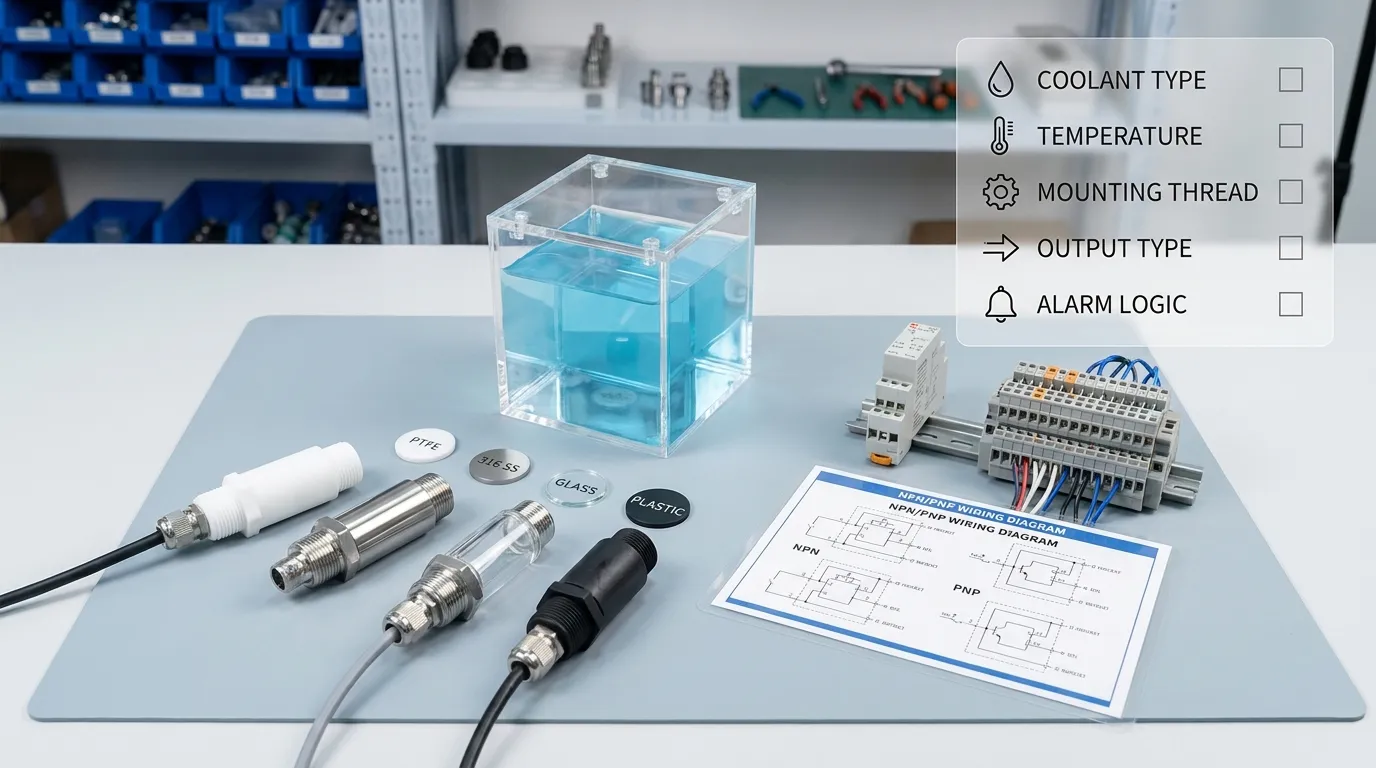
કૂલન્ટ ટેન્ક મોનિટરિંગ માટે ઓપ્ટિકલ સેન્સરની પસંદગી કરતા પહેલા, નીચેની જાણકારી તૈયાર કરો:
- કૂલન્ટ પ્રકાર: પાણી આધારિત, ગ્લાયકોલ આધારિત, તેલ આધારિત, પ્રવાહી મિશ્રણ, ચિલર પાણી, અથવા અન્ય
- જો સુસંગતતા અનિશ્ચિત હોય તો વાસ્તવિક કૂલન્ટ બ્રાન્ડ અથવા નમૂનો
- સામાન્ય ઓપરેટિંગ તાપમાન અને મહત્તમ સફાઈ અથવા પ્રક્રિયા તાપમાન
- ટાંકી સામગ્રી અને દિવાલની જાડાઈ
- માઉન્ટ કરવાની શૈલી: બાજુની દિવાલ, થ્રેડેડ બોસ, ફ્લેન્જ, અથવા વૈવિધ્યપૂર્ણ ધારક
- ટેન્કના તળિયે અથવા પમ્પ ઇનલેટમાંથી જરૂરી એલાર્મ લેવલ માપવામાં આવે છે.
- આઉટપુટ પ્રકાર: NPN, PNP, રીલે, અથવા એનાલોગ સતત સિગ્નલ
- એલાર્મ તર્ક: સામાન્ય રીતે ખુલ્લું અથવા સામાન્ય રીતે બંધ
- મશીન કંટ્રોલ બોર્ડ દ્વારા જરૂરી સપ્લાય વોલ્ટેજ
- જોડાણ લક્ષ્ય: PLC, રીલે, બઝર, ચેતવણી લેમ્પ, અથવા પંપ ઇન્ટરલોક
- કેબલ લંબાઈ, જોડનાર પ્રકાર, અને કેબલ જેકેટની આવશ્યકતા
- વાઇબ્રેશનના સંપર્કમાં, ચિપ્સ કાપી રહ્યા છે, ફીણ, તેલ ઝાકળ, અથવા કૂલન્ટ સ્પ્રે
- જરૂરી સેન્સર બોડી મટિરિયલ: PSU, PTFE, 316 સ્ટેઈનલેસ સ્ટીલ, અથવા ગ્લાસ
- ઉત્પાદન ઓર્ડર પહેલાં નમૂનાનો જથ્થો અને પરીક્ષણ યોજના
5-પગલું સેવા પ્રક્રિયા
1. પૂછપરછ
અમને તમારી કૂલન્ટ ટેન્ક એપ્લિકેશન મોકલો, પ્રવાહી પ્રકાર, ટાંકી ચિત્ર અથવા ફોટો, એલાર્મ ઊંચાઈ, અને વોટ્સએપ અથવા ઇમેઇલ દ્વારા વાયરિંગની આવશ્યકતા.
2. સ્પષ્ટીકરણ અને કસ્ટમાઇઝેશન
અમારી એન્જિનિયરિંગ ટીમ ભીની સામગ્રીની સમીક્ષા કરે છે, માઉન્ટ થ્રેડ, આઉટપુટ પ્રકાર, કેબલ, કનેક્ટર, અને એલાર્મ તર્ક. OEM/ODM પ્રોજેક્ટ્સ માટે, અમે કસ્ટમ સેન્સર સ્ટ્રક્ચર અને વાયરિંગને ટેકો આપી શકીએ છીએ.
3. નમૂના પરીક્ષણ
તમારા વાસ્તવિક કૂલન્ટ સાથે માન્યતા માટે નમૂનાઓ તૈયાર કરી શકાય છે, reservoir, નિયંત્રણ બોર્ડ, અને એલાર્મ સર્કિટ. ગ્લાયકોલ આધારિત માટે આ પગલું મહત્વપૂર્ણ છે, તેલ આધારિત, ઊંચું તાપમાન, અથવા એડિટિવ-સમૃદ્ધ કૂલન્ટ્સ.
4. ઉત્પાદન અને ક્યુસી
નમૂનાની પુષ્ટિ પછી, ફેક્ટરી સંમત રૂપરેખાંકન અનુસાર ઉત્પાદન કરે છે. ક્યુસી સેન્સર ફંક્શન પર ધ્યાન કેન્દ્રિત કરે છે, આઉટપુટ સ્થિતિ, સીલીંગ, કેબલ ગુણવત્તા, અને દેખાવ.
5. શિપિંગ અને સપોર્ટ
અમે યુ.એસ.માં ગ્રાહકો માટે સેન્સર નિકાસ કરીએ છીએ, અમે, ભારત, અને અન્ય બજારો. સપોર્ટમાં વાયરિંગની પુષ્ટિ શામેલ હોઈ શકે છે, સ્થાપન સૂચનો, અને ભાવિ પ્રોજેક્ટ્સ માટે મોડેલ પસંદગી.
પુષ્ટિ કરવા માટે આવશ્યકતાઓ અને સ્પષ્ટીકરણ બિંદુઓ
| જરૂરિયાત | શા માટે તે મહત્વનું છે |
|---|---|
| કૂલન્ટ પ્રકાર | ભીની સામગ્રી અને નમૂના પરીક્ષણની જરૂરિયાત નક્કી કરે છે |
| તાપમાન વિસ્તાર | સેન્સર બાડીને અસર કરે છે, પ્રિઝમ, સીલીંગ, અને કેબલ પસંદગી |
| માઉન્ટિંગ થ્રેડ અથવા સ્ટ્રક્ચર | સુનિશ્ચિત કરે છે કે સેન્સર લીકેજ વિના રિઝવોયરમાં ફિટ થાય છે |
| એલાર્મ બિંદુની ઊંચાઈ | નુકસાન પહેલાં વધુ પડતું ગરમ થતું અટકાવે છે અને પમ્પ ડ્રાય રનિંગ અટકાવે છે |
| આઉટપુટ પ્રકાર | PLC સાથે બંધબેસતુ હોવુ જ જોઇએ, રીલે, એલાર્મ બોર્ડ, અથવા નિયંત્રક ઇનપુટ |
| NO/NC તર્ક | નક્કી કરે છે કે જ્યારે નીચા સ્તરનું એલાર્મ ટ્રિગર થયેલ છે |
| કેબલ અને કનેક્ટર | મશીન લેઆઉટ અને સેવા વાતાવરણને અનુકૂળ હોવું આવશ્યક છે |
| ટાંકી પર્યાવરણ | ચિપ્સ, ફીણ, સ્પંદન, કાદવ, અને સ્પ્રે ઇન્સ્ટોલેશન ડિઝાઇનને અસર કરી શકે છે |
કૂલન્ટ ટેન્ક માટે ઓપ્ટિકલ સેન્સર વિ ફ્લોટ િસ્વચ
| વસ્તુ | સ્તરે | ફ્લોટ સ્વીચ |
|---|---|---|
| સેન્સિંગ પદ્ધતિ | IR ફોટોઇલેક્ટ્રિક પ્રિઝમ શુષ્ક અથવા ભીની સ્થિતિ શોધી કાઢે છે | મિકેનિકલ ફ્લોટ પ્રવાહી સ્તર સાથે ચાલે છે |
| ભાગોને ખસેડી રહ્યા છે | ખસેડતી સેન્સિંગ પદ્ધતિ નથી | મૂવિંગ ફ્લોટ વળગી શકે છે અથવા ઘસાઈ શકે છે |
| માપ | સંકુચિત, નાની ટાંકી અને OEM જળાશયો માટે યોગ્ય | ઘણી વખત વધુ આંતરિક જગ્યાની જરૂર હોય છે |
| કૂલન્ટ પ્રદૂષણ | કાદવ અથવા ભારે ચિપ્સથી દૂર યોગ્ય માઉન્ટિંગની જરૂર છે | ફ્લોટ ચિપ્સ સાથે જામ થઈ શકે છે, ગંદકી, અથવા ચીકણા અવશેષો |
| વાયરીંગ | NPN, PNP, રીલે ઇન્ટરફેસ, અથવા નિયંત્રક ઇનપુટ | સામાન્ય રીતે સરળ સ્વીચ આઉટપુટ |
| શ્રેષ્ઠ વપરાશ | ઇલેક્ટ્રોનિક નીચા સ્તરનું એલાર્મ, કોમ્પેક્ટ જળાશયો, OEM ડિઝાઇન | સરળ ટાંકીઓ જ્યાં યાંત્રિક હિલચાલ સ્વીકાર્ય હોય |
હોજેલીટેક શા માટે પસંદ કરો
હોજેલીટેક એ ઇન-હાઉસ આર સાથે શેનઝેન ઓપ્ટિકલ અને લિક્વિડ લેવલ સેન્સર ઉત્પાદક છે&ડી અને ફોટોઇલેક્ટ્રિક સેન્સિંગ અનુભવ. અમે કૂલન્ટ ટાંકી મોનિટરિંગ માટે OEM / ODM કસ્ટમાઇઝેશનને ટેકો આપીએ છીએ, કોમ્પેક્ટ સાધનો જળાશયો, ઔદ્યોગિક નિયંત્રણ સિસ્ટમ્સ, અને સ્માર્ટ ડિવાઇસ ઇન્ટિગ્રેશન્સ જ્યાં સંબંધિત છે.
ખરીદદારો માટે અમારી સાથે કામ કરે છે:
- ફેક્ટરી-ડાયરેક્ટ સેન્સર વિકાસ અને નિકાસ સપોર્ટ
- કોમ્પેક્ટ ટાંકી માટે ઓપ્ટિકલ લેવલ સ્વિચ ડિઝાઇન
- વૈવિધ્યપૂર્ણ કેબલ, કનેક્ટર, થ્રેડ, અને આઉટપુટ રૂપરેખાંકન
- પીએસયુ સહિતના સામગ્રી વિકલ્પો, PTFE, 316 સ્ટેઈનલેસ સ્ટીલ, અને ગ્લાસ
- મશીન સાધનો માટે કાર્યક્રમ આધાર, એન્જિનો, ચિલર્સ, અને પંપ પ્રોટેક્શન
- યુ.એસ.માં ગ્રાહકો સાથે નિકાસ અનુભવ, અમે, ભારત, અને અન્ય બજારો
ચપળ
શું ઓપ્ટિકલ લેવલ સેન્સર કૂલન્ટ ટેન્ક સોલ્યુશન પંપને નુકસાન થાય તે પહેલાં નીચા કૂલન્ટને શોધી શકે છે?
હા. સેન્સર ન્યૂનતમ સલામત કૂલન્ટ સ્તર પર માઉન્ટ થયેલ છે. જ્યારે પ્રિઝમની ટોચ સૂકી થઈ જાય છે, આઉટપુટ સ્થિતિમાં ફેરફાર કરે છે અને એલાર્મ ટ્રિગર કરી શકે છે, PLC ઈનપુટ, રીલે, બઝર, ચેતવણી લેમ્પ, અથવા પમ્પ સ્ટોપ ઇન્ટરલોક.
શું ઓપ્ટિકલ લેવલ સેન્સર ગ્લાયકોલ આધારિત કૂલન્ટ સાથે કામ કરશે?
તેનો ઉપયોગ ઘણા ગ્લાયકોલ-આધારિત કૂલન્ટ એપ્લિકેશન્સ માટે થઈ શકે છે, પરંતુ કૂલન્ટની સાંદ્રતા દ્વારા સુસંગતતાની પુષ્ટિ થવી જાઇએ, તાપમાન, એડિટિવ્સ, અને ભીની સામગ્રી. OEM પ્રોજેક્ટ્સ માટે, વાસ્તવિક કૂલન્ટ સાથે પરીક્ષણ કરવાની ભલામણ કરવામાં આવે છે.
શું સેન્સર ઓઇલ આધારિત કૂલન્ટ અથવા કટીંગ ઓઇલને શોધી શકે છે?
હા, જ્યારે યોગ્ય સેન્સર સામગ્રી અને માઉન્ટિંગ પોઝિશન પસંદ કરવામાં આવે ત્યારે ઓપ્ટિકલ લેવલ સેન્સિંગનો ઉપયોગ ઓઇલ આધારિત કૂલન્ટ અથવા કટીંગ ઓઇલ સાથે કરી શકાય છે. PTFE, સ્ટેઈનલેસ સ્ટીલ, અથવા કઠોર પ્રવાહી માટે કાચના વિકલ્પો ધ્યાનમાં લેવામાં આવી શકે છે.
કૂલન્ટ રિઝવોયરમાં સેન્સરને ક્યાં માઉન્ટ કરવું જાઇએ?
તેને જરૂરી નીચા-સ્તરની એલાર્મ ઊંચાઈ પર માઉન્ટ કરો, સામાન્ય રીતે પમ્પ ઇનલેટ અથવા સક્શન પોઇન્ટની ઉપર. કાદવ ઝોનને ટાળો, ચિપ સંચય વિસ્તારો, મજબૂત તોફાન, અને એવી જગ્યાઓ જ્યાં ફીણ ઉપદ્રવ એલાર્મનું કારણ બની શકે છે.
શું મારે કૂલન્ટ ટેન્ક સેન્સર માટે એનપીએન અથવા પીએનપી આઉટપુટ પસંદ કરવું જોઈએ?
આઉટપુટ પસંદ કરો કે જે તમારા પીએલસી સાથે બંધબેસે છે, નિયંત્રણ બોર્ડ, અથવા એલાર્મ સર્કિટ. એનપીએન અને પીએનપી બંને સામાન્ય છે. એનઓ/એનસી લોજિકની પણ પુષ્ટિ કરવી જાઇએ જેથી જ્યારે કૂલન્ટનું સ્તર નીચું હોય ત્યારે મશીન યોગ્ય પ્રતિક્રિયા આપે.
શું કૂલન્ટ ટેન્ક લેવલ મોનિટરિંગ માટે ૪-૨૦ એમએ જરૂરી છે?
હંમેશા નહીં. સરળ નીચા સ્તરના એલાર્મ માટે, એનપીએન સાથે ઓપ્ટિકલ પોઇન્ટ-લેવલ સ્વીચ, PNP, અથવા રીલે ઇન્ટરફેસ સામાન્ય રીતે પૂરતું છે. જ્યારે તમારી સિસ્ટમને એક એલાર્મ પોઇન્ટને બદલે સતત સ્તર માપનની જરૂર હોય ત્યારે જ ૪-૨૦ એમએનો ઉપયોગ કરો.
કૂલન્ટ ટેન્ક સેન્સર ક્વોટની વિનંતી કરો
તમારા કૂલન્ટનો પ્રકાર મોકલો, ટાંકી ફોટો અથવા રેખાંકન, એલાર્મ ઊંચાઈ, માઉન્ટ થ્રેડ, આઉટપુટ પ્રકાર, વોલ્ટેજ આવશ્યકતા, અને વોટ્સએપ અથવા ઇમેઇલ દ્વારા હોજેલીટેક માટે કેબલ / કનેક્ટર પસંદગી. અમારી ટીમ મશીન ટૂલ્સ માટે ઓપ્ટિકલ કૂલન્ટ લેવલ સેન્સર પસંદ અથવા કસ્ટમાઇઝ કરવામાં મદદ કરશે, એન્જિનો, ચિલર્સ, અને OEM જળાશય સિસ્ટમો.


