
ફૂડ-ગ્રેડ ઓપ્ટિકલ લિક્વિડ લેવલ સેન્સર
ઇન-હાઉસ આર સાથે શેનઝેન ઉત્પાદક અને નિકાસકાર તરીકે&D, અમે PSU માટે OEM / ODM સેન્સર રૂપરેખાંકનને આધાર આપીએ છીએ, પીટીએફઇ અને 316 સ્ટેનલેસ સ્ટીલ ભીની ડિઝાઇન, આરએફક્યુ તબક્કે ફૂડ-કોન્ટેક્ટ ડોક્યુમેન્ટેશનની પુષ્ટિ થઈ છે.
ફૂડ એન્ડ બેવરેજ લેવલ સેન્સિંગ ક્ષમતાઓ
અમારા ઓપ્ટિકલ લિક્વિડ લેવલ સેન્સરનો ઉપયોગ ટાંકીઓમાં પોઇન્ટ-લેવલ શોધ માટે થાય છે, નાના જળાશયો, ડિસ્પેન્સિંગ સિસ્ટમ્સ અને પ્રોસેસ ઇક્વિપમેન્ટ. ઇન્સ્ટોલેશન પર આધાર રાખીને, સેન્સર ઓવરફ્લો નિવારણને ટેકો આપી શકે છે, નીચા સ્તરનું એલાર્મ, પંપ પ્રોટેક્શન, ફિલ કન્ફર્મેશન અથવા ડોઝિંગ ટેન્ક મોનિટરિંગ.
લાક્ષણિક ક્ષમતાઓમાં શામેલ છે:
- IR ઉત્સર્જકની મદદથી ફોટોઇલેક્ટ્રિક ઓપ્ટિકલ સેન્સિંગ, રીસીવર અને પ્રિઝમ સેન્સિંગ ટીપ
- OEM ઉપકરણ એકીકરણ માટે કોમ્પેક્ટ સેન્સર બોડીઝ
- PSU, PTFE, 316 પ્રવાહી અને સફાઈની સ્થિતિના આધારે સ્ટેનલેસ સ્ટીલ અથવા ગ્લાસ-ઇન્ટરફેસ વિકલ્પો
- NPN, PNP, કંટ્રોલ સિસ્ટમ આવશ્યકતાઓ પર આધાર રાખીને ડિજિટલ સ્વીચ અથવા 4-20 એમએ આઉટપુટ વિકલ્પો
- થ્રેડેડ થ્રેડેડ, ટેન્ક-માઉન્ટેડ અથવા કસ્ટમાઇઝ્ડ મિકેનિકલ સ્ટ્રક્ચર્સ
- કેબલ, OEM ઉત્પાદન માટે કનેક્ટર અને હાઉસિંગ કસ્ટમાઇઝેશન
- ખોરાક માટે ટેકો, પીણું, ડેરી, પાણી, કોફી, નમૂનાની માન્યતા પછી ચાસણી અને ડોઝિંગ એપ્લિકેશન્સ
સામાન્ય સંવેદનશીલતા સિદ્ધાંતની તુલના કરતા ખરીદદારો માટે, જુઓ અમારું ઓપ્ટિકલ લેવલ સેન્સર પાનું.
પાલન ભીની સપાટીથી શરૂ થાય છે
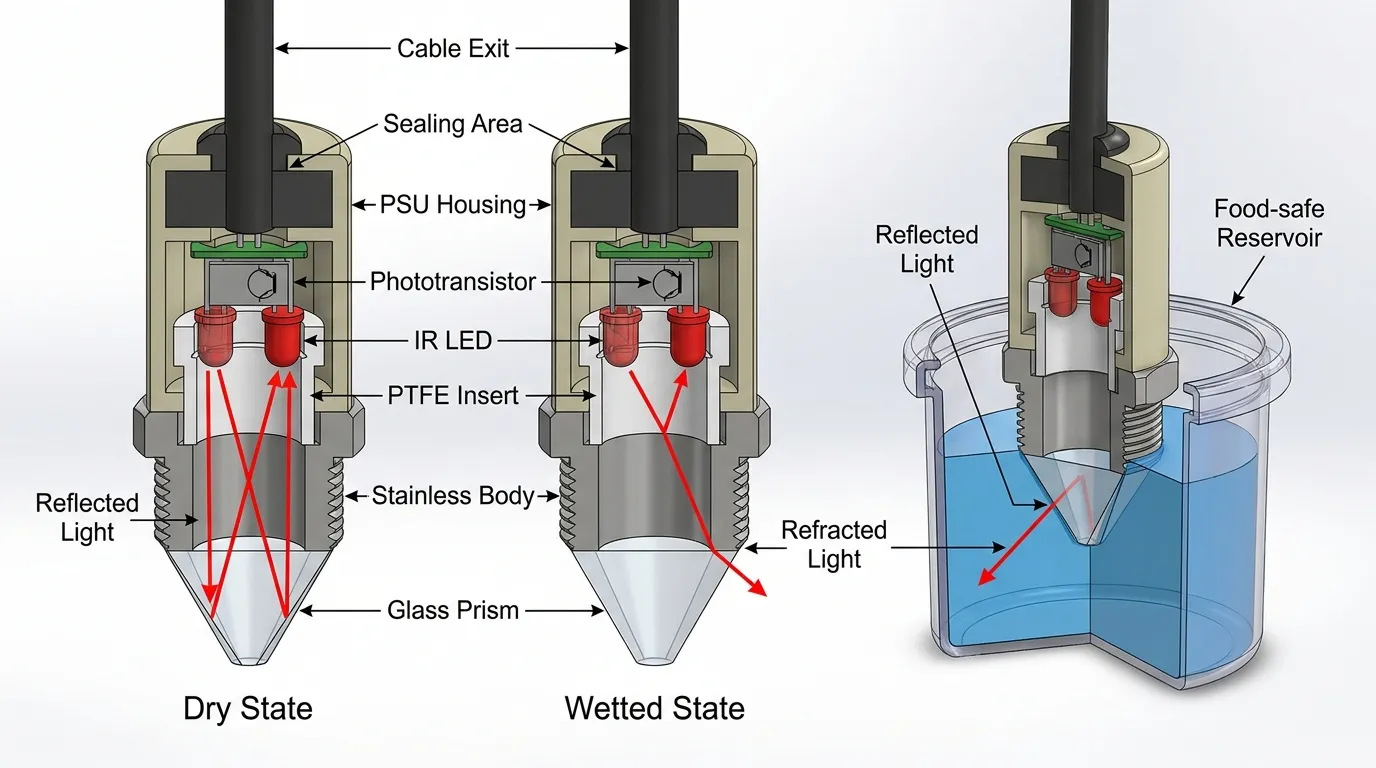
ફૂડ એન્ડ બેવરેજ પ્રોજેક્ટ્સમાં, મુખ્ય પ્રશ્ન ફક્ત "સેન્સર પ્રવાહી શોધી કાઢે છે?"" પહેલો પ્રશ્ન એ છે કે દરેક ભીનો ભાગ પ્રક્રિયા માટે યોગ્ય છે કે કેમ. સેન્સર બોડી, પ્રિઝમ, છાપ, ગાસ્કેટ, થ્રેડ, ફૂડ-સંપર્ક ઉપકરણ માટે પાર્ટને મંજૂરી આપવામાં આવે તે પહેલાં એડહેસિવ એક્સપોઝર અને કેબલ એન્ટ્રીની સમીક્ષા કરવી જાઇએ..
ઓપ્ટિકલ લેવલ સેન્સર પ્રિઝમ ટીપ દ્વારા ઇન્ફ્રારેડ લાઇટ મોકલીને કામ કરે છે. શુષ્ક અવસ્થામાં, પ્રકાશ પ્રિઝમની અંદર આંતરિક રીતે પરાવર્તિત થાય છે અને રીસીવર પર પાછો ફરે છે. જ્યારે પ્રવાહી ટોચને આવરી લે છે, વક્રીભવનની સ્થિતિ બદલાય છે, તેથી ઓછો પ્રકાશ રીસીવર પર પાછો ફરે છે. ઇલેક્ટ્રોનિક્સ આ ફેરફારને લેવલ સિગ્નલમાં રૂપાંતરિત કરે છે.
આ પદ્ધતિ ઉપયોગી છે કારણ કે ત્યાં કોઈ ફરતા ફ્લોટ્સ નથી, કોઈ ચુંબકીય રીડ નથી અને સેન્સિંગ વિસ્તારમાં કોઈ યાંત્રિક હિંજ પોઇન્ટ નથી. ખોરાક અને પીણાના સાધનો માટે, જે મૂવિંગ-પાર્ટ વસ્ત્રોને ઘટાડી શકે છે અને કોમ્પેક્ટ માઉન્ટિંગને સરળ બનાવી શકે છે. જો કે, આરોગ્યપ્રદ કામગીરી હજુ પણ વાસ્તવિક ભીની સામગ્રી પર આધાર રાખે છે, સેન્સર ભૂમિતિ અને સફાઈ પ્રક્રિયા.
ફૂડ-કોન્ટેક્ટ કમ્પ્લાયન્સ ડોક્યુમેન્ટ્સ જેમ કે એફડીએ, EC 1935/2004, LFGB, 3-નિયંત્રિત ખોરાક-સંપર્ક સાધનોમાં ઉપયોગ કરતા પહેલા A અથવા EHEDG ની હોજેલીટેક સાથે પુષ્ટિ કરવી જોઈએ. જ્યાં સુધી સંબંધિત સામગ્રી ઘોષણાઓ અથવા પરીક્ષણ દસ્તાવેજો ચોક્કસ સેન્સર મોડેલ અને રૂપરેખાંકન માટે તપાસવામાં ન આવે ત્યાં સુધી અમે પ્રમાણપત્ર દાવાઓ પ્રકાશિત કરવાની ભલામણ કરતા નથી.
ફૂડ-કોન્ટેક્ટ મટિરિયલ વિકલ્પો
વિવિધ ખોરાક અને પીણાની એપ્લિકેશનો માટે વિવિધ ભીની સામગ્રીની જરૂર હોય છે. કોફી મશીન જળાશય, ડેરી ટાંકી, સીરપ ડોઝિંગ સિસ્ટમ અને ક્લીનિંગ-ફ્લુઇડ ટાંકી બધાને વિવિધ સેન્સર બોડીઝની જરૂર પડી શકે છે.
| ભીની સામગ્રી | લાક્ષણિક ખોરાક / પીણાનો ઉપયોગ | શક્તિઓ | ઓર્ડર કરતા પહેલા ખાતરી કરો |
|---|---|---|---|
| PSU / પીપીએસયુ શૈલીનું એન્જિનિયરિંગ પ્લાસ્ટિક | કોફી મશીનો, પીવાના પાણીની ટાંકીઓ, બેવરેજ ડિસ્પેન્સર્સ, નાના OEM જળાશયો | હલકું વજન, સંકુચિત, મોલ્ડેડ સેન્સર સ્ટ્રક્ચર્સ માટે યોગ્ય, ઉપકરણ એકીકરણ માટે સારું | ખોરાક-સંપર્ક ઘોષણા, ગરમ પાણીના સંપર્કમાં, ડિટર્જન્ટ સુસંગતતા, માઉન્ટિંગ તાકાત |
| PTFE | ડોઝિંગ ટાંકીઓ, સફાઈ પ્રવાહી, એસિડિક/આલ્કલાઇન પ્રવાહી, ચીકણા ઘટકો, રાસાયણિક-સંપર્ક ઝોન | મજબૂત રાસાયણિક પ્રતિકાર, નીચી સપાટી સંલગ્નતા, ઉપયોગી છે જ્યાં આક્રમક પ્રવાહી સેન્સરનો સંપર્ક કરી શકે છે | યાંત્રિક માઉન્ટિંગ, સીલિંગ પદ્ધતિ, ખોરાક-સંપર્ક પુરાવા, સફાઈ તાપમાન |
| 316 સ્ટેઈનલેસ સ્ટીલ | પ્રક્રિયા ટાંકીઓ, પીણાં લીટીઓ, ડેરી સાધનો, ધોવા-ડાઉન વિસ્તારો | ટકાઉ આવાસ, મજબૂત યાંત્રિક સુરક્ષા, ઔદ્યોગિક ખાદ્ય સાધનો ડિઝાઇન માટે યોગ્ય | સપાટી પૂર્ણાહુતિ, સીલ સામગ્રી, વેલ્ડ અથવા થ્રેડની સ્વચ્છતા, વાસ્તવિક ગ્રેડ દસ્તાવેજીકરણ |
| ગ્લાસ પ્રિઝમ / ઓપ્ટિકલ ઇન્ટરફેસ | ઓપ્ટિકલ સેન્સિંગ ટીપ અથવા પારદર્શક શોધ ઇન્ટરફેસ | સ્થિર ઓપ્ટિકલ સપાટી, ક્લીન સેન્સિંગ પોઈન્ટ, સારું ઓપ્ટિકલ ટ્રાન્સમિશન | ભંગાણનું જોખમ, અવશેષોની વર્તણૂક, સફાઈ પ્રક્રિયા, સ્થાપન સુરક્ષા |
| સીલ / ગાસ્કેટ સામગ્રી | પ્રક્રિયા જોડાણ, લિકેજ નિવારણ, ખોરાક-સંપર્ક સીમા | સ્વચ્છતા માટે મહત્વપૂર્ણ, સફાઈ અસ્તિત્વ અને પ્રેશર સીલિંગ | ઇપીડીએમ / એફકેએમ / પીટીએફઇ યોગ્યતા, તાપમાનના સંપર્ક, ડિટર્જન્ટ અને વરાળ સુસંગતતા |
આક્રમક ઘટકો માટે, પ્રવાહી અથવા ઓછી સંલગ્નતા ભીની સપાટીની સફાઈ, a પીટીએફઇ ઓપ્ટિકલ સેન્સર પ્લાસ્ટિક-બોડીવાળા વિકલ્પ કરતાં વધુ યોગ્ય હોઈ શકે છે. ઔદ્યોગિક ટાંકીઓ માટે, વોશ-ડાઉન ઝોન અથવા મજબૂત યાંત્રિક સુરક્ષા, a 316 સ્ટેઈનલેસ સેન્સર વધુ સારું પ્રારંભિક બિંદુ હોઈ શકે છે.
CIP, SIP, હોટ-ફિલ અને વોશ-ડાઉન સર્વાઇવલ
ફૂડ અને બેવરેજ સેન્સર ઘણીવાર નિષ્ફળ જાય છે કારણ કે ઓર્ડરિંગ સ્પષ્ટીકરણ ફક્ત પ્રવાહીનું વર્ણન કરે છે, સફાઈ ચક્ર નથી. ઓરડાના તાપમાનના પાણીમાં કામ કરતું સેન્સર વારંવાર ગરમ ભરવામાં ટકી શકશે નહીં, કોસ્ટિક વોશ, એસિડ કોગળા, વરાળના સંપર્ક અથવા પ્રેશર વોશ-ડાઉન.
ફૂડ-ગ્રેડ ઓપ્ટિકલ લિક્વિડ લેવલ સેન્સરની પસંદગી કરતા પહેલા, ખાતરી કરો:
- કામગીરી દરમિયાન ઉત્પાદનનું સામાન્ય તાપમાન
- સેન્સરની નજીક મહત્તમ હોટ-ફિલ અથવા પેશ્ચ્યુરાઇઝેશન એક્સપોઝર
- સીઆઈપી અથવા એસઆઈપી સફાઈનું તાપમાન અને સમયગાળો
- ક્યાંતો વરાળ સેન્સિંગ ટીપને સ્પર્શે છે અથવા ફક્ત ટાંકીની દિવાલને જ સ્પર્શે છે
- સફાઈ રસાયણો[ફેરફાર કરો], સાંદ્રતા અને કોગળા ક્રમ
- કેબલ એક્ઝિટ અને કનેક્ટર પાસે વોશ-ડાઉન પ્રેશર
- ક્યાંતો સેન્સર સતત ડૂબી જાય છે કે માત્ર ભરણ દરમિયાન જ
- શું અવશેષો ડ્રેઇન કર્યા પછી પ્રિઝમ પર સૂકાઈ જાય છે
ઓપ્ટિકલ સેન્સિંગ સ્વચ્છ ઓપ્ટિકલ ઇન્ટરફેસ પર આધારિત છે. જો દૂધ ઘન હોય તો, ચાસણી, તેલ ફિલ્મ, ફળનો પલ્પ, સ્ફટિકીકરણ કરેલી ખાંડ અથવા સફાઈ અવશેષો પ્રિઝમને આવરણ કરે છે, સેન્સર ખોટી રીતે વાંચી શકે છે. આનો અર્થ એ નથી કે ઓપ્ટિકલ સેન્સિંગ અયોગ્ય છે, પરંતુ તેનો અર્થ એ છે કે પ્રવાહીનું વાસ્તવિક સફાઈ અને સૂકવણી પરિસ્થિતિઓમાં પરીક્ષણ કરવું આવશ્યક છે.
હાઇજિનિક માઉન્ટિંગ અને ઇન્સ્ટોલેશન ડિઝાઇન
આરોગ્યપ્રદ સેન્સર ઇન્સ્ટોલેશનમાં ફસાયેલા પ્રવાહીને ટાળવું જોઈએ, મૃત ખૂણાઓ અને સાફ કરવા માટે મુશ્કેલ ધાર. નાના ઉપકરણોમાં, પ્રાધાન્યતા કોમ્પેક્ટ બાજુ-દિવાલ માઉન્ટિંગ હોઈ શકે છે. પ્રક્રિયામાં ટાંકીઓ, પ્રાથમિકતા ડ્રેનેબિલિટી હોઈ શકે છે, પ્રોસેસ કનેક્શનની આસપાસ ગાસ્કેટ કમ્પ્રેશન અને સપાટી ફિનિશ.
સામાન્ય માઉન્ટિંગ પસંદગીઓમાં થ્રેડેડ ટેન્ક ઇન્સ્ટોલેશનનો સમાવેશ થાય છે, કોમ્પેક્ટ બાજુ માઉન્ટિંગ, ફ્લેન્જ-સ્ટાઇલ માઉન્ટિંગ અથવા કસ્ટમાઇઝ્ડ OEM હાઉસિંગ. શ્રેષ્ઠ ડિઝાઇન ટાંકીની દિવાલની જાડાઈ પર આધાર રાખે છે, આંતરિક સફાઈ પ્રવેશ, સેન્સર ઓરિએન્ટેશન અને શું કેબલ સાઇડને વોશ-ડાઉન પ્રોટેક્શનની જરૂર છે.
કોફી મશીનો માટે, પાણીના વિતરકો અને ગરમ પીણાના સાધનો, ગરમ પાણીને સહન કરતી વખતે સેન્સર કોમ્પેક્ટ રિઝવોયરમાં ફિટ થવું જાઇએ., વરાળની નજીકના વિસ્તારો અને વારંવાર ભરણ. જુઓ અમારું કોફી મશીન સેન્સર વધુ ઉપકરણ-કેન્દ્રિત ઉદાહરણ માટે પૃષ્ઠ.
ડેરી, પીણાં અને ડોઝિંગ એપ્લિકેશન્સ
ફૂડ એન્ડ બેવરેજ મેન્યુફેક્ચરર્સ ઓપ્ટિકલ પોઇન્ટ-લેવલ સેન્સરનો ઉપયોગ કરે છે જ્યાં કોમ્પેક્ટ, ફાસ્ટ લિક્વિડ/નો-લિક્વિડ સિગ્નલ સતત સ્તરના માપન કરતાં વધુ ઉપયોગી છે.
લાક્ષણિક કાર્યક્રમોમાં નીચેનાનો સમાવેશ થાય છે:
- દૂધમાં લો-લેવલ એલાર્મ, પાણી અથવા પીણા જળાશયો
- ફિલિંગ ઇક્વિપમેન્ટમાં ઓવરફ્લો પ્રોટેક્શન
- પમ્પ કામગીરી પહેલાં ખાલી ટેન્ક શોધ
- સ્વાદ માટે ડોઝિંગ ટેન્કની પુષ્ટિ, ચાસણી અથવા એડિટિવ સિસ્ટમ્સ
- કોફી મશીન અને ડિસ્પેન્સર વોટર લેવલ ડિટેક્શન
- ખાદ્ય ઉપકરણોમાં ક્લીનિંગ-ફ્લૂઇડ ટેન્ક મોનિટરિંગ
- નાના OEM ટાંકીઓ કે જ્યાં ફ્લોટ્સ ખૂબ મોટા અથવા અવિશ્વસનીય હોય છે
ડેરી અને પીણાંના પ્રવાહી માટે, નમૂનાનું પરીક્ષણ મહત્વપૂર્ણ છે કારણ કે ફીણ, ચરબી, પ્રોટીન, પલ્પ, ખાંડ અને સફાઈના અવશેષો ઓપ્ટિકલ શોધને અસર કરી શકે છે. ડોઝિંગ સિસ્ટમ્સ માટે, રાસાયણિક સુસંગતતા સામાન્ય રીતે પ્રથમ ચિંતા હોય છે. કોફી અને ગરમ પાણીના સાધનો માટે, તાપમાન, સ્કેલ અને કોમ્પેક્ટ માઉન્ટિંગ સામાન્ય રીતે વધુ મહત્વપૂર્ણ હોય છે.
આરએફક્યુ પહેલાં સ્વચ્છતા ચેકલિસ્ટ
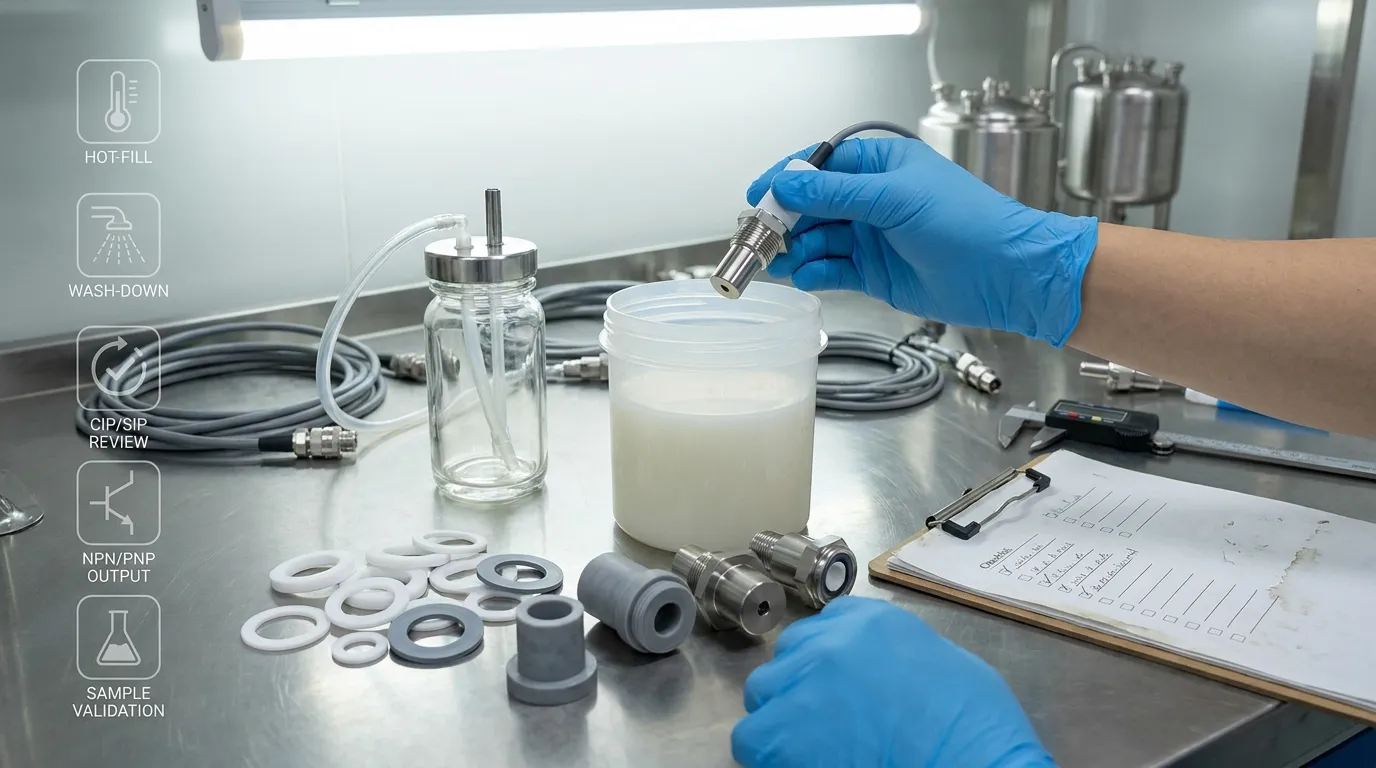
નમૂનાની માંગણી કરતા પહેલાં આ ચેકલીસ્ટને વાપરો:
- સેન્સરને સ્પર્શતા દરેક પ્રવાહીની યાદી બનાવો, સફાઈ રસાયણોનો સમાવેશ થાય છે..
- બધા ભીના ભાગોની ખાતરી કરો: શરીર, પ્રિઝમ, છાપ, ગાસ્કેટ અને દોરો.
- અંતિમ ઉત્પાદન માટે ફૂડ-કોન્ટેક્ટ ડોક્યુમેન્ટેશનની જરૂર છે કે કેમ તે જણાવો.
- સફાઈ ચક્ર વિગતોને વહેંચો: ગરમ પાણી, ડિટર્જન્ટ, એસિડ, આલ્કલી, વરાળ અથવા કોગળા કરો.
- ખાતરી કરો કે શું સેન્સર CIP ટકી રહેવું જોઈએ, SIP અથવા બાહ્ય વોશ-ડાઉન.
- લિક્વિડ ફીણ કરી શકે છે કે કેમ તે ચકાસો, કોટ, સ્ફટિકીકરણ, આથો અથવા ઘન પદાર્થો છોડો.
- માઉન્ટિંગ સ્થાનને વ્યાખ્યાયિત કરો: બાજુની દિવાલ, તળિયે, ભમરડો, પાઇપ, જળાશય અથવા ટાંકી.
- ખાતરી કરો કે શું સફાઈ કર્યા પછી સેન્સિંગ વિસ્તાર નિકાલ કરી શકાય તેવો હોવો જ જોઇએ.
- આઉટપુટ પ્રકાર પસંદ કરો: NPN, PNP, ડિજીટલ સ્વીચ અથવા ૪-૨૦ એમએ.
- વાસ્તવિક પ્રવાહી અને સફાઈ પ્રક્રિયાનો ઉપયોગ કરીને નમૂના માન્યતાની વિનંતી કરો.
5-પગલું એપ્લિકેશન સપોર્ટ પ્રક્રિયા
- પૂછપરછ
પ્રવાહી પ્રકારને મોકલો, ટાંકી ચિત્ર, સફાઈ પદ્ધતિ, તાપમાનના સંપર્ક, માઉન્ટ સ્થાન અને જરૂરી આઉટપુટ. - સ્પેક અને કસ્ટમાઇઝેશન સમીક્ષા
અમારી એન્જિનિયરિંગ ટીમ ભીની સામગ્રીની તપાસ કરે છે, આવાસ, છાપ, કેબલ, થ્રેડ, આઉટપુટ અને નિયંત્રણ-બોર્ડ સુસંગતતા. - નમૂનાની પુષ્ટિ
નમૂનાઓ વાસ્તવિક ખોરાક સાથે માન્યતા માટે તૈયાર કરી શકાય છે, પીણું, ડોઝિંગ પ્રવાહી અથવા સફાઈ ચક્ર. - ઉત્પાદન અને ક્યુસી
પુષ્ટિ પછી, ફેક્ટરી સંમત મોડેલને અનુસરે છે, વાયરીંગ, OEM / ODM ઉત્પાદન માટે સામગ્રી અને નિરીક્ષણ આવશ્યકતાઓ. - શિપિંગ અને નિકાસ સપોર્ટ
અમે યુ.એસ.માં ગ્રાહકો માટે નિકાસ પ્રોજેક્ટ્સને ટેકો આપીએ છીએ, અમે, ભારત અને અન્ય બજારો, પેકિંગ અને દસ્તાવેજીકરણ સાથે ઓર્ડર આવશ્યકતાઓ સાથે સંરેખિત.
ઓર્ડર આપતા પહેલા પુષ્ટિ કરવાની આવશ્યકતાઓ
| જરૂરિયાત | શા માટે તે મહત્વનું છે |
|---|---|
| ભીની સામગ્રી | ખોરાક-સંપર્ક યોગ્યતા નક્કી કરે છે, રાસાયણિક પ્રતિકાર અને લાંબા ગાળાની સ્વચ્છતા |
| સફાઈ પ્રક્રિયા | CIP/SIP, ગરમ પાણી, ડિટર્જન્ટ અથવા વરાળ સામગ્રીની પસંદગીમાં ફેરફાર કરી શકે છે |
| પ્રવાહી વર્તણૂક | ફીણ, ફિલ્મ, પલ્પ, ચરબી અથવા સ્ફટિકો ઓપ્ટિકલ સેન્સિંગને અસર કરી શકે છે |
| માઉન્ટિંગ ડિઝાઇન | નબળું ઇન્સ્ટોલેશન તિરાડો બનાવી શકે છે, લિકેજ અથવા અવશેષોની જાળ |
| આઉટપુટ સિગ્નલ | NPN, PNP, ડિજિટલ અથવા 4-20 mA નિયંત્રક સાથે મેળ ખાતો હોવો જ જોઇએ |
| કેબલ અને કનેક્ટર | વોશ-ડાઉન અને ઓઇએમ એસેમ્બલીની િસ્થતિ કેબલ એક્ઝિટ ડિઝાઇનને અસર કરે છે |
| દસ્તાવેજીકરણ | ખોરાક-સંપર્ક દાવાઓની પુષ્ટિ મોડેલ-વિશિષ્ટ પુરાવા સાથે હોવી આવશ્યક છે |
ઓપ્ટિકલ વિ ફ્લોટ વિ કન્ડક્ટિવ લેવલ ડિટેક્શન
| સેન્સર પ્રકાર | શ્રેષ્ઠ બંધબેસતો | મુખ્ય ફાયદો | ખોરાક / પીણાની ચિંતા |
|---|---|---|---|
| ઓપ્ટિકલ પોઇન્ટ-લેવલ સેન્સર | કોમ્પેક્ટ ટાંકીઓ, ઉપકરણો, ડોઝિંગ, ઓવરફ્લો/ખાલી શોધ | ખસેડતા ફ્લોટ નથી, ઝડપી બિંદુ-સ્તર સંકેત, કોમ્પેક્ટ ડિઝાઇન | પ્રિઝમ સ્વચ્છ હોવું જોઈએ અને સામગ્રીને માન્ય રાખવી જાઇએ |
| ફ્લોટ સ્વીચ | પૂરતી જગ્યાવાળી સરળ ટાંકી | ઓછી કિંમતે મિકેનિકલ સ્વિચિંગ | ભાગોને ખસેડી રહ્યા છે, વળગી રહ્યા છે, સફાઈ કરવામાં મુશ્કેલી |
| વાહક તપાસ | વાહક પ્રવાહી | સરળ સ્તર શોધ | બિન-વાહક પ્રવાહી માટે અનુકૂળ નથી અને ખુલ્લા ઇલેક્ટ્રોડ્સની જરૂર પડી શકે છે |
| કેપેસિટિવ સેન્સર | દિવાલ અથવા પ્રોબ ડિઝાઇન દ્વારા કેટલાક પ્રવાહી | ખસેડ્યા વિના ભાગોને શોધી શકે છે | ટ્યુનિંગની જરૂર છે અને બિલ્ડઅપથી પ્રભાવિત થઈ શકે છે |
હોજેલીટેક સાથે શા માટે કામ કરવું
હોજેલીટેક ફોટોઇલેક્ટ્રિક ઓપ્ટિકલ સેન્સિંગને જોડે છે, ઇન-હાઉસ આર&લિક્વિડ લેવલ સેન્સર પ્રોજેક્ટ્સ માટે ડી અને ઓઇએમ / ઓડીએમ મેન્યુફેક્ચરિંગ. દરેક ફૂડ એપ્લિકેશન માટે એક ફિક્સ્ડ મોડલ વેચવાને બદલે, અમે ખરીદનારાઓને ભીની સામગ્રીની સમીક્ષા કરવામાં મદદ કરીએ છીએ, માઉન્ટ કરી રહ્યા છે, આઉટપુટ, વોલ્યુમ ઉત્પાદન પહેલાં કેબલ માળખું અને નમૂના પરીક્ષણ આવશ્યકતાઓ.
સ્માર્ટ એપ્લાયન્સિસ પ્રોજેક્ટ્સ માટે, તુયા અથવા સ્માર્ટ લાઇફ ઇન્ટિગ્રેશનની ચર્ચા કરી શકાય છે જ્યાં સેન્સર કનેક્ટેડ પાણીની ટાંકીનો ભાગ છે, ડિસ્પેન્સર અથવા મોનિટરિંગ ઉપકરણ.
ચપળ
પીણાના સાધનો માટે ફૂડ ગ્રેડ ઓપ્ટિકલ લિક્વિડ લેવલ સેન્સરને શું યોગ્ય બનાવે છે?
તેમાં યોગ્ય ભીની સામગ્રીનો ઉપયોગ કરવો જાઇએ, એક સ્વચ્છ સેન્સિંગ સ્ટ્રક્ચર અને માઉન્ટિંગ ડિઝાઇન જે સફાઈ પ્રક્રિયાને બંધબેસે છે. પ્રમાણપત્રના દાવાઓનો ઉપયોગ થાય તે પહેલાં ચોક્કસ સામગ્રી અને મોડેલ માટે ફૂડ-કોન્ટેક્ટ દસ્તાવેજીકરણની પુષ્ટિ કરવી આવશ્યક છે.
શું દૂધ અથવા ડેરી ટાંકીમાં ઓપ્ટિકલ સેન્સરનો ઉપયોગ કરી શકાય છે?
હા, તેમને ડેરી પોઇન્ટ-લેવલ શોધ માટે ધ્યાનમાં લઈ શકાય છે, પરંતુ દૂધની ચરબી, પ્રોટીન ફિલ્મ, ફીણ અને સફાઈના અવશેષોનું પરીક્ષણ કરવું જોઈએ. સ્થિર શુષ્ક/ભીની શોધ માટે પ્રિઝમ પૂરતું સ્વચ્છ હોવું જાઇએ..
શું પીટીએફઇ તેના કરતાં વધુ સારું છે 316 ફૂડ એપ્લિકેશન્સ માટે સ્ટેનલેસ સ્ટીલ?
હંમેશા નહીં. પીટીએફઇ રાસાયણિક પ્રતિકાર અને ઓછી સંલગ્નતા માટે ઉપયોગી છે, જ્યારે 316 સ્ટેનલેસ સ્ટીલ ઔદ્યોગિક ટાંકી અને વોશ-ડાઉન વાતાવરણ માટે મજબૂત છે. યોગ્ય પસંદગી પ્રવાહી પર આધાર રાખે છે, સફાઈ પદ્ધતિ અને માઉન્ટિંગ ડિઝાઇન.
શું સેન્સર સીઆઈપી અથવા એસઆઈપી સફાઈથી ટકી શકે છે?
તે પસંદ કરેલ સામગ્રી પર આધાર રાખે છે, છાપ, કેબલ એક્ઝિટ અને સફાઈ ચક્ર. CIP/SIP તાપમાન, વરાળ એક્સપોઝર, આરએફક્યુ દરમિયાન રસાયણો અને સમયગાળો શેર કરવા જાઇએ જેથી યોગ્ય રૂપરેખાંકનની સમીક્ષા કરી શકાય.
વિલ સીરપ, ફીણ અથવા સ્ફટિકીકરણ થયેલ પ્રવાહી ખોટા રીડિંગનું કારણ બને છે?
તે કરી શકે છે. ઓપ્ટિકલ સેન્સર પ્રિઝમની સપાટી પર આધાર રાખે છે. સ્ટીકી સીરપ, ભારે ફીણ, સૂકી ખાંડ અથવા સ્ફટિકીકરણ અવશેષો શોધને અસર કરી શકે છે, તેથી ઉત્પાદનની મંજૂરી પહેલાં વાસ્તવિક-પ્રવાહી પરીક્ષણની ભલામણ કરવામાં આવે છે.
અવતરણની વિનંતી કરવા માટે મારે શું મોકલવું જોઈએ?
પ્રવાહી નામ મોકલો, ટાંકી ચિત્ર, માઉન્ટ સ્થાન, ભીની સામગ્રી પસંદગી, સફાઈ પ્રક્રિયા, તાપમાનના સંપર્ક, આઉટપુટ પ્રકાર, કેબલ/કનેક્ટરની જરૂરિયાતો, ઓર્ડર જથ્થો અને કોઈપણ ખોરાક-સંપર્ક દસ્તાવેજીકરણ આવશ્યકતાઓ.
ફૂડ એન્ડ બેવરેજ સેન્સર ક્વોટની વિનંતી કરો
ફૂડ-ગ્રેડ ઓપ્ટિકલ લેવલ સેન્સિંગ સોલ્યુશન સ્પષ્ટ કરવા માટે, વોટ્સએપ અથવા ઇમેઇલ દ્વારા તમારી અરજીની વિગતો મોકલો. પ્રવાહી વહેંચો, ટાંકી માળખું, સફાઈ પદ્ધતિ, સામગ્રી પસંદગી, માઉન્ટ ડ્રોઇંગ અને જરૂરી આઉટપુટ, અને અમારી ટીમ નમૂના પરીક્ષણ અને OEM ઉત્પાદન માટે યોગ્ય સેન્સર રૂપરેખાંકનની ભલામણ કરશે.


