
પીટીએફઇ ઓપ્ટિકલ લિક્વિડ લેવલ સેન્સર
હોજેલીટેક પીટીએફઇ / ટેફલોન બોડી વિકલ્પો સાથે ફોટોઇલેક્ટ્રિક ઓપ્ટિકલ લેવલ સેન્સર બનાવે છે, PTFE અથવા નીલમ પ્રિઝમ વિકલ્પો, અને રાસાયણિક ટાંકી બિલ્ડરો માટે OEM / ODM કસ્ટમાઇઝેશન, ડોઝિંગ સાધનો ઉત્પાદકો, પ્રયોગશાળા સિસ્ટમો, અને ઔદ્યોગિક ઓટોમેશન સપ્લાયર્સ.
પીટીએફઇ ઓપ્ટિકલ સેન્સર ક્ષમતાઓ
પીટીએફઇ-બોડીડ ઓપ્ટિકલ સેન્સર એ કોમ્પેક્ટ પોઇન્ટ-લેવલ સ્વીચ છે જેનો ઉપયોગ ટાંકીની અંદર પ્રવાહી નિશ્ચિત સ્તરે પહોંચ્યો છે કે કેમ તે શોધવા માટે થાય છે, પાઇપ, ચેમ્બર, અથવા નાના જળાશય. જ્યારે સામાન્ય ભીની સામગ્રી આક્રમક પ્રવાહી સંપર્ક માટે યોગ્ય ન હોય ત્યારે તે ઘણી વખત પસંદ કરવામાં આવે છે.
લાક્ષણિક ક્ષમતાઓમાં શામેલ છે:
- કોઈ ફ્લોટ સાથે ફોટોઇલેક્ટ્રિક ઓપ્ટિકલ સ્તર શોધ, લોહચુંબક, કે યાંત્રિક ભાગને ખસેડવો
- મજબૂત રાસાયણિક પ્રતિકાર માટે પીટીએફઇ / ટેફલોન ભીનું શરીર
- પીટીએફઇ અથવા નીલમ પ્રિઝમ વિકલ્પો મીડિયા પર આધાર રાખે છે, શુદ્ધતા, ઓપ્ટિકલ પ્રદર્શન, અને યાંત્રિક આવશ્યકતાઓ
- નાની ટાંકીઓ માટે કોમ્પેક્ટ થ્રેડેડ માઉન્ટિંગ, રાસાયણિક જળાશયો, અને સાધનો પેનલ્સ
- પીએલસી માટે એનપીએન અથવા પીએનપી જેવા ડિજિટલ સ્વિચિંગ આઉટપુટ્સ, નિયંત્રકો, અને એલાર્મ સર્કિટ્સ
- એનાલોગ આઉટપુટ વિકલ્પો જેમ કે પસંદ કરેલા સ્તર મોનિટરિંગ ડિઝાઇન માટે 4-20 એમએ જ્યાં જરૂરી હોય ત્યાં
- વૈવિધ્યપૂર્ણ કેબલ લંબાઈ, કનેક્ટર, વાયરિંગ તર્ક, આઉટપુટ સ્થિતિ, અને માઉન્ટ રૂપરેખાંકન
- સેન્સર બ્રાન્ડ્સ માટે OEM / ODM વિકાસ, સાધન ઉત્પાદકો, અને ઔદ્યોગિક સિસ્ટમ ઇન્ટિગ્રેટર્સ
સ્ટાન્ડર્ડ ઓપ્ટિકલ લેવલ સેન્સિંગ સિદ્ધાંતો અને પ્રોડક્ટ ફોર્મેટ્સ માટે, જુઓ અમારું ઓપ્ટિકલ લેવલ સેન્સર પાનું.
શા માટે રાસાયણિક હુમલો મુખ્ય ડિઝાઇન સમસ્યા છે
ઘણી રાસાયણિક ટાંકીઓમાં, કન્ટ્રોલ સિસ્ટમ નિષ્ફળ જાય તે પહેલાં લેવલ સેન્સર નિષ્ફળ જાય છે. કારણ સરળ છે: પ્રવાહી દરરોજ સેન્સરનો સંપર્ક કરે છે. જો ભીનું શરીર, પ્રિઝમ, છાપ, કેબલ જેકેટ, અથવા પોટિંગ સામગ્રી યોગ્ય નથી, સેન્સર રાસાયણિક સોજો ભોગવી શકે છે, તણાવ ક્રેકિંગ, રંગહીન થવું, લીકેજ, સિગ્નલ ડ્રિફ્ટ, અથવા અચાનક આઉટપુટ નિષ્ફળતા.
આ સમસ્યા ખાસ કરીને મહત્વની છે:
- એસિડ અને આલ્કલી સ્ટોરેજ ટાંકી
- દ્રાવક ફીડ જળાશયો
- રાસાયણિક ડોઝિંગ સાધનો
- ઇચિંગ અને સફાઈ સિસ્ટમ્સ
- લેબોરેટરી ફ્લૂઇડ હેન્ડલિંગ સાધનો
- બેટરી, પ્લેટિંગ, અને સપાટી-ટ્રીટમેન્ટ સાધનો
- ઉચ્ચ શુદ્ધતા રાસાયણિક પુરવઠા સિસ્ટમ્સ
- મર્યાદિત જાળવણી ઍક્સેસ સાથે કોમ્પેક્ટ OEM મશીનો
પીટીએફઇ બોડી મદદ કરે છે કારણ કે પીટીએફઇ પાસે ઘણા આક્રમક રસાયણો સામે ઉત્તમ પ્રતિકાર છે અને તેનો વ્યાપકપણે ઉપયોગ થાય છે જ્યાં ધાતુઓ અથવા એન્જિનિયરિંગ પ્લાસ્ટિક પર હુમલો થઈ શકે છે. ઓપ્ટિકલ લેવલ સેન્સરમાં, બોડી સેન્સિંગ ટીપની આસપાસ હોય છે અને થ્રેડેડ માઉન્ટિંગ સ્ટ્રક્ચર પૂરું પાડે છે. જ્યારે પ્રિઝમ પણ પીટીએફઇ અથવા નીલમ હોય છે, પ્રવાહી-સંપર્ક વિસ્તાર સામાન્ય પ્લાસ્ટિક-બોડીવાળી ડિઝાઇન કરતાં કઠોર મીડિયા માટે વધુ યોગ્ય છે.
નીલમ પ્રિઝમ પસંદ કરી શકાય છે જ્યાં સખત, સ્થિર ઓપ્ટિકલ વિન્ડો પ્રાધાન્ય થયેલ છે. પીટીએફઇ પ્રિઝમની પસંદગી કરી શકાય છે જ્યાં ભીની શરીરની સામગ્રી સાથે મેળ ખાવું રાસાયણિક પ્રતિકાર અને નીચી સપાટીની ક્રિયાપ્રતિક્રિયા માટે વધુ મહત્વપૂર્ણ છે. સાચી પસંદગી ચોક્કસ મીડિયા અને ઓપરેટિંગ શરતો પર આધાર રાખે છે.
ઓપ્ટિકલ ડિટેક્શન કેવી રીતે કાર્ય કરે છે
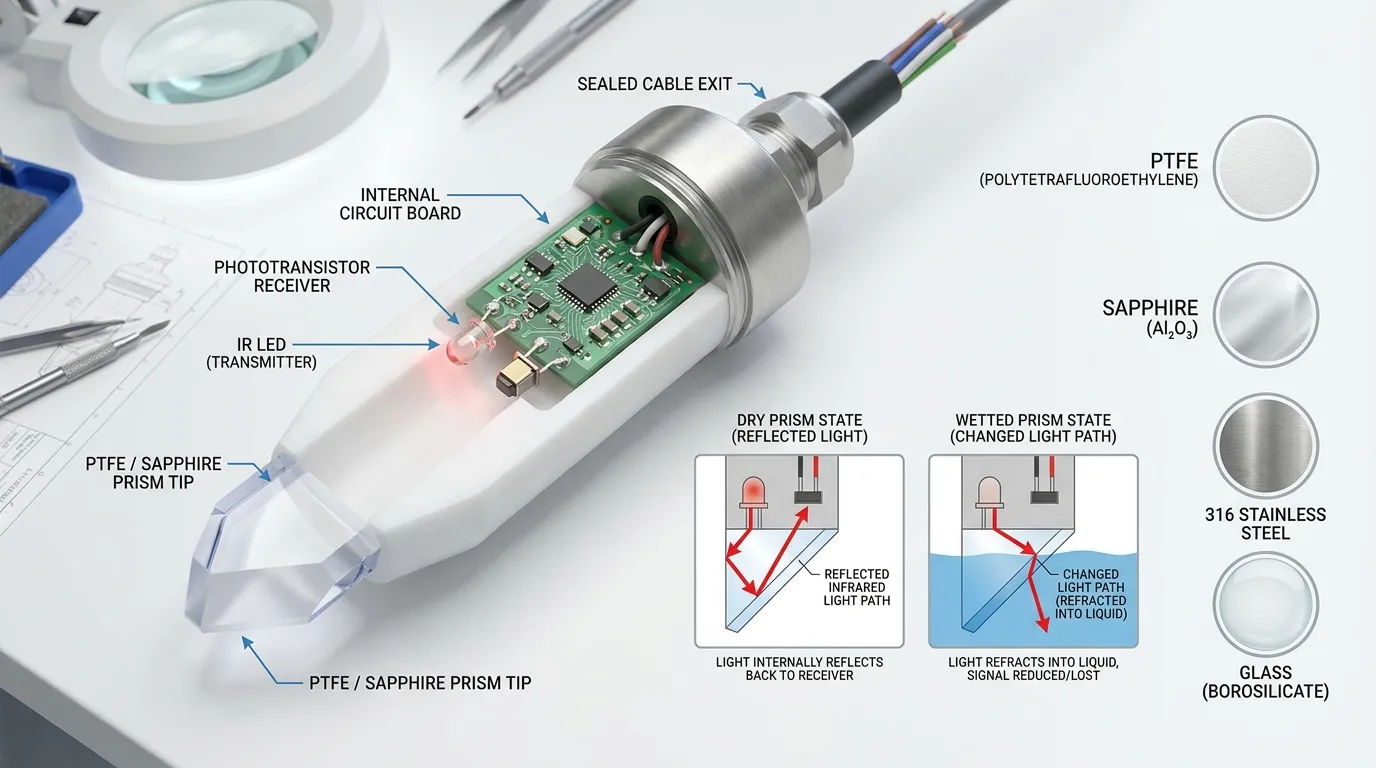
સેન્સરની અંદર, ઇન્ફ્રારેડ એલઇડી પ્રિઝમ ટીપ તરફ પ્રકાશ મોકલે છે. ફોટોટ્રાન્ઝિસ્ટર પરાવર્તિત પ્રકાશ મેળવે છે. શુષ્ક અવસ્થામાં, પ્રિઝમ આંતરિક રીતે વધુ પ્રકાશ પ્રતિબિંબિત કરે છે, તેથી રીસીવર એક મજબૂત સિગ્નલ જુએ છે. જ્યારે પ્રવાહી પ્રિઝમને આવરી લે છે, વક્રીભવન વર્તણૂક બદલાય છે અને ઓછો પ્રકાશ રીસીવર પર પાછો ફરે છે. સર્કિટ તે ફેરફારને સ્તર આઉટપુટમાં રૂપાંતરિત કરે છે.
આ સેન્સરને પોઇન્ટ-લેવલ ડિટેક્શન માટે ઉપયોગી બનાવે છે જેમ કે:
- નીચા સ્તરનું એલાર્મ
- ઉચ્ચ-સ્તરનું એલાર્મ
- ટાંકી સુરક્ષા ખાલી કરો
- ઓવરફ્લો નિવારણ
- રાસાયણિક રીફિલ શોધ
- પમ્પ ડ્રાય રન પ્રોટેક્શન
- નાના જળાશય સ્તરની પુષ્ટિ
કારણ કે ત્યાં કોઈ ફ્લોટ નથી, સેન્સર ફ્લોટ સ્ટીકિંગને લગતી સમસ્યાઓને ટાળે છે, ચુંબક નિષ્ફળતા, હિંજ વસ્ત્રો, અથવા મૂવિંગ-પાર્ટ પ્રદૂષણ. જો કે, ઓપ્ટિકલ સેન્સર્સને હજુ પણ યોગ્ય મીડિયા સમીક્ષાની જરૂર છે. ભારે આવરણ, સ્ફટિકીકરણ, ચીકણા અવશેષો, પરપોટા, ફીણ, અથવા પ્રિઝમ પર અપારદર્શક બિલ્ડઅપ શોધ સ્થિરતાને અસર કરી શકે છે.
પીટીએફઇ / ટેફલોન ઓપ્ટિકલ સેન્સર્સ માટે કેમિકલ-સુસંગતતા માર્ગદર્શિકા
ઘણા આક્રમક પ્રવાહી માટે પીટીએફઇ એક મજબૂત પસંદગી છે, પરંતુ કોઈ પણ સેન્સર સાર્વત્રિક રીતે સુસંગત તરીકે વેચવું જોઈએ નહીં. સુસંગતતા રાસાયણિક નામ પર આધાર રાખે છે, એકાગ્રતા, તાપમાન, દબાણ, એક્સપોઝર સમય, સફાઈ પ્રક્રિયા, અને તમામ ભીની સામગ્રી, શરીર સહિત[ફેરફાર કરો], પ્રિઝમ, સીલ, કેબલ જેકેટ, અને પોટિંગ.
| મીડિયા જૂથ | લાક્ષણિક ઉદાહરણો | PTFE શરીર અનુકૂળતા | પ્રિઝમ વિકલ્પ | મુખ્ય સાવચેતી |
|---|---|---|---|---|
| મજબૂત એસિડ્સ | સલ્ફ્યુરિક એસિડ, હાઇડ્રોક્લોરિક એસિડ, નાઇટ્રિક એસિડ એપ્લિકેશન્સ | પુષ્ટિ પછી ઘણી વાર અનુકૂળ | PTFE અથવા નીલમ | સાંદ્રતા અને તાપમાનની ચકાસણી કરવી આવશ્યક છે |
| આલ્કાલીસ / કોસ્ટિક્સ | સોડિયમ હાઇડ્રોક્સાઇડ, પોટેશિયમ હાઇડ્રોક્સાઇડ સોલ્યુશન્સ | પુષ્ટિ પછી ઘણી વાર અનુકૂળ | PTFE અથવા નીલમ | લાંબા એક્સપોઝર અને એલિવેટેડ તાપમાનની સમીક્ષાની જરૂર છે |
| દ્રાવકો | આલ્કોહોલ, કીટોન્સ, દ્રાવકોની સફાઈ, કાર્બનિક પ્રવાહી | ઘણી વખત ઘણી દ્રાવક સિસ્ટમો માટે યોગ્ય હોય છે | PTFE અથવા નીલમ | કેબલ જેકેટ અને સીલ સુસંગતતા મહત્વપૂર્ણ છે |
| ઓક્સિડાઇઝિંગ રસાયણો[ફેરફાર કરો] | ઓક્સિડાઇઝિંગ એસિડ્સ, પેરોક્સાઇડ આધારિત રસાયણો[ફેરફાર કરો] | કેસ-બાય-કેસ | કેટલીક ડિઝાઇનમાં નીલમ પસંદ કરવામાં આવી શકે છે | મજબૂત ઓક્સિડાઇઝર્સને કાળજીપૂર્વક સામગ્રીની પુષ્ટિ કરવાની જરૂર હોય છે |
| ઉચ્ચ-શુદ્ધતા મીડિયા | સેમીકન્ડક્ટર રસાયણો[ફેરફાર કરો], ડીઆઈ વોટર સિસ્ટમ્સ, રાસાયણિક રેખાઓ સાફ કરો | યોગ્ય ડિઝાઇન સાથે શક્ય છે | PTFE અથવા નીલમ | નીચા લીચિંગ અને પ્રદૂષણના જોખમની સમીક્ષા કરવી આવશ્યક છે |
| તેલ અને બળતણ | બળતણ, તેલ, હાઈડ્રોલિક પ્રવાહી | સામાન્ય રીતે શક્ય છે, પરંતુ પીટીએફઇ હંમેશાં જરૂરી ન હોઈ શકે | PTFE, ગ્લાસ, અથવા સ્ટેઈનલેસ વિકલ્પો | સ્નિગ્ધતાની ખાતરી કરો, અવશેષો, અને ઓપરેટિંગ તાપમાન |
| સફાઈ રસાયણો[ફેરફાર કરો] | CIP પ્રવાહી, ડિટર્જન્ટ, રસાયણો કોગળા કરો | કેસ-બાય-કેસ | PTFE અથવા નીલમ | વારંવાર સફાઈ ચક્ર સીલ અને કેબલ્સને અસર કરી શકે છે |
| અજ્ઞાત મિશ્ર મીડિયા | વૈવિધ્યપૂર્ણ મિશ્રણો અથવા પ્રક્રિયા કચરો | સમીક્ષા કરવી આવશ્યક છે | પુષ્ટિ થવાની છે | માત્ર રાસાયણિક નામ દ્વારા પસંદ કરો નહિં |
મીડિયા-પુષ્ટિ નોંધ: અંતિમ પસંદગી પહેલાં, અમારી ટીમે ચોક્કસ પ્રવાહીની પુષ્ટિ કરવી જોઈએ, એકાગ્રતા, તાપમાન, દબાણ, સફાઈ પદ્ધતિ, નિમજ્જન સમય, ટાંકી સામગ્રી, અને જરૂરી આઉટપુટ. પીટીએફઇમાં વ્યાપક રાસાયણિક પ્રતિકાર છે, પરંતુ હોજેલીટેક દરેક રસાયણ માટે સાર્વત્રિક સુસંગતતાનો દાવો કરતું નથી, એકાગ્રતા, અથવા પ્રક્રિયા સ્થિતિ.
શુદ્ધતા, લીચિંગ, અને ઉચ્ચ શુદ્ધતા પ્રવાહીનો ઉપયોગ
ઉચ્ચ શુદ્ધતા મીડિયા માટે, રાસાયણિક પ્રતિકાર એ નિર્ણયનો માત્ર એક ભાગ છે. ખરીદદારોએ પણ પ્રદૂષણને ધ્યાનમાં લેવાની જરૂર છે, અર્ક કાઢી શકાય તેવો, લીચિંગ, સપાટીની સ્વચ્છતા, અને શું સેન્સર બોડી અથવા કેબલ સામગ્રી અનિચ્છનીય કણો અથવા અવશેષો રજૂ કરી શકે છે.
જ્યારે ભીનું માળખું કાળજીપૂર્વક ડિઝાઇન કરવામાં આવે છે ત્યારે પીટીએફઇ ઓપ્ટિકલ સેન્સર ઉચ્ચ-શુદ્ધતા રાસાયણિક હેન્ડલિંગ માટે યોગ્ય હોઈ શકે છે. બોડી મટિરિયલ, પ્રિઝમ સામગ્રી, સીલિંગ પદ્ધતિ, કેબલ પ્રવેશ, અને સફાઈ પ્રક્રિયાની સાથે મળીને સમીક્ષા કરવી જોઈએ. અલ્ટ્રા-ક્લીન કાર્યક્રમો માટે, ખરીદદારોએ અમને જણાવવું જોઈએ કે સેન્સર ડીઆઈ પાણીનો સંપર્ક કરશે કે નહીં, એસિડ, દ્રાવક, સફાઈ પ્રવાહી, અથવા સેમિકન્ડક્ટર-ગ્રેડ રસાયણો, અને શું કોઈ વિશેષ પેકેજિંગ અથવા હેન્ડલિંગ આવશ્યકતાઓ લાગુ પડે છે.
જ્યાં રાસાયણિક હુમલા કરતાં ખોરાકના સંપર્ક અથવા સેનિટરી આવશ્યકતાઓ વધુ મહત્વપૂર્ણ છે, અમારું ફૂડ-ગ્રેડ ઓપ્ટિકલ સેન્સર પૃષ્ઠ વધુ સારો સંદર્ભ હોઈ શકે છે.
માઉન્ટ કરી રહ્યા છીએ, આઉટપુટ, અને એકીકરણ વિકલ્પો
પીટીએફઇ ઓપ્ટિકલ લેવલ સેન્સર સામાન્ય રીતે ટાંકીની દિવાલ દ્વારા અથવા થ્રેડેડ પોર્ટમાં માઉન્ટ કરવામાં આવે છે. સાઇડ માઉન્ટિંગનો ઉપયોગ ઘણીવાર ઉચ્ચ-સ્તરના અથવા નીચા-સ્તરના એલાર્મ માટે થાય છે. તળિયે માઉન્ટિંગ ખાલી શોધ માટે વાપરી શકાય છે, ડ્રેઇન કન્ફર્મેશન, અથવા નાના જળાશય મોનિટરિંગ, ટાંકીની ડિઝાઇન પર આધાર રાખે છે.
ખરીદદારોએ પુષ્ટિ કરવી જોઈએ:
- થ્રેડ પ્રકાર અને પોર્ટ માપ
- બાજુ, તળિયે, અથવા વૈવિધ્યપૂર્ણ માઉન્ટિંગ દિશા
- ટેન્કની દિવાલની જાડાઈ અને સીલિંગ પદ્ધતિ
- જરૂરી ભીની લંબાઈ
- કેબલ બહાર નીકળવાની દિશા
- સેન્સિંગ પોઇન્ટની નજીક પ્રવાહી તોફાન
- શું મદદથી પરપોટા ભેગા થઈ શકે છે, અવશેષો, અથવા સ્ફટિકો
- PLC/નિયંત્રક ઇનપુટ પ્રકાર
- NPN, PNP, સામાન્ય રીતે ખુલ્લું છે, સામાન્ય રીતે બંધ છે, અથવા વૈવિધ્યપૂર્ણ બદલવાનું તર્ક
- શું ચોક્કસ સતત અથવા ટ્રાન્સમીટર-શૈલીની ડિઝાઇન માટે 4-20 એમએ આઉટપુટ જરૂરી છે
એપ્લિકેશન્સ માટે જ્યાં રાસાયણિક પ્રતિકાર ઓછો તીવ્ર હોય છે પરંતુ યાંત્રિક તાકાત અને ઔદ્યોગિક દેખાવ પ્રાથમિકતાઓ છે, સાથે સરખામણી કરો 316 સ્ટેનલેસ ઓપ્ટિકલ સેન્સર. પારદર્શક અથવા પ્રયોગશાળા શૈલીના ભીના ભાગો માટે, સાથે સરખામણી કરો ગ્લાસ ઓપ્ટિકલ સેન્સર.
5-સ્ટેપ સપ્લાય પ્રોસેસ
- પૂછપરછ - પ્રવાહી નામ મોકલો, એકાગ્રતા, તાપમાન, ટાંકી સામગ્રી, માઉન્ટ કરવાની પદ્ધતિ, આઉટપુટ પ્રકાર, અને વોટ્સએપ અથવા ઇમેઇલ દ્વારા ઓર્ડર જથ્થાનો અંદાજ.
- સ્પેક અને કસ્ટમાઇઝેશન સમીક્ષા - અમારી એન્જિનિયરિંગ ટીમ ભીની સામગ્રીની સમીક્ષા કરે છે, પ્રિઝમ વિકલ્પ, થ્રેડ, કેબલ, આઉટપુટ તર્ક, અને ઇલેક્ટ્રિકલ ઇન્ટરફેસ.
- નમૂનાની પુષ્ટિ - ઇન્સ્ટોલેશન પરીક્ષણ માટે નમૂના તૈયાર કરી શકાય છે, મીડિયા સંપર્ક સમીક્ષા, અને તમારી વાસ્તવિક ટાંકી અથવા ઉપકરણમાં સિગ્નલ પુષ્ટિ.
- ઉત્પાદન અને ક્યુસી - ફેક્ટરી પુષ્ટિ થયેલ રેખાંકનો અનુસાર ઉત્પાદન કરે છે, વાયરીંગ, સામગ્રી, અને નિરીક્ષણ આવશ્યકતાઓ. શિપમેન્ટ પહેલાં ઓપ્ટિકલ રિસ્પોન્સ અને ઇલેક્ટ્રિકલ આઉટપુટની ચકાસણી કરવામાં આવે છે.
- શિપિંગ અને નિકાસ સપોર્ટ - હોજેલીટેક શેનઝેનથી યુ.એસ.ના ગ્રાહકોને ઓપ્ટિકલ લિક્વિડ લેવલ સેન્સર્સની નિકાસ કરે છે, અમે, ભારત, અને અન્ય બજારો.
ઓર્ડર આપતા પહેલા પુષ્ટિ કરવાની આવશ્યકતાઓ
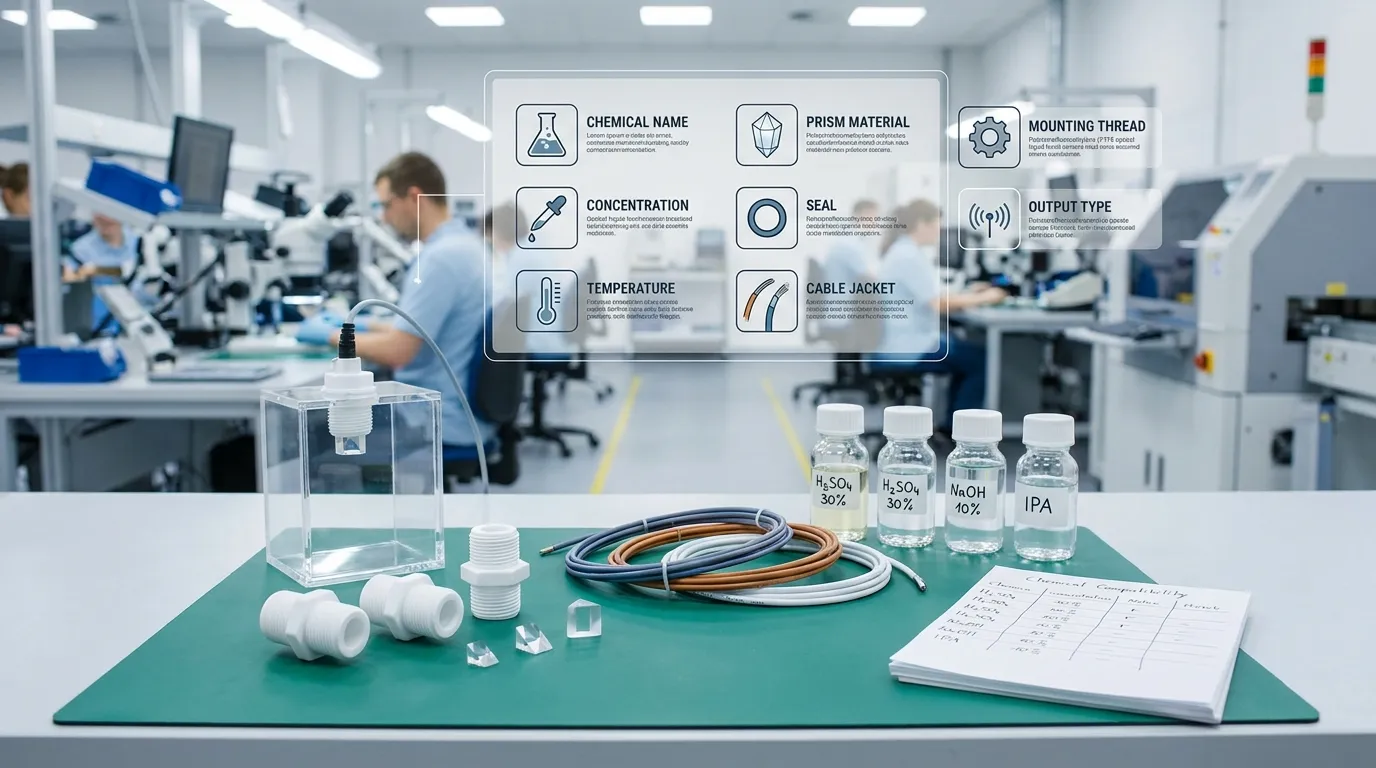
| જરૂરિયાત | શા માટે તે મહત્વનું છે |
|---|---|
| ચોક્કસ રાસાયણિક નામ | સુસંગતતા સમીક્ષા માટે સામાન્ય વર્ગો પૂરતા નથી |
| એકાગ્રતા | મજબૂત એકાગ્રતા ભૌતિક વર્તણૂકમાં ફેરફાર કરી શકે છે |
| તાપમાન | રાસાયણિક પ્રતિકાર અને સીલ પ્રદર્શન ગરમી પર આધાર રાખે છે |
| પ્રેશર અથવા ટેન્કની િસ્થતિ | થ્રેડ અને સીલિંગ ડિઝાઇન ઇન્સ્ટોલેશન સાથે મેળ ખાતી હોવી જોઈએ |
| માઉન્ટ સ્થાન | બાજુ, તળિયે, અને કોણીય ઇન્સ્ટોલેશન શોધને અસર કરે છે |
| પ્રિઝમ સ્થિતિ | આવરણ, પરપોટા, અથવા સ્ફટિકીકરણ ઓપ્ટિકલ સેન્સિંગને અસર કરી શકે છે |
| આઉટપુટ પ્રકાર | પીએલસી અને બોર્ડને એનપીએનની જરૂર પડી શકે છે, PNP, અથવા એનાલોગ સિગ્નલ |
| કેબલ અને કનેક્ટર | બાહ્ય વાતાવરણમાં અલગ જેકેટ અથવા કનેક્ટરની જરૂર પડી શકે છે |
| શુદ્ધતા આવશ્યકતા | ઉચ્ચ-શુદ્ધતા સિસ્ટમ્સને પ્રદૂષણ અને લીચિંગ સમીક્ષાની જરૂર છે |
પીટીએફઇ વિ અન્ય ભીની સામગ્રી વિકલ્પો
| સામગ્રી વિકલ્પ | શ્રેષ્ઠ-બંધબેસતો ઉપયોગ | તાકાત | મર્યાદા |
|---|---|---|---|
| PSU / ઇજનેરી પ્લાસ્ટિક | સામાન્ય પાણી અથવા હળવા પ્રવાહી શોધ | ખર્ચ-અસરકારક અને કોમ્પેક્ટ | આક્રમક રસાયણો માટે આદર્શ નથી |
| PTFE / ટેફ્લોન | એસિડ, દ્રાવકો, ઉચ્ચ શુદ્ધતા રસાયણો, કાટ લાગનાર મીડિયા | વ્યાપક રાસાયણિક પ્રતિકાર અને નીચી સપાટીની ક્રિયાપ્રતિક્રિયા | ચોક્કસ મીડિયા અને યાંત્રિક ડિઝાઇનની ખાતરી કરવી જરૂરી છે |
| 316 સ્ટેઈનલેસ સ્ટીલ | તેલ, બળતણ, ઔદ્યોગિક ટાંકીઓ, ઉચ્ચ યાંત્રિક તાકાત | મજબૂત મેટલ બોડી અને મજબૂત ઇન્સ્ટોલેશન | તમામ એસિડ અથવા કાટ લાગનારા રસાયણો માટે યોગ્ય નથી |
| ગ્લાસ | પ્રયોગશાળા, મીડિયાને સાફ કરો, પસંદ થયેલ રાસાયણિક કાર્યક્રમો | સ્થિર અને પારદર્શક ભીની સપાટી | મેટલ અથવા પીટીએફઇ ડિઝાઇન કરતાં વધુ નાજુક |
હોજેલીટેક શા માટે પસંદ કરો
હોજેલીટેક એ ઇન-હાઉસ આર સાથે શેનઝેન ઓપ્ટિકલ અને લિક્વિડ લેવલ સેન્સર ઉત્પાદક છે&D, ફોટોઇલેક્ટ્રિક સેન્સિંગ ડિઝાઇન અનુભવ, અને OEM / ODM ઉત્પાદન ક્ષમતા. અમે કસ્ટમ ભીની સામગ્રીને ટેકો આપીએ છીએ, કોમ્પેક્ટ સેન્સર સ્ટ્રક્ચર્સ, વાયરિંગ તર્ક, આઉટપુટ બંધારણો, અને સાધનો ઉત્પાદકો માટે માઉન્ટિંગ આવશ્યકતાઓ.
અમારી ટીમ ઔદ્યોગિક ખરીદદારો સાથે કામ કરે છે, સેન્સર વિતરકો, રાસાયણિક સાધનો બિલ્ડરો, અને ઓટોમેશન કંપનીઓ કે જેમને ફક્ત કેટલોગ ભાગોને બદલે ફેક્ટરી-ડાયરેક્ટ કસ્ટમાઇઝેશનની જરૂર છે. તુયા / સ્માર્ટ લાઇફ ઇન્ટિગ્રેશનની પણ ચર્ચા કરી શકાય છે જ્યાં સ્તર સેન્સર સરળ વાયર્ડ કંટ્રોલ સર્કિટને બદલે સ્માર્ટ મોનિટરિંગ ડિવાઇસનો ભાગ છે.
ચપળ
શું પીટીએફઇ ઓપ્ટિકલ લિક્વિડ લેવલ સેન્સરનો ઉપયોગ સલ્ફ્યુરિક એસિડ અથવા હાઇડ્રોક્લોરિક એસિડ સાથે કરી શકાય છે?
ઘણી વાર, પીટીએફઇ એસિડ એપ્લિકેશન માટે મજબૂત ઉમેદવાર છે, પરંતુ ચોક્કસ એસિડ, એકાગ્રતા, તાપમાન, એક્સપોઝર સમય, પ્રિઝમ સામગ્રી, છાપ, અને પસંદગી કરતા પહેલા કેબલ જેકેટની પુષ્ટિ કરવી આવશ્યક છે. અમે નમૂનાના ઉત્પાદન પહેલાં મીડિયા પુષ્ટિની ભલામણ કરીએ છીએ.
શું પીટીએફઇ તેના કરતાં વધુ સારું છે 316 કાટવાળા રસાયણો માટે સ્ટેનલેસ સ્ટીલ?
ઘણા આક્રમક એસિડ અને રાસાયણિક દ્રાવણો માટે, પીટીએફઇ આના માટે વધુ યોગ્ય હોઈ શકે છે 316 સ્ટેઈનલેસ સ્ટીલ. તેલ માટે, બળતણ, યાંત્રિક સાધનો, અથવા ઓછા કાટ મીડિયા, સ્ટેનલેસ સ્ટીલ હજી પણ વધુ સારી પસંદગી હોઈ શકે છે. નિર્ણય મીડિયા અને ઇન્સ્ટોલેશનની શરતો પર આધાર રાખે છે.
શું સેન્સર ઉચ્ચ શુદ્ધતા રાસાયણિક પ્રણાલીઓમાં કામ કરી શકે છે?
હા, પીટીએફઇ અથવા નીલમ ભીની ડિઝાઇનને ઉચ્ચ-શુદ્ધતા મીડિયા માટે ધ્યાનમાં લઈ શકાય છે, પરંતુ શુદ્ધતાની આવશ્યકતાઓની કાળજીપૂર્વક સમીક્ષા કરવી આવશ્યક છે. ખરીદદારોએ પ્રદૂષણની મર્યાદા શેર કરવી જોઈએ, સફાઈ પ્રક્રિયા, પેકેજિંગ જરૂરિયાતો, અને શું સેન્સર DI પાણીનો સંપર્ક કરે છે, દ્રાવક, અથવા પ્રક્રિયા રસાયણો.
ઓપ્ટિકલ કેમિકલ લેવલ સેન્સર નિષ્ફળ થવાનું કારણ શું હોઈ શકે છે?
સામાન્ય નિષ્ફળતા મોડ્સમાં રાસાયણિક સોજો શામેલ છે, સીલ લીકેજ, કેબલ જેકેટ એટેક, પ્રિઝમ કોટિંગ, સ્ફટિકીકરણ, પરપોટા, અયોગ્ય માઉન્ટિંગ, અસંગત આઉટપુટ વાયરિંગ, અને શરીરની સામગ્રીનો ઉપયોગ કરવો જે વાસ્તવિક રાસાયણિક સાંદ્રતા અથવા તાપમાન માટે યોગ્ય નથી.
શું પ્રિઝમ સામગ્રી મહત્વની છે?
હા. પ્રિઝમ એ પ્રવાહીના સંપર્કમાં સક્રિય સંવેદનાત્મક સપાટી છે. પીટીએફઇ અને નીલમ રાસાયણિક પ્રતિકારમાં વિવિધ ફાયદા પ્રદાન કરે છે, સખતાઈ, ઓપ્ટિકલ વર્તણૂક, અને શુદ્ધતા યોગ્યતા. લિક્વિડ અને ઓપરેટિંગ એન્વાયર્નમેન્ટના આધારે સાચી પસંદગીની પુષ્ટિ થવી જોઈએ.
હું કસ્ટમ પીટીએફઇ ઓપ્ટિકલ લિક્વિડ લેવલ સેન્સરની વિનંતી કેવી રીતે કરી શકું?
તમારું રાસાયણિક નામ મોકલો, એકાગ્રતા, તાપમાન, ટાંકી ચિત્ર, થ્રેડની આવશ્યકતા, માઉન્ટ કરવાની દિશા, આઉટપુટ પ્રકાર, કેબલ લંબાઈ, અને લક્ષ્ય જથ્થો. હોજેલીટેક સ્પષ્ટીકરણની સમીક્ષા કરી શકે છે અને વોટ્સએપ અથવા ઇમેઇલ દ્વારા અવતરણ પ્રદાન કરી શકે છે.
પીટીએફઇ ઓપ્ટિકલ સેન્સર ક્વોટની વિનંતી કરો
એસિડ્સ માટે પીટીએફઇ / ટેફ્લોન-બોડીડ ઓપ્ટિકલ લેવલ સેન્સરની જરૂર છે, દ્રાવકો, ઉચ્ચ શુદ્ધતા રસાયણો, અથવા આક્રમક પ્રક્રિયા માધ્યમ? તમારી મીડિયા વિગતોને મોકલો, સ્થાપન રેખાંકન, અને વોટ્સએપ અથવા ઇમેઇલ દ્વારા અમારી ટીમને આઉટપુટ આવશ્યકતા. અમે ભીની સામગ્રીની પુષ્ટિ કરવામાં મદદ કરીશું, પ્રિઝમ વિકલ્પ, વાયરીંગ, અને અવતરણ પહેલાં માઉન્ટિંગ સ્ટ્રક્ચર.


