
કોફી મશીનો માટે ઓપ્ટિકલ વોટર લેવલ સેન્સર
કોફી મશીન OEM માટે ઓપ્ટિકલ વોટર લેવલ સેન્સર ઉપકરણ ઉત્પાદકોને નીચા પાણીને શોધવામાં મદદ કરે છે, ઊંચું પાણી, ઓવરફ્લો, અને વાહક તપાસ પર આધાર રાખ્યા વિના ડ્રાય-રન જોખમ જે સ્કેલથી ફર કરી શકે છે. એસ્પ્રેસો મશીનો માટે, વેન્ડિંગ મશીનો, કોફી બ્રુઅર્સ, અને સ્માર્ટ બેવરેજ સાધનો, હોજેલીટેક જળાશય માટે રચાયેલ કોમ્પેક્ટ ફોટોઇલેક્ટ્રિક સ્તરના સેન્સર પૂરા પાડે છે, બોઈલર-અડીને, ટપક ટ્રે, અને આંતરિક ટાંકી એકીકરણ.
અમારું ધ્યાન બારિસ્ટાનો ઉપયોગ નથી. તે OEM ડિઝાઇન-ઇન છે: નાનું ફોર્મ ફેક્ટર, સ્થિર તર્ક આઉટપુટ, યોગ્ય ભીની સામગ્રી, પુનરાવર્તિત કરી શકાય તેવું બદલી રહ્યા છે, વાયરિંગ વિકલ્પો, અને ઉપકરણ ઉત્પાદકો માટે કસ્ટમ હાઉસિંગ સપોર્ટ.
ઉપકરણ OEM માટે ઓપ્ટિકલ વોટર લેવલ સેન્સર ક્ષમતાઓ
હોજેલીટેક ઉત્પાદકો માટે શેનઝેનથી ફોટોઇલેક્ટ્રિક લિક્વિડ લેવલ સેન્સિંગ સોલ્યુશન્સ વિકસાવે છે અને નિકાસ કરે છે જેને કોમ્પેક્ટની જરૂર છે, ફિનિશ્ડ ઉપકરણોની અંદર વિશ્વસનીય પાણીની શોધ. કોફી અને વેન્ડિંગ સાધનો માટે, સેન્સરને લો-લેવલ સ્વીચ તરીકે રૂપરેખાંકિત કરી શકાય છે, ઉચ્ચ-સ્તરની સ્વીચ, ઓવરફ્લો ડિટેક્ટર, દૂર કરી શકાય તેવી ટેન્ક સેન્સર, અથવા પંપ-પ્રોટેક્શન ઇનપુટ.
લાક્ષણિક OEM સપોર્ટમાં શામેલ છે:
- ચુસ્ત ઉપકરણની જગ્યાઓ માટે કોમ્પેક્ટ ઓપ્ટિકલ પ્રિઝમ સેન્સર સ્ટ્રક્ચર
- 5ઉપકરણ નિયંત્રણ બોર્ડ સાથે મેળ ખાતી વી અથવા 12 વી લોજિક આઉટપુટ ડિઝાઇન
- NPN, PNP, ના, NC, અને વૈવિધ્યપૂર્ણ સિગ્નલ લોજિક વિકલ્પો
- ટાંકી પર આધારિત ખોરાક-સંપર્ક સામગ્રીની પસંદગી, પાણીનો માર્ગ, અને સફાઈની સ્થિતિ
- જળાશય, બોઈલર-અડીને, ટપક ટ્રે, અને વેન્ડિંગ ટેન્ક પ્લેસમેન્ટ સપોર્ટ
- કેબલ, કનેક્ટર, થ્રેડ, આવાસ, અને માઉન્ટિંગ કસ્ટમાઇઝેશન
- ઉપકરણ બ્રાન્ડ્સ અને સિસ્ટમ ઇન્ટિગ્રેટર્સ માટે OEM / ODM વિકાસ
- ઉત્પાદનની પુષ્ટિ પહેલાં નમૂનાનું મૂલ્યાંકન
સામાન્ય ઉત્પાદન પૃષ્ઠભૂમિ માટે, જુઓ અમારું ઓપ્ટિકલ લેવલ સેન્સર વિસ્તાર. ઉપકરણ વોટર-કોન્ટેક્ટ ડિઝાઇન માટે, અમારું ફૂડ-ગ્રેડ ઓપ્ટિકલ સેન્સર પૃષ્ઠ પણ સુસંગત છે.
શા માટે કોફી મશીન ઉત્પાદકો વાહક તપાસને બદલે છે
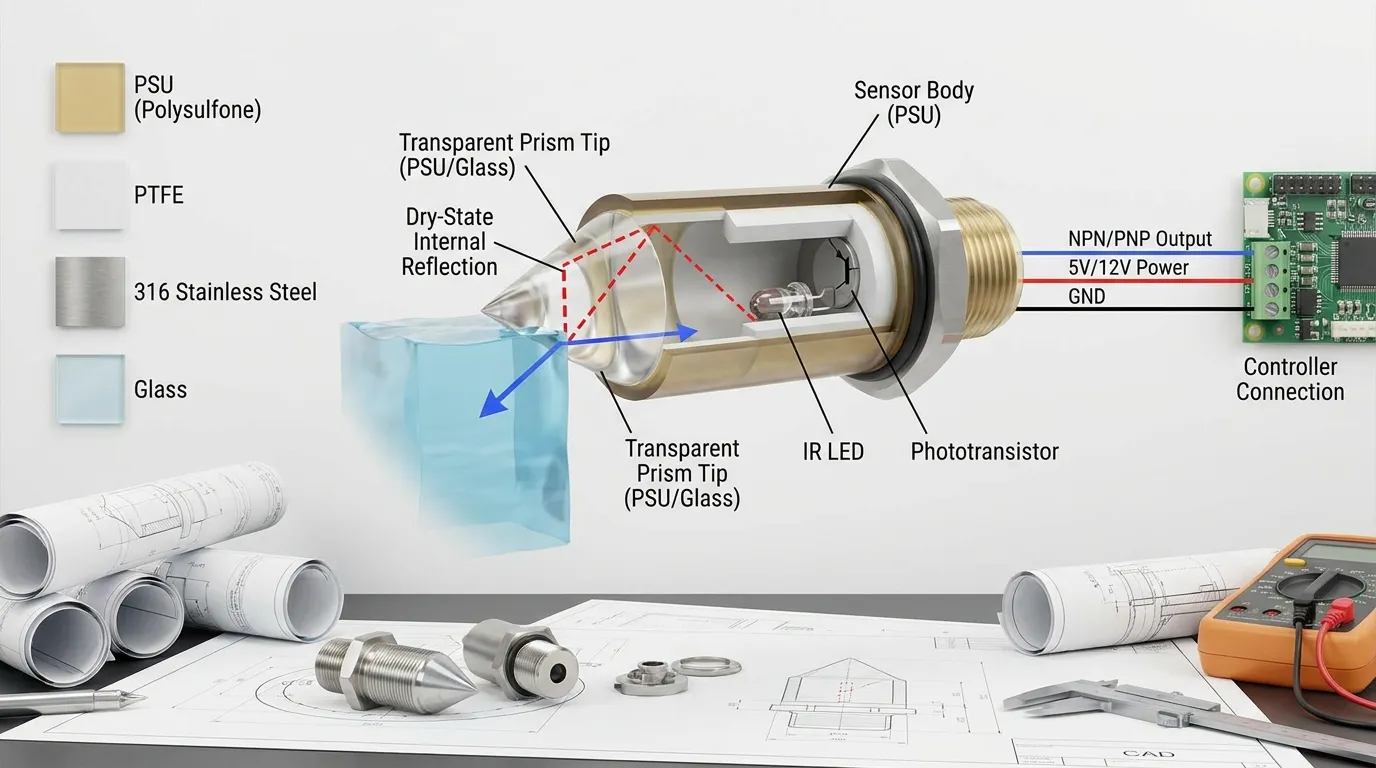
પાણીની ટાંકીમાં વાહક પ્રોબ્સ સામાન્ય છે કારણ કે તે સરળ હોય છે., પરંતુ તેઓ પ્રવાહી સાથેના વિદ્યુત સંપર્ક પર આધાર રાખે છે. કોફી અને વેન્ડિંગ ઇક્વિપમેન્ટમાં, જ્યારે પાણીના ખનિજો હોય ત્યારે તે સંપર્ક વિસ્તાર ઓછો વિશ્વસનીય બની શકે છે, માપદંડ, કોફીના અવશેષો, સફાઈ-એજન્ટ ફિલ્મ, અથવા ઇલેક્ટ્રોડની આસપાસ વરાળ ઘનીકરણ નિર્માણ થાય છે.
તેના બદલે ઓપ્ટિકલ સેન્સર ફોટોઇલેક્ટ્રિક શોધનો ઉપયોગ કરે છે. સેન્સરની અંદર, ઇન્ફ્રારેડ એલઇડી પારદર્શક પ્રિઝમ ટીપ તરફ પ્રકાશ મોકલે છે. ફોટોટ્રાન્ઝિસ્ટર પરાવર્તિત પ્રકાશ મેળવે છે. જ્યારે પ્રિઝમ શુષ્ક હોય છે, પ્રકાશ અનુમાનિત રીતે આંતરિક રીતે પ્રતિબિંબિત થાય છે. જ્યારે પાણી પ્રિઝમની સપાટીને સ્પર્શે છે, ઓપ્ટિકલ પાથ બદલાય છે કારણ કે વક્રીભવન સ્થિતિ બદલાય છે. ઇલેક્ટ્રોનિક્સ તે પરિવર્તનને સ્વિચિંગ સિગ્નલમાં રૂપાંતરિત કરે છે.
ઉપકરણ ઉત્પાદકો માટે, આ ઘણા ડિઝાઇન ફાયદા બનાવે છે:
- શોધ માટે કોઈ ખુલ્લી વાહક ઇલેક્ટ્રોડ જોડીની જરૂર નથી.
- સેન્સર કંટ્રોલરને સ્વચ્છ ઉચ્ચ/નીચા સિગ્નલ આપી શકે છે..
- કોમ્પેક્ટ જળાશયો માટે સેન્સિંગ પોઇન્ટને ખૂબ જ નાનું બનાવી શકાય છે.
- તે ફ્લોટ આર્મ વિના નિશ્ચિત બિંદુ પર પાણીની હાજરી શોધી શકે છે.
- તે ફ્લોટ સ્વીચની સરખામણીમાં મૂવિંગ-પાર્ટ નિષ્ફળતાને ઘટાડે છે.
- તે સીલબંધ અથવા અર્ધ-સીલબંધ ઉપકરણ લેઆઉટ માટે વધુ યોગ્ય છે.
આનો અર્થ એ નથી કે સેન્સર તમામ પ્રદૂષણને અવગણે છે. પ્રિઝમ ચહેરાને હજી પણ વાસ્તવિક ડિઝાઇન વાતાવરણની જરૂર છે. ભારે સ્કેલ કોટિંગ, ફસાયેલા હવાના પરપોટા, અપારદર્શક અવશેષો, અથવા નબળો માઉન્ટિંગ એંગલ કોઈપણ પોઇન્ટ-લેવલ સેન્સરને અસર કરી શકે છે. તફાવત એ છે કે ઓપ્ટિકલ પદ્ધતિ વિદ્યુત સંપર્ક અસ્થિર થવાની સામાન્ય વાહક-તપાસ સમસ્યાને ટાળે છે કારણ કે પ્રોબ સપાટી ફર થઈ ગઈ છે.
કોફી, એસ્પ્રેસો, અને વેન્ડિંગ મશીન ઇન્ટિગ્રેશન પોઇન્ટ્સ
સૌથી મજબૂત ડિઝાઇન મૂલ્ય યોગ્ય સેન્સિંગ પોઝિશન પસંદ કરવાથી આવે છે. કોફી મશીનને એક સેન્સરની જરૂર પડી શકે છે, પરંતુ OEM પીણાં પ્લેટફોર્મને વિવિધ તર્ક સ્થિતિઓ સાથે ઘણા પોઇન્ટ સેન્સરની જરૂર પડી શકે છે.
જળ જળાશય નીચા સ્તરની શોધ
જળાશયની નીચલી સલામત પાણીની લાઇન નજીક નીચા સ્તરની ઓપ્ટિકલ સ્વીચ સ્થાપિત કરી શકાય છે. જ્યારે પાણીનું સ્તર પ્રિઝમથી નીચે જાય છે, નિયંત્રક પંપને રોકી શકે છે, રીફિલ ચેતવણી બતાવો, અથવા હીટરની કામગીરીને અટકાવી શકે છે. આ કોમ્પેક્ટ એસ્પ્રેસો મશીનો માટે ઉપયોગી છે, કાઉન્ટરટોપ કોફી ઉત્પાદકો, અને વેન્ડિંગ મશીનો જ્યાં ડ્રાય રનિંગ પંપને નુકસાન પહોંચાડી શકે છે અથવા ગ્રાહકની વિશ્વસનીયતા ઘટાડી શકે છે.
હાઇ-લેવલ અને ઓવરફ્લો ડિટેક્શન
ઉચ્ચ-સ્તરીય ઓપ્ટિકલ સેન્સર ઉપલી ફિલ લાઇનની નજીક સ્થિત કરી શકાય છે. તે સ્વચાલિત ફિલિંગ સિસ્ટમ્સને સપોર્ટ કરી શકે છે, વેન્ડિંગ ટાંકીઓ, વોટર ડિસ્પેન્સર્સ, અથવા વોટર ઇનલેટ વાલ્વ સાથે જોડાયેલા મશીનો. જ્યારે સેન્સર ઉપરના બિંદુ પર પાણીનું નિદાન કરે છે, નિયંત્રક ભરવાનું બંધ કરી શકે છે અથવા ઓવરફ્લો પ્રોટેક્શન રૂટિનને ટ્રિગર કરી શકે છે.
બોઈલર-અડીને રક્ષણ
બોઈલર સંબંધિત પ્લેસમેન્ટમાં, સેન્સર ડિઝાઇનની વધુ કાળજીપૂર્વક સમીક્ષા કરવી જોઈએ. OEM એ પાણીના તાપમાનની પુષ્ટિ કરવી જોઈએ, વરાળ એક્સપોઝર, દબાણ અલગતા, સામગ્રી સુસંગતતા, અને શું સેન્સર સીધું ભીનું છે અથવા નજીકની ચેમ્બરમાં ઇન્સ્ટોલ કરવામાં આવ્યું છે. ઘણા ઉપકરણો માટે, સેન્સરને ઉચ્ચ-તણાવવાળા બોઇલર બોડીની અંદરના બદલે જળાશય અથવા સહાયક પાણીના માર્ગમાં વધુ સારી રીતે મૂકવામાં આવે છે..
ટપક ટ્રે અને ગંદા પાણીની શોધ
ઓપ્ટિકલ પોઇન્ટ સેન્સરનો ઉપયોગ ટપક ટ્રે અથવા ગંદા પાણીના કન્ટેનરમાં પણ થઈ શકે છે. અહીં ડિઝાઇન ફોકસ પીવાલાયક પાણીથી અવશેષ સહનશીલતા તરફ બદલાય છે, સફાઈ પ્રવેશ, અને ખોટા-ટ્રિગર નિવારણ. જ્યારે શક્ય હોય ત્યારે માઉન્ટિંગ પોઝિશન ડાયરેક્ટ સ્પ્લેશિંગ ઝોનને ટાળવી જોઈએ.
વેન્ડિંગ મશીન આંતરિક ટાંકી શોધ
વેન્ડિંગ અને બેવરેજ ડિસ્પેન્સર્સ માટે, ઓપ્ટિકલ સેન્સર રિફિલ કંટ્રોલને સપોર્ટ કરી શકે છે, ખાલી ટાંકી શોધ, ઉચ્ચ-સ્તરીય કટઓફ, અને જાળવણી એલાર્મ. જ્યારે વેન્ડિંગ મશીન પાસે આઇઓટી અથવા એપ્લિકેશન-કનેક્ટેડ ફંક્શન્સ હોય છે, સેન્સર આઉટપુટ મુખ્ય નિયંત્રણ બોર્ડને ફીડ કરી શકે છે, અને સિસ્ટમ એપ્લાયન્સ પ્લેટફોર્મ દ્વારા સ્ટેટસ એલર્ટ્સ ફોરવર્ડ કરી શકે છે. જ્યાં સંબંધિત છે, અમારી ટીમ ડિવાઇસ-સિસ્ટમ સ્તરે તુયા અથવા સ્માર્ટ લાઇફ કનેક્ટેડ પ્રોડક્ટ આવશ્યકતાઓની ચર્ચા કરી શકે છે.
ઉપકરણ એકીકરણ કોષ્ટક
| ઉપકરણ વિસ્તાર | સેન્સર ભૂમિકા | સૂચવેલ ડિઝાઇન ફોકસ | આઉટપુટ જરૂરિયાત |
|---|---|---|---|
| દૂર કરી શકાય તેવા પાણીનો જળાશય | નીચા પાણીની ચેતવણી, પંપ પ્રોટેક્શન | કોમ્પેક્ટ બાજુ અથવા તળિયે માઉન્ટિંગ, ચોખ્ખા પ્રિઝમ એક્સપોઝર, વપરાશકર્તા રીફિલ ચક્ર | 5વી અથવા ૧૨ વી લોજિક આઉટપુટ |
| ઉપલા જળાશય બિંદુ | ઉચ્ચ-સ્તરીય કટઓફ, ઓવરફ્લો નિવારણ | સ્થિર ભરણ-વાક્ય સ્થાન, સ્પ્લેશ નિયંત્રણ, વ્યાખ્યાયિત બદલવાનું તર્ક | NO/NC, NPN/PNP |
| એસ્પ્રેસો મશીન પાણી પાથ | નીચા સ્તર અથવા સલામતી ઇન્ટરલોક | સામગ્રી સુસંગતતા, વરાળ/ગરમીની સમીક્ષા, સીલબંધ વાયર એક્ઝિટ | RFQ દ્દારા વૈવિધ્યપૂર્ણ તર્ક પુષ્ટિ થયેલ છે |
| બોઇલર-અડીને આવેલી ચેમ્બર | ડ્રાય-રન નિવારણ આધાર | સીધો વધુ પડતો તણાવ ટાળો; તાપમાનની પુષ્ટિ કરો, માઉન્ટ કરી રહ્યા છે, અને ભીની સ્થિતિ | નિયંત્રક-બંધબેસતુ થયેલ આઉટપુટ |
| વેન્ડિંગ ટાંકી | ખાલી/સંપૂર્ણ પરિસ્થિતિ, ફરીથી ભરો નિયંત્રણ | લાંબી કેબલ રાઉટીંગ, કનેક્ટર તાળુ મારી રહ્યા છે, સેવા પ્રવેશ | NPN/PNP અથવા વૈવિધ્યપૂર્ણ સંકેત |
| ટપક ટ્રે / કચરાની ટાંકી | સંપૂર્ણ-ટ્રે ચેતવણી | અવશેષ સહનશીલતા, સફાઈ પ્રવેશ, એન્ટિ-સ્પ્લેશ પ્લેસમેન્ટ | ડિજીટલ સ્વીચ આઉટપુટ |
કોમ્પેક્ટ ફોર્મ ફેક્ટર અને માઉન્ટિંગ પસંદગીઓ
કોફી મશીનોમાં ઘણીવાર જળાશયની દિવાલની પાછળ મર્યાદિત જગ્યા હોય છે, ટાંકીની નીચે, અથવા ઉપકરણ ચોકઠાંની નજીક. વિશાળ ફ્લોટ સ્વીચ મોલ્ડેડ પ્લાસ્ટિકના ભાગોમાં દખલ કરી શકે છે, ટાંકી દૂર કરો, અથવા સેવા ઍક્સેસ. કોમ્પેક્ટ ઓપ્ટિકલ ડિઝાઇન સેન્સિંગ પોઇન્ટને નાના પ્રિઝમ ટીપ સાથે નિશ્ચિત સ્તરે મૂકવાની મંજૂરી આપે છે.
ચુસ્ત લેઆઉટ માટે, અમારું માઇક્રો ઓપ્ટિકલ સેન્સર વિકલ્પો ચર્ચા માટે યોગ્ય પ્રારંભિક બિંદુઓ છે. અંતિમ ડિઝાઇન થ્રેડેડ માઉન્ટિંગનો ઉપયોગ કરી શકે છે, એક સીલબંધ શરીર, બાજુની દિવાલ સ્થાપન, અથવા ઉપકરણ માળખાના આધારે વૈવિધ્યપૂર્ણ કૌંસ.
પુષ્ટિ કરવા માટે માઉન્ટિંગ નિર્ણયોમાં શામેલ છે:
- બાજુની દિવાલ, તળિયે, અથવા કોણીય સ્થાપન
- ટાંકીની દિવાલની જાડાઈ અને ઉપલબ્ધ સીલિંગ સપાટી
- થ્રેડ અથવા નોન-થ્રેડ માઉન્ટિંગ આવશ્યકતા
- ઓ-રિંગ, ગાસ્કેટ, અથવા વેલ્ડેડ/સીલ્ડ ઇન્ટિગ્રેશન કન્સેપ્ટ
- કેબલ બહાર નીકળવાની દિશા અને તાણ રાહત
- કનેક્ટરનો પ્રકાર અને હાર્નેસની લંબાઈ
- શું ટાંકી સ્થિર છે અથવા દૂર કરી શકાય તેવી છે
- શું વપરાશકર્તાઓ સેન્સિંગ વિસ્તારની આસપાસ સાફ કરી શકે છે
OEM પ્રોજેક્ટ્સ માટે, સેન્સર ફક્ત બાહ્ય માપ દ્વારા પસંદ થવું જોઈએ નહીં. વાસ્તવિક ડિઝાઇન પ્રશ્ન એ છે કે શું પ્રિઝમ ટીપ ઉપકરણના સંપૂર્ણ ઉપયોગના ચક્ર દ્વારા જરૂરી સ્વિચિંગ પોઇન્ટ પર પાણીના યોગ્ય રીતે ખુલ્લી રહે છે.
પાણી માટેની સામગ્રી, વરાળ, સ્કેલ, અને સફાઈની સ્થિતિ
સામગ્રીની પસંદગી સેન્સર પાણીને ક્યાં સ્પર્શે છે અને સફાઈ અને કામગીરી દરમિયાન ઉપકરણ ઉત્પાદક શું અપેક્ષા રાખે છે તેના પર આધાર રાખે છે. સામાન્ય વિકલ્પોમાં એન્જિનિયર્ડ પ્લાસ્ટિક શામેલ છે, PSU, PTFE, 316 સ્ટેઈનલેસ સ્ટીલ, અને કાચની રચનાઓ. દરેકમાં ખર્ચનું અલગ સંતુલન હોય છે, રાસાયણિક પ્રતિકાર, તાપમાનની વર્તણૂક, અને યાંત્રિક તાકાત.
કોફી અને વેન્ડિંગ એપ્લિકેશન્સ માટે, ખરીદદારોએ ચેક કરવું જોઈએ:
- શું ભીનો ભાગ પીવાલાયક પાણીનો સંપર્ક કરે છે
- શું સેન્સર ગરમ પાણીને જુએ છે, વરાળ, અથવા ફક્ત ઓરડાના તાપમાનના જળાશયનું પાણી
- ક્યાંતો ડિસ્કેલીંગ પ્રવાહી અથવા સફાઈ એજન્ટો પ્રિઝમને સ્પર્શશે
- શું ટાંકી સામગ્રી પારદર્શક છે, અર્ધપારદર્શક, અથવા અપારદર્શક
- શું હાર્ડ વોટર બજારોમાંથી ખનિજ નિર્માણની અપેક્ષા છે
- શું સેન્સિંગ બિંદુ સમયાંતરે સફાઈ માટે સુલભ છે
કોઈ પણ સામગ્રી ફક્ત કેટલોગ ફોટામાંથી પસંદ કરવી જોઈએ. ઉપકરણ ડ્રોઇંગ પ્રદાન કરવાનો સૌથી સલામત માર્ગ છે, પાણી પાથ સ્થાન, સફાઈ પદ્ધતિ, અને અપેક્ષિત ઓપરેટિંગ સ્થિતિ જેથી ફેક્ટરી યોગ્ય ભીના-સામગ્રી માળખાની ભલામણ કરી શકે.
વિદ્યુત આઉટપુટ: 5V, 12V, NPN, PNP, અને 4-20 એમએ
કોફી મશીન કંટ્રોલ બોર્ડ ઘણીવાર સરળ ડિજિટલ સ્થિતિને પસંદ કરે છે: પાણી હાજર છે અથવા પાણી ગેરહાજર છે. આ કારણથી, ઘણા ઉપકરણ પ્રોજેક્ટ્સ 5V અથવા 12V લોજિક આઉટપુટનો ઉપયોગ કરે છે. નિયંત્રક સિગ્નલ વાંચે છે અને નક્કી કરે છે કે પંપ બંધ કરવો કે નહીં, ચેતવણી બતાવો, વાલ્વ ખોલો, અથવા ગરમ કરવાની મંજૂરી આપે છે.
ઉપલબ્ધ ઇલેક્ટ્રિકલ ચર્ચાઓમાં શામેલ હોઈ શકે છે:
- 5લો વોલ્ટેજ એપ્લાયન્સ બોર્ડ માટે વી લોજિક આઉટપુટ
- 12વેન્ડિંગ અથવા આંતરિક નિયંત્રણ સિસ્ટમો માટે વી લોજિક આઉટપુટ
- નિયંત્રક ઇનપુટ ડિઝાઇન પર આધાર રાખીને એનપીએન અથવા પીએનપી આઉટપુટ
- નિષ્ફળ-સલામત પસંદગી માટે સામાન્ય રીતે ખુલ્લો અથવા સામાન્ય રીતે બંધ થયેલ તર્ક
- ઉપકરણ હાર્નેસ માટે કેબલ અને કનેક્ટર કસ્ટમાઇઝેશન
- 4-20 એમએ આઉટપુટ જ્યાં સિસ્ટમને સરળ બિંદુ સ્વીચને બદલે કરન્ટ-લૂપ લેવલ સિગ્નલિંગની જરૂર હોય છે
મોટાભાગના કોફી મશીન માટે નીચા / ઉચ્ચ પાણીની શોધ, પોઇન્ટ-લેવલ ઓપ્ટિકલ સ્વીચ પૂરતી છે. સ્તરના વલણ અથવા દૂરસ્થ ઔદ્યોગિક દેખરેખની આવશ્યકતા હોય તેવા કાર્યક્રમો માટે, આઉટપુટ પ્રકારની RFQ તબક્કે સમીક્ષા કરવી જોઈએ.
OEM કસ્ટમાઇઝેશન અને ડિઝાઇન-ઇન સપોર્ટ
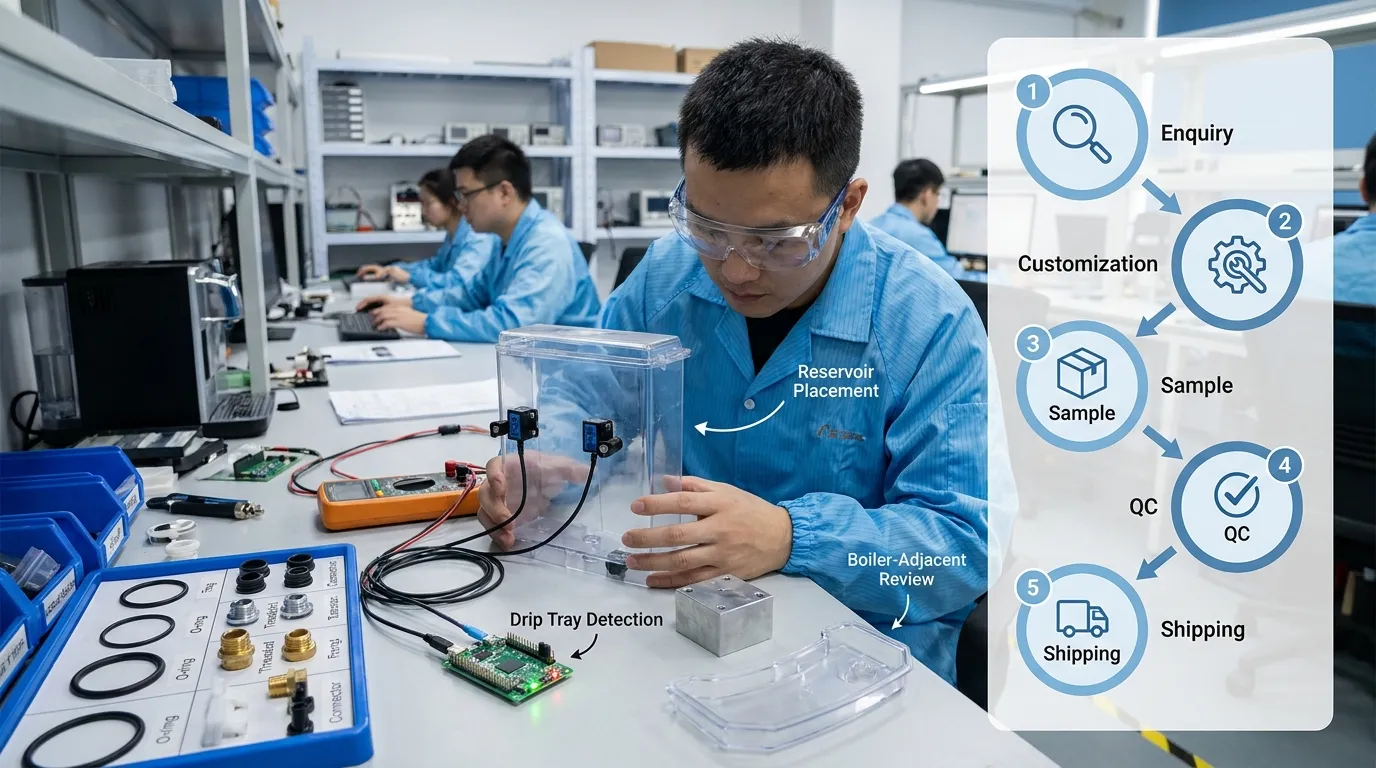
ઇન-હાઉસ આર સાથે શેનઝેન ઉત્પાદક / નિકાસકાર તરીકે&D, હોજેલીટેક OEM / ODM પ્રોજેક્ટ્સને સપોર્ટ કરે છે જ્યાં પ્રમાણભૂત કેટલોગ સેન્સર ઉપકરણ ડિઝાઇનને બંધબેસતા નથી. આપણું OEM ઓપ્ટિકલ સ્તરની સ્વીચ સેવા હાઉસિંગ ફેરફારોને ટેકો આપી શકે છે, કેબલ એસેમ્બલીઓ, કનેક્ટર બંધબેસતુ, લોગો અથવા પેકેજિંગ આવશ્યકતાઓ, અને પ્રોજેક્ટ-વિશિષ્ટ વિદ્યુત તર્ક.
OEM ડિઝાઇન-ઇનમાં શામેલ હોઈ શકે છે:
- પ્રિઝમ આકાર અને સેન્સિંગ-પોઇન્ટ સમીક્ષા
- સેન્સર બોડી મટિરિયલ પસંદગી
- થ્રેડ અને માઉન્ટિંગ સ્ટ્રક્ચર કસ્ટમાઇઝેશન
- વાયરની લંબાઈ અને ટર્મિનલ કનેક્ટર મેળ ખાય છે
- આઉટપુટ લોજિક ગોઠવણી
- ઉપકરણ પરીક્ષણ માટે નમૂનાની તૈયારી
- નમૂનાની મંજૂરી બાદ પ્રોડક્શન ક્યુસી પ્લાન
અમે યુ.એસ.માં ગ્રાહકો માટે સેન્સર ઉત્પાદનોની નિકાસ કરીએ છીએ, અમે, ભારત, અને અન્ય બજારો, એન્જિનિયરિંગ કમ્યુનિકેશન સાથે ડ્રોઇંગ્સ પર ધ્યાન કેન્દ્રિત કરે છે, નમૂનાઓ, અને વ્યવહારુ ઉપકરણ એકીકરણ.
5-પગલું OEM પ્રક્રિયા
- પૂછપરછ
ઉપકરણનો પ્રકાર મોકલો, સેન્સર સ્થાન, પાણીની સ્થિતિ[ફેરફાર કરો], લક્ષ્ય વિધેય, વોલ્ટેજ, આઉટપુટ પ્રકાર, અને જો ઉપલબ્ધ હોય તો ચિત્ર દોરવું. - સ્પેક અને કસ્ટમાઇઝેશન સમીક્ષા
અમારી ટીમ સામગ્રીની તપાસ કરે છે, આવાસ, કેબલ, કનેક્ટર, માઉન્ટ કરી રહ્યા છે, અને લોજિક આઉટપુટ આવશ્યકતાઓ. - નમૂનાની પુષ્ટિ
જળાશય માટે નમૂનાઓ તૈયાર કરવામાં આવે છે, બોઈલર-અડીને, ટપક ટ્રે, અથવા વેન્ડિંગ ટાંકી પરીક્ષણ. - ઉત્પાદન અને ક્યુસી
નમૂનાની મંજૂરી પછી, ઉત્પાદન પુષ્ટિ થયેલા સ્પષ્ટીકરણને અનુસરે છે, વાયરીંગ, અને નિરીક્ષણ આવશ્યકતાઓ. - શિપિંગ અને સપોર્ટ
અમે નિકાસ શિપમેન્ટ તૈયાર કરીએ છીએ અને ઇન્સ્ટોલેશન માટે ફોલો-અપ પ્રશ્નોને ટેકો આપીએ છીએ, વાયરીંગ, અને પુનરાવર્તિત હુકમો.
ઓર્ડર આપતા પહેલા ડિઝાઇન-ઇન ચેકલિસ્ટ
અવતરણની વિનંતી કરતા પહેલા, આ વિગતો તૈયાર કરો:
- ઉપકરણ પ્રકાર: કોફી મેકર, એસ્પ્રેસો મશીન, વેન્ડિંગ મશીન, વોટર ડિસ્પેન્સર, અથવા પીણાં સિસ્ટમ
- સેન્સર વિધેય: નીચું પાણી, ઊંચું પાણી, ઓવરફ્લો, ડ્રાય રન પ્રોટેક્શન, ટપક ટ્રે ભરાઈ ગઈ, અથવા ટાંકીની હાજરી
- સ્થાપન બિંદુ: જળાશય દિવાલ, તળિયે ટાંકી, બોઈલરની નજીકનો વિસ્તાર, વેન્ડિંગ ટાંકી, અથવા કચરાના કન્ટેનર
- પાણીની સ્થિતિ[ફેરફાર કરો]: સ્વચ્છ પાણી, ગરમ પાણી, વરાળ એક્સપોઝર, સ્કેલ જોખમ, પ્રવાહી એક્સપોઝરને સાફ કરવું
- સપ્લાય વોલ્ટેજ: 5V, 12V, અથવા પુષ્ટિ કરવા માટે અન્ય નિયંત્રક જરૂરિયાત
- આઉટપુટ પ્રકાર: NPN, PNP, ના, NC, 4-20 mA, અથવા વૈવિધ્યપૂર્ણ તર્ક
- સામગ્રીની આવશ્યકતા: PSU, PTFE, 316 ડાઘ વગરના, ગ્લાસ, અથવા અન્ય ભીના-સામગ્રીની પસંદગી
- માઉન્ટ કરી રહ્યા છીએ: થ્રેડ, ગાસ્કેટ, ઓ-રિંગ, કૌંસ, મોલ્ડેડ ટેન્ક ઇન્ટરફેસ, અથવા કસ્ટમ હાઉસિંગ
- કેબલ અને કનેક્ટર: લંબાઈ, ટર્મિનલ, વોટરપ્રૂફિંગ, તાણ રાહત, અને રાઉટીંગ દિશા
- નિષ્ફળતા-સલામત તર્ક: જ્યારે પાણી ગેરહાજર હોય ત્યારે નિયંત્રકે શું કરવું જોઈએ, હાજર છે, અથવા સેન્સર વાયરિંગ નિષ્ફળ જાય છે
- ઉપકરણની માન્યતા માટે નમૂનાનો જથ્થો અને પરીક્ષણ યોજના
ઓપ્ટિકલ વિ કન્ડક્ટિવ વિ ફ્લોટ ડિટેક્શન
| વિકલ્પ | તાકાત | કોફી/વેન્ડિંગ મશીનોમાં મર્યાદા | શ્રેષ્ઠ વપરાશ |
|---|---|---|---|
| ઓપ્ટિકલ પોઇન્ટ સેન્સર | સંકુચિત, ખસેડતા ફ્લોટ નથી, કોઈ ખુલ્લી વાહક પ્રોબ જોડી નથી, સ્થિર ડિજિટલ પાણીની હાજરી સિગ્નલ | પ્રિઝમ ચહેરો સ્થિત હોવો જોઈએ અને ઓપ્ટિકલ શોધ માટે યોગ્ય રાખવો જોઈએ | OEM નીચા / ઉચ્ચ પાણીની શોધ |
| વાહક તપાસ | સરળ અને ઓછી કિંમત | સ્કેલ સાથે ફર કરી શકે છે, પ્રવાહી વાહકતાની જરૂર છે, ખનિજ ફિલ્મથી અસરગ્રસ્ત થઈ શકે છે | મૂળભૂત પાણી-સંપર્ક શોધ |
| યાંત્રિક ફ્લોટ સ્વીચ | સમજવા માટે સરળ, સીધું બિંદુ બદલી રહ્યા છે | ખસેડતો ભાગ, મોટી જગ્યા, સંભવિત સ્ટીકિંગ અથવા યાંત્રિક ઘસારો | પર્યાપ્ત ક્લિયરન્સ સાથે મોટી ટાંકી |
| દબાણ આધારિત સેન્સિંગ | સ્તર અંદાજને આધાર આપી શકે છે | વધુ સિસ્ટમ ડિઝાઇન જટિલતા | મોટી ટાંકી અથવા બિન-બિંદુ માપન |
| 4–20 mA સ્તરનું આઉટપુટ | સિસ્ટમ-લેવલ સિગ્નલ ટ્રાન્સમિશન માટે સારું | સામાન્ય રીતે મૂળભૂત કોફી જળાશય બિંદુની શોધ માટે જરૂરિયાત કરતા વધુ | ઔદ્યોગિક અથવા કનેક્ટેડ સિસ્ટમ્સ |
હોજેલીટેક સાથે શા માટે કામ કરવું
હોજેલીટેક પ્રવાહી સ્તરની એપ્લિકેશનો માટે OEM મેન્યુફેક્ચરિંગ સપોર્ટ સાથે ફોટોઇલેક્ટ્રિક ઓપ્ટિકલ સેન્સિંગ અનુભવને જોડે છે. ઉપકરણ ઉત્પાદકો માટે, આનો અર્થ એ છે કે તમે યાદીમાંથી ફક્ત ભાગ નંબર પસંદ કરવાને બદલે વાસ્તવિક સ્થાપન સમસ્યાની ચર્ચા કરી શકો છો.
કી ટ્રસ્ટ સિગ્નલોમાં શામેલ છે:
- શેનઝેન સ્થિત ઉત્પાદક અને નિકાસકાર
- ઇન-હાઉસ આર&ફોટોઇલેક્ટ્રિક પ્રવાહી સ્તર સેન્સિંગ માટે ડી
- ઉપકરણ અને સાધનો બ્રાન્ડ્સ માટે OEM / ODM કસ્ટમાઇઝેશન
- કોમ્પેક્ટ ઓપ્ટિકલ લેવલ સ્વિચ ડિઝાઇન માટે આધાર
- વાયરીંગ, કનેક્ટર, આઉટપુટ, અને વધતી જતી ચર્ચાઓ
- યુએસ સાથે નિકાસ અનુભવ, અમે, ભારત, અને અન્ય બજારો
- વોટ્સએપ અથવા ઇમેઇલ દ્વારા અવતરણ અને નમૂના સંદેશાવ્યવહાર
ચપળ
શું કોફી મશીન પ્રોજેક્ટ્સ માટે ઓપ્ટિકલ વોટર લેવલ સેન્સર વાહક તપાસને બદલી શકે છે?
હા. કોફી મશીન ડિઝાઇન માટે ઓપ્ટિકલ વોટર લેવલ સેન્સર વાહક તપાસને બદલી શકે છે જ્યારે ઉપકરણને પ્રવાહી વાહકતા પર આધાર રાખ્યા વિના કોમ્પેક્ટ પાણીની હાજરી શોધની જરૂર હોય છે.. તે ખાસ કરીને ઉપયોગી છે જ્યાં ખનિજ બિલ્ડઅપ અથવા પ્રોબ ફરિંગ વાહક-તપાસ વિશ્વસનીયતાને ઘટાડી શકે છે.
શું એક જ સેન્સર પાણીના નીચા અને ઊંચા સ્તરને શોધી શકે છે?
વન પોઇન્ટ સેન્સર એક નિશ્ચિત સ્તરને શોધી કાઢે છે. લો-લેવલ પમ્પ પ્રોટેક્શન અને હાઇ-લેવલ ઓવરફ્લો કન્ટ્રોલ બંને માટે, OEM સામાન્ય રીતે બે સેન્સિંગ પોઇન્ટ ઇન્સ્ટોલ કરે છે અથવા બહુવિધ શોધ સ્થિતિ સાથે કસ્ટમ એસેમ્બલી ડિઝાઇન કરે છે.
શું ઓપ્ટિકલ સેન્સર ગરમ પાણી અથવા બોઈલર પ્લેસમેન્ટ માટે યોગ્ય છે?
તે ચોક્કસ સ્થાન પર આધાર રાખે છે. જળાશયનો ઉપયોગ સામાન્ય રીતે સરળ હોય છે. બોઇલરની નજીક અથવા ગરમ પાણીના પ્લેસમેન્ટમાં સામગ્રીની સમીક્ષા જરૂરી છે, તાપમાનના સંપર્ક, વરાળ, સીલીંગ, દબાણ અલગતા, અને નમૂનાની પુષ્ટિ પહેલાં સફાઈની શરતો.
આપણે કયો વોલ્ટેજ પસંદ કરવો જોઈએ: 5વી અથવા 12V?
તમારા ઉપકરણ નિયંત્રણ બોર્ડ સાથે મેળ ખાતો વોલ્ટેજ પસંદ કરો. ઘણા કોફી મશીન પ્રોજેક્ટ્સ 5V લોજિક આઉટપુટની ચર્ચા કરે છે, જ્યારે વેન્ડિંગ અથવા આંતરિક નિયંત્રણ સિસ્ટમો 12Vનો ઉપયોગ કરી શકે છે. આરએફક્યુ સમીક્ષા દરમિયાન અંતિમ પુરવઠા અને આઉટપુટ તર્કની પુષ્ટિ થવી જોઈએ.
શું માપકાં અથવા પરપોટા ખોટા ટ્રિગરિંગનું કારણ બનશે?
ભારે સ્કેલ કોટિંગ, ફસાયેલા પરપોટા, ડાયરેક્ટ સ્પ્લેશિંગ, અથવા અવશેષો શોધને અસર કરી શકે છે. યોગ્ય પ્રિઝમ પ્લેસમેન્ટ, સામગ્રી પસંદગી, સફાઈ પ્રવેશ, અને ઇન્સ્ટોલેશન એંગલ વાસ્તવિક ઉપકરણના ઉપયોગમાં ખોટા સિગ્નલોને ઘટાડવામાં મદદ કરે છે.
શું હોજેલીટેક કેબલને કસ્ટમાઇઝ કરી શકે છે, કનેક્ટર, થ્રેડ, અથવા આવાસ?
હા. OEM/ODM પ્રોજેક્ટ્સ માટે, હોજેલીટેક કેબલ લંબાઈની સમીક્ષા કરી શકે છે, જોડનાર પ્રકાર, થ્રેડ અથવા માઉન્ટિંગ સ્ટ્રક્ચર, હાઉસિંગ મટિરિયલ, આઉટપુટ તર્ક, અને તમારા ઉપકરણ ડ્રોઇંગના આધારે નમૂનાની આવશ્યકતાઓ.
કોફી મશીન સેન્સર ડિઝાઇન માટે અવતરણની વિનંતી કરો
તમારું કોફી મશીન મોકલો, એસ્પ્રેસો મશીન, અથવા વોટ્સએપ અથવા ઇમેઇલ દ્વારા હોજેલીટેકને વેન્ડિંગ મશીન વોટર-લેવલ આવશ્યકતા. સેન્સર પોઝિશન શેર કરો, વોલ્ટેજ, આઉટપુટ પ્રકાર, સામગ્રી પસંદગી, ચિત્ર માઉન્ટ કરી રહ્યા છે, અને અપેક્ષિત પાણીની સ્થિતિ, અને અમારી ટીમ નમૂના પરીક્ષણ માટે યોગ્ય ઓપ્ટિકલ લેવલ સેન્સર ડિઝાઇનની ભલામણ કરશે.


