
આંતરિક રીતે સલામત ઓપ્ટિકલ લેવલ સેન્સર
આંતરિક રીતે સલામત ઓપ્ટિકલ લેવલ સેન્સિંગ ક્ષમતાઓ
હોજેલીટેક એ શેનઝેન ઉત્પાદક અને નિકાસકાર છે જે ફોટોઇલેક્ટ્રિક ઓપ્ટિકલ લિક્વિડ લેવલ સેન્સિંગ પર ધ્યાન કેન્દ્રિત કરે છે. અમારી એન્જિનિયરિંગ ટીમ ઔદ્યોગિક સાધનો બિલ્ડરો માટે કસ્ટમ ઓપ્ટિકલ પોઇન્ટ-લેવલ સેન્સર ડિઝાઇનને સપોર્ટ કરે છે, ટાંકી સિસ્ટમ સપ્લાયર્સ, અને ઓટોમેશન ઇન્ટિગ્રેટર્સ કે જેને કોમ્પેક્ટની જરૂર છે, બિન-યાંત્રિક પ્રવાહી શોધ.
જોખમી વિસ્તાર પ્રોજેક્ટ્સ માટે, અવકાશમાં શામેલ હોઈ શકે છે:
- પ્રવાહી હાજર માટે ઓપ્ટિકલ પ્રિઝમ-આધારિત બિંદુ સ્તર શોધ / પ્રવાહી ગેરહાજર સ્થિતિ
- શુષ્ક અને ભીની સ્થિતિની ઓળખ માટે આઇઆર એલઇડી અને ફોટોટ્રાન્ઝિસ્ટર સેન્સિંગ સ્ટ્રક્ચર
- સેન્સર બોડી મટિરિયલ ચર્ચાઓ, PSU સહિત[ફેરફાર કરો], PTFE, 316 સ્ટેઈનલેસ સ્ટીલ, અને જ્યાં યોગ્ય હોય ત્યાં કાચ
- NPN, PNP, અથવા નિયંત્રણ સિસ્ટમ પર આધારિત એનાલોગ આઉટપુટ ચર્ચાઓ
- થ્રેડેડ થ્રેડેડ, પેનલ, ટાંકી-દિવાલ, અને કસ્ટમ માઉન્ટિંગ ખ્યાલો
- કેબલ, કનેક્ટર, અને નીચા પાવર સેન્સિંગ લૂપ્સ માટે વાયરિંગ લેઆઉટ સમીક્ષા
- OEM/ODM આવાસ, પ્રોબ લંબાઈ, વાયર એક્ઝિટ, અને આઉટપુટ લોજિક કસ્ટમાઇઝેશન
- યુ.એસ.માં સાધનોની નિકાસ કરતા ગ્રાહકો માટે આરએફક્યુ સપોર્ટ, અમે, ભારત, અને અન્ય ઔદ્યોગિક બજારો
સામાન્ય કાર્યકારી સિદ્ધાંતો અને પ્રમાણભૂત સેન્સર વિકલ્પો માટે, જુઓ અમારું ઓપ્ટિકલ લેવલ સેન્સર ઝાંખી અને ઓપ્ટિકલ લેવલ સેન્સર પ્રોડક્ટ પાનું.
આઇએસ ખ્યાલ: ઊર્જાને મર્યાદિત કરીને ઇગ્નીશનને અટકાવો
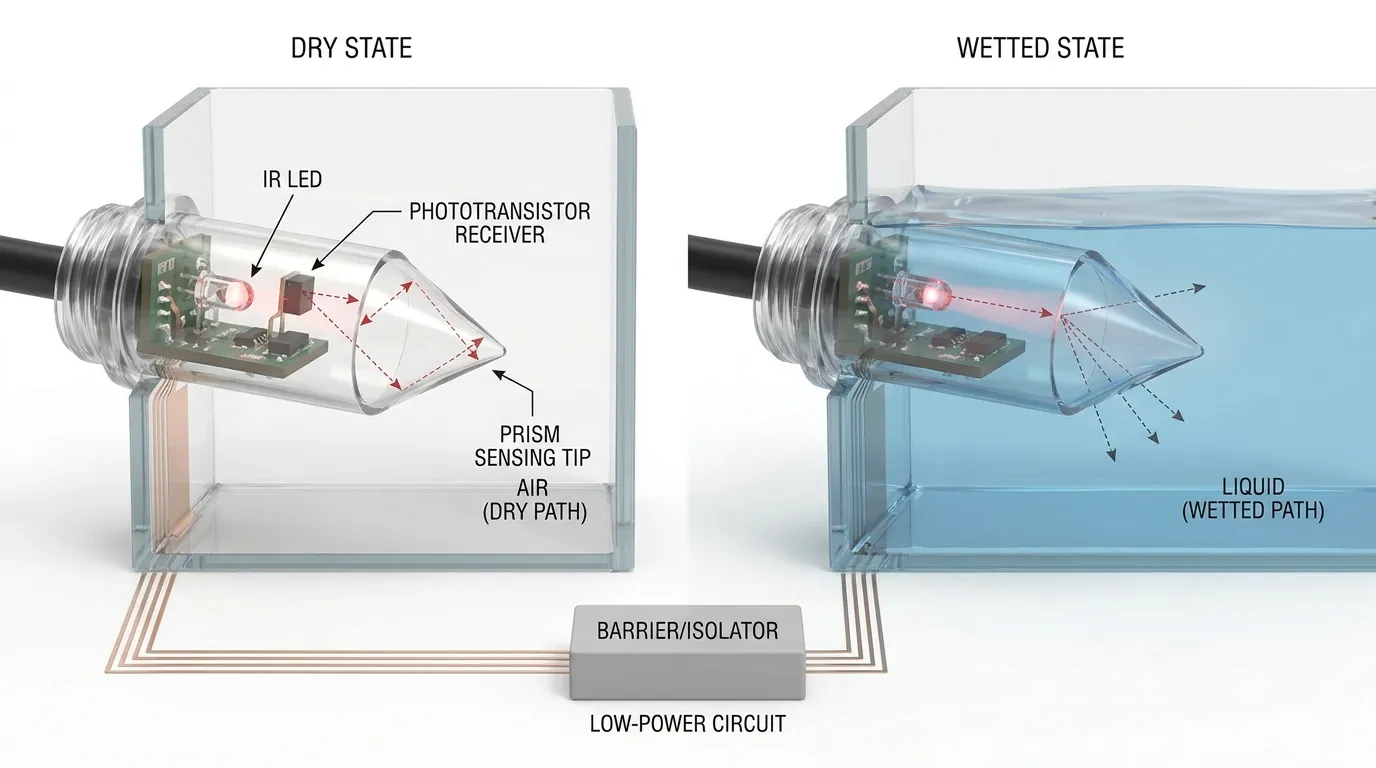
આંતરિક સલામતી એ મજબૂત આવાસ બનાવવા વિશે નથી. તે ઇલેક્ટ્રિકલ સર્કિટની રચના કરવા વિશે છે જેથી જોખમી વાતાવરણમાં ઇગ્નિશન-સક્ષમ સ્પાર્ક અથવા સપાટીનું તાપમાન બનાવવા માટે ઉપલબ્ધ energyર્જા ખૂબ ઓછી હોય. પ્રવાહી સ્તર સેન્સિંગ લુપમાં, એટલે કે સેન્સર, કેબલ, અવરોધ અથવા આઇસોલેટર, અને નિયંત્રણ ઇનપુટને સલામતી સંબંધિત સર્કિટ તરીકે ગણવું આવશ્યક છે.
આ મહત્વનું છે કારણ કે ઓપ્ટિકલ લિક્વિડ લેવલ સેન્સર સામાન્ય રીતે વિદ્યુત ઘટકો ધરાવે છે: ઇન્ફ્રારેડ એલઇડી પ્રિઝમ ટીપમાં પ્રકાશ ઉત્સર્જન કરે છે, અને ફોટોટ્રાન્ઝિસ્ટર અથવા રિસીવિંગ એલિમેન્ટ પ્રકાશ કેવી રીતે પાછો આવે છે તે શોધી કાઢે છે. જ્યારે પ્રિઝમ શુષ્ક હોય છે, પ્રકાશ રીસીવર પર આંતરિક રીતે પરાવર્તિત થાય છે. જ્યારે પ્રિઝમ પ્રવાહી દ્વારા ભીનું થાય છે, વક્રીભવનની સ્થિતિ બદલાય છે, વળતર સંકેત બદલાય છે, અને સર્કિટ આઉટપુટ સ્ટેટ સ્વિચ કરે છે.
તે ઓપ્ટિકલ સિદ્ધાંત જોખમી પ્રવાહીમાં ઉપયોગી છે કારણ કે જામ કરવા માટે કોઈ ફ્લોટ્સ નથી, પ્રવાહીમાં કોઈ મૂવિંગ રીડ મિકેનિઝમ નથી, અને ઝડપી પોઇન્ટ-લેવલ પ્રતિસાદ કોમ્પેક્ટ પ્રોબમાં બનાવી શકાય છે.. પરંતુ એકલા ઓપ્ટિકલ સિદ્ધાંત સેન્સરને આંતરિક રીતે સલામત બનાવતો નથી. લૂપનું મૂલ્યાંકન લાગુ જોખમી વિસ્તારના નિયમો સામે થવું આવશ્યક છે, સ્થાપન રેખાંકનો, વસ્તુ પરિમાણો, અવરોધ કિંમતો, વાયરિંગ પદ્ધતિ, ઝોન અથવા વિભાગ વર્ગીકરણ, ગેસ જૂથ, અને તાપમાન વર્ગ.
અવરોધ સાથે ઇન્સ્ટોલ કરાયેલ સ્ટાન્ડર્ડ ઓપ્ટિકલ સેન્સર પણ આપમેળે માન્ય આઇએસ સિસ્ટમ નથી. ખરીદદારોએ ચોક્કસ પ્રમાણિત મોડેલની પુષ્ટિ કરવી આવશ્યક છે, પ્રમાણપત્ર નંબર, રેખાંકન નિયંત્રણ કરો, વસ્તુ માહિતી, અને સ્થાપન શરતો. હોજેલીટેક ડિઝાઇન ચર્ચાઓ અને OEM વિકાસને ટેકો આપી શકે છે, પરંતુ આ પૃષ્ઠ ATEX નો દાવો કરતું નથી, IECEx, UL, CSA, અથવા દરેક પ્રમાણભૂત સેન્સર મોડેલ માટે અન્ય આંતરિક રીતે સલામત પ્રમાણપત્ર સિવાય કે માન્ય પ્રોજેક્ટ-વિશિષ્ટ દસ્તાવેજો પૂરા પાડવામાં આવે અને ચકાસવામાં ન આવે.
આંતરિક રીતે સલામત વિ વિસ્ફોટ-પ્રૂફ ઓપ્ટિકલ સેન્સર
આંતરિક રીતે સલામત સુરક્ષા અને વિસ્ફોટ-પ્રૂફ સુરક્ષા સમાન જોખમને વિવિધ રીતે હલ કરે છે.
આઇએસ ડિઝાઇન સર્કિટમાં energyર્જાને મર્યાદિત કરીને ઇગ્નિશનને રોકવાનો પ્રયાસ કરે છે. વિસ્ફોટ-પ્રૂફ અથવા એક્સ ડી ડિઝાઇન ધારે છે કે એન્ક્લોઝરની અંદર ઇગ્નિશન થઈ શકે છે અને આંતરિક વિસ્ફોટને સમાવવા માટે પ્રમાણિત ફ્લેમપ્રૂફ હાઉસિંગનો ઉપયોગ કરે છે અને તે બહારના વાતાવરણમાં પહોંચે તે પહેલાં ઠંડા બહાર નીકળતા વાયુઓને સમાવવા માટે.
બંને વિકલ્પોની તુલના કરતા ખરીદદારો માટે, અમારું વિસ્ફોટ-પ્રૂફ ઓપ્ટિકલ સેન્સર જ્યારે પ્રોજેક્ટને energyર્જા-મર્યાદિત સાધનોને બદલે ફ્લેમપ્રૂફ-શૈલીના યાંત્રિક સંરક્ષણની જરૂર હોય ત્યારે પૃષ્ઠ વધુ સારો સંદર્ભ છે.
| પસંદગી બિંદુ | આંતરિક રીતે સલામત / આઇએસ / Ex i અભિગમ | વિસ્ફોટ-પ્રૂફ / એક્સ ડી અભિગમ |
|---|---|---|
| સંરક્ષણ ખ્યાલ | ઇલેક્ટ્રિકલ અને થર્મલ એનર્જીને મર્યાદિત કરે છે, તેથી માન્ય લૂપમાં ઇગ્નીશન થઈ શકતું નથી | પ્રમાણિત એન્ક્લોઝરની અંદર આંતરિક વિસ્ફોટને સમાવે છે |
| મુખ્ય ડિઝાઇન ફોકસ | સેન્સર પરિપથ, બેરિયર/આઇસોલેટર, વસ્તુ પરિમાણો, કેબલ કેપેસિટન્સ અને ઇન્ડક્શન | ફ્લેમપ્રૂફ હાઉસિંગ, થ્રેડો, સીલ, બંધન અખંડિતતા, નળી અથવા કેબલ ગ્રંથિ સિસ્ટમ |
| લાક્ષણિક ફિટ | લો-પાવર સેન્સર્સ, સ્વીચો, ટ્રાન્સમીટરો, સાધન લુપ્સ | ઉચ્ચ-ઊર્જા ઉપકરણો અથવા સાધનો કે જે સરળતાથી ઊર્જા-મર્યાદિત ન હોઈ શકે |
| સ્થાપન નિર્ભરતા | યોગ્ય અવરોધ અથવા ગેલ્વેનિક આઇસોલેટર અને માન્ય વાયરિંગ પ્રેક્ટિસની જરૂર પડે છે | યોગ્ય બંધન સ્થાપનની જરૂર છે, સીલીંગ, ગ્રાઉન્ડિંગ, અને જાળવણી |
| જાળવણીની ચિંતા | ખોટા લૂપ ફેરફાર આઇએસ ડિઝાઇનને અમાન્ય કરી શકે છે | ક્ષતિગ્રસ્ત કવર, થ્રેડો, સીલ, અથવા ગ્રંથિઓ રક્ષણ સાથે સમાધાન કરી શકે છે |
| ખરીદનાર પ્રશ્ન | "શું આ ચોક્કસ સેન્સર લૂપને મારા ઝોન / વિભાગ અને ગેસ જૂથ માટે પ્રમાણિત કરી શકાય છે?” | "શું આ ચોક્કસ એન્ક્લોઝર અને ઇન્સ્ટોલેશન પદ્ધતિ મારા વિસ્તાર માટે મંજૂર છે?” |
અવરોધ, આઇસોલેટર, અને એન્ટિટી પરિમાણ સમીક્ષા
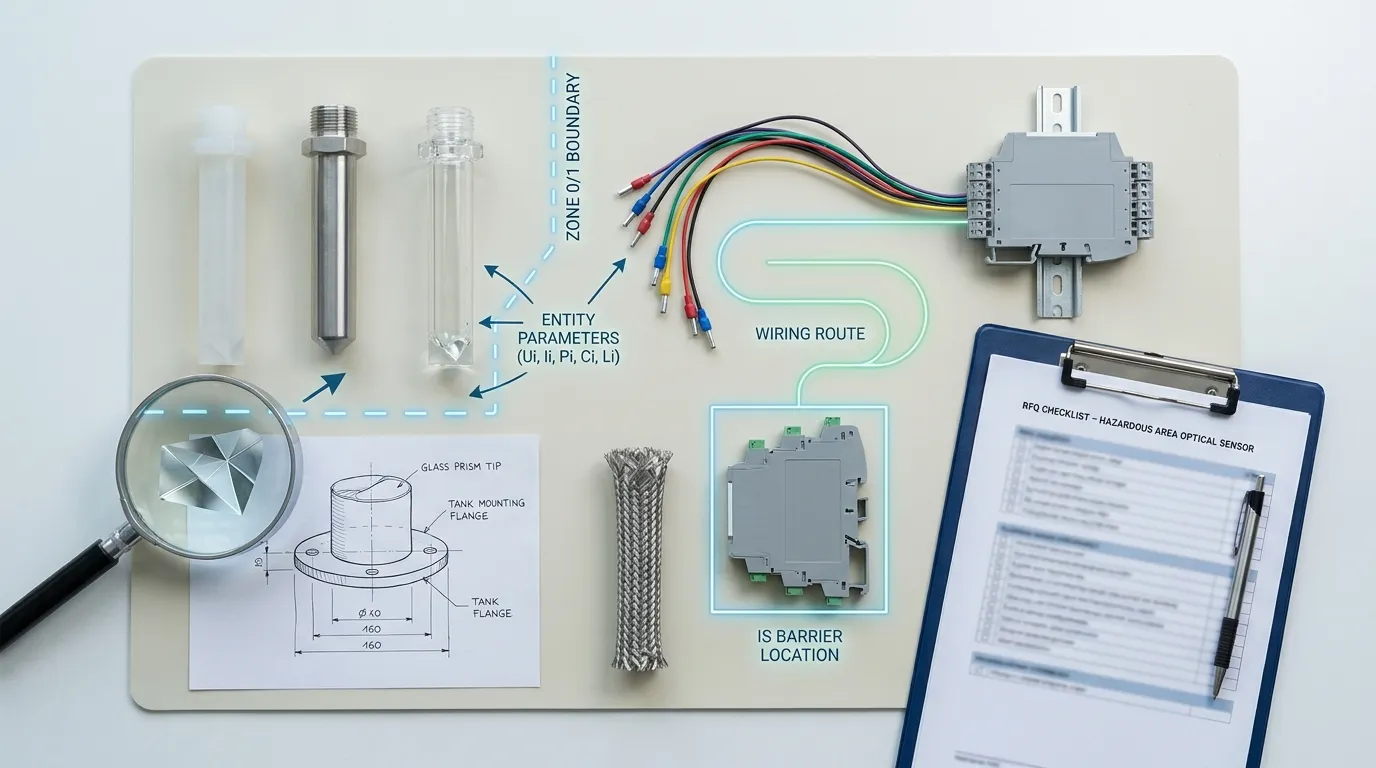
આંતરિક રીતે સલામત ઓપ્ટિકલ લેવલ સેન્સર પ્રોજેક્ટમાં સૌથી મોટો નિર્ણય ઘણીવાર પ્રિઝમ અથવા હાઉસિંગ નથી. તે લૂપ ડિઝાઇન છે.
આઇએસ અવરોધ અથવા ગેલ્વેનિક આઇસોલેટર સામાન્ય રીતે સલામત-વિસ્તાર નિયંત્રણ સિસ્ટમ અને જોખમી વિસ્તાર ક્ષેત્ર ઉપકરણ વચ્ચે ઇન્સ્ટોલ કરવામાં આવે છે. તેની ભૂમિકા વોલ્ટેજને પ્રતિબંધિત કરવાની છે, હાલનું, અને જોખમી વિસ્તારમાં પ્રવેશતી વીજળી. સરળ PLC ઇનપુટ, રીલે બોર્ડ, અથવા તો સેન્સર ઓછી પાવર હોવાને કારણે પાવર સપ્લાયને સલામત ગણી શકાતું નથી.
ખરીદનાર અથવા જોખમી વિસ્તાર ઇજનેરે સેન્સર એન્ટિટી પરિમાણોની અવરોધ અથવા આઇસોલેટર આઉટપુટ પરિમાણો સાથે સરખામણી કરવી આવશ્યક છે. લાક્ષણિક શબ્દોમાં શામેલ છે:
- Ui: સેન્સર પર મહત્તમ ઇનપુટ વોલ્ટેજ માન્ય છે
- II: સેન્સર પર મહત્તમ ઇનપુટ વર્તમાન માન્ય છે
- Pi: સેન્સર પર મહત્તમ ઇનપુટ પાવર માન્ય છે
- ત્યાં: સેન્સરનું આંતરિક કેપેસિટન્સ
- મેં વાંચ્યું: સેન્સરનું આંતરિક ઇન્ડક્શન
- ઉઓ: અવરોધમાંથી મહત્તમ આઉટપુટ વોલ્ટેજ
- I: બેરિયરમાંથી મહત્તમ આઉટપુટ વર્તમાન
- પછી: અવરોધમાંથી મહત્તમ આઉટપુટ પાવર
- Co: મહત્તમ બાહ્ય ક્ષમતા માન્ય છે
- ધ: મહત્તમ બાહ્ય ઇન્ડક્શન માન્ય છે
કેબલ એ ગણતરીનો એક ભાગ છે. લાંબો કેબલ ચાલે છે, ઢાલ કેબલ, જંકશન બોક્સ, અને ફીલ્ડ કનેક્ટર્સ કેપેસિટન્સ અને ઇન્ડક્શન ઉમેરી શકે છે. જો કુલ કેબલ વત્તા ઉપકરણ કિંમતો માન્ય અવરોધ મર્યાદાને ઓળંગે છે, સેન્સર પોતે જ ઓછી શક્તિ ધરાવતો હોય તો પણ લૂપ સ્વીકાર્ય ન હોઈ શકે.
આ કારણથી, જોખમી વિસ્તારના ખરીદદારોએ માત્ર થ્રેડના કદ અથવા વોલ્ટેજ દ્વારા જ ઓર્ડર આપવો જોઈએ નહીં. તેઓએ વિસ્તાર વર્ગીકરણ મોકલવું જોઈએ, પ્રવાહી, ટાંકી સામગ્રી, ઇનપુટ નિયંત્રણ કરો, કેબલ લંબાઈ, જો પસંદ થયેલ હોય તો અવરોધ મોડેલ, અને ડિઝાઇનને અંતિમ સ્વરૂપ આપતા પહેલા કોઈપણ જરૂરી પ્રમાણપત્ર ધોરણ.
ઝોન, વિભાગ, ગેસ જૂથ, અને વાયરિંગ પ્રશ્નો
જોખમી વિસ્તાર પ્રોજેક્ટ્સે સેન્સર પસંદગી પહેલાં ઇન્સ્ટોલેશન વાતાવરણને વ્યાખ્યાયિત કરવું આવશ્યક છે. સામાન્ય પ્રશ્નોમાં ટાંકી વિસ્તારને ઝોન દ્વારા વર્ગીકૃત કરવામાં આવ્યો છે કે કેમ તે શામેલ છે 0, ઝોન 1, ઝોન 2, અથવા વર્ગ / વિભાગના નિયમો દ્વારા; શું વાતાવરણમાં ગેસ છે, બાષ્પ, ધૂળ, અથવા મિશ્ર જોખમ; અને કયો ગેસ જૂથ અને તાપમાન વર્ગ લાગુ પડે છે.
સેન્સર લોકેશન પણ મહત્વનું છે. ટાંકીની અંદરની પ્રોબ ટીપ કેબલ ટર્મિનેશન અથવા કંટ્રોલ કેબિનેટ કરતાં વધુ ગંભીર વર્ગીકૃત વિસ્તારમાં હોઈ શકે છે. ટોપ-માઉન્ટેડ સેન્સર, સાઇડ-માઉન્ટેડ પોઇન્ટ િસ્વચ, અથવા બાહ્ય ચેમ્બર ઇન્સ્ટોલેશન વિવિધ વાયરિંગ અને સીલિંગ આવશ્યકતાઓ બનાવી શકે છે.
વાયરિંગને નિયંત્રિત ઇન્સ્ટ્રુમેન્ટેશન લૂપ તરીકે આયોજન કરવું જાઇએ, કેઝ્યુઅલ સેન્સર કેબલ એક્સ્ટેંશન તરીકે નથી. પ્રોજેક્ટે પુષ્ટિ કરવી જોઈએ:
- જોખમી અને સલામત વિસ્તારની સીમા
- અવરોધ અથવા આઇસોલેટર સ્થાન
- કેબલ પ્રકાર, ઢાલ, ગ્રાઉન્ડિંગ, અને નોન-આઇએસ વાયરિંગથી અલગ પાડવું
- જંકશન બોક્સ રેટિંગ અને ઇન્સ્ટોલેશન પદ્ધતિ
- શું આઉટપુટ એ અલગ NPN/PNP સ્વિચિંગ અથવા એનાલોગ સિગ્નલ છે
- શું નિયંત્રણ ઇનપુટ પસંદ કરેલ અવરોધ સાથે કામ કરી શકે છે
- ઓવરફ્લો માટે જરૂરી NO/NC લોજિક, ડ્રાય રન, લીક, અથવા ખાલી ટાંકી એલાર્મ
- નિષ્ફળ-સલામત વર્તણૂક જો કેબલ તૂટી જાય તો, સત્તા ખોવાઈ ગઈ છે, અથવા પ્રિઝમ ફાઉલ થઈ જાય છે
કઠોર યાંત્રિક વાતાવરણ માટે, ખરીદદારો અમારી સમીક્ષા પણ કરી શકે છે કઠોર ઇલેક્ટ્રો-ઓપ્ટિક સેન્સર ઔદ્યોગિક બાંધકામ ખ્યાલો માટેના વિકલ્પો.
આસપાસ ડિઝાઇન કરવા માટે વાસ્તવિક નિષ્ફળતા મોડ્સ
જ્યારે સલામતી લૂપ અને પ્રક્રિયા શરતોને અલગથી સારવાર આપવામાં આવે છે ત્યારે જોખમી વિસ્તાર ઓપ્ટિકલ સેન્સિંગ પ્રોજેક્ટ્સ નિષ્ફળ જાય છે. સૌથી સામાન્ય સમસ્યાઓ માત્ર ઇલેક્ટ્રિકલ જ નથી.
જ્યારે ચીકણું તેલ હોય ત્યારે પ્રિઝમ ફાઉલિંગ થઈ શકે છે, રેઝિન, સ્ફટિકીકરણ રસાયણો[ફેરફાર કરો], અથવા ભારે પ્રદૂષણ સેન્સિંગ ટીપને આવરણ કરે છે. જો પ્રવાહી સપાટી તોફાની હોય તો ફીણ અથવા પરપોટા અસ્થિર સ્વિચિંગનું કારણ બની શકે છે. મજબૂત બાહ્ય પ્રકાશ, નબળું ઢાલ, અથવા ખોટી વાયરિંગ સિગ્નલ ઘોંઘાટ પેદા કરી શકે છે. ખોટી આઉટપુટ પસંદગી PLC ને વિરુદ્ધ સ્થિતિને વાંચી શકે છે. વોટર ટેસ્ટમાં કામ કરતું સેન્સર ઇંધણમાં સમાન રીતે વર્તન ન કરી શકે, દ્રાવક, તેલ, અથવા આક્રમક રાસાયણિક સેવા.
સામગ્રીની પસંદગી પણ મહત્વપૂર્ણ છે. સુસંગત પ્રવાહી માટે કોમ્પેક્ટ સેન્સર હાઉસિંગ્સમાં પીએસયુ ઉપયોગી થઈ શકે છે. પીટીએફઇને ઘણીવાર મજબૂત રાસાયણિક પ્રતિકાર માટે ગણવામાં આવે છે. 316 સ્ટેનલેસ સ્ટીલ મજબૂત ઔદ્યોગિક આવાસો અને થ્રેડેડ માઉન્ટને ટેકો આપી શકે છે. ગ્લાસ સેન્સિંગ ટીપ્સ ઉપયોગી થઈ શકે છે જ્યાં ઓપ્ટિકલ સ્પષ્ટતા, તાપમાનની વર્તણૂક, અથવા રાસાયણિક સુસંગતતાની સમીક્ષા કરવી આવશ્યક છે. અંતિમ પસંદગી પ્રવાહી પર આધાર રાખે છે, સફાઈ પદ્ધતિ, તાપમાન, દબાણ, થ્રેડ, છાપ, અને પ્રમાણપત્ર પાથ.
પાંચ-પગલાની પ્રોજેક્ટ પ્રક્રિયા
1. પૂછપરછ અને જોખમી વિસ્તારની સમીક્ષા
તમારો પ્રવાહી પ્રકાર મોકલો, ટાંકી ચિત્ર, માઉન્ટ સ્થાન, વિસ્તાર વર્ગીકરણ, જરૂરી આઉટપુટ, નિયંત્રક પ્રકાર, અને ટાર્ગેટ માર્કેટ. અમારી ટીમ તપાસ કરે છે કે પ્રોજેક્ટની ચર્ચા આઇએસ તરીકે થવી જોઈએ કે નહીં, વિસ્ફોટ-પ્રૂફ, કઠોર ઔદ્યોગિક, અથવા પ્રમાણભૂત ઓપ્ટિકલ સેન્સિંગ.
2. સ્પષ્ટીકરણ અને કસ્ટમાઇઝેશન
અમે પ્રિઝમ સ્ટ્રક્ચરની સમીક્ષા કરીએ છીએ, હાઉસિંગ મટિરિયલ, થ્રેડ, કેબલ, વાયરની લંબાઈ, આઉટપુટ તર્ક, અને સિગ્નલ પ્રકાર. આઈએસ પ્રોજેક્ટ્સ માટે, ડિઝાઇન સ્થિર થાય તે પહેલાં અવરોધ / આઇસોલેટર અને એન્ટિટી પરિમાણ ચર્ચાનો સમાવેશ કરવો આવશ્યક છે.
3. નમૂનાની પુષ્ટિ
યાંત્રિક ફિટ માટે નમૂના તૈયાર કરી શકાય છે, વાયરીંગ, સંકેત વર્તણૂક, અને પ્રવાહી પરીક્ષણ મૂલ્યાંકન. જોખમી વિસ્તારની મંજૂરીને નમૂના પરીક્ષણ દ્વારા બદલી શકાતી નથી; પ્રમાણપત્ર દસ્તાવેજો અને નિયંત્રણ રેખાંકનો અલગથી નિયંત્રિત કરવા આવશ્યક છે.
4. ઉત્પાદન અને ક્યુસી
ઉત્પાદન ઓપ્ટિકલ ગોઠવણી પર ધ્યાન કેન્દ્રિત કરે છે, સીલીંગ, વિદ્યુત આઉટપુટ, કેબલ જોડાણ, અને સંમત સ્પષ્ટીકરણ અનુસાર દેખાવનું નિરીક્ષણ.
5. શિપિંગ અને સપોર્ટ
ફેક્ટરી ગ્રાહક સમીક્ષા માટે જરૂરી નિકાસ સંદેશાવ્યવહાર અને તકનીકી ફાઇલોને સપોર્ટ કરે છે. ખરીદદારો ડ્રોઇંગ્સ અને પ્રોજેક્ટ આવશ્યકતાઓ સાથે વોટ્સએપ અથવા ઇમેઇલ દ્વારા અવતરણની વિનંતી કરી શકે છે.
ઓર્ડર આપતા પહેલા પુષ્ટિ કરવાની આવશ્યકતાઓ
- પ્રવાહી નામ, એકાગ્રતા, ચીકાશ, અને કોટિંગ અથવા સ્ફટિકીકરણની અપેક્ષા છે કે કેમ
- ટાંકી સામગ્રી, દિવાલની જાડાઈ, માઉન્ટિંગ દિશા, અને થ્રેડની આવશ્યકતા
- બિંદુ-સ્તર વિધેય: ઊંચું એલાર્મ, નીચું એલાર્મ, ઓવરફ્લો, લીક શોધ, અથવા ડ્રાય રન પ્રોટેક્શન
- આઉટપુટ પ્રકાર: NPN, PNP, એનાલોગ, અથવા કંટ્રોલ-બોર્ડ-વિશિષ્ટ સિગ્નલ
- જરૂરી સામાન્ય સ્થિતિ: સામાન્ય રીતે ખુલ્લું છે, સામાન્ય રીતે બંધ છે, ભીનાશ પર, અથવા શુષ્ક તર્ક
- કેબલ લંબાઈ, ઢાલની આવશ્યકતા, જોડાણકર્તાની શૈલી, અને રૂટીંગ અંતર
- જોખમી વિસ્તારનું વર્ગીકરણ: ઝોન/વિભાગ, ગેસ જૂથ, ધૂળ જૂથ, તાપમાન વર્ગ
- અવરોધ અથવા ગેલ્વેનિક આઇસોલેટર મોડેલ અને એન્ટિટી પરિમાણો
- અંતિમ વપરાશકર્તા દ્દારા જરૂરી પ્રમાણપત્ર ધોરણ, EPC, નિરીક્ષણ સત્તા, અથવા સ્થાનિક બજાર
- શું પ્રમાણિત IS ઉપકરણ ફરજિયાત છે, અથવા પ્રોજેક્ટ હજી પણ પ્રોટોટાઇપ ડિઝાઇન સમીક્ષામાં છે કે કેમ
શું પ્રમાણિત છે અને શું નથી
હોજેલીટેક ઓપ્ટિકલ લેવલ સેન્સર ડિઝાઇનની ચર્ચા કરી શકે છે, OEM/ODM વૈવિધ્યીકરણ, અને જોખમી વિસ્તાર સંવેદનશીલતા આવશ્યકતાઓ. જો કે, આ પાનું પોતે પ્રમાણપત્ર નથી, અને સ્ટાન્ડર્ડ ઓપ્ટિકલ સેન્સરને આંતરિક રીતે સલામત પ્રમાણિત ઉત્પાદન તરીકે ગણવું જોઈએ નહીં સિવાય કે ચોક્કસ મોડેલને માન્ય પ્રમાણપત્ર દસ્તાવેજો સાથે પૂરા પાડવામાં ન આવે.
જોખમી વિસ્તારનો ઉપયોગ કરતા પહેલા શેની ચકાસણી કરવી જોઈએ:
- ચોક્કસ સેન્સર મોડેલ અને માર્કિંગ
- લાગુ પડતું ATEX, IECEx, UL, CSA, અથવા જો જરૂરી હોય તો સ્થાનિક મંજૂરી
- પ્રમાણપત્ર નંબર અને અવકાશ
- રેખાંકન અથવા સ્થાપન રેખાંકન પર નિયંત્રણ
- વસ્તુ પરિમાણો
- માન્ય અવરોધ અથવા આઇસોલેટર
- ઝોન/વિભાગ, ગેસ જૂથ, અને તાપમાન વર્ગ સુસંગતતા
- ઇન્સ્ટોલેશન અને નિરીક્ષણ આવશ્યકતાઓ
હોજેલીટેક સાથે શા માટે કામ કરવું
હોજેલીટેક ઇન-હાઉસ આરને જોડે છે&D, ફોટોઇલેક્ટ્રિક ઓપ્ટિકલ સેન્સિંગ અનુભવ, અને શેનઝેનમાં OEM / ODM મેન્યુફેક્ચરિંગ સપોર્ટ. ઔદ્યોગિક ખરીદદારો માટે, આનો અર્થ એ છે કે સેન્સર ચર્ચામાં ઓપ્ટિકલ સર્કિટનો સમાવેશ થઈ શકે છે, પ્રિઝમ ભૂમિતિ, ભીની સામગ્રી, માઉન્ટ કરી રહ્યા છે, વાયરીંગ, અને આઉટપુટ વર્તણૂક ફક્ત કેટલોગ ભાગ પસંદગીની જગ્યાએ.
અમે નિકાસકારોને ટેકો આપીએ છીએ, સાધનો બિલ્ડરો, અને ઓટોમેશન કંપનીઓ કે જેને કસ્ટમ લિક્વિડ લેવલ સેન્સિંગ માટે ફેક્ટરી-ડાયરેક્ટ કમ્યુનિકેશનની જરૂર હોય છે. જ્યાં જોખમી વિસ્તારોની બહાર સ્માર્ટ ટેન્ક મોનિટરિંગ સંબંધિત છે, તુયા/સ્માર્ટ લાઇફ સંબંધિત સોલ્યુશન્સની પણ આઇએસ સેન્સર લૂપ્સથી અલગ ચર્ચા કરી શકાય છે.
ચપળ
આંતરિક રીતે સલામત ઓપ્ટિકલ લેવલ સેન્સર શું છે?
આંતરિક રીતે સલામત ઓપ્ટિકલ લેવલ સેન્સર એ ઓપ્ટિકલ લિક્વિડ લેવલ ડિવાઇસ છે જેનો ઉપયોગ ઊર્જા-મર્યાદિત સર્કિટમાં થાય છે, જેથી માન્ય લૂપ નિર્દિષ્ટ જોખમી વાતાવરણને સળગાવી શકતું નથી. એકલા સેન્સર પૂરતા નથી; અવરોધ અથવા આઇસોલેટર, વાયરીંગ, વસ્તુ પરિમાણો, અને પ્રમાણપત્ર અવકાશ બધા સાથે મેળ ખાતો હોવો જોઈએ.
શું આઇએસ ઓપ્ટિકલ સેન્સરને હંમેશા અવરોધ અથવા ગેલ્વેનિક આઇસોલેટરની જરૂર પડે છે?
મોટા ભાગના જોખમી વિસ્તાર ઇન્સ્ટ્રુમેન્ટેશન લૂપ્સમાં, હા. અવરોધ અથવા આઇસોલેટર વોલ્ટેજને મર્યાદિત કરે છે, હાલનું, અને જોખમી વિસ્તારમાં પ્રવેશતી વીજળી. ચોક્કસ ઉપકરણ સેન્સર એન્ટિટી પરિમાણો અને સ્થાપન રેખાંકન અનુસાર પસંદ થયેલ હોવુ જ જોઇએ.
શું આંતરિક સલામતી વિસ્ફોટ-પ્રૂફ જેવી જ છે?
ના. આંતરિક સલામતી ઉપલબ્ધ ઊર્જાને મર્યાદિત કરીને ઇગ્નીશનને અટકાવે છે. વિસ્ફોટ-પ્રૂફ અથવા એક્સ ડી પ્રોટેક્શન આંતરિક વિસ્ફોટને સમાવવા માટે પ્રમાણિત એન્ક્લોઝરનો ઉપયોગ કરે છે. યોગ્ય પસંદગી વિસ્તારના વર્ગીકરણ પર આધારિત છે, પાવર સ્તર, સ્થાપન પદ્ધતિ, જાળવણી પસંદગી, અને મંજૂરીની આવશ્યકતા.
શું હોજેલીટેક આ પૃષ્ઠ માટે ATEX અથવા IECEx પ્રમાણપત્રનો દાવો કરી શકે છે?
આ પૃષ્ઠ પર કોઈ ધાબળો દાવો કરવામાં આવ્યો નથી. ચોક્કસ સેન્સર મોડેલ માટે પ્રમાણપત્રની પુષ્ટિ કરવી આવશ્યક છે, પ્રમાણપત્ર અવકાશ, ચિહ્નિત કરી રહ્યા છે, અવરોધ, અને સ્થાપન પદ્ધતિ. નિયમનકારી જોખમી વિસ્તાર માટે કોઈપણ સેન્સર સ્પષ્ટ કરતા પહેલા ખરીદદારોએ સંબંધિત દસ્તાવેજોની વિનંતી કરવી જોઈએ.
ઓપ્ટિકલ લેવલ સેન્સિંગ માટે કયા પ્રવાહી યોગ્ય છે?
ઓપ્ટિકલ લેવલ સેન્સિંગને ઘણીવાર પાણી માટે ગણવામાં આવે છે, તેલ, બળતણ, દ્રાવકો, કુલન્ટ્સ, અને ઘણા ઔદ્યોગિક પ્રવાહી. ખરીદનારે ઓપ્ટિકલ વર્તણૂકની પુષ્ટિ કરવી આવશ્યક છે, રાસાયણિક સુસંગતતા, કોટિંગ જોખમ, તાપમાન, દબાણ, અને ઓર્ડર આપતા પહેલા ભીની સામગ્રી.
RFQ માટે મારે કઈ માહિતી મોકલવી જોઈએ?
પ્રવાહી મોકલો, ટાંકી ચિત્ર, માઉન્ટ થ્રેડ, વિસ્તાર વર્ગીકરણ, જરૂરી આઉટપુટ, કેબલ લંબાઈ, નિયંત્રણ સિસ્ટમ ઇનપુટ, અવરોધ અથવા આઇસોલેટર મોડેલ, લક્ષ્ય પ્રમાણપત્ર આવશ્યકતા, અને અપેક્ષિત કાર્ય જેમ કે ઓવરફ્લો એલાર્મ, નીચા સ્તરનું એલાર્મ, અથવા લીક શોધ.
જોખમી વિસ્તાર ઓપ્ટિકલ લેવલ સેન્સર ક્વોટની વિનંતી કરો
તમારું ટાંકી ચિત્ર મોકલો, પ્રવાહી વિગતો, વિસ્તાર વર્ગીકરણ, વાયરિંગ પ્લાન, અને વોટ્સએપ અથવા ઇમેઇલ દ્વારા હોજેલીટેકને મંજૂરી ધોરણની જરૂર છે. અમારી ટીમ સમીક્ષા કરી શકે છે કે તમારો પ્રોજેક્ટ આઇએસ ઓપ્ટિકલ સેન્સિંગ ચર્ચા માટે વધુ યોગ્ય છે કે નહીં, વિસ્ફોટ-પ્રૂફ ઓપ્ટિકલ સેન્સર, એક કઠોર ઇલેક્ટ્રો-ઓપ્ટિક ડિઝાઇન, અથવા સ્ટાન્ડર્ડ ઓપ્ટિકલ લેવલ સેન્સર રૂપરેખાંકન.
