
કઠોર ઇલેક્ટ્રો-ઓપ્ટિક લેવલ સેન્સર
અમારી કઠોર ઇલેક્ટ્રો-ઓપ્ટિક સ્તર સેન્સર સેવા ખરીદદારોને યોગ્ય સેન્સિંગ ટીપ પસંદ કરવામાં મદદ કરે છે, આવાસ, સીલિંગ પદ્ધતિ, કેબલ ડિઝાઇન, નમૂનાઓ અથવા ઉત્પાદન એકમો ઓર્ડર કરતા પહેલા આઉટપુટ પ્રકાર અને સુરક્ષા સુવિધાઓ.
કઠોર ઓપ્ટિકલ લેવલ સેન્સર ક્ષમતાઓ
હોજેલીટેક ફોટોઇલેક્ટ્રિક સેન્સિંગ પર આધારિત ઓપ્ટિકલ લિક્વિડ લેવલ સેન્સર ડિઝાઇન કરે છે અને સપ્લાય કરે છે. સેન્સરની અંદર, ઇન્ફ્રારેડ એલઇડી પ્રિઝમ ટીપમાં પ્રકાશ મોકલે છે, અને ફોટોટ્રાન્ઝિસ્ટર પરાવર્તિત સંકેત મેળવે છે. હવામાં, પ્રકાશ પ્રિઝમની અંદર આંતરિક રીતે પરાવર્તિત થાય છે. જ્યારે પ્રવાહી પ્રિઝમને ભીનું કરે છે, વક્રીભવન બદલાય છે અને રીસીવર એક અલગ સિગ્નલ જુએ છે. ત્યારબાદ ઇલેક્ટ્રોનિક્સ શુષ્ક અથવા ભીની સ્થિતિની શોધ માટે આઉટપુટને સ્વિચ કરે છે.
પ્રમાણભૂત મોડેલોની વ્યાપક ઝાંખી માટે, જુઓ અમારું ઓપ્ટિકલ લેવલ સેન્સર પાનું.
કઠોર ઔદ્યોગિક સેવા માટે, અમે રૂપરેખાંકિત કરવામાં મદદ કરીએ છીએ:
- નીચા-સ્તર માટે બિંદુ સ્તર શોધ, ઉચ્ચ-સ્તર, ઓવરફ્લો અથવા ડ્રાય રન પ્રોટેક્શન
- મોબાઈલ ટાંકી માટે કઠોર આવાસ વિકલ્પો, ઔદ્યોગિક સ્કિડ્સ અને સાધનો જળાશયો
- ભીની સામગ્રીની પસંદગી જેમ કે પીએસયુ, PTFE, 316 સ્ટેનલેસ સ્ટીલ અથવા ગ્લાસ
- NPN, PNP અને કાર્યક્રમ-બંધબેસતા આઉટપુટ રૂપરેખાંકનો
- કેબલ, કંપન-સંભવિત સાધનો માટે કનેક્ટર અને તાણ-રાહત ડિઝાઇન
- ધૂળ માટે આઇપી-રેટેડ સીલિંગ ખ્યાલો, સ્પ્લેશ, વોશડાઉન અથવા આઉટડોર એક્સપોઝર
- ઇલેક્ટ્રિકલ પ્રોટેક્શન પ્લાનિંગ, ઓવર-વોલ્ટેજ અને રિવર્સ-પોલારિટીની જરૂરિયાતોનો સમાવેશ થાય છે
- ટાંકી ભૂમિતિ માટે OEM/ODM વૈવિધ્યીકરણ, માઉન્ટિંગ થ્રેડ અને નિયંત્રણ બોર્ડ ઇન્ટરફેસ
દુરુપયોગના કેસ માટે બનાવવામાં આવ્યું: સ્પંદન, આઘાત, ધૂળ, પાણી અને રફ હેન્ડલિંગ
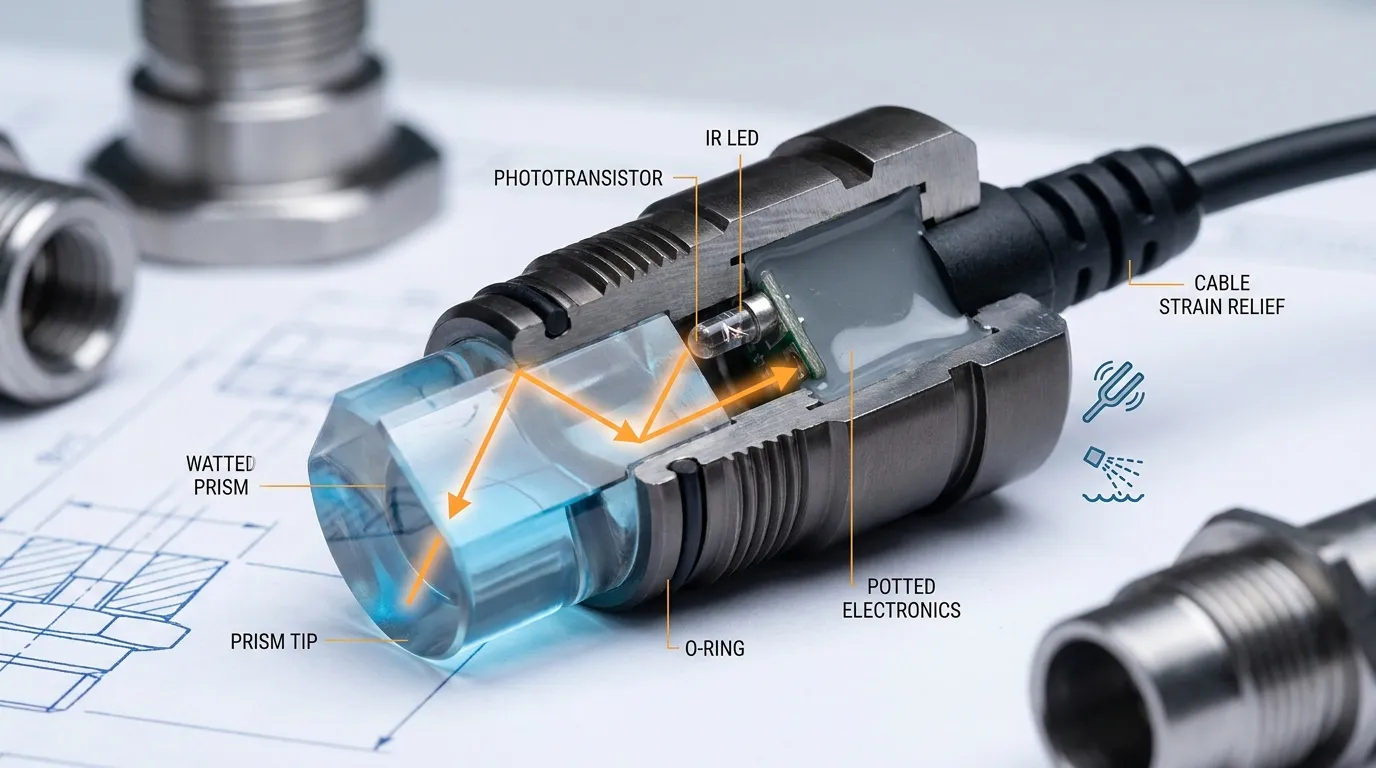
હાર્શ-ડ્યુટી લેવલ સેન્સિંગ માત્ર પ્રવાહી શોધવા વિશે નથી. મશીનનો જે રીતે ઉપયોગ કરવામાં આવે છે તે રીતે સેન્સર ટકી રહેવું આવશ્યક છે. મોબાઇલ સાધનો, ઔદ્યોગિક જળાશયો[ફેરફાર કરો, સફાઈ સિસ્ટમ, બાંધકામ મશીનરી, કૂલન્ટ ટાંકી અને આઉટડોર પ્રવાહી કન્ટેનર બધા વિવિધ યાંત્રિક અને પર્યાવરણીય તણાવ પેદા કરે છે.
સામાન્ય સેન્સર ક્લીન ટેસ્ટ બેન્ચ પર કામ કરી શકે છે, પરંતુ કેબલ ખેંચ્યા પછી નિષ્ફળ જાય છે, સ્પંદન, વોશડાઉન, થર્મલ સાયકલિંગ અથવા પુનરાવર્તિત સર્વિસ હેન્ડલિંગ. કઠોર ઇલેક્ટ્રો-ઓપ્ટિક લેવલ સેન્સર્સ માટે, મિકેનિકલ પેકેજ સેન્સિંગ સર્કિટ જેટલું મહત્વનું છે.
કંપન અને આંચકો પ્રતિરોધક
મોબાઇલ અને ઔદ્યોગિક સાધનો પર, વાઇબ્રેશન થ્રેડેડ માઉન્ટને ઢીલો કરી શકે છે, થાક કેબલ બહાર નીકળવા, આંતરિક સોલ્ડર જાઇન્ટને નુકસાન પહોંચાડે છે અથવા તૂટક તૂટક વિદ્યુત સંપર્ક બનાવે છે. કઠોર ડિઝાઇનમાં ટાંકીની દિવાલથી સેન્સિંગ ટીપ અને કેબલ સુધીના સંપૂર્ણ લોડ પાથને ધ્યાનમાં લેવું જોઈએ.
મહત્વપૂર્ણ ડિઝાઇન પોઇન્ટ્સમાં સ્થિર થ્રેડ સગાઈનો સમાવેશ થાય છે, શરીરની સુરક્ષિત રચના, જ્યાં જરૂર હોય ત્યાં આંતરિક પોટિંગ અથવા ઓવર-મોલ્ડિંગ, અને એક કેબલ એક્ઝિટ જે દરેક વાઇબ્રેશનને સીધા આંતરિક ઇલેક્ટ્રોનિક્સમાં સ્થાનાંતરિત કરતું નથી. સેન્સરે મિકેનિકલ ફ્લોટ્સને ખસેડવાનું પણ ટાળવું જોઈએ, કારણ કે ફરતા ભાગો ગડબડ કરી શકે છે, કંપન કરતી ટાંકીઓમાં લાકડી અથવા ઘસારો.
ધૂળ અને પાણીની અંદર પ્રવેશ સુરક્ષા
ધૂળ, સ્પ્લેશ વોટર અને વોશડાઉન એક્સપોઝર કેબલ એક્ઝિટ દ્વારા સેન્સર પર હુમલો કરી શકે છે, શરીર સાંધા, જોડાણ વિસ્તાર અથવા થ્રેડ ઇન્ટરફેસ. આ કારણથી, વાસ્તવિક ફરજની શરતના આધારે આઇપી રેટિંગ પસંદ થવું જોઈએ, માત્ર બ્રોશર ટાર્ગેટ જ નહીં.
સંરક્ષિત ડિઝાઇનમાં સીલબંધ હાઉસિંગ બાંધકામનો સમાવેશ થઈ શકે છે, ઓ-રિંગ અથવા ગાસ્કેટ પ્લાનિંગ, પોટેડ ઇલેક્ટ્રોનિક્સ, મોલ્ડેડ કેબલ એન્ટ્રી અને યોગ્ય માઉન્ટિંગ ઓરિએન્ટેશન. જો એપ્લિકેશનમાં આઉટડોર ટાંકી શામેલ હોય તો, સફાઈ ચક્ર, રોડ સ્પ્રે અથવા ધૂળિયા ઔદ્યોગિક વિસ્તારો, આરએફક્યુ તબક્કા દરમિયાન તે વિગતો શેર કરો જેથી સીલિંગ અભિગમ યોગ્ય રીતે મેળ ખાય.
હાઉસિંગ અને પોટિંગ ડિઝાઇન
આવાસ એ અસર સામે પ્રથમ સંરક્ષણ છે, રાસાયણિક સંપર્ક, રફ હેન્ડલિંગ અને ઇન્સ્ટોલેશનને નુકસાન. પ્લાસ્ટિક બોડીઝ કોમ્પેક્ટ અને ખર્ચ-સંવેદનશીલ સાધનો માટે યોગ્ય હોઈ શકે છે. પીટીએફઇ ઉપયોગી છે જ્યાં રાસાયણિક પ્રતિકાર પ્રાધાન્ય છે. 316 જ્યારે ખરીદદારોને વધુ મજબૂત મેટલ બોડીની જરૂર હોય ત્યારે સ્ટેનલેસ સ્ટીલને પ્રાધાન્ય આપવામાં આવે છે, મજબૂત યાંત્રિક રક્ષણ અથવા માંગ ઔદ્યોગિક પ્રવાહી સાથે સુસંગતતા. કાટમાળ અથવા સેનિટરી-પ્રકારની સામગ્રી ચર્ચાઓ માટે, અમારી સમીક્ષા 316 સ્ટેઈનલેસ બોડી વિકલ્પ.
પોટિંગ ઇલેક્ટ્રોનિક્સને ભેજથી બચાવવામાં મદદ કરે છે, કંપન અને તણાવને નિયંત્રિત કરવું. કઠોર એકમોમાં, પોટિંગ અને સીલિંગને ગરમીના વિસર્જન સાથે ધ્યાનમાં લેવું જોઈએ, સમારકામની ક્ષમતા, કેબલ લવચીકતા અને સેન્સર કદ.
કેબલ તાણ રાહત અને કનેક્ટર પસંદગીઓ
મોબાઇલ અને હાર્શ-ડ્યુટી ઇન્સ્ટોલેશનમાં કેબલ નિષ્ફળતા એ સૌથી સામાન્ય વાસ્તવિક-વિશ્વની સમસ્યાઓમાંની એક છે. સેન્સર ઇલેક્ટ્રિકલ પરીક્ષણ પાસ કરી શકે છે, પરંતુ પાછળથી નિષ્ફળ જાય છે કારણ કે કેબલ તીવ્ર વળે છે, જાળવણી દરમિયાન ખેંચાય છે અથવા મૂવિંગ ઇક્વિપમેન્ટની નજીક રૂટ કરવામાં આવે છે.
કઠોર ઓપ્ટિકલ સેન્સર ઇન્સ્ટોલેશન માટે યોગ્ય કેબલ એક્ઝિટ અને તાણ-રાહત માળખાનો ઉપયોગ કરવો જોઈએ. ખરીદદારોએ કેબલ લંબાઈની પુષ્ટિ કરવી જોઈએ, જેકેટ સામગ્રી, વળાંકવાળો માર્ગ, જોડનાર પ્રકાર, વાયર ગેજ, શિલ્ડિંગની જરૂરિયાતો અને કેબલને તેલનો સામનો કરવો પડશે કે કેમ, પાણી, ઘર્ષણ અથવા વારંવાર હલનચલન.
વિશાળ તાપમાન અને પાવર ભિન્નતા
ઔદ્યોગિક સાધનોની શરૂઆત ઠંડી થઈ શકે છે, ગરમ જળાશયો, એન્જિન-ખાડીની ગરમી, આઉટડોર મોસમી ફેરફાર અથવા અસ્થિર સપ્લાય વોલ્ટેજ. વાસ્તવિક પ્રવાહી તાપમાન સામે ઓપરેટિંગ તાપમાન રેન્જની પુષ્ટિ થવી જોઈએ, આસપાસનું તાપમાન અને ટાંકીની દિવાલનું તાપમાન.
ઇલેક્ટ્રિકલ પ્રોટેક્શન પણ મહત્વપૂર્ણ છે. ઓવર-વોલ્ટેજ, વિપરીત ધ્રુવીકરણ, સર્જ એક્સપોઝર અને ખોટી વાયરિંગ સેન્સર ઇલેક્ટ્રોનિક્સને નુકસાન પહોંચાડી શકે છે. વૈવિધ્યીકરણ દરમિયાન, અમારી એન્જિનિયરિંગ ટીમ કંટ્રોલ બોર્ડ ઇનપુટની સમીક્ષા કરી શકે છે, સપ્લાય વોલ્ટેજ, આઉટપુટ લોજિક અને પ્રોટેક્શન આવશ્યકતાઓ જેથી સેન્સરને સામાન્ય ઘટક તરીકે ગણવાને બદલે મશીન સાથે મેળ ખાય.
ઊંચા તાપમાનના કાર્યક્રમો માટે, જુઓ અમારું ઉચ્ચ-તાપમાન સેન્સર પાનું.
કઠોરતા સ્પષ્ટીકરણ કોષ્ટક
| કઠોરતા વસ્તુ | શું પુષ્ટિ કરવી | કઠોર ફરજમાં તે શા માટે મહત્વનું છે |
|---|---|---|
| IP રેટિંગ લક્ષ્ય | ધૂળ, સ્પ્લેશ, વોશડાઉન, આઉટડોર અથવા નિમજ્જન એક્સપોઝર | શરીરના સાંધામાંથી પાણી અથવા ધૂળના પ્રવેશને અટકાવે છે, કેબલ એક્ઝિટ અને માઉન્ટિંગ પોઈન્ટ્સ |
| હાઉસિંગ મટિરિયલ | PSU, PTFE, 316 સ્ટેઈનલેસ સ્ટીલ, ગ્લાસ અથવા કસ્ટમ બોડી | સંતુલન અસર શક્તિ, રાસાયણિક સુસંગતતા, તાપમાન અને ખર્ચ[ફેરફાર કરો] |
| પોટિંગ / ઓવર-મોલ્ડિંગ | શું ઇલેક્ટ્રોનિક્સને સંપૂર્ણ અથવા આંશિક એનકેપ્સ્યુલેશનની જરૂર છે | ભેજનો પ્રતિકાર કરવામાં મદદ કરે છે, કંપન અને આઘાત સંબંધિત આંતરિક નિષ્ફળતા |
| કેબલ તાણ રાહત | કેબલ બહાર નીકળવાની શૈલી, દિશા વાળો, જોખમ અને રાઉટીંગ ખેંચો | તૂટેલા વાયરને ઘટાડે છે, તૂટક તૂટક સંકેતો અને ક્ષેત્ર સેવા નિષ્ફળતાઓ |
| તાપમાન વિસ્તાર | પ્રવાહી, આસપાસની અને ટાંકી-દિવાલ તાપમાનની સ્થિતિ | ડ્રિફ્ટ ટાળે છે, થર્મલ સાયકલિંગ હેઠળ સીલને નુકસાન અથવા સામગ્રી મેળ ખાતી નથી |
| ઇલેક્ટ્રિકલ પ્રોટેક્શન | ઓવર-વોલ્ટેજ, વિપરીત ધ્રુવીકરણ, ઉછાળો અને વાયરિંગ ભૂલનું જોખમ | અસ્થિર ઔદ્યોગિક પાવર સિસ્ટમ્સમાં સેન્સર ઇલેક્ટ્રોનિક્સનું રક્ષણ કરે છે |
| આઉટપુટ પ્રકાર | NPN, PNP, શુષ્ક/ભીનું તર્ક અથવા નિયંત્રણ-બોર્ડ ઇન્ટરફેસ | પીએલસી સાથે સીધી સુસંગતતા સુનિશ્ચિત કરે છે, નિયંત્રકો અથવા OEM ઇલેક્ટ્રોનિક્સ |
| માઉન્ટ થ્રેડ | થ્રેડ માપ, ટાંકીની દિવાલની જાડાઈ, સીલિંગ પદ્ધતિ અને અભિગમ | લીકેજને અટકાવે છે, ઢીલું ઇન્સ્ટોલેશન અને ખોટું પ્રિઝમ પોઝિશનિંગ |
| ભીની સામગ્રી | પ્રવાહી પ્રકાર, એડિટિવ્સ, તેલ, કૂલન્ટ, પાણી અથવા રાસાયણિક માધ્યમ | સોજો અટકાવે છે, ક્રેકિંગ, કાટ અથવા ઓપ્ટિકલ ટીપ દૂષણ |
| જોખમ સંભાળવું | એસેમ્બલી લાઇન હેન્ડલિંગ, ફિલ્ડ રિપ્લેસમેન્ટ અને સર્વિસ ઍક્સેસ | ઇન્સ્ટોલેશન અને મેન્ટેનન્સ દરમિયાન ભંગાણને ઘટાડે છે |
અવતરણની વિનંતી કરતા પહેલા ફરજ ચેકલિસ્ટ
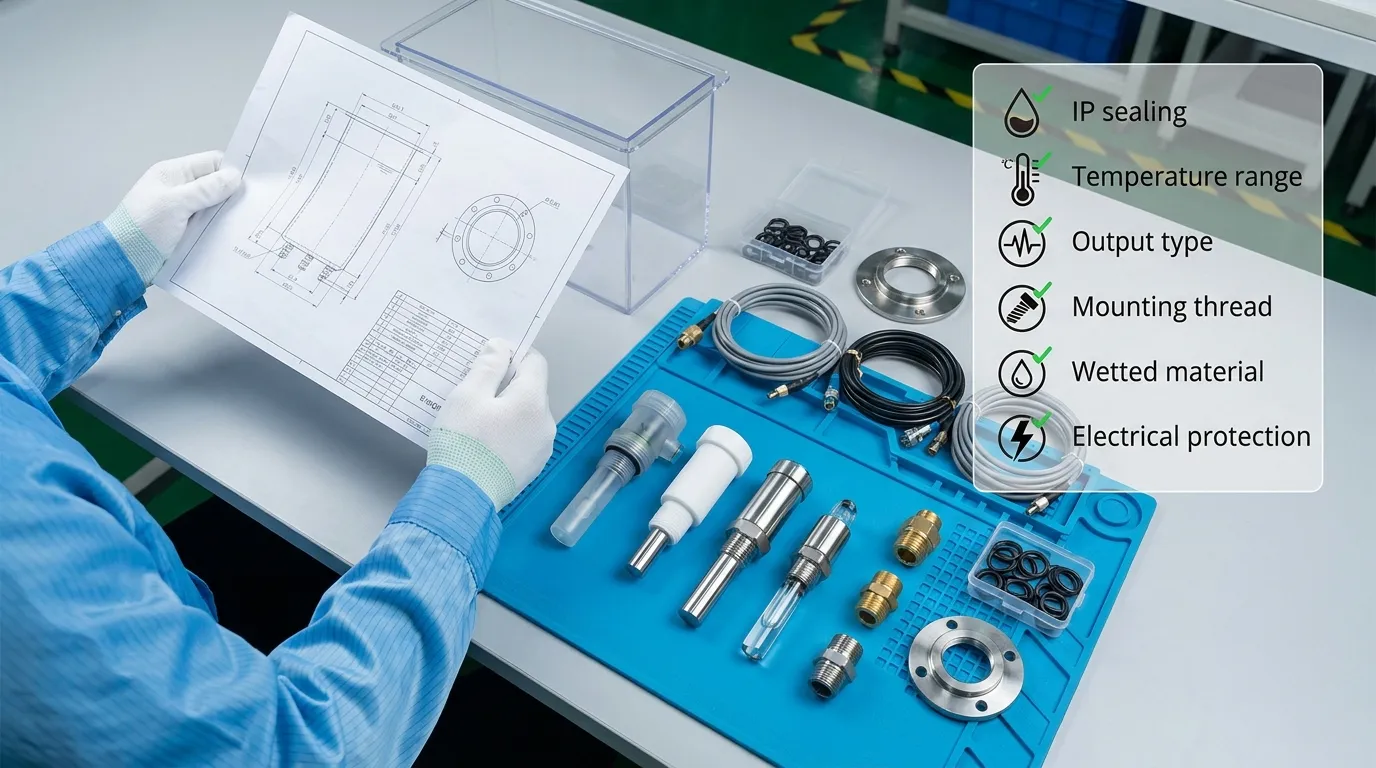
કઠોર ઓપ્ટિકલ સ્તરની િસ્વચનો ઓર્ડર આપતા પહેલા, નીચેની વિગતો તૈયાર કરો:
- સાધનોનો પ્રકાર: મોબાઇલ મશીન, ઔદ્યોગિક ટાંકી, જનરેટર, સફાઈ સિસ્ટમ, કૂલન્ટ રિઝવોયર અથવા ઓઇએમ પ્રોડક્ટ.
- પ્રવાહી પ્રકાર: પાણી, તેલ, કૂલન્ટ, બળતણ સંબંધિત પ્રવાહી, રાસાયણિક મિશ્રણ અથવા ઇન્ટરફેસ મીડિયા.
- નિષ્ફળતાનું જોખમ: સ્પંદન, આઘાત, વોશડાઉન, ધૂળ, કેબલ ખેંચો, આઉટડોર એક્સપોઝર અથવા રફ સર્વિસ હેન્ડલિંગ.
- માઉન્ટ સ્થાન: બાજુ માઉન્ટ, તળિયે માઉન્ટ, ટોચની નોંધણી, ઊભી ટાંકીની દિવાલ અથવા કોમ્પેક્ટ જળાશય.
- જરૂરી બદલવાનું બિંદુ: નીચું સ્તર, ઊંચું સ્તર, ઓવરફ્લો, ડ્રાય-રન પ્રોટેક્શન અથવા લીક ડિટેક્શન.
- ભીની સામગ્રી પસંદગી: પ્લાસ્ટિક, PTFE, 316 સ્ટેનલેસ સ્ટીલ અથવા ગ્લાસ.
- આઉટપુટ આવશ્યકતા: NPN, PNP, તર્ક બદલી રહ્યા છીએ, સંબંધિત સતત મોનિટરિંગ પ્રોજેક્ટ્સ માટે સિગ્નલ દિશા અથવા 4-20 એમએ આવશ્યકતા.
- પાવર સ્થિતિ: સપ્લાય વોલ્ટેજ, નિયંત્રક ઇનપુટ, ઓવર-વોલ્ટેજ જોખમ અને વાયરિંગ સુરક્ષા જરૂરિયાતો.
- કેબલ આવશ્યકતા: કેબલ લંબાઈ, કનેક્ટર, જેકેટ સામગ્રી, તાણ રાહત અને રાઉટીંગની દિશા.
- પર્યાવરણીય આવશ્યકતા: IP લક્ષ્ય, તાપમાન વિસ્તાર, ધૂળ/પાણીના સંપર્ક અને સર્વિસ લોકેશન.
5-પગલું સેવા પ્રક્રિયા
1. પૂછપરછ સમીક્ષા
પ્રવાહી પ્રકારને મોકલો, ટાંકી ચિત્ર, માઉન્ટ કરવાની દિશા, વોટ્સએપ અથવા ઇમેઇલ દ્વારા આઉટપુટની આવશ્યકતા અને કાર્યકારી વાતાવરણ. અમારી ટીમ પ્રમાણભૂત ઓપ્ટિકલ સેન્સર છે કે કેમ તે તપાસે છે, કઠોર વૈવિધ્યપૂર્ણ સંસ્કરણ અથવા વૈકલ્પિક સ્તર સેન્સિંગ અભિગમ વધુ સારી રીતે ફિટ છે.
2. સ્પષ્ટીકરણ અને કસ્ટમાઇઝેશન
અમે સામગ્રીની પુષ્ટિ કરીએ છીએ, થ્રેડ, કેબલ, આઉટપુટ તર્ક, સીલિંગ પદ્ધતિ અને વિદ્યુત સુરક્ષા જરૂરિયાતો. OEM / ODM ફેરફારોમાં હાઉસિંગ આકારનો સમાવેશ થઈ શકે છે, વાયરની લંબાઈ, કનેક્ટર, દિશા અને નિયંત્રણ-બોર્ડ ઇન્ટરફેસ સંવેદના.
3. નમૂનાની તૈયારી[ફેરફાર કરો]
ફિટ ટેસ્ટિંગ માટે સેમ્પલ તૈયાર કરી શકાય છે, ઇલેક્ટ્રિકલ પરીક્ષણ અને પ્રવાહી શોધ તપાસ. ખરીદદારોએ શક્ય હોય ત્યાં વાસ્તવિક ટાંકીમાં સેન્સરનું પરીક્ષણ કરવું જોઈએ, ખાસ કરીને જ્યારે ઉપકરણમાં કંપન હોય ત્યારે, ફીણ, સ્પ્લેશિંગ અથવા ચુસ્ત ઇન્સ્ટોલેશન જગ્યા.
4. ઉત્પાદન અને ક્યુસી
પ્રોડક્શન ઇન-હાઉસ આર સાથે સંચાલિત થાય છે&ડી સપોર્ટ અને ફોટોઇલેક્ટ્રિક ઓપ્ટિકલ સેન્સિંગ અનુભવ. QC વિધેય પર ધ્યાન કેન્દ્રિત કરે છે, વાયરીંગ, સીલિંગ સ્ટ્રક્ચર, દેખાવ, કેબલ શરત અને ગ્રાહક-સંમત રૂપરેખાંકન વિગતો.
5. શિપિંગ અને નિકાસ સહાય
હોજેલીટેક એ શેનઝેન ઉત્પાદક અને નિકાસકાર છે જે યુ.એસ.માં ગ્રાહકોને સેવા આપે છે, અમે, ભારત અને અન્ય બજારો. પેકેજિંગ અને શિપમેન્ટની વિગતો ઓર્ડરની માત્રા અને ગંતવ્યના આધારે પુષ્ટિ કરવામાં આવે છે.
જરૂરીયાતો અને રૂપરેખાંકન વિકલ્પો
| જરૂરિયાત | સામાન્ય વિકલ્પો | ખરીદીની નોંધ |
|---|---|---|
| શોધ સ્થિતિ | પોઇન્ટ લેવલ ડ્રાય/વેટ સ્વિચિંગ | નીચા માટે શ્રેષ્ઠ, હાઈ અને ઓવરફ્લો લેવલ ડિટેક્શન |
| આઉટપુટ | NPN, PNP, વૈવિધ્યપૂર્ણ સિગ્નલ ઇન્ટરફેસ | ઓર્ડર કરતા પહેલા PLC અથવા નિયંત્રક ઇનપુટને સરખાવો |
| સતત સંકેત | 4સંબંધિત સતત સ્તરના ઉકેલો માટે –20 એમએ | ખાતરી કરો કે તમારે પોઈન્ટ ડિટેક્શન અથવા સતત માપનની જરૂર છે કે નહીં |
| બોડી મટિરિયલ | PSU, PTFE, 316 સ્ટેઈનલેસ સ્ટીલ, ગ્લાસ | પ્રવાહી દ્દારા પસંદ કરો, તાપમાન અને યાંત્રિક ભાર |
| માઉન્ટ કરી રહ્યા છીએ | થ્રેડેડ થ્રેડેડ, કોમ્પેક્ટ બોડી અથવા કસ્ટમ OEM ફિટિંગ | ટેન્કની દિવાલની જાડાઈ અને સીલિંગ પદ્ધતિની પુષ્ટિ કરો |
| કેબલ | વૈવિધ્યપૂર્ણ લંબાઈ, જેકેટ અને કનેક્ટર | વાઇબ્રેશનના આધારે પસંદ કરો, તેલ, પાણી અને રૂટિંગનું જોખમ |
| રક્ષણ | આઇપી-રેટેડ સીલિંગ અને ઓવર-વોલ્ટેજ પ્લાનિંગ | વાસ્તવિક એક્સપોઝરની ખાતરી કરો, માત્ર ઇન્ડોર પરીક્ષણની સ્થિતિ જ નહીં |
કઠોર ઓપ્ટિકલ સેન્સર વિ સ્ટાન્ડર્ડ ફ્લોટ સ્વીચ
| વસ્તુ | કઠોર ઇલેક્ટ્રો-ઓપ્ટિક લેવલ સેન્સર | મિકેનિકલ ફ્લોટ સ્વીચ |
|---|---|---|
| ભાગોને ખસેડી રહ્યા છે | ખસેડતા ફ્લોટ નથી; ઓપ્ટિકલ પ્રિઝમ સેન્સિંગ | મૂવિંગ ફ્લોટ અથવા રીડ મિકેનિઝમનો ઉપયોગ કરે છે |
| કંપન પ્રદર્શન | જ્યારે યોગ્ય રીતે માઉન્ટ કરવામાં આવે ત્યારે કોમ્પેક્ટ વાઇબ્રેટિંગ સાધનો માટે વધુ અનુકૂળ | ફ્લોટ મૂવમેન્ટ ગપસપ કરી શકે છે અથવા પહેરી શકે છે |
| માપ | નાની ટાંકીઓ માટે કોમ્પેક્ટ સેન્સિંગ ટીપ | ઘણી વખત વધુ ટેન્ક ક્લિયરન્સની જરૂર પડે છે |
| રફ હેન્ડલિંગનું જોખમ | આવાસ પર આધાર રાખે છે, પોટિંગ અને કેબલ રાહત | ફ્લોટ આર્મ અથવા ફરતા ભાગોને નુકસાન થઈ શકે છે |
| પ્રવાહી શોધ | ઝડપી શુષ્ક/ભીની ઓપ્ટિકલ સ્વિચિંગ | યાંત્રિક હિલચાલ ઉછાળો પર આધાર રાખે છે |
| જાળવણી | નીચા યાંત્રિક વસ્ત્રો | થાપણોને કારણે વળગી શકે છે, કાટમાળ અથવા સ્નિગ્ધતા |
જોખમી વિસ્તારના ખરીદદારો માટે મહત્વની નોંધ
આ કઠોર સેવા પૃષ્ઠ જોખમી વિસ્તાર અથવા વિસ્ફોટ-પ્રૂફ મંજૂરીનો દાવો કરતું નથી. જો તમારા પ્રોજેક્ટમાં વિસ્ફોટક ગેસ શામેલ હોય તો, બાષ્પ, ફ્યુઅલ સ્ટોરેજ ઝોન અથવા રેગ્યુલેટેડ એક્સ એન્વાયર્નમેન્ટ્સ, કૃપા કરીને સમર્પિતની સમીક્ષા કરો વિસ્ફોટ-પ્રૂફ ઓપ્ટિકલ સેન્સર પૂછપરછ દરમિયાન જરૂરી મંજૂરીના ધોરણને પેજ અને શેર કરો.
હોજેલીટેક શા માટે પસંદ કરો
હોજેલીટેક શેનઝેન મેન્યુફેક્ચરિંગને જોડે છે, ઇન-હાઉસ આર&OEM અને ઔદ્યોગિક ખરીદદારો માટે ડી અને ફોટોઇલેક્ટ્રિક ઓપ્ટિકલ સેન્સિંગ અનુભવ. અમે કસ્ટમ સેન્સર બોડીઝને સપોર્ટ કરીએ છીએ, કેબલ એસેમ્બલીઓ, આઉટપુટ તર્ક અને કાર્યક્રમ-બંધબેસતા રગડાઇઝેશન ફક્ત ઑફ-ધ-શેલ્ફ ભાગોને પૂરા પાડવાને બદલે.
સ્માર્ટ ટેન્ક મોનિટરિંગ પ્રોજેક્ટ્સ માટે, અમારી ટીમ તુયા વિશે પણ ચર્ચા કરી શકે છે / જ્યાં સંબંધિત હોય ત્યાં સ્માર્ટ લાઇફ ઇન્ટિગ્રેશન. ઔદ્યોગિક OEM માટે, મુખ્ય મૂલ્ય ડાયરેક્ટ ફેક્ટરી કમ્યુનિકેશન છે, નમૂના પરીક્ષણથી બેચ ઉત્પાદન સુધી વ્યવહારિક કસ્ટમાઇઝેશન અને સપોર્ટ.
કઠોર ઇલેક્ટ્રો-ઓપ્ટિક લેવલ સેન્સર વારંવાર પૂછાતા પ્રશ્નો
કઠોર ઇલેક્ટ્રો ઓપ્ટિક સ્તર સેન્સર કેવી રીતે કાર્ય કરે છે?
તે આઇઆર એલઇડીનો ઉપયોગ કરે છે, ફોટોટ્રાન્ઝિસ્ટર અને પ્રિઝમ ટીપ. હવામાં, પ્રકાશ પ્રિઝમની અંદર પરાવર્તિત થાય છે. જ્યારે પ્રવાહી પ્રિઝમને સ્પર્શે છે, પ્રકાશ પાથ બદલાય છે, અને ઇલેક્ટ્રોનિક્સ ભીની અથવા શુષ્ક સ્થિતિ સૂચવવા માટે આઉટપુટને સ્વિચ કરે છે.
શું કંપન માટે અનુકૂળ ઓપ્ટિકલ લેવલ સેન્સર છે?
હા, તે યોગ્ય હોઈ શકે છે કારણ કે તેમાં કોઈ ફરતા ફ્લોટ નથી. જો કે, આવાસ[ફેરફાર કરો], માઉન્ટ થ્રેડ, પોટિંગ, વાસ્તવિક કંપન અને આંચકાની સ્થિતિ માટે કેબલ સ્ટ્રેન રાહત અને વાયરિંગ સુરક્ષાની પસંદગી કરવી જાઇએ..
મારે કઈ હાઉસિંગ મટિરિયલ પસંદ કરવી જોઈએ?
કોમ્પેક્ટ ઔદ્યોગિક ડિઝાઇન માટે પીએસયુ સામાન્ય છે, પીટીએફઇ રાસાયણિક પ્રતિકાર માટે ઉપયોગી છે, 316 સ્ટેનલેસ સ્ટીલ મજબૂત મેટલ-બોડી આવશ્યકતાઓને ટેકો આપે છે, અને કાચનો ઉપયોગ કરી શકાય છે જ્યાં ઓપ્ટિકલ અથવા સામગ્રી સુસંગતતા અર્થપૂર્ણ છે. પ્રવાહી અને ફરજ ચક્ર શ્રેષ્ઠ પસંદગી નક્કી કરે છે.
શું સેન્સરનો ઉપયોગ આઉટડોર અથવા વોશડાઉન એરિયામાં કરી શકાય છે?
તે ધૂળ અને પાણીના સંપર્ક માટે રૂપરેખાંકિત થઈ શકે છે, પરંતુ આઇપી રેટિંગ, કેબલ બહાર નીકળો, કનેક્ટર, ઓર્ડર આપતા પહેલા સીલિંગ પદ્ધતિ અને માઉન્ટિંગ ઓરિએન્ટેશનની પુષ્ટિ કરવી આવશ્યક છે. વહેંચો કે શું સેન્સર સ્પ્લેશનો સામનો કરે છે, વોશડાઉન, વર્ષા, ધૂળ અથવા નિમજ્જનનું જોખમ.
કયા આઉટપુટ પ્રકારો ઉપલબ્ધ છે?
સામાન્ય પસંદગીઓમાં પોઇન્ટ લેવલ ડિટેક્શન માટે એનપીએન અને પીએનપી સ્વિચિંગ આઉટપુટનો સમાવેશ થાય છે. સતત માપન અથવા એનાલોગ ટ્રાન્સમિશનની જરૂર હોય તેવા પ્રોજેક્ટ્સ માટે, 4-20 એમએ આવશ્યકતાઓ અલગથી ચર્ચા કરવી જોઈએ જેથી યોગ્ય સેન્સર આર્કિટેક્ચર પસંદ કરવામાં આવે.
શું આ પાનાંનું કઠોર સેન્સર વિસ્ફોટ-પ્રૂફ વિસ્તારોમાં વાપરી શકાય છે?
એવું ન માનો. કઠોર બાંધકામ અને જોખમી વિસ્તારની મંજૂરી એ વિવિધ આવશ્યકતાઓ છે. ભૂતપૂર્વ અથવા વિસ્ફોટ-પ્રૂફ કાર્યક્રમો માટે, સમર્પિત વિસ્ફોટ-પ્રૂફ ઓપ્ટિકલ સેન્સર પૂછપરછ માર્ગનો ઉપયોગ કરો અને જરૂરી મંજૂરીની શરતો પ્રદાન કરો.
કઠોર સેન્સર અવતરણ માટે વિનંતી કરો
તમારું ટાંકી ચિત્ર મોકલો, પ્રવાહી પ્રકાર, માઉન્ટ સ્થાન, કેબલ આવશ્યકતા, આઉટપુટ પ્રકાર, IP લક્ષ્ય, તાપમાનની સ્થિતિ અને કંપન / આંચકો વિગતો. હોજેલીટેક ડ્યુટી કેસની સમીક્ષા કરી શકે છે અને નમૂના પરીક્ષણ અથવા OEM ઉત્પાદન માટે કઠોર ઇલેક્ટ્રો-ઓપ્ટિક સ્તર સેન્સર રૂપરેખાંકનની ભલામણ કરી શકે છે. અવતરણની વિનંતી કરવા માટે વોટ્સએપ અથવા ઇમેઇલ દ્વારા અમારો સંપર્ક કરો.
