
スルーウォール (非接触) 光学水位感知
光学センサーを使って壁越しに水位を感知することは、タンクを掘る必要がなく魅力的です, ウェット部分の追加, または別の漏れ点を作ること. 透明チューブ用, 半透明プラスチックリザーバー, ガラスのサイトウィンドウ, そしてきれいなコンテナの壁もいくつか, 外部の光学センサーや赤外線センサーは、外部から液体の境界を検出することができます.
制限も同じくらい重要です: この方法は じゃない すべてのタンクを徹底的に調べてください. 不透明プラスチック, メタル, 塗装面, 厚い壁, 曲がった汚れた壁, 泡, 凝縮, また、強い周囲光は壁を通しての光学検知を信頼性に欠けることがあります. 多くの工業施設では, 純正, または安全に関わるシステム, タンク内蔵の光学スイッチの方が依然として信頼できる選択肢です.
なぜエンジニアが壁を通した水位検出を求めるのか
非接触型外部水位センサーは、タンクが開けられない場合や液体がセンサーに触れてはならない場合に有用です. これは小型家電でよく見られます, 医療用または実験用コンテナ, 飲料器具, バッテリー水貯水池, 冷却タンク, 化学的投与システム, および試作のエンクロージャー.
その魅力はシンプルです:
- タンクの壁に穴が開いていない
- 水や化学液体に直接触れることはありません
- 既存のコンテナへの後付けが容易になる
- 汚染リスクの低減
- 一部のOEM設計における組み立ての高速化
- センサーはタンクを抜かずに交換できます
しかし, 「非接触」は「どこでも機能する」という意味ではありません。光学的センシングは光の挙動に依存します. 壁が塞がるなら, 散布, 吸収, 反映, または赤外線ビームを過度に歪めてしまう, センサーは壁の後ろにある石膏ボードと液体を明確に区別できません.
そのため、壁を通す光学レベル検知は常に実現可能性に基づく設計として扱うべきです, 普遍的な代替ではありません 光学レベルセンサー タンクに直接取り付ける.
外部光学とは / 赤外線水位センシング工場
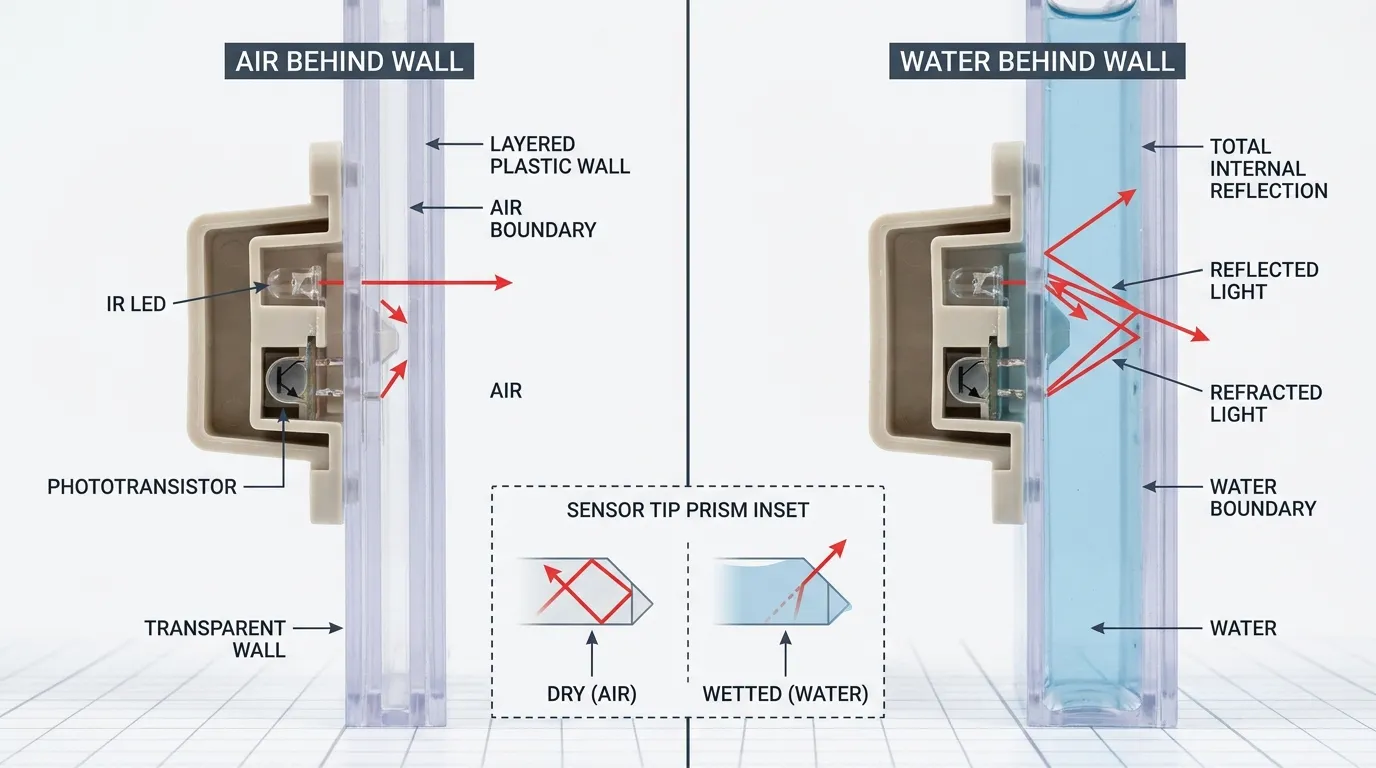
ほとんどの光学液位センサーは赤外線LEDとフォトトランジスタまたはフォトダイオード受信機を使用しています. 標準的なタンク内光学スイッチにおいて, センサーにはプリズムチップが付いています. プリズムが乾いているとき, 赤外線は内部から受信機に反射します. 液体がプリズムを覆うとき, 屈折率が変化し、光の反射が減ります. 電子回路はこの光学的変化をON/OFF信号に変換します.
外部の壁貫通検知は関連する考え方を用いています, しかし光路の制御は難しいです. センサーの先端が液体に触れる代わりに, 赤外線光は容器の壁を通過するか反射しなければなりません, その壁の後ろに水があるときに交換します.
センサー設計によります, この方法は次のようになることがあります:
- 反射変化: 液体が壁の後ろにある場合、受信機は異なる反射信号を検出します.
- トランスミッションの変更: 光は管や壁を通過します, 受信機は空気と液体の差を読み取ります.
- 屈折変化: 液体は光路を十分に変化させ、検出可能な状態差を生み出します.
- しきい値比較: 回路は石膏ボードとウェットビハインドウォールの信号レベルを比較し、差が安定したときに出力を切り替えます.
このため、外部の光学センサーは壁の材料に対してより感度が高いのです, 壁の厚さ, カラー, 曲率, 表面仕上げ, 液体の透明度, 内部の光スイッチよりも設置の整合性が.
最大の制約: 壁は有用な光信号を許容しなければなりません
壁を通しての光学センサーには、受信機に十分な量の実用的な赤外線または可視光が届く壁が必要です. 最適な候補は通常、一貫した厚さで清潔な表面を持つ透明または半透明の材料です.
透明なガラス, クリアアクリル, 透明ポリカーボネート, また、テスト後に自然や乳白色の半透明プラスチックも使えることがあります. 薄い透明チューブは、センサーが既知の直径を囲んで小さい光経路を読み取れるため、平らなタンクよりもしばしば容易です.
でも黒いプラスチック製のタンク, ステンレス製タンク, 塗装された金属製ハウジング, 厚い不透明な壁, または、色の強い容器は通常信号を遮断したり歪めたりします. そういう場合, 外部の光学センサーでは安定した乾燥/湿潤差を生み出さない場合があります.
これが重要なルールです: 壁を通しての光学式水位センシングは、壁や環境が光学検出を支持している場合にのみ実用的です. 不透明なタンクに対して盲目的に指定すべきではありません.
貫通壁実現可能性表
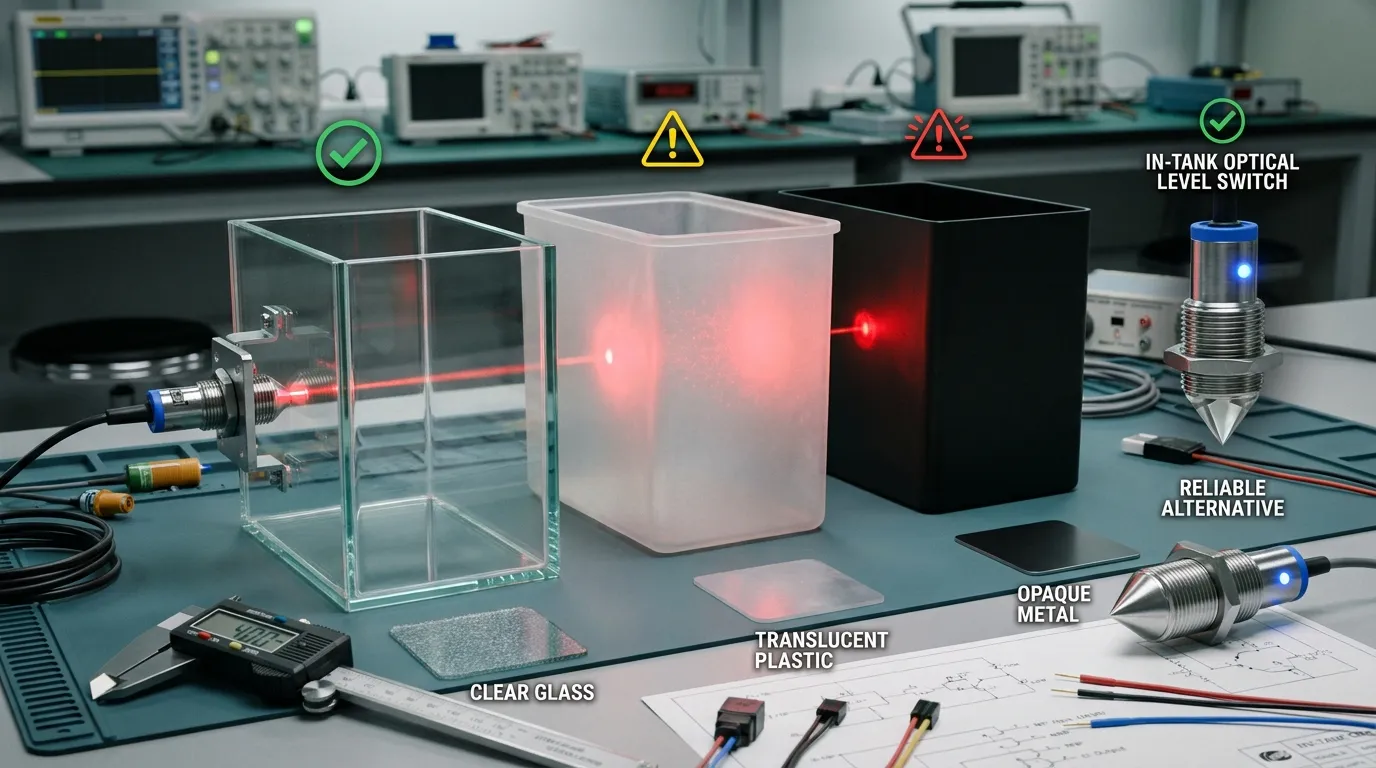
| コンテナウォール / 状態 | 外部光学センシングの実現可能性 | 主な理由 | 信頼性が低いなら、より良い選択肢です |
|---|---|---|---|
| 透明なガラス壁 | 良い候補者だ | 光信号を予測可能に通過または反射できるようにします | 厚さのテスト, 曲率, 凝縮 |
| 透明なアクリルやPCプラスチック | 良い候補者だ | 通常は赤外線/可視光の透過に対応しています | 壁の厚さと色を確認してください |
| 透明な小さな管 | 良い候補者だ | 安定ジオメトリと短い光学経路 | クランプオン式の外部光学センサーまたはチューブセンサー |
| 乳白色の半透明プラスチック | 可能性はあります | 光は通過することもあります, しかし散乱はコントラストを減少させる可能性があります | 実際の液体と壁のサンプルでテスト |
| 色付き透明プラスチック | 可能性はあるがリスクが高い | 染料は赤外線を吸収したり、信号のしきい値を変化させたりします | 現在の材料試験, 異なる色のサンプルではありません |
| 厚いプラスチックの壁 | 不確か | 信号損失と内部散乱の増加 | より強力な光学設計やタンク内スイッチを使用してください |
| 曲面成形貯留層 | 不確か | 曲率は光を予測不能に曲げたり再集束させたりします | 固定括弧と実単位テストを活用してください |
| 壁の結露 | リスキー | 水滴は液体を模倣したり光を散乱させたりします | 遮蔽を追加, 清掃計画, または内部センサー |
| 汚い, スケールされた, または油性の壁 | リスキー | フィルムの変化、反射、透過 | 直接接触センサーまたはメンテナンスアクセスをご利用ください |
| 泡立つ液体や泡立つ液体 | リスキー | 気泡や泡が不安定な測定値を引き起こすことがあります | フィルタリングの追加, 遅延ロジック, またはタンク内光学スイッチ |
| 黒または不透明なプラスチック | 通常は適していません | 有用な光信号を遮断する | タンク内光学スイッチ, 容量, 超音波, または浮かぶ |
| 塗装されたタンクの壁 | 通常は適していません | ペイントブロックや光路の変更 | タンク内スイッチまたは上部センサー |
| 金属製タンクの壁 | 不適切です | 金属が光透過を遮断します | タンク内光学スイッチ, サイトグラス, 超音波, レーダー, または浮かぶ |
| 屋外の日光曝露 | リスキー | 周囲の赤外線は受信機に干渉することがあります | 光学遮蔽の使用, 変調, または別のセンサー方式 |
肉厚, カラー, そして形状は多くの買い手が予想する以上に重要です
購入者が光学センサーで壁越しの水を検知できるか尋ねる場合, 彼らはしばしば素材だけに焦点を当てています: 「プラスチックだ, うまくいくでしょうか??「もっと良い質問はこうだ: プラスチックって, 何色, 厚さはどのくらいですか, 表面仕上げ, そして液体の状態は何であるか?
薄い透明なプラスチック壁は空気と水の間に大きな違いをもたらすことがあります. 同じプラスチックの厚みを置くと信号が弱まり、スイッチが不安定になることがあります. 薄く色をつけた壁は可視光では動作しますが、赤外線を吸収します. 成形半径はビームを受信機から遠ざける反射をします. リブ, シーム, ラベル, 接着剤ライン, または内部のバッフルが誤った読み取りを引き起こすことがあります.
OEMプロジェクト用, 最善の方法は、実際のタンク素材を使ってセンサーをテストすることです, 最終壁厚, 本物の液体, 実際の取り付け位置, および予想される運用環境. きれいな検査用カップだけで検査すると、誤解を招く信頼を生むことがあります.
清潔な条件も仕様の一部です
壁を通しての光学検知は、壁が光学的に一定である場合に最も効果的に機能します. 壁面を変えるものは読み取り値を変えることがあります.
一般的な故障モードには以下が含まれます:
- 冷水タンクの外側に結露ができている
- 壁を伝って流れる水滴
- 容器内の石灰スケールや鉱物の蓄積
- 油膜または化学残留物
- 掃除による傷
- 内壁に気泡がくっついていた
- 検出高さでのフォーム
- 直射日光または反射式機械照明
- 振動後のセンサーブラケットの動き
- タンクが満たされたり加圧されたりしたときの壁の変形
これらは些細なことではありません. コーヒーマシンの貯蔵庫用, 水槽側壁, 冷却水ボトル, または化学薬品容器, 表面状態は外部光学法が生産に十分安定しているかどうかを左右します.
低電圧検出モジュール用, HojellyTekの項目を参照してください 赤外線水センサー 関連する赤外線センシングの概念に関するページ.
外部光学センサーとタンク内蔵光学スイッチの比較
タンクの貫通を最優先し、壁が光学的に適している場合には外部光学センサーが最適です. タンク内光学スイッチは、読み取りをより制御し再現性が求められる場合に最適です.
| 設計の選択 | 外部の壁貫通型光学センシング | タンク内光学レベルスイッチ |
|---|---|---|
| 戦車貫通 | 必須ではありません | 必須 |
| 濡れた部分 | センサーからは何もありません | センサー先端が液体に接触します |
| 最適な壁タイプ | 透明または半透明 | 壁の材料はそれほど重要ではありません |
| 不透明タンク互換性 | たいていは貧しい | センサーをタンクに取り付けられるなら良いです |
| 結露に対する感受性 | 高い | 下げる |
| 壁の色や厚さに対する感度 | 高い | 低い |
| 設置の繰り返し性 | 慎重なアライメントが必要です | 取り付け後の再現性が高まります |
| メンテナンス | センサーは外部に交換可能 | タンクへのアクセスが必要かもしれません |
| 最適な用途 | クリアな壁, 改修, 試作機, 小さな貯水池 | OEM機器, アラーム, ポンプ保護, 産業用タンク |
タンク内型はプリズムの先端が空気や液体に直接接触するため、より明確な光学経路を持っています. そのため、ポンプのドライラン保護においてより信頼性が高いことが多いのです, オーバーフロー防止, 低レベル警報, および機器インターロック.
タンク内光学スイッチの仕組みの違い
典型的なタンク内光学式液体レベルスイッチは、プリズムの先端をタンク内に配置します. センサー本体はPSU製の場合もあります, PTFE製, 316 ステンレススチール, グラス, 液体によっては他の材料も含まれます, 温度, 洗浄プロセス, および機械的要件.
乾いたとき, プリズムは赤外線を受信機に反射します. 液体がプリズムに到達したとき, 光路が変化し、電子回路の状態が切り替わります. これにより、高レベルのクリーンなポイントレベル信号が得られます, 低レベル, 空の, 満杯, または液体のない状態.
一般的な構成オプションには以下があります:
- PLCまたはコントローラ入力用のNPNまたはPNPトランジスタ出力
- 小型家電および制御基板向けのデジタルON/OFF出力
- 4連続または送信機型システムの場合は、該当する場合に–20 mA出力
- 小さなパネルねじなどのねじ山取り付け, 1/4 NPTスタイルの取り付け, またはカスタムOEMねじ山
- 特殊タンク用のフランジまたはブラケット取り付け
- ケーブル, コネクター, またはPCBマウント型
- 制御設計に応じて通常開論理または通常閉論理
材料選択が重要です. PSUはコンパクトプラスチック製のセンサーボディによく使われます. 化学耐性にはPTFEが好まれます. 316 ステンレス鋼は機械的強度や工業的適合性が必要な場合に使用されます. ガラスは特定の化学的または高温のセンシング環境で有用です. 最終的な選択は液体と一致するべきです, 洗浄方法, 圧力条件, および設置構造.
壁を通して光学センサーが意味を持つ場合
外部光学/赤外線の水位検出は、これらの条件のほとんどが適用されている場合に試験する価値があります:
- 壁は透明または半透明です.
- 検出点は平らか、または再現可能な形状です.
- 液体は比較的透明で安定しています.
- コンテナの壁はきれいに保たれます.
- 設置は屋内か、強い周囲赤外線から遮蔽されています.
- システムはキャリブレーションや閾値設定に耐えられます.
- センサーブラケットは時間をかけてアライメントを保持できます.
- この用途はレベルインジケーションまたは非重要制御です, 危険なシャットダウンシステムではありません.
例としては、小型家電の水タンクが挙げられます, 透明な化学薬品瓶, 透明排水容器, ラボリザーバー, 加湿器タンク, アクアリウム側壁検知, および試作水位プロジェクト. DIYテストのコンセプトのために, ホジェリーテック DIY光学センサー 記事は出発点として有用です.
タンク内光学スイッチの信頼性が高まる場合
外部の壁通しセンサーではなく、タンク内の光学スイッチを選択してください:
- タンクは不透明です, 黒い, 塗装, 金属とも.
- 壁が厚すぎるか、光学的に不安定です.
- 液体は残留物を残します, スケール, 油, 泡, または泡.
- 水槽は日光や洗浄環境にさらされます.
- 信号はポンプを制御します, ヒータ, バルブ, または安全警報.
- 製品は大量生産を通じて一貫して挙動しなければなりません.
- OEMはバッチごとに同一のタンク材料を保証することはできません.
- センサーは数ヶ月の使用で動作しなければなりません, クリーンテストだけでなく.
屋外水位監視や遠隔モニタリングプロジェクト, センサーの選択は出力にも依存する場合があります, 通信, 囲い込み, および設置環境. ホジェリーテック 地下水モニタリング リソースは現場応用に関するセンシングの考慮事項について論じています.
注文前に購入者が確認すべきこと
外部または内部の光学レベルセンサーを選ぶ前に, サプライヤー向けに以下の情報を準備してください:
- タンク壁材: グラス, アクリル, PC, PPの, または, PVC, メタル, またはその他
- 壁の色と透明性
- 検出点の壁厚
- 平らまたは曲面の形状
- 液体タイプ: 水, 冷却液, 油, 化学薬品, 飲料, 廃水
- 液体が透明かどうか, 有色人種, 泡沫, 泡立つ, またはスケーリング
- 予想される結露, 塵, オイルミスト, または洗浄薬品
- 屋内外の設置
- 必要な出力: NPN, PNP, デジタルロジック, リレーモジュール, またはアナログ信号
- 電源電圧とコントローラ入力タイプ
- 必要な取り付け: 外部ブラケット, ねじ込みマウント, フランジ, パネルマウント, またはカスタムハウジング
- ケーブルの長さ, コネクター, 配線要件
- フェイルセーフロジック: 濡れたときの警報, 乾いたときの警報, 通常は開いています, または通常閉鎖
- 生産前の試験用サンプル量
壁を貫通検知するために, 実際の水槽サンプルや壁掛け材の部品を送るのが特に有効です. サプライヤーは、未知の壁に対して外部光学センサーをテストなしに正直に保証することはできません.
HojellyTekの光学レベルセンシングプロジェクトにおける役割
HojellyTekは、深センの製造・輸出企業で、光電光学センサーおよび液体レベルセンサーソリューションに注力しています. 当社のチームは、コンパクトな光スイッチ向けのOEM/ODMプロジェクトをサポートしています, 赤外線水検出モジュール, カスタマイズされたハウジング, ケーブルアセンブリ, および用途特化した取り付け設計.
外部の貫通壁検出のために, 私たちは、普遍的な性能を約束するのではなく、購入者が実現可能性を評価するのを支援します. 壁が適さない用途, タンク内光学スイッチを推奨できます, マテリアルアップグレード, 取り付け調整, または代替のセンシング構造.
私たちのプロジェクトは、アメリカの買い手が関わることが一般的です, 私たちは, インド, その他の輸出市場. Tuya/Smart Lifeの統合は、スマート水位監視が必要なプロジェクトでは議論できます, アプリのアラート, または接続デバイス開発.
よくある質問
どのプラスチックタンクでも光学センサーを使って壁越しに水位を感知することはできますか??
いいえ. プラスチックの種類によります, カラー, 厚さ, 表面仕上げ, そして清潔さ. 透明または半透明のプラスチックも可能です. 不透明, 黒い, 厚い, 塗装, または汚れたプラスチックは信頼できる光信号を提供できないことが多いです.
IRセンサーはガラス越しの水を検出できますか?
クリーンによって可能かもしれません, 透明なガラス, 特に壁が厚すぎず、センサーが正しく整列していればなおさらです. 凝縮, 曲率, 着色, 垢, そして周囲の光は結果に影響を与えることがあります, つまり、実際のガラス検査が必要です.
なぜ不透明タンクは外部の光学センサーで通常故障するのか?
外部光学センサーには、実用的な光の透過または反射が必要です. 不透明な壁は赤外線信号を遮断または散乱させます, そのため、センサーは壁の後ろの空気と水の違いを明確に検出できません.
通壁式光学センサーは容量式センサーより優れていますか??
常にとは限りません. 光学センサーは壁がクリアで液体がきれいな場合に役立ちます. 静電容量検知は、非金属の不透明な壁を通してより効果的かもしれません, しかし、それは壁の厚さにも左右されます, 液体誘電特性, そして干渉. 最適な選択はタンクと液体によって異なります.
タンク内の光学レベルスイッチはいつ選べばいいのでしょうか?
タンク壁が不透明な場合は、タンク内の光学スイッチを選びましょう, 汚い, 厚い, または矛盾している, また、信号がポンプのドライラン保護などの重要な機能を制御する場合も含まれます, オーバーフロー防止, ヒーターインターロック, または機器の停止.
カスタムセンサーを注文する前に、どのサンプルを送るべきでしょうか?
実際の水槽か壁のサンプルを送ってください, 液体の詳細, 壁の厚さ, 取り付け場所の写真, 電源電圧, 出力要件, コントローラ入力タイプ, および目標検出状態. OEM/ODMプロジェクト用, これにより、外部センサーとタンク内光学スイッチのどちらが安全な設計かを確認できます.
実現可能性チェックを依頼してください
壁を通しての光学式水位検出はクリーンにできます, エレガント, そして非侵襲的ですが、壁や環境がそれを支えている場合に限ります. 水槽が透明か半透明か, 外部光学センサーも試す価値があるかもしれません. タンクが不透明なら, 汚い, メタル, または安全上に重要, タンク内光スイッチの方が通常、より信頼性の高い経路です.
水槽の素材について話し合うために, 壁の厚さ, 液体タイプ, 出力信号, および取り付け設計, WhatsAppまたはメールでHojellyTekに見積もりを依頼してください.


