
LoRa Level Monitor Buying Guide: 7 Key Questions to Make the Right Choice
Target Audience: Procurement Managers, Engineering Technicians, System Integrators
Introduction
The LoRa level monitor market offers a wide variety of products with complex specifications. How do you choose the right product? This article starts from 7 key questions to help users make informed purchasing decisions.
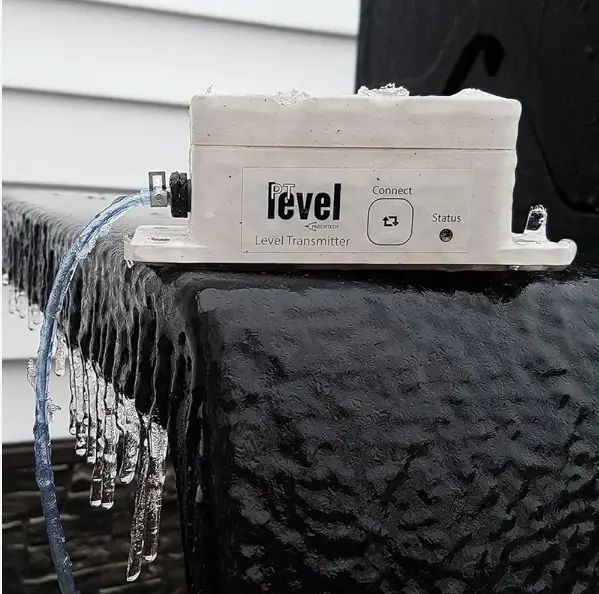
Question 1: What is the installation scenario?
This is the primary prerequisite for selection. Different scenarios have significantly different technical requirements:
| Scenario | Key Requirements | Recommended Solution |
|---|---|---|
| Rooftop tank (outdoor) | Waterproof, long-range | LoRa + IP67 |
| Fire tank (basement) | Strong penetration | LoRa (concrete penetration) |
| Deep well/underground | IP68 protection, long-range | LoRa + IP68 |
| No-power outdoor | Long battery life | LoRa (ultra-low power) |
| Large campus/farm | Wide area coverage | LoRa + gateway management |
Industry selection guides emphasize that installation location affects both measurement performance and wireless connectivity. Evaluate distance to the nearest gateway and metal structures that can block RF signals.
Question 2: Which communication protocol should you choose?
| Communication | Distance | Power Use | Penetration | Suitable Use |
|---|---|---|---|---|
| LoRa | 3-5 km | Extremely Low | Excellent | Long distance, obstacles, no power |
| NB-IoT | Cellular | Low-Medium | Good | Urban areas with coverage |
| 4G | Cellular | High | Good | High real-time requirements |
| WiFi | <100 m | High | Poor | Indoor with WiFi coverage |
Industry guides indicate: LoRaWAN is excellent for long-range, low-power applications with low data transmission frequency (e.g., hourly readings); NB-IoT suits distributed assets with cellular coverage.
Question 3: Which measurement principle should you choose?
| Comparison | Ultrasonic | Submersible | Float Switch |
|---|---|---|---|
| Continuity | Continuous | Continuous | Discrete |
| Liquid Contact | No | Yes | Yes |
| Clog/Jamming Risk | None | Yes (scaling) | Yes (debris) |
| Maintenance Frequency | Low | Medium-High | High |
Industry guides emphasize: For media with foam, vapor, or dust, special consideration of measurement principles is required – heavy foam can absorb ultrasonic signals.
Question 4: How to solve power supply?
For no-power scenarios, battery life is the core consideration. LoRa solutions can achieve multi-year battery life, while WiFi solutions typically only last 1-2 months.
Selection advice: Ensure the device has low-battery alert capability to avoid monitoring gaps from sudden battery death.
Question 5: Is the protection rating sufficient?
- IP65: Dustproof + water jet resistant – suitable for outdoor non-submersion
- IP67: Short-term submersion (1m for 30 minutes)
- IP68: Long-term submersion – suitable for deep wells, underwater installation
Industry selection guidelines clearly state: Underwater installation requires ≥IP68 protection rating.
Question 6: Is the alert mechanism comprehensive?
App-only push notifications may be blocked by Do Not Disturb mode. Choose products supporting multi-channel alerts.
Industry cases show strong user demand for multi-channel alerts via App, SMS, and email.
Question 7: What is Total Cost of Ownership (TCO)?
| Cost Item | WiFi Battery | 4G/NB-IoT | LoRa |
|---|---|---|---|
| Device Cost | Lower | Medium | Medium |
| Wiring/Modification | 0 | 0 | 0 |
| Gateway/Annual Fee | 0 | SIM annual fee | One-time gateway |
| Annual Maintenance | 4-6 battery changes | 2-4 battery changes | 1 change/several years |
| Software Subscription | Possible | Possible | Possible |
Industry analysis shows LoRa solutions have no recurring SIM or cellular costs per sensor, making them especially suitable for large-scale deployments.
Quick Decision Matrix
| Requirement | Recommended Solution |
|---|---|
| Long distance (>100m) | LoRa |
| Strong wall penetration | LoRa |
| No power, long battery life | LoRa |
| Large-scale, multi-site | LoRa + Gateway |
| Short distance, WiFi coverage | WiFi solution |
| Cellular coverage, real-time | 4G/NB-IoT |
Conclusion: HojellyTek PTDevices LoRa Level Monitor has significant advantages in long-range transmission, low power consumption, and penetration capability – the ideal choice for no-power, long-distance, obstacle-rich scenarios


