
A Comprehensive Guide to Medical Waste Regulations
The management of medical waste presents a unique and critical challenge for healthcare facilities worldwide. Unlike general municipal waste, healthcare waste contains potentially infectious, toxic, and physically dangerous materials. Its mismanagement poses a direct threat to healthcare workers, sanitation staff, the public, and the environment. Therefore, this waste stream is governed by a stringent set of regulations. Adherence to these rules is not optional; it is a fundamental requirement for any healthcare provider.
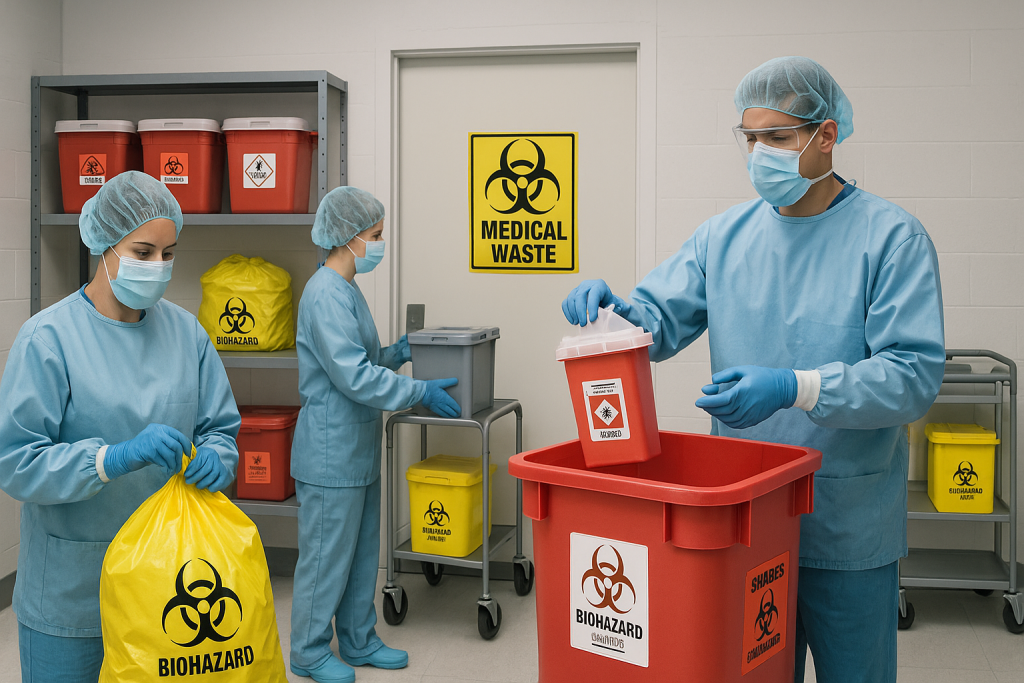
Medical waste regulations are a stringent set of rules governing the segregation, packaging, storage, transport, and disposal of healthcare-related waste to protect public health and prevent environmental contamination. These frameworks are designed to ensure safety and accountability at every step. As an international expert in waste management, CESH Home helps healthcare facilities navigate these complex requirements to achieve full compliance and operational excellence. This guide provides a detailed overview of the core components of a comprehensive medical waste regulatory system.
The Core Principle: Cradle-to-Grave Responsibility
The foundational principle of nearly every robust medical waste regulatory system is "cradle-to-grave" liability. This legal doctrine holds the healthcare facility that created the waste (the generator) ultimately responsible for it from its creation ("cradle") to its final, verified treatment and disposal ("grave").
Who is Ultimately Responsible for Medical Waste?
The generating facility holds the final responsibility. This liability does not transfer to the waste management company upon collection. If a contractor mismanages the waste, leading to a public health incident or environmental contamination, the original generator can still be held legally and financially accountable.
This principle underscores the critical importance of due diligence when selecting a waste management partner. A healthcare facility must choose a certified, reputable, and fully compliant service provider. This partner acts as a steward of the waste on the generator's behalf. However, the ultimate responsibility always remains with the healthcare facility that produced it. A comprehensive service agreement and meticulous record-keeping are essential tools for managing this long-term liability and proving compliance.
Categorizing Medical Waste: A Framework for Segregation
Effective management begins with proper identification and segregation at the point of generation. Mixing different types of medical waste is dangerous and non-compliant. It can increase risks for healthcare workers and complicate the final disposal process. For this reason, regulatory frameworks are built around a clear system of waste categorization. Each category has specific handling and disposal requirements based on the risks it presents.
How is Medical Waste Categorized for Safe Handling?
While specific definitions may vary slightly, most comprehensive regulatory systems classify medical waste into the following major categories.
| Waste Category | Description & Examples | Primary Risk & Handling Requirement |
| Infectious Waste | Any waste contaminated with blood, body fluids, or other potentially infectious materials. (e.g., used gloves, contaminated dressings, lab cultures, IV tubing). | Risk of Disease Transmission. Must be segregated into designated, labeled containers (often yellow bags) and decontaminated before disposal. |
| Pathological Waste | Human tissues, organs, body parts, and anatomical specimens. | High-Risk Infectious & Ethical Concerns. Must be handled with extreme care, often requires refrigerated storage, and is typically treated by incineration. |
| Sharps Waste | Any item that can pierce or cut the skin. (e.g., needles, syringes, scalpels, lancets, broken glass vials). | High Risk of Injury & Infection. Must be placed immediately into a rigid, puncture-resistant, leak-proof sharps container at the point of use. |
| Pharmaceutical Waste | Unused, expired, or contaminated medications, including pills, vials, and creams. | Risk of Environmental Contamination & Public Health. Must be segregated and sent for high-temperature incineration to ensure complete destruction. Cannot be landfilled. |
| Chemical Waste | Discarded chemicals from laboratory procedures, cleaning, and disinfection. (e.g., solvents, reagents, sterilants like glutaraldehyde). | Toxicity, Corrosivity, or Ignitability. Must be managed according to its specific chemical properties, often treated as traditional hazardous waste. |
| Genotoxic Waste | Waste containing materials with cytotoxic, carcinogenic, mutagenic, or teratogenic properties. (e.g., cytotoxic drugs for cancer therapy, contaminated PPE). | Highly Toxic & Hazardous. Requires the highest level of containment and must be destroyed via incineration. |
Packaging and Labeling Standards
Once waste is segregated into the correct categories, it must be packaged in a way that ensures safe containment through storage, transport, and disposal. Packaging and labeling standards are highly specific and strictly enforced.
What are the Standard Requirements for Packaging and Labeling?
Compliance hinges on using the right containers and labels for the right waste streams. The following protocols are standard in robust regulatory environments.
Color-Coded Segregation
A standardized color-coding system provides an immediate visual cue for healthcare workers, reducing the chance of errors. A typical system includes:
- Yellow Bags/Containers: For general infectious waste.
- Red Containers: Exclusively for sharps waste.
- Brown or Black Containers: Often used for pharmaceutical or chemical waste.
These bags and containers must be strong enough to resist tearing and be certified to carry the weight of their contents without failing.
Container Integrity
The type of container is dictated by the waste it holds.
- Bags: Used for non-sharp infectious waste, bags must be leak-proof and properly sealed (e.g., with a gooseneck tie) when no more than three-quarters full.
- Sharps Containers: These are the most critical. They must be made of a rigid plastic that is puncture-resistant, leak-proof on the sides and bottom, and closable to prevent spillage.
- Rigid Containers: Used for liquid waste, pathological waste, and chemicals, these containers must be durable and have a secure, leak-proof lid.
Universal Labeling Protocols
Every bag and container must be clearly labeled before it is transported. The label serves as a passport for the waste, communicating its contents and risks to everyone who handles it. A standard label must include:
- The universal biohazard symbol.
- The name and address of the generating facility.
- The date the waste was packaged.
- The specific category of waste inside.
This ensures that the waste can be tracked and that handlers are always aware of the potential dangers they are managing.
On-Site Storage and Transport Preparation
After packaging, medical waste must be stored safely on-site until it is collected by a licensed transporter. The storage area itself is subject to strict regulations to prevent contamination and unauthorized access.
How Should Medical Waste Be Stored Before Collection?
A compliant medical waste storage area must be a dedicated space. It cannot be used for any other purpose. Key requirements for this area include:
- Security: The area must be locked and accessible only to authorized and trained personnel.
- Signage: Clear signage, including the biohazard symbol, must be posted to warn of the contents.
- Separation: It must be located away from patient care areas, public spaces, and food preparation zones.
- Refrigeration: Pathological waste and certain other materials must be stored in a refrigerated environment to prevent decomposition and reduce odors.
- Cleanliness: The area must have impermeable, easy-to-clean surfaces and be equipped with a spill kit and cleaning supplies.
Regulations also place strict time limits on how long waste can be stored on-site. These limits are based on the volume of waste generated and are designed to prevent the accumulation of hazardous materials.
What Documentation is Required for Transport?
When the waste is ready for collection, a manifest or tracking document must be completed. This multi-part form is the legal record of the "cradle-to-grave" process. It meticulously tracks the chain of custody from the healthcare facility to the final treatment facility.
The manifest must include:
- The generator's name, address, and identification number.
- The transporter's name and license number.
- The name and address of the permitted treatment facility.
- A detailed description of the waste, including its category and quantity.
Each party—generator, transporter, and treatment facility operator—must sign the manifest. The generator receives a final, signed copy back from the treatment facility as legal proof that the waste was disposed of in a compliant manner.
Approved Treatment and Disposal Technologies
The final stage in the management lifecycle is treatment and disposal. The goal of treatment is to render the medical waste non-hazardous, typically by destroying pathogens and any recognizable human elements. The chosen technology depends on the waste category.
What Happens to Medical Waste After It Leaves the Facility?
Waste is transported to a licensed Treatment, Storage, and Disposal Facility (TSDF), where one of several approved technologies is used.
- Autoclaving (Steam Sterilization): This is the most common treatment method for infectious waste and sharps. The waste is subjected to high-temperature, high-pressure steam for a specific duration. This process kills all microorganisms, rendering the waste non-infectious. After treatment, the sterilized waste is often compacted or shredded to make it unrecognizable and can then be safely disposed of in a sanitary landfill.
- Incineration: This high-temperature combustion process is used for waste that cannot be autoclaved, such as pathological waste, pharmaceutical waste, and genotoxic waste. Incineration effectively destroys all organic matter and pathogens, reducing the waste to an inert ash. Modern incinerators operate with advanced air pollution control systems to manage emissions.
- Chemical Disinfection: This method is typically used for liquid waste, such as blood or suctioned fluids. A powerful disinfectant is added to the waste to kill pathogens before it is discharged into a sanitary sewer system in accordance with local regulations.
- Alternative Technologies: Other methods, such as microwave treatment, are also used in some regions. These technologies use different mechanisms to heat and decontaminate the waste.
The principles for managing these materials safely often overlap with the protocols required for other forms of hazardous waste. The ultimate goal is always the complete neutralization of any public health risk.
Conclusion
A robust medical waste regulatory framework is a complex but essential system for safeguarding public health. It provides a clear, legally enforceable pathway for managing dangerous materials from the point of generation to their final disposal. The key pillars of this framework—responsible segregation, secure packaging, meticulous tracking, and effective treatment—work together to prevent the spread of disease and protect our environment.
For any healthcare facility, achieving and maintaining compliance is a critical operational duty. Partnering with a deeply knowledgeable and experienced waste management provider like CESH Home is the most effective way to navigate these complex rules. An expert partner ensures safety, mitigates risk, and allows healthcare professionals to focus on their primary mission: patient care.
Frequently Asked Questions
Q1: What is the single most common violation of medical waste regulations?
The most common violation is improper waste segregation at the point of generation. This includes placing general trash in a biohazard bag or, more dangerously, placing sharps or pharmaceutical waste in the wrong container.
Q2: Are staff training records required by regulators?
Yes. Regulatory frameworks universally require that all employees who handle medical waste receive regular, documented training on the facility's waste management plan and safety procedures. These training records are often reviewed during inspections.
Q3: Can treated medical waste be recycled?
Generally, no. Even after treatment via autoclaving, the material is still considered medical waste and is typically sent to a landfill. However, some non-contaminated plastic and glass items from healthcare settings (e.g., certain packaging) can be recycled if kept separate from the regulated medical waste stream.
Q4: What is the role of a waste management plan?
A waste management plan is a formal, written document that details a facility's specific procedures for handling all categories of medical waste. It is a customized operational guide that ensures everyone in the organization understands and follows the same compliant processes.


