The Complete Guide to IR Sensors: Types, Principles, and Professional Buying Advice
1. Product Definition & Core Value
IR sensors are electronic devices that detect infrared radiation emitted by objects and convert it into electrical signals for processing. Any object with a temperature above absolute zero emits infrared radiation, which has wavelengths between visible light and microwaves.
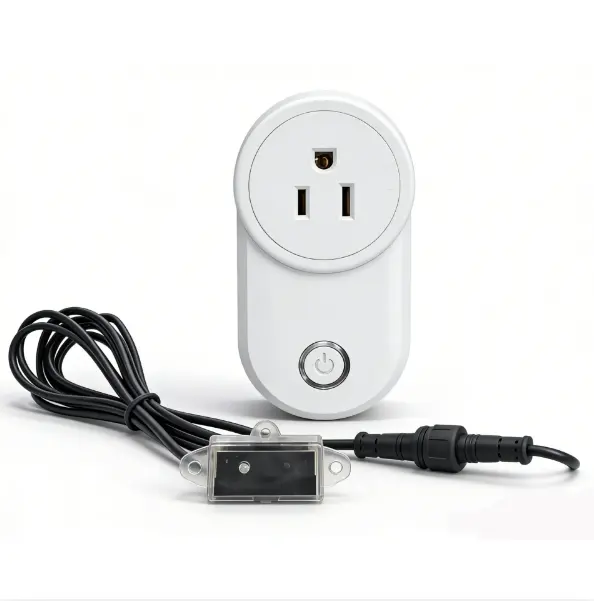
Core Value manifests in three areas:
- Non-Contact Sensing: Detect targets without physical contact, ideal for hygienic or hazardous environments.
- Environmental Adaptability: Unaffected by ambient light; operates reliably day and night.
- Cost & Power Efficiency: Compared to cameras or LiDAR, IR sensors offer lower cost and ultra-low power consumption, making them ideal for battery-powered IoT devices.
2. Four Main Types of IR Sensors & Their Working Principles
2.1 Passive Infrared (PIR) Sensor
The most common motion detector, widely used in security alarms, automatic lighting, and smart homes.
Working Principle: A PIR sensor contains two series-connected pyroelectric elements with a filter (typically centered at 8-14μm, highly sensitive to human infrared radiation). When a human moves across the detection area, the two elements receive different amounts of infrared radiation at different times, causing a change in output voltage. A stationary human does not trigger the sensor because the two elements reach thermal equilibrium. A Fresnel lens in front of the sensor divides the detection area into alternating sensitive and blind zones, significantly enhancing sensitivity.
2.2 Thermopile Sensor
Used for non-contact temperature measurement, such as infrared thermometers, industrial pyrometers, and microwave oven temperature probes.
Working Principle: A thermopile consists of multiple thermocouples connected in series. When the sensor receives infrared radiation from a target object, the absorption area heats up while the reference area remains at ambient temperature. This temperature difference generates a voltage output via the Seebeck effect. The output voltage is linearly related to the target temperature. With blackbody calibration, accuracy of ±0.1°C can be achieved.
2.3 Infrared Photoelectric Sensor (Through-beam / Reflective)
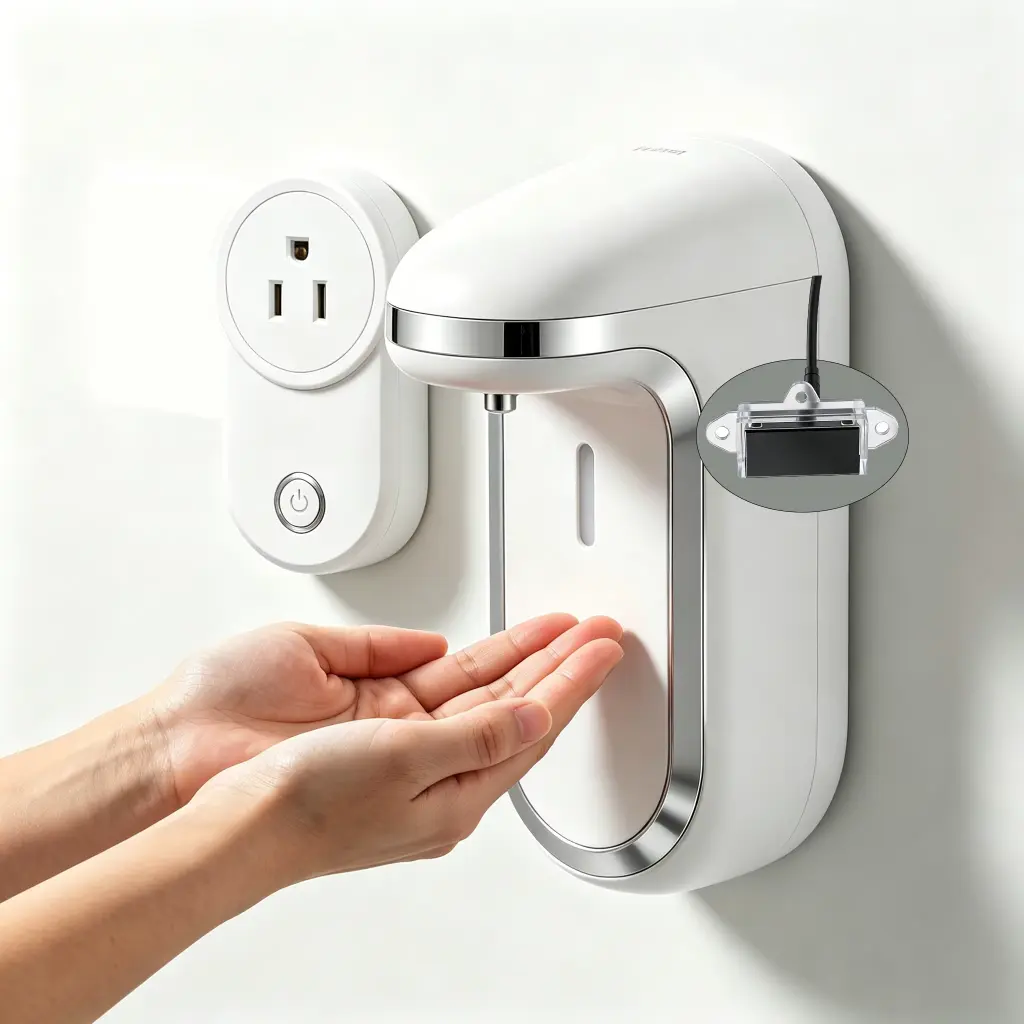
Primarily used for object counting, position detection, and proximity switches, widely found in automated production lines and smart faucets.
Working Principle: These can be active or passive. The most common active types include through-beam (emitter and receiver separated; object breaks the beam) and reflective (emitter and receiver on the same side; relies on a reflector or the object's surface to reflect IR light). A near-infrared LED (typically 940nm or 850nm) serves as the light source, while a phototransistor or photodiode detects changes in light intensity.
2.4 Infrared Thermal Imager
Used to generate thermal distribution images, indispensable in electrical inspections, building thermal leak detection, and firefighting.
Working Principle: The core of a thermal imager is a Focal Plane Array (FPA), consisting of thousands of microbolometers. Each microbolometer is a tiny, suspended bridge structure whose resistance changes upon absorbing infrared radiation. The change in resistance for each pixel is read out electronically. After signal processing and pseudo-color mapping, a two-dimensional temperature distribution image is produced. Uncooled thermal imagers now meet most commercial and industrial needs.
3. Comparison Table
| Type | Accuracy | Cost | Ease of Use | Core Applications |
|---|---|---|---|---|
| PIR | Accurate for motion; cannot measure static objects or temperature | Very Low ($2-$10) | Very Easy, plug-and-play | Security, auto lights, smart home |
| Thermopile | High accuracy for temp measurement (±0.1°C~±1°C) | Medium ($5-$30) | Easy, requires simple calibration | Thermometers, industrial pyrometry, microwaves |
| IR Photoelectric | Accurate for presence/absence; short range | Low ($1-$15) | Very Easy | Automatic faucets, line counting |
| IR Thermal Imager | Accurate spatial temperature distribution; very high cost | Very High ($200-$10,000+) | Complex, requires training for image interpretation | Electrical inspections, building diagnostics, firefighting |
4. Scenario-Based Selection Guide
Home Use
- Security & Automatic Lighting: Choose PIR sensors. Look for detection angle (typically 90°-120°) and range (8-12 meters is sufficient). Products with Fresnel lenses offer higher sensitivity.
- Smart Appliances & Remote Control: IR photoelectric sensors are used in smart faucets and automatic soap dispensers. For remote control reception, use integrated IR receiver modules (e.g., VS1838B).
- Entry-Level Temperature Measurement: Thermopile sensor modules (e.g., MLX90614) are great for DIY non-contact thermometers.
- Budget Advice: Most home applications are well-served by sensor modules costing $10-$30.
Industrial Use
- Object Counting/Positioning on Production Lines: Select through-beam IR photoelectric sensors with fast response time (<1ms) and high ingress protection (IP67 or higher). Recommended brands: Omron, SICK.
- Non-Contact Process Temperature Measurement: Use thermopile sensors or pyrometers with a temperature range covering your needs (e.g., -20°C to +500°C). Pay attention to the Distance-to-Spot (D:S) ratio.
- Equipment Condition Monitoring & Electrical Inspections: An infrared thermal imager is an indispensable tool. Entry-level options: Flir One Pro or Hti HT-102 ($200-$500). Professional grade: Flir E-series or Fluke Ti-series ($2,000+).
- Special Environments: Look for explosion-proof (ATEX/IECEx) or intrinsically safe certifications for hazardous locations like oil and chemical plants.
5. Frequently Asked Questions (FAQ)
Q1: Why is a PIR sensor insensitive to a stationary person?
A: By design, PIR sensors respond only to changes in infrared radiation. When stationary, the two sensing elements inside reach thermal equilibrium, resulting in zero output voltage. Only when a person moves, causing the two elements to experience the thermal change sequentially, does a differential signal occur. Therefore, a PIR is essentially a motion sensor, not a presence sensor. For detecting stationary presence, consider radar sensors or thermopile arrays.
Q2: How can I improve the noise immunity of a PIR sensor?
A: Common interference sources include direct sunlight, radiators, HVAC vents, and fast-moving hot air. Solutions: (1) Install the sensor away from these sources; (2) Use a weatherproof housing with a white light filter; (3) Adjust the sensitivity potentiometer to reduce gain; (4) Implement validation logic in software (e.g., require multiple consecutive triggers before alarming).
Q3: Which is more accurate for an infrared thermometer: forehead or wrist?
A: The forehead is more accurate. The forehead has rich blood supply and relatively stable temperature, closely reflecting core body temperature. The wrist is highly affected by ambient temperature (exposure to cold air causes significant cooling). When using an infrared thermometer, operate in an ambient temperature of 16°C~35°C (61°F~95°F), aim at the center of the forehead from a distance of 3-5 cm, and wipe away sweat. In cold conditions, measure the wrist under clothing. Averaging multiple readings improves reliability.
Q4: What is the maximum effective range of a through-beam IR photoelectric sensor?
A: It depends on the optical power and design. Standard LED through-beam sensors have an effective range of 5-20 meters. Through-beam sensors using infrared laser diodes can reach 100 meters to several hundred meters, often used for highway vehicle detection or large warehouse perimeter protection. However, laser products require attention to eye safety classifications (Class 1 is safe; Class 2 and above need caution). In practice, consider signal attenuation due to fog or dust.
Q5: What is the difference between uncooled and cooled infrared thermal imagers? Which should I choose?
A:
- Uncooled: Use microbolometers; no cryogenic cooling needed; lower cost ($200-$5,000); lower resolution (typically 80x60 to 640x480); fast startup. Suitable for building diagnostics, electrical inspections, and outdoor night vision.
- Cooled: Require an internal cryocooler to bring the detector down to approximately -200°C (-328°F); very expensive ($20,000+); extremely high resolution and sensitivity; high frame rates. Used for military, scientific research, and high-end industrial applications (e.g., detecting tiny gas leaks). For most hobbyists and general industrial users, an uncooled thermal imager is sufficient.