
Real User Horror Stories: The Pitfalls We've Encountered with Level Monitors
Target Audience: Users Who Have Experienced Product Failures, Decision Makers Currently Shopping
Real-World Feedback from Frontline Users
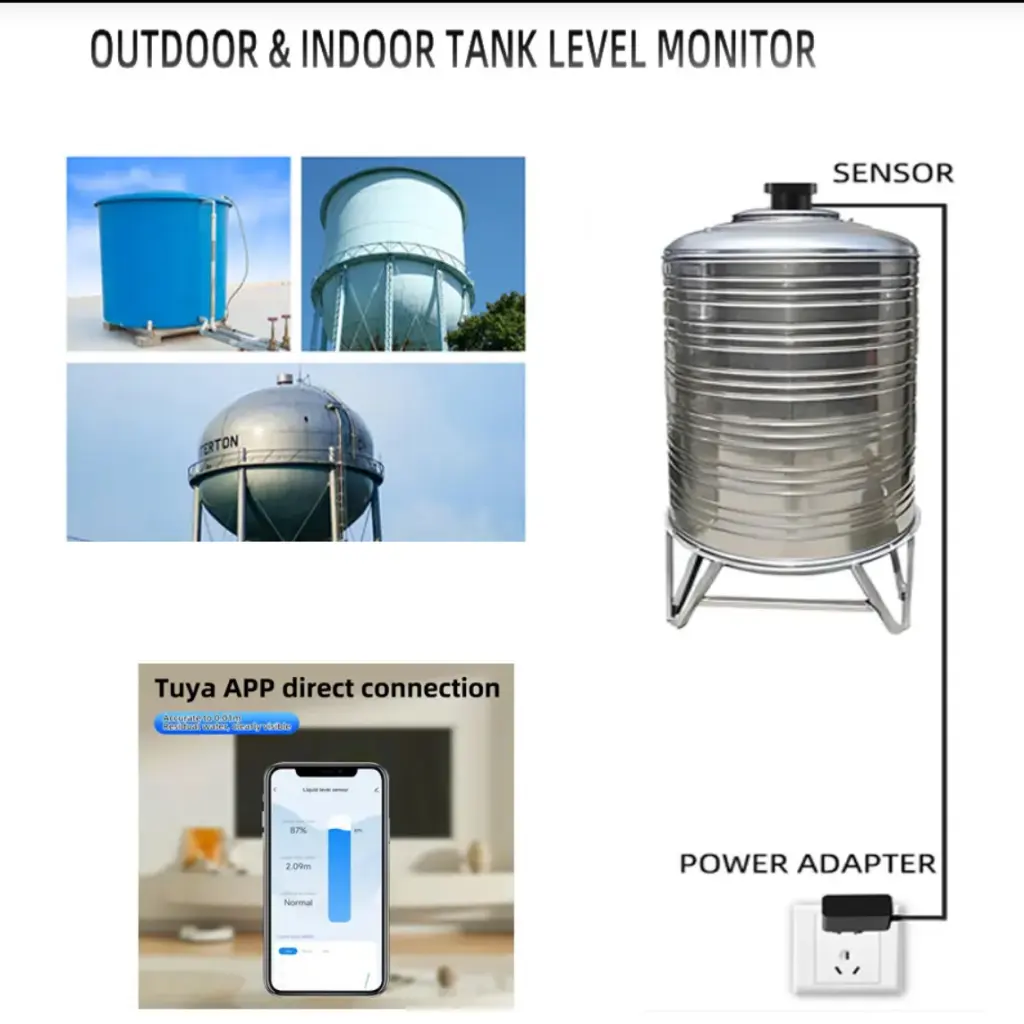
Beyond the five common pain points above, users encounter many other "pitfalls" in actual use. Below are typical cases compiled from market research and user feedback.
Case #1: The "Scaling Pain" of Submersible Sensors
User Story: A factory installed a submersible pressure level sensor in a sewage tank. After three months, readings began fluctuating abnormally. Cleaning the probe restored normal function, but problems recurred a month later. Maintenance staff was overwhelmed
Root Cause: The submersible sensor probe directly contacts sewage. Impurities and microorganisms form biofilm or scale on the probe surface, obstructing pressure transmission and causing measurement errors.
*TLC2326-WF-S Solution:* Ultrasonic non-contact measurement – sensor never contacts liquid, fundamentally eliminating scaling issues. Works long-term even with sewage, oil, or acid/alkali liquids.
Case #2: The Embarrassment of Sudden "Battery Death"
User Story: A residential property installed a battery-powered WiFi level meter on a rooftop tank. One weekend, staff received a dry-running pump alarm. Investigation revealed the level meter had been offline for days due to battery depletion – the tank had long been empty.
Lesson: Battery-powered devices must be evaluated for battery life and should have low-battery alerts. Users cannot reliably remember "change batteries every two months."
*TLC2326-WF-S Solution:*
Optional mains power for complete elimination of battery anxiety
Solar auto-charging – users never need to remember battery changes
Real-time battery level display in App, auto-push when low
Case #3: The "Signal Black Hole" of Underground Garage Fire Tanks
User Story: A commercial complex had a fire tank in Basement Level 2. Property installed an NB-IoT level meter nearby, but NB-IoT signal was extremely poor – the device was constantly offline.
Lesson: Communication method selection must consider on-site signal coverage. NB-IoT, 4G, and other cellular-dependent technologies may be completely unusable underground or in remote areas.
*TLC2326-WF-S Solution:*
Consider LoRa version products for truly impossible coverage scenarios
Uses WiFi communication, leveraging existing building network
3m cable allows moving main unit to better signal location if WiFi coverage insufficient
Case #4: The "Cry Wolf" Effect of False Alarms
User Story: A home installed a brand-name level alarm. The device frequently pushed "low water level" alerts in the middle of the night – users repeatedly got up to check, only to find normal levels. Eventually, users disabled all alarm functions
Lesson: False alarms are worse than no alarms. Frequent false alarms cause users to lose trust in the system, ultimately abandoning it entirely.
*TLC2326-WF-S Solution:*
Users can adjust alert thresholds based on actual needs to avoid over-sensitivity
High-precision ultrasonic measurement reduces false alarms from measurement error
Tuya platform supports alert delay and debouncing to filter transient interference


