
Technology Breakthrough | ULS-03GW Wide‑Temperature Ultrasonic Level Sensor Released: Precision in Extreme Cold Down to -20°C
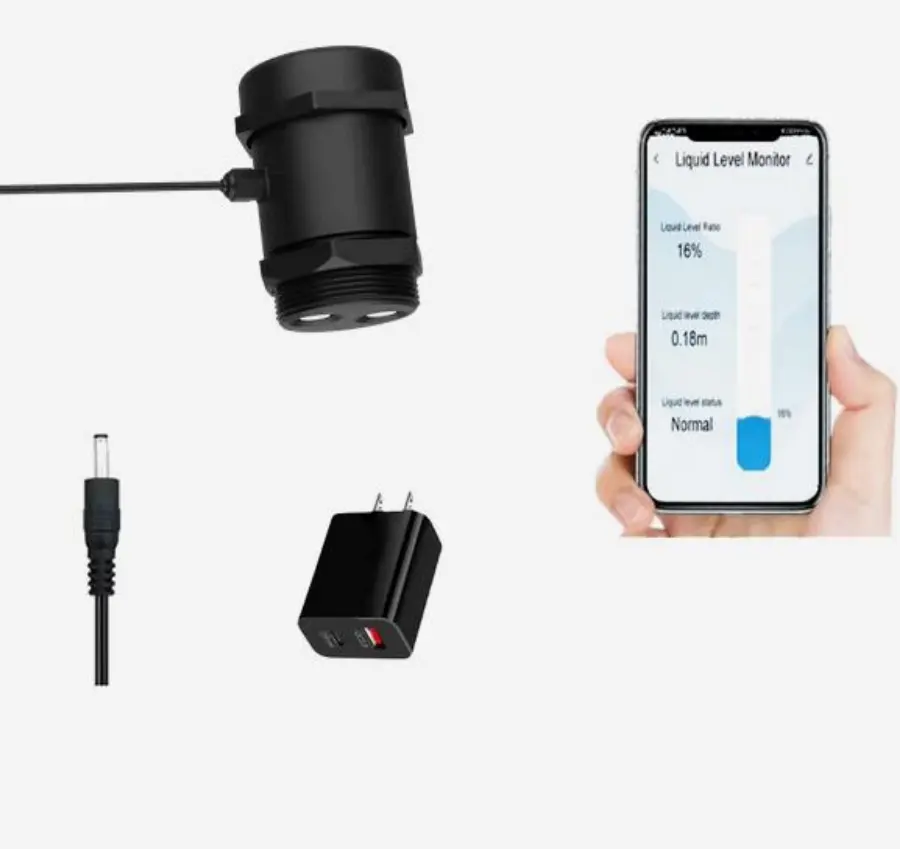
In cold regions of the north and high‑altitude outdoor environments, liquid level sensors often suffer from measurement failure or drastically shortened service life due to low temperatures. Recently, HojelyTek officially launched the ULS-03GW wide‑temperature ultrasonic level sensor. With an extended operating temperature range of -20°C to +70°C, enhanced anti‑icing design, and industrial‑grade protection, it provides a highly reliable level monitoring solution for sectors such as hydrology, oil & gas, cold chain storage, and outdoor tank farms.
Industry Challenge: Measurement Difficulties in Low Temperatures
Traditional ultrasonic level sensors typically face two major challenges in low‑temperature environments: first, the transducer sensitivity degrades below freezing, weakening the echo signal and causing unstable measurements; second, ice or condensation forming on the transducer surface prevents the ultrasonic waves from being properly emitted and received, resulting in data loss or even equipment damage. This problem is particularly acute in scenarios such as outdoor storage tanks in northern winters or hydrological monitoring stations on the Qinghai‑Tibet Plateau.
ULS-03GW: Engineered for Extreme Environments
To address these challenges, the ULS-03GW has been systematically upgraded in hardware selection, structural design, and algorithm optimization:
1. Wide‑Temperature Operation
It employs military‑grade wide‑temperature transducers and industrial‑grade electronic components, complemented by a proprietary temperature‑adaptive compensation algorithm. The sensor delivers stable ultrasonic transmission and reception even at -20°C. An optional built‑in heating film actively prevents ice formation on the transducer surface, ensuring continuous operation in snowy and icy conditions.
2. Enhanced Echo Processing Algorithm
To counteract echo signal attenuation at low temperatures, the ULS-03GW incorporates high‑gain signal amplification and adaptive threshold filtering technology. Under the same measurement range, the echo signal‑to‑noise ratio is improved by more than 30% compared to conventional models. In addition, a “Low‑Temperature Mode” can be activated with one touch, allowing users to manually optimize measurement parameters according to site conditions.
3. Fully Sealed Corrosion‑Resistant Construction
The housing is made of high‑strength ABS+PC alloy with an IP67 protection rating (immersion up to 24 hours). The transducer surface is coated with a PTFE self‑cleaning layer, providing excellent anti‑icing and anti‑fouling properties. All fasteners are made of 304 stainless steel, meeting the requirements for long‑term use in salt‑spray environments.
4. Wide Range with High Accuracy
The measurement range covers 0.1 m to 3 m, with a dead zone ≤ 10 cm. Accuracy is ±1% FS at room temperature and remains ±1% FS even at -20°C, meeting industrial control and custody transfer requirements.
5. Intelligent Diagnostics and Remote Operation
It supports Wi‑Fi (2.4 GHz) and interfaces with Smart Life / Tuya Smart for output. Sensor status (such as icing alarm, temperature anomaly, signal quality index) can be transmitted in real time, enabling predictive maintenance via host systems.
Typical Applications
| Industry | Application Description |
|---|---|
| Hydrology | Continuous winter monitoring of river and reservoir levels in northern regions |
| Oil | Low‑temperature level measurement for oilfield storage tanks and LNG tanks |
| Cold Chain Storage | Level monitoring of ammonia tanks and refrigerant tanks in cold storage facilities |
| High‑Altitude Outdoor | Water level telemetry for reservoirs and storage tanks on the Qinghai‑Tibet Plateau and in mountainous areas |
| Northern Environmental Protection | Winter operation for outdoor tanks in wastewater treatment plants and rainwater collection tanks |
The launch of the ULS-03GW fills a gap in the domestic market for wide‑temperature ultrasonic level sensors capable of operating reliably in extreme cold. For detailed technical specifications or to arrange a low‑temperature field test, please visit our website or contact our technical team.


