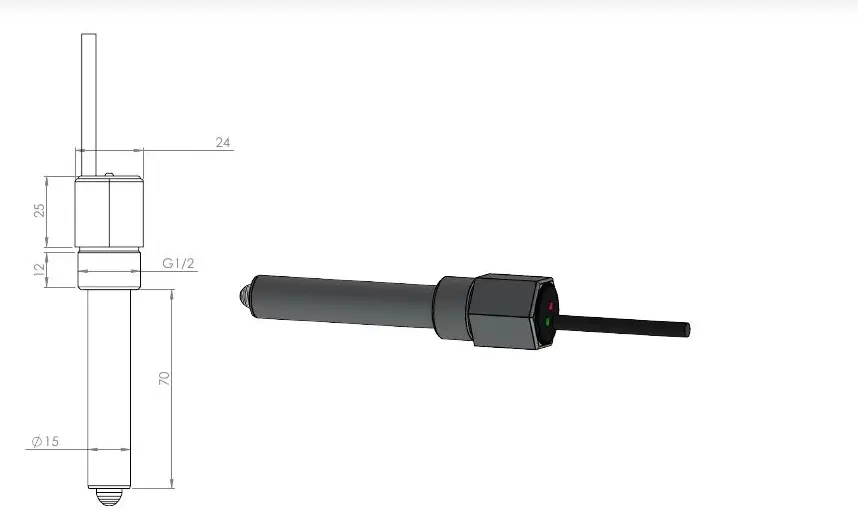
Advantages of Using Optical Level Sensors
Managing fluids accurately is a crucial requirement in modern engineering. Whether you are dealing with everyday consumer appliances or heavy-duty manufacturing, choosing the right liquid level sensor makes all the difference in system safety and efficiency. Today, the optical level sensor stands out as a highly reliable, solid-state solution. Let’s explore why making the switch to this technology can instantly upgrade your operations.
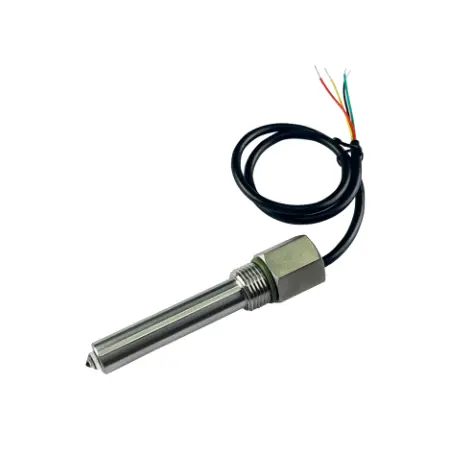
Understanding How Point Level Detection Works
At the heart of an optical liquid level sensor is a beautifully simple concept. To grasp exactly how point level detection works, you just need to look at basic optics. Most standard units rely on the prism light reflection principle.
When the sensor tip is exposed to air, an internal LED bounces infrared light inside the prism, reflecting it directly into a receiver. However, when the tip becomes submerged, the infrared light refraction in liquids causes that light beam to scatter outward into the fluid. This causes a sudden drop in the light reaching the receiver, triggering an immediate electronic state change.
Why Choose Optical Over Traditional Methods?
When engineers evaluate a float switch vs photoelectric probe, the optical probe almost always wins on durability simply because it lacks moving parts. Here is what makes them superior:
- Unmatched Reliability: Mechanical floats can easily jam due to debris. In contrast, optical sensors resist mechanical wear. Even when comparing ultrasonic vs light-based measurement technology, optical probes often provide faster, more definitive switching for specific point levels.
- Smart Integration: Modern setups provide a clean digital output for overflow prevention, seamlessly talking to microcontrollers and automated shut-off valves.
- Energy Efficiency: Many of these units act as low power consumption level indicators, making them perfect for remote, battery-operated setups.
- Versatile Mounting: While traditional probes touch the fluid, some advanced through-wall designs highlight the advantages of non-contact fluid sensing by reading through clear tank walls, completely eliminating contamination risks.
Versatile Applications Across Industries
The incredibly compact footprint of an optical level sensor allows for highly creative applications. Innovators are increasingly integrating detection systems in medical devices where tight spatial constraints and strict hygiene are paramount. Similarly, they serve as excellent high precision leak detection solutions inside server room sub-floors and HVAC drip pans.
For heavy-duty environments, they act as the reliable backbone of large-scale industrial tank monitoring systems. When paired with a robust stainless steel housing for chemical compatibility, these sensors can safely measure harsh industrial solvents, high-temperature liquids, or acidic fluids without degrading.
Pro Tips for Accuracy and Maintenance
Even the best technology has operational limits. One of the most common causes of fluid sensing errors is the effect of bubbles on sensing accuracy. Highly aerated liquids or thick clinging foam can trick the optical prism into registering "air" instead of liquid. To minimize this, always install your sensor away from direct fluid inlets or agitators.
Fortunately, maintaining electronic liquid switches requires minimal effort compared to mechanical counterparts. A simple, periodic wipe-down of the prism ensures that mineral scaling or dried fluid residues do not interfere with light refraction.
Upgrading to optical sensing technology guarantees fewer mechanical failures and highly precise control over your fluid management. By understanding their operating principles and ideal environments, you can achieve unmatched reliability in virtually any application.