
Glas Optiese Vloeistofvlaksensor
Vir kopers wat glas vergelyk, Plastiek, PTFE, en vlekvrye vlekvrye optiese sensorontwerpe, Hierdie bladsy verduidelik die materiaalkeuse, natgemaakte dele, Verseëling, Temperatuuroorwegings, Termiese skokgrense, Skoonmaak, Uitvoeropsies, en RFQ-besonderhede benodig voor bestelling.
Glasoptiese Sensor Vermoëns
Ons glas-prisma optiese vlaksensors gebruik foto-elektriese sensing om te bepaal of die prismapunt in die lug is of in vloeistof ondergedompel is. Binne-in die sensor, 'n infrarooi LED stuur lig in die prisma in. In 'n droë toestand, Die lig weerkaats intern en keer terug na die fototransistor. Wanneer vloeistof die prisma bedek, Die brekingstoestand verander, dus keer minder lig terug na die ontvanger. Die stroombaan skakel dan die uitset oor.
Afhangend van die projek, Die sensor kan gekonfigureer word vir:
- Puntvlakdeteksie vir hoë of lae vloeistofvlakke
- Droë-na-nat of nat-na-droog skakellogika
- Glaspunt- of glasprisma-sensorstrukture
- Vlekvrye staal, PTFE, PSU, of ander behuisingsmateriaalopsies
- NPN, PNP, of ander beheerbord-uitsetvereistes
- Bespreking oor digitale skakelaaruitset of analooguitset vir deurlopende vlakprojekte
- Draad, Tenk-gemonteerd, Sy-gemonteerd, of pasgemaakte OEM-installasie
- Kabel, Konnektor, of gepotte looddraadbeëindiging
- OEM/ODM-aanpassing vir toerustingvervaardigers
As jy 'n algemene verwysing nodig het voordat jy die glasweergawe kies, sien ons optiese vlaksensor Oorsig.
Waarom glas gebruik word vir harde en hoë-temperatuur media
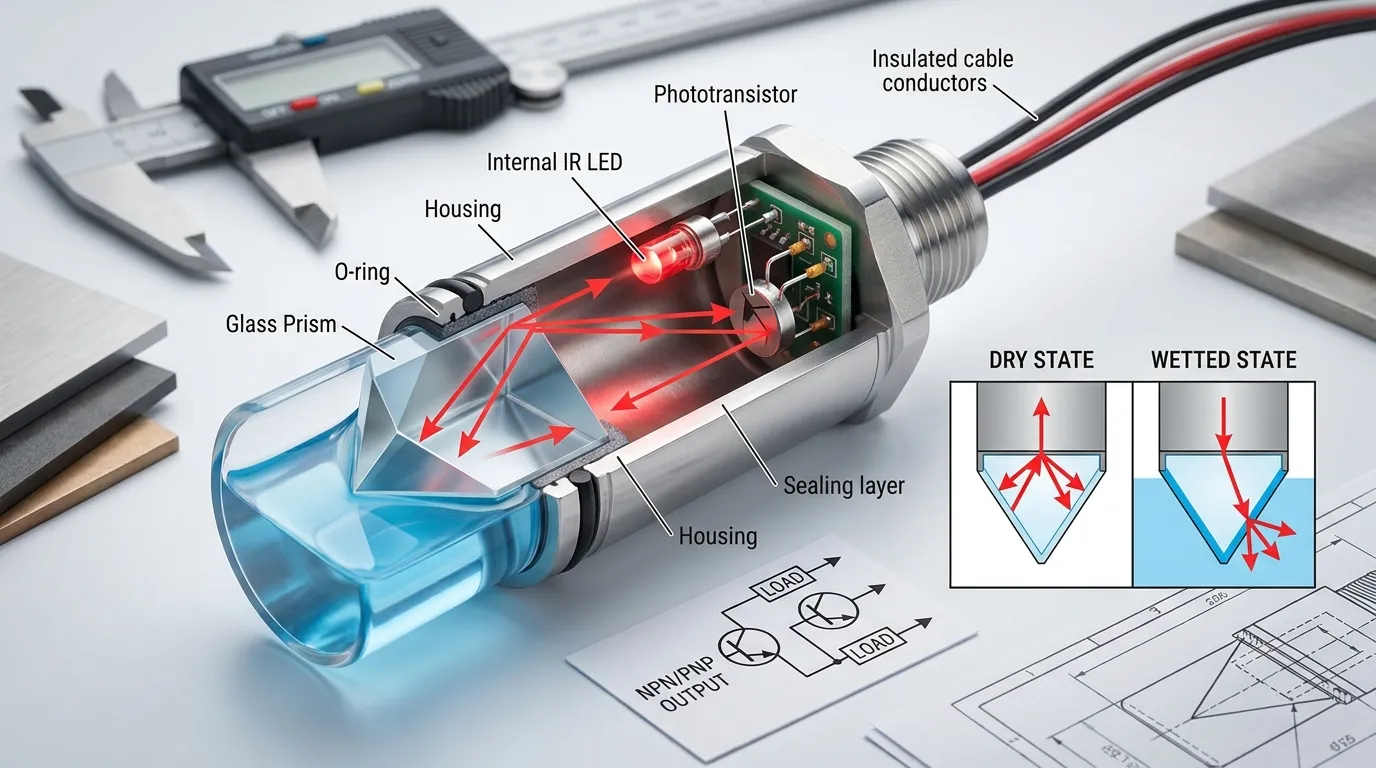
Glas word gekies wanneer die sensorpunt opties stabiel moet bly in 'n vloeistof wat te aggressief kan wees, te warm, of te skurend vir 'n standaard plastiekprisma. Die waarde is nie net chemiese weerstand nie. Die werklike voordeel is die kombinasie van optiese helderheid, Oppervlakhardheid, Dimensionele stabiliteit, en skoonmaakbaarheid.
Chemiese Weerstand in Aggressiewe Vloeistowwe
In chemiese tenks, skoonmaak stelsels, Oplosmiddelhantering, Plaattoerusting, en industriële proseshouers, Die sensorpunt is direk aan die vloeistof blootgestel. Plastiekprisma's kan absorbeer, Swel, Versag, Verkleur, of raak mal wanneer hulle aan sekere oplosmiddels of aggressiewe chemikalieë blootgestel word. 'n Glassensorpunt bied 'n meer stabiele optiese oppervlak vir baie harde vloeistowwe.
Nietemin, Glas is nie universeel nie. Die koper moet steeds die presiese vloeistof bevestig, Konsentrasie, Temperatuur, Skoonmaakmiddel, en blootstellingstyd. Sekere chemikalieë kan glas aanval, En die seëlstelsel rondom die glas kan die werklike swak punt word as dit nie by die vloeistof pas nie.
Slytweerstand en Oppervlakstabiliteit
'n Glas-prisma-sensor is nuttig waar die vloeistof deeltjies bevat, Poeiers, Slurry-spore, Skoonmaakresidu, of bewegende vloeistof wat sagter plastiek kan krap. 'n Gekrapte prisma kan lig verstrooi en onstabiele skakeling veroorsaak, veral in klein tenks waar die vlak herhaaldelik die waarnemingspunt kruis.
Glas het beter oppervlakhardheid as gewone plastiekoptiese punte, Dit kan dus 'n skoner optiese pad langer handhaaf in skuur- of gereeld skoongemaakte omgewings. Kalm, Glas kan afskilfer of kraak as dit deur harde gereedskap getref word, Metaaldele, of sterk meganiese impak tydens installasie.
Optiese Duidelikheid Wat Weerstand bied teen Bedekkingsprobleme
Optiese vlaksensors is afhanklik van 'n duidelike prisma-oppervlak. Olies, Klewerige bymiddels, Gekristalliseerde chemikalieë, Biologiese film, Skaal, of droë residu kan enige optiese sensor verkeerd laat oorskakel. Glas help omdat dit glad is, Harde oppervlaktes is makliker om af te vee en te inspekteer as baie plastiekmateriale.
Vir vloeistowwe wat swaar film agterlaat, Die sensor moet gemonteer wees waar vloei die punt natuurlik kan was, Nie in 'n dooie hoek nie. As die tenk 'n dik laag het, Skuim, of kristallisasie, die RFQ moet skoonmaakfrekwensie en residugedrag insluit sodat die fabriek 'n geskikte puntvorm en monteerposisie kan aanbeveel.
Hoë-temperatuur Verdraagsaamheid vs Plastiekprismas
Glas word dikwels gekies vir hoër-temperatuur vloeistowwe omdat dit sy vorm en optiese stabiliteit beter behou as baie plastiek. In verhitte waterstelsels, Warmolie-toerusting, Prosestenks, en industriële skoonmaakmasjiene, Plastiekprisma's kan sagter word, Vervorming, Verkleur, of afwyking in prestasie.
Vir meer veeleisende temperatuurprojekte, vergelyk met ons Hoë-temperatuur optiese sensor Opsies. Temperatuurgoedkeuring moet altyd die hele sensor in ag neem, Nie net die glas nie. Die behuising, Kabel, Seël, Potting, Konnektor, en elektronika moet ook ooreenstem met die werklike bedryfsomgewing.
Moet Nie Termiese Skoklimiete Ignoreer Nie
Glas kan hitte beter hanteer as baie plastiekprisma's, Maar skielike temperatuurverandering kan dit steeds beskadig. Termiese skok kan voorkom wanneer 'n warm sensorpunt met koue water afgespoel word, wanneer 'n koue sensor skielik met warm vloeistof gevul word, of wanneer skoonmaaksiklusse vinnig die vloeistoftemperatuur verander.
Dit verskil van normale bedryfstemperatuur. 'n Sensor kan geskik wees vir 'n bestendige hoë-temperatuur vloeistof, maar steeds in gevaar wees as die punt skielik warm-na-koud of koud-tot-warm skok ervaar. Vir glas optiese vlaksensors, Kopers moet verhittingsiklusse beskryf, Skoonmaaksiklusse, Tenkvultemperatuur, en wasvoorwaardes voor goedkeuring.
Natglas-tipe, Verseëling, en Liggaamsmateriaal
'n Betroubare glas-optiese sensor is nie net "glas" nie. Die volledige natgemaakte struktuur moet hersien word.
Glassensorpunt of Glasprisma
Die glasdeel kan 'n klein optiese punt wees, 'n gevormde of bewerkte prisma, of 'n glaselement wat in 'n vlekvrye staal liggaam geïntegreer is. Die sleutelvereiste is dat die optiese pad duidelik en stabiel bly by die opsporingspunt. Kopers moet bevestig of die glas direk aan vloeistof blootgestel is en of die vloeistof slegs die punt of bykomende dele van die samestelling raak.
Huismateriaalkeuses
Algemene behuisingskeuses sluit in:
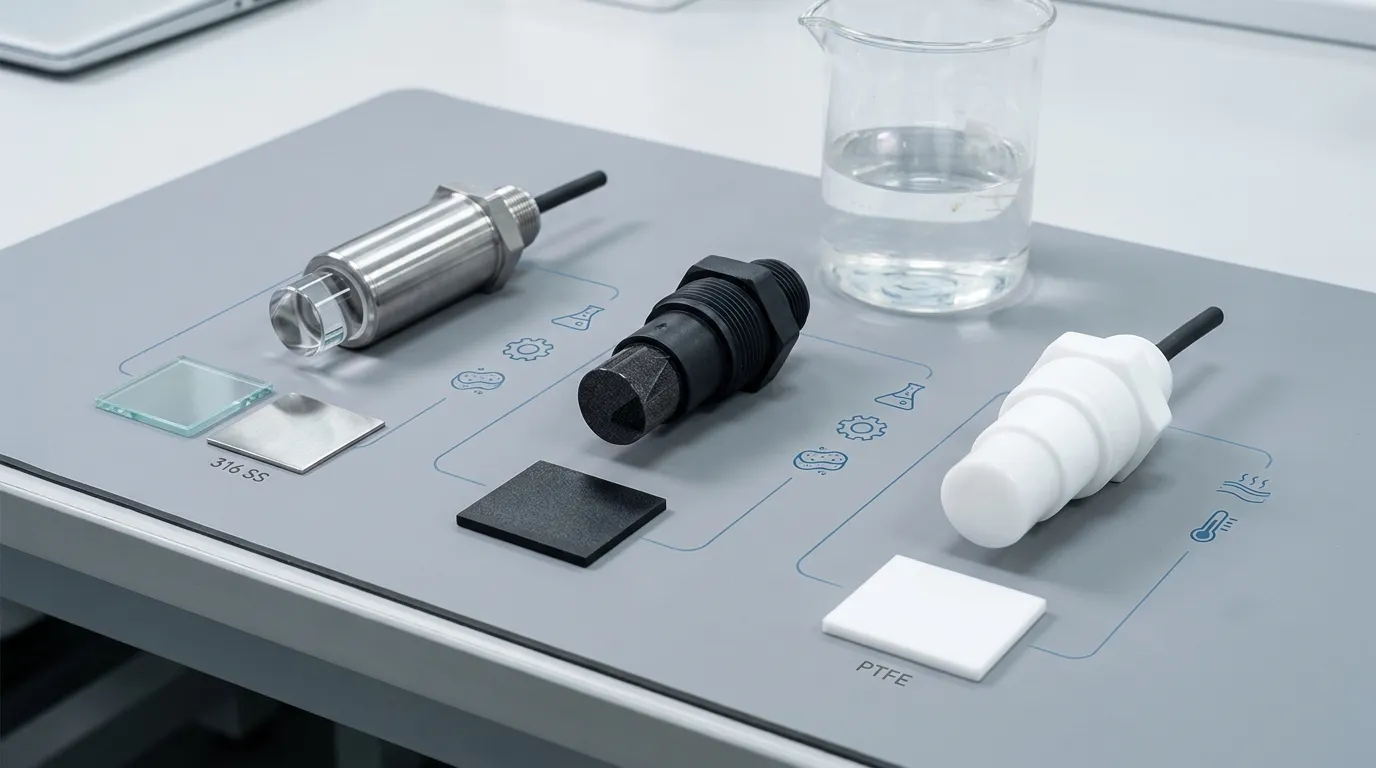
- 316 Vlekvrye staal vir krag, Gedraaide montering, Olies, Brandstowwe, Industriële vloeistowwe, en baie chemiese omgewings
- PTFE vir hoogs korrosiewe toepassings waar fluorpolimeerversoenbaarheid verkies word
- PSU of ingenieursplastiek vir laerkoste industriële en toesteltoepassings
- Glaspunt met metaalliggaam waar optiese helderheid en meganiese sterkte albei vereis word
Vir metaalliggaamprojekte, Hersien ons 316 Vlekvrye vlekvrye optiese sensor Opsies. Vir korrosiewe media waar die hele natgemaakte struktuur fluorpolimeerbeskerming benodig, vergelyk met ons PTFE optiese sensor.
Seël en Potting
Die seël is dikwels die belangrikste seleksiepunt. Selfs wanneer die glaspunt versoenbaar is, die O-ring, Kleefmiddel, Potmiddel, Kabelomhulsel, of konnektor kan faal as dit aan die verkeerde vloeistof of temperatuur blootgestel word. 'n Goeie RFQ behoort dit te bevestig:
- Of die sensor van binne of buite die tenk geïnstalleer is
- Of die seël deurlopend ondergedompel is of slegs deur spatsels blootgestel is
- Of daar druk of vakuum teenwoordig is
- Of skoonmaakchemikalieë nou die kabel raak of net die punt
- Of die tenkmateriaal tydens verhitting uitbrei
- Of vibrasie of meganiese spanning teenwoordig is
Montering, Uitset, en Integrasie-opsies
Glasoptiese vlaksensors word gewoonlik as kompakte puntvlakskakelaars gebruik. Hulle kan deur 'n tenkmuur gemonteer word, Geskroefde poort, Flens, Bracket, of OEM gevormde tenkkenmerk. Die monteerposisie moet toelaat dat die prisma die vloeistof skoon kontak maak sonder om lugborrels vas te vang.
Vir beheeruitset, kopers versoek gewoonlik NPN- of PNP-skakeling vir PLC's, Beheerborde, Pompe, Alarms, en vulstelsels. Uitsetlogika kan dikwels gekies word volgens of die stelsel 'n sein benodig wanneer die punt nat of droog is. Vir deurlopende vlak projekte, analooguitset soos 4–20 mA moet afsonderlik bespreek word omdat dit 'n ander sensorstruktuur vereis as 'n eenvoudige puntvlak-optiese skakelaar.
Voor bestelling, Bevestig toevoerspanning, Uitsettipe, Kabellengte, Konnektor, gare, Monteringsrigting, Tenkwanddikte, en of die sensor in hoëvlak- of laevlaktoestande moet faalveilig wees.
Glas vs Plastiek vs PTFE Optiese Sensors
| Materiaalopsie | Beste pasvorm | Sterkpunte | Grense om na te gaan |
|---|---|---|---|
| Glasoptiese punt / Prisma | Harde, Warm, Skuurmiddel, of gereeld skoongemaakte vloeistowwe | Goeie optiese duidelikheid, Harde oppervlak, Makliker skoonmaak, beter hoë-temperatuur stabiliteit as baie plastiek | Termiese skok, Impakskade, Glaschemiese verenigbaarheid, Seëlversoenbaarheid |
| Plastiese optiese prisma | Algemene water, Toestelle, Kompakte tenks, laerkoste OEM-ontwerpe | Lae koste, liggewig, Maklik om aan te pas, geskik vir baie standaardvloeistowwe | Laer chemiese en slytweerstand, Laer hittetoleransie, moontlike verkleuring of swelling |
| PTFE optiese sensor | Sterk korrosiewe chemikalieë en veeleisende vereistes vir natgemaakte materiaal | Uitstekende chemiese weerstand vir baie aggressiewe media, Lae oppervlakenergie, Goeie anti-stok gedrag | Hoër koste, Meganiese ontwerpbeperkings, optiese struktuur en seëling moet bevestig word |
| Glas + 316 Vlekvrye staal liggaam | Olies, Brandstowwe, Industriële toerusting, Hoësterkte draadinstallasie | Sterk liggaam, Skoon optiese punt, Robuuste industriële montering | Metaalversoenbaarheid, Galvaniese/korrosie-risiko, Seëlmateriaal, Wringkraginstallasie |
Paskontrolelys voordat jy glas spesifiseer
'n Glas-prisma optiese sensor is 'n sterk kandidaat as die meeste van hierdie punte by jou toepassing pas:
- Die vloeistof is chemies aggressief teenoor gewone plastiekpunte
- Die sensor moet in verhitte vloeistof of naby 'n hoë-temperatuur proses werk
- Die medium bevat deeltjies, residu, of skoonmaaksiklusse wat plastiek kan krap
- Die optiese punt moet gereeld afgevee of chemies skoongemaak word
- Die tenk gebruik 'n gedraaide of vlekvrye vlekvrye industriële installasie
- Die vloeistof is helder, deurskynend, of voorspelbaar genoeg vir optiese skakeling
- Skuim, Borrels, en 'n klewerige laag kan bestuur word deur die monteerposisie
- Termiese skok kan beheer of ontwerp word rondom
- Die seël, Kabel, en liggaamsmateriaal kan by die vloeistof aangepas word
- 'n Monster kan in die werklike vloeistof getoets word voor massaproduksie
Glas is dalk nie die beste opsie as die toepassing 'n sterk meganiese impak het nie, Vinnige ekstreme temperatuursiklus, Swaar kristallisasie, of 'n chemikalie wat bekend is om glas aan te val. In daardie gevalle, PTFE, Vlekvrye vlekvrye, ultrasonies, Float, of 'n ander vlak-senseringsmetode mag veiliger wees.
5-Stapvoorsieningsproses
- Navraag: Stuur die vloeistofnaam, Tenktekening, Monteringsposisie, Temperatuurtoestand, Uitsetvereiste, en hoeveelheidsplan per WhatsApp of e-pos. Foto's of tekeninge help ons span om die werklike installasie te verstaan.
- Spesifikasie en Aanpassing: Ons ingenieurs hersien die natgemaakte materiaal, Glaspunt, Seël, Behuising, gare, Uitsetlogika, Kabel, en konnektor. Vir OEM/ODM-projekte, Ons kan die grootte bespreek, Bedrading, Privaat-etiket behoeftes, en beheerbordintegrasie.
- Voorbeeld: 'n Monster word aanbeveel vir harde vloeistowwe, Hoë-temperatuur media, Bedekkingsvloeistowwe, of skoonmaaksiklus-toepassings. Die beste toets is altyd in die werklike vloeistof onder werklike temperatuur en skoonmaakomstandighede.
- Produksie en kwaliteitsbeheer: HojellyTek vervaardig in Shenzhen met interne R&D- en foto-elektriese optiese sensing ervaring. Produksie kan funksiekontroles insluit, Bedradingkontroles, Seël-oorsig, en visuele inspeksie volgens die ooreengekome spesifikasie.
- Skeepsvaart: Ons voer optiese vloeistofvlaksensors na die VSA uit, ONS, Indië, en ander markte. Versendingsmetode en verpakking word bevestig volgens bestellingshoeveelheid, Voorbeelddringendheid, en kopervereistes.
Vereistes om by RFQ-fase te bevestig
- Vloeibare naam, Konsentrasie, viskositeit, en residu-gedrag
- Normale en maksimum bedryfstemperatuur
- Of dit nou skielike verhitting is, Verkoeling, of waswater veroorsaak termiese skok
- Tenkmateriaal, Wanddikte, en monteringsrigting
- Garing, Flens, of pasgemaakte monteringsvereiste
- Nat materiale: Glas, Vlekvrye staal, PTFE, PSU, Seël, Kabel
- Uitsettipe: NPN, PNP, nat/droë logika, of analoogvereiste
- Toevoerspanning en beheerdertipe
- Kabellengte, Konnektor, en IP/omgewingsbehoeftes
- Skoonmaakmetode: Vee, Spoel af, Chemiese was, CIP, of handmatige diens
- Monstertoetsplan voor bondelbestelling
Hoekom Werk Met HoJellyTek
HojellyTek is 'n vervaardiger en uitvoerder in Shenzhen wat fokus op optiese en vloeistofvlaksensorprodukte. Ons ondersteun standaard sensorkeuse sowel as OEM/ODM-ontwikkeling vir tenkvervaardigers, Toestelhandelsmerke, Industriële toerustingbouers, en stelselintegrators.
Ons span kan help om glas te vergelyk, PTFE, Vlekvrye staal, en plastiekoptiese sensorstrukture in plaas daarvan om een materiaal vir elke geval te forseer. Vir gekoppelde tenkmoniteringsprojekte, Tuya/Smart Life-integrasie kan ook bespreek word waar dit by die stelselontwerp pas.
Vrae
Waarvoor word 'n glas optiese vloeistofvlaksensor gebruik?
'n Glasoptiese vloeistofvlaksensor word gebruik vir puntvlakdeteksie in harde, Warm, Skuurmiddel, of chemies veeleisende vloeistowwe waar 'n plastiekoptiese prisma dalk nie genoeg materiaalstabiliteit bied nie.
Hoe detecteer 'n glas-prisma optiese vlaksensor vloeistof?
Dit gebruik 'n infrarooi LED, Fototransistor, en optiese prisma. In die lug, Lig weerkaats binne-in die prisma. Wanneer vloeistof die glaspunt bedek, Die brekingsgedrag verander, en die sensor skakel sy uitset oor.
Is glas beter as plastiek vir optiese vloeistofvlaksensor??
Glas is dikwels beter vir hoë temperature, Slytasiebestand, Optiese duidelikheid, en skoonmaak. Plastiek is steeds nuttig vir laer koste, Algemene vloeistofdeteksie waar chemiese en temperatuurspanning laer is.
Kan glasoptiese sensors saam met chemikalieë gebruik word?
Ja, Glas kan met baie chemiese media werk, maar verenigbaarheid moet bevestig word. Die koper moet die vloeistof nagaan, Konsentrasie, Temperatuur, Skoonmaakmiddel, en blootstellingstyd, plus die seël- en behuisingsmateriaal.
Kan termiese skok 'n glas optiese sensor beskadig?
Ja. Glas kan bestendige hoë temperature verdra, maar kan kraak by skielike temperatuurverandering. Warm-na-koud spoel, Vinnige vulling, of streng skoonmaaksiklusse moet hersien word voor sensorgoedkeuring.
Hoe moet die glassensorpunt skoongemaak word?
Gebruik 'n skoonmaakmetode wat versoenbaar is met die vloeistof, Glas, Seël, en behuising. Vermy harde gereedskap wat die punt kan afbreek. Vir klewerige residu, Beplan gereelde inspeksie en toets of afvee of spoel stabiele skakeling herstel.
Versoek 'n Kwotasie
Om 'n glaspunt- of glasprisma-optiese vlaksensor te spesifiseer, Stuur jou vloeistofbesonderhede, Temperatuurreeks, Tenktekening, Monteringsvereiste, Uitsettipe, en skoonmaakproses. Kontak HojellyTek per WhatsApp of e-pos om 'n kwotasie aan te vra, Voorbeeld, of OEM/ODM-sensoraanbeveling.


