
316 Vlekvrye Staal Optiese Vlaksensor
Vir kopers wat PSU vergelyk, PTFE, 316/316L vlekvrye staal, en glassensorliggame, hierdie bladsy fokus op waar 316SS nuttig is, wat geverifieer moet word, en wanneer 'n ander natgemaakte materiaal veiliger is.
316/316L Vlekvrye Staal optiese vlaksensor Vermoëns
Ons vlekvrye staal optiese sensors is gebou vir puntvlak-opsporing in tenks, Reservoirs, Prosesvate, Klein kamers, en OEM-toerusting waar vloeistofkontak is, Skoonmaaksiklusse, of meganiese sterkte-materie. Die sensor gebruik foto-elektriese optiese sensing: 'n infrarooi LED en fototransistor is agter 'n optiese prisma geplaas. In die lug, Lig weerkaats intern deur die prisma. Wanneer vloeistof die prisma bedek, Die weerkaatste sein verander, en die sensorelektronika omskep daardie verandering in 'n skakeluitset.
Tipiese projekopsies kan insluit:
- 316 of 316L vlekvrye staal natgemaakte liggaamskonstruksie
- Optiese prismapunt aangepas by die medium- en temperatuurvereiste
- Seëlmateriaal gekies volgens vloeistof, Temperatuur, en skoonmaakblootstelling
- NPN, PNP, of ander beheerbord-uitsetkonfigurasie
- Normaalweg oop of normaal geslote logika
- Geskrapte of aangepaste monteringsontwerp
- Kabel, Konnektor, of harnasopsies vir OEM-samestelling
- Puntvlak-opsporing vir hoë, laag, Oorloop, Droë lopie, of lekmonitering
Vir breër sensorliggaamskeuses, Sien ons hoof optiese vlaksensor omvang.
Waarom kopers 316SS bo plastiek kies vir optiese vlak-sensering
Plastiek optiese vlaksensors is koste-effektief vir baie waters, Lae-temperatuur, en ligte dienstoepassings. Nietemin, Kopers skuif dikwels na 316 Vlekvrye staal wanneer die toepassing een of meer van hierdie risiko's inhou: Hoër temperatuur, Meganiese spanning, Draadslytasie, Drukblootstelling, Brandstofkontak, skoonmaak chemikalieë, of wasmiddel.
316/316L-vlekvrye staal bied beter sterkte en korrosieweerstand as gewone plastiekbehuisings in baie industriële vloeistowwe. Dit word dikwels oorweeg vir diesel, Brandstofolie, Smeerolie, hidrouliese olie, Watergebaseerde prosesvloeistowwe, Ligte chemikalieë, en toerusting wat herhaalde skoonmaak vereis. Dit gee die sensor ook 'n sterker gedraaide liggaam vir metaaltenks, Masjinerie, en kompakte industriële samestellings.
Die belangrikste punt is dat vlekvrye staal nie die hele sensor universeel chemiesbestand maak nie. Die werklike natgemaakte stelsel sluit die vlekvrye liggaam in, Optiese prisma, Seëls, en enige blootgestelde bindings- of koppelvlakarea. 'n Koper moet die volledige nat materiaalstapel verifieer voor goedkeuring.
Natgemaakte Deel Konstruksie: Liggaam, Prisma, Seël, en Kabeluitgang
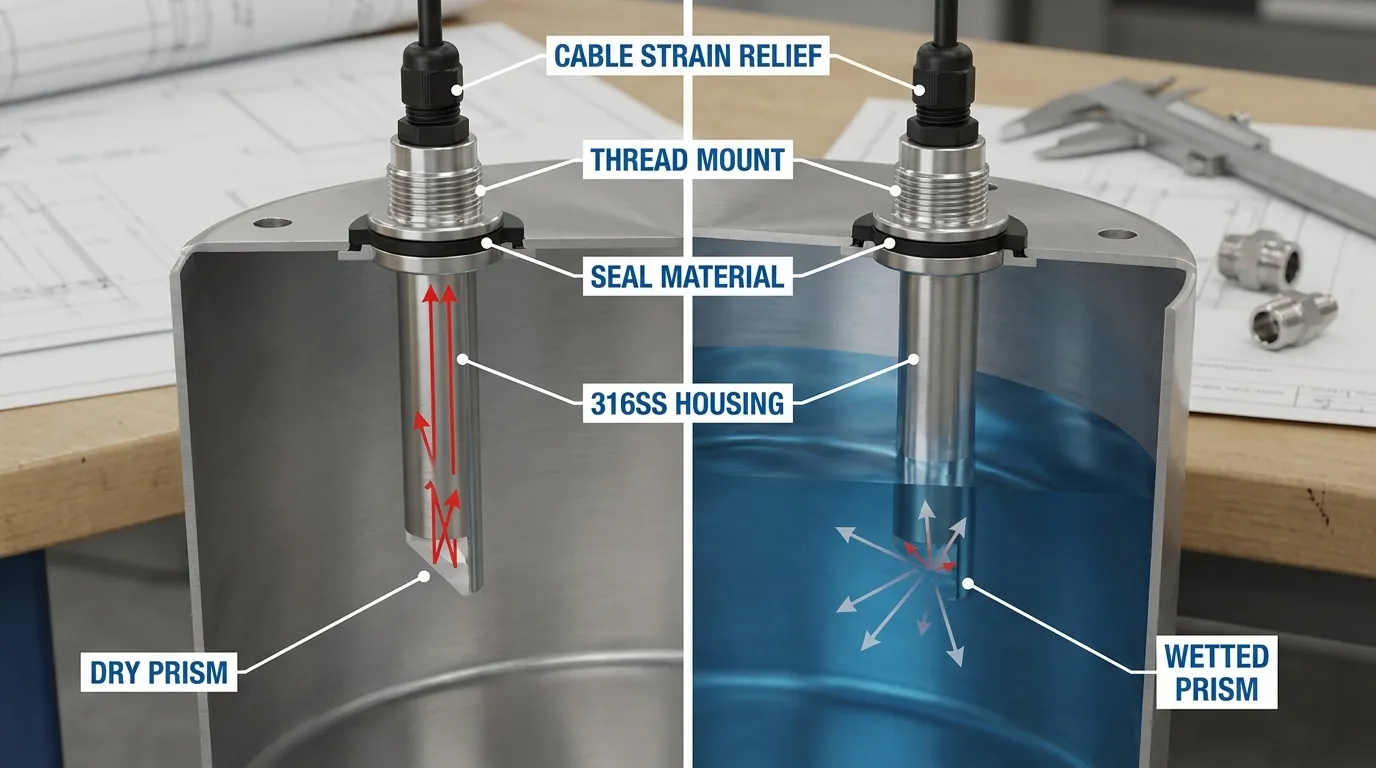
Vir 'n vlekvrye vlekvrye optiese vloeistofvlaksensor, "316SS" verwys gewoonlik na die metaalliggaam of -behuizing wat die vloeistof kontak en die monteerdraad verskaf. In sommige projekte, 316L kan versoek word vir verbeterde korrosieprestasie in gesweisde of higiëniese omgewings. Die finale graad moet tydens RFQ bevestig word op grond van tenkontwerp, Skoonmaakmetode, en vloeistofblootstelling.
Die optiese prisma is die waarnemingsoppervlak. Die materiaal moet versoenbaar wees met die vloeistof, Temperatuur, en skoonmaaksiklus. In baie vlekvrye vlekvrye optiese sensors, 'n Glas- of optiese-graad prisma word gebruik sodat die infrarooi sein korrek kan reflekteer tussen droë en natgemaakte toestande. Die prisma moet skoon genoeg bly vir ligtransmissie; Swaar laag, Kristallisasie, slyk, of klewerige vloeistof kan die reaksiebetroubaarheid verminder.
Seëls is ewe belangrik. Selfs al is die vlekvrye liggaam geskik, die verkeerde O-ring of seël kan swel, Crack, harden, of lek. Brandstof, oplosmiddel, warm water, skoonmaakmiddel, en alkaliese skoonmaakvloeistof mag verskillende seëlkeuses vereis. HojellyTek bevestig seëlopsies by die RFQ-stadium in plaas daarvan om aan te neem een seël pas elke vloeistof.
Die kabeluitgang of konnektorarea moet ook nagegaan word. Vir wastoerusting, Die koper moet die kabelrigting bespreek, Rekverligting, Omhulselbeskerming, en of die sensor gespat gaan word, Ondergedompel, Blootgestel aan stoom, of met drukspuit skoongemaak.
Materiaalverenigbaarheidsgids vir 316SS optiese vlaksensors
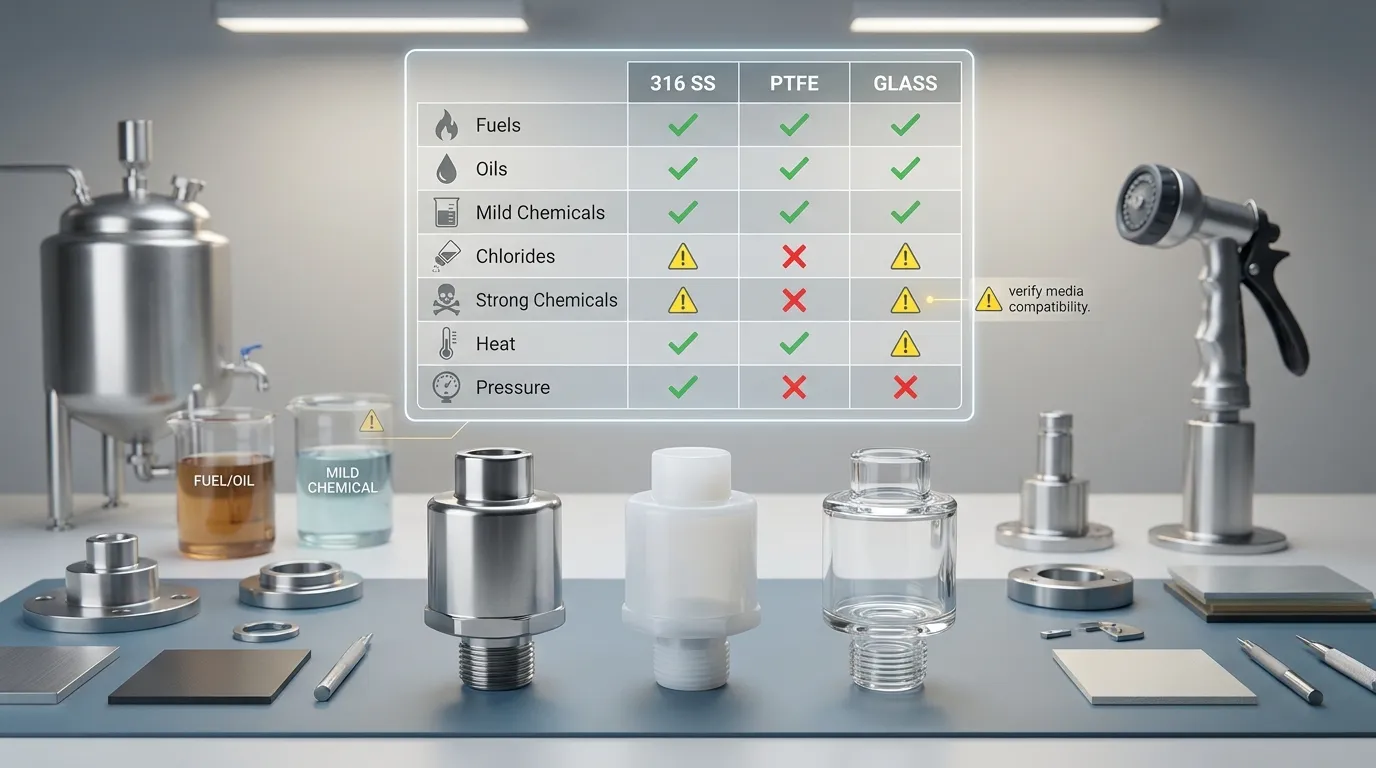
Die tabel hieronder is 'n seleksiegids, Nie 'n finale verenigbaarheidswaarborg nie. Verifieer altyd die medianaam, Konsentrasie, Temperatuur, Druk, en skoonmaakproses voor bestelling.
| Media of toestand | 316/316L-vlekvrye staal geskiktheid | Wat om te verifieer voordat jy bestel | Alternatief om te oorweeg |
|---|---|---|---|
| Diesel, Brandstofolie, Smeerolie | Dit is dikwels 'n sterk rede om vlekvrye vlekvrye staal bo plastiek te kies | Seëlmateriaal, Prisma-vervuiling, Temperatuur, Tenkvibrasie | Vlekvrye vlekvrye staal met geverifieerde seël |
| Hidrouliese olie en masjienolie | Geskik vir baie toerustingvlakmoniteringsprojekte | Oliebymiddels, Drukpuls, Draadtipe, Kabelbeskerming | Vlekvrye vlekvrye staal of glas, afhangend van die hitte |
| Water en sagte watergebaseerde vloeistowwe | Gewoonlik geskik, veral waar krag of afspoel saak maak | Chloriedvlak, skoonmaak chemikalieë, Temperatuur | Plastiek vir laekoste-watergebruik |
| Ligte chemikalieë | Moontlik, maar dit moet geverifieer word | Chemiese naam, Konsentrasie, Blootstellingstyd, Seëlswelling | PTFE of glas as dit aggressief is |
| CIP-afspoel- of skoonmaaksiklus | Nuttig vir sterker liggaam- en draadkonstruksie | Skoonmaakmiddel, Temperatuur, Drukspuit, Seëlmateriaal | PTFE/glas vir skerper skoonmaakvloeistowwe |
| Warm of geperste media | Dikwels beter as plastiekbehuisings | Vereiste temperatuur- en drukgrense, Termiese siklus | Hoë-temperatuur weergawe |
| Chloriedryke vloeistowwe of soutblootstelling | Vereis versigtigheid | Pitting/korrosie-risiko, Konsentrasie, Temperatuur | PTFE of glas |
| Sterk sure, sterk alkalis, aggressiewe oplosmiddels | Moet nie versoenbaarheid aanvaar nie | Volledige chemiese verenigbaarheidsoorsig | PTFE optiese sensor |
| Hoë suiwerheid, Hoë-temperatuur, of spesiale chemiese diens | Vlekvrye staal is dalk nie die beste natgemaakte oppervlak nie | Suiwerheid, Termiese skok, Chemiese aanval, Skoonmaakmetode | Glasoptiese sensor |
Temperatuur en Druk: Wat om te bevestig
316 Vlekvrye staal kan meer veeleisende meganiese en termiese toestande hanteer as baie plastiek sensorliggame, Maar die volledige sensorgradering hang van meer as net die metaaldop af. Temperatuur- en drukgrense word deur die prisma beïnvloed, Interne elektronika, Seëlstruktuur, Kabel, Potmateriaal, en montering ontwerp.
Vir warm vloeistof, Kopers moet deurlopende temperatuur bevestig, Kort skoonmaaktemperatuur, Stoom- of warmwaterblootstelling, Termiese siklus, en of die elektronika naby die proseshitte is. Vir druk, Bevestig normale werkdruk, Drukpieke, Vakuumtoestande, Draadseëlmetode, en installasiewringkrag.
As die toepassing hoofsaaklik oor verhoogde prosestemperatuur gaan, 'n toegewyde Hoë-temperatuur optiese sensor mag meer geskik wees as 'n standaard vlekvrye staal model.
Waar 316 Vlekvrye staal val steeds kort
316SS is 'n sterk industriële materiaal, Maar dit is nie die veiligste antwoord vir elke vloeistof nie. Dit kan steeds korrosiegevaar in chloriedryke media in die gesig staar, Sommige sure, Sommige alkalis, oksiderende chemikalieë, en hoë-temperatuur chemiese blootstelling. In sommige toepassings, Die vlekvrye liggaam mag oorleef, maar die seël of prisma kan eerste faal.
Werklike faalmodusse sluit in:
- Putvorming of korrosie op die natgemaakte liggaam
- Seëlswelling, Kraak, of kompressieverlies
- Prismabedekking van olieslib, Skuim, Skaal, of klewerige media
- Valse oorskakeling van borrels, Afsettings, of verkeerde monteerhoek
- Lekkasie veroorsaak deur swak draadseëling of onversoenbare pakkingmateriaal
- Kabelbeskadiging tydens afspoeling of vibrasie
- Uitset-ongelykheid met PLC, Aflos, of beheerbord
Vir aggressiewe chemikalieë, PTFE is dikwels 'n beter keuse vir natgemaakte liggame. Vir hoë temperature, suiwerheid, of spesiale optiese vereistes, Glas mag dalk beter wees. Die veiligste benadering is om die werklike vloeistofbesonderhede te stuur voordat die sensorliggaam gekies word.
5-Stapprojekproses
- Navraag
Deel die vloeistof, Tenktekening, Monteringsposisie, Verwagte uitset, Hoeveelheid, en teikenmark. - Spesifikasie- en aanpassingsresensie
Ons ingenieurspan kontroleer natgemaakte materiale, Prisma-ontwerp, Seëlkeuse, Bedrading, gare, Kabel, Konnektor, en beheerlogika. - Steekproefbevestiging
Monsters kan voorberei word vir pasvorm, Skakellogika, Installasie, en mediatoetsing voor produksie. - Produksie en kwaliteitsbeheer
Die fabriek kontroleer die samestelling, Elektriese uitset, Voorkoms, en funksionele reaksie volgens die bevestigde ordespesifikasie. - Versendingsondersteuning
HojellyTek voer sensors uit vir kliënte in die VSA, ONS, Indië, en ander markte, met ondersteuning via WhatsApp of e-pos vir bestellingskoördinering.
RFQ-vereistes en Spesifikasies om voor te berei
Voordat jy 'n kwotasie versoek, Berei die volgende inligting voor:
- Vloeibare naam, Konsentrasie, Bymiddels, en skoonmaakchemikalieë
- Normale en maksimum vloeistoftemperatuur
- Normale en maksimum druktoestand
- Tenkmateriaal en wanddikte
- Monteringsposisie: Newe, Top, Onderkant, Horisontale, of vertikaal
- Draadgrootte of pasgemaakte monteringstekening
- Vereiste uitset: NPN, PNP, Relaiskoppelvlak, Analoog sein, of beheerbordsein
- Voorsieningsspanningsvereiste
- Normaalweg oop of normaal geslote logika
- Kabellengte, Konnektor, of harnasversoek
- Prisma-blootstelling: Skoon vloeistof, Skuim, Bedekking, Borrels, slyk, of klewerige media
- Monsterhoeveelheid en verwagte produksiehoeveelheid
- Enige Tuya/Smart Life- of slim moniteringsintegrasievereiste, indien dit in 'n gekoppelde tenkvlak-toestel gebruik word
Materiaalseleksievergelyking
| Sensorliggaammateriaal | Beste-geskikte toepassings | Sterkpunte | Beperkings |
|---|---|---|---|
| PSU / Plastiek | Water tenks, Laekoste-toestelle, ligte diens OEM-toerusting | Ekonomiese, Kompakte, Maklik om te integreer | Beperk vir hitte, Druk, Brandstof, en sommige chemikalieë |
| 316/316L vlekvrye staal | Brandstof, Olies, Ligte chemikalieë, Warm of geperste media, Afspoeltoerusting | Sterk liggaam, Duursame draad, beter industriële weerstand as plastiek | Nie universele chemiese weerstand nie; Seëls en prisma moet geverifieer word |
| PTFE | Aggressiewe chemiese vloeistowwe en korrosiewe omgewings | Uitstekende chemiese weerstand in baie harde vloeistowwe | Meganiese ontwerp en temperatuurgrense benodig steeds projekhersiening |
| Glas | Hoë temperatuur, Hoë-suiwerheid, of spesiale chemiese toepassings | Sterk optiese en chemiese prestasie in geselekteerde toestande | Meer broos as metaal; Monteringsbeskermingskwessies |
Hoekom Werk Met HoJellyTek
HojellyTek is 'n vervaardiger en uitvoerder in Shenzhen wat fokus op foto-elektriese optiese sensing vir vloeistofvlakopsporing. Ons ondersteun OEM/ODM-projekte waar kopers meer as net 'n katalogusdeel nodig het: Materiaalhersiening, Montage-aanpassing, Bedradingkonfigurasie, en steekproeftoetsondersteuning.
Ons interne R&D-span kan help om vlekvrye staal te vergelyk, PTFE, Plastiek, en glasopsies gebaseer op die werklike vloeistof en installasie. In plaas daarvan om 316SS as 'n universele oplossing te oordryf, Ons help kopers om die natgemaakte materiale voor produksie te verifieer.
Vrae
Wat is 'n 316 Vlekvrye staal optiese vlaksensor gebruik vir?
N 316 'n Vlekvrye staal optiese vlaksensor word gebruik vir puntvlakopsporing in tenks of toerusting waar plastiek dalk nie geskik is nie, soos brandstoftenks, Oliereservoirs, Ligte chemiese houers, Warm vloeistofstelsels, Drukvatte, of wastoerusting.
Is 316L beter as 316 vir optiese vloeistofvlaksensors?
316L het 'n laer koolstofinhoud en kan verkies word vir sekere gesweisde items, Sanitêr, of korrosie-sensitiewe konstruksies. Die beste keuse hang af van die vloeistof, Skoonmaakmetode, Temperatuur, en tenkontwerp. Bevestig die materiaalgraad tydens RFQ.
Kan 316SS optiese sensors saam met brandstof of olie gebruik word??
Ja, Vlekvrye vlekvrye optiese sensors word algemeen gekies vir brandstowwe en olies, Maar die seël, Prisma, Kabeluitgang, Temperatuur, en bymiddels moet steeds verifiseer word. Olieslib of -laag kan ook die prisma beïnvloed as die vloeistof afsettings verlaat.
Is 316 Vlekvrye staal geskik vir sterk chemikalieë?
Nie altyd nie. 316SS het goeie weerstand in baie ligte omgewings, maar sterk sure, Alkalis, Chloriede, en aggressiewe oplosmiddels mag PTFE of glas benodig in plaas daarvan. Verskaf altyd die presiese chemiese naam en konsentrasie voordat jy bestel.
Watter uitsetsoorte beskikbaar is?
Afhangend van die projek, die sensor kan gekonfigureer word vir algemene industriële of OEM-beheerstelsels soos NPN, PNP, Skakellogika, of ander koppelvlakvereistes. Die uitset moet by jou PLC aangepas wees, Aflos, PCB, of beheerder.
Hoe versoek ek die regte vlekvrye vlekvrye optiese sensor?
Stuur jou vloeistofbesonderhede, Temperatuur, Druk, Monteringsdraad, Tenktekening, Uitsettipe, Spanning, Kabel- of konnektorversoek, en monsterhoeveelheid. Ons span sal die natgemaakte konstruksie hersien en 'n geskikte konfigurasie aanbeveel.
Versoek 'n Kwotasie
Ek het 'n 316/316L vlekvrye vlekvrye optiese vlaksensor nodig vir brandstof, Olie, Ligte chemiese stof, Warm vloeistof, of wastoerusting? Stuur jou aansoekbesonderhede per WhatsApp of e-pos om 'n kwotasie aan te vra, Databladbespreking, of voorbeeldresensie.


