
Optischer kontinuierlicher Pegelsensor
HojellyTek unterstützt optische Flüssigkeitsniveau-Sensorprojekte für Käufer, die klareres Feedback benötigen, Kompakte Installation, und Anpassungen über die standardmäßige Ein-/Aus-Erkennung hinaus.
Kontinuierliche optische Pegelmessungsfähigkeiten
Die meisten optischen Flüssigkeitspegelsensoren verwenden ein photoelektrisches Prinzip: eine Infrarot-LED sendet Licht in eine Prismenspitze, und ein Fototransistor oder -empfänger erkennt das reflektierte Licht. In der Luft, Das Prisma reflektiert Licht anders als wenn es durch Flüssigkeit benetzt wird. Die Sensorschaltung wandelt dann diese trockene/feuchte optische Änderung in ein brauchbares Signal um.
Für einen einfachen Panzeralarm, Dieses Signal kann ein Ein/Aus-Ausgang sein.. Für kontinuierliche oder nahezu kontinuierliche Pegelüberwachung, Das Design kann eine längere Sensorstruktur verwenden, mehrere optische Punkte, oder ein Signalumwandlungsdesign, das Pegeländerungen an einen Controller meldet.
Unsere Unterstützung für die optische Pegelmessung kann umfassen:
- Maßgeschneiderte optische Punktschalter für hohe, Niedrig, leer, Überlauf, und Leckageerkennung
- Mehrpunkt-optische Pegelarrays für gestufte Pegelanzeigen
- Kontinuierliche Projekte, bei denen das Signal Prozesssteuerung oder Dosierungsrückmeldung unterstützen muss
- Ausgangskonfiguration für Steuerplatinen, SPS, Pumps, Alarme, oder IoT-Geräte
- Materialauswahl für Wasser, Öl, Brennstoff, Chemikalie, und Reinigungsflüssigkeitsanwendungen
- OEM/ODM-Sensorgehäuse, Faden, Kabel, Steckverbinder, und Wohnraumanpassung
Für Käufer, die allgemeine Lösungen vergleichen, Siehe unsere Optischer Pegelsensor Leitfaden.
Punktoptischer Schalter vs. kontinuierliche optische Pegelmessung
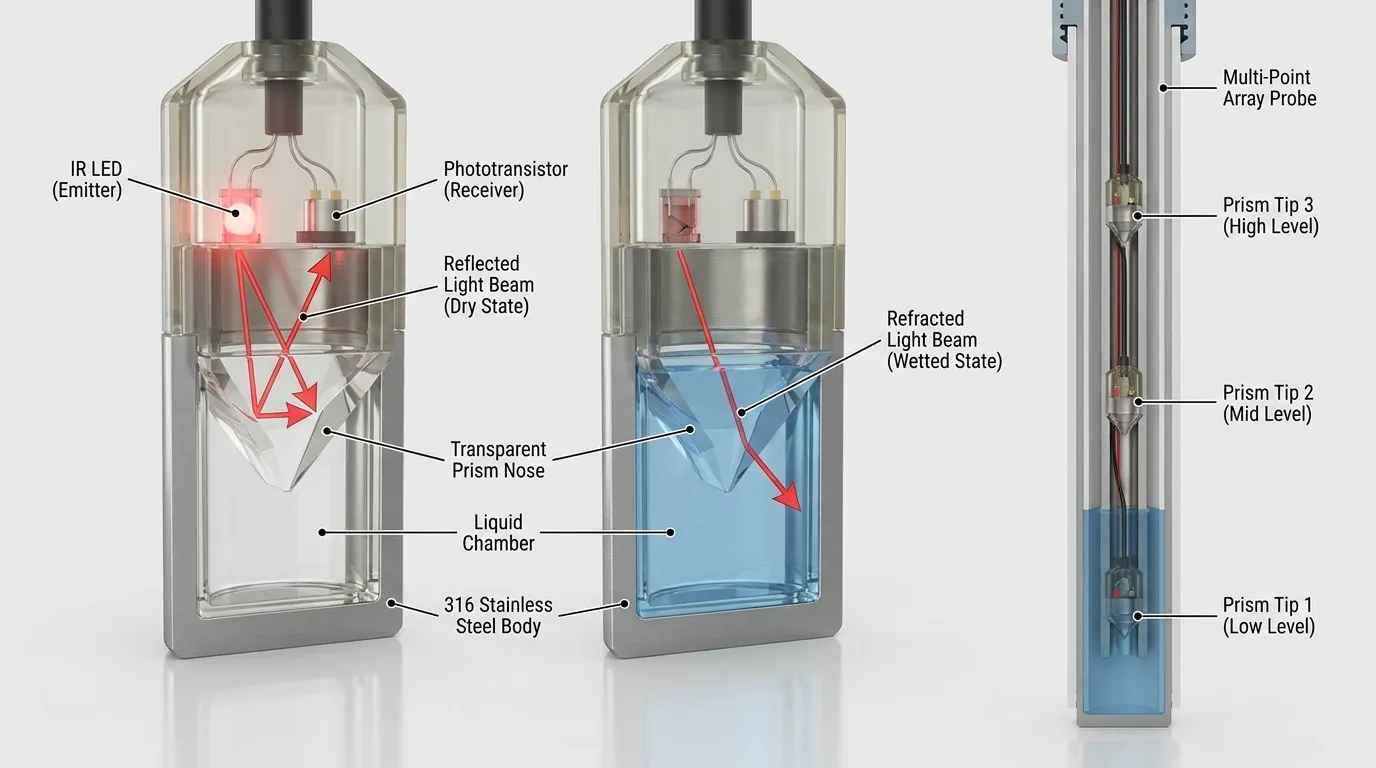
Ein photoelektrischer Punktpegelschalter beantwortet eine Frage: "Ist an dieser Position Flüssigkeit vorhanden?"Es ist ideal, wenn das System nur einen klaren, trockenen/nassen Status benötigt. Zum Beispiel, Eine Kaffeemaschine benötigt möglicherweise einen Niedrigwasser-Warnhinweis, Ein Medizingerät benötigt möglicherweise ein reagenzvorhandenes Signal, oder ein kleiner Tank benötigt möglicherweise Überlaufschutz.
Kontinuierliche Messung beantwortet eine andere Frage: "Wie viel Flüssigkeit ist jetzt im Tank?"Das ist wichtig, wenn ein Controller die Pegeländerung während des Befüllens verfolgen muss, Entwässerung, Dosierung, Batchverarbeitung, oder Prozessbetrieb.
In vielen Projekten, Käufer fragen zuerst nach einem optischen kontinuierlichen Pegelsensor, Aber nach Überprüfung, Das richtige Design kann eine von drei Optionen sein:
- Einzelne optische Punktschalter Für hohe/niedrige Alarme
- Mehrpunkt-optisches Array für mehrere feste Stufen
- Kontinuierliches Ausgangsdesign wobei der Controller ein variables analoges oder digitales Signal empfängt, wobei der Controller ein variables analoges oder digitales Signal empfängt
Wenn deine Anforderung nur "Tank voll" oder "Tank leer" ist,"Ein Punktgerät ist in der Regel einfacher. Wenn du Level Trend brauchst, Nachfüllzeitpunkt, Dosierungsmenge, oder Prozessrückmeldung, Kontinuierliche oder Mehrpunktmessung ist geeigneter.
Für Projekte zur Festpunkterkennung, Vergleichen Sie unsere Elektro-optischer Punktpegelsensor.
Messbereich, Auflösung, und Signaldesign
Für kontinuierliche optische Projektebene, Der Messbereich wird nicht wie bei einem generischen Katalogschalter ausgewählt. Es muss der Tiefe des Aquariums entsprechen, Sensorzone, Standort der Installation, Flüssigverhalten, und erforderliche Steuerungsgenauigkeit.
Ein kurzer Behälter benötigt möglicherweise nur mehrere optische Detektionspunkte. Ein höherer Tank benötigt möglicherweise eine längere Sonde oder eine maßgeschneiderte Messstruktur. Eine Dosierkammer benötigt möglicherweise eine höhere Auflösung über einen schmalen Abschnitt statt über einen langen Bereich mit voller Tank.
Die Auflösung hängt von der Messmethode ab. Mit einem Mehrpunktarray, Die Auflösung basiert auf dem Abstand zwischen den optischen Punkten. Näherer Abstand ermöglicht mehr ebene Schritte, Aber es beeinflusst auch das Sondendesign, Verdrahtung, kosten, und Anforderungen an Controller-Eingänge. Mit analogem oder digitalem kontinuierlichem Ausgang, Die nutzbare Auflösung hängt vom Design der optischen Sensoren ab, Signalverarbeitung, Flüssigkeitsstabilität, und Kalibrierungsmethode.
Käufer sollten definieren:
- Gesamttiefe des Tanks oder Zielerfassungsgröße
- Minimale und maximale Flüssigkeitsmengen zu überwachen
- Erforderliche Level-Schritt- oder Steuerungsgenauigkeit
- Ob das System eine glatte Ausgangs- oder feste Pegelzonen benötigt
- Flüssiger Typ, Klarheit, Viskosität, Schaum, Blasen, und Beschichtungsrisiko
- Controller-Eingangstyp: NPN, PNP, Spannung, 4–20 mA, Puls, RS485, oder benutzerdefiniertes digitales Signal
Ausgabeoptionen: NPN, PNP, 4–20 mA, und Digitale Signale
Die Auswahl von Ausgaben ist eine der wichtigsten Kaufentscheidungen. Ein Punktschalter verwendet normalerweise einen diskreten Ausgang wie NPN, PNP, Push-Pull, oder Relaislogik, abhängig von der Steuerschaltung,. Das eignet sich für Alarme, Pumpenstart/-stopp, Nachfüllauslöser, und Stellwerkssignale.
Für kontinuierliches oder prozessbezogenes Feedback, Käufer fragen oft nach analogem Ausgang. Ein 4–20 mA-Signal ist in der industriellen Steuerung üblich, da es einen sich ändernden Pegel über einen definierten Bereich darstellen kann und für längere Kabelstrecken besser geeignet ist als einfache Spannungssignale. Digitaler Ausgang kann verwendet werden, wenn der Sensor mit einem Mikrocontroller kommunizieren muss., Smart Device, oder Industrial Gateway.
HojellyTek kann die Controller-Anforderungen während der RFQ überprüfen und helfen, die Ausgangslogik an Ihr System anzupassen. Versorgungsspannung, Verdrahtungsmodus, Kabellänge, Steckverbinder, und das Signalverhalten vor der Probenproduktion bestätigt wird.
Mehrpunkt-Optische Arrays als kontinuierliche Alternative
Nicht jede kontinuierlich aussehende Anwendung benötigt einen echten kontinuierlichen Sender. In vielen kompakten OEM-Systemen, Ein optisches Mehrpunktarray ist eine praktische Alternative.
Ein Mehrpunkt-Design platziert mehrere optische Messpositionen entlang einer Sonde oder Baugruppe. Jeder Punkt erkennt, ob die Flüssigkeit diese Höhe erreicht hat. Der Controller interpretiert das Ergebnis dann als leer, Niedrig, Mittel, Hoch, oder voll. Für viele Geräte, Das reicht aus, um die Nachfüllung zu kontrollieren, Trockenlauf verhindern, Überlauf stoppen, oder die verbleibende Flüssigkeit schätzen.
Dieser Ansatz ist nützlich, wenn:
- Das Becken ist klein oder unregelmäßig
- Eine exakte Millimetermessung ist nicht erforderlich
- Der Controller verfügt über mehrere digitale Eingänge
- Der Käufer möchte optische Zuverlässigkeit ohne einen beweglichen Schwimmer
- Die Anwendung benötigt einfache Levelzonen für Dosierung oder Prozesssteuerung
Mehrpunkt-Arrays werden häufig in Reagenztanks eingesetzt, Wasserreservoirs, Reinigungsflüssigkeitspatronen, Öltanks, Kraftstoffüberwachungsmodule, Intelligente Geräte, Laborausrüstung, und kompakte Industriegeräte.
Für Öl-Wasser- oder Flüssigkeitsschnittstellenprojekte, Siehe unsere Optischer Schnittstellenpegelsensor.
Vergleich von Punkt- und kontinuierlichem optischen Pegelsensor
| Anforderung | Fotoelektrischer Punktschalter | Mehrpunkt-optisches Array | Kontinuierliche optische Messung |
|---|---|---|---|
| Hauptzweck | Flüssigkeit an einer festen Position nachweisen | Erkennen Sie mehrere feste Ebenenzonen | Streckenwechselniveau über einen definierten Bereich |
| Typische Ausgabe | NPN, PNP, digitales An/Aus | Mehrere digitale Signale oder codierter Ausgang | 4–20 mA, Spannung, Digital, oder benutzerdefiniertes Signal |
| Beste Passform | Voll, leer, Überlauf, Leck, Hoher Alarm/Tiefer | Niedrige/mittlere/hohe Anzeige, Gestufte Nachfüllregelung | Dosierung, Prozessrückmeldung, Tank-Trend-Überwachung |
| Auflösung | Ein Detektionspunkt | Basierend auf Punktabstand | Basierend auf Sensordesign und Signalverarbeitung |
| Designkomplexität | Niedrigster | Medium | Höchst |
| Der Käufer sollte sie wählen, wenn | Es wird nur der Trocken-/Nassstatus benötigt | Mehrere Stufen reichen aus | Der Regler benötigt eine Rückkopplung mit variabler Pegel |
Anwendungsanwendungen für kontinuierliche oder mehrpunktige optische Pegeldetektion
Kontinuierliche und mehrpunktige optische Messung ist nützlich, wenn mechanische Schwimmer zu groß sind, Kann bleiben, oder nicht zum Produktdesign passen. Weil die Messspitze keinen beweglichen Schwimmerarm hat, Es eignet sich für kompakte Geräte mit begrenztem Platz.
Häufige Verwendungen sind unter anderem:
- Dosierungstanks, die Nachfüllzeit oder Volume-Stage-Rückmeldung benötigen
- Prozessgeräte, bei denen der Flüssigkeitsstand die Pumpen- oder Ventilsteuerung beeinflusst
- Intelligente Geräte, die das Wasser überwachen, Reinigungsmittelmittel, oder Reinigungsflüssigkeit
- Medizinische und Laborausrüstung mit Reagenz- oder Abfalltanks
- Öl, Kühlmittel, oder Treibstoffreservoirs, die eine niedrige bis hohe Anzeige benötigen
- OEM-Systeme, die an eine Steuerplatine angeschlossen sind, zeigen, oder IoT-Modul
Für intelligente Produktdesigns, Die Integration von Tuya/Smart Life kann diskutiert werden, wenn der Sensor Teil eines größeren, verbundenen Überwachungssystems ist.
Auswahl-Checkliste vor der Bestellung
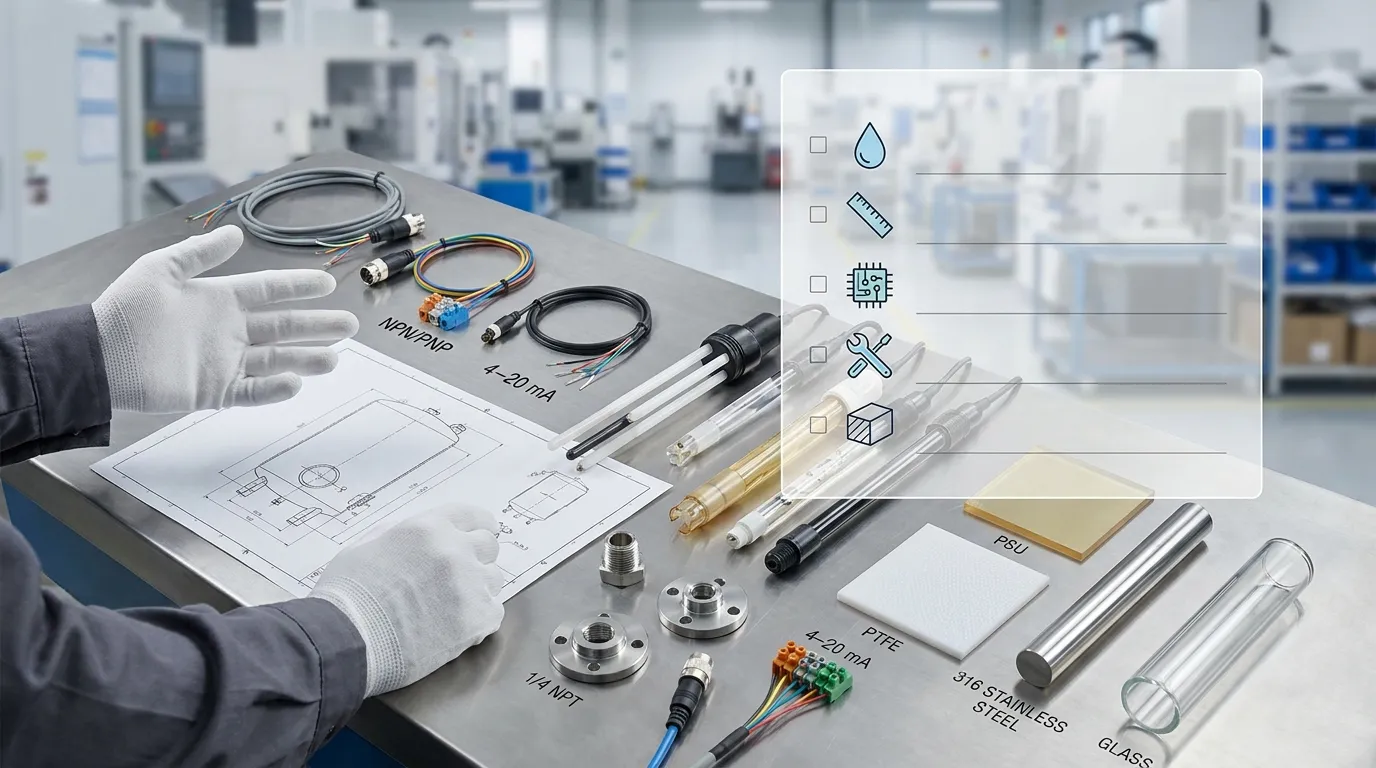
Bevor Sie ein Angebot anfordern, Bereiten Sie die folgenden Details vor:
- Niveaufunktion: Punktalarm, Mehrpunkt-Anzeige, oder kontinuierliche Ausgabe
- Panzerzeichnung: Höhe, Wanddicke, Winkelinstallation, und verfügbarer Montagefläche
- Messzone: Vollbereich oder nur der aktive Steuerbereich
- Flüssige Details: Wasser, Öl, Brennstoff, Chemikalie, Schaumrisiko, Blasen, Viskosität, Beschichtung, und Transparenz
- Benetztes Material: Netzteil, PTFE, 316 Edelstahl, Glas, oder ein anderes Material, das auf chemischem Kontakt basiert
- Montagestil: Gewindekörper, Panelhalterung, Seitenhalterung, Oberste Montage, 1/4 NPT, Flansch, oder Sonderunterkünfte
- Produktionsbedarf: NPN, PNP, 4–20 mA, Spannung, Puls, RS485, oder benutzerdefinierte digitale Ausgabe
- Elektrische Details: Versorgungsspannung, Kabellänge, Steckverbinder, Drahtfarben, und Controller-Eingang
- Betriebsumgebung: Reinigungsmethode, Schwingung, Kondensation, Platschen, und Temperaturbedingungen
- Projektphase: Prototyp, Ersatz, neues OEM-Design, oder Produktionsquellen
5-Schrittweiser individueller Serviceprozess
- Untersuchungsprüfung
Teile Zeichnungen, Flüssige Details, Zielniveau-Reichweite, Produktionsbedarf, und Installationsmethode. - Spezifikation und Anpassung
Unser Ingenieurteam bestätigt die Erkennung der Struktur, Benetztes Material, Montage, Kabel, Steckverbinder, und Signaltyp. - Probenvorbereitung
Eine Probe kann für die Passform vorbereitet werden, Verdrahtung, und Flüssigkeitstests vor der Massenproduktion. - Produktion und Qualitätskontrolle
Die Fabrik überprüft das optische Ansprechen, Verdrahtung, Montagequalität, und Konsistenz basierend auf der genehmigten Probe. - Versandunterstützung
Wir unterstützen Exportkäufer in den USA, WIR, Indien, und andere Märkte mit Verpackungs- und Versandkoordination.
Warum sich für HojellyTek entscheiden
HojellyTek ist ein Hersteller von optischen und flüssigen Levelsensoren in Shenzhen mit eigenem R&D, Erfahrung mit photoelektrischer Messung, sowie Unterstützung für OEM/ODM-Anpassungen. Anstatt jeden Käufer zu einem Standard-Punktwechsel zu zwingen, Wir helfen bei der Überprüfung der Frage, ob Ihr Produkt einen Punktsensor benötigt, Mehrpunkt-Array, oder Stufenpegelsignal-Design.
Käufer können auch unsere Produkt des optischen Pegelsensors Rufen Sie vor dem Versand von Zeichnungen oder Antragsdetails auf.
FAQ
Ist ein optischer kontinuierlicher Pegelsensor dasselbe wie ein optischer Punktschalter?
NEIN. Ein optischer Punktschalter erkennt Flüssigkeit an einer festen Position. Ein optischer kontinuierlicher Pegelsensor oder ein Mehrpunkt-Design liefert Pegelrückkopplung über einen Bereich oder mehrere Höhenzonen hinweg.
Kann optische Pegelmessung 4–20 mA Ausgang liefern?
Ja, 4–20 mA kann für Projekte angegeben werden, die Feedback auf variabler Ebene benötigen. Der Sensorbereich, Signalskalierung, Verdrahtung, und die Eingabe des Controllers sollte während der RFQ bestätigt werden.
Wann sollte ich ein Multi-Punkt-optisches Array verwenden??
Verwende ein Mehrpunkt-Array, wenn du mehrere feste Level brauchst,, wie zum Beispiel niedrig, Mittel, und hoch, benötigen jedoch kein vollständig glattes, kontinuierliches Sendesignal.
Welches benetzte Material sollte ich wählen?
PSU ist für viele wasserbasierte Anwendungen üblich. PTFE, 316 Edelstahl, oder Glas kann für Chemikalien in Betracht gezogen werden, öle, Kraftstoffe, Hohe Sauberkeitsanforderungen, oder anspruchsvolleren Kontakt mit Flüssigkeit.
Was kann Probleme mit der optischen Pegelmessung verursachen?
Häufige Risiken sind schmutzige Prismenspitzen, Beschichtungsflüssigkeit, Schaum, Blasen, Kondensation, Schlechte Montageposition, Inkompatibles Material, Falsche Verkabelung, oder einen Punktschalter wählen, wenn der Prozess kontinuierliches Feedback benötigt.
Wie beantrage ich ein Angebot für einen maßgeschneiderten optischen Pegelsensor??
Schick deine Panzerzeichnung, Flüssigtyp, Messbereich, Ausgangssignal, Montagemethode, Spannung, Kabelanforderungen, und erwartete Anwendung. Sie können ein Angebot per WhatsApp oder per E-Mail anfordern.
Fordern Sie ein Angebot an
Ich brauche kontinuierliche Pegelrückkopplung statt eines einfachen Ein-/Aus-Signals? Schick deine Zeichnung, Flüssige Details, Erforderliche Ausgabe, und Installationsplan für HojellyTek. Unser Team kann Ihnen helfen, zwischen einem punktoptischen Schalter auszuwählen, Mehrpunkt-optisches Array, oder eine kontinuierliche optische Pegelmesslösung für Ihr OEM- oder Industrieprojekt.
